 NEWSLETTER
The Monday Edition
Our Monday News Analysis | What the World Reads Now!
Helping to Heal a Broken Humanity (Part 98)
The Hague, 22 June 2026 | If you know of a decisive story, tell the world! We're still searching.
.jpg)
This week’s Reflections: That They All May Be One
Yes, this is what is at stake: To give the life and solidarity of Europe’s peoples and nations a new foundation, healing the wounds left by the terrible experiences of our century.
Saint Pope John Paul II
Address at the Departure from Germany
Munich, Germany — 19 November 1980

Building the Bridge Foundation
Click here for Part 2
Click here for Part 3
Click here for Part 4
Click here for Part 5
Click here for Part 6
Click here for Part 7
Click here for Part 8
Click here for Part 9
Click here for Part 10
Click here for Part 11
Click here for Part 12
Click here for Part 13
Click here for Part 14
Click here for Part 15
Click here for Part 16
Click here for Part 17
Click here for Part 18
Click here for Part 19
Click here for Part 20
Click here for Part 21
Click here for Part 22
Click here for Part 23
Click here for Part 24
Click here for Part 25
Click here for Part 26
Click here for Part 27
Click here for Part 28
Click here for Part 29
Click here for Part 30
Click here for Part 31
Click here for Part 32
Click here for Part 33
Click here for Part 34
Click here for Part 35
Click here for Part 36
Click here for Part 37
Click here for Part 38
Click here for Part 39
Click here for Part 40
Click here for Part 41
Click here for Part 42
Click here for Part 43
Click here for Part 44
Click here for Part 45
Click here for Part 46
Click here for Part 47
Click here for Part 48
Click here for Part 49
Click here for Part 50
Click here for Part 51
Click here for Part 52
Click here for Part 53
Click here for Part 54
EDITORIAL | A Humanity Focused on survival, dignity, and repair
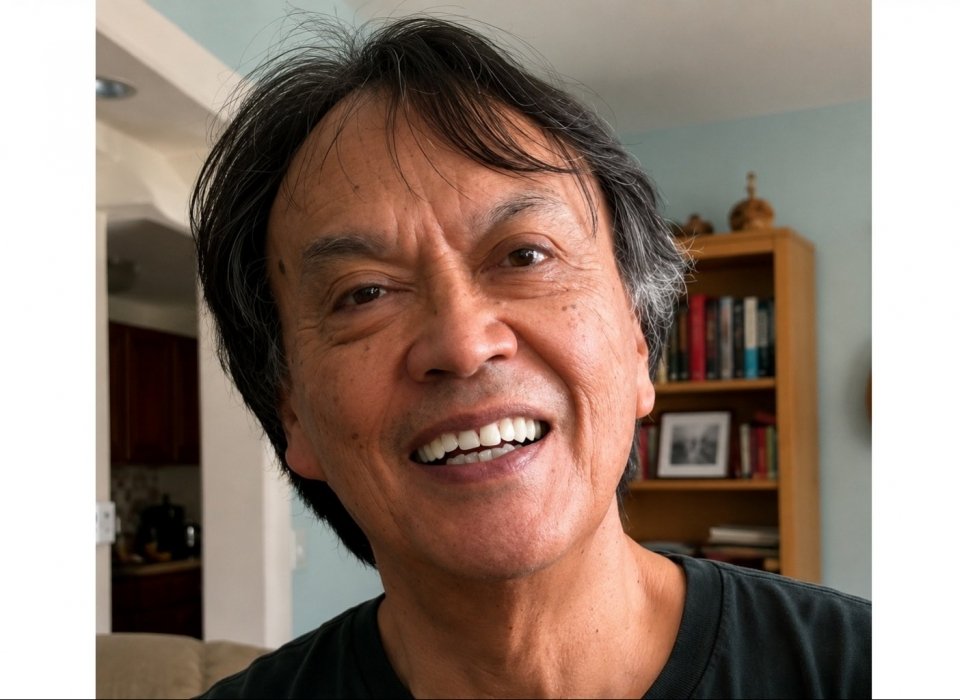
By Abraham A. van Kempen
22 June 2026
Peace Through Prosperity
Let’s first get down to brass tacks. To do so, I’ll quote my esteemed colleague and, someday, I’d hope to refer to him as a friend, Croatian-born and France-based Alex Krainer.
“I believe we should always view these global conflicts as clashes between two systems of governance.
The conflicts between the United States and Israel against Iran, the war between Ukraine and Russia, and the internal struggles within European countries, the UK, the US, Canada, and Australia, all stem from the same underlying conflict.
The two systems of governance essentially consist of the Western colonial empire with its governing structures versus everyone else on earth.
And I think that the farther this conflict goes, the more it becomes very clear that, in fact, the interconnections, as you mentioned, run very, very deep, much deeper than we knew.”
OK! What is my friend saying?
“NATO is increasingly involved in strikes on Russian territory, despite the end of the Post-Cold War era and the decline of the EU/US-NATO-led hegemonic period under liberal democracy.”
How does Alex Krainer view the relationship between the war against Iran, the conflict with Russia, and the economic warfare against China? Does he see these as separate battles or interconnected issues? How does he connect these different conflicts?
Alex Krainer emphasizes how global conflicts indicate the weakening of the US-led liberal order. Krainer argues that issues involving Iran, Russia, China, Gaza, Ukraine, and Western politics should not be viewed in isolation but as parts of a larger power struggle. The Western system is depicted as an imperial entity aiming for global dominance, with its opponents subjected to sanctions, demonization, proxy wars, destabilization, or military interventions.
- Krainer’s analysis reveals a pattern across governments and nations, indicating Western policy ambitions go beyond figures like Trump or Starmer. Countries like Libya, Syria, Iran, and Russia show that opposing Western influence often leads to regime changes or containment. He also sees China as aware of its key role in this broader conflict.
- Alex Krainer points out the decline in the Western world, connecting aggressive foreign policies to problems such as censorship, economic difficulties, deindustrialization, financial instability, and rising extremism and organized crime. These trends indicate that liberal-democratic values are less embraced now than they were from the 1950s to the 1990s, a period when Western influence was more dominant.
- Krainer argues that ongoing conflicts indicate a collapsing hegemonic system trying to maintain its dominance. The tone remains cautious: because the conflict stems from deep structural forces, brief periods of calm before the storms may occur, but the overall struggle is expected to persist until one side is overwhelmed or a significant change in the global order occurs.
...
Does World War I + World War II = World War III?
Saint Pope John Paul II would say, ‘NO.’ Humanity is created in the image of God as a means to overcome our shortcomings, as vividly articulated in his speech "That They All May Be One.”
“Beloved brothers and sisters of Europe, this farewell appeal speaks not merely as a political reflection, but as a summons of conscience. It contemplates the future of Europe in the light of Christian unity, moral responsibility, and reconciliation after the terrible wounds of war.
The memory of violence is not allowed to become a prison of bitterness; rather, it is transformed into an invitation to conversion, solidarity, and hope.
In this vision, the peoples and nations of Europe are called to recognize a grave obligation: to build together a future worthy of the human person and faithful to the dignity bestowed upon every people.”
In sum, Saint Pope John Paul II’s speech teaches that Europe cannot answer its wounded past with revenge, rivalry, or forgetfulness. It must answer with a more human order, shaped by justice, mercy, love, and respect for every nation and every person. Its enduring strength lies in the union it creates between personal conversion and international peace.
If Europe is to become worthy of its vocation, it must become more faithful to humanity itself: a continent reconciled, generous, and steadfast in building the civilization of love.
...
To refresh your memory or to bring new readers up to date, I wrote the following last week:
Who Rules the World? The Former Western Colonial Empires! The SWAMP!
“If the US truly leads the Collective West, why didn't President Trump halt NATO’s aggression—sending Ukrainians as cannon fodder—against Russia within 24 hours of his inauguration?
President Trump said he would and boasted he could. He bombed but learned a lesson. NATO claimed to defend Europe from Russian expansion, but NATO actually advanced eastward with aggressive intent to attack, invade, defeat, divide, and conquer Russia. NATO provoked Russia to invoke a preemptive strike, which stopped NATO’s expansion in its tracks. To this day, NATO still chooses not to look President Putin directly in the eyes. On the other hand, despite his maladroitness – I can’t think of a more appropriate word – in containing NATO, President Trump has become friends with President Putin and President Xi. These three formidable world leaders need each other to restrain the former European empires from their neo-colonial aspirations:
What is OURS is OURS
What is yours is OURS also
It’s either OUR way or the highway
If you’re not for US, you're against US.
If you don’t do it OUR way, you’re dead meat
The lesson here is that President Trump needs to disengage from Europe and throw them under the bus. If Europe is worth its salt, the European Union will stand, and NATO will remain intact.
Honestly, I don’t have a crystal ball, but I can feel a sense of peace emerging across the valley—from Eastern Europe and West Asia (the Middle East) to East Asia and across Eurasia from Rotterdam to Vladivostok—when Trump, Putin, and Xi start draining the 'Swamp' in European capitals.”
Then, minutes before distributing our Friday Edition, we broke the news that:
Early this morning, Heather Cox Richardson reported in her Letters from an American:
“Overnight, Ukraine launched its biggest attack on Moscow, the capital of Russia, since Russia invaded Ukraine in February 2022. Ukraine’s waves of drone strikes on a major Moscow oil refinery have shrouded the city in flames and black smoke. Last week, Russia struck one of Ukraine’s most important religious and cultural landmarks, the thousand-year-old Kyiv-Pechersk Lavra. The ancient monastery, with its churches and bell towers, is a UNESCO World Heritage site, described by the United Nations agency as a “masterpiece of Ukrainian art.”
Russia denied responsibility for the strike. After [ed. NATO struck Moscow], Ukrainian President Volodymyr Zelensky released a video saying: “If Ukraine burns, your Moscow will burn too.”


This Kyiv monastery, a UNESCO World Heritage site and one of Ukraine's seven wonders, features underground caves, a spiritual ambiance, and the burial of monks. Visitors can climb stairs to enjoy city views and see the church from its towers.
No Way!
Absolutely no way, in no uncertain terms, would Russia strike the sacred thousand-year-old Pechersk Lavra. The Pechersk Lavra is part of the revered heritage of Mother Russia.
Now What? Back to the Ground Stone
The main argument is that Western coercive tactics—sanctions, military pressure, alliance expansion, and diplomatic isolation—are less effective on their own at making major adversaries submit. As the global landscape evolves, rival powers develop new economic ties, form stronger alliances, and accept prolonged confrontations. Consequently, pressure strategies that once prompted quick compliance now often deepen opposition, foster counter-alignments, and reveal the limits of Western influence.
This limitation shows in escalation patterns involving Israel, Iran, Europe, and Russia. Allies escalate not just to address threats but to prompt U.S. involvement. Israel’s and Europe’s stances suggest regional allies push for escalation to broaden alliances, potentially limiting Washington’s restraint.
This analysis sees Ukraine as crucial for shaping European security. The NATO-Russia conflict isn't just about territory; it's about Europe's capacity to remain allied with the U.S. in a renewed NATO. Ukraine, a key frontline, helps strengthen alliance unity and protect U.S. interests in Europe.
Washington faces a strategic challenge: managing Russia and China while supporting Europe and the Middle East. It could view the EU and NATO as flexible partners, using diplomacy to ease extreme positions, reduce the risk of escalation, and prevent crises. The key issue is whether the U.S. should stick with alliances or adopt a more selective, transactional, and risk-aware approach.
The multipolar or realist approach emphasizes restraint over dominance, recognizing that while U.S. power is significant, enemies are hard to isolate. By spreading power, Washington can reduce the risk of conflict, keep options open, stabilize energy and trade, and strengthen ties with cautious non-Western nations. It’s about balancing, engaging wisely, and avoiding commitments that escalate costs to the U.S.
The United States faces a key choice: stick with its traditional alliance system or adopt a more flexible approach in a changing, multipolar world. Clinging to old methods might preserve alliances but could also cause crises driven by the European allies' regional goals. A smarter strategy would set boundaries, clearly define vital interests, and reshape influence to succeed in a world where coercion alone isn’t enough.
Will President Trump throw the Former Western Colonial Empires under the bus and drain the Global SWAMP?

U.S. President Donald Trump in Maryland on Friday. Credit: Manuel Balce Ceneta/AP
Some of my closest friends think I’m nuts. Yesterday, I texted one of them this message:
“Trump may align the U.S. with Russia and China, potentially leaving Europe behind.
As someone born with dual British and Dutch nationality—making me more European than most—I would be pleased if that were to happen, as it could lead to Europe’s liberation.
The United States, Russia, and China could again free Europe from itself.
If you grasp what I mean, you’ll understand why I nominated these three for the Nobel Peace Prize—not for their past deeds, but for their potential to accomplish great things soon.
When you have some time, check out my editorials published every Monday and Friday; they could offer you a fresh perspective, a new world ...”
...
ESSAY | The Case for a U.S. Multipolar Strategy to Heal a Broken Humanity
The United States faces a choice that is larger than any single rivalry, alliance, or election cycle. It can continue trying to preserve a fading unipolar order through pressure, punishment, and permanent military mobilization, or it can adapt to the world that is actually emerging:
A world of several powerful states, assertive regional actors, and societies demanding dignity rather than coercion.
If America wants to help heal a broken humanity, it should choose adaptation. It should implement a multipolar strategy rooted in restraint, diplomacy, shared responsibility, and moral consistency.
- This is not an argument for American retreat.
- Nor is it an argument for indifference to aggression, human rights, or democratic values.
- It is an argument for using American power more wisely.
Humanity is fractured by war, displacement, food insecurity, ecological crisis, debt, humiliation, and the terrifying possibility of nuclear escalation. A foreign policy that treats every disagreement as a contest for dominance cannot repair that fracture. A policy that accepts plural centers of power, however, can move the world toward negotiated coexistence.
The first reason the United States should embrace a multipolar strategy is simple: the alternative is dangerous. A unipolar mindset encourages Washington to see every rival gain as an American defeat and every regional dispute as a test of credibility. That habit makes compromise look like weakness and escalation look like resolve. In a world where Russia and China possess nuclear weapons, that logic is reckless. The purpose of foreign policy should be to protect life, not to turn human survival into a theater of prestige.
A multipolar approach reduces the risk of major power conflict by reestablishing crisis communication, encouraging arms-control negotiations, keeping military hotlines open, and fostering opportunities for negotiated solutions. This strategy does not rely on naive trust in adversaries; instead, it recognizes that even hostile nations share an interest in avoiding catastrophe. While deterrence can prevent some conflicts, relying solely on deterrence without diplomacy leaves humanity vulnerable to miscalculation and disaster.
The second reason is that the United States cannot heal the world by overextending itself. Attempting to contain Russia, China, Iran, and other adversaries simultaneously strains American military, financial, industrial, and diplomatic resources. It also undermines domestic well-being. While the nation dedicates significant energy to managing foreign crises, it still faces challenges in infrastructure, health care, housing, education, addiction, loneliness, and political trust domestically. A strategy that aims to police the world but ignores the needs of the republic is neither humane nor sustainable.
Multipolarity would necessitate strategic prioritization. The U.S. could focus on defending truly critical interests while recognizing that not all regions need to align under American leadership. This restraint would enhance the credibility of U.S. commitments since America would avoid overpromising beyond its capacity. Additionally, it would realign foreign policy with internal renewal, emphasizing to citizens that national strength depends not only on military assets and sanctions but also on the well-being, unity, and confidence of the population.
A multipolar approach would also diminish the development of hostile alliances. When Washington perceives all competitors as part of a single adversarial block, it encourages those rivals to unite against it. Countries like Russia, China, Iran, India, Turkey, Brazil, Gulf states, African nations, and Southeast Asian countries do not share identical interests. Many seek flexibility rather than obedience to a central authority. U.S. diplomacy should leverage this heterogeneity by engaging each state individually, forming issue-specific coalitions, and steering clear of ideological rhetoric that forces these actors into a unified anti-American front.
This type of diplomacy would be more adaptable and transparent. The United States could challenge China in technology and trade while collaborating on climate change and financial stability. It could oppose Russian aggression while striving to reduce nuclear risks. It could keep alliances intact, urging allies to share responsibilities and avoid extreme war goals. It could apply targeted sanctions for specific violations while avoiding widespread economic sanctions that hurt civilians and push countries toward alternative systems. In essence, America can compete when necessary and cooperate for the greater good.
The global South, including Africa, Asia, Latin America, and the Middle East, urgently needs multipolarity. Many nations there resent being forced to pick sides in great-power conflicts while their main concerns—such as debt relief, food affordability, climate issues, infrastructure, public health, and development—are often overlooked. A US that adopts a listening stance instead of a lecturing one would likely be viewed as more legitimate than one that pressures for alignment. By backing fair global institutions, regional diplomacy, debt relief, and development efforts without humiliation, Washington can demonstrate that American leadership is rooted in service rather than dominance.
Critics argue that multipolarity benefits authoritarian regimes and undermines the liberal order. This concern is valid and should be addressed. The United States must uphold its principles and recognize that not all regimes are morally equal. However, it can promote its values without insisting on global conformity. Moral credibility hinges on consistency: if Washington defends sovereignty in one region, it should do so elsewhere; if it condemns civilian suffering caused by rivals, it must also hold its partners accountable when their actions harm civilians; and if it expects others to follow rules, it should do the same. Without such consistency, the rhetoric of human rights risks becoming a tool for convenience rather than a basis for peace.
A multipolar approach shouldn't be seen as a sign of weakness. Instead, it demands a higher form of strength: the discipline to prioritize vital interests over vanity, the patience to engage in negotiations with rivals, the bravery to speak hard truths to allies, and the humility to recognize the legitimate agency of other civilizations and regions. Interestingly, America might retain greater influence by lessening its drive for dominance. In a world with multiple powers, legitimacy equates to strength. Countries are more likely to cooperate with the U.S. when they see its leadership as beneficial, restrained, predictable, and respectful.
To implement this strategy, Washington should refine its definition of vital interests, revive arms-control negotiations with nuclear states, keep communication open during crises, apply targeted sanctions with humanitarian safeguards, back regional peace efforts, invest in development collaborations, and reform global institutions to give rising powers a substantial say. These actions won't produce a utopia, but they will foster a more attainable and valuable goal: a world where power is balanced by responsibility.
Humanity doesn't need another rule of domination; it requires a politics focused on survival, dignity, and repair. The United States still has enough power to influence a positive future, but only if it sheds the false idea that leadership depends on dominance. A multipolar approach by the U.S. could reduce the risk of war, ease the burdens of overreach, rebuild trust with the Global South, stabilize everyday life, and align American strength with the common good. When the world is fractured by fear, humiliation, and ongoing conflict, choosing negotiated coexistence isn't submitting; it’s a step toward healing.
The world chooses ‘Peace Through Prosperity.’ ‘Peace Through Strength’ has become an oxymoron -- an empty paradox, blown in the wind.
To continue on Friday, 26 June 2026.
In our upcoming Friday and Monday editions, we will explore how the United States can regain its prestige by cooperating with Russia, China, India, Iran, and the BRICS countries to prevent World War III and build a better world. President Trump might opt to share the Nobel Peace Prize with Presidents Xi and Putin. How will Europe respond? Europe will drop President Zelensky like a hot potato. Without a safe haven, Zelensky will face the same fate as Mussolini unless he flees to Russia, the only country that might offer him refuge. After all, Vladimir Zelensky is Russian – once born Russian, always Russian. He relinquished his own soul and the sovereignty of Ukraine to the devil.
Enjoy your week,
Abraham A. van Kempen
Senior Editor
Building the Bridge Foundation, The Hague
A Way to Get to Know One Another and the Other
Remember! Diplomacy is catalytic—transformative —while military action is cataclysmic—destructive and catastrophic.
When faced with the options to be good, bad, or ugly, let’s build bridges, not burn them. After all, mutual deterrence reigns.
ALEX KRAINER: THE WEST'S POLITICAL LEGITIMACY CRISIS IS TRIGGERING WORLD WAR III
Croatian-born and France-based Alex Krainer, a market analyst, author, and ex-hedge fund manager, explains that the U.S. lacks a clear path to achieving a military victory or a diplomatic settlement that would maintain its dominance in the region.
- Prof. Glenn Diesen and Alex Krainer interpret current global tensions as manifestations of a deeper crisis in Western political and economic dominance.
- Instead of seeing issues in Iran, Ukraine, Russia, China, and Europe as separate conflicts, they suggest these are part of a broader struggle over legitimacy, sovereignty, and the future global order.
- Their analysis links foreign policies, sanctions, domestic unrest, media narratives, and economic decline into a unified critique of Western hegemony.
Although their interpretation is clear and compelling, it depends on broad assertions that should be critically examined and compared with alternative viewpoints.

Watch the Video Here (57 minutes, 11 seconds)
Host Prof. Glenn Diesen
Substack.com
11 May 2026
Crisis of Empire: Western Hegemony, War, and the Rise of Multipolarity – An overview of geopolitical conflict, economic decline, domestic legitimacy challenges, and the contested future of global order.
Prof. Glenn Diesen’s discussion with Alex Krainer offers a broad view of current global politics, seen as a unified crisis affecting Western power, legitimacy, and economic sustainability. Instead of viewing conflicts involving Iran, Russia, China, Ukraine, Israel, and domestic unrest in Western nations as isolated incidents, Alex Krainer interprets them as signs of a larger clash between competing governance systems.
“We always have to regard all of these different conflicts around the world as the clash between two systems of governance.”
The main argument is that the post-Cold War order, once justified by liberal democratic ideals and backed by Western economic and military strength, is now visibly unraveling:
“The post-Cold War era or the US-led hegemonic era [EU-US/NATO-LED] under the banner of liberal democracy is evidently gone.”
A central theme is the noticeable decline of Western dominance.
Prof. Glenn Diesen and Alex Krainer contend that the US and its allies once held global power, framing it in terms of democratic ideals, human rights, and a rules-based order. However, they argue these justifications now lack the same legitimacy. They point out that conflicts in Iraq, Libya, Syria, Ukraine, and Iran follow a pattern:
Nations opposing Western influence face sanctions, sabotage, proxy wars, regime-change efforts, or direct military intervention.
In their view, Iran, Russia, and China are not just isolated targets but part of a broader contest over whether the global system remains Western-led or shifts toward a multipolar structure.
The interview connects foreign policy with internal instability, emphasizing that Western governments are experiencing declining trust, economic difficulties, social divisions, and waning political legitimacy.
Alex Krainer suggests that political leaders are either unable or unwilling to resolve issues such as inflation, deindustrialization, deteriorating public services, and public outrage over crime and governance problems. They view foreign confrontation as a way to channel domestic frustrations externally, with one remark stating,
“The people in power are desperate to redirect this anger towards an external enemy.”
Russia is highlighted as the primary target of this pattern, with warnings that Western actions in Ukraine might be intentionally escalatory, as “they’re desperate for Russia to respond because they’re losing legitimacy at home.”
Economics is at the heart of the argument.
Krainer forecasts an imminent "economic collapse," describing it as “a mathematical certainty."
This collapse is seen not as a temporary downturn but as a fundamental failure of the current system. The upcoming crisis is expected to be stagflationary, involving ongoing inflation, declining purchasing power, and rising living costs.
- Diesen and Krainer contend that economic weaknesses will deepen public dissatisfaction and prompt governments to seek external conflicts as a political distraction.
- Sanctions are also highlighted as a vital tool of Western influence: even if military efforts falter, economic pressure can weaken target states, open avenues for foreign influence, and destabilize internal order.
The discussion of Iran is viewed through this same perspective.
The speakers contend that any memorandum of understanding or diplomatic pause should not be seen as a definitive resolution. Instead, they believe the US and its allies will regroup, delay action, uphold sanctions, support Israel, and continue secret or indirect pressures.
- Even if direct conflict is temporarily halted, Krainer warns that “war is off the table, but they still have their sabotage, assassinations, regime change wars, color revolutions, sanctions, and none of this is going to disappear.”
- Iran’s long-term capacity to withstand this pressure depends more on economic resilience than battlefield results, since “the ultimate outcome of the game is going to depend on questions of economics.”
- Consequently, China, Russia, and BRICS nations are seen as vital: if they assist Iran in trade, investment, and development outside Western-controlled financial channels, Iran may avoid the vulnerabilities created by sanctions in places like Syria.
Diesen and Krainer also emphasize information control and narrative management.
- They argue that official narratives often survive despite contradictory evidence because careers, institutions, and political incentives depend on maintaining them.
- Prof. Diesen summarizes this as a “post-reality” condition in which “reality facts, they literally have zero impact on narratives anymore.”
- Examples discussed include claims about Ukraine, NATO expansion, Western humanitarian motives, and the treatment of dissenting voices as conspiracy theorists or foreign propagandists.
The interview shows that decision-making groups often lean towards officials who prefer to confront issues, while those who acknowledge opponents’ security concerns or suggest caution are sometimes overlooked. This can lead to "structures of government populated by people who are paid to not understand basic things.”
Overall, this is not a neutral geopolitical survey but a highly critical, systemic interpretation of Western policy.
Its core strength is its ability to link military conflicts, economic pressures, domestic legitimacy issues, and propaganda within a unified explanatory framework. It demonstrates how foreign wars can be tied to internal political crises and how sanctions and financial systems act as tools of geopolitical influence. Nonetheless, the argument is also quite polemical, depending on broad claims about elite intentions, institutional complicity, and intentional escalation—claims that would require verification from multiple independent sources. Several statements are presented as obvious truths but lack substantiation.
The most important analytical takeaway is that Prof. Glenn Diesen and Alex Krainer see the current era as a transition from Western unipolar dominance to a more contested and unstable world order. In their view, this transition is dangerous because declining powers may escalate conflicts abroad to preserve authority at home and abroad. The future, they suggest, will depend on whether Western publics resist militarization, whether Russia avoids being provoked into direct confrontation, whether Iran can survive economically, and whether China and other non-Western powers can build alternative trade and financial structures.
“This is going to be a generational conflict,” and the discussion therefore presents contemporary geopolitics as a crisis of empire, legitimacy, and economic power unfolding simultaneously across domestic and international arenas.
Conclusion
The conversation suggests that crises involving Iran, Russia, China, Ukraine, Israel, and domestic unrest in Western countries are all signs of a declining Western-led order. Prof. Glenn Diesen and Alex Krainer link the Ukraine conflict, tensions with Iran, competition with China, and social unrest across Europe as interconnected aspects of a broader systemic conflict.
Foreign policy and domestic legitimacy are closely linked: external confrontation ay be used to redirect public anger away from economic hardship, institutional failure, and declining trust.
Escalation against Russia could create a “rally around the flag” effect while distracting from domestic crises in Britain and Europe.
Prof. Glenn Diesen and Alex Krainer portray the crisis as political, economic, moral, and informational, involving both weakened authority at home and reduced power abroad. For example, they point to declining trust in media, falling approval ratings for European leaders, and the use of humanitarian language to justify interventions.
Economic resilience may become as important as military strength, especially for states such as Iran that remain vulnerable to sanctions, financial isolation, and long-term pressure. For example, Syria is presented as a case where battlefield survival was followed by economic weakening through sanctions, making the state more vulnerable to outside influence.
The analysis is powerful but should be approached critically, because some claims about elite intent, deliberate escalation, and institutional coordination require further evidence. Claims that Western leaders are intentionally provoking war with Russia or deliberately using conflict to suppress domestic unrest would need corroboration from independent sources.
The emerging multipolar order may not bring immediate stability; instead, it could lead to prolonged confrontation over narratives, public resistance, and alternative economic systems. Prof. Glenn Diesen and Alex Krainer describe BRICS, China, and Russia as potential supports for Iran, while also warning that sanctions, propaganda, and proxy conflicts are likely to continue.
The interview’s value lies in showing how economic decline, foreign policy, public trust, and global power shifts are deeply connected. For example, it links inflation and deindustrialization with political discontent, media distrust, and growing resistance to Western-led military escalation.
OPINION | DONALD TRUMP HAS FULFILLED MY DREAM: FOR ISRAEL TO PAY FOR ITS ACTIONS
“Let's put an end to all this – to the occupation, to apartheid, to controlling another people – because it's ugly.”

This screengrab from video footage shows U.S. President Donald Trump next to France's President Emmanuel Macron during the signing of a deal with Iran, inside Château de Versailles, southwest of Paris, on Wednesday. Credit: AFP
By Gideon Levy
Haaretz Israel
21 June 2026 IDT
Sometimes dreams do come true. For years, other dinosaurs and I dreamed of international pressure and sanctions as the last way out of the mess. I knew that Israelis would never wake up one morning and say, “Let's put an end to all this – to the occupation, to apartheid, to controlling another people – because it's ugly.”
I knew it simply wouldn't happen. I thought that what worked wonders against the first apartheid regime, the one in South Africa – sanctions, ostracism, and international boycotts that led to its downfall – would also work against the second apartheid regime, the one practiced in Israel.
I also knew that the key to any change in the international community's attitude to Israel lay in Washington. Without it, there could be no effective international pressure on Israel. I thought about an enlightened and courageous American president, such as Barack Obama, who would put an end to the corrupting and distorted relations between his country and Israel.
I dreamed about the moment in which Israelis would be forced to recognize that it was impossible to continue this way, with unbelievable arrogance toward the United States and with blatant disregard for the entire world, without paying a price.
That moment is now dawning. Not a liberal president, but rather the most benighted of all American presidents, is preaching morality to Israel as if he were René Cassin, the French Jewish jurist who co-authored the Universal Declaration of Human Rights.
The vice president, more conservative than the commander-in-chief, is issuing unprecedented warnings. Their points are self-evident, their logic sound: There's no need to flatten an entire building because a Hezbollah militant might be inside; it's not wise to attack the U.S. president, Israel's last friend in the world; Syria would do a better job in Lebanon than Israel; two-thirds of the arms and ammunition protecting Israel are made in and paid for by the U.S.: the voice of reason from Washington.

A man sits atop a hill near destroyed and heavily damaged buildings at the Nuseirat camp for Palestinian refugees in the central Gaza Strip, Friday. Credit: AFP/EYAD BABA
It's reasonable to assume that these harsh words will not remain in the realm of rhetoric; they will be followed by action. An administration so focused on itself and its honor will not wipe the spittle from its face and say it's raining.
Along with the sense of bitterness, justified or not, over Israel pushing the superpower into a failed war, a new dawn will rise over relations between the two countries – a cold, cloudy morning. Nor will the U.S. elections change things. There will no longer be a "friend of Israel" in the White House, someone who thinks Israel must be given everything unconditionally.
It's impossible to rejoice over this. On the one hand, this is the last chance for a correction. On the other hand, it is a severe blow to Israel and its people. The greatest danger to the state, greater than any Iranian threat, is taking shape before our astonished eyes.
Related Articles
- Fork found in kitchen: Israelis have discovered the occupation, Gideon Levy
- In Israel's army, murdering a child is fine, but an affair is reason to be fired, Gideon Levy
- The Gaza war opened a moral chasm between American Jews and Israel. Daniel Sokatch
When Washington gives the signal, Europe will eagerly join in. They are only waiting for the sign. It's hard to imagine how Israel can manage without the world. The world will loathe it, as it did other pariah states. This is frightening and painful, but this is our last hope.
Therefore, one must be grateful to President Donald Trump for replacing the hollow, pointless words of all his liberal predecessors with a revolutionary change in policy.
No more insane aid without conditions, but every dollar and every missile will carry a condition. Behave or pay the price. You can no longer do as you please: assassinate, abuse, or violate national sovereignty and international law with impunity. In such an atmosphere, Israel will no longer be able to continue to thumb its nose at the international community, which has no more unifying issue than opposition to the occupation.
Whether it wants to or not, Israel will have to take this into account. The first cracks have already appeared, and how: a deal with Iran that entirely disregarded Israel, even though Israel had for years disregarded the United States and the entire world.
This is only the beginning: A world horrified by what Israel did in the Gaza Strip will demand a reckoning. A genocidal state can no longer be the darling of the Western world. A state whose citizens carry out daily pogroms, with the cooperation of its military, will not be part of the family of nations. The dream is starting to come true.
It will be a nightmare.
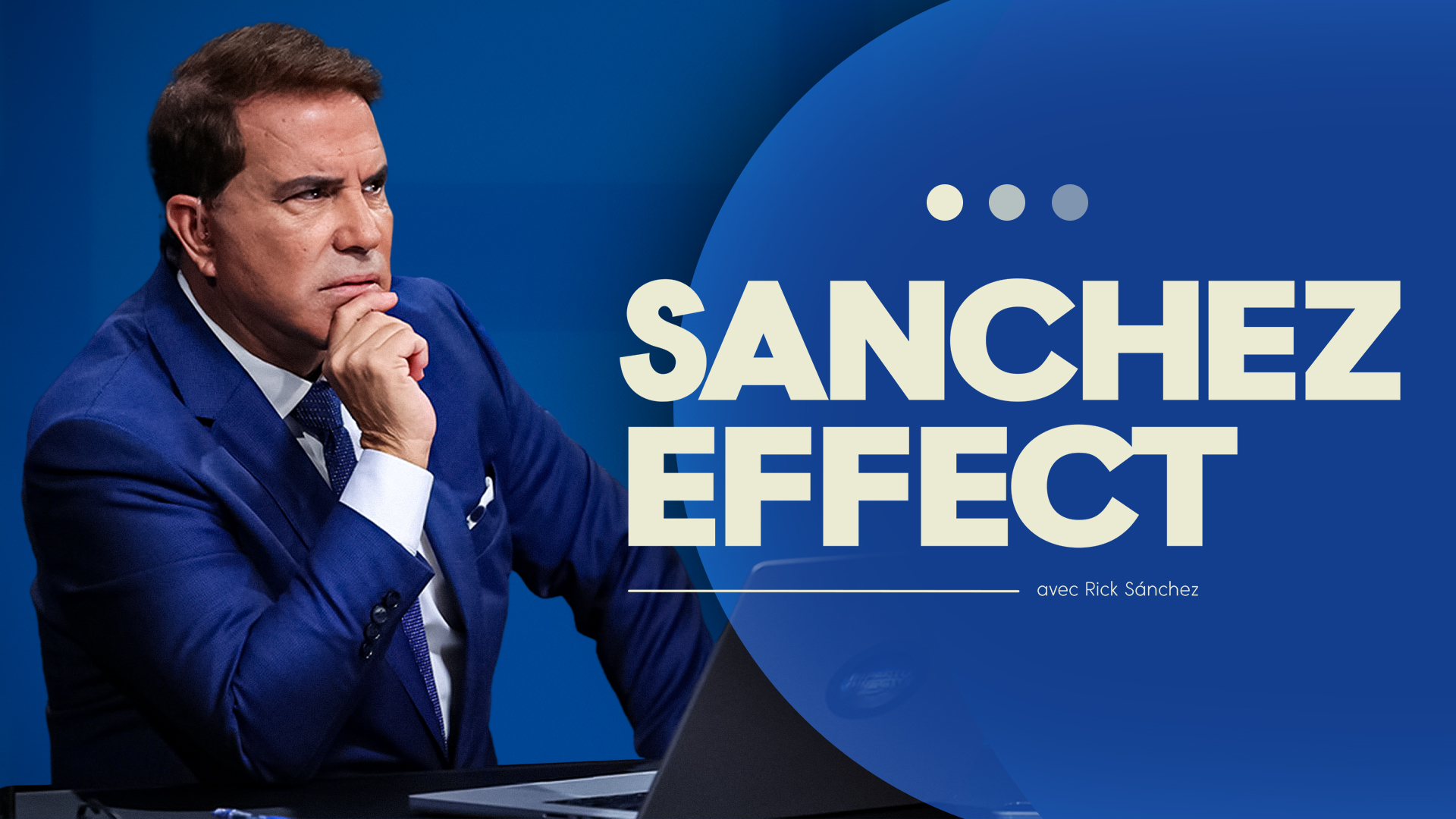
The Sanchez Effect is a journalistic rebellion ... in search of truth.
RT’s flagship show is hosted by Rick Sanchez, an Emmy- and Peabody Award-winning journalist known for challenging the status quo. “When only one side of a story is allowed, I push even harder.
If Moscow is off-limits, that’s exactly where I want to be, because truth often lies in the places we’re told not to investigate.”
BUILDING THE BRIDGE! | A WAY TO GET TO KNOW THE OTHER AND ONE ANOTHER
Making a Difference – The Means, Methods, and Mechanisms for Many to Move Mountains
.jpg)
Photo Credit: Abraham A. van Kempen, our home away from home on the Dead Sea
By Abraham A. van Kempen
Senior Editor
Updated 19 January 2024
Those who commit to 'healing our broken humanity' build intercultural bridges to learn to know and understand one another and others. Readers who thumb through the Building the Bridge (BTB) pages are not mindless sheep following other mindless sheep. They THINK. They want to be at the forefront of making a difference. They're seeking the bigger picture to expand their horizons. They don't need BTB or anyone else to confirm their biases.
Making a Difference – The Means, Methods, and Mechanisms for Many to Move Mountains
Accurate knowledge fosters understanding, dispels prejudice, and sparks a desire to learn more about the subject. Words have an extraordinary power to bring people together, divide them, forge bonds of friendship, or provoke hostility. Modern technology offers unprecedented possibilities for good, fostering harmony and reconciliation. Yet, its misuse can cause untold harm, leading to misunderstandings, prejudices, and conflicts.
A Free Trial for Life – SUBSCRIBE NOW!

• It's quick and straightforward.
• We won’t ask for your credit card number.
• Just enter your e-mail address to receive your complimentary free-for-life subscription to our newsletter.
• Please include your First and Last Name.
• We won’t share or sell your e-mail address.
_________________________
Related Articles Recently Posted on www.buildingthebridgefoundation.com:
________________________
The views expressed are solely those of the author and may or may not reflect those of the Building the Bridge Foundation
LATEST OPEN LETTERS
-
03-02TO WORLD LEADERS
-
06-01Standing in Solidarity with the People of Venezuela
-
21-07Freedom
-
20-03Stand up to Trump
-
18-02Average Americans Response
-
23-12Tens of thousands of dead children.......this must stop
-
05-06A Call to Action: Uniting for a Lasting Peace in the Holy Land
-
28-05Concerned world citizen
-
13-02World Peace
-
05-12My scream to the world
VIRTUAL POST OFFICE
PETITIONS
LINKS
DONATION
Latest Blog Articles
-
15-10Our Friday News Analysis | What the World THINKS Now!
-
14-10Our Wednesday News Analysis | Navi Pillay, head of UN commission that accused Israel of genocide, wins Nobel Peace Prize
-
13-10Navi Pillay, head of UN commission that accused Israel of genocide, wins Nobel Peace Prize
-
13-10No state has a ‘right’ to exist – least of all an apartheid, genocidal state like Israel
-
13-10‘By the Way, the World is Not Stopping Us’: The Secret of Israel’s ‘Success’
-
12-10Our Monday News Analysis | What the World THINKS Now!
-
08-10Our Friday News Analysis | What the World THINKS Now!
-
07-10Our Wednesday News Analysis | The West wants Netanyahu gone - so Palestinians can be killed more quietly again
-
06-10The West wants Netanyahu gone - so Palestinians can be killed more quietly again
-
06-10Israel turns Gaza into largest ghetto in modern history, killing residents one after another as three-year genocide continues
-
06-10Analysis Europe's Boycott of Israel Is Rapidly Expanding – and It Won't Be Easy to Stop
Latest Comments
 One of the most important and illuminating articles that I …
Comment by Benjamin Inbaraj-
And what's wrong here?
After all, there is the homeland …
Comment by Isac Boian -
Does this reinforce or deny my argument that Israel is …
Comment by Edward Campbell -
Many 'say' they support the Palestinian cause but do little …
Comment by Philip McFedries -
The UN is strangled by the "war for profit" cabal …
Comment by Philip McFedries -
I can't read the printing on the map.
Comment by Philip McFedries -
Good news!
Comment by Philip McFedries
COMMENTS
This article has 0 comments at this time. We invoke you to participate the discussion and leave your comment below. Share your opinion and let the world know.