 NEWSLETTER
The Friday Edition
Our Friday News Analysis | What the World Reads Now!
Helping to Heal a Broken Humanity (Part 79)
The Hague, 10 April 2026 | If you know of a decisive story, tell the world! We're still searching.
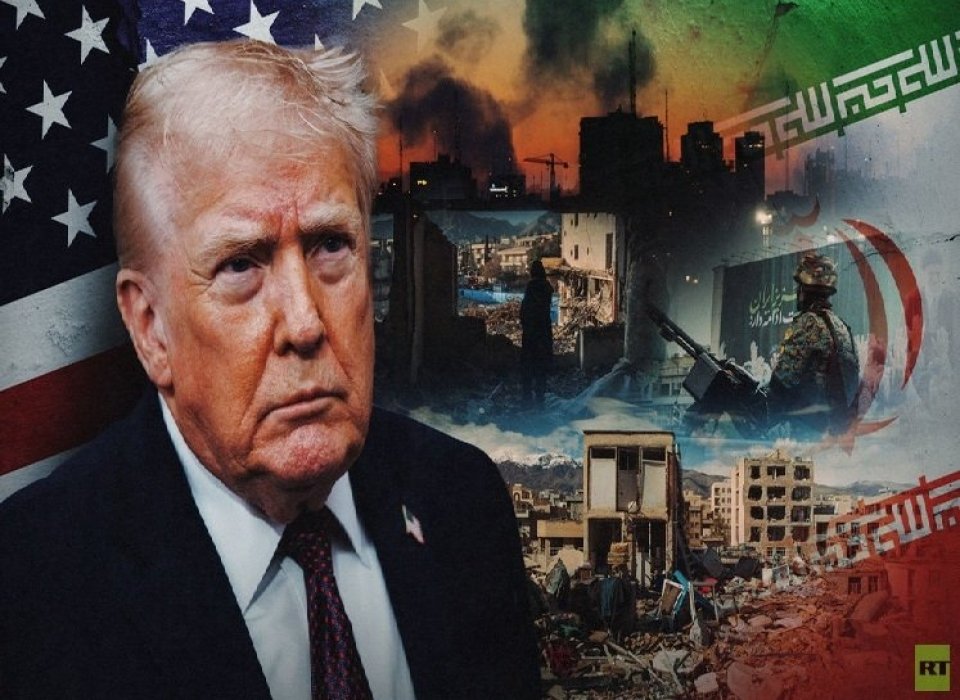
Thank you, Mr. President! You won, did you?
Click here for Part 2
Click here for Part 3
Click here for Part 4
Click here for Part 5
Click here for Part 6
Click here for Part 7
Click here for Part 8
Click here for Part 9
Click here for Part 10
Click here for Part 11
Click here for Part 12
Click here for Part 13
Click here for Part 14
Click here for Part 15
Click here for Part 16
Click here for Part 17
Click here for Part 18
Click here for Part 19
Click here for Part 20
Click here for Part 21
Click here for Part 22
Click here for Part 23
Click here for Part 24
Click here for Part 25
Click here for Part 26
Click here for Part 27
Click here for Part 28
Click here for Part 29
Click here for Part 30
Click here for Part 31
Click here for Part 32
Click here for Part 33
Click here for Part 34
Click here for Part 35
Click here for Part 36
Click here for Part 37
Click here for Part 38
Click here for Part 39
Click here for Part 40
Click here for Part 41
Editorial | You Can’t Make This Up!
By Abraham A. van Kempen
10 April 2026
Dear Mr. Trump,
May I be the first to congratulate you on ‘winning the war.’ Ingenious! You’ve killed three birds with one stone. You freed West Asia, Eastern Europe, and East Asia from Western hegemony. Wow! Additionally, you’ve managed to break free from being Europe’s punching bag, its whipping boy, the enforcer of Eurocentric policies, obsessions that seek to homogenize the world in its image. The old world, with its old money and its former glory, is dead. Long live the new world.
Consider the realities: the European Union, the United States, NATO, and their Wannabees—often called the Coalition of the Willing—have shot themselves in both feet by actions like destroying the Nord Stream Pipeline, a key source of affordable Russian oil. Why? To weaken and destabilize Russia with plans to attack, invade, divide, and ultimately destroy it through Ukraine. Insanity! Worse, Europe is blocked from meeting its insatiable demand for oil from West Asia. The Strait of Hormuz remains closed to countries that Iran and the Gulf States deem hostile. Europe is seen as unfriendly, and the reality is stark. Without securing oil, Europe is dead in the water. But from whom and where will it get the oil?
Honestly, you can’t make this up.
Now what? Reach out to your buddies, Presidents Xi and Putin, and secure a plan to prevent World War III. If you succeed, the three of you will be worthy of sharing the 2026 Nobel Peace Prize.
Happy Easter Weekend (to our Orthodox Christian friends in Eastern Europe and around the world)!
Abraham A. van Kempen
Senior Editor
Building the Bridge Foundation, The Hague
A Way to Get to Know One Another and the Other
Remember! Diplomacy is catalytic—transformative —while military action is cataclysmic—destructive and catastrophic.
When faced with the options to be good, bad, or ugly, let’s build bridges, not burn them. After all, mutual deterrence reigns.
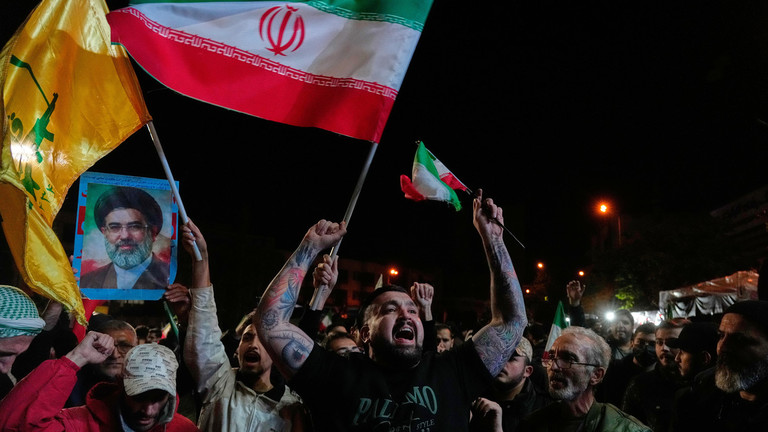
Iran has prevailed, and the Middle East has changed
PROF. ALEXANDER DUGIN | THE IRAN WAR WILL CHANGE THE WORLD FOREVER
- Iran will never surrender — they live by the spirit of Karbala: earthly defeat for spiritual victory.
- The White House is run by hardline Protestant fundamentalists whose main enemies are Iran, Muslims, and Russia.
- Who will prevail?
Prof. Dugin is a distinguished scholar with a PhD in Sociology, Political Sciences, and Philosophy. He is the founder of the Russian Geopolitical School and the Eurasian Movement.

Watch the Video Here (02 minutes, 02 seconds)
Host Prof. Alexander Dugin
Substack.com
08 April 2026
When Diplomacy Becomes a Hazard: Negotiating in the Middle East Without Rules
By Abraham A. van Kempen
10 April 2026
In a place where narratives, often rumors, spread faster than facts, the negotiating table can seem less like a safe space and more like a spotlight—less refuge and more a lit corridor where the uncautious might feel exposed.
A crisis of credibility
The fog of war not only hides but also changes the truth. It blurs facts, turns motives into rumors, and transforms evidence into arguments early on. Claims are weakened by counterclaims, timelines are disputed, and each sentence shadows the truth. This affects journalists and strategic planning alike. Diplomacy relies on two fragile beliefs: that words can be tested against reality, and promises hold weight. When these weaken, negotiations become impossible, like a doorway seen through a sniper’s scope.
Sometimes speaking no longer eases tension; it can even harm your reputation. When envoys are ambushed, or agreements quickly collapse, a harsh truth emerges: dialogue no longer ensures safety. Refusing to engage may seem obstructive, while agreeing can expose vulnerabilities and key figures to isolation or weaken the alliance. What used to be a shield at negotiations now becomes a target.
The claim of continuity: power first, language second
From Beirut to Baghdad, from Tehran to Europe's backchannels, a common suspicion spreads: rules are now just props. Washington and Jerusalem handle red lines, formulas, and guarantees as tools—used when beneficial, ignored when not. Administrations change, fashion changes, stage lighting changes. Yet, many believe the script remains the same. Force determines the boundaries, and diplomacy is accepted only if it endorses what force has already established.
Ignoring that verdict doesn't eliminate its influence on incentives. Signatures often protect the weaker side, making demands seem like traps, and moderation appear self-sabotage. Terms like "ceasefire" and "guarantee" sound like stage props, not genuine restraint. When language is reversible, deterrence relies more on the ability to inflict pain and the will to endure than on formal agreements.
Why pressure may consolidate rather than fracture Iran
People often think that applying enough pressure will weaken Iran's resistance, but it's more complex. Iran isn't a single voice; it comprises many layers—debates, factions, fatigue, defiance, personal grievances, and public rituals. Despite this complexity, the government effectively turns external pressures such as sanctions, covert actions, and threats into a rallying cry for the nation. They encourage unity in facing these challenges, which can sometimes strengthen the collective resilience.
This sense of unity is rooted in an ancient story that transcends modern borders: the story of Karbala. It represents resilience through ongoing loss without surrender — the notion that earthly defeat can still hold deep meaning. Some cautiously liken it to early Christian ideas of martyrdom: not identical in theology, but a similar transformation in which suffering gains purpose. When mentioned, fear often doesn't lead to surrender. Instead, it can serve as a rallying cry: standing united in adversity, pride in perseverance, and believing that surviving without yielding is a victory.
This is why morale-boosting campaigns often strengthen those least likely to give up. They motivate the most enthusiastic to push further, dampen those seeking compromise, and foster a collective sense of threat that unites society with the state. When individuals face a direct attack, surrendering shifts from a strategic choice to a matter of personal identity—something not easily altered or negotiated, unlike money or other resources.
American politics, apocalyptic narratives, and foreign policy risk
A significant third influence profoundly impacts America, extending beyond military interventions to shape its cultural and ideological landscape. It reflects a belief that history is driven both by American actions worldwide and by fundamental beliefs within its political sphere. Recently, there has been an increase in religious-nationalist rhetoric, often framing issues as civilizational clashes and occasionally invoking end-times imagery. When such perspectives influence government policies, international relations tend to acquire a moral dimension. Negotiations may be seen as betrayal, restraint as cowardice, and opponents are sometimes viewed not as sovereign nations with their own interests but as symbols of evil—enemies to be defeated rather than diplomatically engaged.
America, of course, does not adhere to a single creed or be governed by one sermon. Many believers—including Catholics, Protestants, and others—along with secular officials, avoid crusading language and tend to favor diplomacy over military action. But the existence of conflicting moral views within one superpower creates a special kind of instability: both allies and enemies cannot be sure whether Washington will behave as a typical state, balancing interests, or as a movement that believes it faces a final showdown.
How this ends: two grim scenarios—and a demand for agency
Predicting outcomes when trust is fragile is difficult, similar to gauging distance in a sandstorm—uncertain and complex. Two main scenarios could unfold. First, the U.S. government—possibly under Donald Trump again—may view multiple power centers not as barriers but as rivals to confront. Their approach might be to engage in intense economic battles, regional disputes, and efforts to reclaim influence through punitive actions. Though this might initially scare opponents, it could also hinder the development of new power hubs, as resisting would incur high costs.
In the second scenario, the force sometimes overshoots and then pulls back. Excessive aggression can undermine Western legitimacy, causing allies to hesitate and exposing divisions within NATO as national interests conflict with ideological aims. Domestically, politics focused on threats can lead to deadlock, distrust, unrest, or violence. This isn't a prediction, but it shows how the risk of collapse rises as setbacks escalate, and how foreign policy involves managing catastrophe.
As norms weaken, the margin for error shrinks; negotiation exposes vulnerabilities, but avoiding it risks losing the opportunity to lead. For smaller nations, staying on the sidelines isn’t neutrality—it means losing control of the narrative, framework, and outcome. Instead of idealizing negotiations, focus on creating meaningful conditions—using verification tools resistant to propaganda, establishing durable guarantees, and sharing costs fairly so breaking promises costs more than keeping them.
What is the Side of the Story that is Not Yet Decisive? Edited and annotated by Abraham A. van Kempen
WAR IN IRAN, SEASON 1: TRUMP 0 – IRAN 1
Although more at home on the golf course than in the Persian Gulf, Donald Trump initially called the Iran war a "little excursion." Impatient for quick results, his goals were the fall of the Islamic regime and the destruction of its military. Four weeks in, none of that has happened.
By Alain de Benoist
Arktos Journal
Substack.com
8 April 2026
Originally published in Éléments
Translated by Alexander Raynor
Annotated by Abraham A. van Kempen
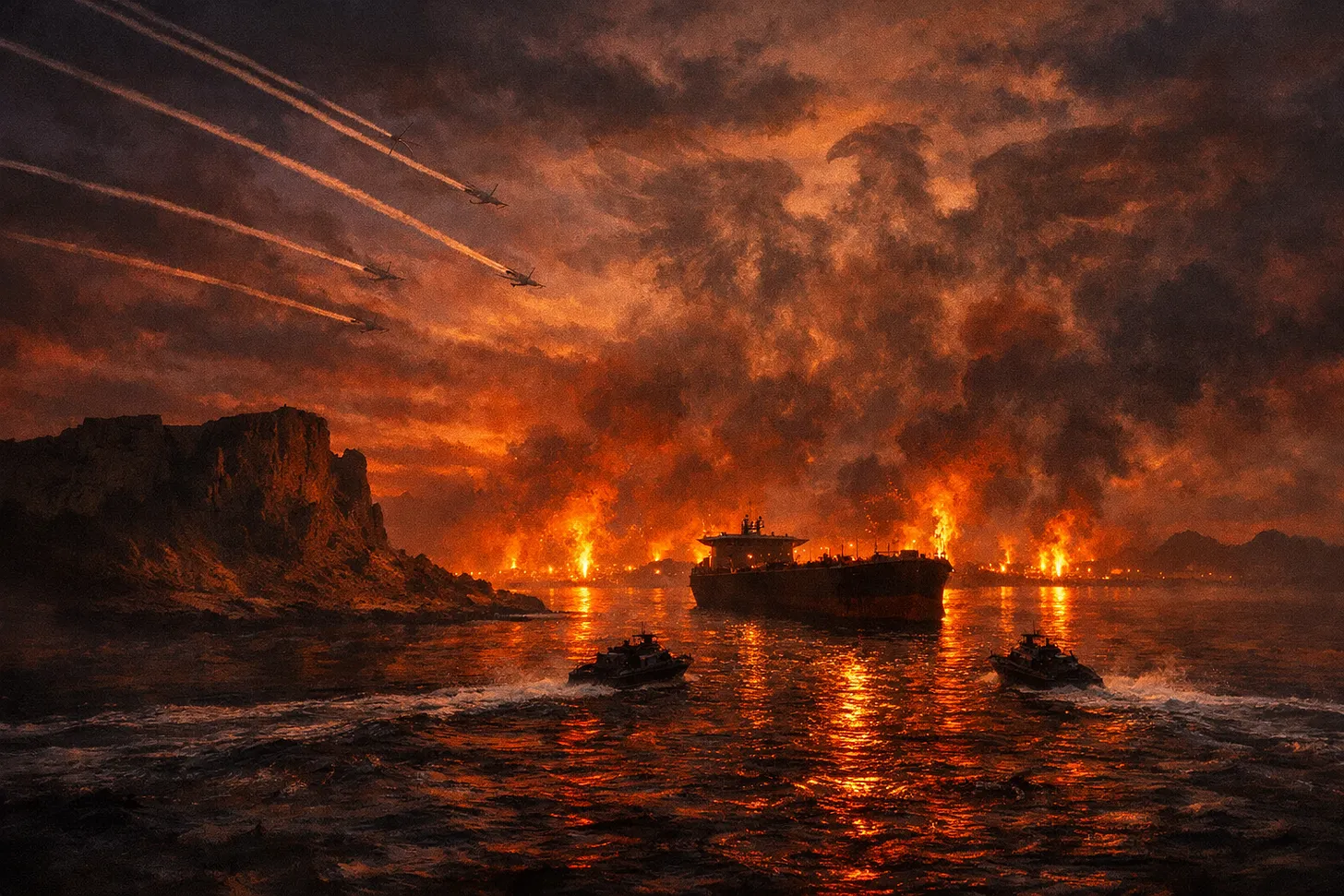
Iran controls the Strait of Hormuz, heavily fortified with missiles, drones, and speedboats. Yemen's Houthis threaten to close the Strait of Bab-el-Mandeb, crucial for Red Sea access. In Lebanon, about one million displaced residents face Israel's plan to occupy the south to the Litani River. Crude oil exceeds $100 a barrel, benefiting Russia. European countries, forced by the European Commission to cut Russian energy ties, face gas and oil shortages, raising fuel prices [Ed. notwithstanding the shortages caused by the Strait of Hormuz blockage].
Despite severe bombardments, the Iranians haven't given up. Instead, they're escalating rapidly, resembling an all-out rush. US and Israeli military actions, conflicting White House statements, ongoing Iranian strikes, energy market turmoil, and possible ground invasion create an uncertain scenario. Outcomes are unpredictable but reminiscent of 1974 and 1979 oil shocks, risking economic crises and a global recession.
The United States expected a quick victory but now faces a complicated situation. Iran, expected to fall quickly, remains in control across multiple areas. Operation “Epic Fury” results are overwhelmingly unfavorable.
How Did We Get Here?
Firstly, why is this war being fought? Is it over an “imminent threat” justifying a pre-emptive strike? If so, which threat? The nuclear threat? For nearly forty years, Israel has claimed Iran will have the atomic bomb “within a few months,” a statement as skeptical as the “weapons of mass destruction” claims against Saddam Hussein. On 18 March, Tulsi Gabbard, the Director of National Intelligence, reported Iran had not resumed nuclear enrichment activities destroyed in June 2025. Trump claimed Iran's nuclear program was “totally obliterated,” and Rafael Grossi of the IAEA verified there is no immediate Iranian threat.
Why did Trump undertake this risky, unnecessary action amid current circumstances, showing unpreparedness that surprised military experts? Why risk alienating supporters who oppose war, which most Americans condemn, just months before the midterms? Marco Rubio suggested Trump was influenced by Israeli pressure from Netanyahu during a 11 February meeting in Washington. But why did he give in to that pressure?
On March 17, Joe Kent, Director of the National Counterterrorism Center, unexpectedly resigned, shocking many. In his letter to Trump, he said: “I cannot, in good conscience, support the ongoing war against Iran. Iran did not pose an immediate threat, and this war was driven by pressure from Israel and influential American lobbyists.”
The war began on 28 February, two days before Purim, which celebrates the Hebrews' escape from a Persian massacre as told in the Book of Esther. It started with an assassination of Supreme Leader Ali Khamenei and the deaths of 165 schoolgirls aged 7 to 12, daughters of Revolutionary Guards. Meanwhile, Iran-U.S. negotiations were ongoing, with Oman suggesting they were close to a breakthrough, calling it "a deal was within reach."
Mark Twain once remarked that “God created war so that Americans would learn geography.” It seems they still haven't. Trump’s misjudgment of his foes has been severe; he underestimated the strength and resilience of Iranian nationalism, Iran’s military capabilities, its organizational stability, and its strategic aims.
________________________________________
READ MORE:
U.S. Political Theology: Weaponizing the Bible
ARKTOS JOURNAL
·31 March 2026
Regarding the ticking time bomb in the Middle East and the Gulf, it is misleading to blame only President Trump or Israeli Prime Minister Bibi Netanyahu. Many Middle East experts overlook a key aspect: the century-long American, Bible-inspired mission to regenerate the world, which is currently unfolding in Iran. This messianic mindset s…
________________________________________
Iran is distinct from Venezuela or Monaco and not an Arab nation: Iranians are closer to Europeans than Arabs, Turks, or Palestinians. With 90 million people—three times France's population—it has a layered identity: Indo-Iranian since Antiquity, Muslim since the 7th century, and modern since the 19th. It features a complex society, an educated elite (like Ali Larijani, killed by Israel on March 17, expert in Kant and Descartes), a large number of engineers (230,000 annually), a 3,000-year history, and internal dynamics that are hard for most Westerners to grasp. Alongside Egypt and Turkey, Iran has one of the Middle East's richest cultural heritages. It holds the third-largest oil reserves and second-largest gas reserves worldwide. Geopolitically, the Iranian plateau is a key Eurasian pivot.
An Existential War
Viewed as a transactional power dynamic, Trump overlooks that Iran is in an existential war against him—something not true for Americans. He doesn't see their irrational refusal to surrender or that some agreements are impossible. He also fails to recognize that martyrdom has been central to Shia Islam (200 million followers) since the 680 CE Karbala massacre involving Imam Hussein. For Iranians, Ali Khamenei's significance grows in death beyond his life.
Bombardment alone can't secure victory for Americans and Israelis. Ground forces are necessary, even against organized opposition—except in Iran. Reza Pahlavi, son of the former dictator, is a puppet of Mossad and CIA, supported only by the Diaspora.
Iranians recognize they can't directly challenge US military power, despite hitting American bases. They adopted an asymmetric approach, targeting economic and energy vulnerabilities by attacking oil and gas infrastructure in Gulf states. They also control the Strait of Hormuz, vital for global oil—20 million barrels daily—and natural gas transport.
The Gulf monarchies—Saudi Arabia, Kuwait, and the UAE including Dubai—were dragged into a war they didn't choose. They relied on American security for prosperity but now feel insecure. The war threatens their economy, with Iranian strikes targeting their oil infrastructure, their main wealth. They are disappointed that the Americans haven't protected them, and their reputations as financial and tourist hubs have suffered. If the conflict worsens and destroys desalination plants, these nations might face uninhabitable conditions.
The collapse of international law has eroded the laws of war. The targeted assassination of a sovereign state's ruling members—an UN member—at the start of an undeclared war, without informing allies or seeking Congressional approval, is unprecedented and unconstitutional. It blatantly violates the 1949 Geneva Conventions, which prohibit killing, wounding, or capturing through perfidy (Art. 39). Israel's Mossad eliminated nearly a hundred Iranian leaders—spectacular but unsuccessful, as replacements were named the next day.
The main effect is power shifting from mullahs and ayatollahs to the Revolutionary Guards, which has its own military and economy. They follow a strict stance, ready to prolong the conflict and see refusing to surrender as victory.
Iran prepared for this attack for twenty years, creating a “decentralized mosaic defense.” Developed after setbacks in Iraq and Afghanistan, it includes 31 command centers—one per province—each with independent weapons and strategic autonomy. If the central command is hit first, these centers operate autonomously and continue fighting. Iran’s military power has also grown significantly with advanced ballistic missiles and high-tech drones.
Strategy and Tactics
Mao Zedong noted that strategic victory isn't just about tactical wins. The US often confuses tactics with strategy, having targets but no clear plan for peace. Ami Ayalon highlighted their failure to translate military gains into political outcomes. Since 1945, this misunderstanding explains why the US has lost wars and their interventions in Afghanistan, Syria, Iraq, and Libya led to chaos, not democracy or freedom.
Americans often wrongly assume military and tech dominance guarantee victory, but during Vietnam, despite 500,000 troops, victory was not assured.
The war against Iran is costly. American air power excels at stationary targets but struggles with moving ones. Using $4 million missiles for $20,000 drones isn't cost-effective. In three days, the U.S. fired more Patriot interceptors than in four years for Ukraine. The first two weeks cost $12 billion. The White House now seeks $200 billion more. Israel faces a soldier shortage, while the U.S. faces munitions, guided missile, and air defense shortages, recalling systems from East Asia and redirecting arms meant for Ukraine.
The Birth of an Anti-Western Axis
By initiating an unjustified war without a solid coalition or clear goals, Israel and the United States triggered Pandora’s box. Their decision will heighten global multipolarity and foster an anti-Western axis with China and Russia.
Two scenarios now emerge: either Donald Trump spins his defeat as a “great military victory," risking Israel pursuing further conflict in Lebanon or Iran, or he aims to destroy a 3,000-year-old civilization, risking escalation. Both options threaten chaos in the Middle East.
________________________________________
READ MORE:
ARKTOS JOURNAL
·4 April 2026
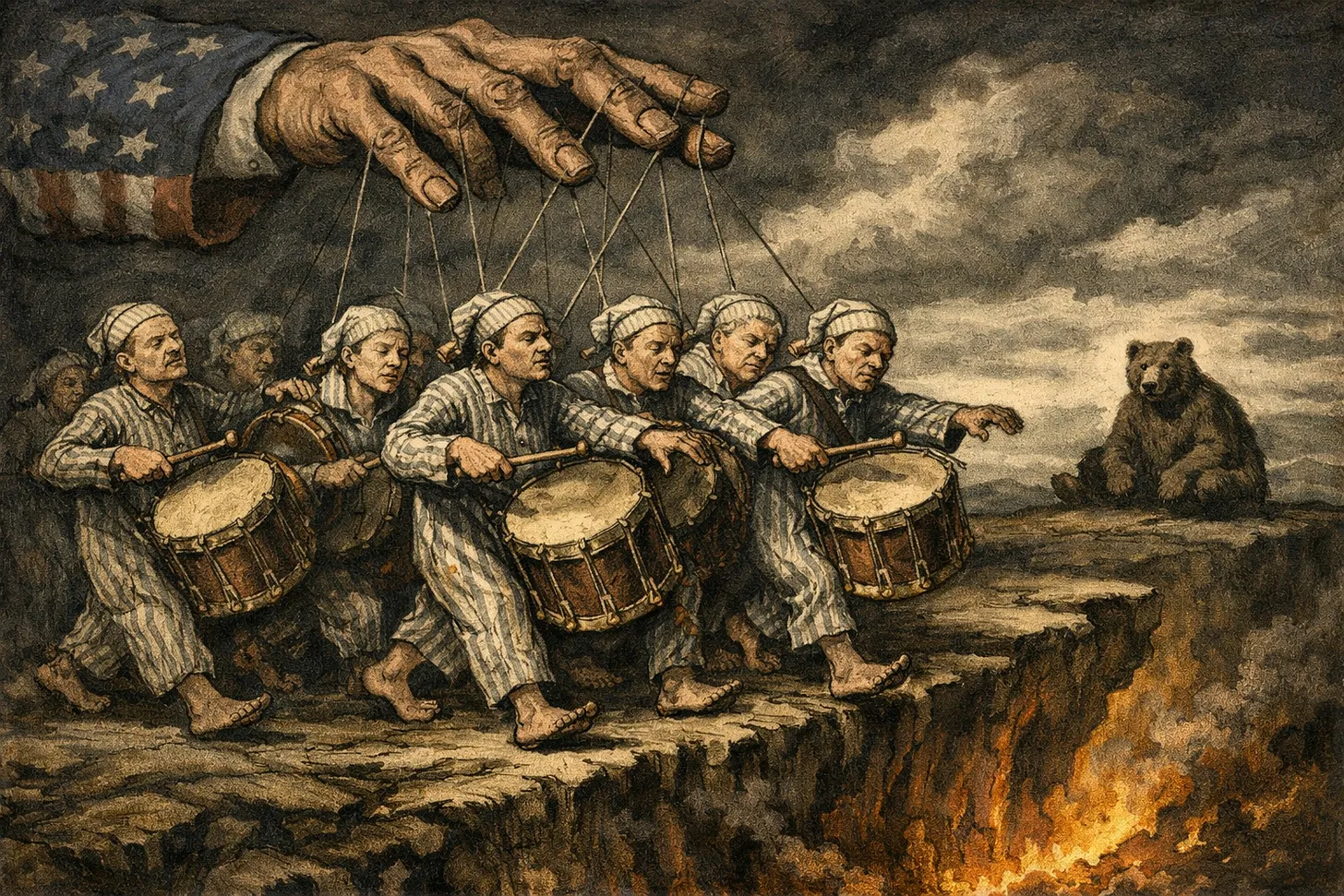
Alain de Benoist argues that a reckless "war party" of European leaders and institutions is pushing the continent toward a catastrophic armed confrontation with Russia over Ukraine.
________________________________________
Although Israel and the U.S. jointly attacked Iran, their goals differ. Trump aimed to weaken Iran for peace, while Netanyahu seeks regime change and dismemberment to maintain regional dominance. Trump is open to peace; Netanyahu favors ongoing violence. Israel, which recently reintroduced the death penalty for Palestinians, fears a Saudi Arabia–Turkey–Pakistan–Egypt alliance. Trump warned he would send Iran “back to the Stone Age.” Regional stability remains elusive.
From current geopolitical analyses to deep philosophical reflections, the essential works of Alain de Benoist, the leading light of the European New Right, are available in English from Arktos:

RAY MCGOVERN: THE DEATH OF NATO - TIME FOR A NEW STRATEGY?
- Ray McGovern served as a CIA officer for 27 years, during which he chaired the National Intelligence Estimates and prepared the CIA's Presidential Daily Briefs.
- He discusses how the US empire is collapsing and undermining the entire US-led security framework.

Watch the Video Here (57 minutes, 30 seconds)
Host Prof. Glenn Diesen
Substack.com
05 April 2026
Transcript Summary | Prof. Glenn Diesen with Retired CIA Analyst Ray McGovern
Glenn: Welcome back. Today, we're joined by Ray McGovern, who served as a CIA analyst for 27 years. He led the National Intelligence Estimates and prepared the daily briefs for the president. Thanks for being here. It's been about a month, and it's good to see you again, Ray.
Ray: Thank you, Glenn, for having me back after all the things I said before.
Glenn: A good starting point is to examine the breakdown of the global order and the post–WWII security framework led by the US across Europe, East Asia, and the Middle East. After the Cold War, the goal was to expand the transatlantic partnership worldwide, but this could strain US resources and weaken institutions and moral authority, as many foresaw. Trump’s speeches show moral concerns are growing. With Cold War experience, how do you interpret this upheaval as the world overturns previous norms?
Ray: Aging brings a wealth of experiences. Born in 1939, a week before Germany invaded Poland, I believed "the Russians were going to take over Europe." Later, I learned Truman and Eisenhower had to reassure Churchill they wouldn't attack the USSR after the war, despite the USSR losing 27 million.
Ray: I was initially told NATO was formed to counter the Soviet expansion—and that NATO's existence was prompted by the Warsaw Pact. It took me years to truly understand the timeline: NATO was established in 1949, while the Warsaw Pact was only created in 1955. The Warsaw Pact was primarily a response to West Germany’s accession to NATO in May 1955.
Ray: NATO’s first secretary general said its purpose was: keep Americans in, Russians out, Germans down. But we rarely considered how Russians felt being “contained," given the sequence of events. Stability needs to address the other side’s fears.
Ray: When I joined the CIA, the Soviets called the U.S. “главный враг” (“main enemy”). Now, polls show Russia no longer sees the U.S. as the main enemy—Germany is. The situation is more complex: Ukraine, NATO, and an escalation with Iran are key issues.
Glenn: The security competition in Cold War studies involved blocs forming counter-blocs, transforming “security for one” into “insecurity for the other.” Since Helsinki (1975), the goal has been to reduce bloc clashes and promote inclusive security. After the Cold War, NATO’s expansion revived bloc tensions, despite warnings from American officials. Thus, viewing the war in Ukraine purely as a fight for democracy ignores the underlying power politics and threat perceptions.
Ray: In 1968, I worked for Radio Free Europe in Munich. After the 1956 Hungarian uprising—where Western support fueled resistance but lacked military backing—I was tasked with stopping RFE from encouraging Czechs to oppose Soviet tanks during the Prague Spring. Soviet experts knew the USSR wouldn't allow countries like Hungary or Czechoslovakia to break away from its influence. Although disastrous, this illustrates security dilemmas.
Ray: He argues the same applies to Ukraine: Western intelligence helped remove Yanukovych in February 2014 after a deal, prompting Russia to secure Crimea's naval base and view Minsk as a delaying tactic to bolster Ukraine to NATO standards.
Ray: He also asserts Russia “stopped” in April 2022 when negotiations led to a draft Ukrainian neutrality agreement and postponed Crimea decisions. The deal was later abandoned due to Western intervention and assurances of support.
Glenn: The concept of indivisible security, emphasizing interconnected safety, was included in the 1990 Helsinki Charter of Paris and the OSCE principles. However, in the 1990s, as Russia’s influence declined, Western discourse framed expansion and intervention as benign, promoting good. Glenn cont claims this narrative denied that Russia saw NATO's expansion as existential.
Ray: Ray dismisses European security proposals that exclude the U.S., citing Europe's lack of military power and the unrealistic claims of some EU leaders. He also suggests Russia may wait for shifts in European public opinion and elections rather than escalating.
Glenn: This raises questions about intelligence's role: it should guide leaders, but can be exploited to justify conflicts. Glenn says this dynamic influenced Ukraine and may now affect Iran, where intelligence appears politicized.
Ray: Ray describes the CIA as having two parts: an operations division for covert actions and regime changes, and an analysis division that mostly tells the truth. He argues that politicization increased under Bill Casey and Robert Gates.
Ray: He cites the 2007 National Intelligence Estimate on Iran’s nuclear program, which concluded Iran stopped work on a nuclear weapon in 2003 and hadn't restarted, as an example of analysis preventing conflict. Ray notes that President George W. Bush later said the estimate “deprived me of the military option.”
Ray: Ray states that current intelligence messaging is ambiguous and recent U.S. actions toward Iran are driven by Israel’s security concerns and domestic lobbying.
Glenn: Glenn observes growing disagreement in the U.S. over Israel policy and broader uncertainties about alliances across Europe and East Asia. He supports incremental reforms but acknowledges that the ongoing transition causes disruptions.
Ray:
Ray sees Putin’s February 4, 2022, visit to Beijing as proof of a strong Russia–China alliance. He states China's stance has evolved to respond to “core interests,' affecting Ukraine, Iran, and Gulf stability.
Glenn: Thank you as always. It’s good to see you again, my friend.
Ray: Thank you, Glenn.
JUDGE NAPOLITANO WITH GLENN DIESEN | CEASEFIRE HAS BEEN BROKEN AS ISRAEL ATTACKED LEBANON
Judge Napolitano’s discussion with Prof. Glenn Diesen:
- Discuss that the European public’s pushback to extreme rhetoric was limited, raising questions about Europe’s political credibility and influence.
- Suggest NATO’s perceived “security guarantee” has been weakened by recent wars, and that Europe’s ability to replace NATO with Europe-only capabilities is uncertain.
- Portray the Strait of Hormuz as a central source of leverage for Iran—economically and strategically—by discussing a possible transit toll and sanctions relief.
- Describe the ceasefire as disputed and fragile, especially regarding whether it covers Lebanon and what continued strikes would imply.
- Contend that political leaders may attempt to frame outcomes as “victory,” but that public relief depends more on whether hostilities actually stop.
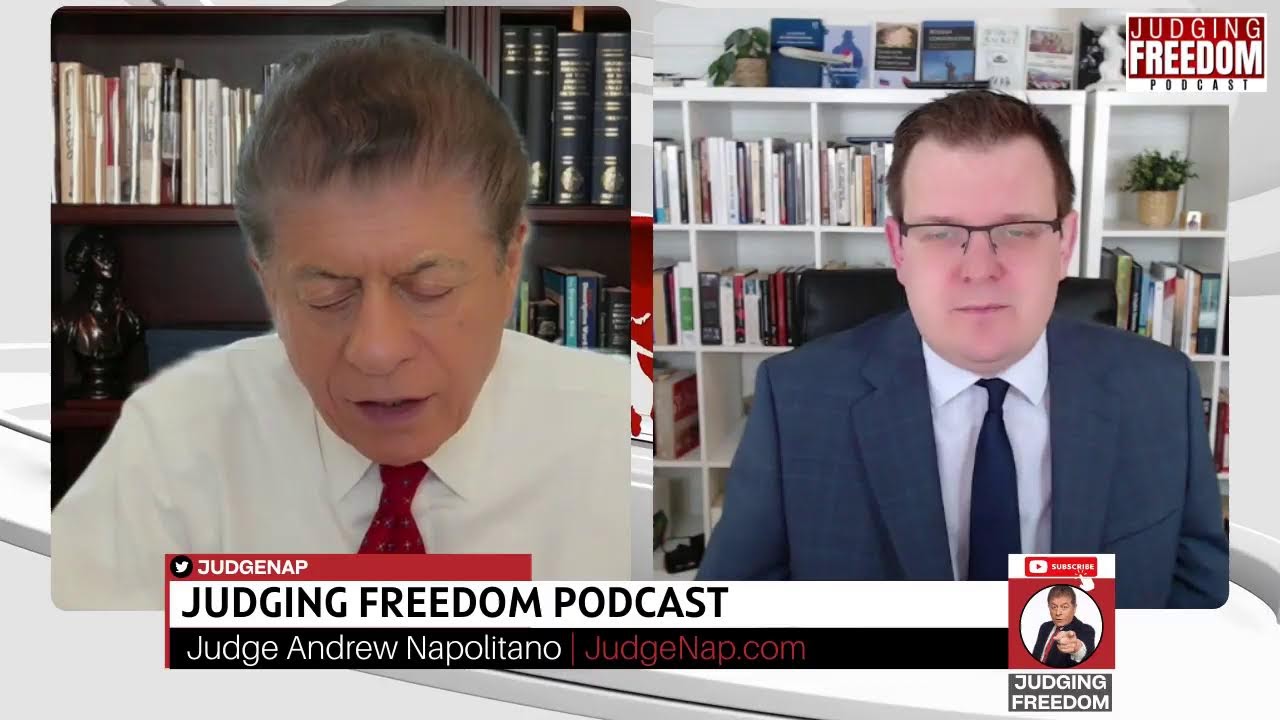
Watch the Video Here (26 minutes, 20 seconds)
Host: Judge Andrew Napolitano
Judging Freedom
08 April 2026
Europe’s Reaction
Q: How was President Trump’s threat to destroy Iranian/Persian civilization received in Europe?
A (Diesen): Some journalists and politicians criticized the rhetoric as too aggressive, but there was little real political opposition. In my view, the threat implied mass destruction on a historic scale against a country of roughly 90 million people and one of the world’s oldest civilizations.
Q: Did European leaders push back privately?
A (Diesen): I don’t know what happened through back channels, but if anything did, it likely happened privately to avoid weakening NATO publicly. European leaders appear cautious about confronting Trump while also trying to avoid retaliation.
Q: What does this episode mean for Europe’s standing?
A (Diesen): I think Europe’s political, economic, and military relevance is eroding quickly. There’s also a credibility issue: the West often claims legitimacy on humanitarian grounds, yet there was little pushback against extreme rhetoric, which can damage leaders’ legitimacy.
NATO’s Future
Q: Will NATO survive the Ukraine war with the U.S. still a member?
A (Diesen): It could survive, but likely not in its current form. NATO was treated as a “monopoly” on security after the Cold War—membership meant security, non-membership meant vulnerability. The Ukraine and Iran wars have shaken that assumption and made Trump’s skepticism toward NATO more mainstream.
Q: What alternatives do European leaders seem to be pursuing?
A (Diesen): Rather than focusing on regional accommodation, leaders appear to be trying to replicate NATO with Europe-only capabilities. I’m skeptical that this can succeed.
Strait of Hormuz
Q: Who was “begging” for a ceasefire—Washington or Tehran?
A (Diesen): Based on earlier episodes where U.S. claims of talks were contradicted by Iran, I tend to give more weight to Iran’s account. The reported shift in negotiation topics—from “unconditional surrender” to questions like sanctions relief and Hormuz—suggests the U.S. faced vulnerability.
Q: Why is control of the Strait of Hormuz central in this discussion?
A (Diesen): Control of Hormuz gives Iran leverage over energy shipments and regional security assumptions. In the conversation, it’s suggested Iran could seek reparations by imposing a transit toll (reported as about $2 million per ship) until war damage is rebuilt, and potentially push for broader economic shifts (including trade in currencies other than the U.S. dollar).
Q: Why would a Hormuz toll undermine U.S. claims of victory?
A (Diesen): The argument is that the strait was open before the war, with no toll. If the post-war outcome is that tankers pay Iran for passage, it’s hard to present that as an improvement achieved by the war.
Ceasefire & Lebanon
Q: Was Lebanon included in the ceasefire?
A (Diesen): In this discussion, inclusion is disputed: Israeli sources reportedly argued Lebanon was not included, while Iranian officials and the Pakistani prime minister (portrayed here as a mediator) said Lebanon was included by name.
Q: What happened after the ceasefire announcement?
A (Diesen): The conversation describes Israel’s continuing strikes in Lebanon and argues that the White House then claimed Lebanon was not part of the ceasefire—implying, as stated here, that “then there is no ceasefire.”
Q: Could the conflict shift into an Iran–Israel war without direct U.S. involvement?
A (Diesen): The claim here is that Iran had not struck U.S. targets at that moment, so a U.S. de-escalation could—at least temporarily—shift the focus to Iran versus Israel. But it would be difficult for the U.S. to “sit it out” if Israel is stretched and weakened.
Q: How did the speakers describe the political messaging around the war’s outcome?
A (Diesen / Napolitano): They argued that officials attempted to frame the outcome as a success, but that a durable ceasefire would matter more to public relief than claims of “victory.” They also suggested credibility problems would persist if key stated objectives were not achieved.
FROM TEHRAN SEYED M. MARANDI | ISRAEL BREAKS CEASEFIRE, IRAN RETALIATES WITH MISSILE STRIKES
Seyed Mohammad Marandi discusses the ceasefire - what was agreed and how it is broken. Marandi is a professor at Tehran University and a former advisor to Iran's Nuclear Negotiation Team.

Watch the Video Here (47 minutes, 02 seconds)
Host Prof. Glenn Diesen
Substack.com
08 April 2026
Summary: Key Points and Timeline
Key points
- Prof. Marandi says a ceasefire framework was accepted by the U.S. after a shift from a stated demand for “unconditional surrender” to a rejected U.S. “15-point plan,” and then to an Iranian “10-point plan” transmitted via Pakistan.
- Prof. Marandi argues the ceasefire is already undermined by Israeli strikes in Lebanon, which he characterizes as deliberate violations intended to disrupt the agreement; he says Iran’s missile launches are a response to these violations.
- Prof. Marandi doubts the U.S. will accept Iran’s stated terms in full, describing U.S. negotiating behavior as unstable and “imperial,” and warning negotiations may fail or be overtaken by renewed fighting.
- The discussion emphasizes the Strait of Hormuz: Prof. Marandi says it is currently closed (with brief reopenings and reclosures) and frames control/management of the strait—and potential tolling/fees—as a central lever affecting global energy flows and political pressure.
- Prof. Marandi asserts that U.S. and allied forces face logistical and political constraints sustaining a prolonged regional deployment (costs, equipment wear, climate conditions, domestic and international opposition).
- Prof. Marandi contends Iran’s military capacity (missiles/drones) remains extensive and that recent fighting has increased Iran’s relative power while diminishing U.S. and Israeli credibility.
- On the Gulf states: Prof. Marandi claims that the UAE/Kuwait/Qatar are too geographically exposed and infrastructure-dependent to sustain conflict with Iran; he warns that their involvement could threaten regime survival and raise questions about future borders.
- On Oman: Prof. Marandi suggests that Oman’s comparatively better relations with Iran and its geographic position make it a practical co-manager counterpart to Hormuz, though details would need to be negotiated.
- Prof. Marandi argues Western governments/media are largely silent on civilian casualties and extreme rhetoric, which, in his view, incentivizes Iran to “meet force with force.”
- The conversation closes with a historical note that U.S.–Iran normalization was once plausible (post-9/11), but Prof. Marandi attributes the current breakdown to outside influence and missed diplomatic opportunities.
Timeline (as described in the conversation)
- Prior position (U.S.): Trump publicly demands Iran’s “unconditional surrender.”
- U.S. proposal phase: A U.S. “15-point plan” is presented; Prof. Marandi says Iran rejects it.
- Iranian counter-framework: Iran develops a “10-point plan,” finalized via the Supreme National Security Council and leadership review; the plan is sent to Pakistan as an intermediary.
- Acceptance of the framework: Prof. Marandi says Trump agrees to use the Iranian framework as the basis for negotiations (though not necessarily to accept its substance).
- Ceasefire day / 8 April (recording date): Host states Iranian missiles are flying toward Israel in response to Israel’s alleged breach; Prof. Marandi says Israel is striking Lebanon heavily and disputes Trump’s claim that Lebanon is outside the ceasefire.
- Strait of Hormuz status (during recording): Prof. Marandi says the strait is closed; later notes it was briefly opened and then closed again amid escalation.
- Next ~two weeks (projected): Host references an initial two week ceasefire/negotiation window; Prof. Marandi expects either an extension with limited progress or renewed conflict if violations continue.
- Medium-term risk (projected): Prof. Marandi anticipates possible Israel–Iran exchanges continuing, with uncertainty over whether U.S. support actions (e.g., refueling) could again trigger a direct Iran–U.S. confrontation.
BUILDING THE BRIDGE! | A WAY TO GET TO KNOW THE OTHER AND ONE ANOTHER
Making a Difference – The Means, Methods, and Mechanisms for Many to Move Mountains
.jpg)
Photo Credit: Abraham A. van Kempen, our home away from home on the Dead Sea
By Abraham A. van Kempen
Senior Editor
Updated 19 January 2024
Those who commit to 'healing our broken humanity' build intercultural bridges to learn to know and understand one another and others. Readers who thumb through the Building the Bridge (BTB) pages are not mindless sheep following other mindless sheep. They THINK. They want to be at the forefront of making a difference. They're seeking the bigger picture to expand their horizons. They don't need BTB or anyone else to confirm their biases.
Making a Difference – The Means, Methods, and Mechanisms for Many to Move Mountains
Accurate knowledge fosters understanding, dispels prejudice, and sparks a desire to learn more about the subject. Words have an extraordinary power to bring people together, divide them, forge bonds of friendship, or provoke hostility. Modern technology offers unprecedented possibilities for good, fostering harmony and reconciliation. Yet, its misuse can cause untold harm, leading to misunderstandings, prejudices, and conflicts.
A Free Trial for Life – SUBSCRIBE NOW!

• It's quick and straightforward.
• We won’t ask for your credit card number.
• Just enter your e-mail address to receive your complimentary free-for-life subscription to our newsletter.
• Please include your First and Last Name.
• We won’t share or sell your e-mail address.
_________________________
Related Articles Recently Posted on www.buildingthebridgefoundation.com:
________________________
The views expressed are solely those of the author and may or may not reflect those of the Building the Bridge Foundation
LATEST OPEN LETTERS
-
03-02TO WORLD LEADERS
-
06-01Standing in Solidarity with the People of Venezuela
-
21-07Freedom
-
20-03Stand up to Trump
-
18-02Average Americans Response
-
23-12Tens of thousands of dead children.......this must stop
-
05-06A Call to Action: Uniting for a Lasting Peace in the Holy Land
-
28-05Concerned world citizen
-
13-02World Peace
-
05-12My scream to the world
VIRTUAL POST OFFICE
PETITIONS
LINKS
DONATION
Latest Blog Articles
-
15-10Our Friday News Analysis | What the World THINKS Now!
-
14-10Our Wednesday News Analysis | Navi Pillay, head of UN commission that accused Israel of genocide, wins Nobel Peace Prize
-
13-10Navi Pillay, head of UN commission that accused Israel of genocide, wins Nobel Peace Prize
-
13-10No state has a ‘right’ to exist – least of all an apartheid, genocidal state like Israel
-
13-10‘By the Way, the World is Not Stopping Us’: The Secret of Israel’s ‘Success’
-
12-10Our Monday News Analysis | What the World THINKS Now!
-
08-10Our Friday News Analysis | What the World THINKS Now!
-
07-10Our Wednesday News Analysis | The West wants Netanyahu gone - so Palestinians can be killed more quietly again
-
06-10The West wants Netanyahu gone - so Palestinians can be killed more quietly again
-
06-10Israel turns Gaza into largest ghetto in modern history, killing residents one after another as three-year genocide continues
-
06-10Analysis Europe's Boycott of Israel Is Rapidly Expanding – and It Won't Be Easy to Stop
Latest Comments
 One of the most important and illuminating articles that I …
Comment by Benjamin Inbaraj-
And what's wrong here?
After all, there is the homeland …
Comment by Isac Boian -
Does this reinforce or deny my argument that Israel is …
Comment by Edward Campbell -
Many 'say' they support the Palestinian cause but do little …
Comment by Philip McFedries -
The UN is strangled by the "war for profit" cabal …
Comment by Philip McFedries -
I can't read the printing on the map.
Comment by Philip McFedries -
Good news!
Comment by Philip McFedries
COMMENTS
This article has 0 comments at this time. We invoke you to participate the discussion and leave your comment below. Share your opinion and let the world know.