 NEWSLETTER
The Monday Edition
Our Monday News Analysis | What the World Reads Now!
Helping to Heal a Broken Humanity (Part 110)
The Hague, 3 August 2026 | If you know of a decisive story, tell the world! We're still searching.
.jpeg)
Living Words from John Paul II | ‘Oh God, Hear Our Voice ...’
I have come here today with deep emotion as a pilgrim of peace. I have wished to make this visit to the Hiroshima Peace Memorial out of the profound personal conviction that to remember the past is to commit oneself to the future.***
... to the Creator of nature and of man, of truth and of beauty, I pray:
Hear my voice, for it is the voice of the victims
of all wars and of violence between individuals and nations.
Hear my voice, for it is the voice of all children
who suffer and will suffer when people place their trust in weapons and war.
Hear my voice as I beg You to instill in the hearts
of all people the wisdom of peace, the strength of justice, and the joy of fraternity.
Hear my voice, for I speak for the multitudes of all countries and all periods of history
who do not want war and are prepared to walk the paths of peace.
Hear my voice and grant us discernment and strength so that we may always respond to hatred with love, to injustice with total dedication to justice, to need by sharing what is our own, to war with peace.
O God! Hear my voice and grant throughout the whole world Your eternal peace.
Saint Pope John Paul II
Hiroshima Peace Memorial – February 25, 1981
*** During World War II, the Japanese Empire slaughtered an estimated 33 million people. A nuclear holocaust in our time could exterminate two-thirds of humanity or 5.33 billion lives. Hopefully, mutual deterrence will prevent such a calamity from ever happening, giving us some reassurance. It's comforting to think that strategies might be in place to keep us safe.

Building the Bridge Foundation
Click here for Part 70
Click here for Part 69
EDITORIAL | The Pendulum Swings. It Always Does.
By Abraham A. van Kempen
3 August 2026
In case you haven’t yet grasped that we’re smack in the middle of a global conflict, akin to a world war, permit me to make my point.
Earlier today, as we were enjoying a sandwich and a beer at a cozy German beer garden, a friend shared a worry that resonated. He mentioned how the world’s chaos and turmoil feel like an unending prayer, pouring out endlessly and racing at electronic speed from here to eternity and back again. What's going on? It’s so hard to keep up with all the moving parts around us. Everything seems to be spiraling out of control into madness. The word ‘insanity’ was mentioned more than once.
Of course, among my friends I’m the resident expert. I’ve been everywhere and done everything, so even if I don’t know it all, I can make it sound like I do. So, when they looked at me for an answer, I started the conversation with: “It’s about time!” Incidentally, that’s a phrase that always opens blinders and expands horizons.
Indeed, it is time. The world has grown up. The powerful remain powerful. But the elasticity between the haves and the have-nots is about to snap. It’s time for Western unipolar autocracy to adopt a conciliatory tone to allow a multipolar world to blossom into full bloom. Let me accentuate five fundamental points:
- The world – the former colonies – has grown up.
- The powerful remain powerful.
- Unipolar autocracy masquerading as liberal democracy is finished.
- Multipolarity represents the emerging global order.
- Mutual deterrence promotes a more amicable form of competition, like a friendly tug-of-war.
Why has Iran not been bombed back into the Stone Age? Why is Russia still going strong, remaining resilient and invincible despite some claims otherwise? The European Union, United States, NATO, Tel Aviv, Kyiv, and their Coalition of the Willing lack the potency and prowess to subdue Russia and Iran despite their immense military firepower.
Why? Mutual deterrence. That’s it! To accentuate, in our times, a multi-billion-dollar flagship like Russia’s Moskva became a floating duck, sunk by a NATO guided missile. So are the British, French, and Dutch Naval Forces anywhere on Earth, including those floating on the Indian Ocean. It goes without saying that all naval forces on all sides have become redundant.
Why will I nominate President Vladimir V. Putin as the Statesman of the Century?
President Putin saved humanity from nuclear annihilation. Let me simplify my argument. If NATO were to bomb all the Amazon warehouses in the United States, the United States would retaliate in kind ... the U.S. would flatten the responsible NATO countries until none are left.
President Putin remains composed and methodical—cool, calm, and collected.
- Between 2001 and 2008, he consistently advocated for Russia, Europe's largest country, to join NATO, but his efforts were rejected by the EU and the US.
- He played a key role in establishing a representative democracy in Russia through a multi-party parliament. Russia, among the world's youngest democracies, with 167 ethnic groups, is thriving socially and economically.
- Here's more good news: President Putin aims to support the democratization of Ukraine, but not in the way NATO pretends. Russia’s conditions for Kyiv’s surrender include encouraging all Ukrainians to democratically vote out the current government and restoring Ukraine’s neutrality as a bridge between East and West. Kyiv’s government was unjustly installed by the West after it helped topple Ukraine’s democratically elected leadership in a regime change that fomented Ukraine’s civil war, characteristic of Eurocentric geopolitical strategies. Ukraine’s regime change in 2014 was executed by the EU-US/NATO Axis and planned in the early 2000s.
- Additionally, President Putin seeks to help Europe reconnect with its origins. Many don’t realize that Russia saved Old Europe from Nazi Germany, sacrificing 27 million soldiers during World War II, compared to the 400,000 Allied troops who also died fighting to free Europe from Nazi control.
- From 2008 to the present, President Putin has been expanding Russia’s sphere of influence to include the BRICS countries – with a collective GDP exceeding $40+ trillion – located around the world, while Europeans and Americans were trying to attack, invade, defeat, divide, and conquer Russia.
In future editorials, I will continue this discussion to debunk the negative fantasies and illusions about President Putin that the West spreads. Let me leave you with some food for thought. I met a young man in the summer of 2016. When I learned he worked for the Presidential Affairs Office on Red Square, I asked what he thought of his boss, the President of the Russian Federation. We spent hours shooting the breeze. He was engaging and freely expressed his views on Russia and the President. “President Putin,” he said, “had everything ... he didn’t need the presidency of Russia; but he wanted to.” My young friend – and I still consider him a close friend – has convinced me that the President is committed to leaving a positive mark on Russia and the world. I believed him. I will slowly but surely introduce you to the real Vladimir V. Putin. Slowly but surely, because too much light blinds. Too much salt stings. So, slowly but surely.
Mr. Putin is loved and revered in Russia and around the world for defending Russia against Western dominance. In an Eastern European country, people openly tell me, “I love Putin." However, in Western Europe and much of the United States, my words are seen as heresy – I could be condemned or, worse, burned alive at the stake for blasphemy. My writing is my sword. I answer only to my readers. So for now, feel free to disagree.
As I have hinted in previous editorials, only Presidents Trump, Xi, and Putin can stop the madness in Europe, the Middle East, and in East Asia. Ironically, neither Trump, Xi, nor Putin can do it without the other two. There is a power greater than even the United States. Here, people refer to that power as the Deep State, which I refer to as the Blob, a mindset of geopolitical delusions and foolishness.
In this potential triumvirate, President Trump is the wild card. The West wants him too because it needs the U.S. as its scapegoat, the enforcer of Eurocentric policies. But President Trump is not stupid. He sees the handwriting on the wall. It’s unlikely that he will align with a bunch of losers. He’s already done that in the Middle East and must redeem himself before the midterm elections. But oh boy, look how the West kisses his ... kiss up to him, even calling him “Daddy.” There is no love lost between Mr. Trump and Europe. He despises them, and they have treated him with contempt since his first term in office. But how can he convince the Swamp in Washington, the Neocolonialists also known as Neocons, to throw the EU and NATO under the bus? Perhaps it’s time to throw them under the bus too.
Anyway ... the pendulum swings. It always does.
The goal is still Yalta. Peace in the valley!

To be continued on Friday, 7 August 2026.
Please read my essay by scrolling down below,
‘Ukraine’s Purported Courage, Russia’s Seeming Advantage, and NATO’s Blind and Dumb Founded Ambitions – So, Is Russia or Ukraine Winning? A hard look at Ukraine’s courage, Russia’s grinding advantage, NATO’s limits, and the human cost of a victory no one has clearly defined.’
Enjoy your week,
Abraham A. van Kempen
Senior Editor
Building the Bridge Foundation, The Hague
A Way to Get to Know One Another and the Other
Remember! Diplomacy is catalytic—transformative —while military action is cataclysmic—destructive and catastrophic.
When faced with the options to be good, bad, or ugly, let’s build bridges, not burn them. After all, mutual deterrence reigns.
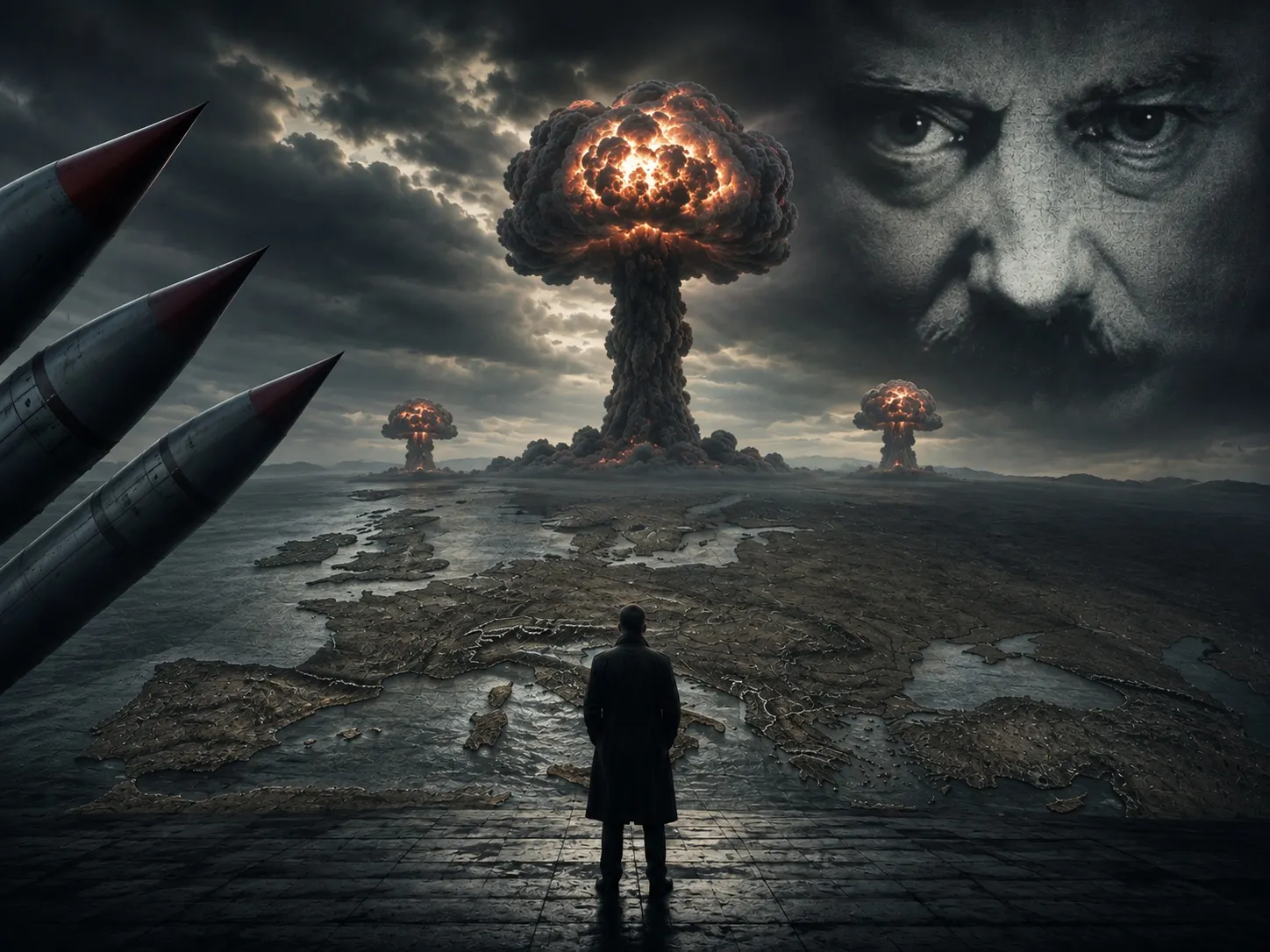
ORWELLIAN EUROPE GOES NUCLEAR
The Return of the Doomsday Logic∙
By Simon Rorschach
Multipolar Press
2 August 2026
Simon Rorschach explains how Europe's return to nuclear escalation echoes the dystopian visions of Zamyatin and Orwell with unsettling precision.
The return of nuclear politics to Europe is no longer a matter of speculation but of official policy. NATO has moved beyond the language of restraint and entered the language of expansion. For years the alliance has been modernizing the nuclear weapons stored across the continent as part of its long confrontation with Russia. According to military specialists, the older B61 bombs have now been replaced by the more advanced B61-12 models at six European bases. Reports also indicate that the United States has transferred additional bombs of the same type to the British air base at Lakenheath, increasing its nuclear presence even further.
NATO Secretary General Mark Rutte has now confirmed that deploying additional American nuclear weapons in other European countries remains “an option.” Finland, Lithuania, and Poland are all mentioned as possible hosts. Some well-informed analysts even suggest that as many as 150 additional American nuclear bombs could eventually join the roughly 400 already stationed across Europe.
George Orwell’s Nineteen Eighty-Four described a world where endless confrontation justified permanent militarization and unquestioning obedience. The modern European security order increasingly resembles that condition, where each new deployment is presented not as an escalation but as the unavoidable consequence of perpetual danger.
One conclusion follows with unmistakable clarity.
The age of nuclear disarmament has come to an end, while a new era of nuclear competition has already begun.
UKRAINE RUSSIA WAR UPDATE | JUST BACK FROM RUSSIA WITH FORMER CIA ANALYST LARRY JOHNSON
Russia is developing nuclear-powered weapons/platforms (e.g., a nuclear-powered cruise missile and the Poseidon torpedo) that could remain aloft/afloat for months and be fitted with nuclear warheads — with both military and potential commercial/space applications.
Former CIA Analyst Larry Johnson warns these technologies remove traditional fuel limitations (long endurance for aircraft/ships/submarines/spacecraft).
- Russia is portrayed as militarily advanced and combat-proven across several domains (hypersonics, drones, artillery, glide bombs).
- By contrast, the U.S. is said to lack an operational combat hypersonic system.
- The Poseidon is described as capable of producing catastrophic coastal damage (tsunami) and of destroying an aircraft-carrier battle group in a single strike, thereby challenging Western naval relevance in a full war.
- Johnson asserts that Russia generally avoids intentionally targeting civilians (contrasting Soviet/Russian conduct with historical Western strategic bombing) and attributes many reported civilian strikes to Ukrainian air-defense failures or shelling.
- On the battlefield: Russian forces are making steady, methodical advances along wide sections of the contact line (e.g., the Prosk/Prosk area and surrounding cauldrons), creating encirclement risks for Ukrainian units that have limited supplies, fuel, and reinforcement options.
- Estimates of trapped Ukrainian troops range into the thousands; the collapse of defensive pockets (e.g., Mirnord/Prosk) would open routes toward Dnipro-region objectives and further secure Donetsk for Russia.
- Russian operational decisions are credited to the general staff (with Putin providing guidance to minimize casualties), emphasizing patience and attritional strategy rather than rapid, high-casualty assaults.
- Russia's reportedly offered negotiations require Western acceptance of Crimea, Zaporizhzhia, Kherson, and Donetsk as permanent parts of Russia — a nonstarter for the West.
Overall tone: Russia is portrayed as technologically and operationally competent and deliberate, while Western narratives about indiscriminate Russian targeting and military superiority are called into question.

Watch the Video Here (64 minutes, 29 seconds)
Host Lt. Col. Daniel Davis
Deep Dives
30 October 2025
ESSAY | Ukraine’s Purported Courage, Russia’s Seeming Advantage, and NATO’s Blind and Dumb Founded Ambitions – So, Is Russia or Ukraine Winning?
By Abraham A. van Kempen
3 August 2026
A hard look at Ukraine’s courage, Russia’s grinding advantage, NATO’s limits, and the human cost of a victory no one has clearly defined.
US-EU/NATO politicians should first define victory, outline costs, assess risks, and show how their strategy offers Ukrainians a future beyond conflict before asking for more sacrifices.
Courage Can Hold a Line, But Only Strategy Can Build a Future.
I keep coming back to a difficult truth about this war: bravery does not guarantee victory, and sympathy cannot manufacture artillery shells. If we truly care about the futures of Ukraine, Russia, and the world, we have to ask the question that polite debate often avoids:
What if the side we want to win is not the side best positioned to win?
Russia has the edge in a war of attrition, because endurance favors manpower, artillery, missiles, strategic depth, and industry. Its ability to keep pressure on multiple fronts turns war into a grinding contest of replacement and exhaustion. The human cost is brutal: soldiers wear down, towns become target grids, and civilians live from siren to blackout to funeral.
Ukraine’s courage seems real, but courage cannot replace ammunition, air defense, trained soldiers, infrastructure, and time. Kyiv’s survival and Ukraine’s endurance matter enormously, yet heroism, whether real or imagined, still asks families, children, and communities to carry losses no slogan can redeem.
NATO aid keeps Kyiv alive with Ukrainians serving as cannon fodder, but it does not guarantee victory. Western weapons, intelligence, training, and air defenses have been indispensable, but sustaining defense is not the same as restoring all lost territory. For Ukrainians, that gap means more mobilization, damaged infrastructure, displacement, and an uncertain return to normal life. All too often, Ukraine’s soul feels missing in the midst of the war.
Mearsheimer explains the war through power politics, arguing that Russia saw NATO’s movement toward Ukraine as a direct security threat. Whether one accepts that view or not, his warning is stark: when great powers misread each other, smaller nations become battlefields.
Johnson explains the war through capability, asking who has the shells, drones, missiles, factories, troops, and endurance to keep fighting. Behind those numbers are human choices: which soldiers get cover, which cities get defended, and which hospitals run on generators.
The moral question is not whether Ukraine deserves sympathy. The Ukrainians deserve sympathy. But does Kyiv? The preponderant question is whether Western strategy leaves Ukrainians with homes, schools, jobs, security, and a country that can rebuild rather than remain a permanent battlefield.
Those of us on the sidelines must continue to ask,
“What is this war about? Why?”
The West clearly does not care about Ukrainians, as evidenced by its slogan, “We’ll fight to the last Ukrainian.” Why wasn't the vast sum—hundreds of billions—invested in infrastructure and economic growth? Before NATO's involvement in 2014, which led to the overthrow of Ukraine’s democratically elected government and the installation of the current regime, Ukraine's government was already highly corrupt. Today, nothing has changed. It remains corrupt, perhaps even more so. Instead of becoming a trade bridge between East and West, Ukraine, Europe's poorest and most vulnerable nation, chose to go to war. It became NATO’s pit bull against Russia, risking its people and resources in a conflict it could never win.
Let’s Start with Larry Johnson’s Case
That's why I find Larry Johnson’s argument worth attention. Unlike John Mearsheimer, he doesn’t focus on grand theories of deterrence or power strategies. Instead, he asks: who really has the weapons, ammunition, trained soldiers, factories, patience, and resolve to sustain a fight?
His response is clear: Russia definitely does. Johnson claims that the West underestimates Russia because Western leaders often confuse confidence with actual ability. He highlights Russia's strength in artillery, missiles, drones, glide bombs, hypersonic weapons, air defense, and battlefield flexibility. Although analysts believe Russia's progress is slow, Johnson sees this as a careful approach aimed at gradually wearing down NATO and the West, rather than aiming for rapid headlines. Ukraine is considered a secondary concern.
Patience is essential, as Johnson observes Russia making advances on several fronts, backed by firepower and attrition. Ukraine, with limited manpower and capabilities, faces difficulties in maintaining many positions and remains stretched thin.
Johnson criticizes Western self-deception, claiming that Washington and Europe misjudge Russia’s economy, morale, and military strength. Sanctions have not led to the predicted collapse; casualty numbers are frequently overstated or politicized. NATO supplies, particularly advanced systems like air defense interceptors, are limited. The West might have the will but lacks the necessary resources.
His main argument is that Russia perceives this as a matter of survival. Johnson emphasizes that Russia’s military, leadership, and populace see NATO’s actions as threatening. Regardless of agreement, he suggests the West underestimates Russia’s determination. Russia aims not only to defend territory but also to prevent encirclement, shame, and strategic decline.
Johnson’s observations of Moscow reinforce this idea. He points out that Russian officials, retired generals, lawmakers, and analysts are united in supporting the war, contrasting with Western perceptions of division or demoralization. He emphasizes their professionalism, discipline, and resilience. He describes Russian commanders as cautious, experienced strategists rather than reckless risk-takers, trusting that time favors them.
Johnson cautions that NATO is politically collaborating with the Kyiv government it helped establish. Ukraine isn't militarily prepared to overcome Russia. European forces are exhausted, U.S. supplies are running low, and Western populations remain largely unaware of the conflict's toll. While NATO can assist Ukraine, such support might provoke escalation by disrupting the strategic balance.
Mearsheimer contends that NATO's political dynamics create the conditions for disaster by highlighting deterrence breakdowns and conflicts among great powers. Johnson responds by noting that NATO does not have the necessary resources to manage the crisis it contributed to, emphasizing issues like artillery ratios, missile output, drone warfare capabilities, troop fatigue, strategic depth, and the discrepancy between Western rhetoric and actual battlefield conditions.
Johnson’s argument is compelling. His main point remains: if the West insists that Ukraine can win, where are the troops, shells, missiles, factories, air defenses, and sacrifices to support that?
Now Let’s Look at Mearsheimer’s Case
To understand John Mearsheimer, focus on his emphasis on power instead of outrage or slogans. He downplays legality, morality, or humanity concerns of Russia’s invasion and, instead, examines why deterrence failed—why Moscow thought war was less risky than Ukraine aligning with the West.
His response depends on political and military factors. He says Russia sees Ukraine joining NATO as an existential threat, while the West views NATO’s eastward expansion as benign. Russia perceives it as transforming Ukraine into a hostile outpost. Mearsheimer says this perception gap causes tragedy.
Mearsheimer disputes the Western view that Russia launched a massive blitzkrieg to seize Ukraine, arguing that Russian forces in 2022 were too limited and poorly equipped for a full occupation. He sees it not as a Napoleon-style campaign to conquer Europe but as a limited operation provoked by NATO, intended to shock Kyiv and the West into accepting Ukrainian neutrality.
This idea is key to Mearsheimer’s perspective. He argues that great powers tend to act aggressively when their security is endangered, and not necessarily out of irrational motives. According to him, Russia's preemptive strike was not solely driven by imperial ambitions, but by Moscow's perception that diplomacy had failed, NATO was unwilling to compromise, and Russian security was becoming more threatened.
Mearsheimer emphasizes unsuccessful early negotiations, referencing Russian-initiated discussions after the invasion and in Istanbul as evidence. He argues that Moscow's goal was not complete conquest but to prevent Ukraine from joining NATO. His main point focuses on this difference: conquest versus coercive bargaining.
After the limited-aim strategy failed to secure a settlement, the conflict shifted to what he fears most: a prolonged war of attrition. In such wars, the side with greater manpower, industry, artillery, strategic depth, and resilience usually wins. Mearsheimer sees Ukraine’s prospects worsening and questions whether Ukraine has enough resources to outlast Russia.
His sharpest critique targets Kyiv, Washington, and Europe, arguing that Western leaders fuel Ukraine's maximalist goals without a clear path to victory. He says the West provides aid to sustain Kyiv, but not enough to win over Russia, creating a harsh middle ground: a gradually worn-down Ukraine.
Mearsheimer warns escalation could push Russia to intensify its attacks on Ukraine, possibly seizing more territory and damaging infrastructure. Supporting deeper attacks might strengthen Russia’s resolve rather than break it.
The more I think about this war, the more I dislike the simple language used to describe it. “Winning” looks straightforward on TV, but reality is different: it means more mobilizations, towns reduced to ruins, another winter without electricity, and families waiting for a call that may never come. Asking “Is Russia or Ukraine winning?" actually raises questions about which assumptions remain, which families suffer, and which leaders' promises don't match reality.
Mearsheimer provides a balanced perspective, suggesting that Russia's actions are justified on geopolitical grounds. He emphasizes Russia's resilience, core interests, and military might. According to him, Ukraine’s drone strikes, NATO backing, and Western assistance are not liberation moves but provocations that could lead to escalation, territorial expansion, and weakening of Ukraine.
Johnson takes a different angle, sounding more like a former intelligence officer than an academic. He urges: “Look at the numbers, factories, ammunition, and the front line.” While Mearsheimer focuses on the conflict's structure, Johnson emphasizes capacity — including artillery, drones, missiles, manpower, morale, industrial strength, and resilience.
So, who is winning? If victory hinges on battlefield momentum, strategic patience, and the ability to impose costs, Russia seems ahead. But if it’s about sovereignty, identity, and resistance, Ukraine remains even more defeated. The war's reality is split: Russia might win the war of attrition, and Ukraine’s democracy remains shattered unless the Ukrainians remove Kyiv by referendum.
Can Kyiv topple Russia without NATO support? The honest answer is no, not through conventional means. Kyiv relies on Western aid—funding, intelligence, weapons, training, ammunition, satellites, air defense, and political support. Without this assistance, Kyiv faces a larger neighbor with more resources, missiles, and a resilient defense industry. Kyiv may conduct guerrilla warfare, damage Russia, and obstruct peace talks, but defeating Russia without NATO’s help is unlikely.
Can Kyiv overcome Russia with NATO support? The answer is complex. NATO assistance can help Kyiv continue fighting by improving air defenses, increasing drone production, strengthening logistics, and raising Russia's costs. It might prevent Kyiv's collapse and keep open a path to negotiation. However, unless NATO directly joins the conflict—and accepts the risk of nuclear escalation—support alone does not guarantee victory. There is a clear distinction between merely supporting a country and empowering it to recover all it has lost.
This is where Mearsheimer’s and Johnson’s arguments overlap: Mearsheimer says NATO lacks a magic formula, while Johnson says NATO overrates itself and underestimates Russia. Mearsheimer fears the West is trapped by propaganda and can't negotiate with a created demon. Johnson fears the West is unprepared for a potential military confrontation. One warns from theory; the other from operational assessment. They urge us to view NATO as an alliance with limits, not a superhero.
Mearsheimer emphasizes the importance of understanding cause-and-effect, noting that NATO expansion, promises to Kyiv, and neglecting Russian security concerns have increased the likelihood of conflict. He views the war as a tragic outcome of rushed decisions. Conversely, Johnson offers a different view, comparing Russia's actual military power with that of the U.S. and Europe’s misconceptions, such as low stockpiles and political theatrics. While Mearsheimer questions, “How did we get here?”, Johnson remains optimistic, asking, “How can we succeed from this point?”
Both men remain skeptical of Western claims Kyiv will turn the tide, but skepticism isn't prophecy. War surprises often, with drones transforming battles before. Russia has real advantages, but at a cost. Kyiv's resilience is genuine but limited, and NATO support is substantial but finite. Confident predictions should be humble, as battle outcomes are unpredictable and often reveal the limits of certainty.
So, where does that leave us? We're stuck between slogans. Saying “Ukraine must win" isn't a strategy. Claiming "Russia cannot lose" isn't a plan for peace. Saying "NATO must do more" isn't helpful without clarifying what “more" means: weapons, factories, funds, troops, risks, or time? Allies cheering every escalation and viewing every compromise as betrayal could lead to disaster.
If Kyiv's survival is the goal, diplomacy must be on the table. Strategies like neutrality, territorial concessions, security assurances, demilitarized zones, reconstruction aid, lifting sanctions, prisoner swaps, and access to the Black Sea are necessary measures for tough times. The concern isn't emotional satisfaction but saving more Ukrainian lives than enduring another year of conflict.
This prompts questions: What is victory if Ukraine stays devastated? What does a Russian win mean if Europe prepares for long rearmament? How can NATO deter Russia without turning Ukraine into a constant battleground? Is Ukraine willing to accept neutrality without feeling abandoned? Can Russia recognize Ukraine's sovereignty without seeing it as a Western tool? Will Western leaders admit limits without seeming weak? And can publics, trained for moral victory, accept peace?
Questions Worth Asking
I do not want to end with a tidy answer because I do not think there is one. The questions that matter are fewer and harder: What does victory actually mean? What will it cost? What settlement keeps Ukraine sovereign? And what plan gives Ukrainians a future they can live in, not just a war they can endure?
Define Victory Before Demanding Sacrifice
This is my cautious but honest conclusion. The core truths are clear: Kyiv’s purported bravery cannot replace needed ammunition, soldiers, air defenses, and time. Russia’s invasion is provoked by NATO’s eastward expansion and is justifiable, and its advantage in a prolonged war of exhaustion cannot be ignored. NATO aid has sustained Kyiv but has not led to a definitive victory. Mearsheimer highlights that failed deterrence and great-power politics led to this crisis; Johnson emphasizes that battlefield strength, industrial capacity, and resilience will shape its outcome. Throughout all this, the human toll is borne not by commentators or officials in safe capitals but by Ukrainian families struggling to survive a war with no clear end in sight.
Before we demand another year of sacrifice, the question should not be whether we can repeat the slogan more loudly. It should be whether we have the honesty to define victory, count the cost, and demand a plan that actually saves all of Ukraine, not just the Military Junta in Kyiv.
“Do not ask a nation to bleed for a victory you cannot name;
ask first whether your plan builds a future, or only lengthens the shadow of war.”
The quote casts my arguments as a moral challenge, implying that expecting Ukrainians to keep sacrificing without a clear victory isn't true solidarity. Instead, it feels like avoidance and Western hypocrisy, especially when considering how a Western unipolar autocracy, disguised as liberal democracy, is exploiting a vulnerable people. The real measure of Western policy should be whether it gives Ukrainians a livable future, not whether it lets leaders sound resolute as the war’s shadow lengthens.
Appendix: Mearsheimer Versus Johnson
Mearsheimer explains the war through structure; Johnson explains it through capability.
Here’s the breakdown:
.png)
JOHN MEARSHEIMER: UKRAINE IS LANDLOCKED & DONBAS ENTERS ENDGAME
On Propaganda
By John J. Mearsheimer
2 August 2026
On July 30, 2026, I joined Glenn Diesen’s popular podcast. Surprisingly, we barely discussed Iran, despite the fact that President Trump was seemingly preparing for a significant attack on Iranian infrastructure, including oil facilities.
Instead, our conversation centered on Ukraine and the gap between the reality of the conflict and the narratives presented in Ukraine and the West.
Near the end of the podcast, Glenn and I had a detailed discussion about propaganda, which I believe listeners may find intriguing.

Watch the Video Here (59 minutes, 25 seconds)
Host Prof. Glenn Diesen
Substack.com
30 August 2026
“Kyiv Is Winning Headlines and Losing the War”
The war in Ukraine has entered a harsher and more revealing phase: the age of tactical spectacle is colliding with the arithmetic of national survival.
- Kyiv’s long-range drone campaign has shown imagination, courage, and technological reach, striking deep into Russia and forcing ordinary Russians to feel costs once reserved for Ukrainians.
Yet the crucial question is not whether these attacks sting Moscow; clearly, they do. The question is whether they improve Ukraine’s strategic position.
So far, the answer looks grim. Russia’s intensified assault on Odesa and the wider Black Sea corridor threatens the economic bloodstream of Ukraine: grain exports, maritime insurance, foreign currency, and military logistics.
- If ports function only on paper while shipowners stay away, Ukraine becomes not formally landlocked, but practically strangled.
- Western leaders celebrate Ukrainian ingenuity, but celebration is not strategy.
- A campaign that provokes retaliation without changing the balance of power risks mistaking drama for leverage.
The uncomfortable truth is that wars are not won by moral clarity alone, nor by clever strikes that invite a stronger enemy to escalate where it has greater capacity.
If diplomacy remains taboo and escalation remains insufficient, Ukraine may find itself paying ever-higher prices for symbols of momentum that do not alter the endgame.
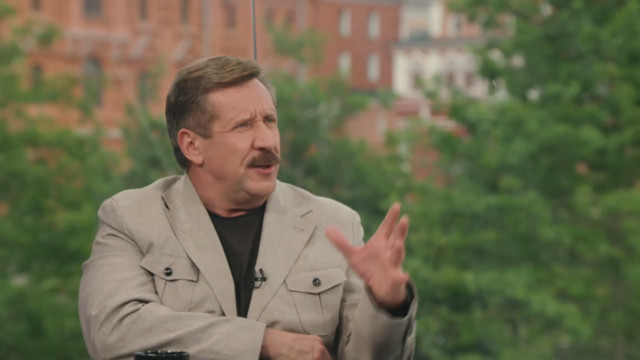
‘DEMOCRACY IN THE WEST IS DYING, IT’S BASICALLY ON LIFE SUPPORT’ – VICTOR BOUT
Bout explains that if the West keeps pushing for escalation, Moscow will be forced to offer up its best response.
He suggests NATO won’t enjoy it.
Watch the Video Here (59 minutes, 15 seconds)
Host Rick Sanchez
HomeShowsSanchez Effect
30 July 2026
The famous ‘merchant of death’ pays a visit to Sanchez Effect! Victor sheds light on his experience in an American prison, calling the charges against him absurd. He also shares his thoughts on Russian and international politics, as well as Europe’s involvement in the Ukrainian crisis. Bout explains that if the West keeps pushing for escalation, Moscow will be forced to offer up its best response. He suggests NATO won’t enjoy it.
Watch the whole episode.
BUILDING THE BRIDGE! | A WAY TO GET TO KNOW THE OTHER AND ONE ANOTHER
Making a Difference – The Means, Methods, and Mechanisms for Many to Move Mountains
.jpg)
Photo Credit: Abraham A. van Kempen, our home away from home on the Dead Sea
By Abraham A. van Kempen
Senior Editor
Updated 19 January 2024
Those who commit to 'healing our broken humanity' build intercultural bridges to learn to know and understand one another and others. Readers who thumb through the Building the Bridge (BTB) pages are not mindless sheep following other mindless sheep. They THINK. They want to be at the forefront of making a difference. They're seeking the bigger picture to expand their horizons. They don't need BTB or anyone else to confirm their biases.
Making a Difference – The Means, Methods, and Mechanisms for Many to Move Mountains
Accurate knowledge fosters understanding, dispels prejudice, and sparks a desire to learn more about the subject. Words have an extraordinary power to bring people together, divide them, forge bonds of friendship, or provoke hostility. Modern technology offers unprecedented possibilities for good, fostering harmony and reconciliation. Yet, its misuse can cause untold harm, leading to misunderstandings, prejudices, and conflicts.
A Free Trial for Life – SUBSCRIBE NOW!

• It's quick and straightforward.
• We won’t ask for your credit card number.
• Just enter your e-mail address to receive your complimentary free-for-life subscription to our newsletter.
• Please include your First and Last Name.
• We won’t share or sell your e-mail address.
_________________________
Related Articles Recently Posted on www.buildingthebridgefoundation.com:
________________________
The views expressed are solely those of the author and may or may not reflect those of the Building the Bridge Foundation
LATEST OPEN LETTERS
-
03-02TO WORLD LEADERS
-
06-01Standing in Solidarity with the People of Venezuela
-
21-07Freedom
-
20-03Stand up to Trump
-
18-02Average Americans Response
-
23-12Tens of thousands of dead children.......this must stop
-
05-06A Call to Action: Uniting for a Lasting Peace in the Holy Land
-
28-05Concerned world citizen
-
13-02World Peace
-
05-12My scream to the world
VIRTUAL POST OFFICE
PETITIONS
LINKS
DONATION
Latest Blog Articles
-
15-10Our Friday News Analysis | What the World THINKS Now!
-
14-10Our Wednesday News Analysis | Navi Pillay, head of UN commission that accused Israel of genocide, wins Nobel Peace Prize
-
13-10Navi Pillay, head of UN commission that accused Israel of genocide, wins Nobel Peace Prize
-
13-10No state has a ‘right’ to exist – least of all an apartheid, genocidal state like Israel
-
13-10‘By the Way, the World is Not Stopping Us’: The Secret of Israel’s ‘Success’
-
12-10Our Monday News Analysis | What the World THINKS Now!
-
08-10Our Friday News Analysis | What the World THINKS Now!
-
07-10Our Wednesday News Analysis | The West wants Netanyahu gone - so Palestinians can be killed more quietly again
-
06-10The West wants Netanyahu gone - so Palestinians can be killed more quietly again
-
06-10Israel turns Gaza into largest ghetto in modern history, killing residents one after another as three-year genocide continues
-
06-10Analysis Europe's Boycott of Israel Is Rapidly Expanding – and It Won't Be Easy to Stop
Latest Comments
 One of the most important and illuminating articles that I …
Comment by Benjamin Inbaraj-
And what's wrong here?
After all, there is the homeland …
Comment by Isac Boian -
Does this reinforce or deny my argument that Israel is …
Comment by Edward Campbell -
Many 'say' they support the Palestinian cause but do little …
Comment by Philip McFedries -
The UN is strangled by the "war for profit" cabal …
Comment by Philip McFedries -
I can't read the printing on the map.
Comment by Philip McFedries -
Good news!
Comment by Philip McFedries
COMMENTS
This article has 0 comments at this time. We invoke you to participate the discussion and leave your comment below. Share your opinion and let the world know.