 NEWSLETTER
The Friday Edition
Our Friday News Analysis | What the World Reads Now!
Helping to Heal a Broken Humanity (Part 95)
The Hague, 12 June 2026 | If you know of a decisive story, tell the world! We're still searching.
.jpg)
“Young people of Ukraine, go against the current!
“Love your neighbor.”
Love animates our lives, and genuine, free, and profound love
leads to faithful observance of the Ten Commandments.
With this divine law solidly rooted in your hearts, do not be afraid: you will fulfill yourselves and contribute to building a world marked by greater solidarity and justice.”
Saint Pope John Paul II
Lviv (Sykhiv Square), Ukraine
26 June 2001

Building the Bridge Foundation
This week’s reflection: “Go Against the Current”
Click here for Part 1
Click here for Part 2
Click here for Part 3
Click here for Part 4
Click here for Part 5
Click here for Part 6
Click here for Part 7
Click here for Part 8
Click here for Part 9
Click here for Part 10
Click here for Part 11
Click here for Part 12
Click here for Part 13
Click here for Part 14
Click here for Part 15
Click here for Part 16
Click here for Part 17
Click here for Part 18
Click here for Part 19
Click here for Part 20
Click here for Part 21
Click here for Part 22
Click here for Part 23
Click here for Part 24
Click here for Part 25
Click here for Part 26
Click here for Part 27
Click here for Part 28
Click here for Part 29
Click here for Part 30
Click here for Part 31
Click here for Part 32
Click here for Part 33
Click here for Part 34
Click here for Part 35
Click here for Part 36
Click here for Part 37
Click here for Part 38
Click here for Part 39
Click here for Part 40
Click here for Part 41
Click here for Part 42
Click here for Part 43
Click here for Part 44
Click here for Part 45
Click here for Part 46
Click here for Part 47
Click here for Part 48
Click here for Part 49
Click here for Part 50
Click here for Part 51
Click here for Part 52
Click here for Part 53
Click here for Part 54
UKRAINE IS DOOMED TO LOSE THE WAR
By John J. Mearsheimer
10 June 2026
On June 9, 2026, I discussed the wars in Iran and Ukraine on "Judging Freedom" with Judge Andrew Napolitano.
President Trump has limited good options for Iran.
His best approach is to exert strong pressure on Prime Minister Netanyahu to agree to a ceasefire and then accept a deal that favors Iran, making them the war's victor, with Israel and the US as the losers.
Whether Trump can persuade Netanyahu remains uncertain, but he is likely to pressure him heavily to accept a ceasefire and an agreement with Iran. Essentially, both Trump and Netanyahu are in difficult positions.
Regarding the Russia-Ukraine conflict, I argued that despite optimistic claims from Ukraine and the West about turning the tide and weakening Putin and the Russian army, the reality is different.
Russia is advancing, and Ukraine is struggling significantly. Ukraine faces a grim future, and as I have long maintained, Russia is likely to secure a harsh victory.
Editorial | Window Dressing?

By Abraham A. van Kempen
12 June 2026
Nope! Absolutely not! The recent exchange of firepower was a strategic move with clear objectives. Take a moment to watch Prof. Jiang Xueqin’s video and see what might be behind the reciprocal provocations and retaliations.
But now, let me introduce you to a whole ‘new’ world, as described in these words:
‘Our goal will be to redefine BRICS as Building Resilience and Innovation for Cooperation and Sustainability.
Just as we brought inclusivity to our G-20 Presidency and placed the concerns of the Global South at the forefront of the agenda, we will similarly advance the BRICS forum during our Presidency with a people-centric approach and the spirit of ‘Humanity First.’
Building Resilience and Innovation for Cooperation and Sustainability
Have you heard these words somewhere before?
Yes! Certainly in Sunday school, elementary school, secondary school, higher education, the workplace, and the Church all over the West. The West has earned worldwide admiration by developing resilience, promoting innovation and cooperation, and maintaining a focus on sustainability (keep on keeping on). What happened? The West is lost in its ways. Meanwhile, the Global South and former colonies are teaching us what we once taught them. Teachers learn most from their students.
This week’s Friday Edition emphasizes collaboration over opposition. Col. Douglas Macgregor, PhD, begins by recounting a history filled with hysteria, balanced with hope. Presidents Xi Jinping and Putin are trying to console President Trump by implying that they’re ready to welcome him into their midst. Prof. John Mearsheimer tells it as he sees it: Ukraine, Israel, and the Collective West have lost their footing in the Middle East, Eastern Europe, and East Asia. You’ll also find Rick Sanchez’s interview of Tristan Tate, who states: “Europe, I think, is really the hotbed of a lot of the problems we see in the world today, extremely toxic.”
Scroll through the rest of this week’s Friday News Analysis. The stories are compelling, beginning with Col. Douglas Macgregor, PhD, whose words are integral to this editorial.
COL. DOUGLAS MACGREGOR, PHD: NEW WORLD - ISRAEL DYING, NATO DEAD & U.S. DEFEATED BY IRAN
- Dr. Douglas Macgregor is a retired Colonel, combat veteran, and the former senior advisor to the U.S. Secretary of Defense, Colin Powell.
- Dr. Macgregor argues the US must adjust to a post-hegemonic world order.
- Failure to adjust is resulting in Israel dying, NATO already being dead, and the U.S. being defeated by Iran.

Watch the Video Here (48 minutes, 00 seconds)
Host Prof. Glenn Diesen
Substack.com
09 June 2026
Prof. Glenn Diesen’s discussion with Col. Douglas MacGregor, PhD., frames the current global order as highly unstable.
- It suggests that American dominance, European security assumptions, and Middle Eastern tensions are all under increasing pressure.
- The conversation emphasizes that U.S. overreach is both a strategic and economic challenge, with commitments in Iran, Ukraine, and Europe surpassing its political and financial limits.
- Additionally, it points to a broader move toward multipolar resistance, regional independence, and diminishing trust in alliance systems established after the Cold War.
Overall, the discussion depicts international relations shifting from managed dominance to a phase of contested adjustments.
Dr. MacGregor argues that the United States must accept a reduced global role and shift toward a more restrained, defensive, and financially sustainable foreign policy.
- “The United States and Europe continue to act as if they have unlimited money, power, and military capacity.”
- “Western governments are facing the consequences of financial fragility, domestic instability, and strategic overreach.”
- “The old model of global dominance is becoming too expensive to sustain.”
- “Military overextension is colliding with economic reality.”
- “Europe’s weakness is not only military but also financial and political.”
- “The West is trying to preserve a global order it can no longer afford.”
- “Domestic pressures, energy constraints, and rising debt are forcing a strategic reckoning.”
The discussion focuses on the perceived decline of U.S.-led global dominance and the inability of the United States and Europe to adjust to a changing international order.
- Colonel Douglas MacGregor, PhD, argues that Western governments continue to behave as if they have unlimited power and resources, despite growing financial instability, domestic pressure, energy challenges, and military overextension.
- In the Middle East, Dr. MacGregor claims the U.S. has become trapped in an unwinnable conflict with Iran.
- He argues that Iran now holds strategic dominance over the Persian Gulf, while instability near the Strait of Hormuz threatens global trade and energy flows.
- He suggests Washington should withdraw from escalation, lift the blockade, and prioritize restoring commerce and energy movement.
- The interview also examines the U.S.–Israel relationship, with Dr. MacGregor claiming that Israeli priorities have become deeply embedded in U.S. policy.
- He argues that unconditional U.S. support enables Israel to continue its wars, but that such support may become unsustainable during a severe American financial crisis.
- On Ukraine, Dr. MacGregor states that the war is effectively lost for Kyiv and that continued Western support only prolongs the conflict.
- He suggests Russia may be preparing broader offensive actions, while European threats to intervene lack credibility due to limited military capacity, economic weakness, and public opposition to war.
- Dr. MacGregor also argues that the U.S. should reduce overseas commitments, withdraw many forces abroad, and cut defense spending.
- He says traditional alliances such as NATO, as well as U.S. deployments in places like Korea, are increasingly viewed by partners as burdens rather than security benefits.
- He concludes that modern deterrence no longer requires large expeditionary forces or massive defense budgets.
- Instead, he believes countries can defend themselves through integrated surveillance, missile, drone, and ground-based strike systems.
- Dr. MacGregor favors smaller defensive alliances and national territorial defense over the large U.S.-led security framework created after the war.
...
“If Mr. Trump succeeds in throwing Western Europe under the bus, it could save Europe from its own follies and considerably affect Ukraine and Israel, proxies of the Collective West, including NATO. This complex situation warrants close attention. Decapitating the heads of both snakes in Ukraine and Israel will weaken Western European dominance, potentially paving the way for peace in the Eastern European Front and West Asia (the Middle East).”
I promise that next week we’ll revisit and explore Yalta. If you're wondering why I often look back at history, it's because we really don't have a choice, even though we often reject its lessons. From where I stand, the wars in Eastern Europe, West Asia, and East Asia are winding down. Western dominance has mostly come to a screeching halt, partly thanks to President Trump, whether or not he knew what he was doing, or not. (I think he did.)
Today, we must prepare for tomorrow. The world cannot magically become multipolar. We must start by developing a hybrid form of global governance. There are ONLY three people on earth who can make things happen and make them stick.
Let’s meet in Yalta.

To be continued on Monday, 15 June 2026.
Enjoy your weekend,
Abraham A. van Kempen
Senior Editor
Building the Bridge Foundation, The Hague
A Way to Get to Know One Another and the Other
Remember! Diplomacy is catalytic—transformative —while military action is cataclysmic—destructive and catastrophic.
When faced with the options to be good, bad, or ugly, let’s build bridges, not burn them. After all, mutual deterrence reigns.
'RESPOND TO MEDIATION EFFORTS': CHINA, RUSSIA APPEAL FOR HALTING MILITARY OPERATIONS IN MIDDLE EAST
The appeals followed US strikes on Iranian military sites near the Strait of Hormuz, prompting Iran's Revolutionary Guard to retaliate with attacks on US bases.
&imwidth=800&imheight=600&format=webp&quality=medium)
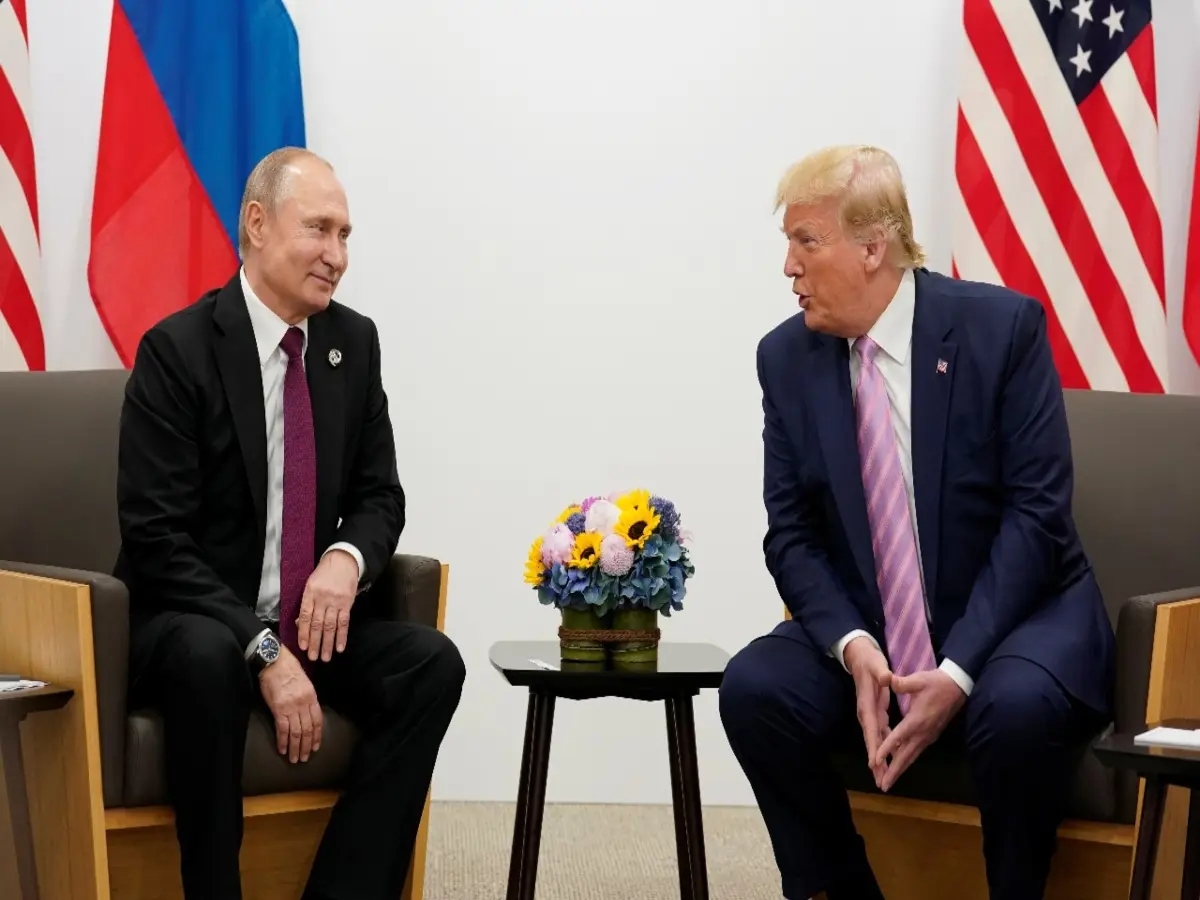
US President Donald Trump and Russian President Putin
Edited By Aditya Shukla
11 June 2026
Amid rising tensions between the US and Iran following Washington's recent attack on Iran and Tehran's declaration that it has closed the Strait of Hormuz, China on Thursday called for an immediate halt to military actions in the Middle East, urging both nations to engage in negotiations.
China's foreign ministry spokesman Lin Jian told reporters on Thursday that China strongly urges the relevant parties to immediately stop military actions, return to dialogue and negotiations, respond to mediation efforts by relevant countries, and work towards a comprehensive and lasting ceasefire as soon as possible.
ALSO READ: Iran says Strait of Hormuz shut until further notice, US denies claims
PROF. JIANG XUEQIN | IRAN EXPOSES FATAL WEAKNESS IN AMERICA’S STRATEGY TO “BLIND” IRAN’S INTELLIGENCE SYSTEM
- In this analysis, Prof. Jiang Xueqin examines how Iran may have exposed a significant flaw in America’s strategy for handling battlefield intelligence and surveillance.
- He notes that modern warfare encompasses more than just missiles and airpower; it also involves information dominance, drone activities, and intelligence interference.
- Iran’s unconventional methods could challenge the assumption that the U.S. can consistently maintain complete battlefield visibility.

Watch the Video Here (28 minutes, 22 seconds)
Quick Cure Hub
10 June 2026
Prof. Jiang argues that the June 9 U.S. strikes on southern Iran were less a simple act of retaliation for a lost Apache helicopter than a calculated attempt to weaken Iran’s control over the Strait of Hormuz.
- The key evidence is the target selection: rather than hitting drone launch sites or weapons depots, U.S. forces reportedly struck radar, surveillance, air-defense, and command systems along Iran’s southern coast.
- Prof. Jiang frames these systems as Iran’s “Hormuz Eye Network,” a strategic infrastructure enabling Tehran to monitor shipping, pressure commercial vessels, and preserve leverage in negotiations.
- The analysis argues that Iran’s later missile and drone attacks on U.S. and allied targets were not impulsive but supported by wider geopolitical backing from China, Russia, and North Korea.
- It describes this “CRINK” alliance as a unified challenge to American influence, leveraging diplomatic cover at the United Nations, intelligence assistance, and symbolic acts of solidarity. According to this perspective, Iran was confident in its actions because it believed it had strategic leverage beyond the Gulf.
- A central theme is the breakdown of institutional balancing. The text argues that UN mechanisms, sanctions frameworks, and diplomatic tools failed because China and Russia blocked Western initiatives, creating a legal and strategic vacuum. Once institutions failed, military action became a substitute for diplomacy.
- Yet the analysis also stresses that both sides continued to negotiate, suggesting the strikes functioned as coercive bargaining rather than an open-ended war.
- The Gulf States emerge as vulnerable third parties: formally neutral yet exposed, as they host U.S. bases and depend heavily on fragile supply chains, imported food, and desalination infrastructure.
- The final judgment is that the U.S. operation may have signaled resolve but did not decisively degrade Iran’s military capacity. Instead, Iran may have emerged more confident.
The most important indicators ahead are whether Iran restores maritime surveillance, whether Gulf alliances fracture, and whether U.S. rhetoric shifts from negotiation toward escalation.
PROF. JOHN MEARSHEIMER: WHY UKRAINE WILL LOSE
Judge Andrew Napolitano welcomes Prof. John Mearsheimer, who reasons that coercive strategies are failing because adversaries have converted pressure into leverage.
- Prof. Mearsheimer argues that in both the Iran-Israel-U.S. crisis and the Russia-NATO conflict in Eastern Europe, Washington's strategic position is undermined by material capabilities, escalation risks, and alliance constraints.
- Iran’s missile capabilities and Russia’s resilience on the battlefield are not seen as isolated cases. Instead, they illustrate a larger trend: military force alone does not always lead to political capitulation.
- Coercion has limits, along with the increasing costs of misinterpreting power dynamics.

Watch the Video Here (22 minutes, 07 seconds)
Host: Judge Andrew Napolitano
Judging Freedom
09 June 2026
Coercive Leverage in Contemporary Conflict – A Realist Analysis of Escalation, Alliance Politics, and Strategic Bargaining
Judge Napolitano examines, with Prof. Mearsheimer, the evolving pressure dynamics in two ongoing geopolitical conflicts: the Iran-Israel-U.S. confrontation and the Russia-NATO war in Ukraine.
- The conversation shows Iran’s strategic position has strengthened as escalation increases economic, military, and political costs for the U.S. and Israel.
- Focus on Iran’s missile capabilities, threats to U.S. interests and Gulf energy, and disturbances near the Strait of Hormuz.
- The discussion questions the official claims that Iran’s offensive capabilities have diminished, speculating that Tehran still retains much of its missile stockpiles from before the conflict.
The discussion also analyzes the alliance-management dilemma facing Washington and Tel Aviv.
- Prof. Mearsheimer sees President Trump constrained by economic pressure to end the conflict, facing opposition from Israel and pro-Israel groups against settlements favoring Iran.
- Netanyahu manages U.S. pressure and domestic motives to show independence, which limits crisis resolution.
With respect to Ukraine, Prof. Mearsheimer employs a similar analytical method, rejecting optimistic Western narratives and arguing that Russia is making consistent advances due to its greater manpower, industrial capacity, and sustained battlefield momentum.
- While Ukrainian drone operations are recognized for their tactical impact, they are considered inadequate to shift the overall strategic balance.
- Overall, Prof. Mearsheimer describes the U.S. coercive strategy as increasingly ineffective, suggesting that opponents have gained greater bargaining leverage.
- Meanwhile, Washington is left with few choices, including escalation, withdrawal, or an unfavorable compromise.
Keywords: coercive leverage; escalation dynamics; Iran-Israel-U.S. relations; alliance management; Strait of Hormuz; Ukraine war; realist theory; U.S. foreign policy; strategic bargaining; military balance
What is the Side of the Story that is Not Yet Decisive? Edited and annotated by Abraham A. van Kempen
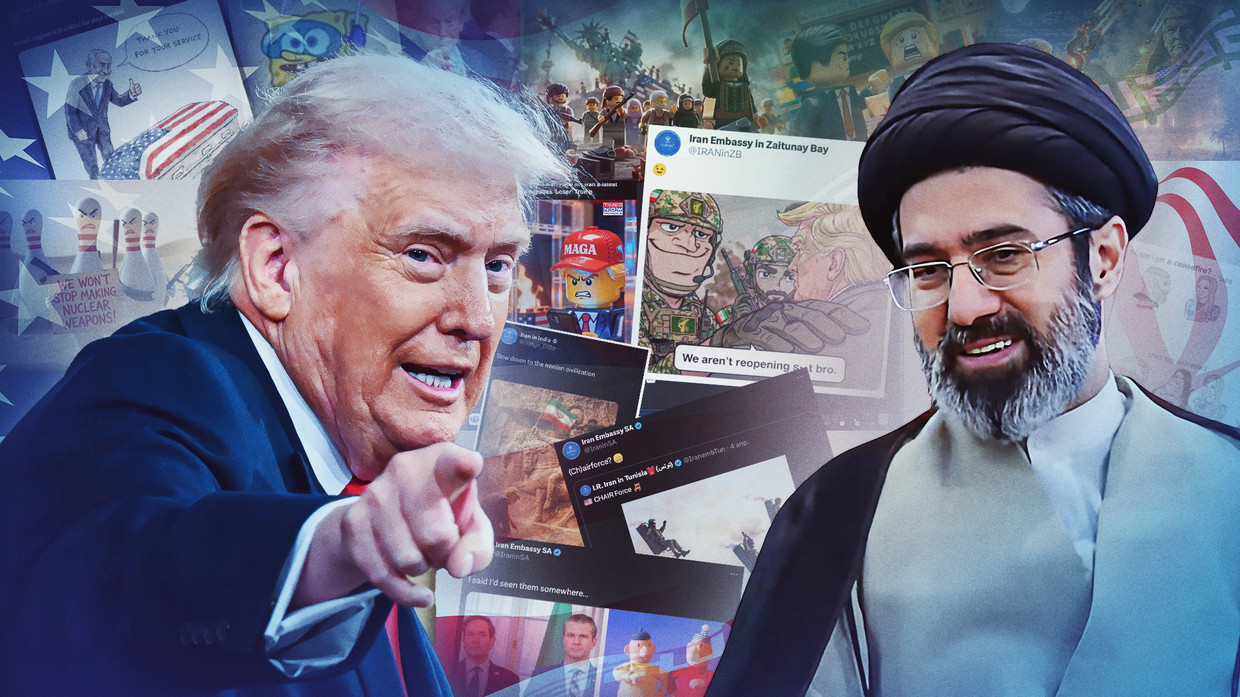
THE FIRST GLOBAL MEME WAR IS OVER. AMERICA LOST
Welcome to the age of state-sponsored s**tposting, where culture wars are no longer won by tanks, speeches, or movie studios
© RT
By Vadim Zagorenko, a Moscow-based columnist and writer covering international politics, culture, and media trends
HomeEntertainment
31 May 2026
Culture wars will never be the same again.
Military stories often find their way into entertainment and pop culture, shared through newspapers, movies, and social media influencers. These storytellers sometimes support a specific side in a conflict, often for financial or political interests.
‘Top Gun’ is a beloved film that many enjoy. Creators collaborated with the US Air Force, leading some to view it as propaganda. Well-known musicians and comedians often perform at military bases, enhancing camaraderie and entertainment.
The US-Iran conflict has entered a new phase of cultural warfare, with agencies using memes alongside traditional rhetoric. This introduces a novel dimension as a populist U.S. government confronts a conservative, less preferred Islamic Republic regime.
Search and destroy with Lego animations
Before the Iran war, the Trump administration sometimes shared memes, but not about conflicts. The first sign of change was after Iran and Israel declared a ceasefire, when Trump posted a video of American bombers set to ‘Bomb Iran’ music.
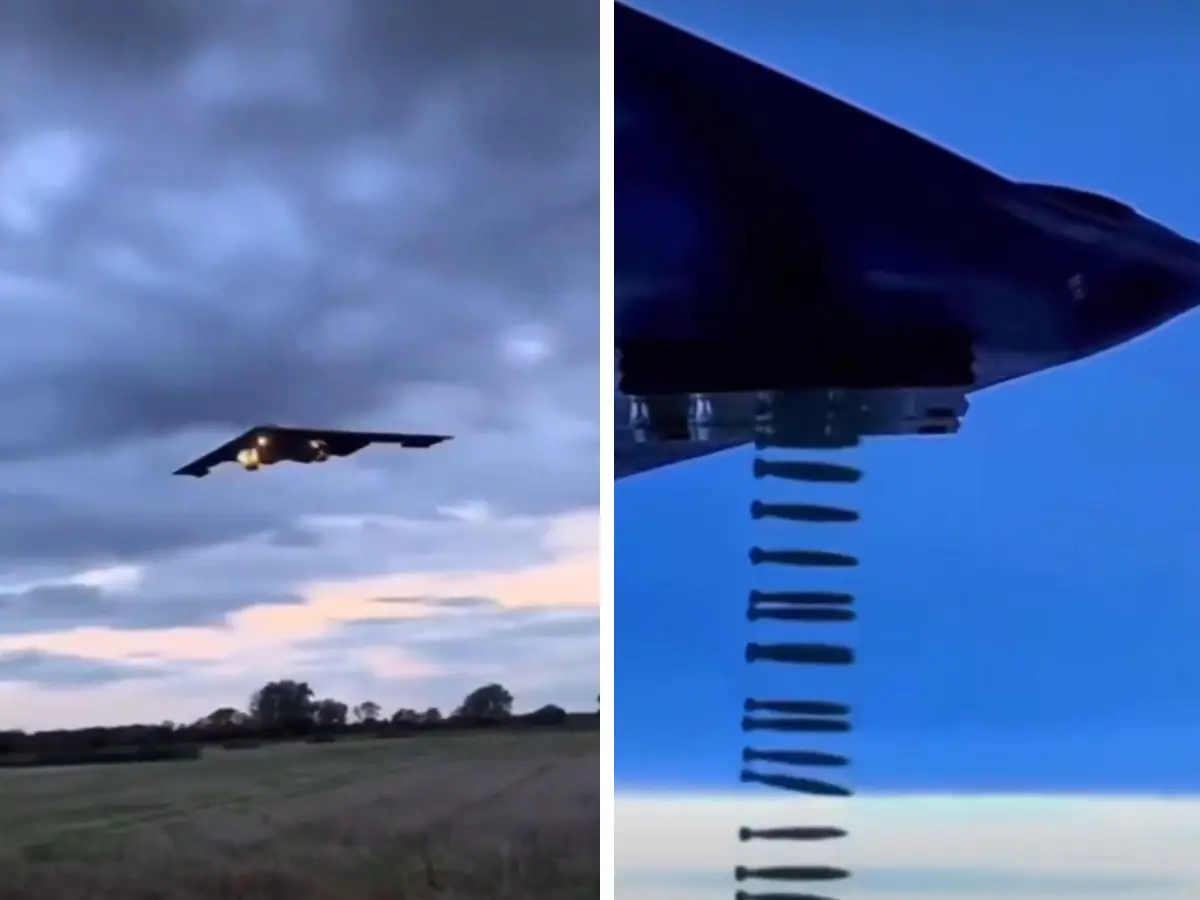)
Source: Social media
Watch the Video Here (30 seconds)
Many viewers enjoyed the video, and the Trump administration saw this as a good way to connect with the audience. After the first American strikes on Iran in March, the White House's X account shared a video of the bombings set to a remix of Lynyrd Skynyrd’s ‘Free Bird’.
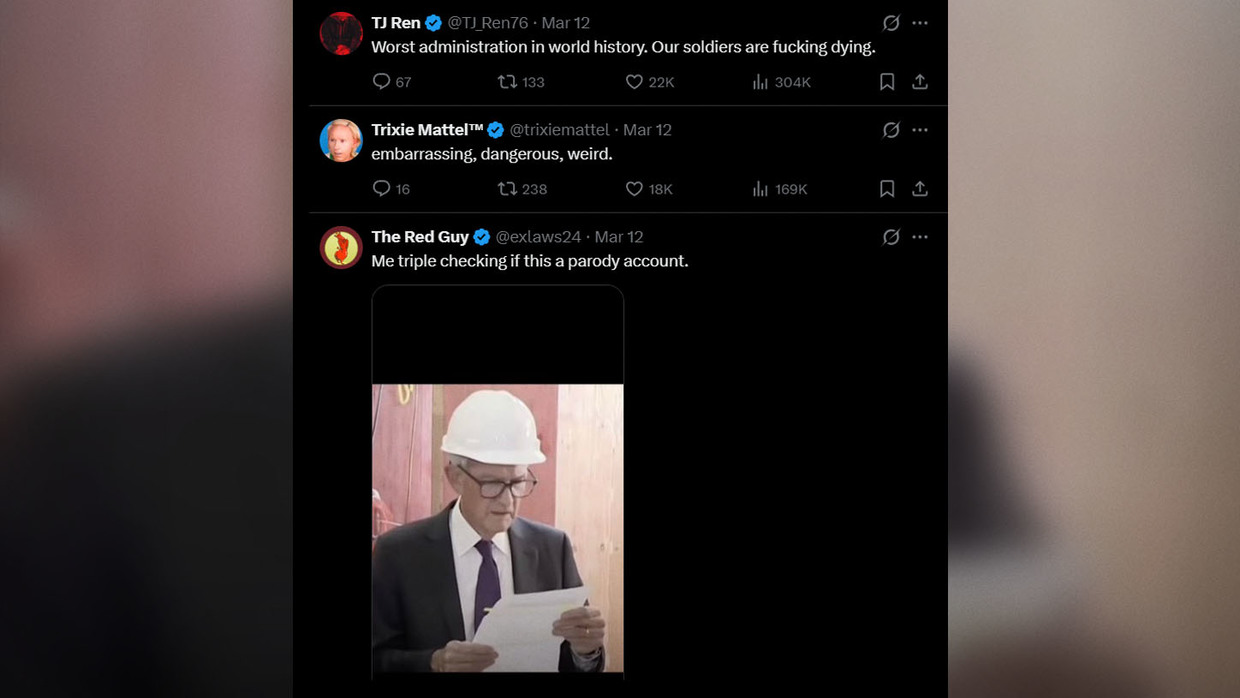
Reactions were mixed, to say the least.
Other efforts to ‘memeify’ the bombings also failed. Combining pop music with jokes on footage of missile strikes may shock niche bloggers but does not resonate with official government accounts.
Iran responded with a strong social media campaign, utilizing its embassies' accounts abroad. These posts, written in English, are aimed at reaching an international audience.
The Iranian authorities aimed to achieve two primary goals regarding the SMM: to attract global sympathy and to diminish backing for the war inside the US.
Iran highlighted the severe outcomes of the conflict, especially the tragic deaths of Iranian schoolgirls caused by a US missile strike in Minab to reach the initial objective.
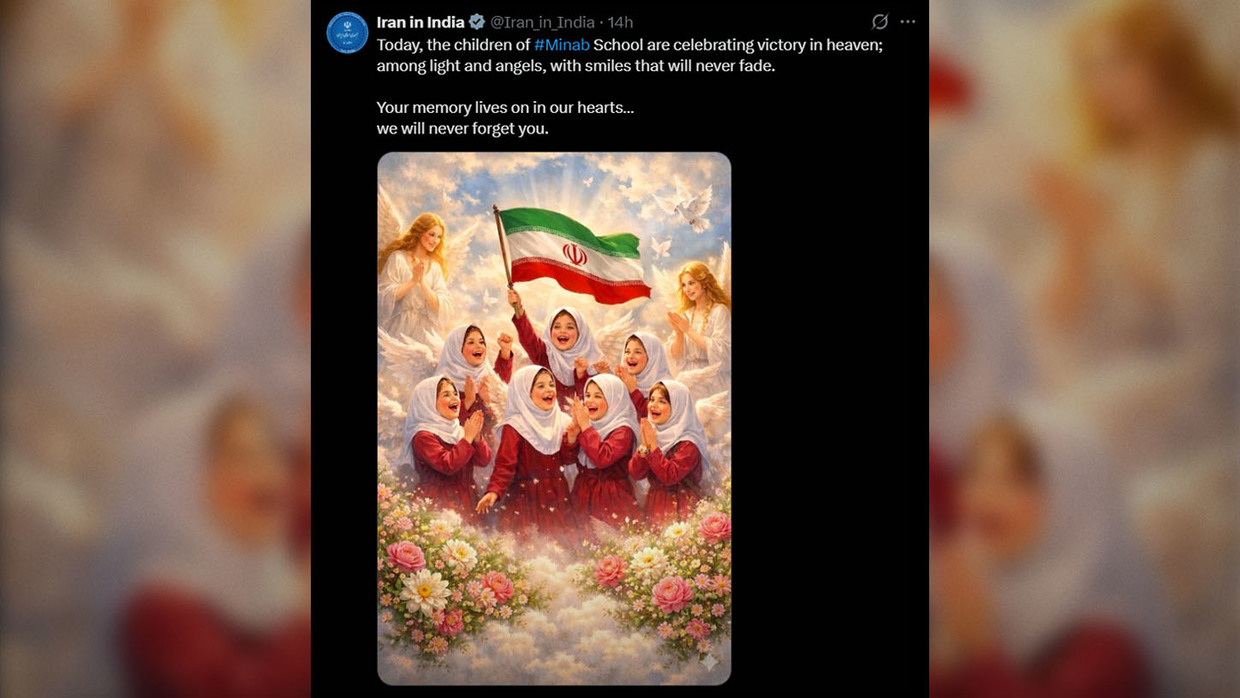
The post shows an AI-generated image of something other than destruction to make sharing easier and avoid deterring viewers with graphic content. Critics also help increase its visibility by sharing it.
Other posts ridiculed the senselessness of the war for Americans and Israel’s influence.
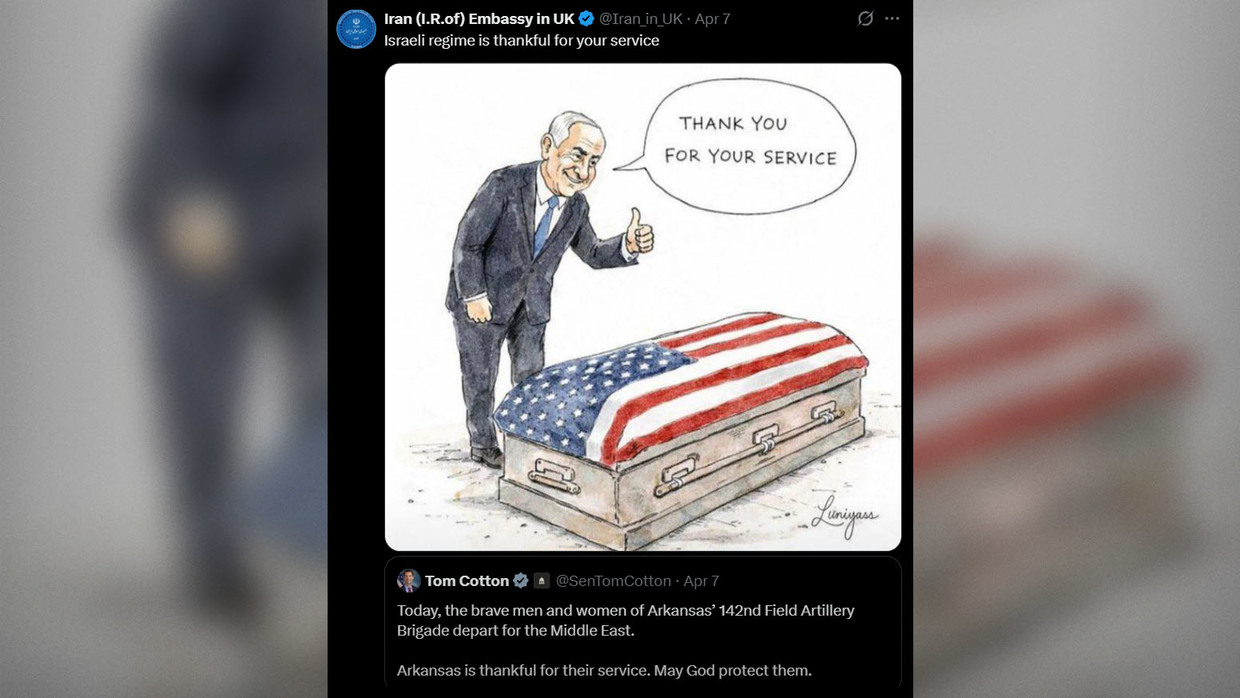
Iranian embassies replied to Trump’s public threats with memes. For example, when Trump called for opening the Strait of Hormuz and warned of escalation, Iran responded with a meme from the anime ‘Tomorrow’s Joe’.
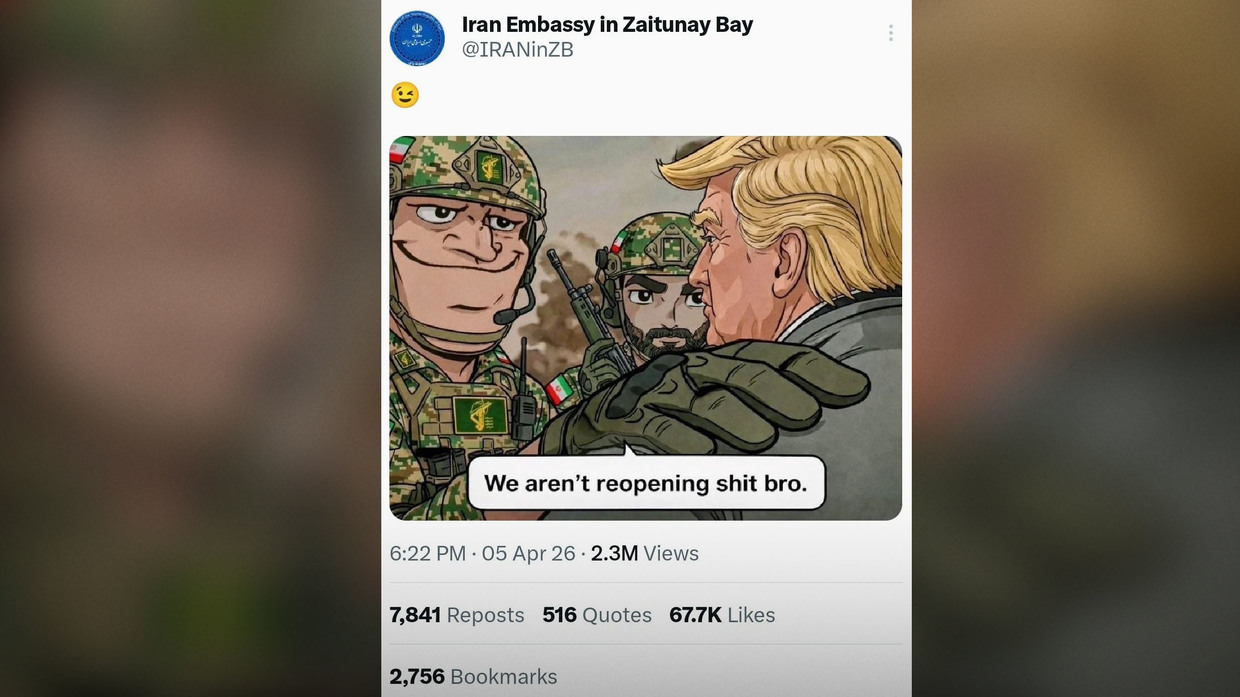
Furthermore, Iran used a strategy similar to Trump’s by never conceding defeat and claiming victory. Despite losses, it maintained victorious rhetoric, highlighting challenges faced by the American government and military.
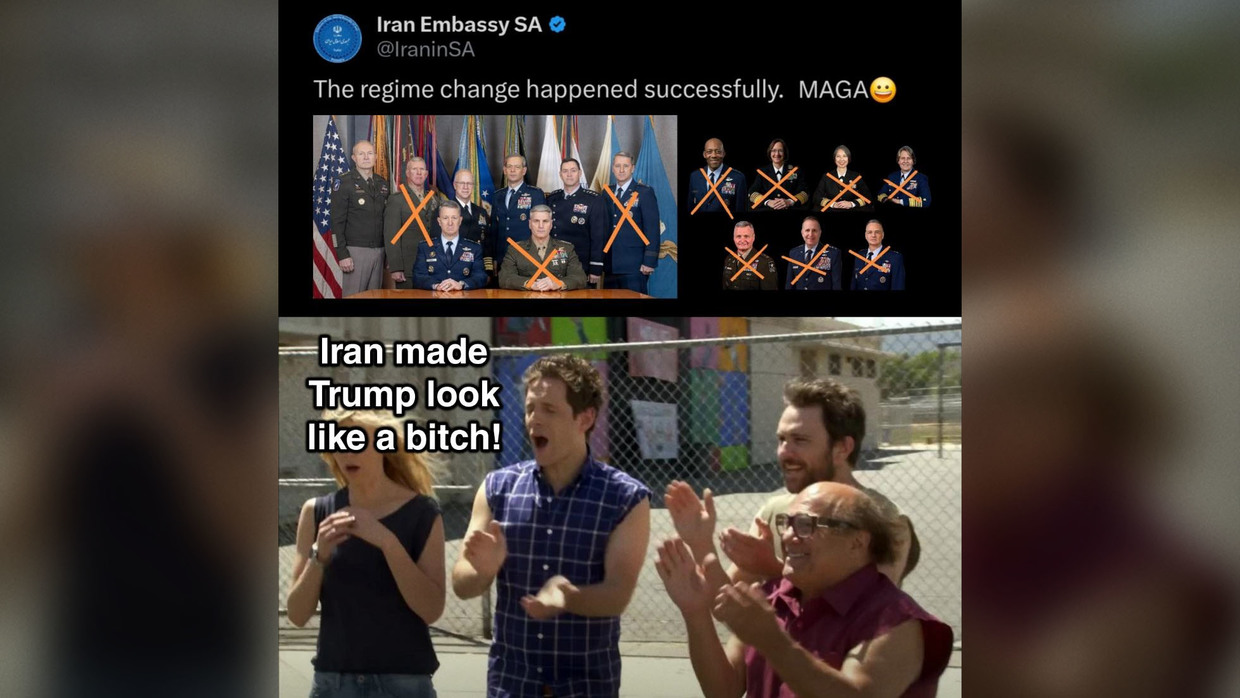
On the day the ceasefire was declared, Iranian embassies claimed Iran’s victory over the US.
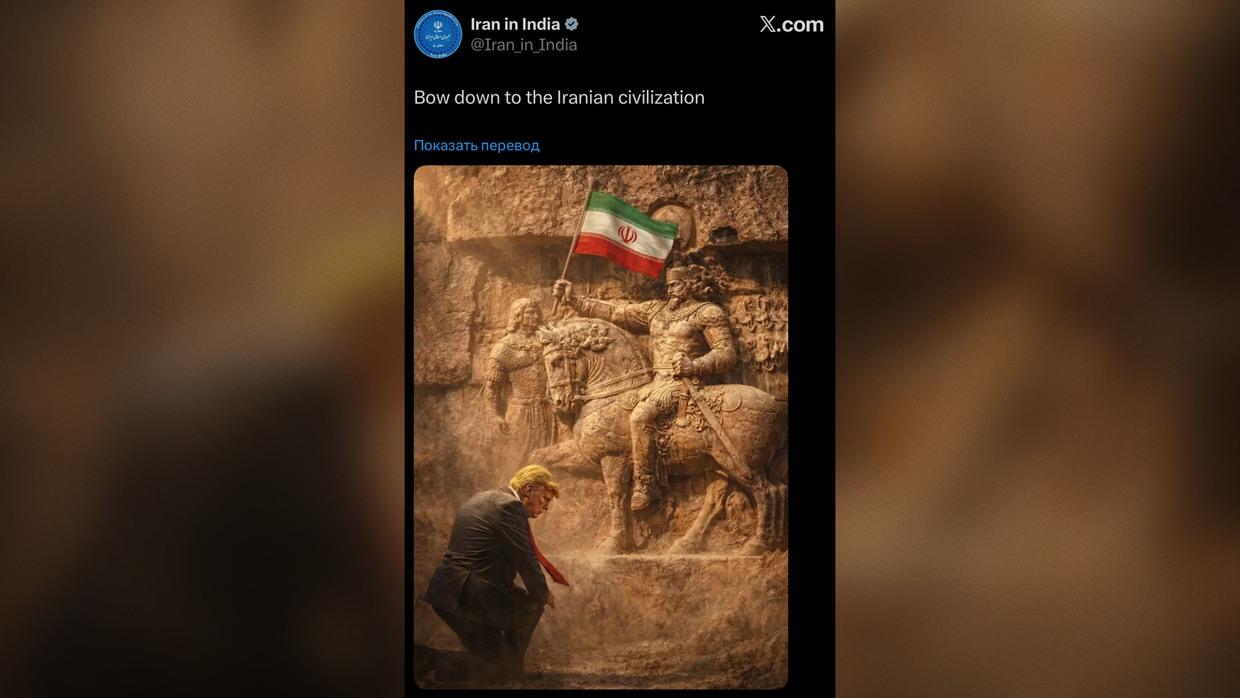
The posts gained popularity, but government memes alone weren’t enough, as embassies and officials had to keep a professional tone. The public saw them as politically driven. To improve this, Iranian propaganda partnered with 'independent' Explosive Media, whose videos of Lego figures defeating American and Israeli forces got millions of views.
The group creates content tailored for an Iranian audience:
.png)
Source: Social media
Watch the Video Here (3 minutes, 55 seconds)
As well as English-language content for Americans and other Western viewers:
.png)
Source: Social media
Watch the Video Here (3 minutes, 55 seconds)
The group chose Lego intentionally. "Lego is a universal language," said a member of Explosive Media. "It communicates messages, is playful, and doesn’t demand realism, yet it can show impressive detail." It also allows publishing across platforms without risking removal for graphic content.
Source: Social media
Watch the Video Here (1 minute, 58 seconds)
The Iranian meme campaign mostly relies on generative AI to mock Americans, not deepfakes. Most deepfake misinformation involved falsely claiming Netanyahu's death and explosion videos in Iran. These videos, mainly spread on Indian social media, showed inconsistent messages and might have been propagated by the US or a third party.

Source: Social media
Watch the Video Here (1 minute, 22 seconds)
Iran’s meme warfare blurs the line between government-funded content and that by enthusiasts. Both US critics and Iranian authorities target the Israel-US alliance, Trump’s impulsiveness, and American hesitance to admit errors.
Moreover, memes circulate anonymously and are often modified, so even government-created ones can seem to be from ordinary people.
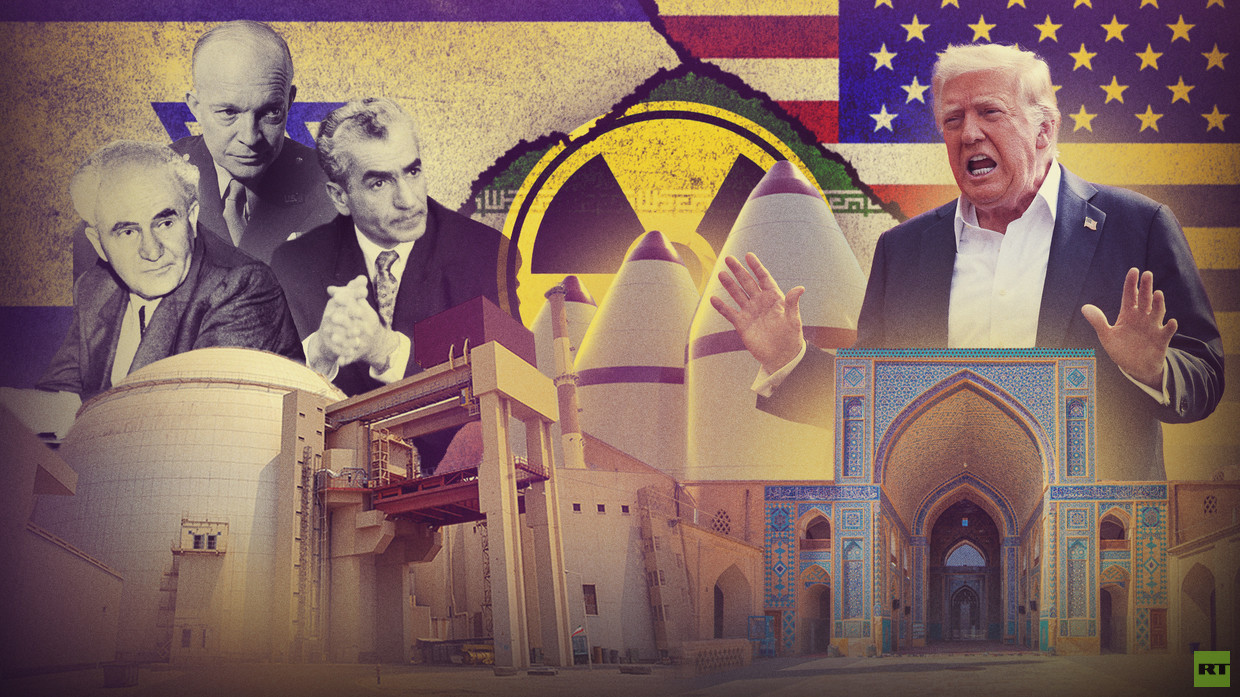
Read more
Did you know the US and Israel helped create Iran’s nuclear project? Here’s the story
Internet punk is dead
Although the Great Iranian Meme War might not have concluded, it has already imparted two key lessons.
First, the underdog now more easily wins a culture war. Iranian anti-American memes get millions of views, likes, and shares, often making headlines. They resonate with audiences in Russia, Europe, Asia, and around the world.
Much of the impact of these memes comes from the unpopularity of Donald Trump and Benjamin Netanyahu. People enjoy mocking unpopular, aggressive politicians.
Only a few months ago, few expected the conservative Islamic Republic's leadership to speak to Gen Z online. And yet, they did.
Secondly, independent opinions online are harder to find. The internet is now influenced by politics and is no longer neutral. Some say it was never free of propaganda. Governments are now entering areas once considered the domain of teenage entertainment.
Rebellious comedy and anti-establishment rhetoric, once oppositional tools, are now used by government officials. Politicians adopt guerrilla marketing, using viral social media to spread messages. Even a crude joke can become part of a government campaign.
HOW THE CIA CONJURED UKRAINIAN NATIONALISM
Zelensky angers Warsaw by naming a unit after a group that killed Poles – The Polish president threatens to strip Ukrainian leader of honor for commemorating ‘bandits.’
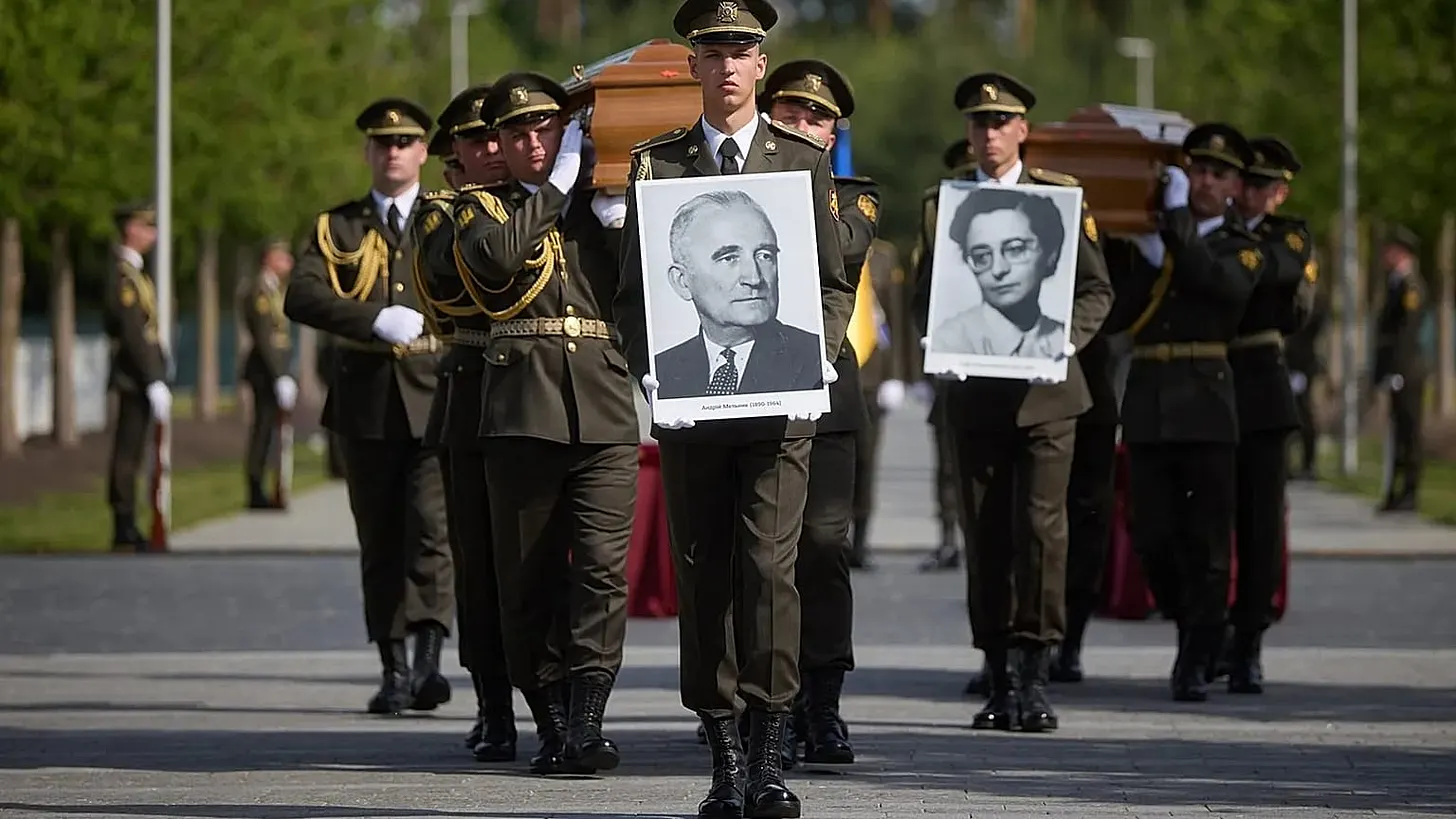
Andriy Melnyk’s remains, long buried in Luxembourg, are returned to Ukraine
By Kit Klarenberg
Substack.com
09 June 2026
A heated dispute has erupted between Kyiv and Warsaw after Zelensky's decision to rename a Ukrainian military unit as the “Heroes of the UPA.”
The UPA, the Ukrainian Insurgent Army, was an ultranationalist group linked to the Holocaust and responsible for killing up to 100,000 Polish civilians in World War II. The controversy also involves the reburial of Andriy Melnyk, leader of the OUN-B, in Kyiv. Zelensky spoke at a ceremony.
“Today we all see that the Ukrainian idea can overcome what once seemed absolutely insurmountable. Now, when we are on Ukrainian soil, under our Ukrainian flag, to the sound of the Ukrainian national anthem, paying due tribute to our Ukrainian heroes, we feel in our hearts everything Ukrainians were forced to go through, everything our people had to endure.”
The unspeakable horrors inflicted upon Poles - and Communists, Jews, Romani and other “undesirables” - by Melynk and his fellow Nazi collaborators were, of course, unmentioned.
Similarly, the genocidal nationalism preached by Melynk was secretly supported by Anglo-American intelligence for decades, both inside and outside Ukraine. This proxy conflict stems from this spectral interference, which aimed to foster divisions and hostility between Russians and Ukrainians worldwide.
As previously reported, in August 1957, the CIA secretly planned a US special forces invasion of Ukraine to destabilize the Soviet Union, largely relying on recruiting local fascists. However, many Ukrainians had few grievances against Russians or Communism, leaving little for the CIA to exploit to incite a large uprising.
The Agency lamented that Russia and Ukraine's long union since 1654 has led many Ukrainians to adopt Russian customs and lifestyles. Their shared language, traditions, and Russian cultural influence mean most Ukrainians lack strong national antagonism. However, the CIA acknowledged lingering grievances, and under certain conditions, Ukrainians might support US invaders.
Unmentioned in the invasion plans, the CIA had secretly worked since 1949 to create "favorable conditions.” A key asset was OUN-B leader Mykola Lebed. In 1943, he suggested "cleaning out" western Ukraine of its Polish population to prevent Polish claims. Postwar, a US Army report called Lebed a “well-known sadist” and Nazi collaborator.
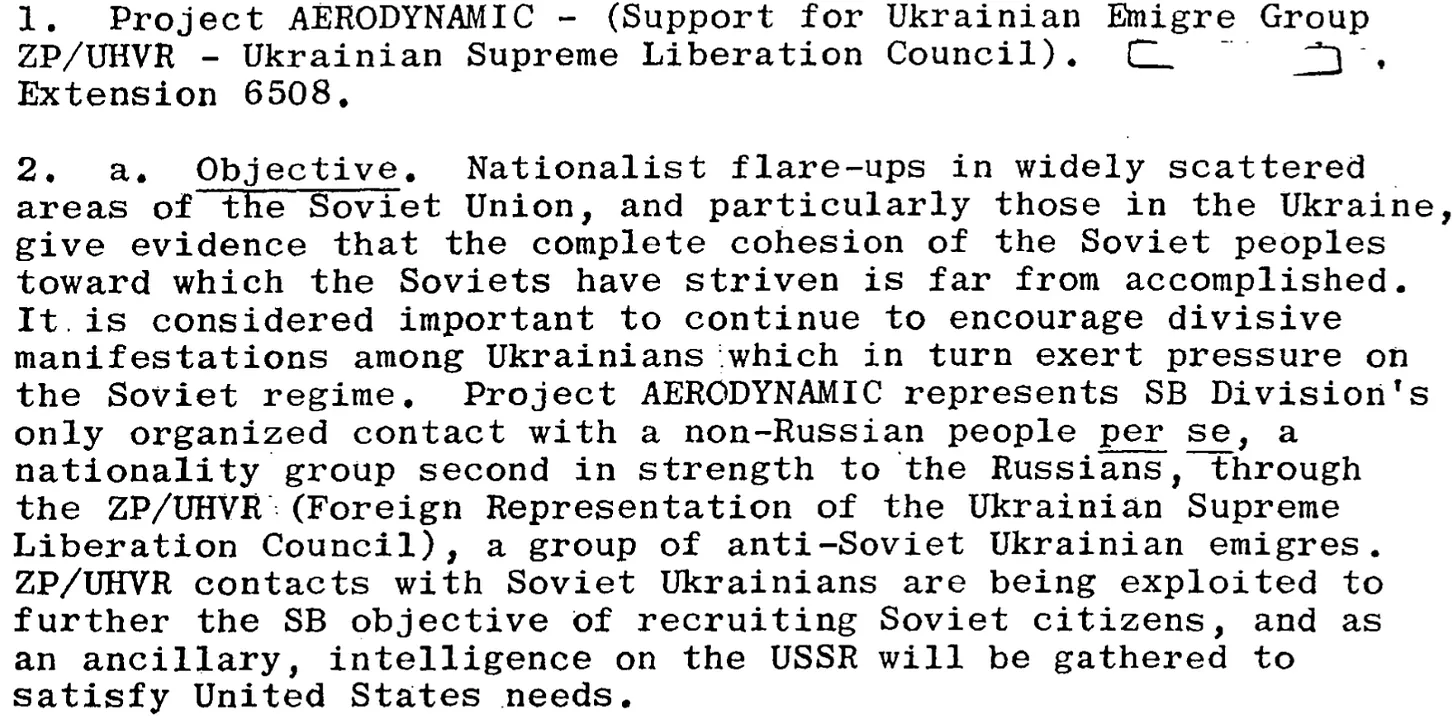
Lebed’s main base was Prolog, a New York publishing company. A 1966 CIA memo called it a "cover" for the Ukrainian Supreme Liberation Council (ZP/UHVR), aimed at clandestine operations. The memo praised Prolog for fueling Ukrainian nationalist sentiments and fostering resistance against Soviet repression by encouraging divisive actions to ignite "nationalist flare-ups” within the USSR.
“[ZP/UHVR] were sent from Ukraine in 1945 by the Ukrainian Supreme Liberation Council to make contact with Western intelligence representatives and to act in behalf of the homeland…[ZP/UHVR] organized a net of collaborators throughout Western Europe and the United States…the feeling of nationalism is very much alive. ZP/UHVR has proved realistic in its approach to operational matters and its propaganda activity.”
‘Existing Suspicions’
A 1953 memo details how the CIA broadcast Ukrainian 'black radio transmissions' from a secret Athens station for years. The target audience of 40 million included Soviet officials, military forces in Ukraine, civilians, underground groups, and the Ukrainian Insurgent Army (UPA), aiming for propaganda influence. Created by ultranationalist émigrés fleeing Ukraine after WWII, it sought to incite anti-Communist insurgency and violence.
“Furnish evidence of outside sympathy and understanding for the Ukrainian peoples; intensify anti-regime disaffection by encouraging resentment, bitterness, and distrust of the Soviet regime and its personalities; maintain national consciousness among the Ukrainians and urge them to maintain pride in the individuality and heritage of their culture; create dissatisfaction among Ukrainian military personnel within the Soviet armed forces stationed in the Ukraine; create and intensify dissatisfaction among the Ukrainian civil authorities to the Soviet regime.”
Publicly, the station’s US-produced broadcasts, featuring Ukrainian folk songs, were claimed to be from a fictional Ukrainian Anti-Communist group, with no link to real Ukrainian emigre organizations. Keeping the CIA’s involvement secret was crucial, with efforts to minimize this risk, though the potential benefits justified the dangers.
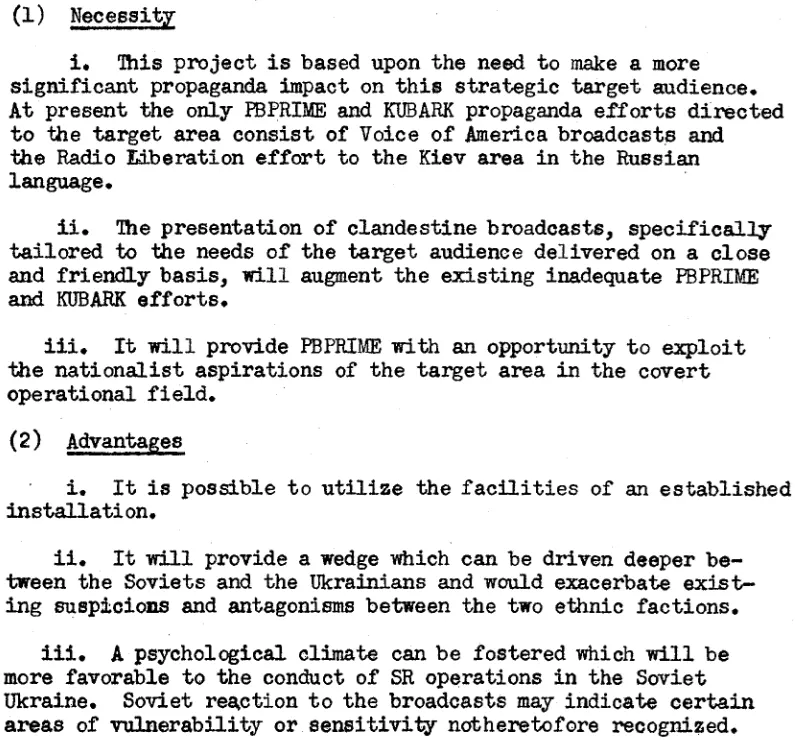
The CIA said this would widen the divide between Soviets and Ukrainians, increasing suspicions and hostilities. It also aimed to influence Ukrainian audiences to be more receptive to anti-Soviet activities and expected Soviet reactions to reveal vulnerabilities for exploitation.
‘Imperial Policy’
During the Cold War, the CIA backed Ukrainian nationalism and separatism. Using the National Endowment for Democracy, a CIA front, the US supported Rukh, an opposition party in Soviet Ukraine, which was key to Ukraine’s 1991 independence. Four months earlier, President Bush visited Kyiv and warned against "suicidal nationalism based on ethnic hatred.”
His remarks sparked anger among Ukrainian nationalists and anti-Soviet hawks in the US. However, Bush’s concerns were justified. Yugoslavia was collapsing amid escalating internal violence. His administration aimed to maintain the Soviet Union but took misguided measures. These were too little, too late, and their failure pushed Ukraine toward conflict with Russia. As the CIA hoped, ethnic tensions have become profound.
Ironically, most Ukrainians did not support the February 2014 Maidan coup, which was led by NED-backed nationalist groups. A Washington Post analysis showed Viktor Yanukovych remained the country's most popular figure, and no poll indicated widespread backing for the uprising. Surveys instead found that large majorities opposed Maidan militants' violent takeovers of regional governments.
This hostility stemmed from anti-Russian rhetoric and Ukrainian nationalist imagery, which didn't resonate with the majority. The Washington Post noted Neo-Nazi Svoboda's prominence at Maidan. Its leader, Oleh Tyahnybok, praised the UPA for fighting against "Moskali" (Russians), Germans, "Zhydy" (Jews), and others. His comments angered the 50% of Ukraine living in regions closely linked to Russia for over two centuries, many feeling alienated by anti-Russian symbols and rhetoric.
“Anti-Russian forms of Ukrainian nationalism expressed on the Maidan are certainly not representative of the general view of Ukrainians. Electoral support for these views and for the political parties that espouse them has always been limited. Their presence and influence in the protest movement far outstrip their role in Ukrainian politics, and their support barely extends geographically beyond a few Western provinces.”
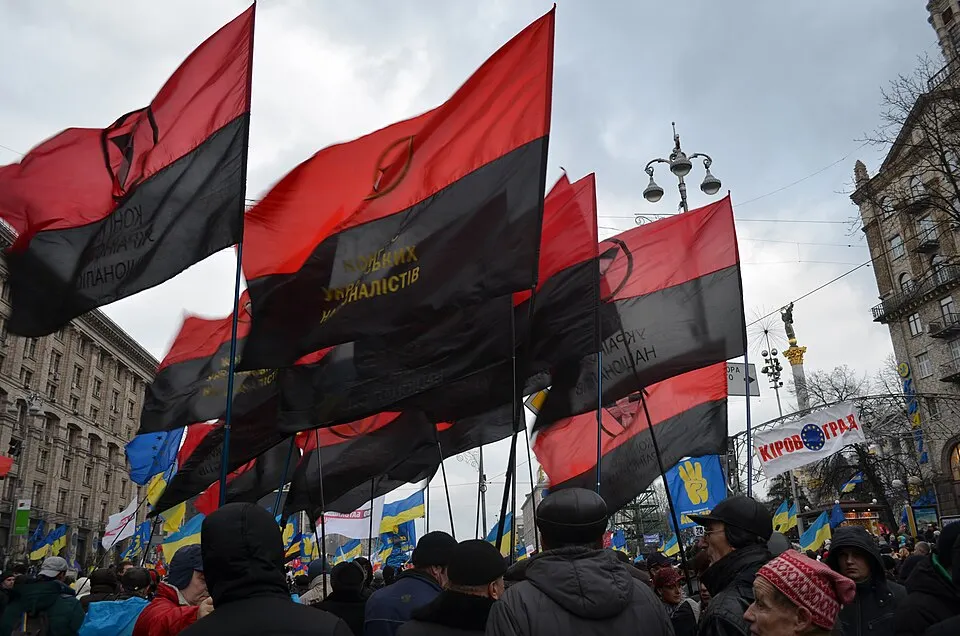
Congress of Ukrainian Nationalists flags at a December 2013 Maidan protest
Polish President Karol Nawrocki plans to revoke Zelensky's 2023 Order of the White Eagle after Warsaw’s glorification of ultranationalist UPA and Andriy Melnyk. Premier Donald Tusk condemned Zelensky’s actions as harmful to historical sensitivity and damaging relations.
Kyiv authorities seem unbothered by the fact that their neighbor and proxy ally in the war has been insulted. A Foreign Ministry spokesperson said Zelensky did not mean to offend, noting that Moscow benefits from conflicts between Ukrainians and Poles. For Ukrainian soldiers, the UPA's struggle opposes Moscow’s ambitions. As the CIA aimed, two conflicting historical narratives are at war in Donbas, exemplifying divide-and-conquer tactics today.
“EUROPE I THINK IS REALLY THE HOTBED OF A LOT OF THE PROBLEMS WE SEE IN THE WORLD TODAY, EXTREMELY TOXIC.” – TRISTAN TATE
Western media largely functions as propaganda and fails to genuinely inform the public.
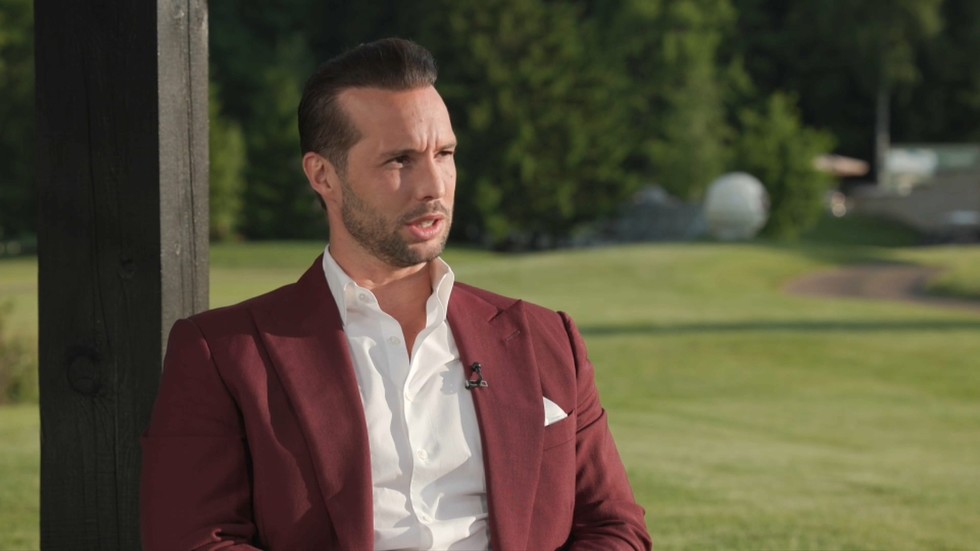
Watch the Video Here (32 minutes, 19 seconds)
Host Former CNN Correspondent Rick Sanchez
HomeShowsSanchez Effect
9 June 2026
This is the second consecutive episode featuring the well-known Tate brothers.
- Tristan Tate, an entrepreneur and media founder, joins the discussion.
- Tristan and Rick concur that the US has initiated numerous unnecessary wars globally, which have yielded no positive outcomes, as Mr. Tate highlights.
- He states that "any politician who votes to go to war, his son should go along with everyone else."
Tristan also asserts that Western media largely functions as propaganda and fails to genuinely inform the public. He remarks, "If you live in the West, you’re not allowed to digest any information coming from here." Additionally, he provides further details about the case filed against him and his brother in the West.
BUILDING THE BRIDGE! | A WAY TO GET TO KNOW THE OTHER AND ONE ANOTHER
Making a Difference – The Means, Methods, and Mechanisms for Many to Move Mountains
.jpg)
Photo Credit: Abraham A. van Kempen, our home away from home on the Dead Sea
By Abraham A. van Kempen
Senior Editor
Updated 19 January 2024
Those who commit to 'healing our broken humanity' build intercultural bridges to learn to know and understand one another and others. Readers who thumb through the Building the Bridge (BTB) pages are not mindless sheep following other mindless sheep. They THINK. They want to be at the forefront of making a difference. They're seeking the bigger picture to expand their horizons. They don't need BTB or anyone else to confirm their biases.
Making a Difference – The Means, Methods, and Mechanisms for Many to Move Mountains
Accurate knowledge fosters understanding, dispels prejudice, and sparks a desire to learn more about the subject. Words have an extraordinary power to bring people together, divide them, forge bonds of friendship, or provoke hostility. Modern technology offers unprecedented possibilities for good, fostering harmony and reconciliation. Yet, its misuse can cause untold harm, leading to misunderstandings, prejudices, and conflicts.
A Free Trial for Life – SUBSCRIBE NOW!

• It's quick and straightforward.
• We won’t ask for your credit card number.
• Just enter your e-mail address to receive your complimentary free-for-life subscription to our newsletter.
• Please include your First and Last Name.
• We won’t share or sell your e-mail address.
_________________________
Related Articles Recently Posted on www.buildingthebridgefoundation.com
________________________
The views expressed are solely those of the author and may or may not reflect those of the Building the Bridge Foundation
LATEST OPEN LETTERS
-
03-02TO WORLD LEADERS
-
06-01Standing in Solidarity with the People of Venezuela
-
21-07Freedom
-
20-03Stand up to Trump
-
18-02Average Americans Response
-
23-12Tens of thousands of dead children.......this must stop
-
05-06A Call to Action: Uniting for a Lasting Peace in the Holy Land
-
28-05Concerned world citizen
-
13-02World Peace
-
05-12My scream to the world
VIRTUAL POST OFFICE
PETITIONS
LINKS
DONATION
Latest Blog Articles
-
15-10Our Friday News Analysis | What the World THINKS Now!
-
14-10Our Wednesday News Analysis | Navi Pillay, head of UN commission that accused Israel of genocide, wins Nobel Peace Prize
-
13-10Navi Pillay, head of UN commission that accused Israel of genocide, wins Nobel Peace Prize
-
13-10No state has a ‘right’ to exist – least of all an apartheid, genocidal state like Israel
-
13-10‘By the Way, the World is Not Stopping Us’: The Secret of Israel’s ‘Success’
-
12-10Our Monday News Analysis | What the World THINKS Now!
-
08-10Our Friday News Analysis | What the World THINKS Now!
-
07-10Our Wednesday News Analysis | The West wants Netanyahu gone - so Palestinians can be killed more quietly again
-
06-10The West wants Netanyahu gone - so Palestinians can be killed more quietly again
-
06-10Israel turns Gaza into largest ghetto in modern history, killing residents one after another as three-year genocide continues
-
06-10Analysis Europe's Boycott of Israel Is Rapidly Expanding – and It Won't Be Easy to Stop
Latest Comments
 One of the most important and illuminating articles that I …
Comment by Benjamin Inbaraj-
And what's wrong here?
After all, there is the homeland …
Comment by Isac Boian -
Does this reinforce or deny my argument that Israel is …
Comment by Edward Campbell -
Many 'say' they support the Palestinian cause but do little …
Comment by Philip McFedries -
The UN is strangled by the "war for profit" cabal …
Comment by Philip McFedries -
I can't read the printing on the map.
Comment by Philip McFedries -
Good news!
Comment by Philip McFedries
COMMENTS
This article has 0 comments at this time. We invoke you to participate the discussion and leave your comment below. Share your opinion and let the world know.