 NEWSLETTER
The Friday Edition
Our Friday News Analysis | What the World Reads Now!
Helping to Heal a Broken Humanity (Part 78)
The Hague, 3 April 2026 | If you know of a decisive story, tell the world! We're still searching.
.jpg)
Watch the Video Here (1 minute, 26 seconds)
Department of Defense (War)
Washington, D.C.
25 March 2026
HEGSETH PRAYS FOR ‘OVERWHELMING VIOLENCE AGAINST THOSE WHO DESERVE NO MERCY’
- US Secretary of Defense Pete Hegseth conducted the first monthly Christian worship service at the Pentagon since the start of the US-Israeli conflict with Iran on Wednesday.
- He prayed for “overwhelming violence against those who deserve no mercy."
- “Let every round find its mark against the enemies of righteousness and our great nation,” Hegseth stated during the livestream.
...
Christians worldwide celebrate Good Friday, with Western Christians on April 3 and Eastern Orthodox Christians on April 10.
What exactly do Christians commemorate on Good Friday?
On Good Friday, Christians are reminded of Jesus’ humility, “Father, forgive them for they don’t know what they’re doing.”
Let us, Jews, Christians, and Muslims—united in our Abrahamic Faiths—pray for Pete Hegeseth that someday soon he may see the Light of God of many names – Eloah, Allah, Yaweh, Jehovah.
May he be enveloped in God’s Holy Presence, filled with joy, where mercy and compassion abound.
Amen
Click here for Part 2
Click here for Part 3
Click here for Part 4
Click here for Part 5
Click here for Part 6
Click here for Part 7
Click here for Part 8
Click here for Part 9
Click here for Part 10
Click here for Part 11
Click here for Part 12
Click here for Part 13
Click here for Part 14
Click here for Part 15
Click here for Part 16
Click here for Part 17
Click here for Part 18
Click here for Part 19
Click here for Part 20
Click here for Part 21
Click here for Part 22
Click here for Part 23
Click here for Part 24
Click here for Part 25
Click here for Part 26
Click here for Part 27
Click here for Part 28
Click here for Part 29
Click here for Part 30
Click here for Part 31
Click here for Part 32
Click here for Part 33
Click here for Part 34
Click here for Part 35
Click here for Part 36
Click here for Part 37
Click here for Part 38
Click here for Part 39
Click here for Part 40
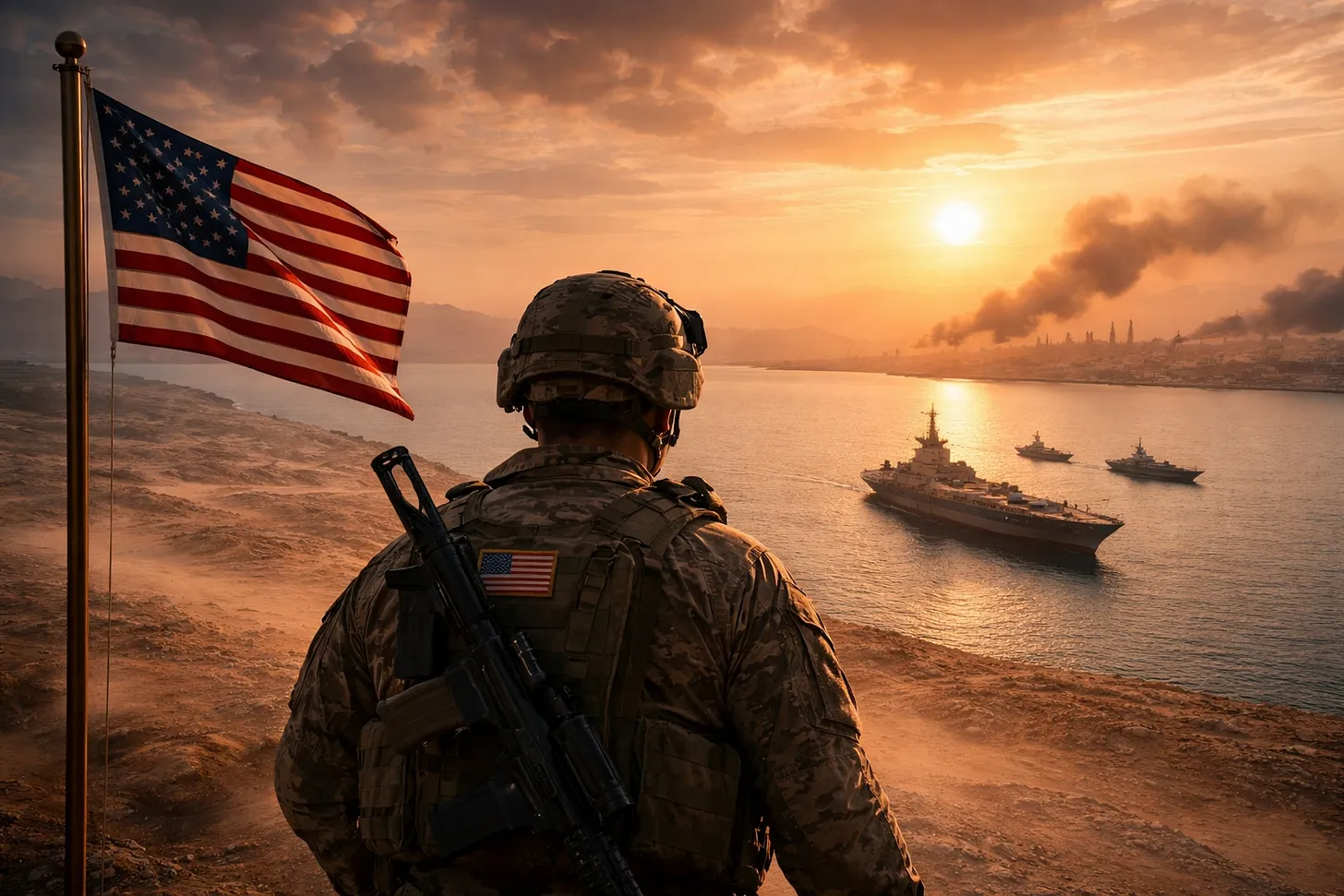
Kenneth Schmidt argues that the US should end the Iranian War as it ended the Korean conflict. Schmidt’s ‘A Modest Proposal to End this Stupid War’ was originally published here.
Editorial | Wisdom Shall Prevail
By Abraham A. van Kempen
3 April 2026
We have reached a pivotal moment in human history. The unipolar moment that emerged at the beginning of Western Civilization has come to an end. Our Collective West – the EU, US, NATO, and their Coalition of the Wannabees – is fighting it relentlessly to the bitter end. Nonetheless, Western hegemony is shooting itself in both feet. Soon there won’t be any feet left.
It cannot divide, conquer, defeat, and partition Russia by using Ukraine as its proxy. Neither will it succeed in West Asia, East Asia, or even in the Western Hemisphere. South American countries will never again become banana republics serving a heartless nation ‘under God’. The world is changing, and the only way to survive is to work together instead of against each other.
:format(webp)/s3/static.nrc.nl/wp-content/uploads/2026/04/02103712/020426BUI_2032749611_Iran1.jpg)
Wow! Majestic! A testament to human ingenuity. Yet, one supersonic missile could sink it.
Before it gets better, it will get worse.
Let me revisit my suggestion from last week. Instead of being the hegemon’s representative in West Asia, the better part of Israel could become a friend to its 400 million neighbors after the war. The Gulf States, including Iran, will free themselves from Western hegemony. Ukraine, by voting out the current power in Kyiv forcibly installed by the West, might forge better ties in Central and Eastern Europe. In East Asia, only the usual suspects desire conflict. This time, Far East Asians will stand firm to prevent the West from dividing and conquering Asian nations. By rejecting Western unipolarity, the 21st century could see shared prosperity in Asia. We must unite and collaborate. Western hegemony – neo-colonialism – will fade away, making room for a more peaceful and prosperous future for all, as in: mi casa es tu casa.
I hope Presidents Trump, Xi, and Putin will build friendships for peace with wisdom. The world has evolved with mutual deterrence. Iran gives the Collective West a run for their money. Iran will not let them steal its oil and gas. The world’s oil belongs to all of humanity. It helps fuel progress. The trade routes and waterways no longer need ‘protection.’ They must remain open to ensure freedom of movement. Cease weaponizing the Strait of Hormuz, the Red Sea, and the South China Sea, to name a few. The Strait of Hormuz no longer belongs to the West. Neither does it belong to Iran.
Happy Easter!
Abraham A. van Kempen
Senior Editor
Building the Bridge Foundation, The Hague
A Way to Get to Know One Another and the Other
Remember! Diplomacy is catalytic—transformative —while military action is cataclysmic—destructive and catastrophic.
When faced with the options to be good, bad, or ugly, let’s build bridges, not burn them. After all, mutual deterrence reigns.
THEODORE POSTOL: IRAN'S MISSILES & DRONES WERE UNDERESTIMATED
Theodore A. Postol (born 1946) is a professor emeritus of Science, Technology, and International Security at the Massachusetts Institute of Technology (MIT). Prior to his work at MIT, he worked at Argonne National Laboratory, the Pentagon, and Stanford University. He was on the editorial board of the journal Science & Global Security until 2019. Postol is also a prominent critic of U.S. missile defense systems, frequently challenging the technical efficacy of military technologies through independent analysis.
Postol rose to national prominence in the early 1990s when he challenged U.S. Army claims regarding the success rate of the MIM-104 Patriot missile during the first Gulf War. While the government initially claimed a near-perfect interception rate, Postol’s analysis—later supported by a House Government Operations Committee investigation—concluded the actual success rate was likely below 10%.[1] For his work in exposing misinformation about the national missile defense, he has received numerous honors, including the Leo Szilard Prize (1990) and the Norbert Wiener Award (2001).[2]

Watch the Video Here (53 minutes, 48 seconds)
Host Prof. Glenn Diesen
Substack.com
31 March 2026
Summary of Interview
Prof. Theodore Postol (MIT) argues that the evolving conflict after the Israel/US strike on Iran on February 28 favors Iran long-term, due to Iran’s resilient underground infrastructure and the rising effectiveness of precision drones and missiles against air-defense sensors.
Key points
Underground survivability: Iran’s retaliatory capabilities are described as largely based in tunnel networks; even if entrances are found, branching tunnels and concealed launch apertures make destruction difficult.
Warhead effects and accuracy: The speaker suggests that Iran’s more modern ballistic missiles appear more stable on reentry and may be significantly more accurate than earlier systems (which he previously estimated at ~1 km, improving to hundreds of meters).
Warning time declining: He claims radar degradation reduces civil-defense warning times in Israel (from roughly minutes to tens of seconds or less), increasing societal stress and forcing greater reliance on underground shelters.
Drones as a disruptive precision tool: Drones are framed as inexpensive platforms that become highly capable when paired with satellite navigation and real-time communications.
Commercial tech leverage: He argues that commercially available components (satnav receivers; Starlink terminals) can enable real-time video and command links, making targeting more precise and broadly accessible.
Economics of interception: He emphasizes unfavorable cost exchange ratios (low-cost drones versus expensive interceptors), and suggests interceptor stocks may be depleted rapidly.
Radar-first campaign logic: He argues that destroying radars (“eyes and ears”) is more decisive than targeting interceptors, and cites examples he interprets as drone strikes on radar sites (including in Bahrain and Gulf states).
Space-based warning limits: Infrared satellites can detect launches (via rocket plumes) but do not provide the fine-grained tracking needed for localized warnings, potentially leading to countrywide alerts and greater disruption.
Possible stopgaps: He mentions acoustic detection as a partial method to locate drones, but notes limitations due to sound propagation and clutter.
Possible Implications
Strategic trajectory: He predicts the war will become increasingly unfavorable for Israel and the US as Iran’s survivable forces continue retaliatory operations.
Defense erosion: Degraded radar coverage reduces effective interception and warning, compounding civilian disruption and psychological strain.
Shift in the military balance: Low-cost precision-strike systems (especially drones) can neutralize high-value air-defense assets and undermine conventional defense advantages.
EXTRA, EXTRA | THEODORE POSTOL: IRAN ALREADY HAS NUCLEAR DETERRENT TO ISRAELI NUCLEAR STRIKE
MIT Professor and Pentagon advisor Ted Postol explains Iran is near a “nuclear threshold,” i.e., with materials/capabilities that could enable rapid production of weapons-usable material.

Watch the Video Here (52 minutes, 54 seconds)
Host Prof. Glenn Diesen
Substack.com
11 March 2026
Claims About Iran’s Nuclear “Threshold” Status and Escalation Risks
- Postol argues Iran might deter attacks without a deployed arsenal because latent capability could allow rapid weaponization under existential threat.
- He claims Israel is more likely to initiate nuclear use, and that an Israeli nuclear strike on Tehran could trigger Iranian retaliation.
- He concludes that the humanitarian consequences of nuclear use make de-escalation and diplomacy the preferable course.
Postol’s recommendation is de-escalation: he urges Israel and the United States to prioritize diplomacy and adopt a “live and let live” posture that reduces incentives for worst-case nuclear planning on all sides.
Prof. Theodor Postol: I believe Iranians can develop nuclear weapons because they have 60% enriched uranium hexafluoride (UF6) stored in durable, compact canisters with several dozen kilograms. Converting UF6 into uranium metal is a key step toward weaponization.
He claims Iran’s 408 kg of 60% UF6, after enrichment and conversion, could support about 10–11 simple fission weapons.
UF6 is used because it can be fed into gas centrifuges. When heated, it becomes a gas and is processed through centrifuge cascades. Over weeks, a cascade can enrich UF6 from 60% to about 90%, weapons-grade. This process produces chemical UF6, which must then be converted into metal.
He describes a small-scale conversion: reacting UF6 with hot hydrogen fluoride to produce UF4, separating the solid, then reducing it with calcium or lithium at high temperature to make uranium metal ingots. This could be done in tunnels covering a few hundred square meters, followed by part machining.
He explains a simple uranium “gun-type” design that wouldn't require testing before use, citing the U.S. Hiroshima weapon as an example of an untested uranium design.
He states that the timeline could be just weeks or less, involving multiple cascades. He also argues that external oversight of centrifuge manufacturing decreased after the U.S. exited the nuclear deal and was not promptly reinstated.
GUEST EDITORIAL | TRUMP’S ADDRESS TO THE IDIOCRACY
A war machine driven by decay and delusion

Alexander Dugin on the clown emperor and the delusional war machine.
By Alexander Dugin
Multipolar Press
Substack.com
2 April 2026
Trump addressed the nation briefly, appearing pitiful and broken with sagging cheeks and swollen eyelids, clearly showing deterioration. Despite this, he threatened Iran with ongoing war, now extending over several years, with a likely ground operation but not yet openly declared. He echoed Hillary Clinton's phrase about Libya, vowing to “bomb Iran back into the Stone Age, to which it belongs.” It's hard to determine which “age' Jeffrey Epstein's civilization belongs to, especially as the West seems to conflate and rearrange major epochs of decline. Ultimately, what we observe now resembles an idiocracy.
Most comments on Trump’s speech are mocking, sarcastic, or negative, with only bot efforts trying to downplay the failure by repeating bland praise.
Many of Trump’s former supporters say “the old man has lost it,” with short videos comparing Trump to Boris Yeltsin—both seen dancing and gesticulating—becoming more common; Trump, who only drinks Diet Coke, is believed by many in the US to have been caught by Epstein and Israeli intelligence, making him a blackmail victim. This, supposedly, led to his initiation of the Iran war, which he now continues amid widespread public opposition.
Trump stated that healthcare, living costs, and food security are not his concern; his focus is on war. This reflects the kind of “president of the whole human world” he claims to be.
He was elected on promises that were the complete opposite.
Trump’s speech marks a total political and psychological failure amid a major war now resembling a Third World War.
The United States, led by Trump and Zionist supporters, seems to prepare for war against Iran for Israel. European leaders focus on Russia. NATO is divided, and peace is ignored by most of the fractured collective West.
Whether we like it or not, we are involved in this world war—fighting on our Ukrainian front.
In a large-scale war, never underestimate the enemy, no matter how weak they seem. Strength must be quickly mobilized by any means. Despite Trump’s decline, the U.S. remains a formidable power. NATO countries in Europe still threaten us. For Russia, despite peaceful intentions, fighting is the only option. Our enemies plan prolonged, brutal war against us. This cannot be ignored, and hopes for peace should be postponed indefinitely.
Peace or war, peace or war, peace or war? War! Freedom or death, freedom or death, freedom or death? War!
— Egor Letov
(Translated from the Russian)
PROF. JOHN MEARSHEIMER: WILL TRUMP GO KAMIKAZE?
Judge Andrew Napolitano and Professor John J. Mearsheimer argue that the reported U.S. objectives in the war involving Iran have not been achieved and that conditions have deteriorated (notably the closure of the Strait of Hormuz and projected economic fallout).
- President Trump’s public messaging is inconsistent—alternating between claims of successful negotiations and threats of expanded attacks—and is interpreted either as irrationality or as “flailing” under mounting strategic constraints.
- The discussion emphasizes escalation dynamics (air strikes, infrastructure targeting, and the movement of U.S. ground forces), likening the trajectory to Vietnam-era decision-making.
- They also assert that domestic political pressures—especially pro-Israel lobbying influence—reduce policy flexibility and suppress criticism, while increasing the risk of deeper military entanglement.

Watch the Video Here (35 minutes, 49 seconds)
Host: Judge Andrew Napolitano
Judging Freedom
31 March 2026
The war caused strategic failures and increased calls for escalation. Key objectives are still unachieved; the Strait of Hormuz remains closed, affecting the economy. There is pressure on U.S. leadership to escalate further, possibly involving ground forces, instead of accepting defeat.
Core Points
- Goals not achieved: They argue that stated objectives (e.g., constraining Iran, maintaining maritime access) have not been met, and conditions are worse than pre-war.
- Economic damage is the main cost center: They emphasize that prolonged energy disruption plus infrastructure destruction will compound global economic harm.
- Escalation logic is taking over: They frame U.S. moves (more troops, broader targeting) as climbing an escalation ladder with limited off-ramps.
- Hormuz is operationally hard to “force” open: They argue geography and Iranian capabilities make sustained naval/amphibious operations unusually risky.
- Messaging credibility problem: They portray public claims of successful negotiations alongside threats as evidence of instability or “flailing.”
Major Risks / Second-Order Effects (Per Their Framing)
- Quagmire risk: Incremental escalation (air → infrastructure → ground) without a clear “win condition,” likened to Vietnam-era dynamics.
- Global energy shock: Hormuz disruption plus damaged energy assets may elevate prices and slow growth beyond the conflict window.
- Proliferation incentive: They argue Iran’s motivation to pursue a nuclear deterrent increases after being attacked.
- Regional critical-infrastructure spillover: They cite desalination/energy infrastructure as escalation nodes with broader humanitarian/economic consequences.
- Legitimacy/coalition strain: They allege international-law violations could weaken diplomatic support and widen political polarization.
Indicators to Watch (Next 1–4 Weeks)
- Force posture: Additional U.S. combat-unit deployments, staging, or new basing permissions in the region.
- Mission shift signals: Public/private hints of “boots on the ground,” amphibious/airborne planning, or seizure of terrain/islands.
- Targeting scope: Expanded strikes on economic infrastructure (energy, ports, desalination) and corresponding retaliation patterns.
- Maritime status: Verified changes in commercial traffic, insurance rates, escorts, and interdiction incidents near Hormuz.
- Diplomacy reality-check: Independent confirmation of talks, intermediaries, and terms vs. purely rhetorical claims.
Key Unknowns / Verification Needs
- Negotiations: Whether substantive talks exist, who is participating, and what terms are actually on offer.
- Operational feasibility: Realistic military options to reopen/secure Hormuz without unacceptable losses.
- Battle damage: Reliable assessments of infrastructure damage and missile/drone effectiveness on all sides.
- End-state definition: What “success” means in concrete, verifiable terms and what would trigger de-escalation.
What is the Side of the Story that is Not Yet Decisive? Edited and annotated by Abraham A. van Kempen
JOE KENT: IRAN WAR, ISRAELI INFLUENCE & CREATING ISIS
Joe Kent, former Director of the National Counterterrorism Center who resigned in March 2026 amid the Iran conflict, criticizes the decision to attack Iran, highlights Israel's intrusive influence on U.S. foreign policy, and points out that Iran is a rational actor.
He also discusses the pro-war bias in Washington, the U.S. role in creating ISIS, the detrimental effects of prolonged wars, and the hubris after military intervention in Venezuela.
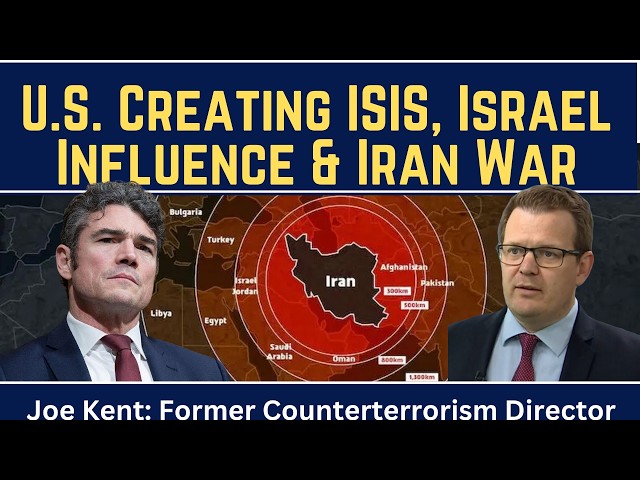
Watch the Video Here (56 minutes, 02 seconds)
Host Prof. Glenn Diesen
Substack.com
2 April 2026
Summary Transcript | Discussion on U.S. Policy Toward Iran and Regional Dynamics
Host, Prof. Glenn Diesen and Joe Kent (former Director, U.S. National Counterterrorism Center)
Host: Joe Kent, ex-director of the U.S. National Counterterrorism Center—thanks for joining us. You recently resigned over the war against Iran. Why do you think it was a mistake?
Joe Kent: My resignation letter stated that Iran was not an immediate U.S. threat. After Trump regained office, Iran followed a pattern of strategic escalation: withdrawing proxies, engaging in negotiations until the 12-day war and Operation Midnight Hammer, and not attacking U.S. forces during that time.
Joe Kent: After Iran's response to the nuclear site attack, Iran launched limited missile strikes at a mostly empty base in Qatar and returned to negotiations. Secretary Rubio noted the only “imminent threat” was from Israel, which struck Iran, seen as an existential threat. I think the whole chain depended on Israel’s initial attack.
Joe Kent: I oppose another Middle East regime-change war. I don't support Iran’s regime and recognize the IRGC as a terrorist threat, but the regime-change approach has failed in Iraq, Afghanistan, Syria, and Libya. It's a disaster and aligns with Israel's interests. Based on my deployments, I didn't want more young Americans to die in what I saw as an unnecessary war.
Israeli influence in Washington
Host: Israeli and U.S. interests intersect but aren't identical and may diverge. Why does Israel hold significant influence in Washington?
Joe Kent: Israel uses a layered strategy: it influences Congress through well-funded advocacy groups and PACs that support candidates and provide access, and maintains a crucial intelligence-sharing relationship. While Israel has capable intelligence services, over-reliance on the U.S. can limit its perspective, especially given the challenges of operating in the Middle East.
Joe Kent: Anyone familiar with the region knows intelligence isn't just for informing but also shaping policy. Israeli officials often bypass validation by directly engaging top U.S. leaders with urgent claims, amplified through sympathetic media and think tanks. This echo chamber can overshadow nuanced analyses, especially when senior decision-makers lack time to assess complex regional issues.
Negotiations, enrichment, and “moving the red line.”
Host: Your impression is that a deal might have been possible if the focus had stayed on transparency and preventing weaponization. Do you think Israeli input linked the nuclear issue with missiles, proxies, and other demands, complicating agreement and increasing war risk?
Joe Kent: Israel influenced U.S. goals over time. Trump’s initial focus was on preventing an Iranian nuclear weapon, allowing negotiations on enrichment and monitoring. The red line shifted from “no weapon” to “no enrichment," then expanded to missiles, drones, and proxies. Combining these issues can make agreements unfeasible.
Joe Kent: I oppose depicting Iran as irrational or unnegotiable. Iran showed it could manage escalation and restrain proxy attacks—especially after Trump’s return. I don’t support Iran’s regime, but external pressure for regime change often strengthens hardliners and weakens internal reformers.
Why Trump shifted toward war
Host: Many expected President Trump to avoid new conflicts and end "forever wars.” Why do you think he shifted toward conflict with Iran?
Joe Kent: Washington's momentum favors military action, backed by defense contractors, proxy ops, and bipartisanship. Israel and its supporters pushed President Trump toward a quick, historic resolution, overshadowing cautious instincts.
Iran’s strategy and the Strait of Hormuz
Host: Iran appears ready to escalate by targeting regional interests, disrupting maritime activity, and pressuring Gulf states. How do you assess Iran’s strategy, and what might they do next?
Joe Kent: Iran analyzed the past two decades and realized victory is avoiding defeat. It has a deep pool of leadership and widespread missile and drone capabilities. Minor disruptions near the Strait of Hormuz can influence global energy prices, and Iran recognizes this strategic advantage. Politically, prolonged conflict may grow unpopular in the US, and pressure on GCC nations could strain alliances.
Host: Can the U.S. declare victory and withdraw if it doesn't control the Strait of Hormuz? Is gaining control feasible?
Joe Kent: Militarily, we can deploy forces for short-term gains, but long-term control is hard. Opening the Strait might lead Iran to adopt asymmetric tactics, reintroducing risks and raising shipping costs. It's a cost-benefit decision: how much effort, money, and risk are we willing to accept for uncertain lasting results? A sustainable solution requires negotiations, including restraining Israeli actions that undermine de-escalation when talks are possible.
What a deal could look like
Host: If President Trump called today, what might an agreement involve? Is a broader regional security framework necessary, or could a limited de-escalation deal suffice?
Joe Kent: The first step is to demonstrate restraint by stopping U.S. support for offensive actions and warning that escalation will lead to consequences such as reduced military aid. This is essential for Iran and GCC countries to take U.S. de-escalation seriously. A practical approach links sanctions relief to reopening commerce and energy flows, restoring oil and gas markets, and promoting stability. While not comprehensive, this could halt violence and restore regional predictability.
Lessons from “forever wars.”
Host: Following conflicts in Afghanistan, Iraq, Libya, and Syria, what key lessons should U.S. leaders learn besides the need for an exit strategy?
Joe Kent: The main lesson is that regime change often doesn’t unfold as portrayed. Removing a leader from afar rarely results in being welcomed as liberators. Effective policies focus on goals like preventing terrorist safe havens, securing counterterrorism cooperation, and maintaining trade and energy stability. When objectives shift toward restructuring societies or influencing politics through proxies, the mission becomes limitless, leading to endless involvement.
Syria: blowback, factions, and instability risks
Host: You mentioned the U.S. helped create the environment leading to an al-Qaeda-linked person rising in Syria. How do you view U.S. involvement, and what might the future hold for Syria, given that Turkey, Israel, and various armed groups pursue different agendas?
Joe Kent: Syria’s history is linked to decisions like the Iraq War, which destabilized the region and helped al-Qaeda in Iraq and ISIS. Early protests against Assad were genuine, but the most influential anti-Assad groups were hardline Sunni factions aligned with or becoming al-Qaeda networks. Over time, these groups rebranded, gained external support—including from Turkey—and remained key in the conflict.
Joe Kent: Looking ahead, I'm skeptical about the outlook. A key issue is Turkey versus Israel: Israel wants to oust Assad but worries about new authorities and Turkish influence on its border. The current coalition struggles to meet Western counterterrorism demands while managing support from radicalized groups. The release and movement of ISIS-linked detainees and camp populations increase risks, as capacity for reintegration or thwarting network reformation may be lacking. These conflicting factors could cause Syria to fracture again.
Nuclear escalation risks
Host: Some analysts warn escalation could lead to nuclear deployment or conflict. How likely is this risk?
Joe Kent: Iran may face internal pressure to develop a nuclear deterrent similar to North Korea's, to prevent invasion or regime change. Opponents of U.S. negotiations may see these developments as confirmatory. De-escalation and resumed talks are essential, as frequent warnings about nuclear threats could make escalation inevitable. Nonetheless, public estimates often overstate Iran's nuclear capabilities; having enrichment capacity doesn't equate to an operational nuclear weapon.
Great-power dynamics: China and Russia
Host: How does this conflict affect broader great-power dynamics outside the region, especially China and Russia?
Joe Kent: China benefits as U.S. shifts focus to the Middle East, increasing its influence in the Pacific. Rising energy instability and attempts to trade in currencies like the yuan could weaken dollar dominance. Russia might use tactics similar to past ones, and energy disruptions could shift market dynamics, undermine sanctions, and raise costs in Europe and the U.S.
Ukraine and limits of U.S. leverage
Host: Do you see the Ukraine conflict as part of the 'forever war” framework? Also, how do you explain President Trump's inability to resolve it quickly, despite his desire?
Joe Kent: By the time Trump took office, Russia had gained momentum, and their idea of “winning” involves slow progress and big losses. Geography remains key, and stories can't override it. In my view, not decisively changing U.S. support early signaled to Russia that the U.S. wasn't fully committed to ending the conflict. Russian leaders plan around U.S. elections. If Washington wants leverage for peace, it should condition support and clearly outline what escalations will or won't be supported.
Outlook: How the Iran war could end
Host: Last question—do you expect this conflict to escalate or is there a way to reduce tensions?
Joe Kent: My core message is that without restraining Israel, we risk escalation, which could happen quickly or gradually. Israeli actions are likely to provoke responses that pull the U.S. back into conflict, despite intentions. If the U.S. sends troops and suffers casualties, public pressure may demand completing the mission, even if goals are vague. Successful strikes might only delay next demands or triggers. Iran's control of the Strait of Hormuz affects energy markets, despite U.S. claims of withdrawal. A sustainable solution requires halting escalation, creating de-escalation reasons, and resuming negotiations with limited aims.
Host: Thank you for your time and perspective.
'PUNCHING THEM WHILE THEY'RE DOWN': US & ISRAEL BOMB IRAN'S SCHOOLS & HOSPITALS, WITH 'NO STUPID RULES OF ENGAGEMENT'
The US and Israel bombed 20 schools and 13 hospitals in Iran within a week. War Secretary Pete Hegseth proudly announced that they unleashed "death and destruction" to provoke a collapse, explicitly mentioning there were "no stupid rules of engagement."
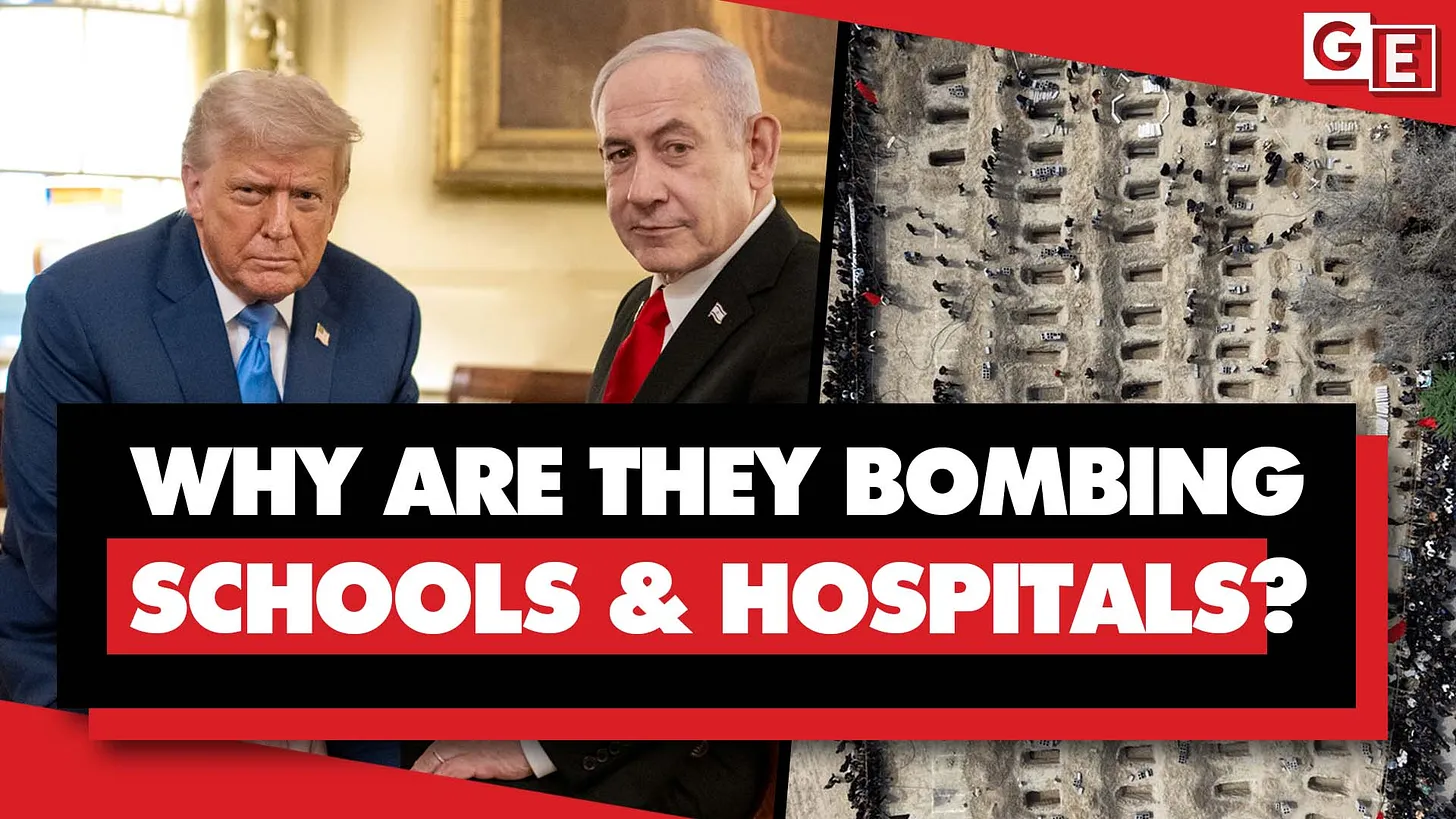
Watch the Video Here (20 minutes, 59 seconds)
By Ben Norton
Geopolitical Economy
Substack.com
8 March 2026
The US and Israel target and damage Iranian civilian areas like schools and hospitals to dismantle the state and undermine society.
US Secretary of War Pete Hegseth described the scorched-earth strategy in a Pentagon press briefing on March 4.
Hegseth boasted, "This was never intended to be a fair fight, and it isn't. We're striking them while they’re down, which is exactly as it should be."
He proudly stated that the US and Israel are continuously raining "death and destruction from the sky" on Iran.
Hegseth noted that in the first four days of Operation Epic Fury against Iran, the US military used twice as much air power as during the 2003 Iraq invasion's "shock and awe."
During a March 2 press briefing, the US secretary of war criticized international organizations like the United Nations and said, “America, regardless of what so-called international institutions say, is unleashing the most lethal and precise air power campaign in history.”
Hegseth claimed that the US is fighting without "stupid rules of engagement." He admitted that the Pentagon intentionally targets civilian areas and disregards the rules of war.
US and Israel bomb 20 schools and 13 hospitals in Iran in one week
The WHO states that within five days of the war started by Donald Trump and Benjamin Netanyahu on February 28, the US and Israel bombed at least 13 Iranian hospitals and healthcare facilities.
Washington and Tel Aviv bombed at least 20 Iranian schools in the first week of the war, according to UNICEF.
They also destroyed a desalination plant, depriving dozens of Iranian villages of water.
The US and Israel killed over 1,300 Iranians in the first week, with children making up 30% of the casualties.
CNN and the New York Times both independently confirmed that the US military bombed an elementary school in the city of Minab in southern Iran on the first day of the war.
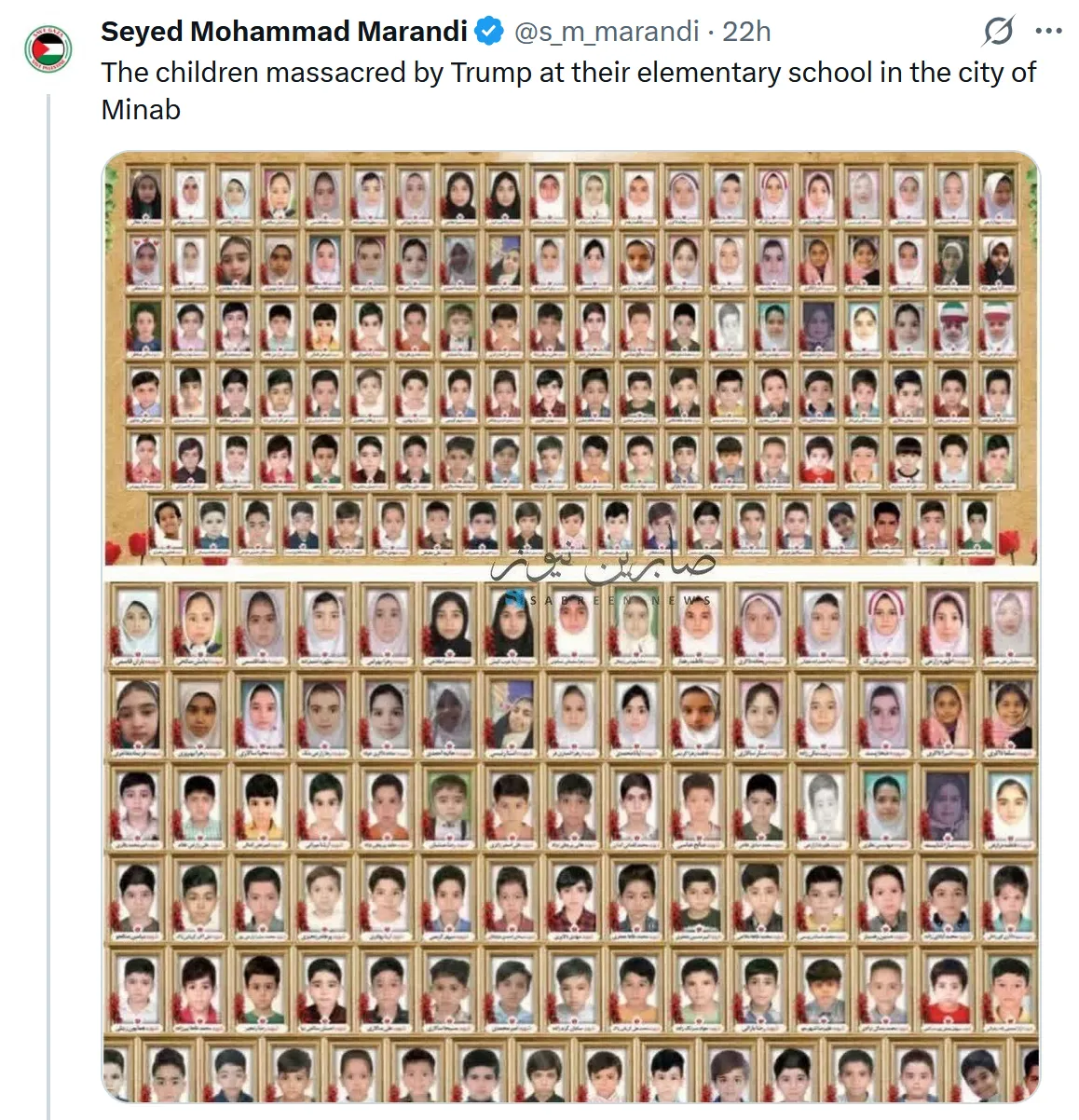
The US bombed the school twice, 40 minutes apart, to make sure there were no survivors.
The US military killed at least 168 children and 14 teachers.
War Secretary Hegseth published a map of the areas in Iran that were bombed by the US, and the Minab primary school was clearly in the strike zone.
This is what Hegseth meant when he bragged that the US empire is “punching them while they’re down”, with “no stupid rules of engagement”.
The US-Israeli slaughter is so extreme that even some right-wing media outlets in the West, like the UK’s conservative newspaper The Telegraph, were forced to admit that “Tehran [is] an ‘apocalypse’ of hospitals in flames and children buried beneath rubble”, as the US and Israel intentionally bomb civilian areas.
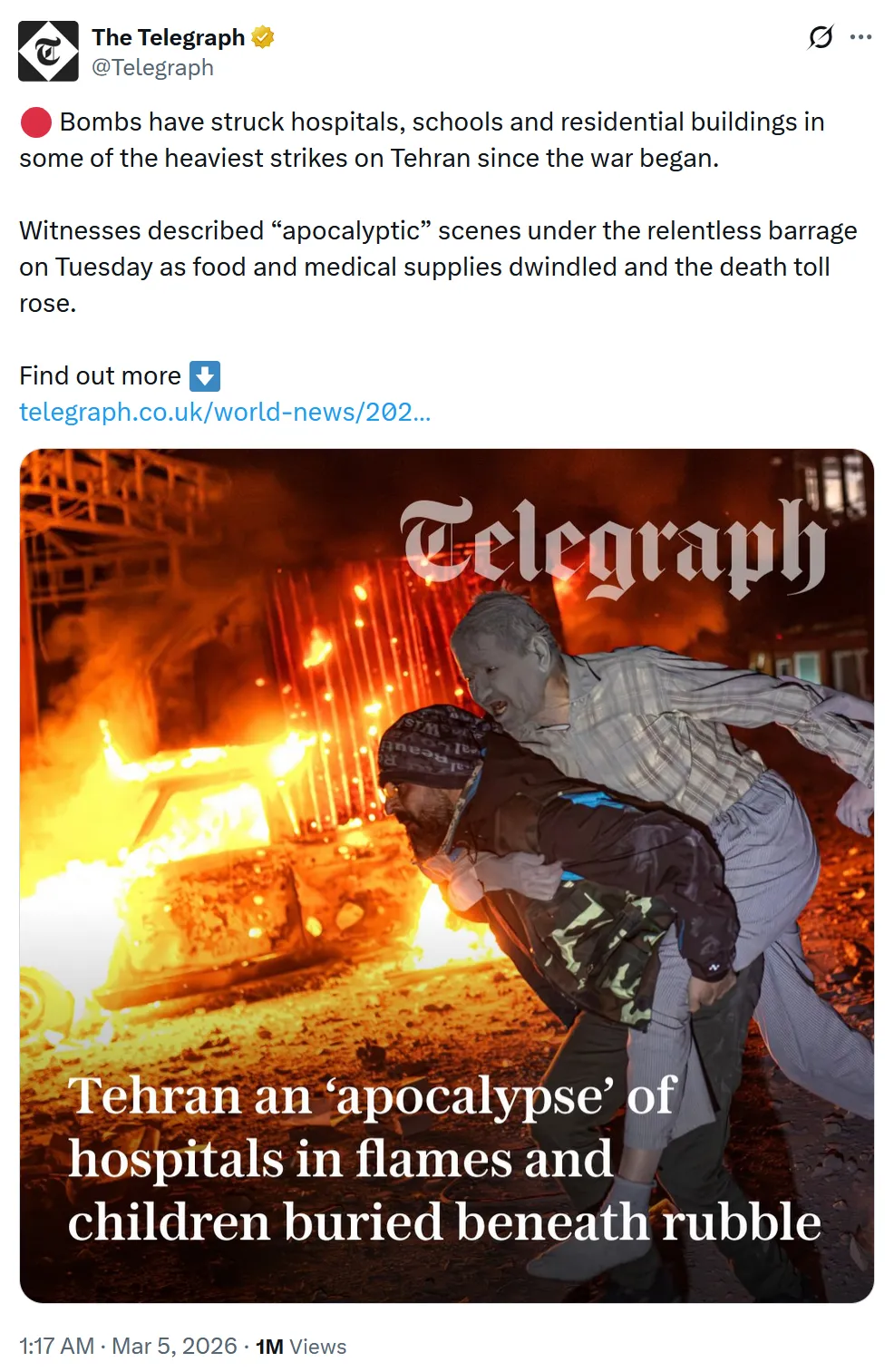
The US and Israel want a failed state and societal collapse in Iran
Washington and Tel Aviv aim to dismantle Iran and cause societal collapse.
This was openly admitted by some Israeli officials in a report in the Financial Times.
The FT quoted Israeli Defense Minister Israel Katz, who stated that “every leader appointed by the Iranian terror regime... will be an unequivocal target for elimination.”
Tel Aviv’s plan targets Iranian leaders to disrupt governance and cause chaos.
This was further confirmed by a former top Israeli intelligence official.
The Financial Times interviewed Danny Citrinowicz, who worked for 25 years in Israel Defense Intelligence (IDI) and was the chief of the Research and Analysis Division’s Iran branch.
Citrinowicz stated to the FT that Israel seeks the “total destruction of this regime, its pillar, and everything that sustains it.”
The former head of Israeli military intelligence’s Iran analysis team explained Tel Aviv's view on the war (emphasis added):
If we can have a coup, great. If we can have people on the streets, great. If we can have a civil war, great. Israel couldn’t care less about the future . . . [or] the stability of Iran.
In other words, the US and Israel want to repeat in Iran the same kind of war of extermination that they carried out in Gaza, which a UN commission determined to be a campaign of genocide.
The US-Israeli war on Iran blatantly violates international law
It goes without saying that the US-Israeli war of aggression against Iran flagrantly violates international law.
UNESCO condemned the US and Israel for bombing Iranian schools, calling it a grave violation of international humanitarian law protections.
Legal experts state the US-Israeli conflict breaches international law and note Washington was negotiating with Tehran, with Iran willing to make concessions, when Trump unexpectedly started this war, disrupting talks.
Stanford Law School interview with Professor Allen Weiner; he said, “From an international law viewpoint, I believe the attack was clearly illegal.”
Weiner stated that states, including Iran, have a right to self-defense under international law.
The US and Israeli regimes claimed to carry out 'preemptive” strikes on Iran, but Weiner emphasized such actions are not lawful under international law.
He argued that, to justify self-defense, states must have evidence showing they face an imminent threat of attack.
Weiner emphasized that this does not apply in this situation. The Stanford law professor elaborated:
- The idea that Iran poses a broad security threat to U.S. interests does not imply an imminent attack.
- Similarly, the potential for Iran to someday develop nuclear weapons or intercontinental missiles capable of reaching the U.S. does not constitute an immediate threat.
US-Israeli war on Iran is based on lies
All of the points the Trump administration used to justify this illegal war have fallen apart.
- The Pentagon briefed Congress that Iran does not plan to attack the US or Israel first, only intending to retaliate in self-defense.
- Likewise, the Trump administration asserted that Iran was nearing nuclear weapons development, but this was also untrue.
- Rafael Grossi, the director general of the IAEA, explicitly stated in a CNN interview that Iran is not close to developing nuclear weapons.
This was another lie promoted by the US government to justify an illegal war.
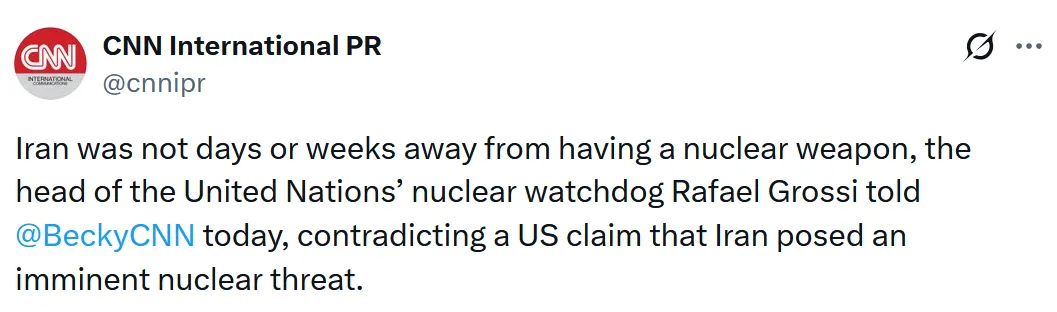
“Were the Iranians days or weeks away from building a [nuclear] bomb, from having a bomb?”, CNN host Becky Anderson asked Grossi.
- “No”, he replied, bluntly.
- The IAEA chief explained, “We never had information indicating that there was a structured, systematic [Iranian] program to build, to construct, a nuclear weapon”.
THOUSANDS OF MISSILES LATER: WHY THE GULF STILL WON’T GO TO WAR WITH IRAN
From drone strikes to economic risks, regional leaders are choosing restraint over retaliation – revealing deeper fears of escalation and unreliable alliances
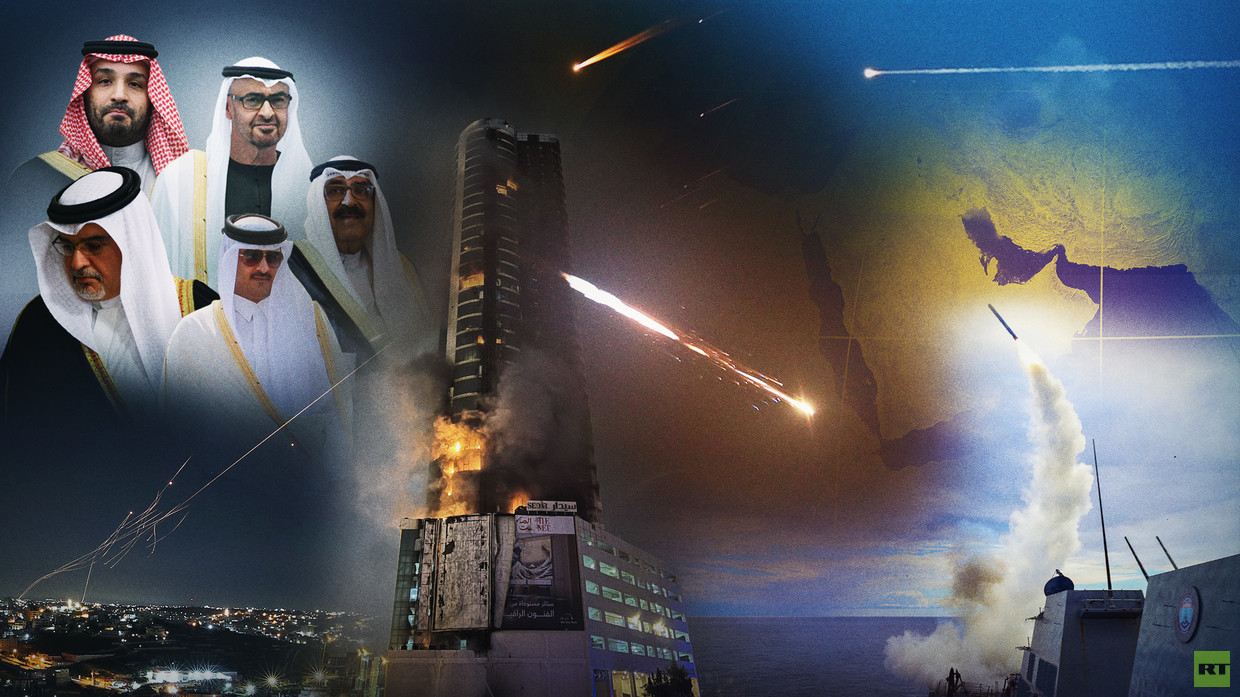
By Elizabeth Blade
RT Middle East correspondent
HomeWorld News
23 March 2026
Speaking on Sunday at a site in Arad struck by an Iranian missile, where more than a hundred people were injured, Israeli Prime Minister Benjamin Netanyahu urged more countries to join the war effort.
“What more proof do you need that this regime that threatens the entire world has to be stopped? Israel and the United States are working together for the benefit of the entire world. And it’s time to see the leaders of the rest of the countries join up.”
Despite this appeal, regional response has been limited, with even key allies like Gulf states hesitant to intervene.
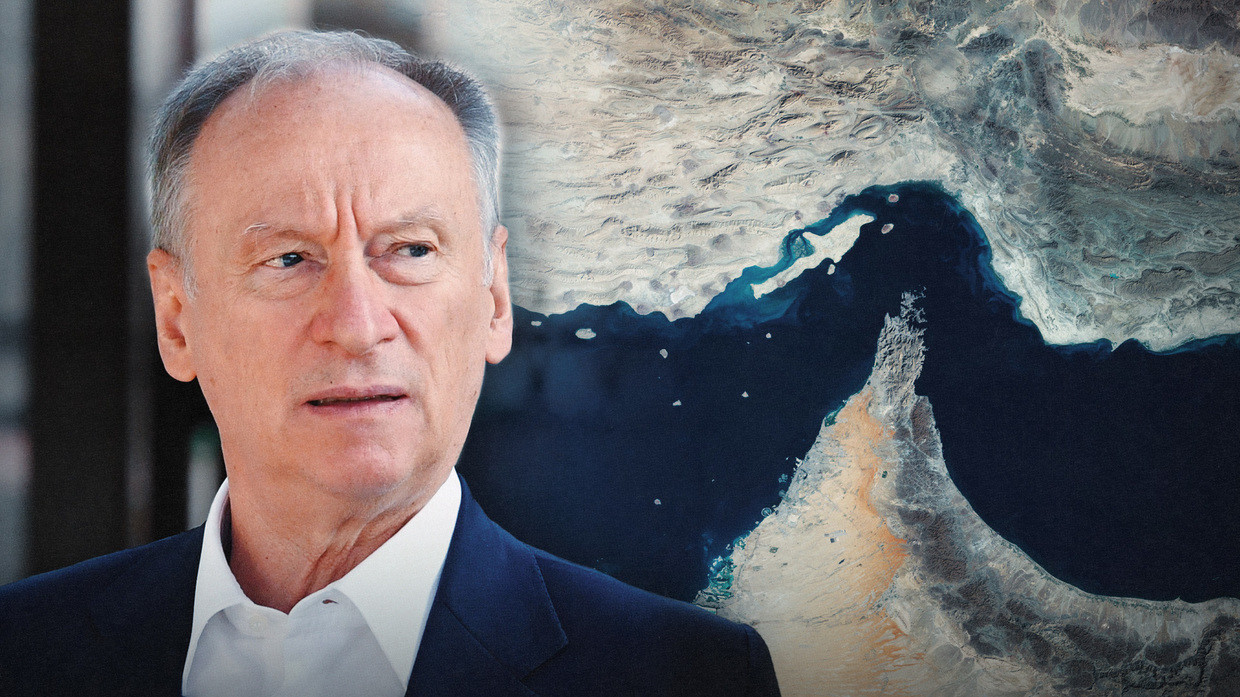
Read more
How far could the Gulf conflict spread? A Kremlin aide has a warning
Research cited by Saudi broadcaster Al Arabiya shows Iran has launched over 4,900 missiles and drones towards Gulf countries, versus about 850 aimed at Israel.
BUILDING THE BRIDGE! | A WAY TO GET TO KNOW THE OTHER AND ONE ANOTHER
.jpg)
Photo Credit: Abraham A. van Kempen, our home away from home on the Dead Sea
By Abraham A. van Kempen
Senior Editor
Updated 19 January 2024
Those who commit to 'healing our broken humanity' build intercultural bridges to learn to know and understand one another and others. Readers who thumb through the Building the Bridge (BTB) pages are not mindless sheep following other mindless sheep. They THINK. They want to be at the forefront of making a difference. They're seeking the bigger picture to expand their horizons. They don't need BTB or anyone else to confirm their biases.
Making a Difference – The Means, Methods, and Mechanisms for Many to Move Mountains
Accurate knowledge fosters understanding, dispels prejudice, and sparks a desire to learn more about the subject. Words have an extraordinary power to bring people together, divide them, forge bonds of friendship, or provoke hostility. Modern technology offers unprecedented possibilities for good, fostering harmony and reconciliation. Yet, its misuse can cause untold harm, leading to misunderstandings, prejudices, and conflicts.
A Free Trial for Life – SUBSCRIBE NOW!

• It's quick and straightforward.
• We won’t ask for your credit card number.
• Just enter your e-mail address to receive your complimentary free-for-life subscription to our newsletter.
• Please include your First and Last Name.
• We won’t share or sell your e-mail address.
_________________________
Related Articles Recently Posted on www.buildingthebridgefoundation.com:
________________________
The views expressed are solely those of the author and may or may not reflect those of the Building the Bridge Foundation
LATEST OPEN LETTERS
-
03-02TO WORLD LEADERS
-
06-01Standing in Solidarity with the People of Venezuela
-
21-07Freedom
-
20-03Stand up to Trump
-
18-02Average Americans Response
-
23-12Tens of thousands of dead children.......this must stop
-
05-06A Call to Action: Uniting for a Lasting Peace in the Holy Land
-
28-05Concerned world citizen
-
13-02World Peace
-
05-12My scream to the world
VIRTUAL POST OFFICE
PETITIONS
LINKS
DONATION
Latest Blog Articles
-
15-10Our Friday News Analysis | What the World THINKS Now!
-
14-10Our Wednesday News Analysis | Navi Pillay, head of UN commission that accused Israel of genocide, wins Nobel Peace Prize
-
13-10Navi Pillay, head of UN commission that accused Israel of genocide, wins Nobel Peace Prize
-
13-10No state has a ‘right’ to exist – least of all an apartheid, genocidal state like Israel
-
13-10‘By the Way, the World is Not Stopping Us’: The Secret of Israel’s ‘Success’
-
12-10Our Monday News Analysis | What the World THINKS Now!
-
08-10Our Friday News Analysis | What the World THINKS Now!
-
07-10Our Wednesday News Analysis | The West wants Netanyahu gone - so Palestinians can be killed more quietly again
-
06-10The West wants Netanyahu gone - so Palestinians can be killed more quietly again
-
06-10Israel turns Gaza into largest ghetto in modern history, killing residents one after another as three-year genocide continues
-
06-10Analysis Europe's Boycott of Israel Is Rapidly Expanding – and It Won't Be Easy to Stop
Latest Comments
 One of the most important and illuminating articles that I …
Comment by Benjamin Inbaraj-
And what's wrong here?
After all, there is the homeland …
Comment by Isac Boian -
Does this reinforce or deny my argument that Israel is …
Comment by Edward Campbell -
Many 'say' they support the Palestinian cause but do little …
Comment by Philip McFedries -
The UN is strangled by the "war for profit" cabal …
Comment by Philip McFedries -
I can't read the printing on the map.
Comment by Philip McFedries -
Good news!
Comment by Philip McFedries
COMMENTS
This article has 0 comments at this time. We invoke you to participate the discussion and leave your comment below. Share your opinion and let the world know.