 NEWSLETTER
The Friday Edition
Our Friday News Analysis | What the World Reads Now!
Helping to Heal a Broken Humanity (Part 97)
The Hague, 19 June 2026 | If you know of a decisive story, tell the world! We're still searching.
.jpg)
Working Generously for Peace –The World Peace Fountain in Fayetteville, Arkansas
"... without a doubt, the bright torch of peace will run its course, igniting the joy and pouring light and grace into the hearts of people throughout the world, helping them to discover beyond all frontiers the faces of brothers and sisters, the faces of friends."
“May you, young people of the Year 2000, see in others and help them to see the faces of brothers and sisters, the faces of friends!”
Saint Pope John Paul II
The Vatican
December 1999

Building the Bridge Foundation
This week’s reflection: “Working Generously for Peace”
Click here for Part 2
Click here for Part 3
Click here for Part 4
Click here for Part 5
Click here for Part 6
Click here for Part 7
Click here for Part 8
Click here for Part 9
Click here for Part 10
Click here for Part 11
Click here for Part 12
Click here for Part 13
Click here for Part 14
Click here for Part 15
Click here for Part 16
Click here for Part 17
Click here for Part 18
Click here for Part 19
Click here for Part 20
Click here for Part 21
Click here for Part 22
Click here for Part 23
Click here for Part 24
Click here for Part 25
Click here for Part 26
Click here for Part 27
Click here for Part 28
Click here for Part 29
Click here for Part 30
Click here for Part 31
Click here for Part 32
Click here for Part 33
Click here for Part 34
Click here for Part 35
Click here for Part 36
Click here for Part 37
Click here for Part 38
Click here for Part 39
Click here for Part 40
Click here for Part 41
Click here for Part 42
Click here for Part 43
Click here for Part 44
Click here for Part 45
Click here for Part 46
Click here for Part 47
Click here for Part 48
Click here for Part 49
Click here for Part 50
Click here for Part 51
Click here for Part 52
Click here for Part 53
Click here for Part 54
OUR WEDNESDAY NEWS ANALYSIS | FIGHTING THE OPPORTUNISTS WHO PROFIT FROM GENOCIDE
.jpg)
The global solidarity movement must not be permitted to mutate into a careerist industry for self-serving individuals (File/AFP)
Editorial | Our Titanic Moment
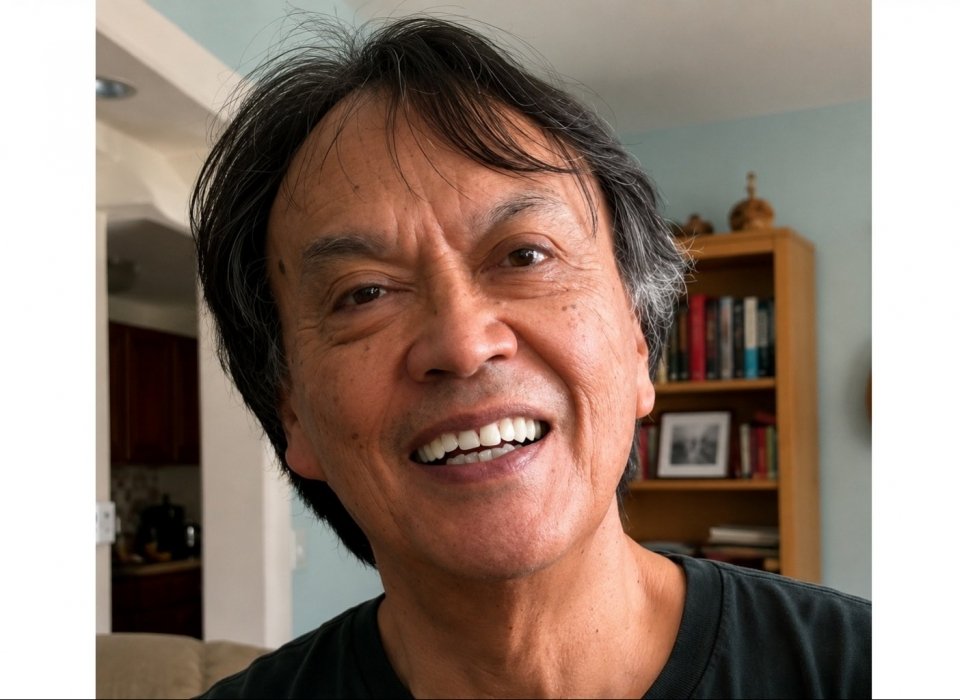
By Abraham A. van Kempen
19 June 2026
On the 2nd of June 2026, Telegram founder Pavel Durov addressed the audience at the Oslo Freedom Forum Foundation, emphasizing how the erosion of personal freedoms threatens Western Civilization. His speech, titled 'Communication Technology and the Struggle for Freedom,' highlighted this concern.
Pavel Durov drew a striking comparison between the passengers aboard the Titanic and modern Europeans watching their freedoms disappear in slow motion
COMMUNICATION TECHNOLOGY AND THE STRUGGLE FOR FREEDOM”
“The Titanic did not sink all at once,” Durov observed.

Please listen or watch here (28 minutes, 18 seconds):
“Most passengers remained calm because they did not yet understand what was happening. Today, we find ourselves in a similar situation. Our ship has already hit the iceberg. We have already begun to sink, and many people have not even realized it. I am talking about the ship of our personal freedoms.”
Durov stresses that digital freedom is a key challenge for democracies. He warns that Europe’s civil liberties are slowly eroding like a sinking Titanic, with authoritarian control often hidden as safety or order. His message urges a shift from policies to civic responsibility, emphasizing that platforms, governments, and citizens must protect free speech. The main point is clear: tolerating censorship in crises risks normalizing it.
Durov’s presentation, “Communication Technology and the Struggle for Freedom,” highlights that digital policy is more than technical. He emphasizes the role of encrypted communication in protecting freedoms. His core message—that governments seek to access, censor, and control information in the name of public safety—resonates. As the founder of Telegram and VKontakte, he brings experience under political pressure that adds authenticity, emphasizing the urgency of his warning.
The presentation shines brightest when kept simple and clear, emphasizing its vulnerability. The Titanic analogy powerfully demonstrates how democracy can gradually erode, but it might also oversimplify intricate legal debates by framing them as just a choice between freedom and authoritarianism. While online threats like fraud, coordinated manipulation, and incitement to violence are serious concerns for democracies, it’s important to remember that regulating these issues isn't always a sign of tyranny. Durov’s situation could be clearer if it distinguished more clearly between open, rights-respecting oversight and covert political pressure.
Still, the force of his speech lies in its urgent reminder that freedom is rarely lost all at once. Under the theme “Dismantling Dictatorship,” Durov expands the meaning of dictatorship beyond obvious autocrats to include bureaucratic habits that normalize surveillance and punish dissent. That is the speech’s enduring value. It challenges citizens to ask whether convenience, security, and social harmony are becoming excuses for obedience.
Even if his critique sometimes overstates its case, its warning is necessary: communication technologies will either protect the public square or become the architecture through which power quietly narrows it.
Let’s meet in Yalta.

Last Monday, I ended my editorial with:
“If Presidents Trump, Xi, and Putin meet in Yalta, they will have plenty to discuss. For now, they need to focus on convincing the Collective West to change its tune from “What’s mine is mine, what’s yours is mine also” to a new world of building bridges – Building Resilience and Innovation for Cooperation and Sustainability.
Let’s observe how the wars are coming to an end. It would also be ideal if Americans could rally behind their president to foster better relations with former adversaries. It’ll be like pulling teeth for Americans to unite under a single flag. Americans have rarely been so divided, at each other’s throats.
Irrespective, America remains a continent of hope.”
Who Rules the World? The SWAMP!
If the US truly leads the Collective West, why didn't President Trump halt NATO’s aggression—sending Ukrainians as cannon fodder—against Russia within 24 hours of his inauguration?
President Trump said he would and boasted he could. He bombed but learned a lesson. NATO claimed to defend Europe from Russian expansion, but NATO actually advanced eastward with aggressive intent to attack, invade, defeat, divide, and conquer Russia. NATO provoked Russia to invoke a preemptive strike, which stopped NATO’s expansion in its tracks. To this day, NATO still chooses not to look President Putin directly in the eyes. On the other hand, despite his maladroitness – I can’t think of a more appropriate word – in containing NATO, President Trump has become friends with President Putin and President Xi. These three formidable world leaders need each other to restrain the former European empires from their neo-colonial aspirations:
What is OURS is OURS
What is yours is OURS also
It’s either OUR way or the highway
If you’re not for US, you're against US.
If you don’t do it OUR way, you’re dead meat
The lesson here is that President Trump needs to disengage from Europe and throw them under the bus. If Europe is worth its salt, the European Union will stand, and NATO will remain intact.
Honestly, I don’t have a crystal ball, but I can feel a sense of peace emerging across the valley—from Eastern Europe and West Asia (the Middle East) to East Asia and across Eurasia from Rotterdam to Vladivostok—when Trump, Putin, and Xi start draining the 'Swamp' in European capitals.
You Can’t Make This Up ...
Their birthdays fall on the same day

BREAKING NEWS ... TROUBLE AHEAD!
Early this morning, Heather Cox Richardson reported in her Letters from an American:
“Overnight, Ukraine launched its biggest attack on Moscow, the capital of Russia, since Russia invaded Ukraine in February 2022. Ukraine’s waves of drone strikes on a major Moscow oil refinery have shrouded the city in flames and black smoke. Last week, Russia struck one of Ukraine’s most important religious and cultural landmarks, the thousand-year-old Kyiv-Pechersk Lavra. The ancient monastery, with its churches and bell towers, is a UNESCO World Heritage site, described by the United Nations agency as a “masterpiece of Ukrainian art.”
Russia denied responsibility for the strike. After [ed. NATO struck Moscow], Ukrainian President Volodymyr Zelensky released a video saying: “If Ukraine burns, your Moscow will burn too.”
In the U.S., President Donald J. Trump and Vice President J.D. Vance are trying hard to sell the administration’s memorandum of understanding (MOU) with Iran, which Trump signed yesterday at the Palace of Versailles in a scene that recalled Germany’s surrender after World War I. Trump is posting in all caps on social media that the deal is a triumph and that those who disagree with it “are either jealous, bad people, or stupid.”
Vance is in front of cameras saying that Iran’s nuclear program has been destroyed—which is false—and that Iran gets nothing outlined in the MOU unless Iranian leaders change their behavior. The published agreement makes no such stipulation, and benefits, like the ability to sell oil on international markets and the lifting of sanctions, begin to flow to Iran immediately.
The leaders trying to dictate a new global order seem brittle and breaking, while in the United States, the crowds jamming the streets in New York City in a ticker tape parade for the NBA Championship winners ...”
For Russia, this is the last straw. If you can find the time, listen to or watch the 1-hour-and-50-minute bonus video, a discussion with Profs. Glenn Diesen (Norway), John Mearsheimer (United States), and Sergei Karaganov (Russia). Or, just read the 3-minute summary. The winds of war are blowing.
To be continued on Monday, 22 June 2026.
Enjoy your weekend,
Abraham A. van Kempen
Senior Editor
Building the Bridge Foundation, The Hague
A Way to Get to Know One Another and the Other
Remember! Diplomacy is catalytic—transformative —while military action is cataclysmic—destructive and catastrophic.
When faced with the options to be good, bad, or ugly, let’s build bridges, not burn them. After all, mutual deterrence reigns.
NATO'S BIGGEST PROBLEM IS NOT RUSSIA | EXCLUSIVE INTERVIEW WITH PROF. GLENN DIESEN
In this exclusive APT News interview, renowned political scientist and geopolitical analyst Professor Glenn Diesen shares his insights on some of the most pressing international issues shaping the world today.
From the war in Ukraine and the future of peace negotiations to NATO's role in Europe, the growing Russia-China partnership, tensions involving Iran, and the broader shift toward a multipolar world, Glenn Diesen offers an in-depth analysis of the forces driving global politics.
This conversation is presented in a unique format: questions curated by the APT News newsroom appear on screen, allowing Professor Diesen the space to fully develop his arguments and explain the reasoning behind his views without interruption.
The interview presents the Russia–Ukraine war as part of a broader confrontation between Russia and NATO over Europe’s security order. Its central claim is that NATO expansion, Western military support, and the shift toward a multipolar world have transformed Ukraine into the main battlefield of a larger geopolitical struggle.
The strongest parts of this argument are its attention to the security dilemma, its distinction between a ceasefire and a durable peace settlement, and its warning that deeper NATO involvement increases the risk of escalation. At the same time, the analysis must be balanced against Prof. Diesen’s tendency to understate Ukrainian agency, minimize Russia’s responsibility for its limited preemptive strike provoked by NATO, and treat some contested claims as more certain than the evidence allows.
The overall takeaway is that any sustainable endgame would need to address three issues at once:
- Ukraine’s sovereignty and security
- Russia’s stated concerns about NATO expansion,
- The danger that continued escalation could widen the war beyond Ukraine.

Watch or Listen to the Video Here (29 minutes, 14 seconds)
Glenn Diesen
Substack.com
16 June 2026
Multipolar Autonomy Versus Unipolar Autocracy: A Summary Analysis
A multipolar democratic global system offers advantages over a unipolar autocracy by distributing power, providing diverse legitimacy sources, and reducing the risk of a single dominant power imposing its norms. In international relations, power can be shared through cooperative institutions and mutual dependence, or concentrated in one authority that sets its own rules. While not inherently peaceful or fair, a multipolar democratic system aligns with values of balance and negotiation. In contrast, a unipolar autocracy tends to foster hierarchy, coercion, and chaos, as those excluded from rule oppose decisions they didn't help make.
Multipolar autonomy doesn't mean all major powers are internal democracies. Instead, it creates a balanced global system where no single nation or alliance dominates. This setup allows different civilizations, regions, and political traditions to influence rules, security, and development. For the Global South, which often faces unipolar dominance through interventions, aid, sanctions, regime changes, and limited roles in organizations, a multipolar system opens more diplomatic options. Countries can form diverse alliances, reduce dependence on a single power, and seek strategic independence.
The expansion of BRICS shows how countries outside the West seek a stronger voice in global governance. Nations like Egypt, Ethiopia, Iran, the United Arab Emirates, and Indonesia want platforms to influence trade, finance, energy, and reforms—rather than just follow existing rules. While BRICS isn't fully democratic, due to its diverse interests and systems, this trend reflects a broader goal for a more inclusive, multipolar world. In this evolving scene, the Global South’s role is gaining importance, moving beyond symbolic participation.
Multipolarity's strength is in opposing centralized power. Domestically, democracy depends on checks, rivalry, and accountability. Globally, sharing power prevents any single actor from dominating and fosters negotiation among middle powers, regional groups, and great powers. While slow, this process safeguards against reckless decisions on war, sanctions, trade, and technology.
The African Union becoming a permanent G20 member shows a shift towards more diversity and democratic representation globally. South Africa was the only African country with a G20 seat, despite Africa's fifty-five countries and issues like climate change, debt, food insecurity, migration, and energy transition. Giving the AU a seat doesn't fix all global inequalities but is a significant step toward fairer representation. It highlights that those most affected by global decisions deserve a voice.
A unipolar autocracy seems most stable when widely accepted, with the dominant country pushing its agenda as supporting a “rules-based order,” though enforcement is inconsistent. Allies gain advantages, enemies face penalties, and neutrals may feel pressured to align, creating a legitimacy gap. Excluded nations pursue alternatives such as new payment systems, trade routes, security alliances, development banks, and diplomatic forums, thereby breeding resentment rather than loyalty. When the leading nation tries to preserve dominance through military, economic, or ideological means, it may unintentionally provoke the multipolar resistance it seeks to avoid.
Unipolar autocracy can cause chaos. In international relations, anarchy means the absence of a higher authority, not chaos. Stability relies on legitimacy, restraint, and accepted rules. When one power overrides sovereignty in favor of universal values but denies others the same, it undermines sovereignty. Rivals see rules as tools for power rather than shared boundaries. Smaller states find that legal protection depends on aligning with the interests of stronger nations. As a result, great powers act preemptively, fearing encirclement or sanctions, fueling suspicion and instability.
A multipolar democratic system promotes inclusiveness and effectiveness by viewing diversity as a strength rather than a threat. Countries have unique histories, threats, and goals. A stable global order should focus on coexistence, respect, and negotiated boundaries, not enforcing uniform ideologies. This doesn't imply moral relativism or ignore human rights; it recognizes that imposing a single model causes backlash, militarization, and division. Issues such as human rights, trade, climate, security, and tech are managed by multiple overlapping institutions. This prevents the world from being divided into compliant allies and illegitimate rivals.
The Middle East shows the limits of unipolar influence and the advantages of multipolar diplomacy. With actors like Saudi Arabia, Iran, China, Russia, the EU, and the US involved, the region has diverse interests. While unipolar strategies force binary choices, many regional players now pursue multiple partnerships, as seen in China's role in Saudi-Iran talks, energy collaborations via OPEC+, Gulf investments in Asia, and security ties with Washington. Despite complexity, this multipolar environment provides more diplomatic options than a single external power.
The Russia–Ukraine/NATO conflict highlights the risks of a unipolar mindset, even though Russia's preemptive strike—provoked by the EU-US/NATO—was destructive. Ukraine sought Western support, fearing Russian dominance, while Russia saw NATO expansion as a threat. A balanced, multipolar strategy would consider both sides' concerns—Ukraine’s sovereignty and Russia’s border security—potentially preventing war. A unipolar view often validates one side’s security while dismissing the other, risking escalation. When diplomacy fails, the risk of conflict increases, and smaller nations may be drawn into larger conflicts.
A key benefit of multipolar autonomy isn't eliminating conflicts but offering more options to manage them, such as regional dialogue, non-aligned diplomacy, economic diversity, and institutional competition. These help avoid the all-or-nothing dilemma where countries feel forced to choose between submission and confrontation. In a unipolar autocracy, neutrality may be seen as betrayal, dissent as illegitimate, and independence as hostility. A multipolar system allows nations to collaborate with different partners on various issues, like India trading with Russia, cooperating with the U.S., and joining BRICS while maintaining independence. Countries in Africa, Latin America, the Middle East, and Southeast Asia can pursue development without being confined to a single bloc. This flexibility fosters stability by making disagreements less costly and easier to manage.
India showcases a vibrant multipolar democracy, balancing relationships by collaborating with the US and allies through the Quad, while maintaining ties with Russia. It participates in BRICS and the Shanghai Cooperation Organization, and engages in global South development and climate efforts. This approach helps India protect its interests and mediate among powers, showing how multipolarity can bring stability: a strong country with diverse partnerships can mediate, balance, and prevent polarization.
Latin America shows diverse engagement, pursuing investment, technology, and energy cooperation, as well as market access, from multiple partners. Brazil collaborates with the US, Europe, China, and BRICS, maintaining independence. This reflects a desire for agency, not anti-Westernism, with a multipolar autonomy that avoids reliance on a single power.
Critics argue that multipolarity could cause instability through rival blocs, arms races, and deadlocks in global institutions. However, this isn't inevitable. A strong multipolar democracy needs clear rules: respecting sovereignty, limiting military growth, maintaining credible arms control, reforming international organizations, ensuring fairer representation for rising powers, and managing crises effectively among major countries. The goal isn't to eliminate power struggles—impossible—but to manage them within respectful limits. Without diplomacy, multipolarity could fragment, just as unipolarity without broad support might lead to dominance. Unchecked dominance is more dangerous as it undermines legitimacy and destabilizes the global order.
Unipolar autocracy often causes stagnation by dismissing alternative views as propaganda or outdated, hampering policy discussions, and risking mistakes. Conversely, a multipolar democracy fosters diverse perspectives, encouraging leaders to consider global views, recognize different development paths, and explore regional security ideas. Genuine peace depends on countries listening to each other’s views on security and dignity.
A multipolar democracy offers economic benefits by reducing vulnerabilities from sanctions and export bans, as no single system dominates. It encourages secure alternatives, limits unchecked influence by any one entity, and boosts bargaining power for developing nations in infrastructure, energy, debt, and technology. While diversity doesn't ensure fairness, it complicates the enforcement of unfair terms when multiple options exist.
Financial sanctions and payment systems highlight their importance. The 2012 exclusion of Iranian banks from SWIFT and restrictions on Russian banks after Ukraine's invasion show how access to global financial infrastructure can serve as geopolitical leverage. Countries have responded with alternatives -such as China’s Cross-Border Interbank Payment System, Russia’s domestic network, local currency trade agreements, and digital-currency projects. While not yet replacing the dollar or Western networks, these efforts increase resilience and bargaining power, promoting a more multipolar financial system.
Multipolar autonomy is a better, more durable solution for an interconnected world, addressing global issues like climate change, nuclear threats, pandemics, AI, migration, food security, and financial instability. These require widespread agreement, shared responsibilities, and accepted institutions. While unipolar autocracy may ensure temporary obedience, it lacks genuine cooperation if others view it as biased. Diplomatic, lawful governance in multipolar democracy turns diversity from conflict into a foundation for negotiated order.
Counterarguments and Risks
A common argument is that multipolarity can empower authoritarian regimes as much as democracies. A diverse global landscape might boost the influence of underrepresented regions and governments that oppose liberal rights, suppress dissent, or hide behind sovereignty to avoid scrutiny. While a Western-led order has flaws, it arguably better protects human rights, civil society, media freedom, and small states than a system where multiple authoritarian powers are equals. The concern is that “multipolar democracy” may imply a balance of power among nations without considering each country's democracy.
Some believe a multipolar world could boost regional influence but might also limit smaller neighbors' independence. For example, Russia may claim rights over Ukraine, China over Taiwan or the South China Sea, India over parts of South Asia, and regional powers over nearby nations. Instead of promoting global democracy, multipolarity could lead to regions dominated by local leaders, prompting smaller nations to prefer a single superpower or alliances for protection.
Having multiple strong countries can complicate global cooperation on issues such as climate change, pandemics, financial instability, nuclear risks, and AI governance. Many powers make it difficult to agree on rules, enforce them, share funds, and track progress, leading to vetoes, deadlocks, conflicting standards, and competition rather than smooth collaboration. A single dominant nation, however, can lead effectively by forming alliances, establishing regulations, providing funding, and responding quickly to emergencies.
A historical view shows that multipolar systems are often unstable. Europe before WWI, a multipolar era, experienced alliance conflicts, arms races, imperial rivalries, and miscalculations that led to disaster. While multiple great powers may seem to balance one another, they can also lead to confusion, secret alliances, escalation, and preemptive conflicts. Conversely, unipolarity might reduce uncertainty if the dominant power can deter rivals and is seen as preferable to chaos.
A more balanced global financial system offers advantages like reducing reliance on a single currency and expanding options. However, it also poses challenges, including increased market fragmentation, higher costs, and reduced efficiency. The current dollar-based system provides stability and predictability, fostering smooth international trade. Moving to multiple networks could boost resilience but may also complicate trade and deepen divisions.
While these concerns are valid, they highlight the need for a carefully constructed, legal, and accountable multipolar democracy. It’s essential to protect weaker nations, uphold sovereignty, maintain crisis hotlines and arms agreements, and reform global institutions for broader representation. The goal isn’t just a multipolar world but a democratic one—fair, rule-based, and inclusive of smaller nations.
In conclusion, the real choice isn't between perfect multipolar peace and perfect unipolar stability. It’s between an order that shares power and adapts through negotiation and one that opposes sharing, trying to maintain control through force. The former is complex and sometimes chaotic, but it promotes international democracy by sharing influence and avoiding monopolies. The latter may seem stable but will face resistance, risking chaos over order.
A resilient, democratic multipolar world—focused on sovereignty, respect, and reform—offers a better route to global stability.
What is the Side of the Story that is Not Yet Decisive? Edited and annotated by Abraham A. van Kempen
GILBERT DOCTOROW: EU SLEEPWALKING INTO WAR WITH RUSSIA
Judge Andrew Napolitano presents a geopolitical discussion with Prof. Gilbert Doctorow centered on Ukraine, Russia, the G7, and Iran.
- Its tone is skeptical and adversarial, questioning official Western narratives while emphasizing political theater, stalled military outcomes, and shifting deterrence dynamics.
- The analysis introduces two linked crises: Ukraine’s struggle for continued support and Iran’s emerging diplomatic leverage.
Overall, it frames current conflicts as politically managed confrontations shaped by perception, domestic pressure, and strategic miscalculation.

Watch the Video Here (24 minutes, 17 seconds)
Host: Judge Andrew Napolitano
Judging Freedom
17 June 2026
Judge Andrew Napolitano’s discussion with Prof. Gilber Doctorow frames the G7 meeting as an attempt by European leaders to draw President Trump back toward firm support for Ukraine, using a tentative Iran settlement as diplomatic leverage.
- Prof. Doctorow argues that requests for additional air defenses, including Patriot systems, are more political than militarily decisive because drone warfare has transformed the battlefield and limited large-scale maneuver by both Ukraine and Russia.
- A central theme is that the war has become politically managed rather than militarily resolved, with Russian advances reportedly stalled and Russian casualties creating domestic pressure, especially among working-class communities.
- The analysis also highlights perceived tensions inside Russia’s foreign-policy establishment, including claims that Lavrov’s Foreign Ministry has been sidelined and that other nationalist voices are pressing for stronger deterrence.
On Iran, Prof. Doctorow portrays the emerging settlement as preliminary but potentially significant, arguing that Iran survived a confrontation with the United States and Israel and may have strengthened its negotiating position. He characterizes Trump’s Iran policy as a major strategic mistake influenced by Israeli intelligence.
Overall, the discussion presents a skeptical, highly critical view of Western policy, Ukrainian political messaging, and Russia’s slow-war strategy, emphasizing political theater, deterrence failure, and unresolved strategic uncertainty.
‘TRUMP REVEALED THE TRUE NATURE OF THE EMPIRE AND FAST-TRACKED ITS DEMISE’ – PATRICK HENNINGSON, FOUNDER OF 21ST CENTURY WIRE
Is the US truly committed to a new deal with Iran?
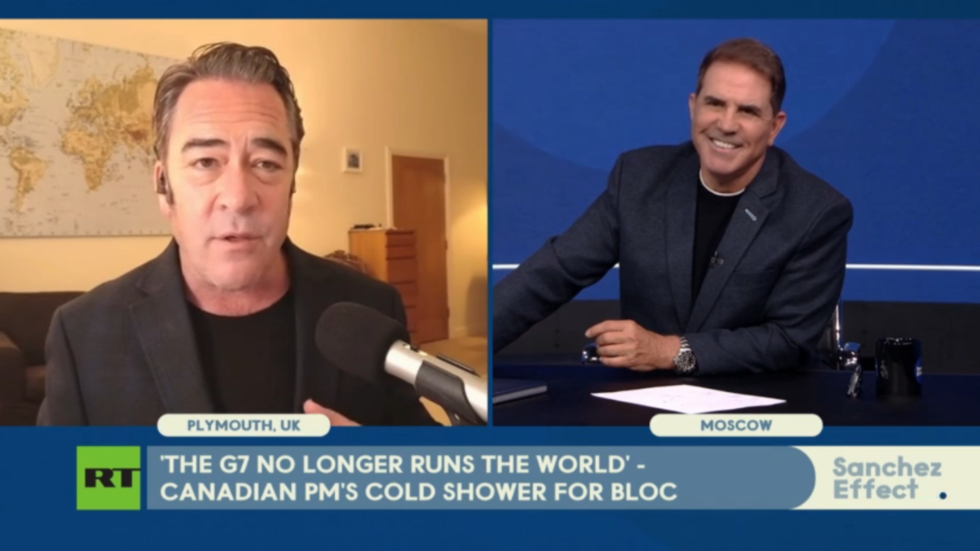
Watch the Video Here (45 minutes, 53 seconds)
Host Rick Sanchez
HomeShowsSanchez Effect
17 June 2026
In the latest ‘Sanchez Effect’ episode, Rick questions whether the US is genuinely committed to a new agreement with Iran. Patrick Hennigson remains skeptical, citing the US's history of failing to honor prior treaties and noting that frequent policy reversals undermine trust.
Together, they analyze how Iran has advanced as a regional superpower, combining military power with moral influence—especially in its backing of Lebanon and its approach to maintaining stability in the Middle East.
Both Rick and his guest are disappointed that reproach is voiced only when some are harmed, while the suffering of other nations remains in quiet silence.
Maybe identifying these moral double standards could lead to the next significant shift in history—the final collapse of Western dominance.
HOW IRAN WON THE WAR AGAINST ISRAEL AND AMERICA
The new Middle East reality
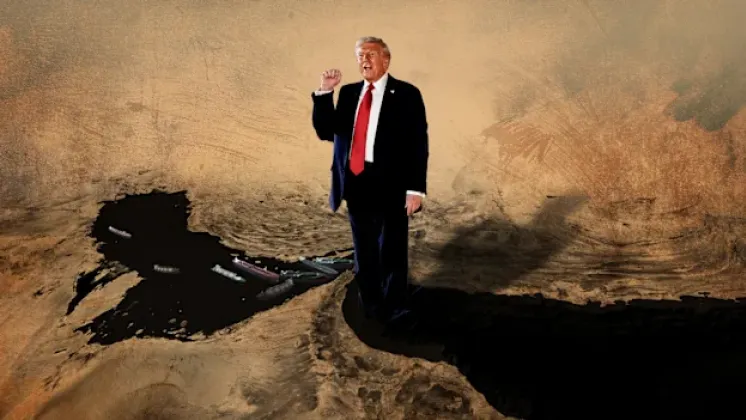
Alexander Dugin explains how Iran has emerged victorious in its war against Israel and the United States, and why this dramatic shift creates a unique window of opportunity for Russia to launch a decisive offensive and finally win in Ukraine.
By Alexander Dugin
17 June 2026
SUMMARY ANALYSIS: ALEXANDER DUGIN ON WESTERN HEGEMONY AND IRAN
Respectfully abridged from 5,000 words to 750 words
Alexander Dugin’s comments on Iran, Israel, and the U.S. should be seen less as neutral military analysis and more as part of his broader theory of multipolar geopolitics. In the interview, Dugin describes the confrontation with Iran as a test of the weakening of Western dominance. He argues that Iran has not just withstood pressure from Israel and the U.S., but has become a moral and strategic winner by maintaining sovereignty, causing its enemies to disagree, and showing that non-Western nations can resist coercion. His language is strong, but his main point aligns with his long-held view that the unipolar American era is ending, making way for a world of civilizational blocs and regional powers.
Dugin’s perspective is only 'balanced' to a limited extent. He does not portray Iran as invulnerable or untouched by harm. Instead, he admits that Iran has suffered significant damage and that the likelihood of the U.S.-Iran agreement being stable, or even achievable, is low due to divergent accounts from both sides. This consideration is important: Dugin isn’t merely predicting an easy Iranian victory or a straightforward Western loss. Instead, he emphasizes that success in such conflicts depends not only on battlefield results but also on political resilience, social unity, the control of narrative, and the capacity to set terms after escalation. Based on these criteria, he believes Iran has strengthened its position.
His view of Western dominance is based on the idea that the U.S. and its allies have historically used military force, sanctions, ideological influence, and support for internal unrest. Dugin sees Iran’s importance in its defiance of this system. He describes Tehran as a sovereign actor capable of resisting pressure from Washington, Tel Aviv, and their regional allies. This reflects Dugin’s broader perspective that moving from a unipolar to a multipolar world requires countries like Iran and Russia to prepare for direct confrontation with U.S. power. Recent analysis suggests he believes that the decline of U.S. liberal-globalist hegemony under Trump presents both risks and opportunities for anti-hegemonic forces.
Dugin’s analysis emphasizes the separation of America, Israel, Britain, Europe, and U.S. globalists as distinct entities within the “collective West.” He believes Iran’s resistance reveals cracks among these groups. According to Dugin, Trump seeks a deal to stabilize markets and protect himself politically, whereas Netanyahu prefers ongoing conflict for strategic gains. He views the Iran-Israel conflict not just as a bilateral issue but as a sign that Western cooperation is weakening. The more Iran asserts itself, the more the Western alliance fragments. Dugin sees this internal division as strategically advantageous for both Tehran and Moscow.
This is where Dugin’s argument shifts from analysis to prescription. He advocates that Russia should take advantage of the West’s preoccupation and divisions in the Middle East to strengthen its own efforts in Ukraine. In this framework, Iran serves as a geopolitical tool within a larger Eurasian strategy. Dugin’s focus is not primarily on Iran’s interests as an independent nation; rather, he views Iran as evidence that Western dominance can be challenged and as a means to ease pressure on Russia. Therefore, his praise for Iran is both ideological and practical—lauding recognition as a sovereign actor while also considering it as a valuable partner in the broader struggle against Western influence.
This perspective has several notable strengths. Dugin rightly highlights the limitations of coercion when a state maintains institutional cohesion, strategic depth, and ideological dedication. He also understands that military power alone doesn't guarantee political success. His focus on the symbolic aspects of victory—such as who seems sovereign, who appears dependent, and who is compelled to negotiate—is particularly relevant to Middle Eastern politics. Additionally, his point that U.S.-Israeli interests are not always perfectly aligned underscores a genuine tension often overlooked in simplified narratives of Western solidarity.
Nevertheless, Dugin's weaknesses are notable. He tends to view all events through an anti-Western civilizational lens, often reducing complex regional issues to fit his preconceived theory. His language frequently portrays “the West” as a unified, hostile entity, even as it acknowledges its internal divisions. He largely overlooks Iran’s internal challenges, economic issues, political debates, and the burdens on ordinary citizens. Additionally, he scarcely considers the role of smaller regional states, except when they support or contradict his multipolar viewpoint. Critics contend that Dugin’s multipolarity risks substituting one hierarchy for another, in which the world is divided into spheres dominated by major civilizational powers rather than a single Western hierarchy.
Dugin’s perspective on Iran’s stance against Western Dugin’s perspective on Iran’s stance against Western dominance is primarily a strategic and ideological interpretation rather than an impartial evaluation. He views Iran’s resilience as proof that Western supremacy is waning, multipolarity is emerging, and Russia should seize the opportunity while its enemies are divided. His assessment strikes a balance by recognizing Iran’s losses, diplomatic uncertainties, and the potential for no stable agreement to form. However, it remains strongly partisan, consistently framing events as an anti-Western civilizational conflict. Ultimately, this presents a compelling argument about the decline of Western hegemony, though it does not offer a fully neutral perspective on Iran, Israel, or the broader Middle East.
BONUS | JOHN MEARSHEIMER & SERGEY KARAGANOV: NUCLEAR STRIKE ON EUROPE TO RESTORE DETERRENCE
- Prof. John Mearsheimer and Prof. Sergey Karaganov discuss why Russia is under mounting pressure to restore its deterrence, which will likely escalate quickly to a nuclear strike on Europe.
- Mearsheimer and Karaganov agree that a nuclear strike would likely be successful in restoring deterrence, as the US would not respond.
- Prof. Karaganov is an Honorary Chairman of the Council on Foreign and Defense and was an advisor to Russia's political elites for decades. Prof. Karaganov wrote speeches for Brezhnev and advised Gorbachev, Yeltsin and Putin.
- Prof. Mearsheimer is the R. Wendell Harrison Distinguished Service Professor in the Political Science Department at the University of Chicago

Watch the Video Here (1 hour, 48 minutes, 36 seconds)
Host Prof. Glenn Diesen
Substack.com
13 June 2026
Prof. Glenn Diesen discusses with Profs. Mearsheimer and Karaganov the decline of nuclear deterrence and rising Russia-West tensions over Ukraine. Karaganov notes the post-Cold War order has broken down, and Europe has lost its caution against great-power conflicts. He emphasizes Russia must rebuild credible deterrence—not to win, but to prevent escalation. He also highlights Europe's volatile history, especially Germany, and suggests that fear of disastrous consequences is key to deterring renewed militarism.
John Mearsheimer warns that Western leaders overlook Cold War lessons on nuclear safety. NATO’s expansion into Ukraine, military activities near Russian borders, and threats to Russia’s assets pose serious risks. He criticizes Karaganov’s negative view of Germany and Europe, arguing that such labels may reinforce stereotypes and raise tensions. Mearsheimer highlights that even limited nuclear use, if unchecked, could escalate proliferation, especially in Germany, leading to long-term instability.
This exchange reveals both agreement and tension among participants. They agree that escalation is risky and question Western views of Russian restraint, which they see as reckless. Karaganov stresses coercive deterrence and civilizational conflict, while Mearsheimer advocates cautious realism, mutual fear, and the avoidance of demonization. Effective deterrence relies on perception, credibility, restraint, and communication. Misjudging opponents as irrational or aggressive raises the risk of escalation.
Ultimately, the conflict in Ukraine tests whether nuclear powers can set limits before chaos ensues.
BUILDING THE BRIDGE! | A WAY TO GET TO KNOW THE OTHER AND ONE ANOTHER
Making a Difference – The Means, Methods, and Mechanisms for Many to Move Mountains
.jpg)
Photo Credit: Abraham A. van Kempen, our home away from home on the Dead Sea
By Abraham A. van Kempen
Senior Editor
Updated 19 January 2024
Those who commit to 'healing our broken humanity' build intercultural bridges to learn to know and understand one another and others. Readers who thumb through the Building the Bridge (BTB) pages are not mindless sheep following other mindless sheep. They THINK. They want to be at the forefront of making a difference. They're seeking the bigger picture to expand their horizons. They don't need BTB or anyone else to confirm their biases.
Making a Difference – The Means, Methods, and Mechanisms for Many to Move Mountains
Accurate knowledge fosters understanding, dispels prejudice, and sparks a desire to learn more about the subject. Words have an extraordinary power to bring people together, divide them, forge bonds of friendship, or provoke hostility. Modern technology offers unprecedented possibilities for good, fostering harmony and reconciliation. Yet, its misuse can cause untold harm, leading to misunderstandings, prejudices, and conflicts.
A Free Trial for Life – SUBSCRIBE NOW!

• It's quick and straightforward.
• We won’t ask for your credit card number.
• Just enter your e-mail address to receive your complimentary free-for-life subscription to our newsletter.
• Please include your First and Last Name.
• We won’t share or sell your e-mail address.
_________________________
Related Articles Recently Posted on www.buildingthebridgefoundation.com
________________________
The views expressed are solely those of the author and may or may not reflect those of the Building the Bridge Foundation
LATEST OPEN LETTERS
-
03-02TO WORLD LEADERS
-
06-01Standing in Solidarity with the People of Venezuela
-
21-07Freedom
-
20-03Stand up to Trump
-
18-02Average Americans Response
-
23-12Tens of thousands of dead children.......this must stop
-
05-06A Call to Action: Uniting for a Lasting Peace in the Holy Land
-
28-05Concerned world citizen
-
13-02World Peace
-
05-12My scream to the world
VIRTUAL POST OFFICE
PETITIONS
LINKS
DONATION
Latest Blog Articles
-
15-10Our Friday News Analysis | What the World THINKS Now!
-
14-10Our Wednesday News Analysis | Navi Pillay, head of UN commission that accused Israel of genocide, wins Nobel Peace Prize
-
13-10Navi Pillay, head of UN commission that accused Israel of genocide, wins Nobel Peace Prize
-
13-10No state has a ‘right’ to exist – least of all an apartheid, genocidal state like Israel
-
13-10‘By the Way, the World is Not Stopping Us’: The Secret of Israel’s ‘Success’
-
12-10Our Monday News Analysis | What the World THINKS Now!
-
08-10Our Friday News Analysis | What the World THINKS Now!
-
07-10Our Wednesday News Analysis | The West wants Netanyahu gone - so Palestinians can be killed more quietly again
-
06-10The West wants Netanyahu gone - so Palestinians can be killed more quietly again
-
06-10Israel turns Gaza into largest ghetto in modern history, killing residents one after another as three-year genocide continues
-
06-10Analysis Europe's Boycott of Israel Is Rapidly Expanding – and It Won't Be Easy to Stop
Latest Comments
 One of the most important and illuminating articles that I …
Comment by Benjamin Inbaraj-
And what's wrong here?
After all, there is the homeland …
Comment by Isac Boian -
Does this reinforce or deny my argument that Israel is …
Comment by Edward Campbell -
Many 'say' they support the Palestinian cause but do little …
Comment by Philip McFedries -
The UN is strangled by the "war for profit" cabal …
Comment by Philip McFedries -
I can't read the printing on the map.
Comment by Philip McFedries -
Good news!
Comment by Philip McFedries
COMMENTS
This article has 0 comments at this time. We invoke you to participate the discussion and leave your comment below. Share your opinion and let the world know.