 NEWSLETTER
The Friday Edition
Our Friday News Analysis | What the World Reads Now!
Helping to Heal a Broken Humanity (Part 109)
The Hague, 31 July 2026 | If you know of a decisive story, tell the world! We're still searching.
.jpg)
Living Words of Saint Pope John Paul II | “That They All Might Be One …”
...unity depends on "vessels of clay" that are fragile and need careful handling. Christians must foster love that overcomes differences through persistent prayer, dialogue, and sincere cooperation to help the poor and vulnerable.
Saint Pope John Paul II
General Audience, The Vatican
22 January 2003

Building the Bridge Foundation
Click here for Part 69
Click here for Part 68
This week’s reflection: “That They All Might Be One …”
OUR WEDNESDAY NEWS ANALYSIS | CAN THE US BREAK THE STRANGLEHOLD OF THE ISRAELI ALLIANCE?
THE SUBSIDIZED OCCUPATION: THE BLACK GOLD, PALESTINE AND THE ARABS
The black gold that once promised regional self-determination has instead financed a status quo of complicity and servitude ...
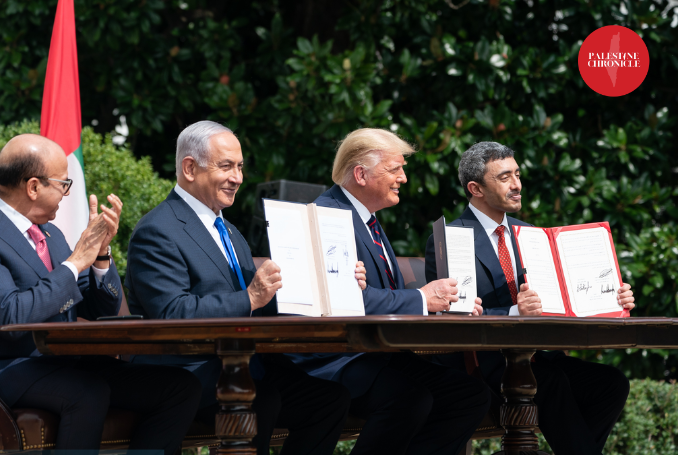
Trump, Netanyahu, and Arab foreign ministers sign the Abraham Accords at the White House, September 2020. (Official White House Photo by Joyce N. Boghosian, via Wikimedia Commons)
Arab states, particularly the Gulf Cooperation Council monarchies (Bahrain, Kuwait, Oman, Qatar, Saudi Arabia and the United Arab Emirates) control
approximately six trillion dollars in sovereign wealth funds in Western markets.
Any coordinated effort to price energy in alternative currencies,
diversify reserve holdings away from the dollar, or liquidate US Treasuries
would pose an existential threat to Western financial hegemony.
Are the ruling elite across the Arab world blind to the reality that
the EU-US/NATO + Israel are wedded to subjugation, not cooperation?
WHY?
Editorial | You Want to Know What’s Happening?
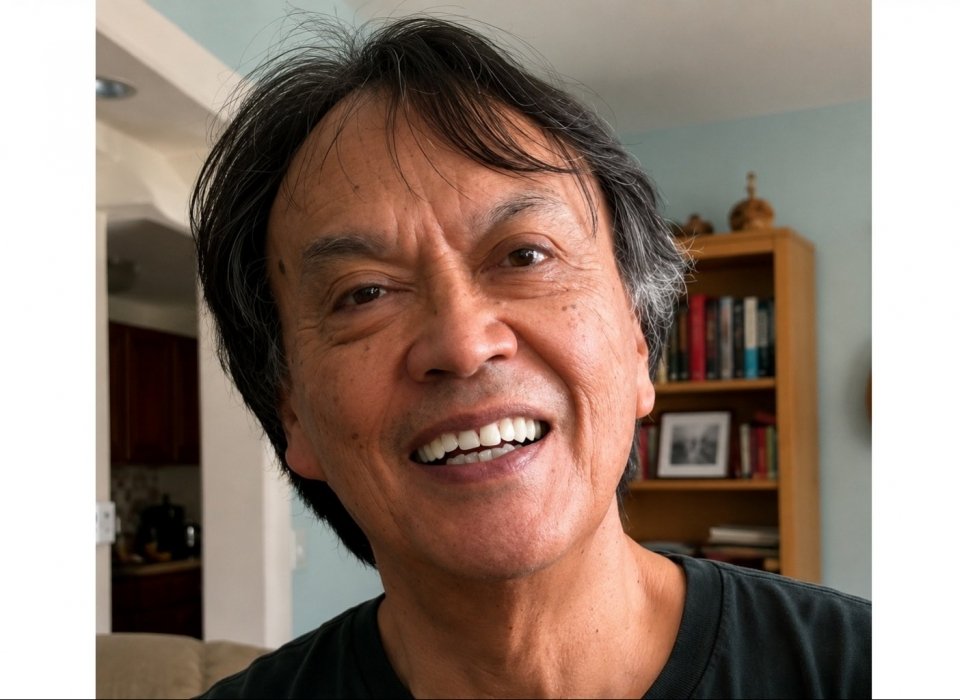
By Abraham A. van Kempen
31 July 2026
Do you see what I see?
- What is happening in Eastern Europe is happening in West Asia (the Middle East).
- Now, the EU-US/NATO and their Wannabees of the Willing are explicitly waging an undeclared war against Russia.
- Ukraine is bankrupt, and even before February 2022, it had been bankrupt, with a total GDP of less than $100 billion annually.
- Yet the clowns in Brussels and the stooges in Washington, D.C., claim Ukraine is winning.
- How?
- Behind Ukraine’s military forces, once behind the scenes, cloak-and-dagger style, is the EU-UK/NATO.
- It’s a war between the EU, US, and NATO against Russia, not a war between Ukraine and Russia; a war with roots dating back several centuries.
...
The situation in West Asia (the Middle East) is similar. The covert conflict against Iran isn't just a US-Israeli effort; it involves the EU-US/NATO and the Coalition of the Willing targeting all Middle Eastern nations. This pattern has persisted for centuries. From the beginning, Israel functioned as a proxy for Britain and France, implementing Eurocentric divide-and-conquer strategies through chaos and destruction, thus fostering ongoing instability across the region. Since the late 1950s, the US has been the dominant Western power and primary proxy within a unipolar autocracy led by the West. In reality, an even more powerful entity operates behind the scenes—one greater than the US. However, this won't last forever.
Despite the vainglorious rhetoric, the West aids and abets Israeli crimes against humanity. Prime Minister Benjamin Netanyahu’s government describes itself as ‘a national movement with a clear vision to follow in the brave path of Russian-born Ze’ev Jabotinsky’. In a few words:
Create an exclusive community (kampf), a Jewish nation, by deploying brute force without regard for the consequences for others, unconscionably dispossessing ‘them’ of the land with no hope of ever returning, with neither compromise, concession, nor conciliation; them or us; the end justifies the means.
This perversion and aberration, this depraved, distorted, and deviant ideology, not the Zionism of my father and mother, can never have a happy ending.
Ask Nazi Germany!
...
What’s really happening? The Western unipolar autocracy is desperately trying to maintain global dominance, while the rest of the world favors a multipolar balance. Out of 8 billion people, 7.3 billion are essentially saying, “Leave us alone.” Russia and Iran have already secured their victories. In future editions, we will examine how the world will endure a cataclysmic clash with the West.
What’s also happening? The West aims to have President Trump align exclusively with them to lure the United States to do their dirty work paid for by the U.S. Meanwhile, through the back channels, Presidents Xi and Putin might encourage President Trump to join forces with them to halt the conflicts. It’s evident that Trump alone has not succeeded in persuading the European Union to prosecute peace with Russia. If Presidents Trump, Xi, and Putin collaborate, they could potentially accelerate a catalytic move toward peace.
I’d like you to compare and contrast two black-and-white photos of world leaders in action. One depicts war; the other, peace.
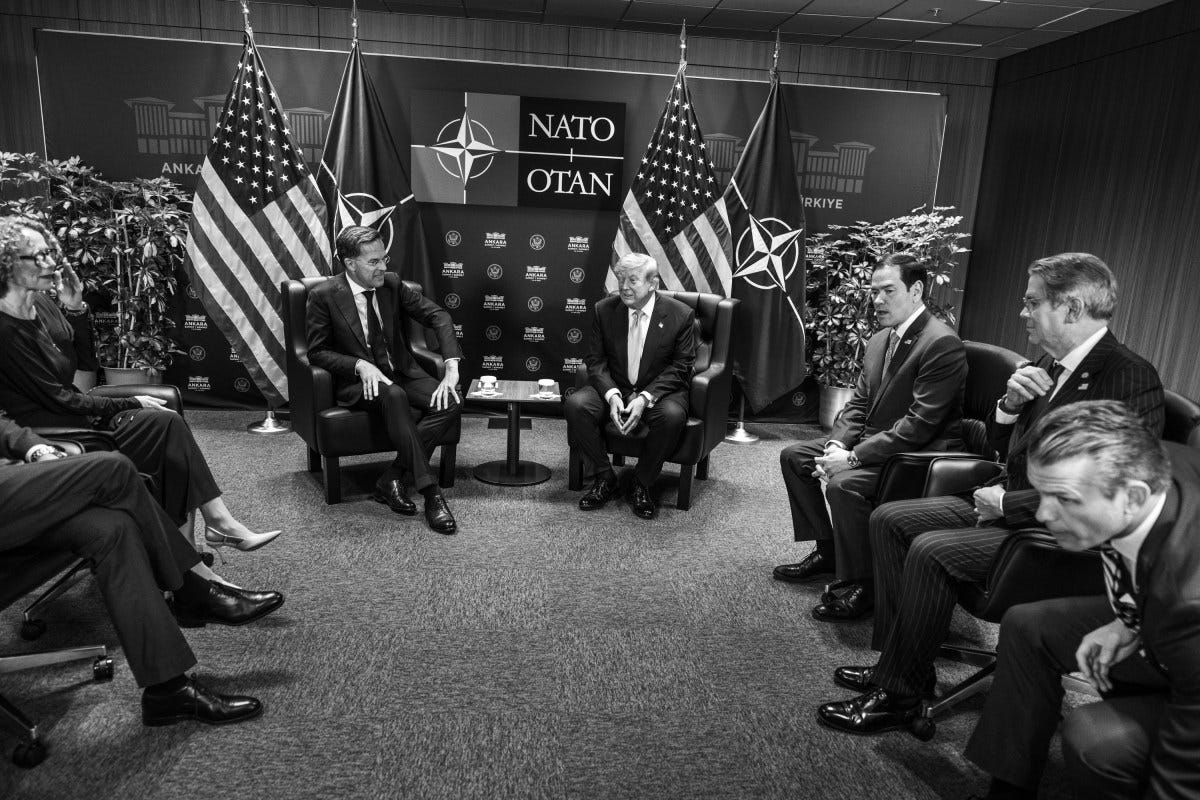
President Donald J. Trump meets NATO Secretary General Mark Rutte at the 2026 NATO Summit in Ankara, 8 July 2026. Official White House Photo by Daniel Torok.

Please review my essay below: “The World Is Done Asking Permission: How former colonies, rising powers, and ordinary people are breaking the grip of the old unipolar order.”
The Eurocentric paradigm should gradually adapt to the evolving world, shifting away from its long-standing focus of the past six centuries that has profoundly shaped humanity:
What is mine is mine.
What is yours is mine also.
It’s either my way or the highway.
If you’re not for us, you’re against us.
If you don’t do it our way, you’re dead meat.
To be continued on Monday, 3 August 2026.
Enjoy your weekend,
Abraham A. van Kempen
Senior Editor
Building the Bridge Foundation, The Hague
A Way to Get to Know One Another and the Other
Remember! Diplomacy is catalytic—transformative —while military action is cataclysmic—destructive and catastrophic.
When faced with the options to be good, bad, or ugly, let’s build bridges, not burn them. After all, mutual deterrence reigns.
ALEX KRAINER: ENERGY WARS, DOLLAR ENDGAME & BANKING CRISIS
- Alex Krainer, born in Croatia, is a market analyst, author, and ex-hedge fund manager.
- He talks about the West's energy conflicts, the decline of the U.S. dollar, and the banking system's collapse.
Prof. Glenn Diesen’s discussion with Alex Krainer suggests that the old Western-led unipolar order is losing its ability to dominate the world through energy control, dollar-based finance, sanctions, military pressure, and moral rhetoric.
The discussion argues that Western power claims to defend democracy, human rights, sovereignty, and free markets, but often acts like a neo-colonial system that keeps resource-rich, formerly colonized nations reliant on Western influence. Energy resources like oil and gas are main goals, while the dollar-driven financial system transfers wealth from the Global South to Western banks and corporations.
The speakers move from a declining unipolar system to an emerging multipolar world. Former colonies and non-Western nations are no longer vulnerable or isolated. Countries like India, Vietnam, Brazil, Indonesia, Ethiopia, Egypt, South Africa, and others are developing industries, infrastructure, technology, regional alliances, and financial mechanisms. Their rising nationalism isn’t hostile but shows self-respect: controlling resources, fostering development, and securing futures.
Prof. Diesen and Mr. Krainer also stress the human side of geopolitics. Behind every discussion of pipelines, currencies, sanctions, and military bases are ordinary families, workers, farmers, students, and communities who want dignity, stability, and sovereignty.
In short: Alex Krainer says the world is moving from Western command to global self-determination—and the old empire can no longer disguise control as virtue.
Key Points at a Glance
- The Western-led unipolar order is portrayed as a fading system that uses language about democracy, human rights, and a “rules-based order” to mask control.
- Energy is depicted as the key prize in modern power conflicts because oil, gas, fuel, and infrastructure sustain economies, militaries, and societies.
- The dollar-centric financial system functions like a modern imperial tollbooth, directing resource wealth through Western banks and corporations.
- Neo-colonialism manifests through loans, sanctions, military pressure, corporate contracts, media narratives, and financial dependency, instead of traditional occupation.
- Former colonies and emerging powers are no longer passive or easily controlled; they have developed industries, infrastructure, deterrence capabilities, technology, and regional alliances.
- Countries like India, Vietnam, Brazil, Indonesia, Ethiopia, Egypt, South Africa, and others are cited as examples of post-colonial development and national pride.
- The discussion emphasizes the human aspect of geopolitics by focusing on families, farmers, workers, students, and communities striving for dignity and autonomy in shaping their futures.
- Western contradictions are highlighted: sovereignty is praised selectively, sanctions are described as peaceful despite harming civilians, and free markets are defended only when they benefit Western interests.
- The financial class is portrayed as fearing imperial defeat because unsuccessful wars and losing authority could reveal bad debts, flawed assumptions, and unstable banking systems.
- The closing call to action encourages readers to think independently, defend local communities, support food security, oppose manufactured hatred, and uphold sovereignty and human dignity.

Watch the Video Here (56 minutes, 19 seconds)
Host Prof. Glenn Diesen
Substack.com
28 July 2026
ESSAY | The World Is Done Asking Permission: How former colonies, rising powers, and ordinary people are breaking the grip of the old unipolar order
By Abraham A. van Kempen
31 July 2026
“A people may be conquered by armies for a season, but they are only defeated when they forget the sound of their own name.”
“Before empires fall, they first lose the power to make people believe. The flags still wave, the speeches still thunder, the banks still count, and the warships still patrol—but somewhere in the world’s villages, ports, factories, farms, and crowded city streets, something ancient begins to stir: the memory that no people were born to kneel.”
“Before an empire loses its territory, it loses its spell.”
That is the spirit moving beneath this moment. It is not loud at first. It sounds like a farmer refusing to surrender his soil, a mother asking why food costs more after another “necessary” war, a student in a once-colonized country learning engineering instead of obedience, a worker watching ships leave port carrying the proof that his nation can build, trade, and rise.
Let’s speak plainly, you and me. For generations, we were told that Western power was the guardian of “freedom,” “democracy,” and “human rights.” But when you follow the money, the pipelines, the oil fields, the sanctions, the military bases, and the banking ledgers, a different story comes into view. It is not a story of charity. It is a story of control.
Alex Krainer and Prof. Glenn Diesen are pointing to something many ordinary people already feel in their bones: the unipolar moment is cracking. The old Western order—the one that expected the rest of the planet to obey, borrow in dollars, sell its resources through Western-approved channels, and accept lectures from capitals that often behaved like creditors with aircraft carriers—is running into a world that no longer kneels so easily.
Energy Is Not a Side Issue—It Is the Prize
Krainer’s first big point is simple: energy is work. Oil, gas, diesel, jet fuel, shipping fuel—these are not just commodities on a screen. They are the muscles of modern civilization. They move food, heat homes, run factories, power armies, and keep cities alive. If you control energy, you do not merely control prices. You control choices.
That is why Venezuela, Iran, Russia, the Gulf, the Red Sea, the Strait of Hormuz, the Black Sea, and Ukraine’s energy infrastructure all belong in the same conversation. They are not isolated “crises.” They are pressure points in a global struggle over who gets to command the arteries of the world economy.
The Dollar Is the Empire’s Toll Booth
Here is the heart of the financial argument: it is not enough for the old imperial system that oil exists. It wants oil traded in dollars, financed by Western banks, insured through Western institutions, and developed by Western corporations. That way, the wealth of resource-rich nations does not stay home to build schools, railways, hospitals, power plants, and domestic industry. It flows outward—to New York, London, Paris, and the balance sheets of the financial class.
This is neo-colonialism in a suit and tie. It does not always arrive with a flag and a governor-general. Sometimes it arrives as a loan agreement, a sanctions package, a military partnership, a “reform” program, a media campaign, or a color-coded moral crusade. The language changes. The purpose does not: keep the former colonies and rising powers dependent, divided, and financially plugged into a system they do not control.
The Former Colonies Are Not Children Anymore
But here is what the Western establishment seems unable to accept: the former colonies have grown up. Many of them have built industries, educated populations, sovereign institutions, regional alliances, missile forces, air defenses, cyber capabilities, and, in some cases, nuclear deterrents. They have their own nationalism now—not the cartoon version Western media likes to mock, but the basic national instinct to say:
“Our resources belong to our people. Our future will not be mortgaged to someone else’s empire.”
Look at What the Former Colonies Have Built
Look around, and the evidence is everywhere. India, once treated by the British Empire as a supplier of raw materials and cheap labor, is now one of the world’s largest economies, a nuclear power, a space power, a pharmaceutical producer, and a technology hub. It launches satellites, builds digital payment systems at national scale, and negotiates with Washington, Moscow, Beijing, and the Global South without asking anyone’s permission.
Vietnam is another lesson the old powers do not like to discuss. After colonial rule, war, devastation, and embargo, it became a manufacturing powerhouse and a disciplined trading nation. It now produces electronics, textiles, machinery, and agricultural goods for global markets. In other words, a country once bombed into ruins refused to remain ruined.
Indonesia, Malaysia, Singapore, and Thailand show the same wider pattern. They took port cities, plantations, colonial trade routes, and fractured societies and turned them into industrial platforms, logistics hubs, energy players, electronics exporters, aviation centers, and regional financial nodes.
The old map said they were peripheral. The new map says they are essential.
Across Africa, the same spirit is rising. Ethiopia built major infrastructure and became a symbol of independent development ambition. Egypt joined new financial and trade alignments to widen its options beyond Western dependency. South Africa, despite its internal struggles, remains an industrial and diplomatic heavyweight in the BRICS conversation.
The point is not that these countries are perfect. No country is. The point is that they are no longer waiting for permission to modernize.
Latin America tells the same story in its own voice. Brazil is not merely a former Portuguese colony; it is an agricultural giant, an aerospace producer, an energy power, and a central player in BRICS diplomacy. Mexico has become a manufacturing base tied to North American industry. Venezuela, Bolivia, and others have struggled fiercely over the question every resource-rich country eventually faces:
Will oil, gas, lithium, land, and minerals serve the nation, or will the nation serve foreign capital?
And then there is the institutional success:
BRICS, the New Development Bank, local-currency trade, alternative payment systems, and regional infrastructure corridors.
These are not just bureaucratic acronyms. They are tools of self-defense.
They say to the old imperial toll booth:
We can trade with one another, lend to one another, build with one another, and settle accounts without routing every dream through Wall Street or the City of London.
Behind the Statistics Are Families With Names, Dreams, and Memory
Picture a young engineer in Bengaluru whose grandparents remembered British rule as humiliation and scarcity. She now writes code for a global client in the morning, sends money home to help her parents, and watches India’s rockets rise on television with the quiet pride of someone who knows what that symbol means.
It means:
We were not born to be managed. We can build, calculate, launch, heal, trade, and decide.
Think of a Vietnamese father outside Ho Chi Minh City, riding his motorbike past factories that did not exist when his own father was young. His family remembers war, hunger, and the insult of being treated as a battlefield for other people’s ambitions. Now his daughter studies electronics, his son speaks three languages, and the products moving through nearby ports carry a simple message to the world:
We survived you, and then we got to work.
Imagine a dockworker in Singapore, a technician in Malaysia, a small-business owner in Indonesia, or a logistics manager in Thailand watching container ships, fiber-optic cables, airports, and factories tie their countries into the nervous system of the world economy. Their grandparents may have lived under colonial administrators, plantation companies, and foreign trading houses. Their grandchildren now grow up in cities that move capital, data, machinery, food, and energy across the planet.
Picture an Ethiopian student boarding a new train, or an Egyptian entrepreneur trying to reach customers beyond the old Western banking channels, or a South African diplomat sitting at a BRICS table where nobody speaks as if Europe owns the agenda. These are not abstract geopolitical talking points. They are lived experiences of people watching their countries search for room to breathe, bargain, build, and stand upright.
Picture a Brazilian farmer using modern machinery on land that once fed empire, a Mexican machinist whose work now feeds a continental supply chain, a Venezuelan oil worker who knows that crude beneath the soil can be either a national inheritance or a foreign prize, and a Bolivian family asking whether lithium will finally build their children’s future instead of disappearing into someone else’s balance sheet.
That is why this struggle is not cold or academic.
It is not just presidents, pipelines, reserve currencies, and military bases. It is a grandmother remembering ration lines, a student applying for an engineering scholarship, a farmer trying to keep ownership of his land, a nurse using locally produced medicine, a family paying for groceries in a currency they hope will still matter tomorrow. Sovereignty is personal long before it becomes geopolitical.
That is the great change of our time.
Western military dominion used to work because the targeted countries were often isolated, technologically weaker, financially trapped, or politically fractured. Today, the cost of coercion is rising.
- Russia has shown that sanctions can boomerang.
- Iran has shown that pressure can produce resilience.
- China has shown that industrial scale can become strategic power.
The wider BRICS world is experimenting with payment systems, development banks, and trade routes that reduce dependency on the dollar-centered order.
The Unipolar Order Calls Itself Democratic—but Behaves Like an Autocracy
This is where the hypocrisy becomes hard to miss. A truly democratic international order would accept pluralism among civilizations. It would allow nations to choose their own trading partners, currencies, security arrangements, and development models. But unipolar power does the opposite.
Unipolar autocracy says:
- You may vote, but only within our script;
- You may trade, but only through our channels;
- You may be sovereign, but only if your sovereignty does not interfere with our privileges.
That is not democracy among nations.
That is autocracy wearing democratic perfume. And people across Asia, Africa, Latin America, and the Middle East can smell the difference. They remember the coups, the debt traps, the structural adjustment programs, the lectures, the invasions, the sanctions, and the endless insistence that Western interests are somehow identical to universal morality.
The Contradictions Are No Longer Hidden
Here is the contradiction in plain English:
Western leaders preach rules while changing them whenever they block their power.
They defend sovereignty when it is their ally’s sovereignty, but treat another nation’s sovereignty as optional when oil, gas, minerals, pipelines, bases, or markets are at stake. They condemn “spheres of influence” in speeches, then maintain hundreds of military facilities around the world as if that is just the natural weather of history.
They tell us sanctions are a peaceful alternative to war, but sanctions can empty pharmacies, cripple industry, raise food prices, and punish families who never voted for any government policy. They say markets are free, until a country chooses the wrong trading partner, the wrong currency, the wrong pipeline, or the wrong development bank. Then suddenly the “free market” needs warships, asset freezes, secondary sanctions, and emergency speeches about democracy.
They lecture poorer nations about corruption, debt, and fiscal discipline, then print oceans of money to rescue their own banks when speculation goes bad. They scold governments in the Global South for subsidizing food, fuel, or industry, then quietly subsidize their own strategic sectors through defense contracts, central-bank liquidity, export controls, tax favors, and protected monopolies.
They speak of human rights, yet too often measure human life by geopolitical usefulness. A protest movement is celebrated if it weakens an adversary, ignored if it embarrasses an ally, and demonized if it challenges Western control. A government is called democratic if it cooperates, authoritarian if it resists, and “unstable” if its people demand ownership of their own resources.
Listen to Their Own Words
Listen to the words Western officials use when they describe their own principles. In 2022, Secretary of State Antony Blinken told the United Nations that the Ukraine crisis threatened “the foundation of the United Nations Charter and the rules-based international order,” including “the principle that one country cannot change the borders of another by force” and “the principle of national sovereignty.” Fine words. But many outside the West hear them and ask: where were those principles when Western wars, interventions, occupations, sanctions, and regime-change campaigns tore through their own regions?
Blinken also said the United States wanted to “strengthen the rules-based international order,” because the alternative is a world where “might makes right and winners take all.” Again, the slogan sounds noble. But to a farmer in Iraq, a family in Libya, a sanctioned business in Venezuela, or a government in the Global South told which currency, bank, buyer, or alliance it may use, that phrase can sound less like a warning and more like a confession.
President Joe Biden told the United Nations that “the principles of partnership” must hold the world together. That is the official sermon: partnership, sovereignty, democracy, shared rules. But partnership does not mean obedience. A partner is not someone you sanction into submission, surround with bases, punish for trading with your rival, or lecture while extracting its resources through your banks and corporations.
President Biden has also framed our era as a struggle between democracy and autocracy. But if democracy is supposed to mean self-government, then why is the self-government of non-Western nations so often treated as legitimate only when it aligns with Western strategy? Why are elections praised when they produce compliant leaders, questioned when they produce nationalists, and destabilized when they threaten foreign access to oil, gas, minerals, land, ports, or cheap labor?
That is the contradiction the rest of the world keeps pointing to.
- Western leaders speak the language of law, but reserve the habits of empire.
- They praise sovereignty, but punish independence.
- They condemn coercion, but practice it through sanctions, banking control, arms pressure, and media campaigns.
- They warn against “might makes right,” while insisting that their own military, financial, and institutional might should remain the final judge of everyone else’s choices.
That is why the old language is losing power.
- The rest of the world has heard the slogans before.
- It has seen the gap between sermon and behavior.
- It has watched “international law” become flexible, “free trade” become conditional, “democracy” become selective, and “security” become a polite word for permanent military reach. Once people see the contradiction, they cannot unsee it.
Why Defeat Terrifies the Financial Class
Krainer also makes a darker point: if the West loses control of these regions, it does not merely lose prestige. It may lose the cash flows that support a mountain of financial claims. Loans, bonds, energy projects, derivatives, and collateral arrangements are all built on the assumption that the old order can keep extracting, pricing, and enforcing.
If that assumption breaks, the people at the top will not calmly accept losses. They will call on central banks. They will demand liquidity. They will ask the public to absorb the damage through inflation, bailouts, currency debasement, and austerity by another name. In plain English:
When the empire’s bets go bad, ordinary people are expected to pay the bar tab.
The World Is Choosing Self-Respect
So the struggle before us is not simply West versus East, or democracy versus autocracy, or one president versus another. It is deeper than that. It is a struggle between a fading unipolar system that still believes it has the right to command humanity, and a rising multipolar world that is learning to say no.
And maybe that is the most human part of this whole story. People do not want to live forever under someone else’s thumb. Nations do not want to remain plantations with flags. Civilizations do not want to be reduced to markets, labor pools, pipeline routes, and collateral for foreign banks. The rest of humanity is not asking for permission to exist. It is building deterrence, demanding respect, and reclaiming the right to develop on its own terms.
The old empire can rage, sanction, lecture, bomb, and manipulate markets. But it cannot forever command a world that has awakened to its own strength. That is the message Krainer and Diesen are circling around—and it is the message our age may be forcing the West, at long last, to hear.
What We Must Do Now
If this is the age of awakening, then it cannot stay abstract. It has to come home—to our kitchen tables, our grocery bills, our sons and daughters, our elderly parents, our farmers, our small businesses, and our neighbors who are quietly wondering why life keeps getting harder while the people in charge keep talking about noble causes overseas.
We have to ask the questions we were trained not to ask. Who pays when sanctions raise prices? Whose children are sent to fight when another war is sold as virtue? Whose savings are diluted when banks are rescued? Whose farms disappear when credit dries up? Whose communities break when everything local is replaced by systems too large, too distant, and too cold to care?
So let’s begin where real courage often begins: close to home. Know your neighbors. Support the farmer down the road. Listen before you hate. Read before you repeat. Teach your children that foreign people are not enemies just because a screen says so. Build friendships, food security, local trust, and enough independence that fear cannot be used to herd us into every new panic.
The call to action is not just political. It is deeply human: refuse to surrender your conscience, your compassion, or your common sense to an empire in decline. Think clearly. Speak honestly. Protect what is local. Stand with sovereignty. And when the old story demands that you kneel, remember the simplest truth of all: human dignity was never theirs to grant.
“The future will not bow to frightened kings; it will rise in the hands of people who remember their dignity, guard their soil, and teach their children to stand in the light.”
So let this be the line we carry forward: no more borrowed courage, no more rented truths, no more surrendering our judgment to those who profit from fear. Let us stand with the nations that want to breathe, with the families that want to build, with the farmers who feed us, with the workers who keep life moving, and with every child who deserves a future larger than empire’s appetite. The world is changing because people are remembering who they are—and once dignity awakens, no throne, bank, army, or slogan can put it back to sleep.
Ultimately, this essay closes with a feeling deeper than politics: a longing to stand upright again. It speaks for parents who want their children to inherit more than debt and fear, for farmers who want to keep the soil beneath their feet, for workers who want honest livelihoods, and for nations that want to breathe without asking permission. The old order may still command institutions, currencies, armies, and headlines—but it cannot command the human heart once dignity remembers its own name.
Do not wait for permission to live with dignity—build trust where you are, speak truth where you can, support the hands that feed and heal, and remember that a free world begins with people who refuse to kneel.
EURASIAN AXIS
BRICS tests the waters of military cooperation
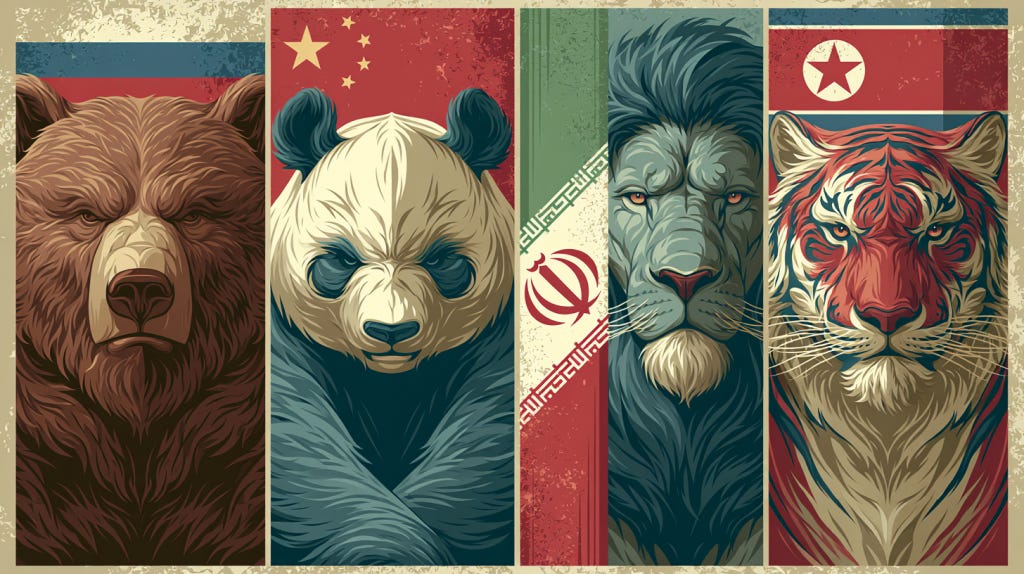
Alexander Dugin warns that without a real military alliance, the Eurasian axis will stay vulnerable, and BRICS’s limited drills prove how far it still has to go.
By Alexander Dugin
Multipolar Press
23 July 2026
Annotated by Abraham A. van Kempen
Conversation with Alexander Dugin on the Sputnik TV program Escalation.
Host: The main topic—urgent and widely discussed—is the renewed US-Iran conflict, ongoing for about seven or eight days. The ceasefire ended, and now they are cautiously exchanging strikes, though I may be mistaken. Two main scenarios are: they exchange fire then cease, or it escalates further, with both sides waiting to see what happens. The Washington Post reports U.S. losses are prompting preparations for a major operation, including securing the Strait of Hormuz for shipping. What do you think will happen next?
Alexander Dugin states that the public-relations efforts and speculation around the Iran-American conflict have reached their limit. The war has shifted from diplomatic declarations to real combat, with Iran suffering significant losses and the US acknowledging only a fraction of its casualties. The true death toll is likely much higher.
Their admission suggests they broke an internal taboo. Originally, everything seemed like a simple game: press a few buttons, and Iran's leadership changes, nuclear weapons disappear, and they bow to Israel's radicals. All aligns for quick economic growth, with Trump as "king of the world.” America maintained this illusion initially, but it is no longer sustainable.
When Iran showed itself as a resilient civilization-state and a key player in global politics and the multipolar world, this shouldn't critique other Islamic nations that often display fervor and loud declarations of 'Allahu Akbar,” yet tend to be compliant puppets of the West and Israel. Despite their brutality, they are obedient like small rodents. Genuine Shiite Iran embodies what it means to be a Muslim—independent, free, and engaged in authentic jihad—not by attacking the defenseless, but by challenging true evil: the United States and Israel.
Iran has shown its independence, sovereignty, and conviction. It marks Iran's awakening after decades of stagnation without war or radical policy shifts. People awaited a final battle that never arrived, like in The Desert of the Tartars—waiting for Gog and Magog, leading to despair. Suddenly, American-Israeli aggression revitalized that faith, making Iran tangible. This conflict is real because Iran has sacrificed everything and can only gain by defending its sovereignty, dignity, and faith to the end.
Within Islam, this is an example of extraordinary, genuine resistance that the Americans never counted on. They assumed everything would be theatrical, that they would buy off the Iranian elite, remove the dissenters, install fully compliant figures, and that the entire pathos of preparation for the final battle that had been cultivated in Iran for half a century since Ayatollah Khomeini’s revolution would simply collapse. It did not collapse. Now it is the turn of the system that proclaimed itself absolutely invincible to begin collapsing. And here everything is only just beginning.
They are beginning to admit troop losses. A senior U.S. Navy officer died, officially in a helicopter crash, claimed as non-combat, but details are unclear due to the “fog of war.' This shows the Americans recognize casualties. Attacks on bases in Kuwait, Bahrain, Jordan, ongoing assaults on Israel, and targeting Middle East infrastructure—like Iran destroying desalination plants—show Iran knows the stakes: secure victory or face extinction. There is no middle ground.
Host: Can we consider the issue of compromise and agreement? Iranian Foreign Minister Abbas Araghchi says Iran is willing to halt military confrontations and negotiate once it has an advantage. He sees two options: end the conflict through capitulation or achieve military superiority first and then negotiate a new agreement. This is similar to a previous instance where Iran didn't succeed militarily but used an economic move by closing the Strait of Hormuz, which caused global backlash and pressured the US to seek a ceasefire and ease oil tensions. Why not consider closing the Bab el-Mandeb Strait—or encouraging Yemenis to do so—to boost economic leverage?
Alexander Dugin: I believe the Bab el-Mandeb Strait will soon close. The Iranians are determined and persistent, ready to fight to the end. When they negotiated with the US to reopen the Strait of Hormuz, they set firm conditions. Trump thought he could outsmart everyone, but he's a manipulative con artist. He's a ruthless deceiver who breaks promises, and the Iranians know this.
Host: But is he like that only toward Iran? Is he exactly the same toward everyone else?
Alexander Dugin: If he treats some the same way he treats others, it’s clear we’re dealing with an unstable individual who makes and breaks promises, shifting his stance based on the current situation—be it market or politics. He’s a total fraud. Even his own country is turning against him; his supporters are abandoning him. Everything is transparent: he rose to power with lofty promises to fight the “deep state" but ultimately betrayed everyone. He lacks real authority in any area. The Democrats have disliked him from the start and still do; now, even his base strongly opposes him. Regarding global view—there’s nothing left to say. America is finished.
His internal motivation is more important. He held attractive ideals: traditional values, returning to religion, focusing on domestic issues, releasing the Epstein files, and arresting elites involved in pedophilia, cannibalism, and atrocities. He promised to end wars, including in Ukraine. Supporters saw the “Fourth Turning” concept, believing Trump's election marked a new golden age, with hopes he would prioritize “America First” and dismantle the deep state.
He betrayed everyone, under Israeli influence, blackmailed, or by other means. He lost face internationally—before Europeans, Americans, supporters, and the world. Iran was willing to negotiate with this maniac, but it's impossible to deal with such creatures. Their current talk of returning to negotiations is mostly for show—they're not prepared for meaningful talks. The next round will only happen when Iran has a stronger position.
Tens or hundreds of thousands of Americans dead returned home; Houthis closed the Bab el-Mandeb Strait; fierce fighting for coastal zones; undersea fiber-optic cables cut in the Strait of Hormuz; strikes on economic infrastructure of America’s Arab allies within Iranian missile range. We shall see what the next events bring.
Host: You mentioned tens or even hundreds of thousands of American corpses being sent back to the United States. So are we already looking at the real possibility of a full-scale ground operation?
BUILDING THE BRIDGE! | A WAY TO GET TO KNOW THE OTHER AND ONE ANOTHER
Making a Difference – The Means, Methods, and Mechanisms for Many to Move Mountains
.jpg)
Photo Credit: Abraham A. van Kempen, our home away from home on the Dead Sea
By Abraham A. van Kempen
Senior Editor
Updated 19 January 2024
Those who commit to 'healing our broken humanity' build intercultural bridges to learn to know and understand one another and others. Readers who thumb through the Building the Bridge (BTB) pages are not mindless sheep following other mindless sheep. They THINK. They want to be at the forefront of making a difference. They're seeking the bigger picture to expand their horizons. They don't need BTB or anyone else to confirm their biases.
Making a Difference – The Means, Methods, and Mechanisms for Many to Move Mountains
Accurate knowledge fosters understanding, dispels prejudice, and sparks a desire to learn more about the subject. Words have an extraordinary power to bring people together, divide them, forge bonds of friendship, or provoke hostility. Modern technology offers unprecedented possibilities for good, fostering harmony and reconciliation. Yet, its misuse can cause untold harm, leading to misunderstandings, prejudices, and conflicts.
A Free Trial for Life – SUBSCRIBE NOW!

• It's quick and straightforward.
• We won’t ask for your credit card number.
• Just enter your e-mail address to receive your complimentary free-for-life subscription to our newsletter.
• Please include your First and Last Name.
• We won’t share or sell your e-mail address.
_________________________
Related Articles Recently Posted on www.buildingthebridgefoundation.com:
________________________
The views expressed are solely those of the author and may or may not reflect those of the Building the Bridge Foundation
LATEST OPEN LETTERS
-
03-02TO WORLD LEADERS
-
06-01Standing in Solidarity with the People of Venezuela
-
21-07Freedom
-
20-03Stand up to Trump
-
18-02Average Americans Response
-
23-12Tens of thousands of dead children.......this must stop
-
05-06A Call to Action: Uniting for a Lasting Peace in the Holy Land
-
28-05Concerned world citizen
-
13-02World Peace
-
05-12My scream to the world
VIRTUAL POST OFFICE
PETITIONS
LINKS
DONATION
Latest Blog Articles
-
15-10Our Friday News Analysis | What the World THINKS Now!
-
14-10Our Wednesday News Analysis | Navi Pillay, head of UN commission that accused Israel of genocide, wins Nobel Peace Prize
-
13-10Navi Pillay, head of UN commission that accused Israel of genocide, wins Nobel Peace Prize
-
13-10No state has a ‘right’ to exist – least of all an apartheid, genocidal state like Israel
-
13-10‘By the Way, the World is Not Stopping Us’: The Secret of Israel’s ‘Success’
-
12-10Our Monday News Analysis | What the World THINKS Now!
-
08-10Our Friday News Analysis | What the World THINKS Now!
-
07-10Our Wednesday News Analysis | The West wants Netanyahu gone - so Palestinians can be killed more quietly again
-
06-10The West wants Netanyahu gone - so Palestinians can be killed more quietly again
-
06-10Israel turns Gaza into largest ghetto in modern history, killing residents one after another as three-year genocide continues
-
06-10Analysis Europe's Boycott of Israel Is Rapidly Expanding – and It Won't Be Easy to Stop
Latest Comments
 One of the most important and illuminating articles that I …
Comment by Benjamin Inbaraj-
And what's wrong here?
After all, there is the homeland …
Comment by Isac Boian -
Does this reinforce or deny my argument that Israel is …
Comment by Edward Campbell -
Many 'say' they support the Palestinian cause but do little …
Comment by Philip McFedries -
The UN is strangled by the "war for profit" cabal …
Comment by Philip McFedries -
I can't read the printing on the map.
Comment by Philip McFedries -
Good news!
Comment by Philip McFedries
COMMENTS
This article has 0 comments at this time. We invoke you to participate the discussion and leave your comment below. Share your opinion and let the world know.