 NEWSLETTER
The Friday Edition
Our Friday News Analysis | What the World Reads Now!
Helping to Heal a Broken Humanity (Part 74)
The Hague, 6 March 2026 | If you know of a decisive story, tell the world! We're still searching.
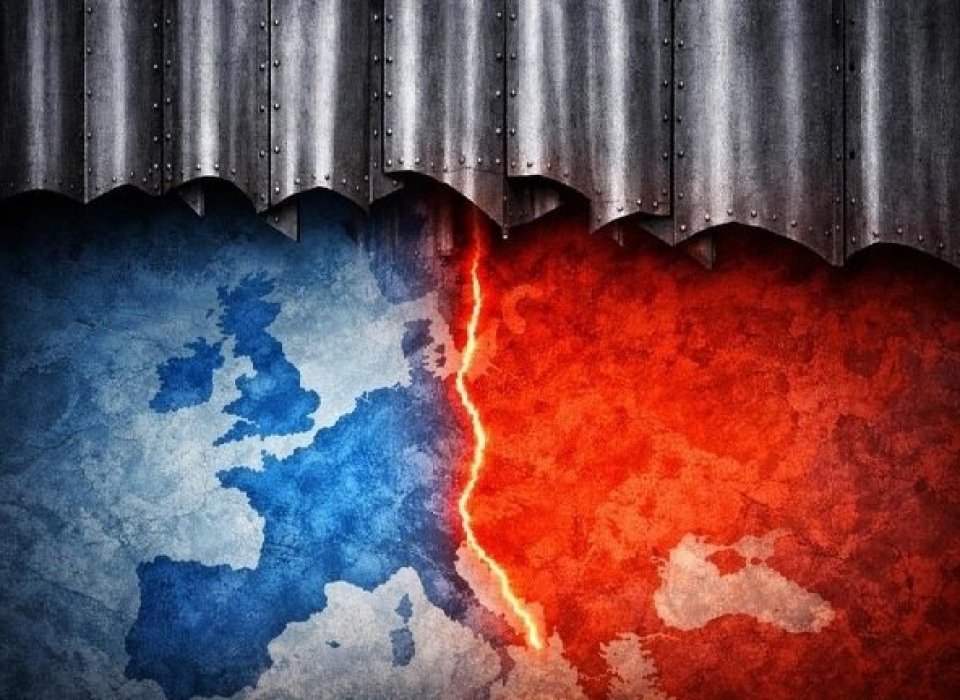
This image was generated using AI technology.
GUEST EDITORIAL | THE IRON CURTAIN RETURNS, BUT FROM THE OTHER SIDE
Fyodor Lukyanov On How Europe Has Divided Itself Again
By Fyodor Lukyanov, the editor-in-chief of Russia in Global Affairs, chairman of the Presidium of the Council on Foreign and Defense Policy, and research director of the Valdai International Discussion Club.
Russia in Global AffairsRGA on Telegram
5 March 2026
HomeWorld News
Unlike Paris, London accepted that losing its empire was inevitable. The British elite tried to manage the decline to minimize the harm, but ending the empire entailed economic and reputational costs. It also left 'Little England'—a nation with big ambitions but fewer resources.
For the British establishment, finding a new international role became urgent. Winston Churchill embodied this dilemma. He began his career at the empire's peak around 1900, but by the mid-1940s, he had witnessed its decline.
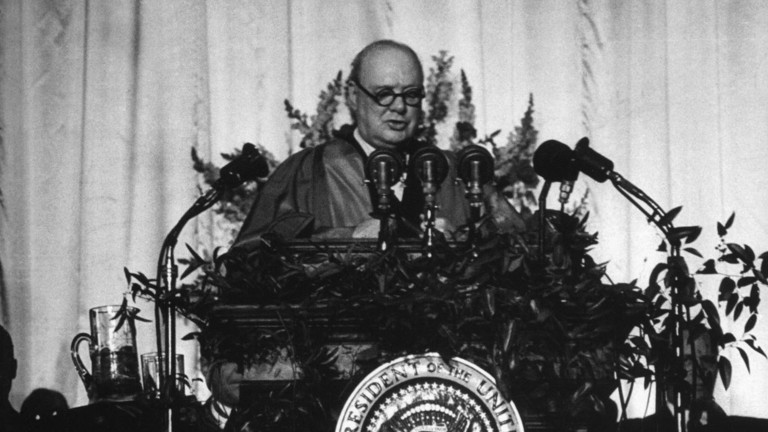
Churchill’s 1946 Fulton speech emphasized that peace and the UN depend on the unity of English-speaking nations and allies. He acknowledged that the U.S. had become the world's leading power.
Churchill framed America's transfer of leadership as a collective responsibility, emphasizing its immense power and the associated burden. It was a significant admission for a nation new to this role.
“You must feel uneasy,” he told his American audience, “that you may not be able to live up to what is expected of you.”
Churchill’s plan was simple: unite air, naval, scientific, and economic strength to break the fragile balance of power that fueled aggression. This alliance would preserve Britain’s influence as its empire waned.

Read more
Churchill wasn’t the first: Europe’s war on Russia is centuries old
Four-fifths of the "century ahead” Churchill envisioned have now passed. It’s hard to ignore the parallels with today. A new curtain has fallen across Europe again, but this time from the opposite direction.
During the Cold War, the Soviet Union isolated itself from the West, and now the Western world is isolating Russia. Churchill's confrontation led to a stable coexistence rather than war, lasting for decades. Historian John Lewis Gaddis called this the ‘Long Peace,’ during which Europe avoided major wars and conflicts remained limited.
Churchill did not support destroying or dismantling the Soviet Union. Instead, his aim was containment—maintaining the balance of power and preventing Soviet expansion—while acknowledging the USSR as a lasting element of the global system.
Two weeks before Churchill's Fulton speech, diplomat George Kennan laid the intellectual groundwork for containment. In Moscow, Kennan sent his 'Long Telegram' to Washington, analyzing Soviet actions and recommending patient resistance. Published later in Foreign Affairs as 'Mr. X,’ this document became a highly influential twentieth-century text.
Churchill may have exaggerated Moscow’s aim of spreading its system, but he acknowledged that the Soviet Union could oppose the West, thereby shaping the Cold War's framework.
Churchill viewed the Soviet Union as vital to global balance, not an anomaly to eliminate, and thought Britain's importance depended on supporting the Western effort against this rival.
Read more
This speech started the Cold War – and still haunts the world 80 years on
History viewed Churchill and Kennan differently. Churchill died twenty years before the Soviet Union launched perestroika, which eventually ended the Cold War. Kennan lived longer and, later in life, became more critical of American policy.
Kennan warned that NATO's expansion, the Iraq War, and other decisions were shortsighted and risky. He said the Cold War encouraged prudence and long-term planning, but that approach faded after the Cold War ended.
When Churchill and Kennan proposed containment eighty years ago, they didn't know its duration or outcomes. Four decades later, Western leaders declared a historic victory.
Four decades later, that confidence waned. The fall of a rival power didn't create stability; it disrupted the balance shaping international relations, making the global system more unpredictable.
Joe Biden's administration tried to revive a Cold War-style approach with rhetoric of a 'community of democracies' facing autocracies, but failed to restore order.
The liberal world order rooted in the Atlantic Charter in the 1940s has gradually and seamlessly evolved into a more pragmatic, transactional system. Even its self-identified leaders lack confidence in its future.
Britain has never regained the global influence Churchill hoped it would maintain. The Cold War is often nostalgically viewed as a clear confrontation, but there's little about it worth romanticizing.
Solutions from that era no longer suffice. New curtains fall worldwide, each promising security but hiding uncertainty. In 1946, right after the deadliest war, a shared belief emerged: such a catastrophe must never happen again.
Today, even that certainty appears less secure than it once did.
Click here for Part 2
Click here for Part 3
Click here for Part 4
Click here for Part 5
Click here for Part 6
Click here for Part 7
Click here for Part 8
Click here for Part 9
Click here for Part 10
Click here for Part 11
Click here for Part 12
Click here for Part 13
Click here for Part 14
Click here for Part 15
Click here for Part 16
Click here for Part 17
Click here for Part 18
Click here for Part 19
Click here for Part 20
Click here for Part 21
Click here for Part 22
Click here for Part 23
Click here for Part 24
Click here for Part 25
Click here for Part 26
Click here for Part 27
Click here for Part 28
Click here for Part 29
Click here for Part 30
Click here for Part 31
Click here for Part 32
Click here for Part 33
Click here for Part 34
Click here for Part 35
Click here for Part 36
Click here for Part 37
Editorial | It’s Time
By Abraham A. van Kempen
6 March 2026
Now more than ever, it's important for global leaders to come together and work towards making our world a better place, guided by the values of honor, respect, and dignity. The era of ideas like White Man’s Burden, Divine Right, Colonialism, and Neo-colonialism has ended.
Get with it! Get over it!
Europe and the Collective West's views of Russia also reflect their attitudes towards Iran. Ukraine acts as a proxy for the EU-US/NATO Axis intended to attack, invade, defeat, divide, and conquer Russia, similar to how Israel symbolizes Europe's stance on the Middle East, especially Iran. Ukraine's conflict with Russia mirrors Israel's conflicts with Middle Eastern countries, mainly Iran.
Europe is the brain behind the US brawn. For too long, the US has served Europe as its enforcer of EU-centric policies. The US doesn't need to be in the Middle East; it has its own oil, unlike Europe. To lower its national debt, the US should stop acting as Europe’s whipping boy and punching bag. President Trump should focus on draining the European swamp that engulfs the European Elite.

Examine the map carefully. Notice the landmass bridging East and West. It’s Russia!
The EU-US/NATO alliance aims for global dominance. Historically, controlling Eurasia—from Rotterdam to Vladivostok—has been seen as key for world leadership, with Russia, the bridge between East and West, at its center. What’s more, Russia has vast resources, including oil, gas, rare minerals, and land, the breadbasket of the world. The Collective West intends to divide Russia into three to 17 separate states, similar to how it carved up or balkanized the former Yugoslavia into eight separate countries.
The Collective West also considers it its divine right to ‘colonize’ and balkanize the Middle East in its image, despite Iran having a civilization that spans over 2,600 years. It’s not going to happen. Regime changes are more likely to happen in Europe and the Americas, not only in Iran.
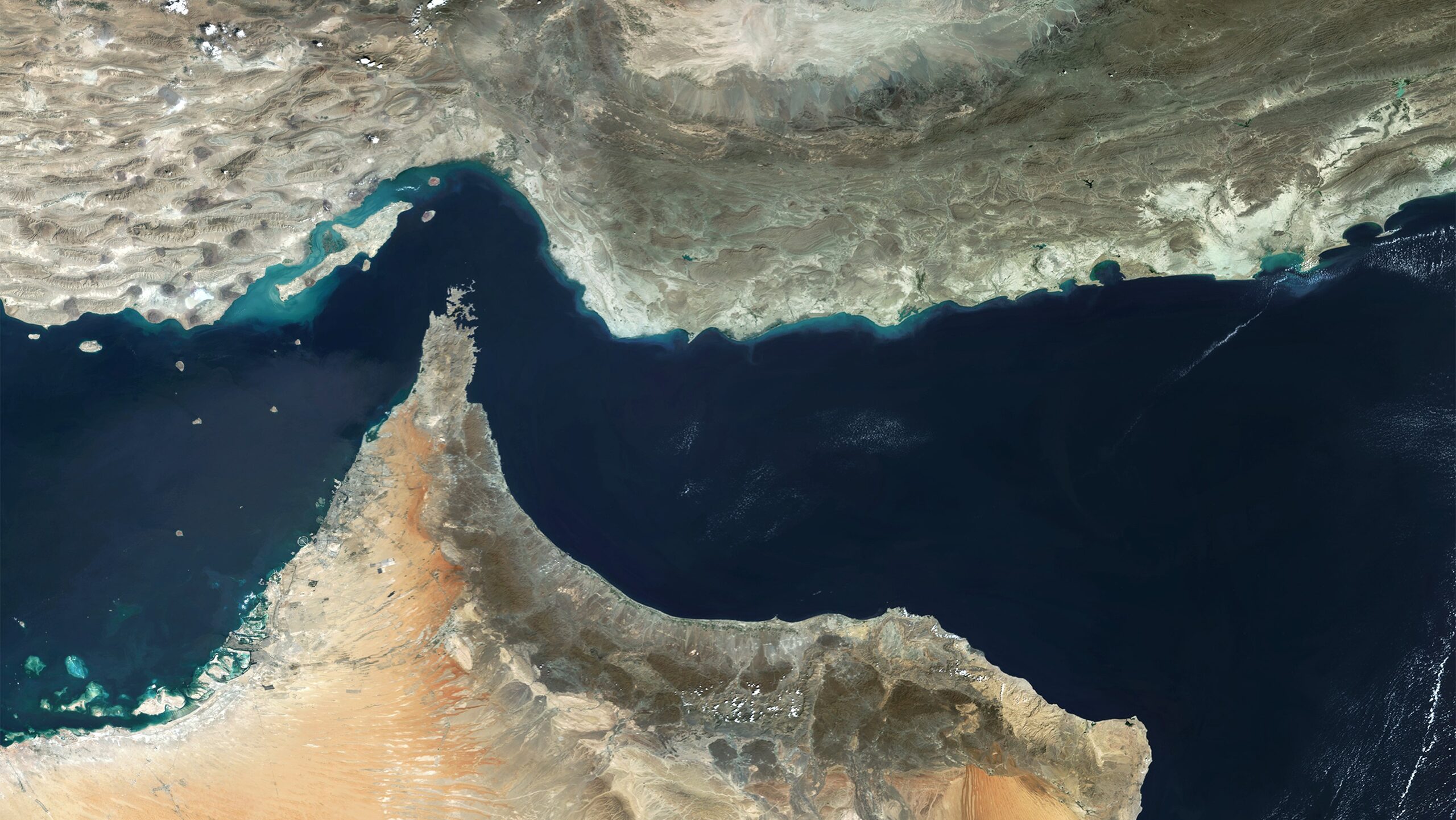
Satellite view of the Strait of Hormuz, connecting the Persian Gulf to the Gulf of Oman. © Gallo Images / Orbital Horizon / Copernicus Sentinel Data 2025
Before it gets better, things will get worse.
Imagine a scenario where the Collective West no longer controls the regional territories of Russia and Iran. Israel and Ukraine have no choice but to become better neighbors, improve cooperation, and foster unity.
Have a wonderful weekend.
Abraham A. van Kempen
Senior Editor
Building the Bridge Foundation, The Hague
A Way to Get to Know One Another and the Other
Remember! Diplomacy is catalytic—transformative —while military action is cataclysmic—destructive and catastrophic.
When faced with the options to be good, bad, or ugly, let’s build bridges, not burn them. After all, mutual deterrence reigns.
FROM TEHERAN | SEYED M. MARANDI (03.03.2026): IRAN'S MILITARY STRATEGY & U.S. MISCALCULATIONS
A Profound Miscalculation

Watch the Video Here (41 minutes, 16 seconds)
Host Prof. Glenn Diesen
Substack.com
3 March 2026
Seyed Mohammad Marandi, a professor at Tehran University and former advisor to Iran's Nuclear Negotiation Team, discusses Iran's goals and tactics in the war, and sheds light on how and why the U.S. misjudged the situation.
What is the Side of the Story that is Not Yet Decisive? Edited and annotated by Abraham A. van Kempen
GUEST EDITORIAL | TODAY IRAN, TOMORROW RUSSIA
Alexander Dugin on Iran, the Katechon, and the war that could reshape the world –
Iran, Trump, and the moment the world order finally broke
By Alexander Dugin
Substack.Com
5 March 2026
Annotated by Abraham A. van Kempen
Conversation with Alexander Dugin on the Sputnik TV program Escalation.
Host: Today, we address a serious issue following a historic incident on February 28, 2026, when the US and Israel jointly attacked Iran, killing Iran’s Supreme Leader, Ayatollah Khamenei, and other officials. Iran responded with attacks on Israel and US military targets, escalating tensions. Questions loom about future actions, impacts, and Iran's resilience. The key concern remains: what is most likely to happen next?
Alexander Dugin: This event is highly significant and could influence global stability, possibly triggering the Third World War due to the massive forces involved. The United States, under Trump and Netanyahu, responded quickly to Iran's political leaders.
This is the second incident. Previously, the U.S. kidnapped Maduro, taking control of Venezuela. Recently, they dismantled Iran's leadership—similar to removing the Pope or Orthodox Patriarch—since Ayatollah Khamenei was the Shiite spiritual leader and head of the global Shiite community, numbering hundreds of millions. Earlier, Israel removed Hamas's leadership with limited effect, then targeted Hezbollah's leadership, which had a greater impact.
Iran's leadership has been openly dismantled, reflecting a decline in international norms and exposing the UN's struggles. The organization seems outdated, like a relic. President Trump acknowledged this, implying a decline in international law and justifying his actions. This signals the end of the old global order. Though gradual, we've now reached a point of no return. If a country can unilaterally remove foreign leaders without cause, we enter a new world—where force replaces law, and the rule is: “If I can do it, I will.”
Trump’s actions are conspicuous. During discussions with Kushner and Witkoff, reports indicated Iran was near accepting most American demands. The strike targeted the country's leadership. Remember, we (Russians) are next. Venezuela, Iran, Syria, and Hezbollah are under U.S. actions and are considered Russian allies.
Allowing actions against allies without repercussions, Trump's success could lead to a regime-change operation in our country during future negotiations with Kirill Dmitriev, Kushner, and Witkoff.
What safeguards us from such a scenario? Nuclear weapons are one, but the key question is whether we would actually use them. During difficult periods, the West doubts our resolve because we threaten but often fail to follow through. Meanwhile, efforts seek to isolate our president, who is central to our nation and, potentially, to the entire world. He acts as the restrainer—the Katechon, from Orthodox tradition. Today, this role is a real part of geopolitics and the global structure.
If Americans—particularly Trump—think other Russian leaders might assume power and be more receptive to the West—like Iran, where leaders are ousted for policies against American interests—what stops them from trying to replicate that here?
President Trump maintains a neoconservative stance on international issues. Countries highlighted by globalists during the Biden, Obama, and Clinton administrations are being targeted again, with no new nations added. Despite scandals and disagreements with European NATO allies, they largely align with the US and share similar views. This situation is critical and should serve as a final warning.
Host: Let me revisit the Third World War. Last year, we discussed Iran—the 'twelve-day war’—and noted that it could trigger a global crisis. Luckily, it didn't. Does this mean conflicts last about twelve or thirteen days before resolution? Or are we facing larger events now?
Alexander Dugin: It's hard to definitively say whether this will trigger the Third World War. The real challenge is the inaccurate claims that 'this is the Third World War' or 'that is the Third World War,' leading to declarations like 'now the Third World War has begun.”
Careful analysis of current events is vital. The situation resembles the early stages of the Third World War, but optimism persists that it won't escalate and could be resolved peacefully. Your question is excellent. Much depends on Iran's resilience to pressure. If the American-Israeli alliance quickly weakens Iran in operations like “Epic Fury”—sometimes jokingly called “Epstein’s Epic Fury”—it's possible that Trump aimed to distract from the Epstein case, where he's viewed complexly. Experts also believe Israeli influence and blackmail play roles.
Israeli ideology is driven by an eschatological outlook, aiming to establish a “Greater Israel,” prepare for the end times, and await the Messiah's arrival. This strong motivation influences Israel’s military campaign, 'The Shield of Judah.' Conversely, Iran sees itself on the verge of a final confrontation. During the recent twelve-day conflict, Iran’s role seemed more preparatory than fully committed. Now, Iran must engage vigorously—targeting all military and strategic goals, blocking the Strait of Hormuz to Western and American ships, and supporting Shiite uprisings across the Middle East and beyond—actively participating in this critical conflict until the very end.
Iran, previously avoiding conflict, now appears to accept it, officially naming its operation 'The End of the Flood,' a significant title. The original Hamas operation related to Gaza and Israel was called “The Flood' or “Al-Aqsa Flood.” Al-Aqsa, a key Islamic site on Jerusalem's Temple Mount, was defended by Palestinians amid threats from Netanyahu, Ben-Gvir, and Smotrich, who proposed demolishing the mosque to build the Third Temple, marking the start of the messianic era. This effort aims for a 'Greater Israel,' with Hamas defending Al-Aqsa against Ben-Gvir’s pledge to destroy it, resulting in Gaza's destruction.
The Iranian operation, called “The End of the Flood,” is seen as the final confrontation. In Islamic belief, the end of the world involves a key battle between the Mahdi, expected to return, and the Dajjal, called the Islamic Antichrist. This encounter, likely in Syria or the Holy Land, is considered the most critical end-times event. Both Shiite and Sunni scholars often link the Dajjal with the U.S. (the “Great Satan”) and Israel, making its symbolic importance highly significant.
Reflecting on the situation, the key question is how long Iran can sustain its resistance. Each day Iran defends its sovereignty might shift the strategic landscape. President Trump expected a quick conflict, believing removing Iran’s military and religious leaders would cause an immediate collapse, assuming a prepared 'fifth column' would support this.
Host: Let's assess Iran's stability. With recent changes, such as the removal of the supreme leader and elites, can leadership quickly restore power and appoint new leaders? Or might the system collapse, especially if missile strikes hit Tehran suddenly?
Alexander Dugin: History is filled with uncertainties, and current details about Iran are scarce due to the complete internet shutdown. There are no evident protests against the regime at present. Some former regime opponents shifted stance after about two hundred schoolgirls died from an Israeli missile. This incident strengthened the Iranian opposition's anti-US and anti-Israel sentiments. Overall, a simple power transfer to Trump seems unlikely.
Iran is probably more unified now than ever since its leadership was eradicated after the school attack. The event increased awareness, and the Iranian people showed pride and resilience. While some resent the Velayat-e Faqih regime—exaggerated by Israeli agents—the current situation may unify Iran under national identity. The leadership might also realize the need to engage more with secular and nationalist sectors, who are less religious but patriotic. If they focus their energy on opposing Zionist-American aggression, sustained resistance is possible, as Gaza has endured long-standing resistance, and Iran's larger territory offers more space for defense.
Shiite communities make up a large part of the Middle East. Many elites in pro-American, pro-Arab governments are seen as highly corrupt, similar to “Epstein Island,” as seen in Qatar, Dubai, and Bahrain. In Bahrain, most residents are Shiite, and widespread Shiite uprisings are expected. If Iran resists mounting pressures, the conflict's outcome is uncertain, especially with rising tensions between Afghanistan and Pakistan. It's unclear if Pakistan or Afghanistan might support Tehran. Israel does not back either, complicating matters for Trump, the U.S., and Israel. There's a risk the Muslim world could overthrow these regimes. The “Iron Dome” has been breached, unrest in Tel Aviv is rising, resembling Gaza, and many believe Iran could win.
The situation remains uncertain. Iran didn't surrender immediately or after the strike, defying President Trump's prediction. He may extend military actions over weeks or months, with legal authority for about three months and possible support from Congress. If Iran resists strongly, the outcome is unpredictable. The “Shield of Judah” operation may be the most vulnerable for the American–Israeli alliance—attacking a non-warring leadership seems like betrayal, similar to Judas, during negotiations. This treachery offers little real protection, and if events develop in a certain way, major global changes could occur.
Recent developments shift focus from who will prevail. The initial phase is over, and Iranians have overcome the first obstacle. Now, political leaders replace Rahbar Khamenei and his family, who also faced losses. It's heartbreaking: a girl, just fourteen months old. Children and grandchildren are all affected.
Gaza often shows a pattern of overwhelming American–Israeli actions, lies, and betrayals that cause horror. Usually, alternative stories circulate, blaming Iran or suggesting Iran harms itself. Misinformation from the U.S., West, and Zionist groups is familiar—it's the same old story. Iran can't count on global outrage but must rely on itself and potential allies.
If Iran keeps reorganizing and sustaining the conflict, Israel may try to reduce Iran to Gaza's level. This process has already begun. Iran still ranks as a major country, with missiles hitting key locations in Israel. After prolonged bombardments and missile exchanges, I believe Israel will become increasingly uneasy.
The Americans and Europeans will notice this. Sinking battleships is easier now, as we've seen from losses in the Black Sea during the conflict with the Kyiv Nazi regime. With modern unmanned aerial and underwater vehicles, taking down a renowned fleet is feasible. We're in a new era of warfare where carrier power is often overstated; it mostly serves as a visual spectacle.
Given Venezuela's rapid helicopter deployment, they likely only last about thirty seconds against threats like firearms, drones, or frontline equipment in Ukraine, indicating limited effectiveness. There seems to be a misconception among Americans and Israelis about the realities of combat, but they are beginning to grasp the realities of modern warfare.
If Iran persists, all options remain on the table. Victory isn't guaranteed for any side, but if Trump and Israel don't succeed quickly, it would be a major win for a multipolar world. The conflict concerns us as the next targets. Iran acts as a shield — the protection of the Katechon — bearing a burden for all. If Iran withstands, it would be a significant achievement for us.
Host: Let's reflect on the importance of cooperation, especially from Russia's perspective. Moscow stated they stay in contact with Iran, pursuing diplomatic solutions despite the U.S. attack. Putin discussed Iran today and plans a meeting with the Amur governor, unrelated to Iran. What are your thoughts? Should we tighten measures or wait? It's unclear what developments we're awaiting.
Alexander Dugin: Adopting a passive stance and waiting to see what happens suggests uncertainty in Iran. Future developments could directly impact our military and political leaders.
Host: In what way?
Alexander Dugin: The Ukraine conflict remains intense. When Trump took office, many hoped he’d ease tensions and withdraw from confrontations. Talks with Witkoff and Kushner aimed to de-escalate U.S. conflicts. Though disagreements with Ukraine and the EU persisted, Trump’s different outlook was seen as a path to peace. Initially, he seemed to hold a different stance. However, within months, he shifted to a more radical neoconservative position, openly and aggressively pushing for globalist goals.
This phase of Donald Trump’s transformation—from supporting MAGA and the Anchorage meeting to adopting a more radical approach amid rapid global developments—may have gone unnoticed. Trump has shifted, acting as a conduit for a will that isn’t truly his. Sadly, he has distanced himself from his original supporters and aligned with forces that began the conflict against us in Ukraine.
The attack on Iran marks a pivotal moment, challenging the idea that Trump is only focused on MAGA, domestic issues, and avoiding international conflicts. It seems unlikely these goals will be met, as Trump is expected to push neoconservative policies. This is a crucial point for everyone.
He targets our allies. If Iran collapses—soon or later—we'll face stronger forces than current enemies. Trump, like a bull charging recklessly, may see our calmness, restraint, and principles as weaknesses, driven by his obsession with victory and invincibility. He might lack the perspective to understand our policies.
Host: How, then, should we act right now?
Alexander Dugin: Acting swiftly is crucial, but the final decision is with the president. Advisors from taxi drivers to military experts agree that a strike is necessary. International law no longer applies, allowing us to act freely toward victory. Removing Ukrainian military-political leadership is non-negotiable, as they targeted our ally. We are justified in retaliating against proxies and enemies on realpolitik grounds.
I believe deploying powerful weapons—ones that can't be ignored—is essential. Working with certain nations that support Ukraine may be necessary, as they see our civility as a weakness. Russia can't afford to appear weak. Though we are strong, they perceive us as feeble, indecisive, hesitant, and lacking strength. Any dominant power's aggression can be challenged if there's the will and capability, and nuclear weapons prove that. Greater Russia has the ability, but thinks we lack the will.
I believe there's been a misunderstanding: our intentions are clear, but we've been discreet during negotiations. This approach now causes complications, and the problems grow quickly. It seems everyone is influencing the president in this direction, though others may see it differently.
There is a consensus that Russia must rethink its strategy toward Ukraine. Decisive actions, like a military strike to incapacitate Bankova Street, could remove leadership and challenge Zelensky, complicating negotiations. Then, proposals for dialogue might follow. This approach seems straightforward and effective.
Host: Alexander Gelyevich suggested that after replacing the current leadership, new leaders with potentially more radical views could be appointed, similar to Iran's rapid leadership changes.
Your take on the Iranian situation is interesting! Have you considered what could happen if we took more supportive actions? Imagine Russia and China deploying fleets to the Persian Gulf—it's worth pondering. What might be the possible outcomes?
Alexander Dugin: We would gain respect and instill fear. That is the outcome of honest speech. That's all.
Host: Would that not lead to direct confrontation?
Alexander Dugin: The confrontation has started. They see themselves as leaders, while we consider ourselves negotiation partners, showing a clear difference in perspective. I advise our president not to act now, as he understands the situation well.
Concern about Kyiv's leadership changes shows that no radical groups remain; they may be replaced by similar figures, but if they don't serve our interests, we should consider measures to eliminate threats gradually. Ukraine differs from Iran, and engaging now offers a chance for success while slowing escalation to prevent a Third World War. Trump proves force is crucial; it stops only with resistance, not words. We must demonstrate strength beyond nuclear capabilities and the 'Oreshnik,' showing power as expected. Only then will Trump see that Russians are upset and realize he’s overstepped.
We need decisive action that can't be seen as bravado or trivial. Though timing and strategy are uncertain, history and front-line soldiers—whose morale is down from peace talks—show swift, firm measures are vital. Repeated promises that “everything will end soon” cause false security, making us think waiting longer is okay. We must admit that the war will end only when all goals of the special military operation are met. It’s time to boost our resolve and take the measures we've delayed. No more excuses for delay.
Recognizing the importance of words is vital. For example, the slogan “Epic Fury”—which even opponents of the Iran attack find inspiring—shows how words matter. It sends a message like “My country is furious, and I support it,” which resonates. In contrast, “SMO” lacks emotional impact. Titles like “Epic Fury,” “Shield of Judah,” and “End of the Flood” serve as powerful symbols. Renaming the military action to “The Sword of the Katechon”—symbolizing restraint, our Russian identity, and Orthodox faith—would be meaningful. Muslims understand this unity and likely support us. Society needs unity, strength, and a meaningful name for the war. Symbols like “Z,” “V,” and “O” seemed simple PR tactics, but now it’s time to show our purpose and pursue victory openly. We owe transparency to those risking their lives for the Fatherland, state, and people. It’s a collective effort, and everyone must understand this.
Today, military, political, and religious forces shape events around us. We are actively involved in a Great War, perhaps the last. There's no rush to predict its end, as Orthodox Christians understand only the Father knows the timing, a point Christ mentioned. We can be sure there's an end because God created the world and will judge it. This core belief underpins our faith and traditions. So, there's no reason to panic.
We observe turbulence marked by recent West events and Epstein revelations. Allegations suggest Western elites are connected to a civilization based on Baal worship, akin to Satanic cultism. These elites are accused of serious crimes, including minor exploitation, cannibalism, and targeting African Americans. Epstein's documents reveal child abuse and orgies. This civilization opposes our values. Iran destroyed a Baal statue before the recent invasion, prompting missile retaliation. In the Islamic world, these events are seen as linked: the Epstein list, Baal worship, and desecration of idols, adding a religious dimension to the conflict. American dispensationalist groups, interpreting the Scofield Bible, believe Iran’s conflict with Israel will draw in Russia. They think "today Iran, tomorrow Russia" and expect US involvement.
Understanding the enemy's psychology is crucial because they often disregard facts and logic. Trump’s tactics and the religious zeal of Israeli leaders—believing it must happen now, expecting the Messiah soon, and viewing "Greater Israel" as urgent—leave little room for daily issues. History, geography, religion, and politics are intertwined, making us part of the story.
Host: Given Europe’s possible involvement in armed operations, what are the implications for the geopolitical landscape? For instance, an Israeli radio station reported that Germany is discussing with the US the potential to participate, possibly supplying weapons or taking part in direct military action. How could this alter the geopolitical balance?
Alexander Dugin: This situation shows conflicts between Trump and the EU are declining as Trump aligns with globalists and neoconservatives, shifting from opposition to the deep state and globalism to a more unified West. We've returned to pre-Trump dynamics, focusing on entrenched “deep state' forces behind figures like Nuland, Blinken, and Harris.
Disagreements between the U.S. and the EU have been temporarily paused due to the urgent need to confront ideological and geopolitical opponents of the West, primarily supporters of a multipolar world, such as China and ourselves.
Regarding your inquiry about our role, leave the final decision to the president. Active involvement is vital, as strength, confidence, and assertiveness often lead to better results. Hesitation may be perceived as weakness, possibly provoking a harsher response like with the Iranian leadership. The president has already met with Rahbar Khamenei, President Raisi, other political leaders, and Maduro.
Host: Expanding on this theme: should we act alone or as part of a coalition with China? What should our strategy be?
Alexander Dugin: Working with China is promising, but they may adopt a cautious approach. If Iran collapses, it could trigger a conflict involving our country and China, their main interest. Those who think they can avoid this—whether our nation, China, or Iran (which didn't join the war after the IDF’s Gaza operation, with Hezbollah waiting before being eliminated)—may be wrong. Delaying action increases the risk of a full-scale confrontation with the West, potentially overwhelming us.
Once again, we face hard truths. Lavrov said Israel has intelligence on plans to attack Iran. They often tell us to stay out of it: “Stay out for now, avoid involvement," but in the end, no one might support us. I believe we must respond firmly. Immediate action isn’t always necessary, but we must be prepared to stand up to the Kyiv regime. Our actions should show that if Russia intervenes, we have the capacity. Ignoring this risk could lead to greater danger.
Our response must be firm and resolute. We should act within a coalition if possible; if not, we will proceed alone. Decisive action now prevents isolation, while delay risks us being alone or China waiting silently. We have a duty to oppose evil and prevent Baal's civilization from spreading.
(Translated from the Russian)
HOW GERMANY BECAME ISRAEL’S ENABLER-IN-CHIEF
Friedrich Merz claims that Iran deserves to be targeted with war because it has not bowed to sanctions.
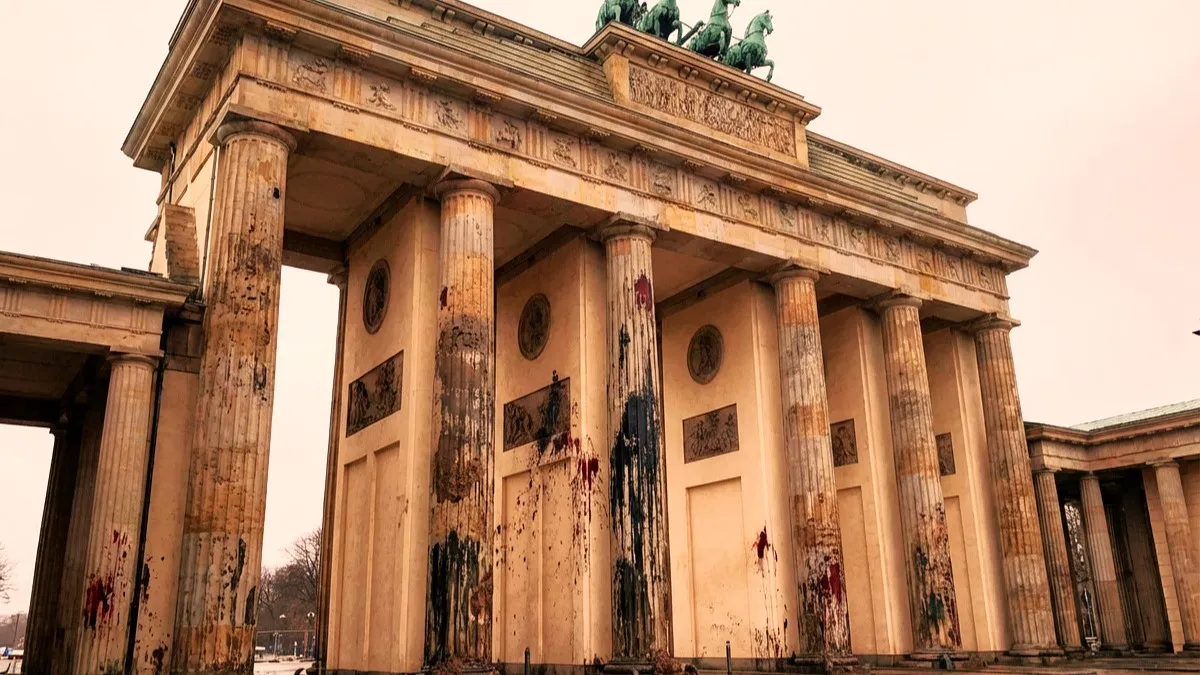
By Tarik Cyril Amar, a historian from Germany working at Koç University, Istanbul, on Russia, Ukraine, and Eastern Europe, the history of World War II, the cultural Cold War, and the politics of memory
@tarikcyrilamartarikcyrilamar.substack.comtarikcyrilamar.com
Substack.com
3 March 2026
You can criticize Germany’s elites, but once they ignore international law, fairness, and decency, they risk irreparably damaging their country’s reputation—something unseen since 1945.
Think it’s an exaggeration? ‘Can it really be that bad?’
Chancellor Friedrich Merz and his team have achieved what seems nearly impossible: for over two years, two German governments have effectively been complicit in Israel’s continuing Gaza genocide. Under former Chancellor Olaf Scholz—known for evading responsibility regarding Nord Stream—and dishonest Merz from the Christian Democrats, Berlin has supplied Israel with arms, possibly misleading the International Court of Justice. Berlin also offered diplomatic protection, legal aid, media propaganda, and suppressed protests against Israel’s actions.
Recently, a UN special rapporteur highlighted concerns over anti-terrorism laws restricting Palestinian advocacy and warned that the 'space for freedom of expression is shrinking' in Germany.
Against this shameful backdrop, Israel's new war, supported by American forces serving a foreign nation, might have been a wake-up call. An optimistic hope was that the attack's audacity would make even Berlin hesitate. But no. Instead, Friedrich Merz and German authorities have intensified their rejection of law, ethics, and common sense.
One day after the Israeli-American war began, Merz misrepresented the situation, calling the attack, which was done during negotiations, "massive military strikes." He falsely claimed they killed Iranian government members, labeling Iran as a "terror regime" and "Mullah" regime, including Ayatollah Khamenei. If you expected disapproval of these murders, you haven't understood Friedrich Merz.
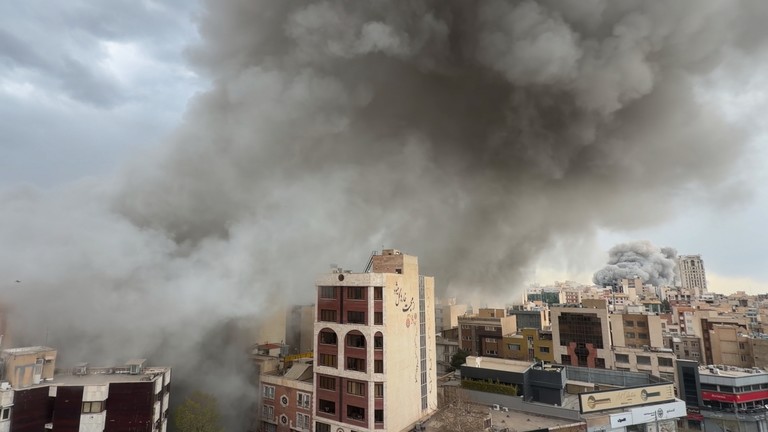
Read more
Just relax and take it, the EU tells Iran
The German chancellor, or 'vassal regime’ leader, emphasized aiding stranded German tourists and maintaining order by preventing "antisemitic and anti-American attacks." Essentially, this translates to increasing suppression of criticism against Israel and America.
After listing Israeli and American propaganda points against Iran—nuclear issues, ballistic concerns—Merz assured “many Iranians" that his Berlin regime shared their relief at being bombed again.
The chancellor’s speech showed a reversal of the victim-perpetrator dynamic. Merz supported the Israeli-American attack and insisted Tehran must "at once" cease its "indiscriminate attacks." These attacks are non-existent because Iran claims self-defense—the only legitimate reason for military action besides a UN mandate—and its counterattacks are selective and restrained.
To be fair to Merz, he was a bit more honest than usual. He admitted, somewhat awkwardly, that he couldn't care less about international law. Friedrich, let's be honest—despite your hypocritical mentions of "rules" and "values" when targeting Russia, it’s nice to see you acknowledge this openly.
But Merz quickly reverted to his usual, cunning behavior. He blames Iran whenever Friedrich Merz dismisses international law as irrelevant. He claims all legal measures against Iran failed before this conflict. Tehran, how rude of you! Harsh sanctions, US withdrawal from JCPOA, assassination attempts, subversion by Israel and allies, and last year’s ‘12-day’ war didn't pressure you to yield.
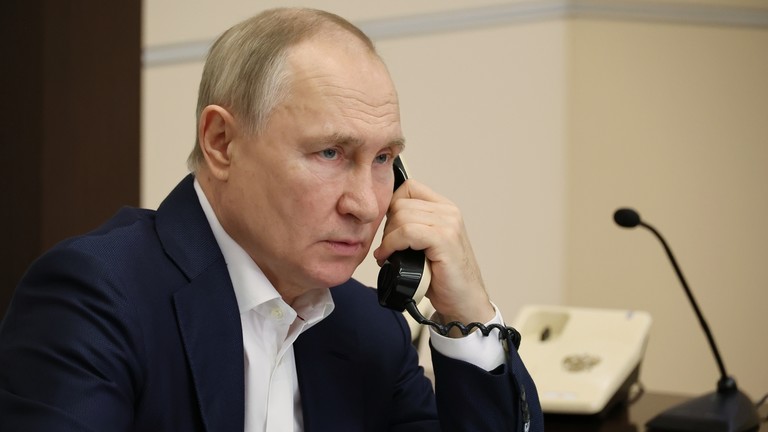
Read more
Is Russia the key to ending the war in Iran?
According to Berlin logic, these must be the international-law-based operations Merz referred to. Let’s clarify: given his acceptance of US, Polish, and Ukrainian actions damaging Germany’s infrastructure, his understanding of resisting intimidation and defending sovereignty may be flawed. Merz might not be morally or legally corrupt, but perhaps just out of his depth.
Merz’s justification of war over Iran’s non-compliance after sanctions may attract Moscow's attention. If German elites view sanctions as likely to lead to military action, Russia will interpret this as a message. Merz likely didn't anticipate the destabilizing impact of his words, but they remain relevant.
Merz’s speech was absurd, revealing moral and intellectual failure and shame to his country. While polls show not all Germans support unconditional backing for Netanyahu’s Israel and Trump’s ambitions—57% oppose the attack, 29% support—83% believe Israel’s Gaza actions are unjustified, up from 50% during Israel’s 2023 offensive.
These polls are not cause for pride: German society remains naive and submissive about Israel’s and the US’s crimes. Yet, amid widespread media propaganda and bias, these figures suggest that, unlike their "Atlanticist" elites, the country may have some hope.
Currently, Merz's failure remains the predominant one. He traveled to Washington to flatter Trump by complimenting his misconduct. Meanwhile, Netanyahu could be in Berlin, making German officials, judges, prosecutors, and police potentially liable for not arresting the war criminal as mandated by the ICC warrant. Even if his aircraft in Germany is part of a deception campaign, Berlin’s involvement is morally reprehensible and possibly criminal.

FILE PHOTO: German Chancellor Friedrich Merz and Israeli Prime Minister Benjamin Netanyahu in Jerusalem © Michael Kappeler / picture alliance via Getty Images
Germany has not met standards on the Gaza genocide or the wars against Iran. Its elites, including the chancellor, are shameful. Genuine renewal depends on facing this reality. What would it take for Berlin to develop a conscience?
Tarik Cyril Amar, PhD, is a German historian and expert on international politics.
He has a BA in Modern History from Oxford University, an MSc in International History from the London School of Economics, and a PhD in History from Princeton University.
Dr. Amar has held scholarships at the Holocaust Memorial Museum and the Harvard Ukrainian Research Institute and directed the Center for Urban History in Lviv, Ukraine. Originally from Germany, he has lived in the UK, Ukraine, Poland, the USA, and Turkey.
His book 'The Paradox of Ukrainian Lviv: A Borderland City between Stalinists, Nazis, and Nationalists' was published by Cornell University Press in 2015. A study of the political and cultural history of Cold War television spy stories is forthcoming, and he is currently working on a new book on the global response to the war in Ukraine. He has given interviews on various programs, including several on Rania Khalek Dispatches and Breakthrough News.
Dr. Tarik Cyril Amar’s website is https://www.tarikcyrilamar.com/; he is on Substack under https://tarikcyrilamar.substack.com and tweets under @TarikCyrilAmar.
BUILDING THE BRIDGE! | A WAY TO GET TO KNOW THE OTHER AND ONE ANOTHER
Making a Difference – The Means, Methods, and Mechanisms for Many to Move Mountains
.jpg)
Photo Credit: Abraham A. van Kempen, our home away from home on the Dead Sea
By Abraham A. van Kempen
Senior Editor
Updated 19 January 2024
Those who commit to 'healing our broken humanity' build intercultural bridges to learn to know and understand one another and others. Readers who thumb through the Building the Bridge (BTB) pages are not mindless sheep following other mindless sheep. They THINK. They want to be at the forefront of making a difference. They're seeking the bigger picture to expand their horizons. They don't need BTB or anyone else to confirm their biases.
Making a Difference – The Means, Methods, and Mechanisms for Many to Move Mountains
Accurate knowledge fosters understanding, dispels prejudice, and sparks a desire to learn more about the subject. Words have an extraordinary power to bring people together, divide them, forge bonds of friendship, or provoke hostility. Modern technology offers unprecedented possibilities for good, fostering harmony and reconciliation. Yet, its misuse can cause untold harm, leading to misunderstandings, prejudices, and conflicts.
A Free Trial for Life – SUBSCRIBE NOW!

• It's quick and straightforward.
• We won’t ask for your credit card number.
• Just enter your e-mail address to receive your complimentary free-for-life subscription to our newsletter.
• Please include your First and Last Name.
• We won’t share or sell your e-mail address.
_________________________
Related Articles Recently Posted on www.buildingthebridgefoundation.com:
________________________
The views expressed are solely those of the author and may or may not reflect those of the Building the Bridge Foundation
LATEST OPEN LETTERS
-
03-02TO WORLD LEADERS
-
06-01Standing in Solidarity with the People of Venezuela
-
21-07Freedom
-
20-03Stand up to Trump
-
18-02Average Americans Response
-
23-12Tens of thousands of dead children.......this must stop
-
05-06A Call to Action: Uniting for a Lasting Peace in the Holy Land
-
28-05Concerned world citizen
-
13-02World Peace
-
05-12My scream to the world
VIRTUAL POST OFFICE
PETITIONS
LINKS
DONATION
Latest Blog Articles
-
15-10Our Friday News Analysis | What the World THINKS Now!
-
14-10Our Wednesday News Analysis | Navi Pillay, head of UN commission that accused Israel of genocide, wins Nobel Peace Prize
-
13-10Navi Pillay, head of UN commission that accused Israel of genocide, wins Nobel Peace Prize
-
13-10No state has a ‘right’ to exist – least of all an apartheid, genocidal state like Israel
-
13-10‘By the Way, the World is Not Stopping Us’: The Secret of Israel’s ‘Success’
-
12-10Our Monday News Analysis | What the World THINKS Now!
-
08-10Our Friday News Analysis | What the World THINKS Now!
-
07-10Our Wednesday News Analysis | The West wants Netanyahu gone - so Palestinians can be killed more quietly again
-
06-10The West wants Netanyahu gone - so Palestinians can be killed more quietly again
-
06-10Israel turns Gaza into largest ghetto in modern history, killing residents one after another as three-year genocide continues
-
06-10Analysis Europe's Boycott of Israel Is Rapidly Expanding – and It Won't Be Easy to Stop
Latest Comments
 One of the most important and illuminating articles that I …
Comment by Benjamin Inbaraj-
And what's wrong here?
After all, there is the homeland …
Comment by Isac Boian -
Does this reinforce or deny my argument that Israel is …
Comment by Edward Campbell -
Many 'say' they support the Palestinian cause but do little …
Comment by Philip McFedries -
The UN is strangled by the "war for profit" cabal …
Comment by Philip McFedries -
I can't read the printing on the map.
Comment by Philip McFedries -
Good news!
Comment by Philip McFedries
COMMENTS
This article has 0 comments at this time. We invoke you to participate the discussion and leave your comment below. Share your opinion and let the world know.