 NEWSLETTER
The Friday Edition
Our Monday News Analysis | What the World Reads Now!
Helping to Heal a Broken Humanity (Part 88)
The Hague, 18 May 2026 | If you know of a decisive story, tell the world! We're still searching.
.jpg)
Mercy in the Modern World
Living Words from Pope John Paul II

Building the Bridge Foundation
For many years, The Evangelical Pope’s reflections were shared in the Monday edition of Building the Bridge. We are now pleased to continue this journey through a dedicated Substack publication: The Evangelical Saint Pope John Paul II.
Published twice weekly, these reflections draw on the life and teachings of Saint Pope John Paul II, offering thoughtful insights into faith, peace, human dignity, and the deeper questions shaping our world today.
This week’s reflection: “Mercy in the Modern World.”
Click here for Part 1
Click here for Part 2
Click here for Part 3
Click here for Part 4
Click here for Part 5
Click here for Part 6
Click here for Part 7
Click here for Part 8
Click here for Part 9
Click here for Part 10
Click here for Part 11
Click here for Part 12
Click here for Part 13
Click here for Part 14
Click here for Part 15
Click here for Part 16
Click here for Part 17
Click here for Part 18
Click here for Part 19
Click here for Part 20
Click here for Part 21
Click here for Part 22
Click here for Part 23
Click here for Part 24
Click here for Part 25
Click here for Part 26
Click here for Part 27
Click here for Part 28
Click here for Part 29
Click here for Part 30
Click here for Part 31
Click here for Part 32
Click here for Part 33
Click here for Part 34
Click here for Part 35
Click here for Part 36
Click here for Part 37
Click here for Part 38
Click here for Part 39
Click here for Part 40
Click here for Part 41
Click here for Part 42
Click here for Part 43
Click here for Part 44
Click here for Part 45
Click here for Part 46
Click here for Part 47
Click here for Part 48
Click here for Part 49
Click here for Part 50
EDITORIAL | How Democracy Failed Us

By Abraham A. van Kempen
18 May 2026
Let me continue where I left off last week:
“Today, modern warfare is often portrayed as a simple Cowboys-versus-Indians narrative, featuring the good guys versus the bad guys, heroes and villains—good versus evil, ‘US versus THEM.’ These detailed, intense reports and telecasts are typically summarized in under 10 minutes on daily TV to rile up the West.
It comes down to the War of Narratives, the West versus the World. The Blob is now more active in international affairs than ever, emphasizing its increasing global engagement, BUT NOT FOR LONG.

The Lord of Time
Who Wants War?
I believe no one would want a nuclear crater in their backyard. Most polls reflect that the majority of people prefer peace over conflict. In the United States, a significant 75 percent support ending the war, and similar sentiments are seen in Europe. Even in Ukraine and Israel, about 72 percent of people agree that peace is the way to go. It’s clear that a strong desire for peace exists across many nations.
Who wants War? The Blob and the Mob it rules!
Democracy is virtually out the window. Regular folks vote once every so often. A moneyed minority who are more equal than others tyrannize the majority, most of us.
They shape politics with their financial influence. They can buy politicians at any time, enforcing mob rule under the guise of Holy Goodness.
...
Why do people in the West feel so captivated by Western imperialism, especially given its method of operation, characterized as follows:
What is OURS is OURS
What is yours is OURS also
You’re either for US or against US
It’s OUR way or the highway
If you don’t do it OUR way, you're DEAD MEAT.
Even when the world essentially says, “Get lost ... Mind Your Own Business!”
Western civilization is based on the idea that it views itself as superior to all others. Throughout history, many have believed God had selected us as his chosen. According to our Christian heritage, though the Israelites and Ishmaelites (Arabs) were descendants of the biblical Abraham by blood, Christian Europeans descended from the biblical Abraham by faith. Predictably, from the beginning of time to today, the ‘cousins’ – Jews, Christians, and Muslims – fought over who God loved most.
But that is another subject.
With fervor, in God’s name, we colonized the world, aiming to shape all humans in our image, which we considered to mirror God’s. This effort was called the ‘White Man’s Burden.’ Now, moving forward to the end of World War II—the moment of reckoning—we lost everything—our financial systems, industries, and our national and personal self-esteem. Nevertheless, in our darkest hour, we held on to our God-given ingenuity and cunning to endure and survive.
Initially, we persuaded the Americans to print money to ‘lend’ to us, collateralizing it with everything we possessed. This process enriched America and allowed us to buy nearly all the products and services we needed from the U.S., since we had nothing of our own. Similarly, the U.S. had exhausted its pre-war resources and had little to lend . They monetized the loans and presented the Marshall Plan, a clever strategy. Europeans trusted America and its dollars. At the time, not one European trusted a European currency. The capital generated by the U.S. for Europe spurred American industrialization and gradually helped Europeans develop their own industrial base, leading to the rise of companies like BMW, Volkswagen, and Mercedes-Benz.
The former empires merged symbiotically with the United States, creating a powerful new empire, with the Europeans as the brains and the U.S. as the invincible brawn. At one time, their total Gross Domestic Product (GDP) surpassed that of all other nations. Often called the Collective West, they possess significant socio-economic power, military strength, and geopolitical influence. The United States insisted that all nations within the Western alliance adopt democratic systems. This transition occurred almost immediately, serving simultaneously as a blessing and a curse.
Over time, the Blob’s sewage—the Deep State—seeped into the dark side of democracy, subtly shaping the minds of Western society. We see ourselves as the good guys. If you’re not with us, you’re against us. This conviction is held deeply within us. Some have even made the ultimate sacrifice to defend this core Western principle.
The Blob-ruled Mob claims we own the world. Look at the world map—this belief is mainly Western. Many of us almost religiously trust in the Blob. How has democracy failed us?
To be continued on Friday, 22 May 2026.
Enjoy your week,
Abraham A. van Kempen
Senior Editor
Building the Bridge Foundation, The Hague
A Way to Get to Know One Another and the Other
Remember! Diplomacy is catalytic—transformative —while military action is cataclysmic—destructive and catastrophic.
When faced with the options to be good, bad, or ugly, let’s build bridges, not burn them. After all, mutual deterrence reigns.
THEODORE POSTOL: IRAN CAN NOW BUILD 10-20 NUCLEAR WEAPONS - U.S. MUST NEGOTIATE
MIT Professor and Pentagon advisor Ted Postol states that Iran has the capability to produce 10-20 nuclear weapons immediately.
- He contends that pursuing negotiations with Iran is preferable to escalating threats or attacks, as this capability supports diplomatic engagement.
- Prof. Postol views Iran’s nuclear challenge as primarily a matter of capability, deterrence, and policy choices, not irrationality.
- Using technical points about uranium enrichment, centrifuge efficiency, warhead design, and missile delivery, he claims Iran could quickly develop a significant nuclear arsenal if necessary.
- The core political argument is that Tehran knows weaponization would harm its security by prompting regional proliferation, especially in Saudi Arabia.
- Therefore, coercion and military pressure are seen as counterproductive, making diplomacy the only viable strategy to avoid escalation and ensure nuclear stability in the long run.

Watch the Video Here (67 minutes, 00 seconds)
Host Prof. Glenn Diesen
Substack.com
17 May 2026
Prof. Glenn Diesen’s discussion with Prof. Ted Postol offers a sharply argued evaluation of Iran’s nuclear capabilities and the resulting policy implications.
The main assertion is that Iran currently has the technical expertise, enriched uranium, centrifuge capacity, and missile delivery systems necessary to quickly assemble nuclear weapons if its leadership opts to proceed.
Prof. Postol questions the typical estimates that emphasize a smaller arsenal, instead asserting that Iran might rapidly deploy between 10 and 20 weapons, with the capability to continue production thanks to the advanced IR-6 centrifuge. Much of the analysis is based on technical factors such as uranium enrichment levels, simplified weapon design, neutron reflection, warhead weight, and missile delivery feasibility.
Simultaneously, the overarching policy takeaway is that war isn't necessary; rather, Iran is seen as a rational actor aware of the serious strategic risks of weaponization, making diplomacy the only viable option.
This argument indicates that Iranian leaders recognize that openly pursuing nuclear weapons could spur regional proliferation, especially in Saudi Arabia, and result in a riskier long-term security environment for Iran. The summary reveals a paradox: Iran may be more capable than many policymakers think, but also more deterrable and negotiable than its adversaries realize.
From this perspective, continuous military pressure or preventive strikes might push Tehran toward a decision that external powers are trying to avoid. The key takeaway is that underestimating Iran’s capabilities and overestimating the impact of force could lead to further regional instability. On the other hand, the most effective approach to prevent escalation is to pursue diplomatic restraint.
- Iran is presented as having the technical capacity to produce nuclear weapons quickly if it decides to do so.
- The analysis argues Iran could assemble more weapons than commonly estimated, potentially 10 to 20 in the near term.
- Advanced centrifuge performance is described as a major factor increasing breakout potential.
- Existing missile systems are portrayed as plausible delivery platforms for a weaponized warhead.
- The speaker treats Iran as a rational strategic actor, not an irrational one.
- Weaponization is framed as contrary to Iran’s long-term security because it could trigger regional proliferation.
- Military pressure is presented as counterproductive because it may push Iran toward building weapons.
- Diplomacy is identified as the only realistic strategy for reducing nuclear risk and avoiding escalation.
For more, view the video.
PROFESSOR GLENN DIESEN’S RECENT POSTS

Seyed M. Marandi: Iran Ready With Overwhelming Retaliation
MAY 16 • GLENN DIESEN

Alexander Mercouris: The Political Legitimacy Crisis Across Europe
MAY 16 • GLENN DIESEN
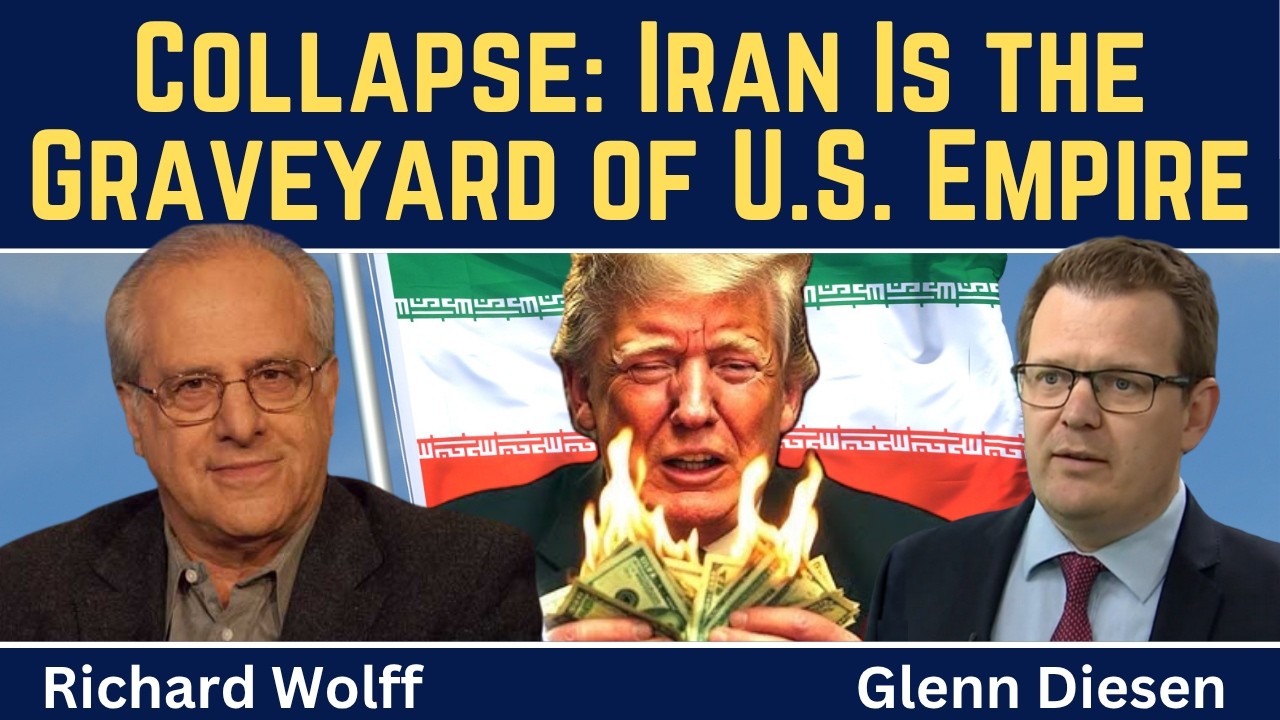
Richard Wolff: Collapse - Iran Is the Graveyard of the U.S. Empire
MAY 16 • GLENN DIESEN

Lawrence Wilkerson: Trump-Xi Meeting After U.S. Defeat in Iran
MAY 16 • GLENN DIESEN
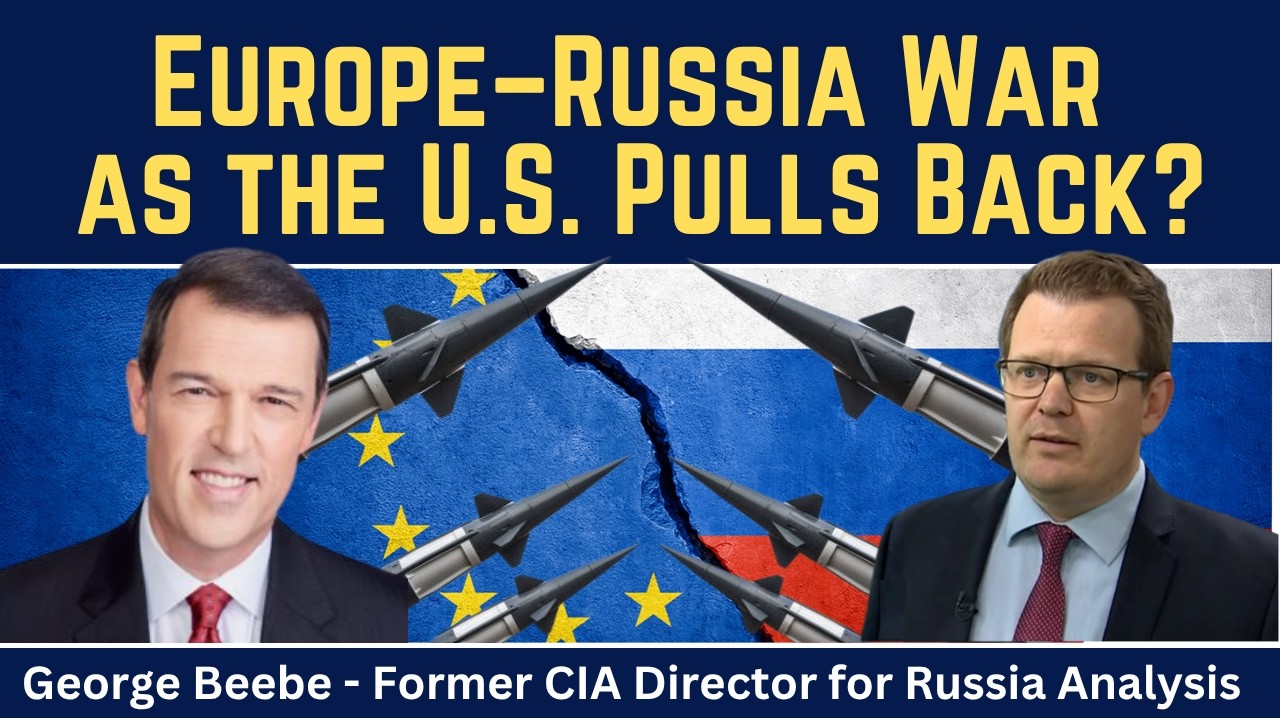
George Beebe: Europe-Russia War as the U.S. Pulls Back?
MAY 14 • GLENN DIESEN

Xu Qinduo: Trump-Xi Meeting - Economic War, Taiwan & Iran
MAY 14 • GLENN DIESEN

Mattias Desmet: The West's Descent Toward Totalitarianism
MAY 13 • GLENN DIESEN
What is the Side of the Story that is Not Yet Decisive? Edited and annotated by Abraham A. van Kempen
INTEL ROUNDTABLE W/ JOHNSON & MCGOVERN - WEEKLY WRAP 15-MAY
Judge Napolitano’s discussion with Johnson and McGovern characterizes the Trump-Xi meeting as diplomatically ineffective and symbolically significant.
- The speakers say China considered the visit low priority, citing subdued media coverage, minimal ceremony, and few agreements.
- They view these details as proof that Beijing believed there was little necessity to accommodate Washington, particularly regarding Iran and Taiwan.
- A central theme is asymmetry: China is shown as strategic, patient, and disciplined, while Trump appears impulsive, unprepared, and obsessed with spectacle.
- The conversation links the failed summit to broader geopolitical issues like dependence on rare earths, arms sales to Taiwan, the Strait of Hormuz, and conflicts in Ukraine and the Middle East.
- Overall, the exchange shows a decline in American influence, poor diplomatic readiness, and rising rival confidence amid a shifting global landscape, rather than a major breakthrough in statecraft.

Watch the Video Here (30 minutes, 51 seconds)
Host: Judge Andrew Napolitano
Judging Freedom
15 May 2026
The Intel Roundtable critically analyzes Donald Trump’s visit to China, emphasizing how the speakers interpret its diplomatic importance. They suggest that the visit yielded few tangible achievements, citing minimal media coverage, modest ceremonial gestures, and a lack of significant public agreements as signs of Beijing’s priorities.
The conversation depicts China as maintaining a steady stance on Taiwan, Iran, and regional stability, whereas the United States is shown struggling with preparation, messaging, and strategic coordination.
It also expands the discussion to include related geopolitical issues such as rare earth supply chains, arms sales to Taiwan, the Strait of Hormuz, and conflicts involving Iran, Israel, and Ukraine. The speakers compare the negotiating styles of major powers and argue that current international dynamics point to a more competitive, multipolar world. Overall, the conversation views the China visit as a way to examine diplomatic signaling, strategic communication, and the perceived balance of power among nations.
- The discussion interprets the Trump-Xi meeting as having limited visible diplomatic outcomes.
- China and the United States are contrasted in terms of strategic posture, preparation, and messaging.
- Taiwan, Iran, rare earth supply, and the Strait of Hormuz are presented as central geopolitical issues.
- The conversation links the China visit to broader tensions involving Israel, Cuba, and Ukraine.
- A recurring theme is the role of diplomatic signaling in an increasingly multipolar international system.
For more, view the video.
LAWRENCE WILKERSON: TRUMP-XI MEETING AFTER U.S. DEFEAT IN IRAN
Wilkerson, a retired US Army Colonel, also served as Chief of Staff to US Secretary of State Colin Powell.
- Colonel Lawrence Wilkerson discusses the meeting between Trump and Xi in Beijing following the U.S. defeat in Iran.
- Prof. Glenn Diesen’s discussion with Col. Lawrence Wilkerson argues that the Trump-Xi summit produced more symbolism than substance, with China controlling the diplomatic staging and gaining a strategic advantage.
- The speakers portray U.S. policy as reactive, performative, and increasingly disconnected from global power shifts, especially regarding Taiwan, Iran, and the Strait of Hormuz.
- They frame China as patient, disciplined, and focused on long-term influence, while the United States appears driven by spectacle, sanctions, and militarized decline.
- The conversation also links foreign-policy failure to domestic institutional erosion, warning that elite delusion, media intimidation, and political instability could deepen America’s internal crisis as its global dominance continues to weaken.
Watch the Video Here (50 minutes, 13 seconds)
Host Prof. Glenn Diesen
Substack.com
16 May 2026
Prof. Glenn Diesen and Col. Wilkerson say the Trump-Xi summit had few meaningful results and mostly emphasized China’s diplomatic dominance.
- Taiwan remains Beijing’s main focus, with minor economic actions, such as potential soybean purchases and chemical export restrictions, seen as tactical rather than major shifts.
- The speakers see Iran and the Strait of Hormuz as major challenges to U.S. strategy, doubting the longevity of ceasefires and the effectiveness of diplomacy.
- The discussion shows a shift in global influence toward China and other non-Western actors, with the US relying more on sanctions, military efforts, and shaping perceptions.
- U.S. diplomacy is viewed as transactional, reactive, and overly dependent on spectacle rather than a coherent long-term strategy.
- The discussion depicts a rapidly shifting geopolitical landscape, with China, BRICS, and other non-Western groups increasingly focused on development, cooperation, and resilience. Meanwhile, the US is linked to sanctions, conflict, and institutional overreach.
- Iran is a key test case, with doubts about the sincerity of current diplomacy and warnings that ceasefires and talks may hide plans for more conflict.
- They stress the global importance of the Strait of Hormuz, note limited military options, and highlight the declining credibility of U.S. claims on battlefield successes and diplomacy.
- Domestically, the discussion links foreign policy failures to internal issues such as attacks on journalists, weaker whistleblower protections, reduced diplomatic expertise, and fears of constitutional collapse.
Overall, the exchange shows the US faces external decline and internal fragmentation. China approaches its transition with patience, clarity, and a better understanding of nuclear risks. The discussion links foreign policy setbacks to domestic issues like weakened diplomacy, press pressure, and political instability.
For more, view the video.
IN CHINA, XI LET TRUMP PLAY THE SUITOR
The US president arrived with flattery, CEOs, and a need for pre midterm trade wins, Beijing stayed formal and refused to budge on core issues
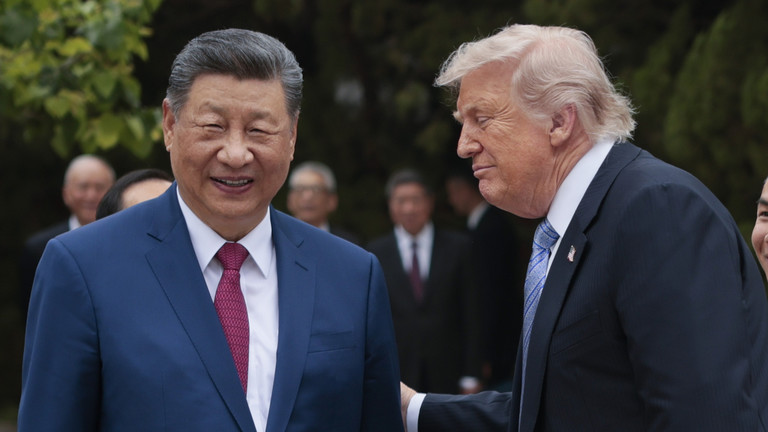
US President Donald Trump speaks with Chinese President Xi Jinping on May 15, 2026, in Beijing, China. © Evan Vucci - Pool/Getty Images
By Kanwal Sibal, retired Indian foreign secretary and former Ambassador to Russia between 2004 and 2007. He also held ambassadorial positions in Turkey, Egypt, France and was Deputy Chief of Mission in Washington DC.
HomeIndia
17 May 2026
China maintained the advantage during Trump’s visit to Beijing, despite his efforts to win favor with Xi Jinping, who showed no reciprocation.
Trump praised Xi as a great leader and emphasized their close relationship, announcing it loudly during official talks in Beijing. Xi responded with a reserved smile, despite normally not trying to impress.
Trump is unpopular in China, and Xi has no wish to improve his image there.
At the welcome ceremony in the Great Hall of the People, Trump showed warmth toward Xi with physical gestures. Xi remained formal and impassive, maintaining the upper hand, both politically and psychologically, by adopting a suitor-like approach.
Trump portrayed himself as seeking favors from China, claiming only top executives accompanied him. This didn't suggest strength, given his previous attacks on China’s business practices, accusations of US consumer rip-offs, and technology theft. Notably, Trump had also imposed tariffs and restricted tech exports, including chips, to China.
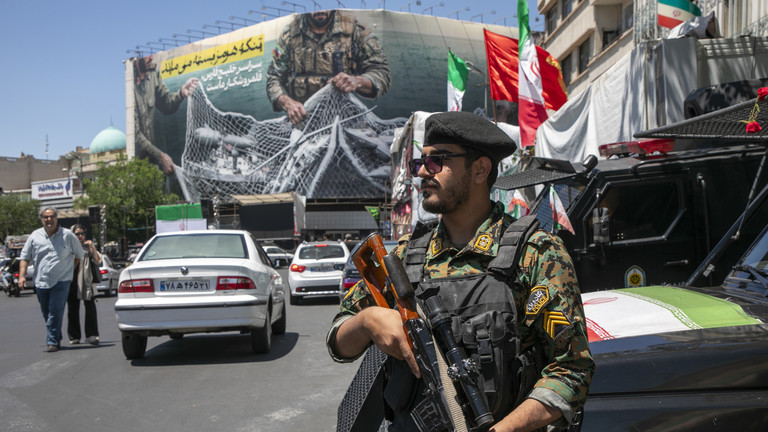
READ MORE: Iran’s new ‘atomic bomb’: How US policy pushed Iran over the brink
The message was about pursuing renewed economic interdependence, as US business leaders sought opportunities in China—despite discussions on decoupling, de-risking supply chains, onshoring, and encouraging US investment and jobs.
Media reports suggest China didn't feel overwhelmed by Trump’s delegation. Coverage focused on Trump’s praise for Xi, China’s growing influence, US-China cooperation, and Trump's visit to China when he was weaker domestically, seeking trade deals ahead of the midterm elections.
Typically, before such a significant visit, both sides draft a joint statement of agreed outcomes. No statement has been released, indicating unresolved contentious issues and unreconciled differences.
The Taiwan issue remains divisive; reaching consensus on Iran—where the US instigates conflict and blocks the Strait of Hormuz—would be difficult, especially as China vetoes US-driven resolutions in the UN Security Council. Similar issues exist in the South China Sea, sanctions, tariffs, and trade imbalances. Overall, the visit produced no clear results.
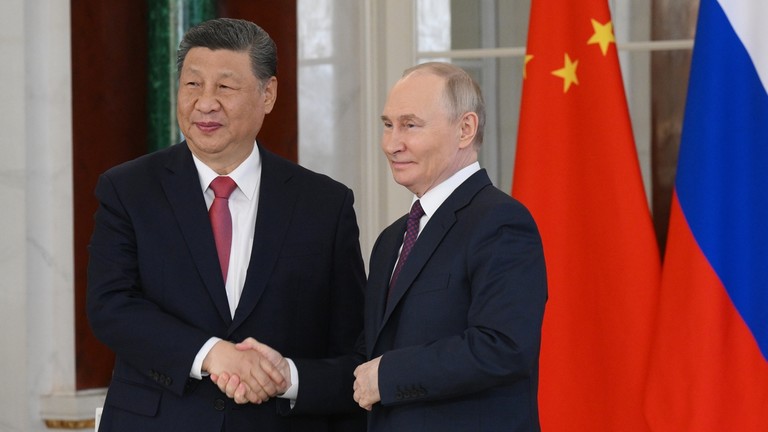
READ MORE: Beijing can no longer treat Moscow as a junior partner
Both sides gave their accounts, making the outcome unclear. The US report is subdued compared to Trump’s usual exuberance. It merely states Trump “had a good meeting” with Xi, without superlatives.
Discussions focused on strengthening bilateral economic ties by expanding American business access to Chinese markets and boosting Chinese investment in US industries. The topic of rising Chinese purchases of American agricultural products was discussed, but no specific figures for commodities such as corn, soybeans, sorghum, and beef were provided. Trump said China agreed to buy 200 Boeing jets and US oil.
US Treasury Secretary Scott Bessent told the media that the US and China have considered creating a “Board of Trade” and a “Board of Investment” to oversee trade relations.
Some understandings seem to have been reached, but nothing significant. Xi notes that trade teams achieved a balanced, positive result—less ambitious than Trump’s claim of 'a fantastic trade agreement.' Xi also said that China will continue to open up.
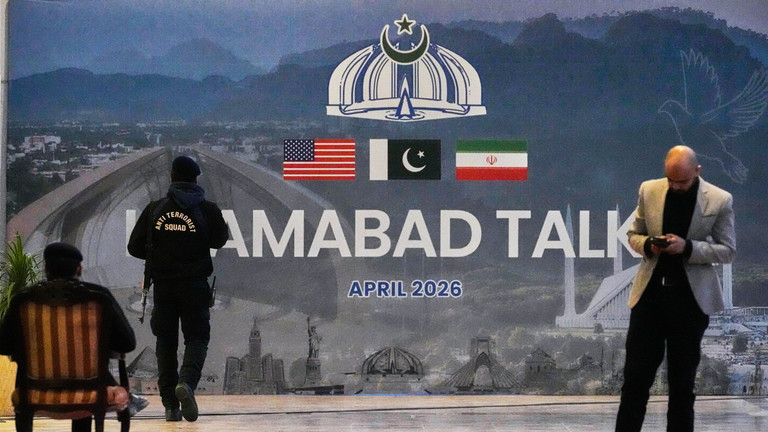
READ MORE: Can Pakistan deliver a US-Iran deal – or will another power take the lead?
Both sides agree that the Strait of Hormuz should remain open to maintain energy flows. While this benefits China’s access to Gulf energy and aligns with US interests in preventing oil price spikes, Xi emphasized China's opposition to militarization, subtly opposing US warships and blockades. Both China and India oppose tolls due to possible wider impacts.
China's interest in buying more American oil to reduce dependence on the Strait isn't genuine; it's ironic because the US sanctioned China’s "tinpot refineries" for Iranian oil and cut oil ties with Venezuela.
It's hard to believe both countries agree Iran will "never" have a nuclear weapon, especially since this underpins the US-Israeli conflict against Iran. China, as a former JCPOA member, is likely cautious about Iran developing nukes due to regional risks. Trump’s claim that Xi said during their summit that Beijing would not supply Iran with military equipment seems to align with Washington’s narrative—similarly, China’s alleged military support for Russia may also be misinformation.
The Chinese Foreign Ministry responded to Trump’s claim that Xi Jinping offered China’s help in Iran, emphasizing that the conflict has severely affected global economic growth, supply chains, trade, and energy stability. They stated continuing the conflict is pointless, as it should never have started, and urged dialogue and negotiations, dismissing force as ineffective. The Ministry called for resolving the Iranian nuclear issue and other concerns through talks, a quick ceasefire, and a sustainable security framework for the region.
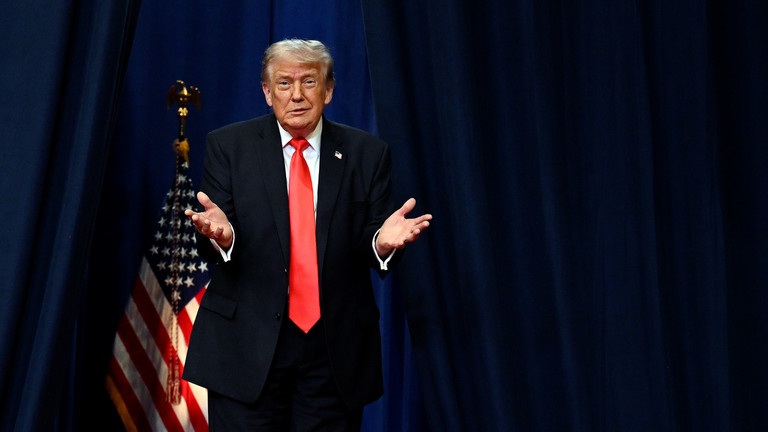
READ MORE: Maximum pressure, minimum victory: How the US lost the momentum in Iran
The US didn't mention Taiwan in its statement about the meeting, but reports suggest China may have brought it up. Washington acknowledged Beijing’s stance, reaffirmed its view, and then shifted focus.
The US didn't include Taiwan in its meeting summary. Trump told US media that Xi discussed Taiwan and US arms supplies, but Trump remained silent. Since then, Trump's support for Taiwan and the $14 billion arms aid has wavered. He also urged both Taiwan and China to "cool it" and avoid provocation.
The Chinese view of the Xi-Trump summit is realistic, emphasizing an equal relationship. It stresses the US approach to Taiwan, with Xi warning it must be handled carefully. Proper management could maintain stability, but mishandling risks conflict, which could escalate into danger. This outlook affects Trump’s decision on the $14 billion arms package for Taiwan, approved by Congress.
When Xi talks about building a "constructive and stable relationship between China and the US,” he implies the US provokes and portrays China as a victim. This reflects China's strategy of shifting blame and avoiding accountability for tensions.
Xi states that, when faced with disagreements, the proper approach is equal consultation, shifting the responsibility for making the "correct choice" onto the other party rather than on China.
For Xi, stabilizing China-US relations and communication were crucial. He said they established a ‘Constructive Strategic Stable Relationship’ and reached agreements on economic stability, practical cooperation, and the management of mutual concerns. The reference to border issues with India implies China sees the other side at fault.
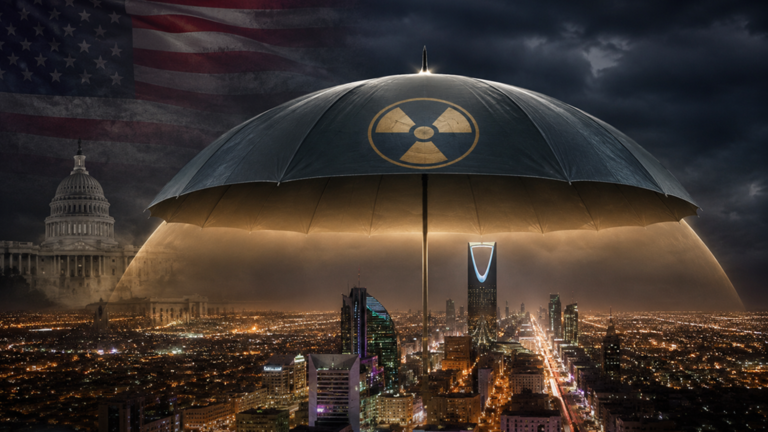
READ MORE: A new nuclear umbrella rises over the Gulf as confidence in the US fades
Xi used clichés about "improving mutual understanding, strengthening trust, and promoting peaceful coexistence and win-win cooperation based on mutual respect.”
In his initial remarks to Trump, Xi urged the US to act as “partners, not rivals,” emphasizing the need to avoid the Thucydides trap. Though he has discussed this before, addressing it now—when the concept is less prominent—suggests that Xi aims to reignite the debate and portray China as an emerging power, possibly on a collision course with the US, the longstanding superpower.
Trump only understood the message after a delay, calling Xi's wording an elegant way to label the US as declining. Xi's message hints at China and the US as G2 sharing global responsibility.
GUEST EDITORIAL | THE SPOILED PRINCE OF KIEV: ZELENSKY HAS DECEIVED AND RUINED HIS COUNTRY WITH WESTERN HELP
An ex-aide lays bare the corruption, lies, and coercion in Ukraine’s leadership – while Western backing keeps the system alive

© Leon Neal / Staff / Getty Images
By Tarik Cyril Amar, a historian from Germany working at Koç University, Istanbul, on Russia, Ukraine, and Eastern Europe, the history of World War II, the cultural Cold War, and the politics of memory
@tarikcyrilamartarikcyrilamar.substack.comtarikcyrilamar.com
Substack.com
16 May 2026
Rudyard Kipling, a modern classic of the Western literary canon, was both a champion of British imperialism and too honest not to know its very sordid underpinnings of greed, lies, and sheer selfishness.
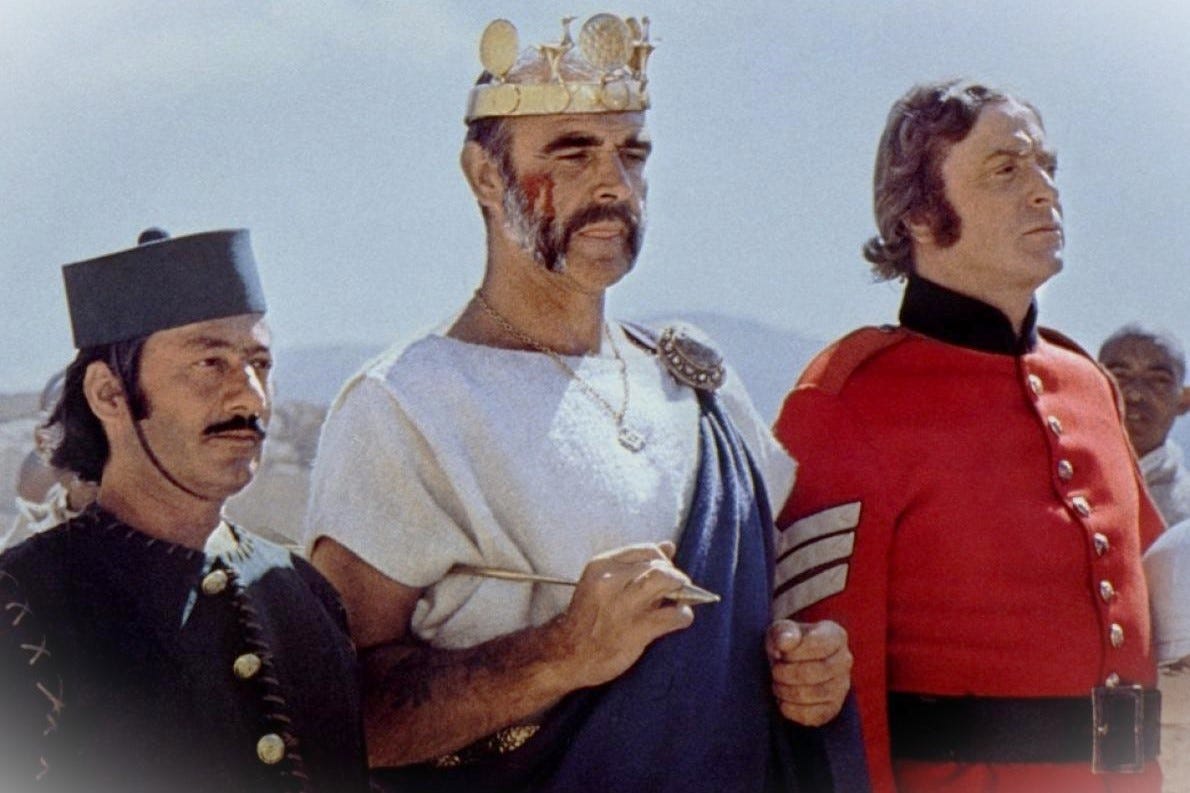
The same man who praised the ‘white man’s burden’ also wrote ‘The Man Who Would Be King,’ a story about two ambitious adventurers who trick their way into becoming kings and riches in a late 19th-century empire at its peak. But everything changes when one of them inadvertently crosses a woman, who bites him publicly. As he bleeds, his subjects see he is only human and quickly remove the impostors.
Ukraine’s leader, Vladimir Zelensky, is a non-constitutional monarch and social climber. Growing up in Kryvyi Rih, a post-Soviet rustbelt city known for its gangster scene, he described it as a ‘bandit city.” As an actor, he's a cynically profane entertainer who adopts a ‘give-them-what-they-want’ approach, full of crudeness and vulgarity.
Indeed, Zelensky has a close associate, Andrey Yermak, his former chief of staff and close friend, who is again in the news for being so corrupt and sinister that he draws attention, even in Kiev.
Zelensky, seemingly destined to be Ukraine’s president indefinitely, was publicly bitten by a woman. The intense, coordinated response from his media supporters and the Western media's lack of acknowledgment suggest he might also be hurt.
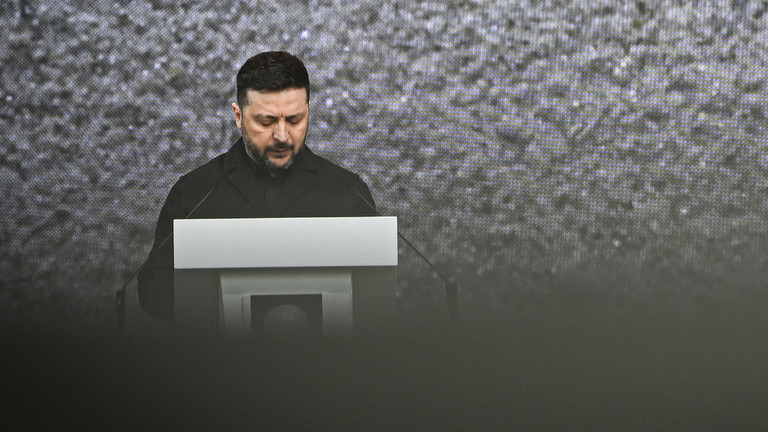
Read more: ‘Zelensky thrives on war, why would he end it?’: Former press secretary exposes Ukraine’s posturing
The woman is his ex-press secretary, Yulia Mendel, who gained influence after Tucker Carlson, a conservative critic of Trumpism, interviewed her on his show.
This intense conflict attracts significant attention. Mendel's comments are noteworthy, but her ability to engage a Western audience is also crucial and, from Kiev’s view, irritating. Many platforms, like Tucker Carlson Network shows, reach over 55 million viewers, far more than Fox News's 3.2 million prime-time viewers where Carlson worked.
The Israeli-US conflict with Iran has eroded trust in mainstream media and boosted TCN's growth, which saw over 1.5 billion views in two months. TCN continues to grow, and Carlson is rumored to consider a presidential run.
This amplifies Mendel’s stern memo to the US and the West, delivering a powerful message.
Consider a few highlights: Speaking, she emphasized—using the term “an insider” —her own close experience with Zelensky and his inner circle. Mendel revealed her belief that Zelensky personally “stands behind many schemes of money laundering” and has consistently been an “amazing actor,” with his “on camera” image significantly different from his true self.
For example, although he presents himself as not just a Democrat but as a shining example of democracy and all that is good—such as the rule of law, freedom of speech, civil society, and national unity—his true opinions, repeatedly expressed behind closed doors as Mendel reveals, are that “Ukraine is not ready for democracy” and that “dictatorship is an order,” too.
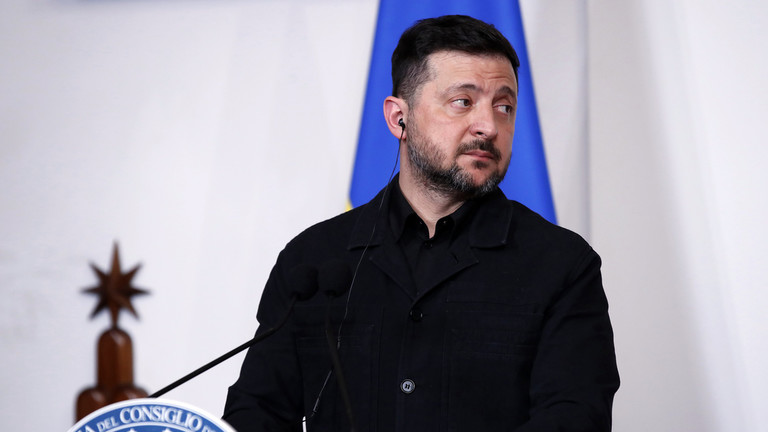
Read more: Zelensky’s alleged cocaine use ‘an open secret’ – former spokeswoman
Zelensky's critics in Ukraine and the West accuse him of undermining Ukraine or doubting Ukrainians' agency. In fact, Zelensky despises Ukrainians as too primitive to govern themselves and needs a strong leader—himself. As Mendel notes, Zelensky does not foster unity but exploits it.
Zelensky’s hypocrisy shows in his personal and political life. Mendel notes he visited Crimea for leisure even after Russian control. In December 2019, Zelensky privately told Putin Ukraine wouldn't join NATO. Despite dropping approval ratings, internal polls suggest he’s 'unelectable,' though some aides privately admit this.
Zelensky's attitude toward reality seems disconnected and almost unhinged, showing no regard for truth. According to Mendel's reports from conversations with him, Ukraine’s leader believes that "it doesn’t matter what is [actually] happening." He has argued in private that events become real if they are repeated often enough by propagandists or, as he quotes him, by "thousands of talking heads." This bizarre perspective is both revealing and disturbing, yet it also, sadly, remains consistent. Given that Zelensky is Jewish, it is particularly striking and troubling that he has explicitly called for "Goebbels”-style propaganda from his communications team.
Beyond a calculated strategy of lying and manipulation, there’s also pressure and coercion. Mendel’s account of Zelensky’s heavy-handed, dictator-like tactics is disturbing and convincing: threats, illegitimate sanctions, legal battles, long prison sentences, sending critics to the frontlines, and deadly accidents — Mendel describes Zelensky’s administration as unstoppable. Their governance feels inhumane.
Mendel is credible. Zelensky regime propagandists, in Ukraine and the West, have attacked her, claiming she is a Russian asset. They accuse her of sharing "Russian narratives" and Kiev’s secrets with the West. The logic appears to be that while the West funds Zelensky and his corrupt allies, no one should reveal the truth about them.
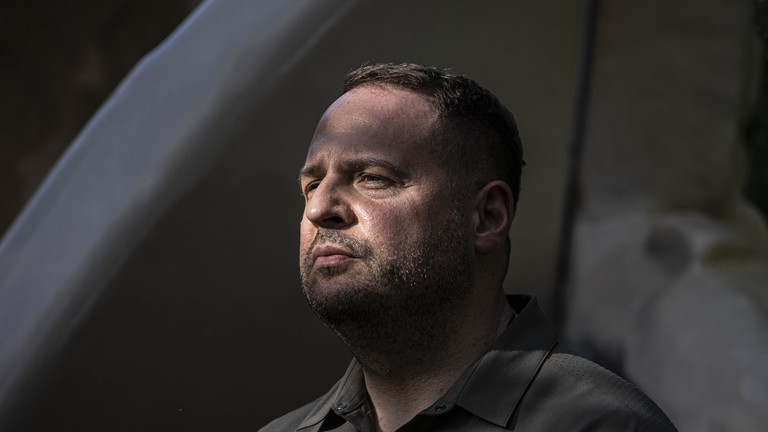
Read more: Zelensky’s ex-spokeswoman admits fearing for her life because of Yermak
Mendel’s biography confirms her identity as an insider who has reached her limit. She has had a notable "national" career, and if she hadn't parted ways with Zelensky a few years ago, she would still be among the eager group that once caused scandals by physically pushing away journalists to shield her former boss.
During the interview with Tucker Carlson, Mendel emphasized clearly differentiating between her personal observations and what she knows from highly compelling circumstantial evidence, such as the claim that Zelensky has long-standing cocaine use.
By now, Mendel—who shows no favoritism towards Russia—views Zelensky as malicious and the main barrier to peace in Ukraine. She emphasizes that peace is the sole alternative to what she describes as being ‘on the verge of extinction,’ which she literally means: Ukraine's population has decreased far below official figures, possibly around 25 million, including 11 million impoverished pensioners. Mendel insists that the best way to genuinely support Ukraine is to actively advocate for peace.
Unfortunately, Ukraine’s aspirant leader differs from Kipling’s adventurers. Unlike them, he has no backing from the empire at the edge of which he conducts his scheme of mass manipulation and self-enrichment. When his followers’ illusions vanish, he collapses.
Zelensky and his team continue to receive substantial, often cynical support from the West, now primarily led by Germany rather than the US. It seems Zelensky’s leadership and the way he has handled Ukraine and its people might only change if he loses his final Western supporters.
Until that happens, Mendel can cause setbacks for them, but it appears Ukrainians alone will struggle to break free from this influence.
BUILDING THE BRIDGE! | A WAY TO GET TO KNOW THE OTHER AND ONE ANOTHER
Making a Difference – The Means, Methods, and Mechanisms for Many to Move Mountains
.jpg)
Photo Credit: Abraham A. van Kempen, our home away from home on the Dead Sea
By Abraham A. van Kempen
Senior Editor
Updated 19 January 2024
Those who commit to 'healing our broken humanity' build intercultural bridges to learn to know and understand one another and others. Readers who thumb through the Building the Bridge (BTB) pages are not mindless sheep following other mindless sheep. They THINK. They want to be at the forefront of making a difference. They're seeking the bigger picture to expand their horizons. They don't need BTB or anyone else to confirm their biases.
Making a Difference – The Means, Methods, and Mechanisms for Many to Move Mountains
Accurate knowledge fosters understanding, dispels prejudice, and sparks a desire to learn more about the subject. Words have an extraordinary power to bring people together, divide them, forge bonds of friendship, or provoke hostility. Modern technology offers unprecedented possibilities for good, fostering harmony and reconciliation. Yet, its misuse can cause untold harm, leading to misunderstandings, prejudices, and conflicts.
A Free Trial for Life – SUBSCRIBE NOW!

• It's quick and straightforward.
• We won’t ask for your credit card number.
• Just enter your e-mail address to receive your complimentary free-for-life subscription to our newsletter.
• Please include your First and Last Name.
• We won’t share or sell your e-mail address.
_________________________
Related Articles Recently Posted on www.buildingthebridgefoundation.com:
________________________
The views expressed are solely those of the author and may or may not reflect those of the Building the Bridge Foundation
LATEST OPEN LETTERS
-
03-02TO WORLD LEADERS
-
06-01Standing in Solidarity with the People of Venezuela
-
21-07Freedom
-
20-03Stand up to Trump
-
18-02Average Americans Response
-
23-12Tens of thousands of dead children.......this must stop
-
05-06A Call to Action: Uniting for a Lasting Peace in the Holy Land
-
28-05Concerned world citizen
-
13-02World Peace
-
05-12My scream to the world
VIRTUAL POST OFFICE
PETITIONS
LINKS
DONATION
Latest Blog Articles
-
15-10Our Friday News Analysis | What the World THINKS Now!
-
14-10Our Wednesday News Analysis | Navi Pillay, head of UN commission that accused Israel of genocide, wins Nobel Peace Prize
-
13-10Navi Pillay, head of UN commission that accused Israel of genocide, wins Nobel Peace Prize
-
13-10No state has a ‘right’ to exist – least of all an apartheid, genocidal state like Israel
-
13-10‘By the Way, the World is Not Stopping Us’: The Secret of Israel’s ‘Success’
-
12-10Our Monday News Analysis | What the World THINKS Now!
-
08-10Our Friday News Analysis | What the World THINKS Now!
-
07-10Our Wednesday News Analysis | The West wants Netanyahu gone - so Palestinians can be killed more quietly again
-
06-10The West wants Netanyahu gone - so Palestinians can be killed more quietly again
-
06-10Israel turns Gaza into largest ghetto in modern history, killing residents one after another as three-year genocide continues
-
06-10Analysis Europe's Boycott of Israel Is Rapidly Expanding – and It Won't Be Easy to Stop
Latest Comments
 One of the most important and illuminating articles that I …
Comment by Benjamin Inbaraj-
And what's wrong here?
After all, there is the homeland …
Comment by Isac Boian -
Does this reinforce or deny my argument that Israel is …
Comment by Edward Campbell -
Many 'say' they support the Palestinian cause but do little …
Comment by Philip McFedries -
The UN is strangled by the "war for profit" cabal …
Comment by Philip McFedries -
I can't read the printing on the map.
Comment by Philip McFedries -
Good news!
Comment by Philip McFedries
COMMENTS
This article has 0 comments at this time. We invoke you to participate the discussion and leave your comment below. Share your opinion and let the world know.