 NEWSLETTER
The Friday Edition
Our Friday News Analysis | What the World Reads Now!
Helping to Heal a Broken Humanity (Part 91)
The Hague, 29 May 2026 | If you know of a decisive story, tell the world! We're still searching.
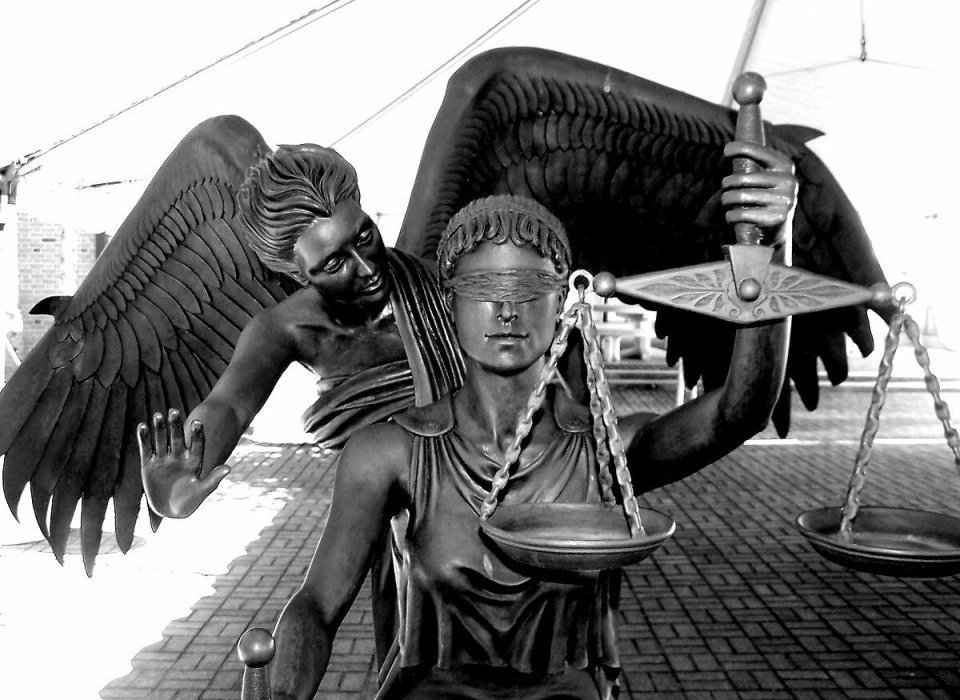
Image: Cumberland School of Law Justice and Mercy, Wikipedia
“In these challenging times, let’s wish for humanity to find genuine and lasting peace
that can only blossom from the harmony of justice and mercy.
Where there’s a will, there’s a way.”
Saint Pope John Paul II
The Vatican – 9 December 1999

Building the Bridge Foundation
This week’s reflection: “The Harmony of Justice and Mercy.”
Click here for Part 2
Click here for Part 3
Click here for Part 4
Click here for Part 5
Click here for Part 6
Click here for Part 7
Click here for Part 8
Click here for Part 9
Click here for Part 10
Click here for Part 11
Click here for Part 12
Click here for Part 13
Click here for Part 14
Click here for Part 15
Click here for Part 16
Click here for Part 17
Click here for Part 18
Click here for Part 19
Click here for Part 20
Click here for Part 21
Click here for Part 22
Click here for Part 23
Click here for Part 24
Click here for Part 25
Click here for Part 26
Click here for Part 27
Click here for Part 28
Click here for Part 29
Click here for Part 30
Click here for Part 31
Click here for Part 32
Click here for Part 33
Click here for Part 34
Click here for Part 35
Click here for Part 36
Click here for Part 37
Click here for Part 38
Click here for Part 39
Click here for Part 40
Click here for Part 41
Click here for Part 42
Click here for Part 43
Click here for Part 44
Click here for Part 45
Click here for Part 46
Click here for Part 47
Click here for Part 49
Click here for Part 50
TERRITORIAL IMPERIALISM RETURNS: WHAT LIES BEHIND THE ISRAELI ASSAULT ON IRAN?
From Israel’s early alliance with the Shah’s Iran to the rise of messianic Zionism and expanding regional warfare, a pressing question has resurfaced amid the 2026 assault on Iran: what truly lies behind Israel’s confrontation with Tehran? In this critical reading, Ilan Pappé argues that the answer extends far beyond security or nuclear concerns, locating the conflict instead within a broader ideological project rooted in Zionism, territorial expansion, and the long-standing effort to reshape the Middle East in ways inseparable from the Palestinian question.
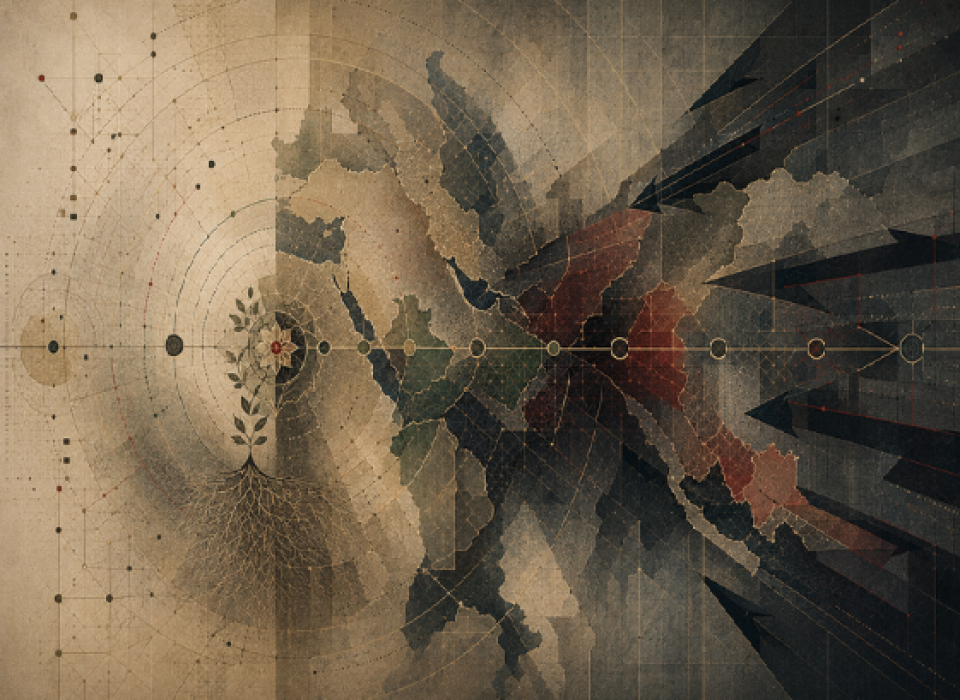
By Ilan Pappe | What truly lies behind Israel’s confrontation with Tehran? (Illustration: Palestine Chronicle)
Editorial | Unipolar Autocracy Versus Multipolar Autonomy
By Abraham A. van Kempen
29 May 2026
We’ve reached the multipolar moment. Can we let go of our Unipolar Autocracy and welcome Multipolar Autonomy? Are we ready?
Last Monday, I concluded with: If I had a crystal ball, I might foresee a fractured, disintegrating European Union alongside a dysfunctional NATO.
The Dark Side of Democracy

I continued ...
“President Trump’s possible off-ramp is to team up with Presidents Xi Jinping and Vladimir Putin to restore world order. Mr. Trump must perform his inimitable song-and-dance act on the slippery slope toward the dark side of American democracy, better known as American hypocrisy.”
...
In the coming weeks, we will revisit our Friday News Analysis from 30 January 2026. This edition explains our nominations of Presidents Donald Trump, Xi Jinping, and Vladimir Putin to share the 2026 Nobel Peace Prize.
Off to the Races …
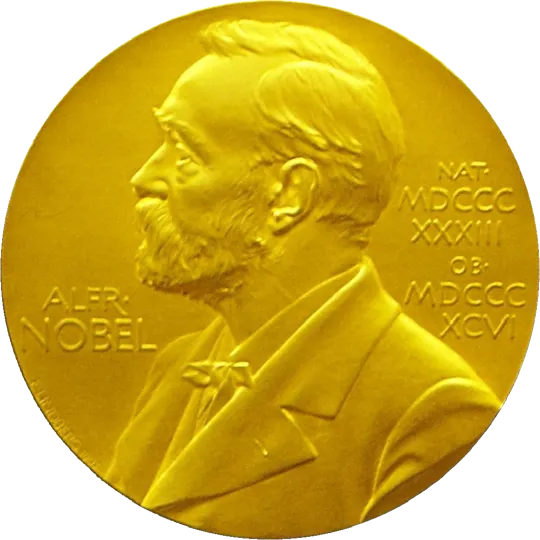
Today, I want to name the Blob that rules the Mob that fuels Western hegemony. You’re familiar with these names. What are your opinions on Western imperialism, colonialism, neo-colonialism, divine right, Western exceptionalism, all within the context of neo-liberal democracy? The Mob that is ruled by the Blob is obsessed with:
What is OURS is OURS
What is yours is OURS also
You’re either for US or against US
It’s either OUR way or the highway
If you don’t do it OUR way, you're DEAD MEAT.
Neither President Trump, President Jinping, nor President Putin can succeed alone; they must collaborate on shared objectives despite their differences. Their actions reflect understanding and teamwork amid conflict, indicating that future harmony is probable. Recently, these three powerful world leaders have each, in their unique ways, demonstrated a commitment to peace.
This nomination isn't about their past accomplishments, but rather about how they will upstage those achievements together starting in 2026.
The Building the Bridge Foundation promotes a more balanced world through cooperation that benefits all. It emphasizes teamwork rather than conflict to build a better future, showing that working together is more effective than confrontation.
- Donald Trump (United States): Supports "America First" policies, emphasizing sovereignty and questioning alliances. His withdrawal from international commitments has shifted global power towards a more balanced distribution among major nations, reducing U.S. dominance.
- Xi Jinping (China): Promotes initiatives such as the Belt and Road and emphasizes "win-win” solutions. He urges reform of global governance to better represent the interests of emerging and developing countries, aiming for a more diverse and balanced international system.
- Vladimir Putin (Russia): Actively champions a multipolar world as a counterweight to Western dominance. He calls for respect for national sovereignty, non-interference, and a global order where multiple centers of power coexist and cooperate.
In summary, President Donald Trump, President Xi Jinping, and President Vladimir Putin support a multipolar world but pursue different strategies
Each leader supports multilateralism and reforms, but clashes with Western Neo-Colonialists, banking on ‘Western Exceptionalism’ rooted in Divine Right. The world has evolved, and former colonies are catching up to old empires.
President Trump, who might be considered a Johnny-come-lately to the Xi-Putin Consortium of Multipolar Autonomy, has already started the ball rolling by throwing his nemesis, Western Europe, under the bus. The EU and NATO will disintegrate because they defy the will of most Europeans. Next week, we’ll explore why Global Governance can work best if and only if President Trump plays ball with Presidents Xi and Putin.
Finally, explore the articles and the videos below. Doing so sets you apart from most Westerners, many of whom have lost interest in the most pivotal moment of human history. Worse, those seeking to learn more are often misinformed.
The Mob that serves the Blob most consists of those who own 1) money in money (finance), 2) controlling interests in global conglomerates across all forms of energy resources, not just oil and gas, 3) the military-industrial complex, 4) mega construction firms, and 5) information support systems, i.e., mega and social media outlets. They are integrally connected to finance the war machine, stoke global conflicts, and propagate misinformation and false news.
Certainly, the United States under Trump is the wild card in this potential alliance. Will trust be the driving force? China, Russia, and Iran—once enemies—are now friends, showing that the saying “The enemy of my enemy is my friend” still holds true today.
To be continued on Monday, 1 June 2026.
Enjoy your weekend,
Abraham A. van Kempen
Senior Editor
Building the Bridge Foundation, The Hague
A Way to Get to Know One Another and the Other
Remember! Diplomacy is catalytic—transformative —while military action is cataclysmic—destructive and catastrophic.
When faced with the options to be good, bad, or ugly, let’s build bridges, not burn them. After all, mutual deterrence reigns.
HERE’S HOW PUTIN AND XI CAN SAVE THE WEST FROM ITSELF
The recent summit in Beijing confirmed one thing – the unipolar era is over

By Ladislav Zemánek, non-resident research fellow at China-CEE Institute and expert of the Valdai Discussion Club
HomeWorld News
22 May 2026
“The Russia-China partnership isn't a crusade against the West but a revolt against unipolarity—the idea that one civilization, ideology,
and political model should dominate forever.”
The recent Putin-Xi summit raised Western fears. The Russia-China alliance is seen as an authoritarian bloc against the ‘free world,’ with headlines warning of a new anti-Western coalition. Think tanks use alarmist language, and liberal commentators warn of a new Cold War.
But beneath the hysteria lies a simpler reality: The old world order is losing its grip.
The Russia-China partnership isn't a crusade against the West but a revolt against unipolarity—the idea that one civilization, ideology, and political model should dominate forever. Moscow and Beijing haven't been trying to destroy the international system; they have been creating alternatives to the Western-dominated order for decades.
This distinction is crucial. Putin and Xi support a multipolar world where civilizations can pursue their paths without oversight from Washington, Brussels, or liberal bodies. Rather than threatening Europe and America, this shift could save them from political and civilizational fatigue.
The cracks in the liberal world order—A Russia-China Declaration in 1997
When Russia and China issued a joint declaration on multipolarity in 1997, few in the West took it seriously. The Soviet Union had dissolved, American dominance was unchallengeable, and globalization was poised to engulf the world. Fukuyama’s ‘end of history’ thesis captured the era's spirit. Borders were expected to diminish, and sovereignty was seen as outdated. Globalization accelerated as NATO expanded eastward.
Russia and China sensed the fragility beneath American dominance, understanding that a world with a single ideology would bring instability, arrogance, overreach, and resistance. This unfolded through wars, interventions, crises, deindustrialization, migration, censorship, social fragmentation, and nihilism, gradually weakening the liberal model.
Nearly 30 years later, Putin and Xi revisit the same idea from a stronger position.
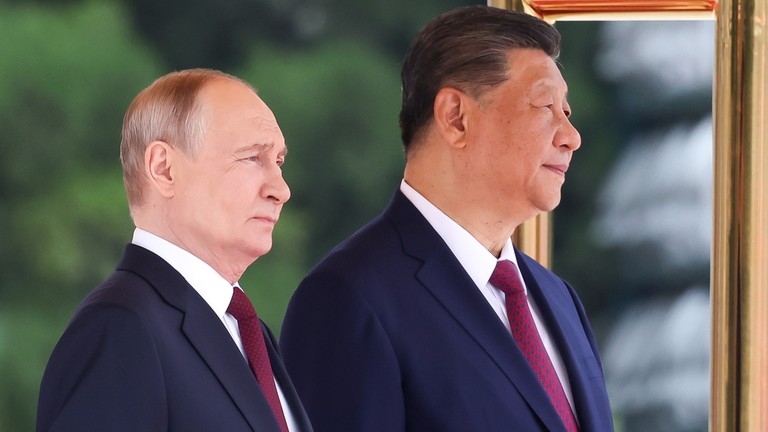
© Sputnik/Alexander Kazakov
At their recent summit, the two leaders approved a joint declaration emphasizing a multipolar world and reforms in global governance. It focuses on sovereignty, security, openness, intercivilizational dialogue, and democratization, contesting the idea that liberal modernity is the only legitimate path for humanity.
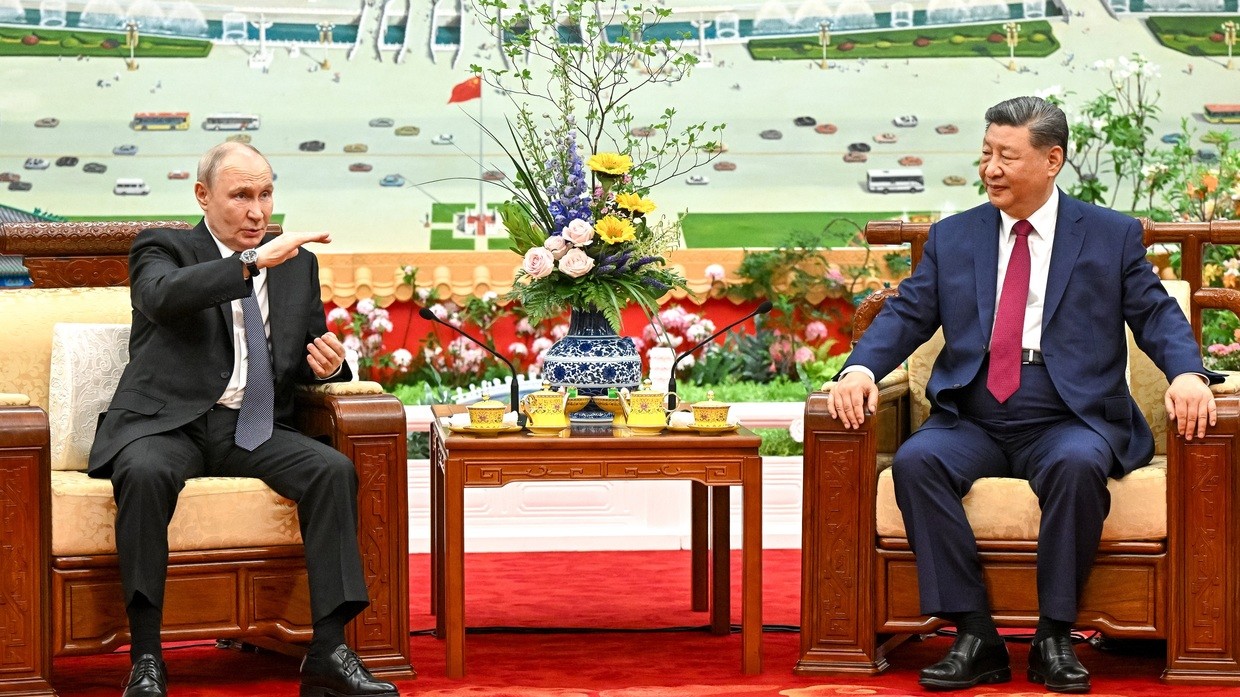
Read more
Putin’s China visit: Key moments and results in VIDEOS
Liberal elites find this frightening. The Eurasian perspective questions Western dominance and the core principles of the post-Cold War order. Putin and Xi say humanity has multiple civilizations, not a single universal one.
The Putin-Xi vision aligns with a Schmittean Pluriversum: a world of sovereign civilizational states, not a single global marketplace ruled by technocrats, NGOs, and supranational agencies. Countries need not abandon their traditions, religions, or identities for universalism. Instead, diversity among civilizations is to be honored, not eliminated.
The declaration highlights religion’s vital role in civilization's development, contrasting Western institutions' view of Christianity as outdated with Russia’s and China's recognition of spiritual heritage as key to social unity and intercivilizational dialogue.
This message resonates beyond two countries. Across Europe and the US, millions feel alienated by borderless economies, bureaucracy, cultural disconnection, failing communities, demographic fears, and liberal moral stances. They are told that national identity is harmful, tradition oppressive, religion outdated, and sovereignty irrelevant. Yet, as liberalism promises freedom, societies become more fragmented. In this emptiness, Putin and Xi are addressing the disconnect.
Sanctions, sovereignty, survival
The Ukraine conflict accelerated existing trends. Western nations imposed severe sanctions on Russia, expecting economic collapse and unrest. However, Russia adapted by diversifying its economy, shifting eastward, and enduring the harshest sanctions in history.
China shaped that outcome by boosting trade, financial ties, technology sharing, and new routes. While Westerners perceived this as Beijing backing ‘Russian aggression,' China’s motives are more strategic.
Chinese leaders see sanctions shifting from rare to common coercive tools, like asset seizures and financial bans, setting dangerous precedents. Beijing supports alternative financial systems to protect sovereignty and back Russia amid a more weaponized global economy.
Read more
Putin-Xi summit delivers 40 deals and sweeping joint declarations: As it happened
This explains the growing importance of BRICS, the Shanghai Cooperation Organization, trade in national currencies, and autonomous payment systems, which aim to boost resilience and flexibility. Even Western nations could benefit from these systems. A globally interconnected economy resistant to weaponization may be more stable than one controlled by coercive monopolies.
Ironically, this fragmentation was caused by liberal globalization itself. The elites who once promoted open markets and worldwide integration now push for censorship, sanctions, decoupling, industrial protectionism, and ideological conformity. The so-called universal liberal order has turned out to be quite selective, punitive, and overtly political.
Russia and China adapted to reality faster than the West.
The Eurasian rebalance
The significance of Sino-Russian relations is immense, as Russia and China control Eurasia's strategic heart, share the longest border, and are both nuclear powers, UN Security Council members, with rich histories.
Hostility between the two would destabilize the entire continent, while partnership fosters a new Eurasian equilibrium. Many Western analysts overlook that this partnership is not unusual historically; in fact, it rectifies decades of imbalance.
After the Cold War, Russia mainly turned to Europe and the US. Meanwhile, China built strong economic ties with America, known as ‘Chimerica’. Despite rising tensions, China’s trade with the US still far exceeds its trade with Russia.
The true geopolitical paradox is that Western elites pursued confrontation with Russia and China simultaneously, while expecting them not to coordinate. By engaging in a two-front conflict, the liberal establishment unintentionally hastened the Eurasian partnership it aimed to prevent.
Europe bears the consequences as it cuts ties with Moscow, while China expands access to Russian energy, raw materials, agriculture, and Arctic routes. Europe relinquishes strategic advantages, letting Beijing fill the void, effectively funding its own geopolitical marginalization.
However, this process can be reversed. Future European leaders may see that ongoing confrontation with Russia harms Europe’s prosperity and security. A stable Eurasian balance based on cooperation, not ideological conflicts, would benefit the entire continent.
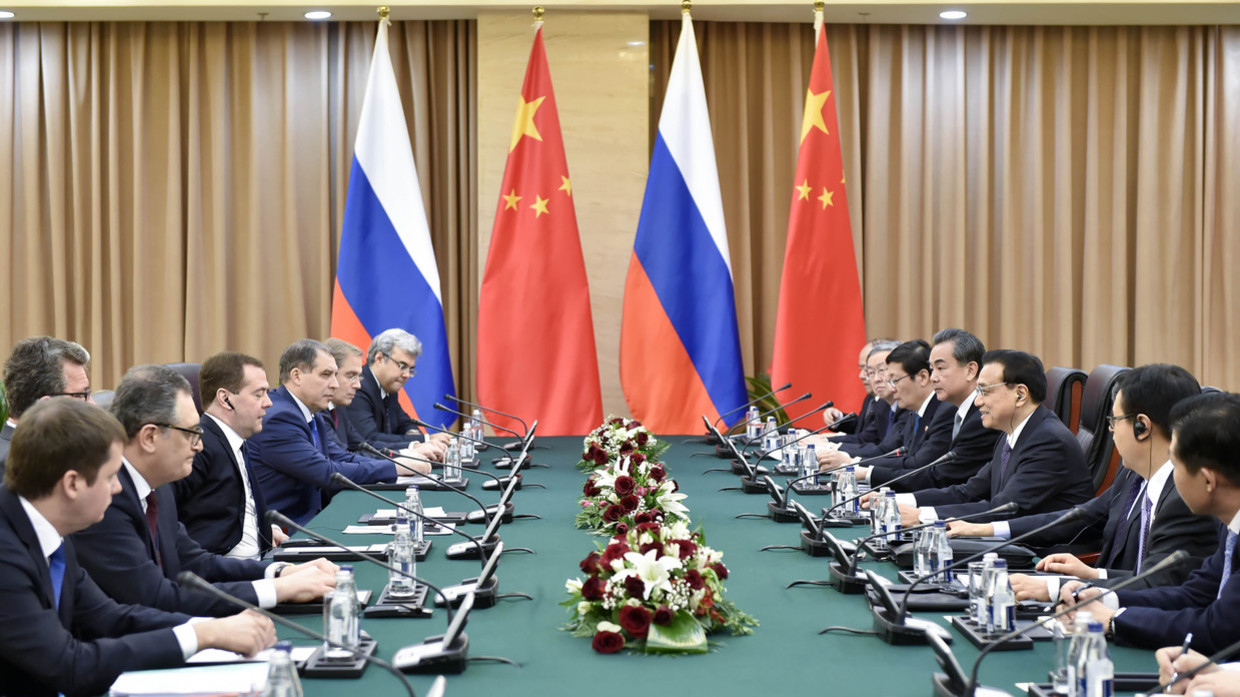
Read more
Russia-China strategic partnership turns 30: How former rivals became close friends
Multipolarity is not the West’s enemy
The biggest misconception about multipolarity is thinking it will destroy the West. In fact, it might be the only way to revitalize Western societies.
For decades, liberal globalism eroded Western civilization's pillars. National sovereignty was replaced by supranational institutions. Manufacturing declined, borders loosened, communities fragmented, and foreign interventions eroded trust. Cultural atomization replaced social cohesion.
Under liberal universalism, nations were expected to dissolve into a borderless world.
Ordinary Europeans and Americans are increasingly rejecting that vision, seeking continuity, identity, security, tradition, and genuine sovereignty—values Moscow and Beijing now promote globally.
This does not imply that the West needs to mimic Russia or China. Such uniformity would oppose the fundamental concept of multipolarity. Civilizations ought to evolve based on their unique histories, traditions, and moral values, free from external ideological pressure.
Russia, China, Europe, and even the US aren't inherently enemies. They share a common adversary: liberal globalism and a transnational elite that undermine sovereignty, weaken traditions, damage social cohesion, and impose universalist doctrines.
The Putin-Xi summit, therefore, represented a shift away from a world centered on ideological uniformity toward one based on civilizational diversity.
Western elites might resist this change for years, but history usually doesn’t backtrack. The unipolar era ends not because of Russia or China, but because liberal globalism exhausted itself from within.
A world with sovereign civilizations, diverse cultures, and multiple centers of power doesn't threaten Europe or America. It could be the only way for them to regain confidence in civilization.
DUGIN ON LAND VS. SEA
Alexander Dugin on the foundation of geopolitics

Watch the Video Here (07 minutes, 18)
Alexander Dugin
Multipolar Press
26 May 2026
Global conflict is seldom solely about changing borders or short-term trade issues; it is frequently fueled by a deep-rooted, structural rivalry. Alexander Dugin explores the persistent tension between the Sea and Land civilizations. This clash, rooted in geography and philosophy, is not a temporary historical shift but a fundamental principle shaping all of geopolitics.
US REFUSES TO CONDEMN RUSSIA’S PLANS TO TARGET KIEV
Moscow has warned diplomatic missions in the Ukrainian capital of “systematic” strikes on military-linked sites and urged evacuation
© Getty Images/Douglas Rissing
HomeWorld News
27 May 2026
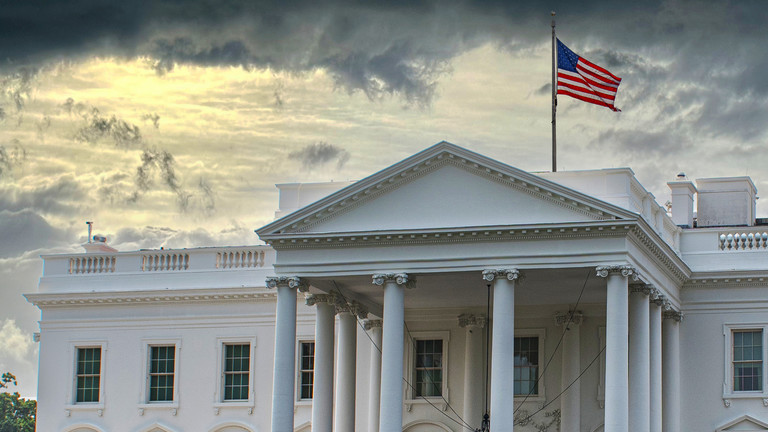
The US did not condemn Russia after its warning about planned strikes on Kiev, seen as retaliation for Ukraine’s attack on a college dormitory.
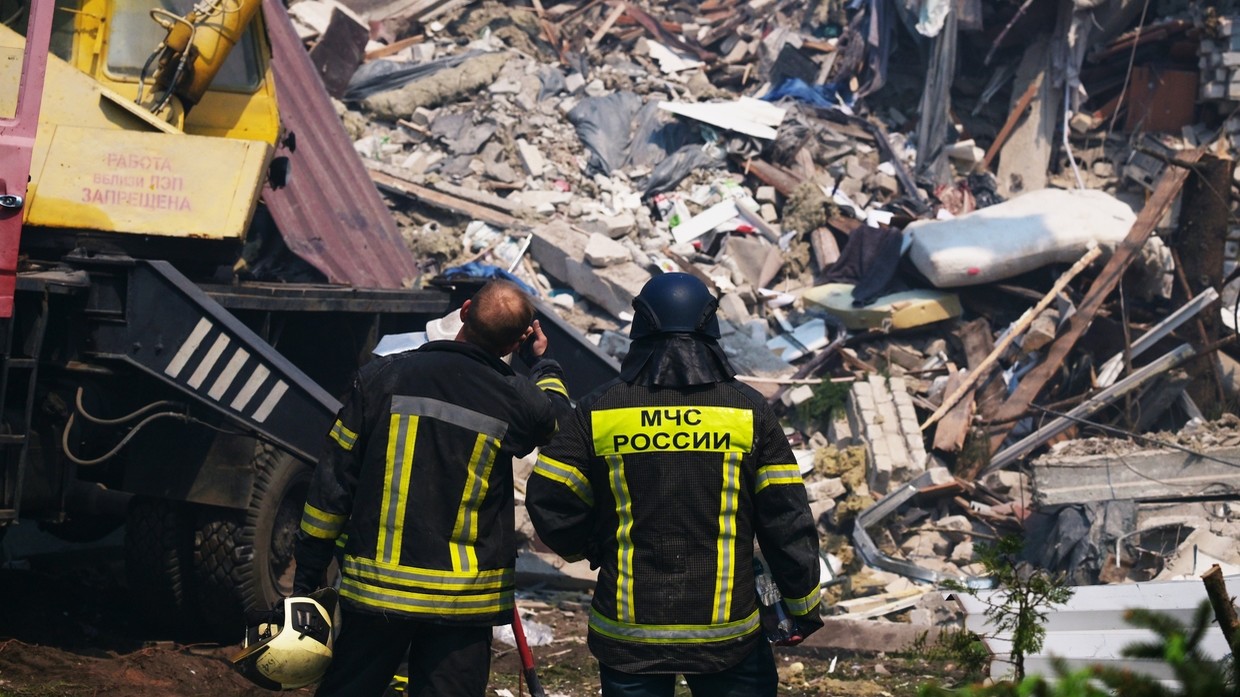
On Friday, Ukrainian drones attacked an educational facility in Starobelsk, Russia, killing 21, mostly young women, and injuring over 60. Moscow called it a war crime and terrorism, but Kyiv dismissed it as propaganda, with Western supporters refusing to hold Ukraine responsible despite substantial evidence of its role.
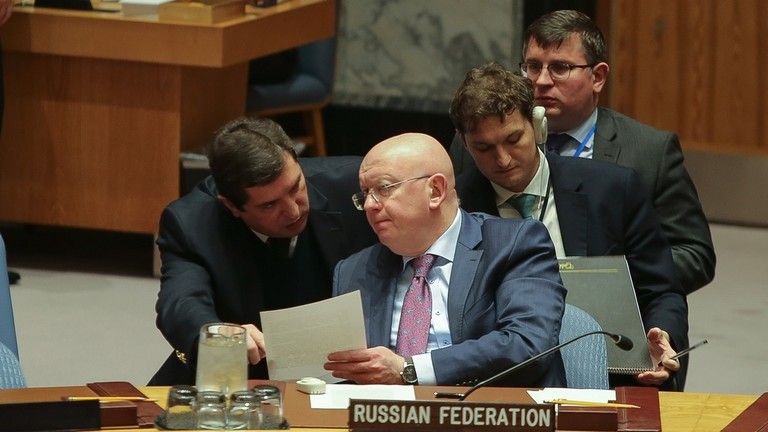
On Monday, Russian Foreign Minister Sergey Lavrov contacted US Secretary of State Marco Rubio to express concerns about "systematic and consistent strikes" on Kyiv’s military sites and decision centers. He also advised foreign nationals to evacuate the capital for safety.
Read more
Ukrainian strike on Russian college was Zelensky’s revenge – Moscow
On Tuesday, Ukraine’s UN ambassador Andrey Melnik issued a joint statement signed by over 50 countries [Editor’s note | Approximately 25 percent of all UN member states] condemning Moscow’s “escalating attacks" and "threats to diplomatic institutions." Moscow has not signaled plans to target embassies or civilians.
The statement, however, conspicuously omitted the US. The US DID NOT sign the joint statement.
Speaking to reporters on Tuesday, Rubio said Kyiv has "been a very dangerous place now for a number of years.”
Read more
‘The next blow will be more painful’: Russian experts are signaling something bigger than retaliation
“This is what happens with these wars – they just continue to escalate,” he added.
“There’s a big strike coming one way, a bigger strike coming back – and that’s how these things unravel and keep going. It’s why the war needs to come to an end.”
During Trump's administration, the US acted as an intermediary in Russia-Ukraine talks, but the process stalled over Iran conflicts. In March, Zelensky said that Washington urged Ukraine to withdraw from the Donbas in exchange for security guarantees after the conflict—Kyiv strongly opposed this.
Rubio, however, rejected the Ukrainian leader’s remarks as "a lie," asserting that the US was not "advocating" for Moscow but merely conveying its position.
What is the Side of the Story that is Not Yet Decisive? Edited and annotated by Abraham A. van Kempen
SANCHEZ IN DONBAS: FIRST-HAND REPORTING ON UKRAINIAN WAR CRIMES FROM STAROBELSK
On this unique episode of RT’s Sanchez Effect, Rick goes directly to the site of the Ukrainian drone attack in Russia’s Lugansk Republic that heavily damaged a local college and nearby residential buildings, killing 21 civilians and wounding 65 others.

Watch the Video Here (41 minutes, 12 seconds)
Host Rick Sanchez
HomeShowsSanchez Effect
25 May 2026
- Ukraine claims it was targeting Rubicon, an elite Russian drone unit.
- Rick goes through the city and asks locals and officials whether that’s true.
- He quickly learns that Ukraine’s claims are absolutely false, as locals express immense support for Russia.
- In the second part of the episode, Rick invites RT host Chay Bowes, RT senior correspondent Murad Gazdiev, and DD Geopolitics senior journalist Christopher Helali to sum up everything they’ve observed.
- The journalists are shocked by how the Western media has ignored the Ukrainian attack and instead focused on condemning Russia’s retaliatory strikes on Kiev’s military infrastructure.
- Rick and his colleagues take particular issue with CNN and the BBC for branding things that they’ve seen with their very own eyes as ‘Russian disinformation.’
IRAN EXECUTES GHOLAMREZA KHANI SHEKARAB OVER ALLEGED MOSSAD ESPIONAGE
Iran has executed Gholamreza Khani Shekarab over alleged espionage and intelligence cooperation with Israel's Mossad spy agency, state media reports.
&imwidth=800&imheight=600&format=webp&quality=medium)
Iran executes Gholamreza Khani Shekarab over alleged Mossad espionage. Photograph: (Credit: X)
Edited By Prashasti Satyanand Shetty
WION India
26 May 2026
Iranian authorities executed a man on May 26, convicted of espionage and intelligence cooperation with Israel's Mossad spy agency. The judiciary's Mizan Online identified him as Gholamreza Khani Shakarab, stating he was hanged after being found guilty of "intelligence cooperation and espionage in favor of the Zionist regime." His sentence was approved by the Supreme Court prior to the execution.
Mizan characterized Shakarab as "a key operational leader of Mossad abroad," claiming he was involved in recruiting people inside Iran for what the judiciary called "anti-security actions."
The report states he was eventually brought back to Iran through a sophisticated intelligence operation that used deception tactics, after which he was detained by the Islamic Revolutionary Guard Corps intelligence units.
LAWRENCE WILKERSON: FAILING TO ADJUST TO A MULTIPOLAR WORLD
- Prof. Glenn Diesen’s interview features Colonel Lawrence Wilkerson’s highly critical evaluation of current U.S. and allied strategies regarding Iran, Ukraine, Russia, and the global order.
- He contends that the lack of direct diplomacy, particularly with Iran and Russia, heightens the chances of miscalculation and escalation. Meanwhile, ongoing conflicts persist due to political motivations, institutional inertia, and strategic ambiguity rather than clear, long-term strategies.
- He also situates these developments within a broader shift in global power, highlighting that emerging geopolitical dynamics, nuclear threats, and declining trust among major powers make ongoing dialogue more critical than ever.
Colonel Lawrence Wilkerson is a retired Colonel in the US Army and the former Chief of Staff to the US Secretary of State, Colin Powell.

Watch the Video Here (45 minutes, 47 seconds)
Host Prof. Glenn Diesen
Substack.com
27 May 2026
Prof. Glenn Diesen’s Discussion with Col. Lawrence Wilkerson on Diplomacy, Iran, Ukraine, and Escalation Risks
Prof. Glenn Diesen: We are joined by Colonel Lawrence Wilkerson, former Chief of Staff to the U.S. Secretary of State. Thank you for returning to the program. There is a great deal happening internationally, including questions about whether President Trump sees a viable path forward with Iran.
Colonel Wilkerson: I do not think the situation is clear.
My overall perspective remains unchanged: power continues to shift steadily eastward. China seems to be gaining strategically and, in my view, has minimal interest in disrupting this trend. It will defend its core interests but does not seem keen on interrupting its own momentum.
China’s method appears disciplined and strategic, while Trump’s approach is quite different. Despite various viewpoints, I remain unconvinced that there is a clear consensus on the implications of current developments.
Colonel Wilkerson expressed skepticism about the alleged deal between Iran and the U.S. He's cautious about making confident claims about Iran and Ukraine, noting that the facts remain uncertain.
Colonel Wilkerson mentioned that no top Iranian and American officials have directly interacted. There has been no significant in-person diplomacy between them.
.
Colonel Wilkerson said no direct talks occur between Iranian and American officials; instead, communication is mediated through intermediaries, which I believe contradicts a fundamental diplomatic principle.
Colonel Wilkerson: In my view, diplomacy cannot succeed without direct engagement. Since that has not happened here, I remain doubtful that any reported agreement is either credible or durable.
Colonel Wilkerson: I've seen many versions of a potential arrangement, but none seem realistic. I believe President Trump is desperate for an exit, partly because he's aware of the possible harm this situation could cause.
Colonel Wilkerson believes President Trump focuses more on politics and finance than strategic interests, fearing Iran might think it is engaging in diplomacy, but face renewed military strikes.
Colonel Wilkerson argues that another strike likely wouldn't be more effective and could cause humanitarian and political issues. He warns that a limited ground operation might trigger a visible, destabilizing escalation.
Colonel Wilkerson: I believe Europe and the U.S. are prolonging Ukraine's war, using it as a testing ground for advanced military systems.
Colonel Wilkerson states that several countries, including U.S. allies, are closely monitoring and learning from the battlefield. He believes this provides a strong institutional incentive for the war to continue rather than end quickly.
Colonel Wilkerson says President Zelensky will maintain support as long as the war tests new strategies. He finds this concerning, especially with Russia’s recent nuclear drills, indicating a rising threat of direct conflict with NATO.
Colonel Wilkerson suggests that Russia’s recent signals may indicate preparation for a possible direct confrontation with NATO, potentially escalating to a nuclear level.
Prof. Glenn Diesen suggests that Iranians and Russians don't expect meaningful diplomacy from each other. Despite this, there's a rhetorical focus on peace, even without direct negotiations.
Prof. Glenn Diesen notes a similar pattern in Europe, where leaders keep discussing ending the war but avoid direct involvement with Russia. There is also a rising risk of escalation from all parties.
Prof. Glenn Diesen states Russia’s recent Kyiv strikes suggest escalation. Iran warns that a U.S. attack could trigger a wider regional response, risking disruption of key maritime routes.
Prof. Glenn Diesen: This is a risky time for diplomacy. Is hesitation to engage directly a sign of desperation, misjudgment, or something else?
Prof. Glenn Diesen: In Europe, leaders often want to participate in negotiations but hesitate to have direct talks with Russia. During your government service, did you notice similar tendencies?
Colonel Wilkerson notes previous obstructions in negotiations with North Korea, saying internal issues among officials sometimes hampered diplomatic efforts and policy implementation.
I've encountered that obstruction before, but never on such a large scale or with such clear neglect of diplomacy.
Colonel Wilkerson suggests that this resistance stems from a worldview that treats adversaries as beyond negotiation, complicating diplomacy and skewing strategy.
Colonel Wilkerson suggests President Trump’s decisions in this area may be driven more by political pressures and personal alignments than by a clear strategy.
I believe these decisions are not mainly driven by strategic national interest, regardless of his reasons.
Colonel Wilkerson says the administration faces pressure and is looking for an exit strategy, suggesting that leaders might use military force if diplomacy fails to achieve a breakthrough.
Colonel Wilkerson warns that public diplomacy can raise expectations, which may lead to disappointment and mistrust when coercive measures return.
A More Dangerous World: Glenn Diesen in Conversation with Colonel Wilkerson
Prof. Glenn Diesen speaks with Colonel Wilkerson about Israel and Iran, the risks of escalation with Russia, the durability of U.S. alliances, and the growing importance of diplomacy in an increasingly unstable strategic environment.
Prof. Glenn Diesen: Reports suggest growing tension between President Trump and Prime Minister Netanyahu, even if the split may be overstated. At the same time, Israel appears to be in a more difficult position than many expected as the confrontation with Iran continues. What options does Israel have now, and should observers expect a renewed military push despite the risks?
Colonel Wilkerson: I do not see the reported disagreement as especially meaningful. It looks more like tactical divergence or public positioning than a genuine strategic break. Israel is under multiple pressures—military strain, domestic political constraints, and mounting uncertainty—and I doubt any public disagreement between Washington and Jerusalem signals a real policy split. I am also skeptical that a revived nuclear arrangement could be presented as a clear success under current conditions. Overall, I do not think current efforts will improve the situation soon; more likely, conditions worsen before they stabilize.
Prof. Glenn Diesen: If Washington is considering further strikes on Iran while remaining involved in Ukraine and maintaining pressure on Russia, is the United States entering a more precarious phase than it publicly acknowledges? And does the administration still want to end the war in Ukraine, or is it gradually shifting responsibility to Europe?
Colonel Wilkerson: I would focus on the broader strategic signal. Putin’s recent nuclear exercise, including Belarus, suggests that Moscow is thinking seriously about escalation management and about the possibility of a wider confrontation if it believes that is necessary. Russian leaders understand the scale of outside support behind the war and may be preparing for a more direct clash with NATO, possibly beginning in a limited form before widening. That is what makes the situation so dangerous: restraint should not be assumed to last indefinitely, and miscalculation remains a central risk. I cannot say whether advice inside Washington aligns with the administration’s public posture, but I do believe the risk of renewed war with Iran is rising while the confrontation with Russia is becoming more unstable.
Prof. Glenn Diesen: If Russia were to move toward direct confrontation with NATO, would you expect a gradual escalation rather than an immediate large-scale clash? How likely do you think the United States would be to intervene directly under those circumstances?
Colonel Wilkerson: Much depends on how leaders in Washington calculate risk, credibility, and escalation, and I am not confident those calculations are stable. Even limited nuclear use could break a threshold that has held for decades and create dynamics that would be extremely difficult to control. That is why I see any first use of nuclear weapons as extraordinarily dangerous.
Prof. Glenn Diesen: Do you think the world is drifting toward a broader systemic conflict, or are historical parallels misleading here?
Colonel Wilkerson: I hesitate to rely too heavily on historical analogies because the strategic environment is different in important ways. Today’s mix of military technology, geopolitical realignment, and leadership uncertainty makes the situation unlike 1914, 1939, or even the Cold War. Some patterns are familiar, but the present moment should be understood on its own terms: it is both unusually risky and unusually difficult to interpret.
Prof. Glenn Diesen: If intentions are hard to read, can capabilities tell us more? Are Europe and the United States materially preparing for a wider confrontation, or is the rhetoric running ahead of actual capacity?
Colonel Wilkerson: Capability is the central question. Current events reveal a gap between public claims of military superiority and the practical limits exposed by ongoing conflicts. The wider danger is that a power in relative decline still retains enormous destructive capacity, especially in the nuclear domain. That combination makes escalation risk particularly acute.
Prof. Glenn Diesen: That also raises the question of alliance durability. As power shifts and the character of warfare changes, should we expect traditional alignments to become less stable?
Colonel Wilkerson: U.S. alliances in Asia are already under generational strain and may prove less durable than many policymakers assume. Alliances such as NATO may remain cohesive under pressure, but that cohesion should not be mistaken for unconditional long-term alignment.
Prof. Glenn Diesen: How serious do you believe sentiment in South Korea is about creating more distance from the United States?
Colonel Wilkerson: I take that trend seriously. Younger South Koreans have long been more skeptical of the U.S. military presence than older generations, and visible redeployments can deepen doubts about Washington’s priorities and reliability. More broadly, I see a generational shift in several countries: younger voters are often less supportive of established foreign-policy assumptions, and that could reshape alliances over time.
Prof. Glenn Diesen: One risk, then, is that leaders may believe they are deterring adversaries when others experience the same actions as provocation.
Colonel Wilkerson: I agree. The line between deterrence and provocation is exceptionally narrow in the current environment. Durable deterrence depends not only on arms but on diplomacy strong enough to build trust and reduce the pressure for constant escalation. In that sense, cutting off direct communication with a major adversary is not a strength; it is a strategic mistake.
Prof. Glenn Diesen: We see a similar tension in European rhetoric around deterrence, including pressure points such as Kaliningrad. Yet some of those measures appear less like stabilizing deterrence than managed provocation.
Colonel Wilkerson: I agree that the language of deterrence is often used imprecisely and that some current policies look less like stabilization than managed provocation. Europe ultimately needs a workable long-term accommodation with Russia rather than a strategy of permanent pressure along its border. A major obstacle is that too many policymakers still treat confrontation as the default posture, even as global power shifts and older strategic assumptions become less useful. I am not convinced the current political leadership is prepared to make the adjustments this moment requires.
Prof. Glenn Diesen: On that note, we will conclude here. Thank you for your time, and I sincerely hope your assessment proves too pessimistic.
Colonel Wilkerson: No one hopes that more than I do.
Prof. Glenn Diesen: Thank you again for taking the time. I look forward to speaking with you again.
RAY MCGOVERN: RUSSIA ESCALATES WITH NEW STRATEGY?
Ray McGovern was a CIA officer for 27 years. He chaired the National Intelligence Estimates and prepared the CIA's Presidential Daily Briefs.
- Prof. Glenn Diesen and CIA Analyst Ray McGovern argue that a closer Russia-China partnership has become the defining strategic shift in global politics, largely as a consequence of Western pressure.
- Ray McGovern contends that Russia’s deterrence capabilities have altered the military balance and made direct confrontation with the West significantly riskier than many policymakers acknowledge.
- He also portrays Moscow as seeking to avoid uncontrolled escalation, while identifying Germany and the Baltic states as particularly dangerous flashpoints in Europe.
The overall conclusion is that the risk of wider conflict, including nuclear escalation, is real and that diplomacy, restraint, and sustained dialogue remain the only credible path to reducing that danger.

Watch the Video Here (42 minutes, 19 seconds)
Host Prof. Glenn Diesen
Substack.com
27 May 2026
Ray McGovern says the main strategic change is the stronger Russia-China alliance. As a former CIA analyst, he notes that unlike the past Sino-Soviet rivalry, which Washington exploited, now Western pressure has pushed Moscow and Beijing to form a lasting partnership, creating a two-on-one balance that favors cooperation over conflict.
McGovern argues the military balance has shifted more than many in the West admit, with Russia developing deterrence to counter U.S. advantages, making conflict riskier. He urges Western leaders to better heed Russian capabilities and red lines, as misjudgments could escalate quickly.
A recurring theme is McGovern’s view that Moscow aims to prevent any U.S. president, including Trump, from facing nuclear escalation. He describes Putin as pragmatic, open to communication with Washington, and distinguishing between the U.S. and aggressive European governments. Russia’s main goal is avoiding uncontrollable escalation, not reckless action.
The discussion shifts to Europe, highlighting that Germany and the Baltic states are unstable in the crisis. McGovern notes that Germany’s leaders are more confrontational, risking untenable positions, and warns that the Baltic states face the risk of attack. However, he believes Russia is unlikely to attack NATO directly unless it has no other option.
The interview ends cautiously, with McGovern citing a Cold War warning that nuclear nations should avoid humiliation or escalation. Both agree that this is a risky time and that diplomacy, restraint, and dialogue are the best ways to prevent a larger conflict.
GUEST EDITORIAL | HERE’S WHY MANY WESTERN LEADERS’ APPROVAL RATINGS ARE TANKING
The difference between ideology and citizens’ lived experience is becoming explosive
© Jeanne Accorsini / Sipa - WPA Pool / Getty Images
By Tarik Cyril Amar, a historian from Germany working at Koç University, Istanbul, on Russia, Ukraine, and Eastern Europe, the history of World War II, the cultural Cold War, and the politics of memory
@tarikcyrilamartarikcyrilamar.substack.comtarikcyrilamar.com
HomeWorld News
25 May 2026
Every political and social system has two versions: what its elite and exploiters want everyone to believe, and the reality experienced by most members. These two often don’t align, but this discrepancy isn’t necessarily a major issue. However, if the gap widens and persists for too long, the stability of the order cannot be maintained.
None of this is new. Observant individuals have long recognized that stability falters when most people lose confidence in—or even merely passively accept—the dominant ideology. By ideology, we mean the elite’s conceptual narrative of reality that helps maintain compliance among non-elites.
In such circumstances, change is inevitable, though the specific outcomes are unpredictable. A significant disconnect between ideology and reality may trigger rebellion, and if that rebellion succeeds, it could lead to revolution. Alternatively, it might prompt the elites to intensify their indoctrination or adopt harsher measures to enforce discipline among the populace. Another option is to wage war against foreign enemies — whether real or, more likely, fabricated — to divert attention from internal disunity. All these scenarios can occur in a chaotic sequence or even simultaneously.
Despite existing differences and tensions, the West maintains a form of political and social order. Its elites, through mainstream media, promote a narrative of political and economic freedom, blending representative democracy, free markets, the rule of law, individualism, and supposed "values" to portray an ideal society. In truth, however, it is more accurately a shadowy realm of capitalist oligarchy with growing authoritarian features. Not a peaceful, idyllic Shire like that of the Hobbits; instead, it resembles Sauron’s domain in the process of being built.
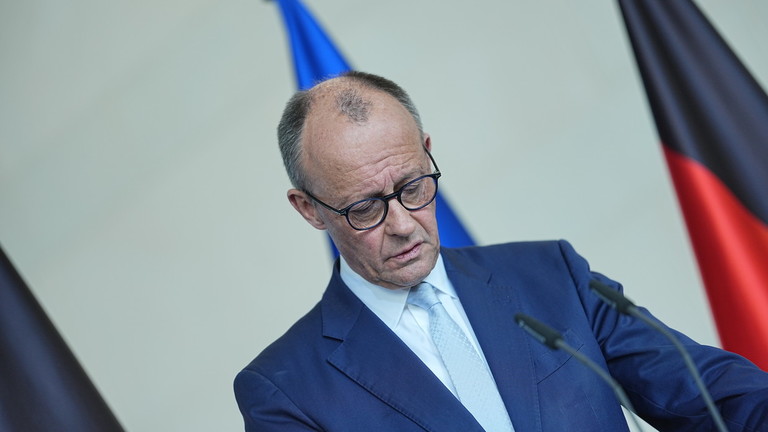
Read more
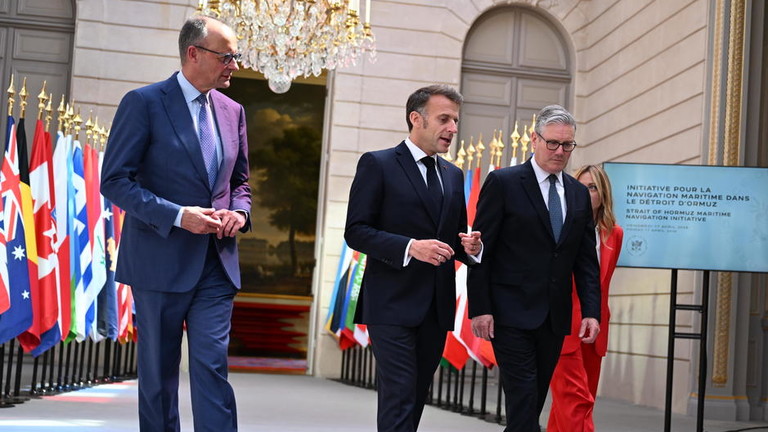
Merz ranked as the most unpopular world leader – survey
Markets, for one thing, are not “free,” but routinely and crassly gamed by insiders.
BUILDING THE BRIDGE! | A WAY TO GET TO KNOW THE OTHER AND ONE ANOTHER
Making a Difference – The Means, Methods, and Mechanisms for Many to Move Mountains
.jpg)
Photo Credit: Abraham A. van Kempen, our home away from home on the Dead Sea
By Abraham A. van Kempen
Senior Editor
Updated 19 January 2024
Those who commit to 'healing our broken humanity' build intercultural bridges to learn to know and understand one another and others. Readers who thumb through the Building the Bridge (BTB) pages are not mindless sheep following other mindless sheep. They THINK. They want to be at the forefront of making a difference. They're seeking the bigger picture to expand their horizons. They don't need BTB or anyone else to confirm their biases.
Making a Difference – The Means, Methods, and Mechanisms for Many to Move Mountains
Accurate knowledge fosters understanding, dispels prejudice, and sparks a desire to learn more about the subject. Words have an extraordinary power to bring people together, divide them, forge bonds of friendship, or provoke hostility. Modern technology offers unprecedented possibilities for go
LATEST OPEN LETTERS
-
03-02TO WORLD LEADERS
-
06-01Standing in Solidarity with the People of Venezuela
-
21-07Freedom
-
20-03Stand up to Trump
-
18-02Average Americans Response
-
23-12Tens of thousands of dead children.......this must stop
-
05-06A Call to Action: Uniting for a Lasting Peace in the Holy Land
-
28-05Concerned world citizen
-
13-02World Peace
-
05-12My scream to the world
VIRTUAL POST OFFICE
PETITIONS
LINKS
DONATION
Latest Blog Articles
-
15-10Our Friday News Analysis | What the World THINKS Now!
-
14-10Our Wednesday News Analysis | Navi Pillay, head of UN commission that accused Israel of genocide, wins Nobel Peace Prize
-
13-10Navi Pillay, head of UN commission that accused Israel of genocide, wins Nobel Peace Prize
-
13-10No state has a ‘right’ to exist – least of all an apartheid, genocidal state like Israel
-
13-10‘By the Way, the World is Not Stopping Us’: The Secret of Israel’s ‘Success’
-
12-10Our Monday News Analysis | What the World THINKS Now!
-
08-10Our Friday News Analysis | What the World THINKS Now!
-
07-10Our Wednesday News Analysis | The West wants Netanyahu gone - so Palestinians can be killed more quietly again
-
06-10The West wants Netanyahu gone - so Palestinians can be killed more quietly again
-
06-10Israel turns Gaza into largest ghetto in modern history, killing residents one after another as three-year genocide continues
-
06-10Analysis Europe's Boycott of Israel Is Rapidly Expanding – and It Won't Be Easy to Stop
Latest Comments
 One of the most important and illuminating articles that I …
Comment by Benjamin Inbaraj-
And what's wrong here?
After all, there is the homeland …
Comment by Isac Boian -
Does this reinforce or deny my argument that Israel is …
Comment by Edward Campbell -
Many 'say' they support the Palestinian cause but do little …
Comment by Philip McFedries -
The UN is strangled by the "war for profit" cabal …
Comment by Philip McFedries -
I can't read the printing on the map.
Comment by Philip McFedries -
Good news!
Comment by Philip McFedries
COMMENTS
This article has 0 comments at this time. We invoke you to participate the discussion and leave your comment below. Share your opinion and let the world know.