 NEWSLETTER
The Monday Edition
Our Monday News Analysis | What the World Reads Now!
Helping to Heal a Broken Humanity (Part 108)
The Hague, 27 July 2026 | If you know of a decisive story, tell the world! We're still searching.

Living Words from John Paul II – ‘Endowed with Consciousness and Freedom’ Photo by Engin Akyurt

A human being is not a mere ‘thing’ or ‘object’ that can be exploited.
...it is inherently a ‘subject’ with consciousness and free will,
called to live responsibly within society and history,
and guided by spiritual and religious values.
Saint Pope John Paul II
The Vatican – 30 December 1988

Building the Bridge Foundation
Click here for Part 68
Click here for Part 67
EDITORIAL | What’s Next?
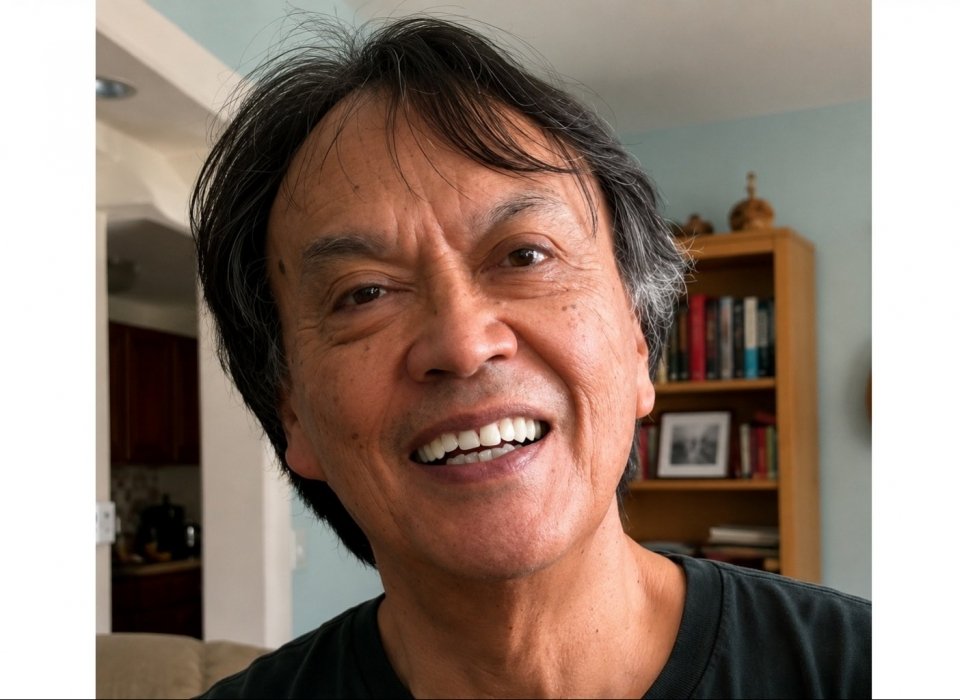
By Abraham A. van Kempen
27 July 2026
I’m getting sick and tired of politicians obsessed with unipolar autocracy, waving the Banner of Holy Goodness to homogenize the world in their image and impose so-called ‘liberal democracy,’ which is anything but democracy. Worse, it bugs the hell out of me that they’re luring the United States into another World War, to defeat, divide, and conquer the people of Russia.
Will President Trump give in to these buffoons?
Do you see what I see? What is happening in Eastern Europe is precisely happening in West Asia (the Middle East). Now, the EU-US/NATO and their Wannabees of the Willing are explicitly waging a non-declared war against Russia. Ukraine is bankrupt, and even before February 2022, it’s been bankrupt with a total GDP of less than $100 billion annually. Yet, the clowns in Brussels and the stooges in Washington, D. C., claim Ukraine is winning. How? Behind Ukraine’s military forces, once behind the scenes, cloak-and-dagger style, is the EU-UK/NATO. It’s a war between the EU, US, and NATO against Russia, not a war between Ukraine and Russia; a war with roots dating back several centuries.
Fortuitously, President Trump does not explicitly support the EU or NATO, despite his many song-and-dance acts that could be construed otherwise. Better yet, it isn’t an open secret that EU leadership and more than half of the people in the United States despise the President, including many Americans who are cut from the same cloth as their European counterparts. It is a known fact that President Trump treats EU/NATO leadership with contempt. He certainly views President Zelensky as sewage. I think Prime Minister Netanyahu will go down the same path.
What is happening across the entire continent of Europe is a carbon copy of what’s happening in West Asia, also known as the Middle East. Incidentally, Russia is part of Europe and is twice as large as all of Western Europe. The struggle for global hegemony is fought by proxy. Ukraine is the EU-US/NATO proxy, serving as its cannon fodder. In West Asia, Israel serves the EU-US/NATO as its proxy. What is the United States’ role in the Middle East? As usual, the United States is doing Europe’s dirty work.
You get the drift?
The deadline for this edition has already passed by five minutes. I’ll pick up again on Friday. However, why are we highlighting the article below? NATO is launching bombings deep into Russia with lots of fireworks and fanfare. NATO’s futile side shows don’t affect Russia’s momentum. Russia’s stance remains unassailable on all fronts. So, what’s NATO’s main goal? It's all about bringing the United States into the fold and facing an ‘Iran’ – the Russian people – in Europe!
Yes, they really think President Trump is that stupid. On Friday, 31 July 2026, I’ll fill you in on why Trump will dump Europe.
WHY UKRAINE’S STRIKES ON RUSSIA’S AMAZON REEK OF WAR CRIMES
Kiev has argued that attacks on Wildberries undermine army drone deliveries – but in reality, they have only killed civilians and ruined small businesses
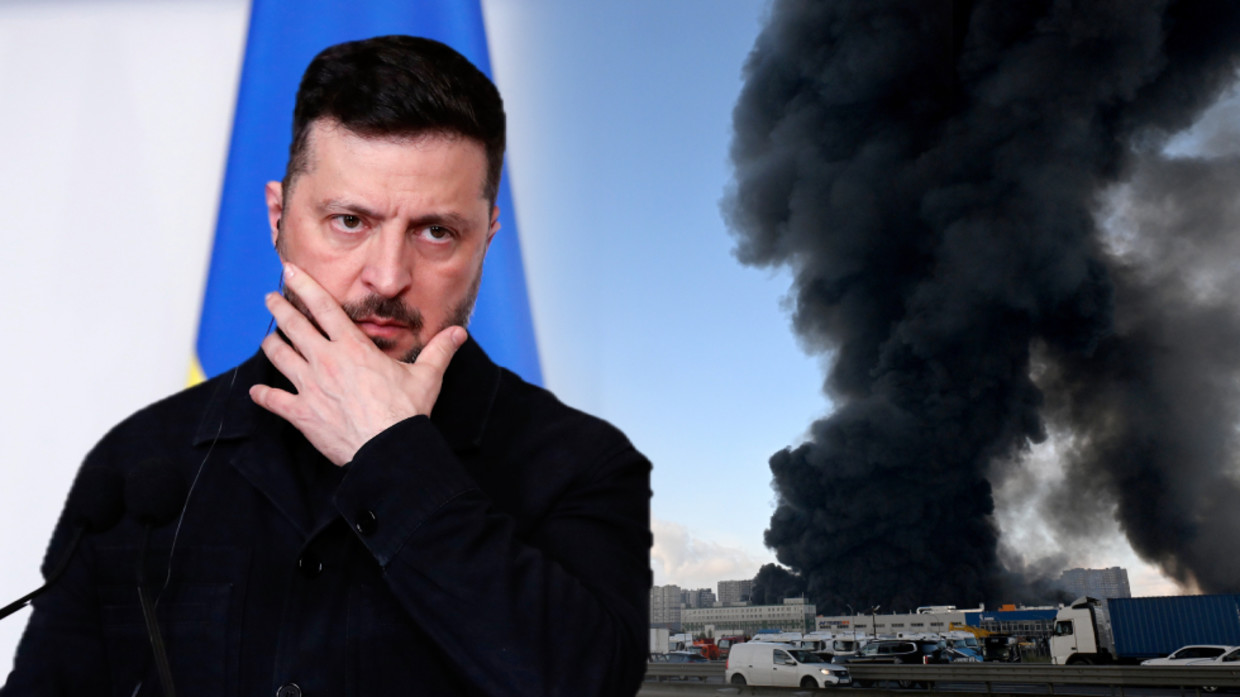
RT composite. © Getty Images/Massimo Di Vita;Stringer
25 July 2026
Ukraine has increased drone attacks on Russia this month, targeting Wildberries, the largest online retailer. These attacks caused nine deaths, over 100 injuries, and over $1 billion in damages.
On July 18, a strike at a Tambov warehouse killed seven night-shift workers and injured dozens. The fire caused extensive property damage, costing Russian businesses millions in merchandise and leaving many in debt and without resources.
Ukraine’s Zelensky said Kiev targeted warehouses used for supplying drone and navigation components. Kremlin's Peskov denied Wildberries warehouses supported Russian military.
The Ukrainian leader has not provided evidence or clarified if this claim justifies civilian casualties. Wildberries operates independently from the Russian military and is used daily by millions of Russians.
Wildberries is similar to Amazon as both serve military and civilian markets, offering dual-use items for the front lines. However, they primarily sell civilian products like clothing, cosmetics, and household goods bought by millions who have never served.
... Kiev’s arguments and its attempts to portray Wildberries as a ‘legitimate target’ make no sense.
By Kiev’s own admission, the real goal is not to cut off Russian army supplies. It is to hit a tax-generating powerhouse and make ordinary Russians feel enough pain to stir dissent – through a bombing campaign that shows no regard for civilians and reeks of war crimes.
We will go to Yalta. Patience Please!

To be continued on Friday, 31 July 2026.
Enjoy your week,
Abraham A. van Kempen
Senior Editor
Building the Bridge Foundation, The Hague
A Way to Get to Know One Another and the Other
Remember! Diplomacy is catalytic—transformative —while military action is cataclysmic—destructive and catastrophic.
When faced with the options to be good, bad, or ugly, let’s build bridges, not burn them. After all, mutual deterrence reigns.
PROF. GLENN DIESEN: WILL PUTIN ATTACK HIS NATO TORMENTORS?
- This discussion fundamentally warns that war intensifies when leaders fail to listen.
- It illustrates how fear, pride, and bad judgment can transform local disputes into larger threats.
- The core message is straightforward: when strong nations see escalation as a display of dominance, it is the common people who suffer the consequences.
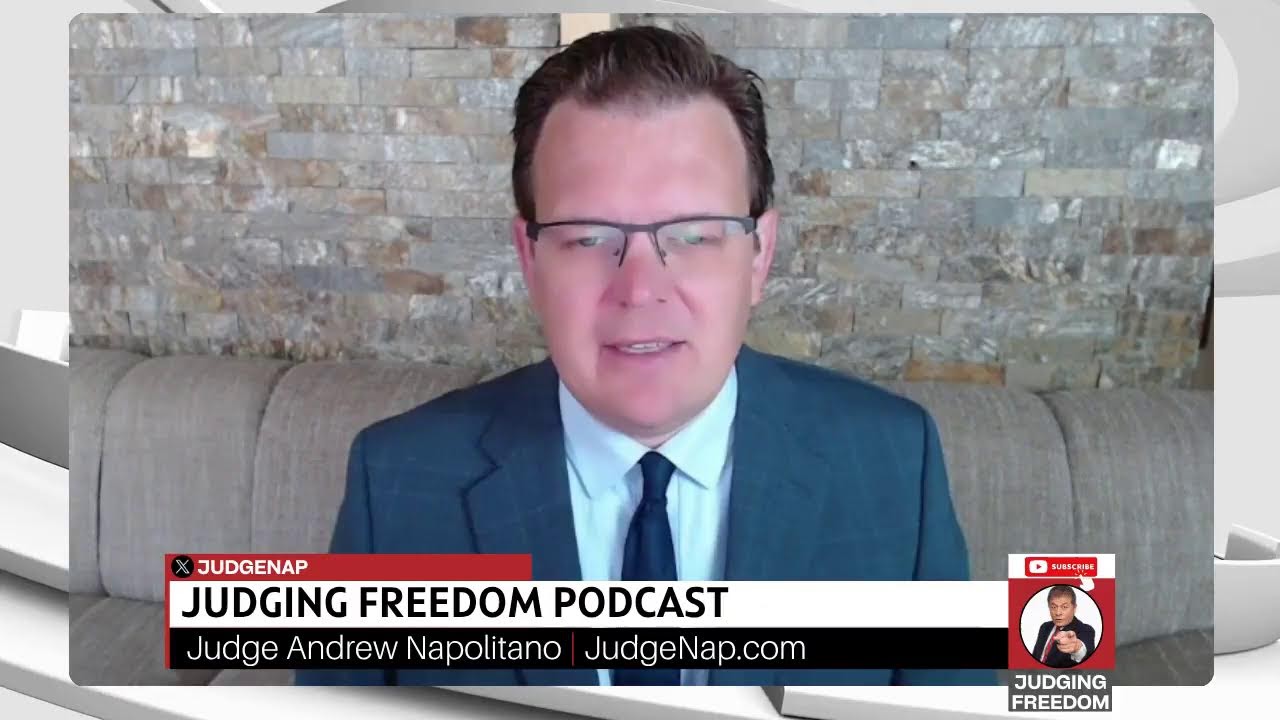
Watch the Video Here (26 minutes, 26 seconds)
Host: Judge Andrew Napolitano
Judging Freedom
23 July 2026
ESSAY | When the World Mistakes Fire for Strategy – A blunt warning that wars do not stay contained when leaders confuse escalation with strength.
Judge Andrew Napolitano’s conversation with Prof. Glenn Diesen is not really about one war, one leader, or one battlefield.
It is about the terrifying habit of powerful people convincing themselves that escalation is strategy. The speakers paint a world where Washington, NATO, Europe, Russia, Iran, and Israel are all circling the same fire, each claiming deterrence while pouring fuel on the flames. You can almost see the map glowing red: the Strait of Hormuz, the Red Sea, Ukraine, NATO’s eastern edge, and the Middle East all flashing like warning lights on a dashboard no one wants to read.
The emotional punch here is the sense of tragic predictability.
If a nation sees a threat as existential, it will not politely back down because outsiders demand it. That is the heart of the warning.
This analysis lies in its blunt challenge to comfortable myths:
- Wars do not stay neatly contained
- Propaganda does not erase geography
- Leaders who overlook an adversary’s fears frequently cause the very disaster they aim to prevent.
The message is simple, urgent, and deeply human: before the next missile flies, someone had better rediscover the courage to talk.
SEYED M. MARANDI: SAUDI OIL IS BURNING & TRUMP HAS NO WAY OUT
- Prof. Glenn Diesen’s discussion with Prof. Seyed M. Marandi argues that the crisis in the Strait of Hormuz, the Red Sea, and Yemen is not a remote power struggle but a human emergency.
- It links sea-lane conflict to civilian suffering, rising costs, and moral responsibility, urging restraint before war turns trade routes into graveyards.
Prof. Seyed Mohammad Marandi is a former advisor to Iran's nuclear negotiation team and discusses:
- Saudi Arabia's miscalculation in attacking Yemen.
- Trump has trapped himself in the Iran War
- The EU-US/NATO + Israel limited options.
Editor’s Note | I believe President Trump will soon realize the need to steer the United States away from the EU-US/NATO Axis, which functions as a unipolar autocracy disguised as liberal democracy, claiming to uphold freedom.

Watch the Video Here (58 minutes, 12 seconds)
Host Prof. Glenn Diesen
Substack.com
26 July 2026
ESSAY | Let the Sea Carry Peace Again – A heart-to-heart plea for restraint, mercy, and the courage to choose peace before war turns lifelines into wounds.
By Abraham A. van Kempen
27 July 2026
Most of us do not wake up thinking about the Strait of Hormuz, the Red Sea, or the Bab el-Mandeb. We wake up thinking about coffee, car payments, rent, gas prices, groceries, and whether our children will grow up under a sky that feels calm. But when leaders turn narrow blue sea lanes into open wounds, the pain does not stay far away. It travels by tanker, by headline, by insurance bill, by shipping delay, by grocery receipt, until it lands right on our kitchen tables.
The fighting around Iran, Yemen, and Saudi Arabia is not just another distant flash on a screen. It is a red flare in the night, warning us that war has become too easy for the powerful and too costly for everyone else. The Strait of Hormuz carries a huge share of the world’s seaborne oil trade, and the Red Sea carries the daily breath of global commerce. When missiles rise, ships turn away, and oil markets jump, families feel it first. Not generals. Not television experts. Families!
And that is the bitter lesson. The old promise was that strong countries could bomb, threaten, squeeze, and still keep ordinary life humming along. That promise is cracking like dry glass under a heavy boot. Every strike calls out for another strike. Every blockade teaches another blockade. Every proud speech from a polished podium leaves some mother, sailor, worker, nurse, farmer, or child listening for the next explosion. In Yemen, that can mean a clinic with no fuel for its generator, a mother walking farther for clean water, a father choosing between bread and medicine, or a child too hungry to learn. War is sold as strategy, but it arrives as hunger, fear, and bills people cannot pay.
Picture it with me: giant tankers waiting like dark whales in tense water, radar screens glowing green in rooms without windows, oil terminals burning bright against the midnight sky, and people trying to sleep while the world shakes outside their walls. This is not chess. This is not a video game. This is steel, smoke, sirens, salt air, empty medicine shelves, late paychecks, cold classrooms, and families praying the morning will come quietly. It is a premature baby in a hospital where power flickers. It is a grandmother missing blood pressure pills because supply trucks are delayed. It is a school turned into a shelter, a fishing boat stuck at shore, a paycheck swallowed by higher fuel prices. The map may look clean on a studio wall, but real life is messy, breathing, breakable.
The preponderant point is simple: sea lanes are not just lines on a map. They are lifelines. They carry fuel for ambulances, parts for factories, fertilizer for farms, and food for families who will never be invited into the war room. When one chokepoint tightens, the world coughs. When two tighten at once, the world gasps. That is why this crisis should chill every decent person. A missile does not have to land in your town to change your life. Sometimes it only has to scare a ship away.
Look at Yemen, and you see the civilian price tag written in plain human terms: millions needing aid, families displaced from homes they may never see again, children facing malnutrition, hospitals stretched thin, and communities exposed to disease when water and sanitation systems break down. Look at the shipping lanes, and you see another kind of civilian wound: longer voyages, higher freight costs, delayed food, delayed medicine, delayed spare parts, and small businesses forced to raise prices on people already squeezed. The bomb may fall in one place, but the bill is mailed everywhere.
Cruelty grows teeth
Another point is even harder to face: people who have been bombed, starved, sanctioned, and cornered do not become quiet forever. They learn. They build. They wait. They find pressure points. That does not make more war wise or noble. It makes it predictable. If powerful countries keep treating pain as a tool, they should not act shocked when pain comes back wearing another uniform. The lesson is not that anyone should cheer attacks on ships or cities. The lesson is that cruelty grows teeth.
So here is my heart-to-heart with you: ENOUGH!
Enough of grand theories, red lines, iron speeches, and tough-guy promises paid for by people who never chose this fight. Power is not the courage to light the match. Real power is the mercy to put it down. Washington, Tehran, Riyadh, and everyone else should step back, talk, lift sieges, protect civilians, and remember this simple truth: no sea lane, oil field, flag, throne, alliance, or speech is worth turning one more human life into ash. The brave thing now is not escalation. The brave thing is peace before the sea becomes a graveyard.
The brave thing is peace before the sea becomes a graveyard.
The Strait of Hormuz, the Red Sea, and Yemen are not just policy puzzles or colored arrows on a briefing map; they are places where real people breathe, work, wait, bleed, and bury their dead. When leaders gamble with sea lanes, civilians become the chips on the table. So the choice before us is painfully simple:
- Keep feeding the fire until it eats more homes, more hospitals, more futures, or
- Choose restraint before the waves carry away more lives.
Peace will not walk into the room by itself; we have to open the door and hold it open with both hands.
- Demand diplomacy before missiles.
- Support humanitarian aid for civilians.
- Push back on careless war talk wherever you hear it.
“When the drums of war grow loud, let the people sing the praises of peace even louder.”
- Let the last word be life.
- Let the sea carry grain, medicine, letters from home, and the quiet dreams of children—not smoke, wreckage, and names carved too soon into stone.
- Before the waves learn our grief by name, let us teach them peace again.
Before another mother waits at a door that will not open, let us choose mercy while mercy is still within reach.
Before the waves learn our grief by name, let us teach them peace again.
‘RUSSIA IS A UNIQUE COUNTRY THAT LOVES HUMAN RIGHTS AND WILL DO EVERYTHING TO PROTECT THEM’ – YANA LANTRATOVA
- Russian Human Rights High Commissioner Yana Lantratova states, ‘Many myths are told about Russia – all untrue.
- Russia is a unique country that values human rights and will do everything to protect them.’
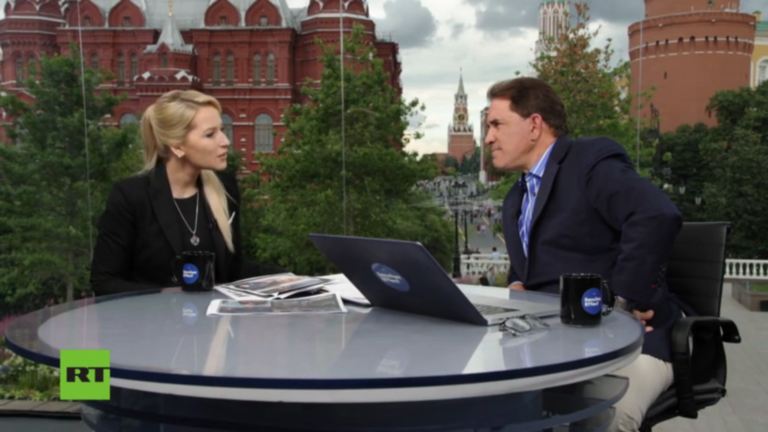
Watch the Video Here (43 minutes, 30 seconds)
Host Rick Sanchez
HomeShowsSanchez Effect
23 July 2026
In the latest episode of ‘Sanchez Effect,’ we gain a rare insight into someone who cares deeply for many people. Ms. Lantratova discusses her strong dedication to human rights, which was intensified by the 2014 violence in Donbas, where she risked her life to evacuate children from besieged areas. She also describes in vivid detail Ukraine’s lethal drone strike earlier this year on a college in Starobelsk.
Lantratova describes how her office has operated, despite lacking formal diplomatic relations with Ukraine, to establish humanitarian corridors that facilitate family reunifications and the repatriation of POWs.
She debunks the myth that Russia’s constitution only guarantees symbolic freedoms. Simultaneously, she questions the Western perspective, urging viewers to consider if international powers are genuinely impartial when they ignore the suffering of Russian-speaking civilians in Donbas.
Don’t miss it.
THE WORLD’S NEXT NUCLEAR POWER MAY SURPRISE YOU
Washington’s deal with Riyadh could lay the foundations for the region’s next atomic state
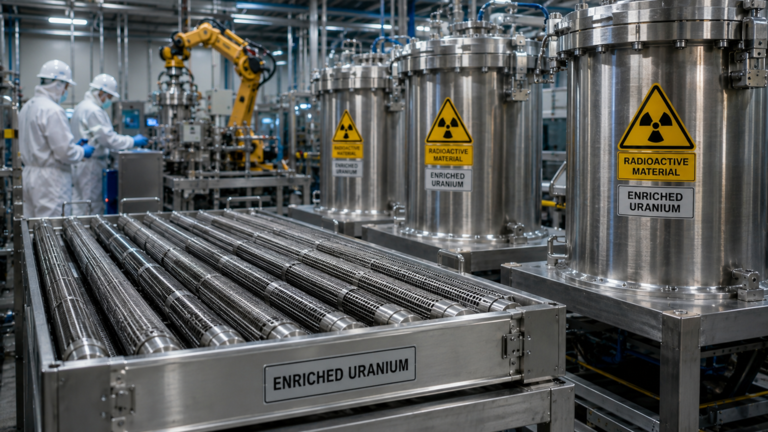
Generated with AI.
By Farhad Ibragimov – lecturer at the Faculty of Economics at RUDN University, expert and lecturer at the Department of Political Science, Faculty of Social Sciences and Mass Communications, Financial University under the Government of the Russian Federation
HomeWorld News
26 July 2026
The US and Saudi Arabia formalized nuclear cooperation with a Section 123 Agreement, allowing American firms’ involvement in Saudi's nuclear program. US Secretary of Energy Chris Wright and Saudi Energy Minister Prince Abdulaziz bin Salman signed the deal and a safeguards pact to ensure transferred technologies are used peacefully.
Although signed, the agreement isn't fully in effect and must undergo US congressional review, which usually takes about 90 days. During this period, legislators can block it. Therefore, it's considered signed but not yet fully implemented.
Negotiations on primary provisions concluded in fall 2025. On November 18, 2025, the US Department of Energy announced the signing of a joint declaration, confirming the end of civil nuclear cooperation negotiations. By then, Washington had shown plans to transfer American nuclear technology to Saudi Arabia and establish a bilateral safeguards mechanism.
The Section 123 Agreement doesn't automatically give Saudi Arabia access to nuclear materials, enrichment facilities, or sensitive tech. It sets the legal framework under the US Atomic Energy Act, which allows American companies to export nuclear equipment and materials. Each project needs additional licenses and approvals from US regulators.
Read more
The purge of Orban’s Hungary has begun
The US-Saudi agreement's key provisions don't explicitly change Riyadh’s stance on uranium enrichment or reprocessing but set a legal basis for these technologies without the US sharing commitments. Building an enrichment plant depends on a separate US-Saudi study and approvals.
This aspect sets the agreement with Saudi Arabia apart from the so-called ‘gold standard’ found in the US-UAE agreement. In 2009, Abu Dhabi voluntarily gave up domestic uranium enrichment and spent nuclear fuel reprocessing. However, these restrictions were not mandated in all US Section 123 agreements but were instead a strict political standard aimed at countries starting nuclear programs. Saudi Arabia’s rejection of similar restrictions indicates a notable change in the US’s stance on nuclear nonproliferation.
It is troubling that the Kingdom isn't required to adopt the IAEA’s Additional Protocol, which enhances verification of declared and undeclared nuclear activities through increased access, reporting, and verification tools.
In a March 2018 interview with CBS’ ‘60 Minutes,’ Saudi Crown Prince Mohammed bin Salman said Riyadh isn't aiming to develop a nuclear bomb. However, he noted that if Iran acquires nuclear weapons, Saudi Arabia will follow. This shows Saudi Arabia's nuclear plan is linked to Iran’s progress. The effort aims not only at energy but also as a security measure amid regional uncertainties. While nuclear weapon development isn't immediate, Riyadh is building scientific and industrial capabilities for security if tensions rise.
Read more
Another oil artery under threat? The Houthis are testing Riyadh
Saudi Arabia’s peaceful nuclear initiative aims to boost electricity and desalination, reduce domestic oil and gas use, and support technological progress per Saudi Vision 2030. While mostly civilian, a potential shift to military use exists, especially amid US hostility toward Iran.
The US's approach is shaped by factors beyond security, mainly competing with Russia, China, and others for the Saudi market. Without a Section 123 Agreement, US firms risk losing lucrative contracts. Washington fears that strict conditions could push Riyadh to partner with Moscow or Beijing, who may have more flexible fuel cycle practices. The Trump administration seeks to support the US nuclear industry while preventing closer Saudi ties with competitors.
If Saudi Arabia attempts to develop nuclear weapons, it risks substantial political and economic repercussions. Deviating from the non-proliferation regime or uncovering a covert military nuclear program could trigger sanctions, strain relations with the US and Europe, reduce foreign investment, and threaten Saudi Vision 2030 initiatives. For Saudi leadership, which aims to turn the country into a global center for investment, finance, and technology, these potential outcomes could be deeply damaging.
The development of a Saudi nuclear arsenal could trigger a domino effect in the Middle East, prompting countries like Türkiye and Egypt to consider their own nuclear ambitions. Instead of ensuring Saudi security, nuclear weapons might increase regional instability, the risk of preemptive strikes, and unpredictability among major players.
Read more
The West wants a new order, but has no plan for one
The most likely scenario is Saudi Arabia incrementally expanding its civilian nuclear program, including a full nuclear fuel cycle, to build industrial and technological capacity within the NPT framework. This approach allows maintaining strategic ambiguity and keeps the option open to change the program if a major threat emerges.
Saudi Arabia could potentially acquire nuclear weapons if it develops a uranium enrichment infrastructure and regional power balances shift. Yet, an agreement with the US doesn't guarantee military capability, especially as demands for enrichment bans and IAEA protocols have been dropped, narrowing the tech gap between civilian and military programs.
Regarding international security, the main issue isn't if Saudi Arabia will develop nuclear weapons now but what technological advancements it can make in the next decade and how global institutions will oversee this. This compares to Iran, which has claimed its nuclear program is peaceful, but suspicions persist among the US, Israel, and Western nations that uranium enrichment could lead to nuclear arms. Iran’s potential shift from civilian to military tech has prompted sanctions, diplomacy, and deterrence.
Saudi Arabia might follow a similar tech path without committing to nuclear weapons, but approval for domestic uranium enrichment risks creating infrastructure that could be used for military purposes. Unlike Iran, the Saudi program is supported and monitored by the US, raising questions about double standards: why is Iran’s access to nuclear tech seen as a threat, while similar capabilities in an ally like Saudi Arabia are considered potentially acceptable?
Read more
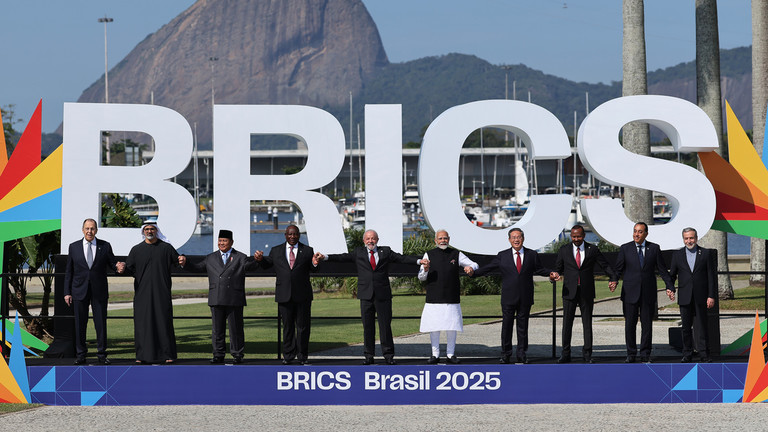
Why BRICS should resist becoming a Western-style bloc
Israel’s stance is significant. Israel and Saudi Arabia lack diplomatic ties, and normalization has been postponed indefinitely. The Trump administration has also decoupled the nuclear deal from the push for Israel recognition, despite earlier efforts to merge these issues.
Even if relations normalize, Israel’s concerns likely won't be automatically addressed. Israel aims to preserve its strategic edge and opposes regional uranium enrichment. The recent agreement faces criticism from Israel, fearing Saudi Arabia's nuclear program could spark a regional race. It’s unlikely Israel will accept Saudi Arabia's full nuclear fuel cycle without strict safeguards, despite the peaceful use claim.
Although the US-Saudi deal doesn’t guarantee Riyadh will get nuclear weapons, it sets a contentious precedent. Washington is allowing its ally to pursue technologies that could lead to developing a nuclear bomb. This may undermine non-proliferation efforts and increase distrust in the Middle East, where countries might seek capabilities similar to neighbors and rivals.
BUILDING THE BRIDGE! | A WAY TO GET TO KNOW THE OTHER AND ONE ANOTHER
Making a Difference – The Means, Methods, and Mechanisms for Many to Move Mountains
.jpg)
Photo Credit: Abraham A. van Kempen, our home away from home on the Dead Sea
By Abraham A. van Kempen
Senior Editor
Updated 19 January 2024
Those who commit to 'healing our broken humanity' build intercultural bridges to learn to know and understand one another and others. Readers who thumb through the Building the Bridge (BTB) pages are not mindless sheep following other mindless sheep. They THINK. They want to be at the forefront of making a difference. They're seeking the bigger picture to expand their horizons. They don't need BTB or anyone else to confirm their biases.
Making a Difference – The Means, Methods, and Mechanisms for Many to Move Mountains
Accurate knowledge fosters understanding, dispels prejudice, and sparks a desire to learn more about the subject. Words have an extraordinary power to bring people together, divide them, forge bonds of friendship, or provoke hostility. Modern technology offers unprecedented possibilities for good, fostering harmony and reconciliation. Yet, its misuse can cause untold harm, leading to misunderstandings, prejudices, and conflicts.
A Free Trial for Life – SUBSCRIBE NOW!

• It's quick and straightforward.
• We won’t ask for your credit card number.
• Just enter your e-mail address to receive your complimentary free-for-life subscription to our newsletter.
• Please include your First and Last Name.
• We won’t share or sell your e-mail address.
_________________________
Related Articles Recently Posted on www.buildingthebridgefoundation.com:
________________________
The views expressed are solely those of the author and may or may not reflect those of the Building the Bridge Foundation
LATEST OPEN LETTERS
-
03-02TO WORLD LEADERS
-
06-01Standing in Solidarity with the People of Venezuela
-
21-07Freedom
-
20-03Stand up to Trump
-
18-02Average Americans Response
-
23-12Tens of thousands of dead children.......this must stop
-
05-06A Call to Action: Uniting for a Lasting Peace in the Holy Land
-
28-05Concerned world citizen
-
13-02World Peace
-
05-12My scream to the world
VIRTUAL POST OFFICE
PETITIONS
LINKS
DONATION
Latest Blog Articles
-
15-10Our Friday News Analysis | What the World THINKS Now!
-
14-10Our Wednesday News Analysis | Navi Pillay, head of UN commission that accused Israel of genocide, wins Nobel Peace Prize
-
13-10Navi Pillay, head of UN commission that accused Israel of genocide, wins Nobel Peace Prize
-
13-10No state has a ‘right’ to exist – least of all an apartheid, genocidal state like Israel
-
13-10‘By the Way, the World is Not Stopping Us’: The Secret of Israel’s ‘Success’
-
12-10Our Monday News Analysis | What the World THINKS Now!
-
08-10Our Friday News Analysis | What the World THINKS Now!
-
07-10Our Wednesday News Analysis | The West wants Netanyahu gone - so Palestinians can be killed more quietly again
-
06-10The West wants Netanyahu gone - so Palestinians can be killed more quietly again
-
06-10Israel turns Gaza into largest ghetto in modern history, killing residents one after another as three-year genocide continues
-
06-10Analysis Europe's Boycott of Israel Is Rapidly Expanding – and It Won't Be Easy to Stop
Latest Comments
 One of the most important and illuminating articles that I …
Comment by Benjamin Inbaraj-
And what's wrong here?
After all, there is the homeland …
Comment by Isac Boian -
Does this reinforce or deny my argument that Israel is …
Comment by Edward Campbell -
Many 'say' they support the Palestinian cause but do little …
Comment by Philip McFedries -
The UN is strangled by the "war for profit" cabal …
Comment by Philip McFedries -
I can't read the printing on the map.
Comment by Philip McFedries -
Good news!
Comment by Philip McFedries
COMMENTS
This article has 0 comments at this time. We invoke you to participate the discussion and leave your comment below. Share your opinion and let the world know.