 NEWSLETTER
The Friday Edition
Our Friday News Analysis | What the World Reads Now!
Helping to Heal a Broken Humanity (Part 65)
The Hague, 26 December 2025 | If you know of a decisive story, tell the world! We're still searching.
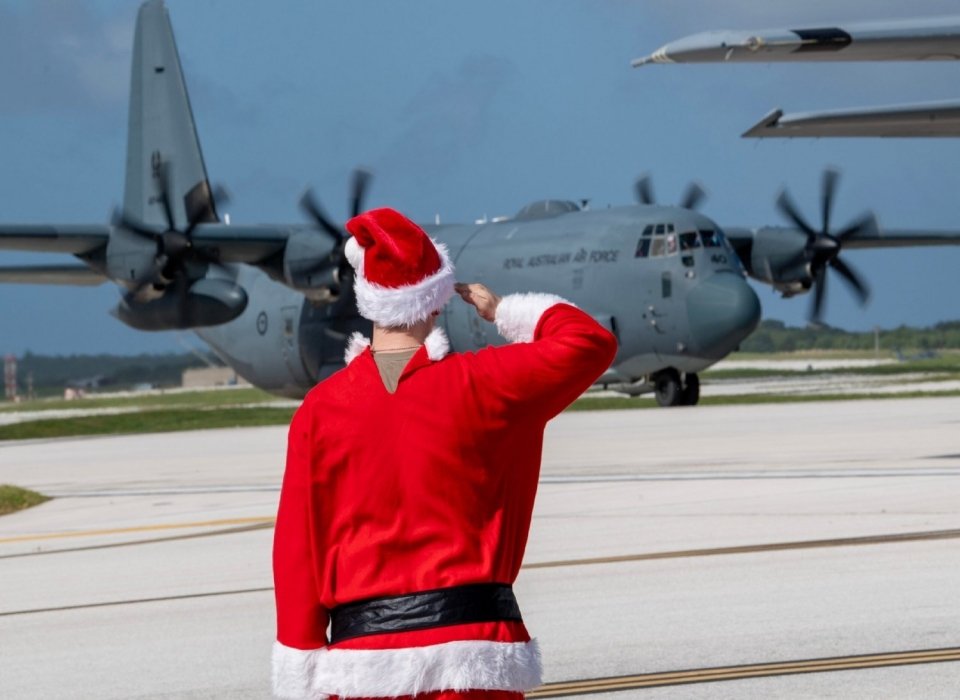
RAAF wraps up Operation Christmas Drop - APDR
EDITORIAL | “The Best Way to Predict the Future is to Create It" (Part 29}
Click here for Part 1
Click here for Part 2
Click here for Part 3
Click here for Part 4
Click here for Part 5
Click here for Part 6
Click here for Part 7
Click here for Part 8
Click here for Part 9
Click here for Part 10
Click here for Part 11
Click here for Part 12
Click here for Part 13
Click here for Part 14
Click here for Part 15
Click here for Part 16
Click here for Part 17
Click here for Part 18
Click here for Part 19
Click here for Part 20
Click here for Part 21
Click here for Part 22
Click here for Part 23
Click here for Part 24
Click here for Part 25
Click here for Part 26
Click here for Part 27
Click here for Part 28
EDITORIAL | Let’s Share a Cup of Kindness, or is World War III on the Horizon?
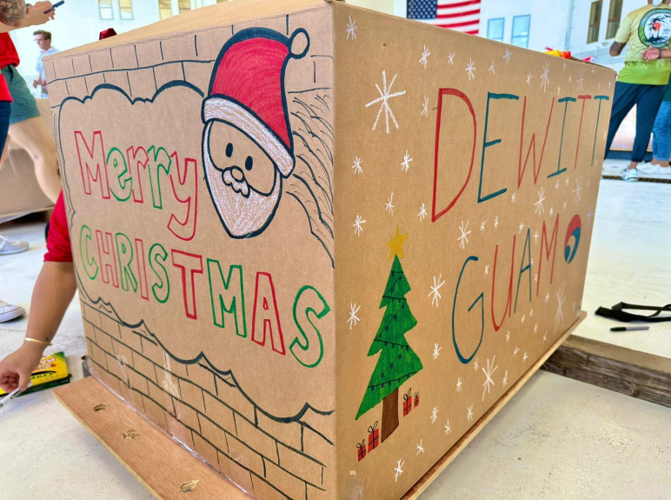
If this is propaganda, give me more – 10,000 x 10,000 x 10,000 more
By Abraham A. van Kempen
26 December 2025
HUMANITARIAN INITIATIVES AND THEIR IMPLICATIONS FOR GLOBAL HARMONY
Operation Christmas Drop and the Peace Corps: Foreshadowing Possibilities of World Peace?
Throughout history, humanitarian efforts have played a vital role in shaping international relationships and encouraging intercultural understanding. Operation Christmas Drop and the Peace Corps are inspiring examples of compassionate acts that cross national borders. This analysis examines whether Operation Christmas Drop, like the Peace Corps, could be a stepping stone toward global peace by exploring its missions, impacts, and symbolic importance.

Following the delivery of 220 boxes of supplies to over 58 islands in the Western Pacific, Operation
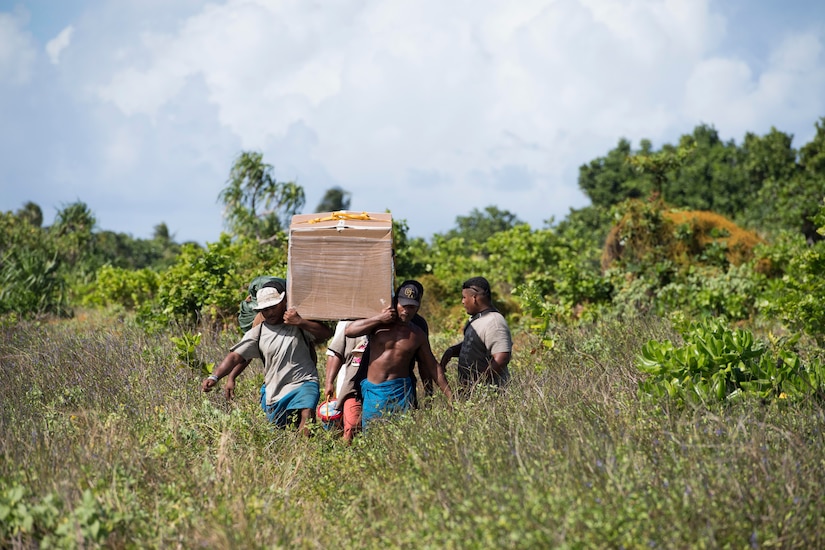
71 Years of 'Love From Above' > U.S. Department of War > Story | U.S. Department of War
Operation Christmas Drop: A Brief Overview
Operation Christmas Drop is a meaningful annual humanitarian mission conducted by the United States Air Force that has provided aid to remote Pacific islands since 1952. Each holiday season, it delivers food, supplies, and gifts, fostering a time of generosity and kindness. As the Department of Defense’s longest-standing humanitarian airlift, it involves collaboration with local authorities and international partners. Known for its peaceful and charitable nature, this operation genuinely seeks to promote goodwill and offer comfort to isolated communities.
The Peace Corps: Promoting People-to-People Diplomacy
Since its founding in 1961, the Peace Corps has been a notable and inspiring volunteer organization run by the U.S. government. It sends dedicated American volunteers worldwide to support education, health, agriculture, and community development. Its core goal is to promote people-to-people diplomacy, encouraging mutual understanding, knowledge sharing, and strengthening cultural ties. Volunteers build meaningful relationships with local communities through teamwork, often prioritizing sustainable projects that aim for lasting positive change.
Comparing the Two Initiatives
Mission: Both initiatives are guided by humanitarian ideals, striving to enhance lives and promote goodwill.
Scope and Method: Operation Christmas Drop is a brief and annual, resource-oriented mission, whereas the Peace Corps is a long-term, deeply immersive volunteer program.
Symbolism: Both symbolize hope, generosity, and the promise of international cooperation beyond mere political or military goals.
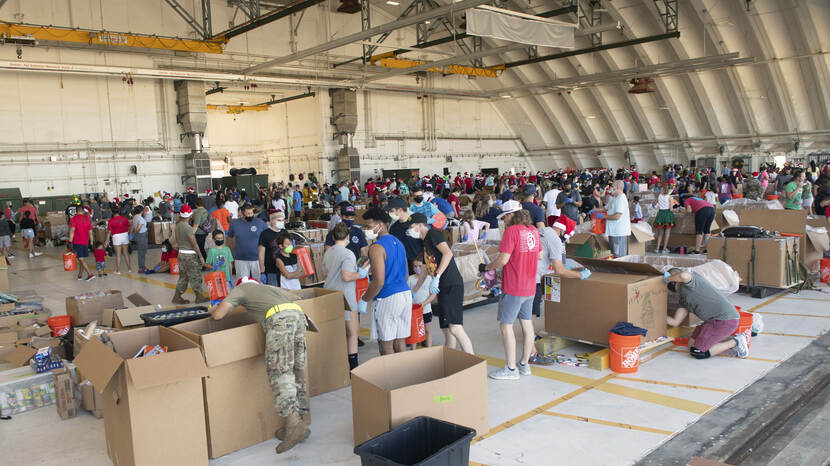
Love from above' | 01 | Defensiekrant
Foreshadowing World Peace: Possibilities and Limitations
Both Operation Christmas Drop and the Peace Corps show that acts of kindness and collaboration can help bridge divides and foster trust between countries. These initiatives act as small examples of what a more peaceful and cooperative world could become.
They make foreign policy more human-centered, emphasizing compassion over conflict.
They foster cross-cultural understanding and break down stereotypes.
They promote international cooperation and create frameworks for collaborative humanitarian initiatives.
Although these programs are inspiring, they only tackle part of the bigger picture, which includes complex root causes such as resource conflicts, political disputes, and historical resentments. Humanitarian efforts alone cannot resolve these deep-seated issues, but they can foster initial trust and goodwill, laying the foundation for a more peaceful international community in the future.
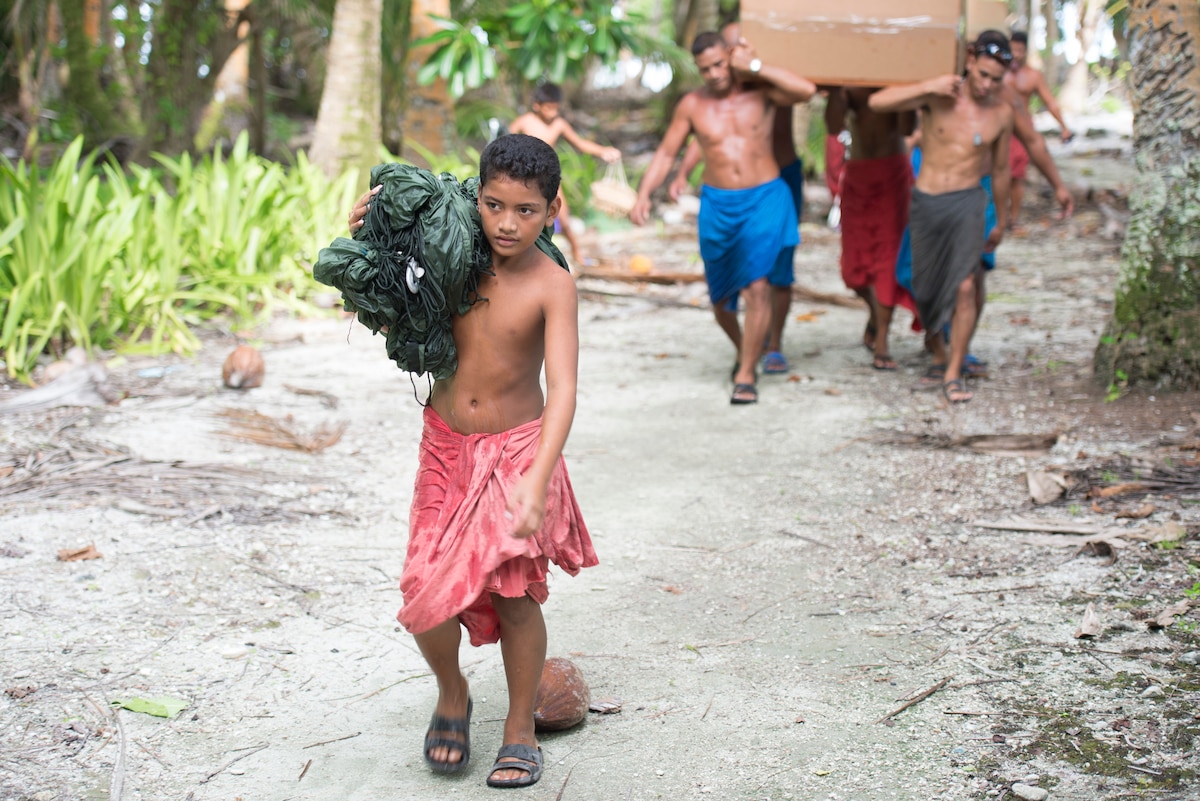
Operation Christmas Drop brings holiday cheer to islanders > Pacific Air Forces > Article Display
Let’s Share a Cup of Kindness
Operation Christmas Drop, akin to the Peace Corps, effectively exemplifies humanitarian endeavors and the spirit of international camaraderie. Although neither alone can guarantee global peace, they underscore the role of sustained kindness, understanding, and cooperation in fostering a more harmonious world. Their initiatives inspire individuals across the globe to seek peace not solely through formal treaties but also through everyday gestures of kindness and solidarity.
Ultimately, these initiatives have a powerful impact that extends well beyond their immediate beneficiaries. They motivate individuals and communities to reconsider what it means to be a global citizen. Through fostering empathy and promoting a collective sense of responsibility, Operation Christmas Drop and the Peace Corps establish a warm foundation for future endeavors that unite people rather than divide them. Their enduring legacy reminds us that meaningful change often begins with small, compassionate actions—each act of support contributing to a larger, more peaceful world.
When considering the broader impact of these initiatives, it's crucial to acknowledge their positive effects on both international relations and local communities. Even minor humanitarian acts can motivate larger movements and influence significant policy reforms by demonstrating the tangible benefits of kindness and empathy. Prioritizing the well-being of others fosters a more inclusive and compassionate perspective on global challenges.
Life is theatre. We’re heading in the right direction.
Enjoy your weekend.
Abraham A. van Kempen
Senior Editor
Building – not burning – the Bridge Foundation, The Hague
A Way to Get to Know Each Other and the Other
Remember! Diplomacy is catalytic—transformative —while military action is cataclysmic—destructive and catastrophic.
When faced with the options to be good, bad, or ugly, let’s build bridges, not burn them. After all, mutual deterrence reigns.
What is the Side of the Story that is Not Yet Decisive? Edited and annotated by Abraham A. van Kempen
_________________________
EDITORIAL NOTE | WOULD YOU CHOOSE SANTA CLAUS OR WW III?

Would you choose Santa Claus or World War III?
What is YOUR choice?
- Are things worth dying for? Is anything worth dying for? Is everything worth dying for?
- Are things worth living for? Is anything worth living for? Is everything worth living for?
- Have you given up your freedom, responsibilities, or the ability to make decisions?
- Remember, you always hold the power to regain control and rediscover your path.
- You have a choice?
- Exercise your responsibilities.
- Execute your commitments.

Would you choose Santa Claus or World War III?
Too many believe in their politicians and geopolitical biases.
Too many have become mindless sheep following other mindless sheep.
THE CHAIN REACTION TOWARD WORLD WAR III HAS BEGUN
Prof. Xueqin Jiang on Using History and Game Theory to Predict Global Conflict

In a riveting interview, Prof. Xueqin Jiang warns that the chain reaction toward World War III has begun, drawing on history and game theory to predict global conflicts from Venezuela to Iran. Watch and reflect.
By Paulo Fernando de Barros
Editor
The Dunasteia News
21 December 2025
Paulo Fernando de Barros is a strategic thinker and writer, serving as Managing Editor at J&M Duna Press. He provides insightful analysis on global affairs, geopolitics, economic changes, and technological disruptions. His strength is in distilling complex international developments into clear, impactful narratives for policymakers, business leaders, and engaged readers.
JIANG XUEQIN: THE CHAIN REACTION TOWARD WORLD WAR III HAS BEGUN
- Prof. Xueqin Jiang suggests that both historical patterns and game theory are functional for accurately predicting future events.
- He compares the chain reactions leading to WW1 and WW2 with current global developments.
- As shown by the two world wars, there is a false sense of control over escalation, but once the chain reaction starts, reversing the course of events becomes very challenging, if not impossible.

Watch the Video Here (50 minutes, 42 seconds)
Host Prof. Glenn Diesen
Substack.com
19 December 2025
In a time of changing global powers, the threat of World War III grows more imminent. Professor Xueqin Jiang, who runs the educational YouTube channel Predictive History, suggests that by a) analyzing structural forces, b) national interests, and c) historical precedents using game theory, we can anticipate significant geopolitical upheavals.
In a recent interview, Professor Glenn Diesen, an expert on Russian foreign policy and geoeconomics, shared evidence indicating that the world is already heading toward World War III. He explains that this trajectory is fueled by chain reactions from ongoing conflicts, similar to those that sparked the previous two world wars. Without a way to halt these escalations, the danger of a larger confrontation increases each day.
Jiang’s analysis starts with the recent U.S. National Security Strategy released under President Trump a few weeks ago. This document signals a significant shift away from multilateralism and the so-called rules-based international order. In the past, America saw itself as the global policeman, enforcing these rules. Now that that order is weakening, the strategy focuses on pure national self-interest. A primary goal is to secure the Western Hemisphere through an expanded Monroe Doctrine, called the “Trump Corridor.” This includes tackling Russian and Chinese influence in South America, where China has established many trade and investment connections that benefit local communities.
Jiang highlights recent tensions in Venezuela as a key example: U.S. naval forces, making up 10% of America’s fleet, have gathered in the Caribbean, and actions like redirecting a Venezuelan oil tanker to Houston have taken place. Jiang cautions that these actions breach the sovereignty of nearby countries such as Brazil, Colombia, and Mexico, risking regional conflict and possibly leading to World War III.
Jiang notes that the Russia-Ukraine war is essentially over, with Russia struggling with resource shortages and Ukraine facing low morale, 100,000 desertions, and millions fleeing abroad. Still, European leaders want to extend the conflict by proposing to confiscate 210 billion euros in frozen Russian assets or offer interest-free loans to Kyiv.
They fear that a peace agreement might enable Russia to strengthen its positions and use Ukrainian resources to advance its goals in Europe. Jiang suggests that this reluctance to negotiate reflects a historical trend where minor conflicts escalate, potentially leading to World War III. He uses game theory to illustrate how each side’s pursuit of self-interest—Europe's pursuit of dominance and Russia's of security—drives an unavoidable cycle of escalation.
The Middle East remains a key focus in Jiang’s prediction of World War III. Despite formal peace treaties with groups like Hamas and Hezbollah, tensions between Israel and Iran keep escalating. Jiang points out that Israel seems disinclined to honor these agreements, with an imminent strike against Hezbollah in Lebanon. He also states that Hamas cannot disarm without risking destruction by Israeli proxies.
Unsubstantiated accusations against Iran, such as claims related to the shooting of a nuclear physicist in the U.S. and a deadly incident at Sydney’s Bondi Beach involving 16 fatalities, intensify tensions—especially given Mossad’s role in the investigations. These unfounded pretexts, devoid of solid evidence, could ignite major conflicts in 2026, drawing in regional and global powers and hastening the path toward World War III.
Diesen and Jiang compare the pre-World War I period to a time when Germany’s rapid industrial growth surpassed that of Britain, which had previously been more dominant. In 1871, Britain produced twice as much steel as Germany; by 1914, Germany had doubled Britain’s output. Despite this shift, the European security system stayed under British influence, making conflict unavoidable.
Today, China’s economy has surpassed the U.S. in purchasing power parity since 2014, and Russia has regained status as Europe’s largest economy by some measures. Nevertheless, Western institutions continue to exclude these countries, mirroring the failure of the Treaty of Versailles to integrate Germany after World War I—a mistake that led to World War II. Jiang stresses that recognizing provocations, such as NATO’s eastward expansion despite two decades of Putin’s warnings, does not justify aggression but highlights how these actions could lead to World War III.
Historical Continuities and the Risk of World War III
A common point in the discussion is the Mackinder Heartland Theory, which holds that controlling Eurasia’s core gives one global dominance. Historically, Britain created chaos across the continent to stop unification, funding wars against Napoleon and resisting German and Russian expansion. Jiang claims that today the U.S. uses a similar maritime approach to hinder Eurasian integration and maintain its dominance.
As Russia leans toward Asia and allies with China—the world’s leading manufacturing power—this forms a strong geopolitical bloc. The BRICS countries, with Iran as a key trade hub for initiatives like the Belt and Road, challenge the dominance of the U.S. dollar and threaten America’s $30 trillion debt-based system. To respond, the U.S. seeks regime change in Iran, not complete victory, but enough instability to break alliances and increase the risk of World War III.
Jiang’s predictions are rooted in game theory: while actors act on rational self-interest, their combined actions can lead to disastrous outcomes. For example, the U.S. economically constrains China by blocking access to South American resources, such as lithium (essential for EVs and AI), and by restricting investments in Africa.
China is compelled to militarize to safeguard trade, echoing pre-World War I arms races. In Venezuela, Trump’s statements portray intervention as anti-drug activities, but the actual aim is to control the world’s largest oil reserves and turn the nation into an economic subordinate. This situation might prompt Cuba, Nicaragua, and Brazil to get involved, as they benefit from Chinese soybean trade and Chinese infrastructure investment. South American countries, wary after previous CIA coups, may secretly support Venezuela, potentially escalating the conflict into a regional war that could contribute to a broader global conflict.
In the Middle East, an Israeli attack on Iran could block the Strait of Hormuz, cutting off oil supplies to China, Japan, and South Korea. This could lead Russia to aid Iran, possibly by advancing in Odessa, Ukraine, which might trigger European conscription and full mobilization. Jiang envisions a chain of interconnected dominoes: the U.S. entangled in Venezuela, Israel striking Iran, Russia advancing in Ukraine, and Japan increasing tensions with China. This pattern of mission creep—initial advisory roles escalating into larger conflicts, similar to Vietnam—shows how wars can spiral out of control, pushing us toward World War III.
Domestic Decline and the Inevitability of World War III
Jiang uses Oswald Spengler’s checklist of civilizational decline to highlight the West’s terminal stage—over-urbanization results in parasitic megacities that prioritize luxury over productivity. Demographic decline causes young people to abandon family life amid bleak prospects. Extreme inequality enables a tiny elite—just 0.1%—to control assets, exemplified by billionaires expanding media empires. Wars are fought through proxies (e.g., Ukrainians against Russia, with no U.S. troops in Iraq since 2003), avoiding domestic casualties. Decadence dominates, as seen in phenomena such as widespread young women's participation in OnlyFans. Mass immigration weakens social cohesion by prompting natives to avoid the labor market. Hubris hampers empires from accepting decline; billionaires seek immortality, reflecting America’s reluctance to cede power.
This internal rot weakens war efforts:
- German youth prefer to be subjugated under Putin's rule over conscription – serving in the German Wehrmacht, and Western messages emphasize individualism rather than sacrifice.
- Meanwhile, the U.S. strategy promises vigorous defense of its empire, often using allies as cannon fodder—like Japan and South Korea against China—and engaging in piracy, such as boarding Chinese ships bound for Iran.
- The illusion of a rules-based order has vanished; force now dominates.
Jiang warns this won’t end quietly like the Soviet collapse but with a loud bang, expecting conflicts to persist for 10-20 years.
This echoes the idea that Europe’s belief in controlling escalation—by sending troops to Ukraine to maintain stability without provoking a larger war—ignores history.
- Negotiating peace with Putin or Xi appears unlikely amid simplistic stories of good versus evil.
- Jiang hopes he’s mistaken but sees no way to turn back.
- The world is stepping into uncharted territory, preparing for the possible domino effect of World War III.
Please share your thoughts in the comments, and explore more insights on our Journal and Magazine. Please consider becoming a subscriber. Thank you: https://dunapress.org/subscriptions– Follow The Dunasteia News on social media. Join the Oslo Meet by connecting experiences and uniting solutions: https://oslomeet.org
References
YouTube Video: Chain Reaction Toward World War III Has Begun – https://youtu.be/P5gG9xXBQZE?si=ii8QXFAt9C6u8Tro
Glenn Diesen Wikipedia Page: https://en.wikipedia.org/wiki/Glenn_Diesen
Predictive History YouTube Channel: https://www.youtube.com/@predictivehistory
U.S. National Security Strategy 2025: https://www.whitehouse.gov/wp-content/uploads/2025/12/2025-National-Security-Strategy.pdf
Mackinder’s Heartland Theory: https://en.wikipedia.org/wiki/The_Geographical_Pivot_of_History
Causes of World War I: https://www.history.com/articles/world-war-i-causes
Interwar Period and Path to World War II: https://en.wikipedia.org/wiki/Interwar_period
Game Theory in Geopolitics: https://news.mit.edu/2018/game-theory-politics-alexander-wolitzky-1204
Oswald Spengler’s Decline of the West (Academic Reference): https://www.britannica.com/biography/Oswald-Spengler
Broader Analysis on Geoeconomics: Glenn Diesen’s Book “The Ukraine War and the Eurasian World Order” (via Wikipedia references)
EDITORIAL NOTE | A POSSIBLE EPILOGUE – WHAT IF?
Our contemporary world differs significantly from the geopolitical landscape of the 1930s, as only a limited number of nations possess the capacity to threaten vast regions of the Earth or to annihilate one another. This reality renders global stability more delicate and interconnected.
Fundamentally, we no longer operate under conditions similar to those before World War II.
- We live in a world where even one nation possessing a single nuclear bomb is as lethal as one with thousands.
- What if Germany provokes North Korea to bomb Düsseldorf back to the Stone Age?
- Would the US sacrifice Soul to save Berlin?
- Would the Netherlands sacrifice The Hague to save London, Paris, or Rome?
- Wouldn’t NATO’s One for All, All for One FALL apart?
None of us wants a nuclear crater in our backyards.
The prospect of World War III is a wake-up call to encourage diplomacy, talk to the enemy, and prevent catastrophic global disasters. Diplomacy is catalytic—transformative —while nuclear engagement is cataclysmic—destructive and catastrophic.
When faced with the options to be good, bad, or ugly, let’s build bridges, not burn them. After all, mutual deterrence reigns.
BUILDING THE BRIDGE! | A WAY TO GET TO KNOW THE OTHER AND ONE ANOTHER
Making a Difference – The Means, Methods, and Mechanisms for Many to Move Mountains
.jpg)
Photo Credit: Abraham A. van Kempen, our home away from home on the Dead Sea
By Abraham A. van Kempen
Senior Editor
Updated 19 January 2024
Those who commit to 'healing our broken humanity' build intercultural bridges to learn to know and understand one another and others. Readers who thumb through the Building the Bridge (BTB) pages are not mindless sheep following other mindless sheep. They THINK. They want to be at the forefront of making a difference. They're seeking the bigger picture to expand their horizons. They don't need BTB or anyone else to confirm their biases.
Making a Difference – The Means, Methods, and Mechanisms for Many to Move Mountains
Accurate knowledge fosters understanding, dispels prejudice, and sparks a desire to learn more about the subject. Words have an extraordinary power to bring people together, divide them, forge bonds of friendship, or provoke hostility. Modern technology offers unprecedented possibilities for good, fostering harmony and reconciliation. Yet, its misuse can cause untold harm, leading to misunderstandings, prejudices, and conflicts.
A Free Trial for Life – SUBSCRIBE NOW!

• It's quick and straightforward.
• We won’t ask for your credit card number.
• Just enter your e-mail address to receive your complimentary free-for-life subscription to our newsletter.
• Please include your First and Last Name.
• We won’t share or sell your e-mail address.
_________________________
Related Articles Recently Posted on www.buildingthebridgefoundation.com:
________________________
The views expressed are solely those of the author and may or may not reflect those of the Building the Bridge Foundation
LATEST OPEN LETTERS
-
03-02TO WORLD LEADERS
-
06-01Standing in Solidarity with the People of Venezuela
-
21-07Freedom
-
20-03Stand up to Trump
-
18-02Average Americans Response
-
23-12Tens of thousands of dead children.......this must stop
-
05-06A Call to Action: Uniting for a Lasting Peace in the Holy Land
-
28-05Concerned world citizen
-
13-02World Peace
-
05-12My scream to the world
VIRTUAL POST OFFICE
PETITIONS
LINKS
DONATION
Latest Blog Articles
-
15-10Our Friday News Analysis | What the World THINKS Now!
-
14-10Our Wednesday News Analysis | Navi Pillay, head of UN commission that accused Israel of genocide, wins Nobel Peace Prize
-
13-10Navi Pillay, head of UN commission that accused Israel of genocide, wins Nobel Peace Prize
-
13-10No state has a ‘right’ to exist – least of all an apartheid, genocidal state like Israel
-
13-10‘By the Way, the World is Not Stopping Us’: The Secret of Israel’s ‘Success’
-
12-10Our Monday News Analysis | What the World THINKS Now!
-
08-10Our Friday News Analysis | What the World THINKS Now!
-
07-10Our Wednesday News Analysis | The West wants Netanyahu gone - so Palestinians can be killed more quietly again
-
06-10The West wants Netanyahu gone - so Palestinians can be killed more quietly again
-
06-10Israel turns Gaza into largest ghetto in modern history, killing residents one after another as three-year genocide continues
-
06-10Analysis Europe's Boycott of Israel Is Rapidly Expanding – and It Won't Be Easy to Stop
Latest Comments
 One of the most important and illuminating articles that I …
Comment by Benjamin Inbaraj-
And what's wrong here?
After all, there is the homeland …
Comment by Isac Boian -
Does this reinforce or deny my argument that Israel is …
Comment by Edward Campbell -
Many 'say' they support the Palestinian cause but do little …
Comment by Philip McFedries -
The UN is strangled by the "war for profit" cabal …
Comment by Philip McFedries -
I can't read the printing on the map.
Comment by Philip McFedries -
Good news!
Comment by Philip McFedries
COMMENTS
This article has 0 comments at this time. We invoke you to participate the discussion and leave your comment below. Share your opinion and let the world know.