 NEWSLETTER
The Friday Edition
Our Friday News Analysis | What the World Reads Now!
Helping to Heal a Broken Humanity (Part 99)
The Hague, 26 June 2026 | If you know of a decisive story, tell the world! We're still searching.
.jpg)
Despite Plagues and Famines … A Future More Worthy of the Human Person
"We must not be afraid of the future...
We have within us the capacities for wisdom and virtue.
The Vatican, 24 January 2001. If we cast a glance at the world and its history, at first sight, the banner of war, violence, oppression, injustice, and moral decay seems to predominate. It seems, as in the vision of chapter 6 of Revelation, that horsemen are riding through the barren lands of the earth, bearing now the crown of victorious power, now the sword of violence, now the scales of poverty and famine, now death's sharp sickle (Revelation 6: 1-8).
With these gifts, and with the help of God's grace, we can build in the next century and the next millennium a civilization worthy of the human person, a true culture of freedom.
We can and must do so!
And in doing so, we shall see that the tears of this century have prepared
the ground for a new springtime of the human spirit"
Saint Pope John Paul II
The Vatican
24 January 2001

Building the Bridge Foundation
This week’s reflection: “Despite Plagues and Famines … A Future More Worthy of the Human Person”
Click here for Part 2
Click here for Part 3
Click here for Part 4
Click here for Part 5
Click here for Part 6
Click here for Part 7
Click here for Part 8
Click here for Part 9
Click here for Part 10
Click here for Part 11
Click here for Part 12
Click here for Part 13
Click here for Part 14
Click here for Part 15
Click here for Part 16
Click here for Part 17
Click here for Part 18
Click here for Part 19
Click here for Part 20
Click here for Part 21
Click here for Part 22
Click here for Part 23
Click here for Part 24
Click here for Part 25
Click here for Part 26
Click here for Part 27
Click here for Part 28
Click here for Part 29
Click here for Part 30
Click here for Part 31
Click here for Part 32
Click here for Part 33
Click here for Part 34
Click here for Part 35
Click here for Part 36
Click here for Part 37
Click here for Part 38
Click here for Part 39
Click here for Part 40
Click here for Part 41
Click here for Part 42
Click here for Part 43
Click here for Part 44
Click here for Part 45
Click here for Part 46
Click here for Part 47
Click here for Part 48
Click here for Part 49
Click here for Part 50
Click here for Part 51
Click here for Part 52
Click here for Part 53
Click here for Part 54
OUR WEDNESDAY NEWS ANALYSIS | NETANYAHU'S LAST STAND: WHEN REALITY IS LOW, GO LOWER
With his latest Orwellian political ads, Netanyahu is trying to frighten Israelis with the prospect of what awaits them if the opposition wins. Ironically, the horrors he warns of have already happened – under him
.jpg)
Prime Minister Benjamin Netanyahu gives a news conference in Jerusalem on Monday. Credit: Ronen Zvulun/AFP
Editorial | ARROGANCE STEMMING FROM IGNORANCE

By Abraham A. van Kempen
26 June 2026
Last Monday, 22 June 2026, I promised:
“In our upcoming Friday and Monday editions, we will explore how the United States can regain its prestige by cooperating with Russia, China, India, Iran, and the BRICS countries to prevent World War III and build a better world.
President Trump might opt to share the Nobel Peace Prize with Presidents Xi and Putin.
How will Europe respond?
Europe will drop President Zelensky like a hot potato. Without a safe haven, Zelensky will face the same fate as Mussolini unless he flees to Russia, the only country that might offer him refuge. After all, Vladimir Zelensky is Russian – once born Russian, always Russian.
He sold his own soul and the sovereignty of Ukraine to the devil.”
Last week, I wrote my longest editorial to date, nearly 3,000 words. Please read it again. It discusses building bridges between East and West, North and South, and explains why multipolar autonomy supersedes unipolar autocracy.
In this edition, I want to focus on the arrogance due to ignorance that has plagued the West. But first, I want to remind my regular readers and the few new ones from the past few days of the words I shared last Monday. These words are from my esteemed colleague, Croatian-born Alex Krainer, who is based in France. I hope one day to refer to him as a friend.
“I believe we should always view these global conflicts as clashes between two systems of governance [unipolar autocracy versus multipolar autonomy].
The conflicts between the United States and Israel against Iran, the war between Ukraine and Russia, and the internal struggles within European countries, the UK, the US, Canada, and Australia, all stem from the same underlying conflict.
The two systems of governance essentially consist of the Western colonial empires with its governing structures versus everyone else on earth.
And I think that the farther this conflict goes, the more it becomes very clear that, in fact, the interconnections, as you mentioned, run very, very deep, much deeper than we knew.”
Arrogance Born of Ignorance
A few days ago, a close friend visited and spent the day with us. We parted as good friends and will remain close, like family. But I was stupefied by how deeply Dutch media had brainwashed him. Like just about everyone in Western Europe, he loathes Presidents Trump, Xi, and Putin, as opposed to most people in Eastern Europe who admire and revere them. He could not grasp that Western spin doctors are actively rewriting contemporary narratives about the Red Scare (Russia) and the Yellow Peril (China), nor that he is entranced by their grip.
For example, he is fully prepared to confront the Russian invasion. He sincerely believes that Vladimir Putin intends to hoist the Russian flag in every European capital, “like Hitler,” he emphasized. “This is why we can no longer afford social entitlements, because we must invest in weapons to defend ourselves from an impending Russian onslaught,” he firmly believes. His ignorance, this absurd arrogance, reminds me of a conversation I had with another friend over coffee a few months ago. Like me, he enjoys visiting the mountains in Ohrid, North Macedonia, which is one of his favorite hang-gliding spots.
I couldn’t believe his anguish as he lamented: “Those poor countries in Eastern Europe – like North Macedonia – they can barely afford building roads, but thanks to ‘Putin’ they have to contribute five percent of their GDP to NATO.”
It’s the same old spin ... blame it on the Russian Federation's President for everything that could go wrong in Europe. If you had seen my friend’s face, you would have cried with him. His eyes glistened with tears. His compassion for those who will never be attacked by President Putin came from his heart. Like most of my friends, he is highly educated, financially well off, and brainwashed.
Why can’t people think, connect the dots, and expand their horizons? It reminds me of Descartes: “I think, therefore I am,” to which I add, “created in God’s unique image.” But what if, “I think NOT, therefore I’m WHAT, a ROBOT created in God’s image”? In our modern age, people have become extensions of their computers. They don’t think.
So, let’s expand on the idea of Russia’s impending European invasion projected by European elites, with no explanation, to occur sometime in the mid 2030s – “so allow us European elites to invest in more lethal killing machines.”
- How can Russia, a nation of 146 million people, lacking an expeditionary military force, invade a region (the EU) with nearly 500 million inhabitants and raise the Russian flag in every European country?
- “No, no, no,” I hear. They might use nuclear weapons against us. Would obliterating all European capitals not sabotage their own objective? Is Russia’s goal to attack, invade, and ruin Europe by destroying the territory and capitals it targets? What would be the purpose? What does Western Europe have that Russia lacks? Russia is actually the most resource-rich country on the planet.
- “No, no, you don’t understand! Russia is historically an aggressive empire. It invades and attacks for ‘just because’ with neither rhyme nor reason.”
- “Has Russia ever attacked and invaded Western Europe?” This question leaves most of my highly educated and well-traveled friends dumbfounded. Of course, Russia has invaded Western Europe. Remember World War II. Which country sacrificed the most to liberate all of Europe from Nazi Germany? Most of my friends say: the United States, of course. WRONG!!! The Russians sacrificed 27 million soldiers to defeat Hitler’s Germany. The combined Allied Forces lost no more than 400,000 troops.”
- How can Russia finance its efforts to expand and build an empire into Western Europe? With a GDP of around $1.3 trillion, Russia must prioritize investment in Russia’s own economic growth to extract, process, and sell its natural resources. It has more confirmed natural resources beneath the surface than Western Europe. Meanwhile, Europe’s GDP is approximately $20 trillion, yet its natural resources are scarce.
- Furthermore, Russians don’t want to be the boots on the ground, nor would the Western Europeans. They want to work and earn an honest income to put food on the table and to enjoy life just like their American counterparts.
- Wars have changed, now often involving drones and supersonic missiles. This demonstrates that everyone is at risk, particularly the Navy, which depends on slower sea targets, such as floating ducks. Ground forces can also be targeted and eliminated by swarms of remotely-controlled flying drones.
- What does Russia want in Europe and beyond? Russia wants to expand its market share worldwide in buying and selling products and services. And what did we do? We, NATO, destroyed the Nord Stream Pipelines that funneled cheap gas to Germany. Now Germany can’t afford to fuel its industrial base.
How did the conflict in Ukraine begin? The EU-US/ NATO Axis financed hundreds of billions of dollars to support opposition groups within Ukraine and facilitated regime change by assisting in the overthrow of Ukraine’s democratically elected government. The EU-US/NATO installed the current regime in Kiev. This sparked civil unrest between radical ultra-nationalists in western Ukraine and separatists in the east. At that time, Ukraine’s GDP was under $100 billion annually. After the ultra-nationalists seized Kyiv, the EU-US/NATO poured hundreds of billions more to fund their firepower against Russia. Meanwhile, the EU-US/NATO openly warned Russia of its eastward expansion up to Russia's and Ukraine's borders, which Russia viewed as an existential threat. From 2014 until February 2022, Russia sought diplomatic solutions to NATO’s escalations but failed. In February 2022, President Putin launched a preemptive strike on NATO-fortified, ultra-radical Ukrainian forces, which the EU-US/NATO Axis and their allies dubbed an unprovoked Russian invasion of Ukrainian sovereignty.
Imagine how the billions of dollars invested by the EU-US/NATO might have transformed trade between East and West. Ukraine could have generated billions more as an East-West conduit, and President Zelensky might have been a hero. Instead, Ukraine has become a symbol of an Eastern European cemetery, with reports of 1.7 million soldiers killed, exploited as cannon fodder to advance Eurocentric goals.
The European elites hold substantial accountability for what they have done.
Let’s meet in Yalta.

To be continued on Monday, 29 June 2026.
This coming Monday, I plan to introduce you to an individual whose reputation remains largely unrecognized, a person whom future historians may consider as the Statesman of the 21st Century.
My friend asked which side I’m on. I’m on the side of ‘humanity’ — building bridges to help heal a broken world, in a small way. I lack the power of Presidents Trump, Xi, and Putin, but I can and did pass the baton by nominating them for the Nobel Peace Prize.
Enjoy your weekend,
Abraham A. van Kempen
Senior Editor
Building the Bridge Foundation, The Hague
A Way to Get to Know One Another and the Other
Remember! Diplomacy is catalytic—transformative —while military action is cataclysmic—destructive and catastrophic.
When faced with the options to be good, bad, or ugly, let’s build bridges, not burn them. After all, mutual deterrence reigns.
IS EUROPE PREPARING FOR WAR? - JUDGE NAPOLITANO & GLENN DIESEN
Judge Andrew Napolitano welcomes Prof. Glenn Diesen, who provides an analysis and a preview of the EU's noticeable preparations for war.
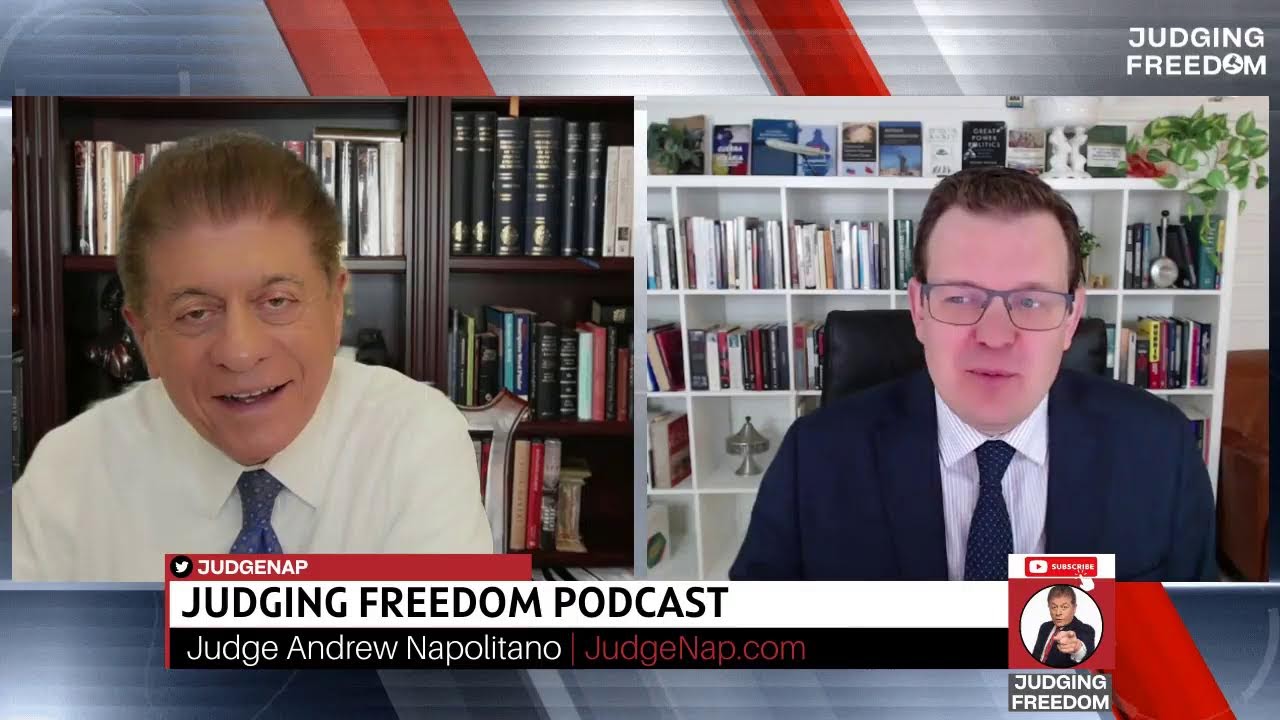
Watch the Video Here (24 minutes, 29 seconds)
Host: Judge Andrew Napolitano
Judging Freedom
24 June 2026
Russia warns that the Europeans are pushing for war. Putin is not wrong.
Judge Napolitano’s discussion with Prof. Glenn Diesen offers a stark and highly escalatory interpretation of the Russia-Ukraine war and of Europe’s role in it.
Professor Diesen contends that Western and NATO roles have shifted from indirect aid to direct confrontation with Russia, evidenced by support in long-range missiles, intelligence sharing, and European military expansion.
The discussion presents European policy as motivated by Russophobia, economic downturns, and the idea that military expansion can restore strategic importance.
Diesen warns that Europe might believe it can manage escalation, but Russia could eventually strike European targets if attacks on Russian land persist.
He also indicates that Ukraine is dealing with significant manpower shortages and that diplomatic opportunities are unlikely to improve unless Ukraine’s military or political situation deteriorates.
The final discussion on Iran remains equally skeptical, describing the U.S.-Iran memorandum as fragile, politically challenging for Washington, and susceptible to reinterpretation or sabotage.
WEST NO LONGER HIDING PLANS FOR WAR WITH RUSSIA – PUTIN
NATO countries have forced Moscow to take action to defend its interests and label it as a threat to justify increased military spending, the president says
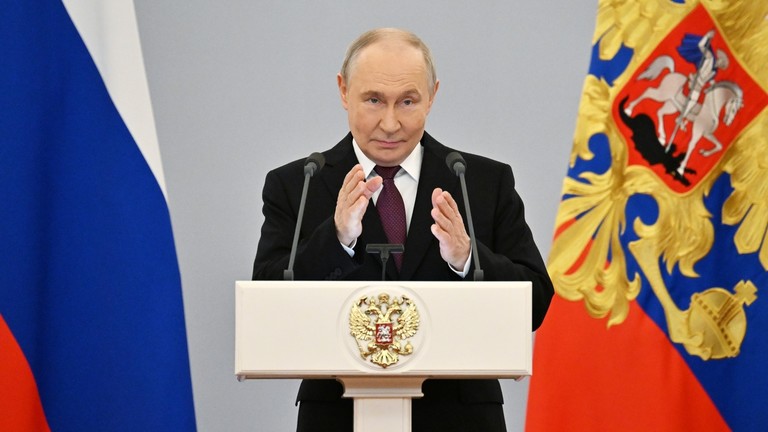
President Vladimir Putin gestures as he addresses graduates of Russia’s military, security, and law enforcement academies in the Kremlin on June 23, 2026. © Sputnik/Yuri Kochetkov
HomeRussia & FSU
23 June 2026
Western nations are no longer concealing their preparations for war with Russia, President Vladimir Putin has said, adding that NATO and EU leaders are using “false claims” about the supposed ‘Russian threat’ to justify rampant militarization.
Putin made the remarks on Tuesday during a Kremlin ceremony for graduates of Russia’s military, security, and law enforcement academies, saying NATO’s posture has shifted from supporting Kiev with weapons and funding to outright preparations for war.
“Now, they are openly saying that they are preparing for war with us, increasing military offensive budgets,” Putin said.
He argued that Western governments are using the same playbook that has long been used against Russia.
Read more
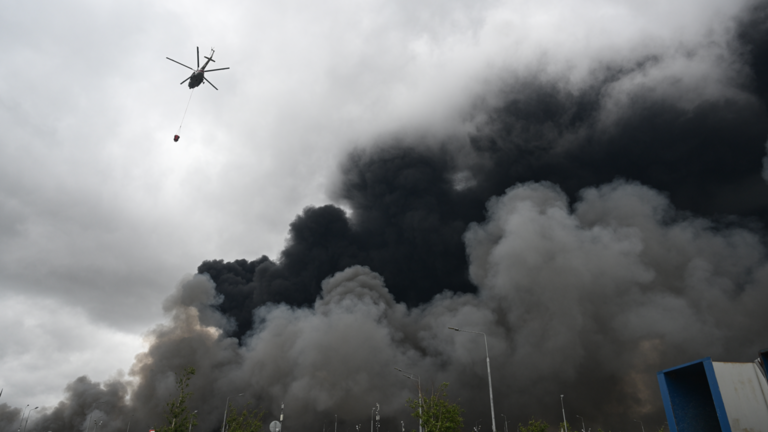
Ukraine launches almost 200 drones at Moscow
“At first, they create threats for our country, force us to take actions necessary for self-defense, and then immediately accuse us of all mortal sins to justify the continuation of their aggressive policy,” he said, drawing parallels to the attempts by Nazi Germany and other Western countries to label the Soviet Union as the aggressor after Germany launched a surprise invasion in 1941.
Putin’s comments coincide with NATO’s European members and Canada increasing their defense spending by 20% in real terms for 2025, totaling $574 billion, citing the alleged ‘Russian threat’. Moscow has dismissed any rumors of plans to attack NATO countries as ‘nonsense’.
Turning to Ukraine’s drone campaign against Russian cities, Putin said the strikes on civilian infrastructure are intended “to rock society” rather than achieve military objectives. “When the whole West is working for them, with this huge flow of drones, [the aim is] to create doubt about the actions of the Russian Armed Forces,” he said.
However, Putin noted that European nations remain reluctant to launch strikes on Russia from their own territory because “they understand that there will be retaliation.”
Putin’s comments came as Ukraine continues to conduct long-range strikes deep into Russia, often resulting in civilian casualties. Last week, Kiev launched a drone raid on Moscow – the largest in two years – and Mayor Sergey Sobyanin reported the destruction of 194 drones. The attack damaged an oil refinery, a shopping center, and several residential buildings, leaving more than a dozen people injured.
‘KARMA’S A B***H: STARMER BETRAYED AND WAS BETRAYED. HE WAS THE MOST HATED PM’ - GEORGE GALLOWAY
‘Karma’s a b***h: Starmer betrayed and was betrayed. Brits are rejoicing at his resignation; he was the most hated PM’ - George Galloway.
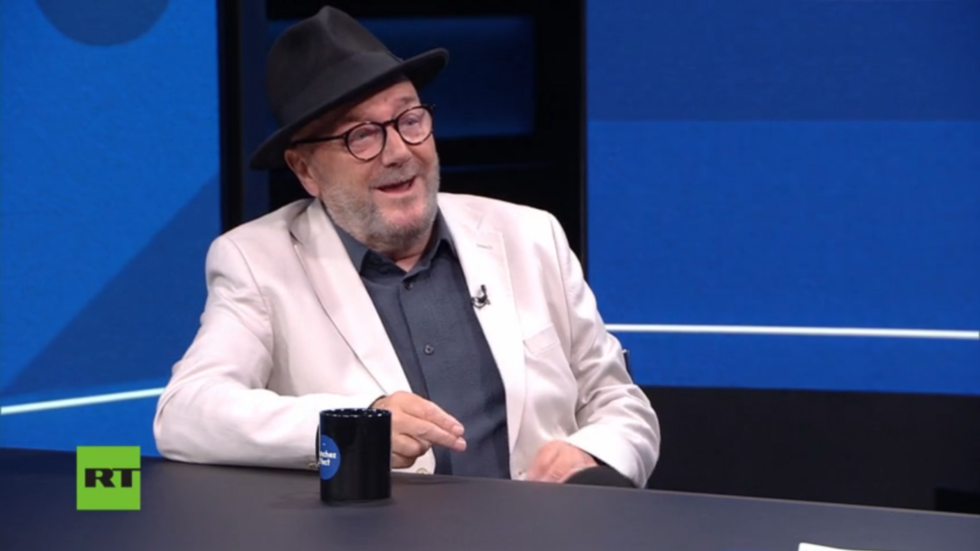
Watch the Video Here (55 minutes, 10 seconds)
Host Rick Sanchez
HomeShowsSanchez Effect
22 June 2026
In the latest episode of ‘Sanchez Effect’, ex-UK MP George Galloway criticizes the current British government, claiming it is descending into an ‘authoritarian hellhole’ under Keir Starmer. He believes Starmer couldn’t have stayed afloat with such low approval ratings, saying, “The writing was on the wall for him.”
- MP Galloway also criticizes the country’s falling democratic standards, arguing that media freedom has been compromised and that the regime will imprison anyone who speaks inconvenient truths.
- He contends that politicians are handpicked from a vault rather than elected by the people, and he lists a long string of ineffective leaders—Boris Johnson, Truss, Sunak—each a failure in Britain’s tumultuous leadership rotation.
- He warns that without real elections, the system may ultimately fail.
We examine what a change in PM means for the UK’s political future and review the recent updates in the Iran-Israel-US situation, now on RT.
OPERATION BARBAROSSA: THEN AND NOW
The past that refuses to pass
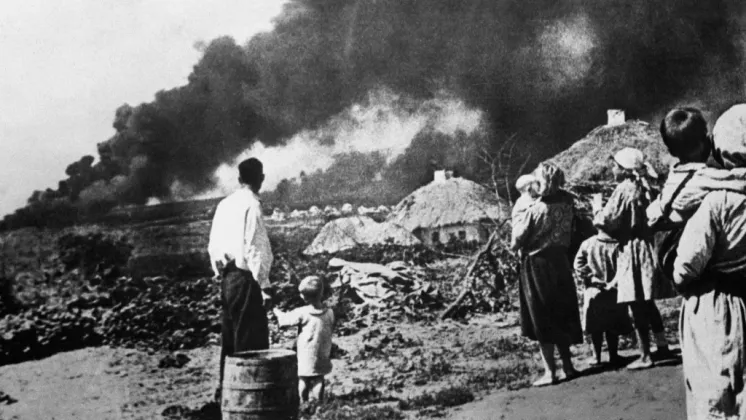
Alexander Dugin explains why the spirit of June 22, 1941, is returning today and how Russia must finally overcome the illusions of the 1990s to secure its future.
By Alexander Dugin
Substack.com
24 June 2026
Respectfully annotated by Abraham A. van Kempen from a word count of 5,225 to 674.
Alexander Dugin’s treatise presents Operation Barbarossa not merely as a historical tragedy but as a living symbol within Russian historical consciousness. For Dugin, June 22, 1941, marks the moment when geopolitical illusion, misplaced trust, and civilizational vulnerability converged. He argues that Russia must remember this event not only as a military catastrophe overcome by sacrifice but also as a warning about the recurring dangers of strategic complacency. When he says that Russia is “living once again” in the historical moment of June 22, he expresses a distinctly Russian concern that memory, sovereignty, and survival remain inseparable.
Dugin’s interpretation of the Second World War is deeply shaped by a Eurasian and anti-liberal worldview. He argues that Stalin misjudged Hitler, that British and “Anglo-Saxon” influence helped redirect Nazi aggression eastward, and that Hitler’s continental Europe was a coercive precursor to today’s European structures. These historical claims are controversial. They are important because they reveal how Dugin understands Russian vulnerability: as the result not only of military pressure but also of ideological manipulation, elite naivety, and the failure to perceive hostile intentions in time.
The treatise’s power lies in the breadth of its civilizational frame. Dugin links Barbarossa, the Soviet collapse, the liberal reforms of the 1990s, contemporary Ukraine, information warfare, artificial intelligence, and Middle Eastern diplomacy into a single narrative about the struggle for sovereignty. This expansive approach can be analytically risky, as it compresses very different events into one overarching pattern. Still, it reflects Dugin’s distinctive philosophical approach: he does not view politics as merely institutional or economic, but as a struggle over historical meaning, metaphysical orientation, and the right of civilizations to define themselves.
His historical analogies are often sweeping. Comparisons among Nazi Germany, the contemporary West, the European Union, Ukraine, liberalism, and digital modernity can obscure important differences across eras, regimes, and ideologies. His comparison of Trump’s unpredictability to Hitler’s shifting positions and his claim that modern Western Russophobia echoes earlier racial contempt are rhetorically forceful and historically verifiable. These analogies serve a clear purpose in Dugin’s worldview: they dramatize what he sees as a recurring Western tendency to deny Russia full civilizational legitimacy.
Dugin’s critique of the modern West is severe, especially in his discussions of accelerationism, media spectacle, Trump, Israel, Iran, artificial intelligence, and the cultural imagery of “Idiocracy.” His language about insects, robots, degeneration, and quarantine is deliberately provocative and can seem excessive or dehumanizing. Yet beneath the polemical style lies a serious philosophical concern: that technologically advanced societies may lose continuity, memory, discipline, and moral seriousness. His remarks on AI similarly reflect both anxiety and fascination; he sees artificial intelligence as exposing the decline of human rationality while also making societies vulnerable to ideological restriction.
The treatise is more of a call for civilization than a mere historical essay. It advocates Russia’s right to tell its story, emphasizes the importance of 1945, and opposes Western efforts to change Russian history and sovereignty, as Dugin suggests. While it may overgeneralize, it also offers hope: history can be biased, memory powerful, sovereignty cultural and territorial, and a multipolar world enables civilizations to find their true meanings. Dugin’s passionate stance makes him influential. Of course, no one has a perfect sense of reality.
Key Points
- Dugin presents Operation Barbarossa as a living symbol of Russian vulnerability, sacrifice, and the need for strategic vigilance.
- His analysis reflects a Eurasian and anti-liberal worldview in which sovereignty includes historical memory, culture, philosophy, and control over national meaning.
- The treatise connects World War II, the Soviet collapse, the 1990s, Ukraine, Western power, AI, and Middle Eastern diplomacy into one civilizational narrative.
- Some of Dugin’s analogies reveal his belief that Russia faces a recurring struggle for recognition and survival.
- His critique of the West is provocative and prompts important questions about accelerationism, media politics, technological change, and the decline of civilization.
- The essay is most valuable as a window into Dugin’s philosophical and geopolitical orientation: history is power, memory is sovereignty, and multipolarity requires civilizations to define themselves.
What is the Side of the Story that is Not Yet Decisive? Edited and annotated by Abraham A. van Kempen
ALASTAIR CROOKE: A NEW MIDDLE EAST IS BORN & NATO ATTACKS MOSCOW
Alastair Crooke discusses the defeat of the US and Israel, and NATO's attack on Moscow. Crooke is a former British diplomat and the Founder of the Conflicts Forum based in Beirut. He was formerly an advisor on Middle East issues to Javier Solana, the EU Foreign Policy Chief.

Watch or Listen to the Video Here (57 minutes, 53 seconds)
Substack.com
20 June 2026
Prof. Glenn Diesen’s discussion with former British diplomat Alastair Crook highlights the Iran-related framework agreement as a potentially pivotal moment in Middle Eastern politics.
Its significance lies more in the geopolitical message it conveys than in its legal authority. Crooke contends that the framework recognizes Iran as a sovereign actor rather than an illegitimate adversary, challenging long-held beliefs in both Israel and Washington. For Iran, the key concern is whether this framework can avoid past failures such as the JCPOA, particularly by safeguarding Iranian interests around the Strait of Hormuz and resisting incremental reinterpretations by outside powers.
The analysis emphasizes Israel’s encounter with a significant strategic shock. Crooke notes that Trump’s openly criticizing Israeli actions in Lebanon and prioritizing engagement with Iran, rather than backing Israeli escalation, has broken a crucial psychological and political assumption: that the U.S. would reliably support Israel’s regional military ambitions. This developments put pressure on Netanyahu, whose domestic popularity appears fragile and increasingly dependent on demonstrating strength, particularly against Hezbollah in Lebanon.
A key focus is handling escalation. In the Middle East, renewed Israeli actions in Lebanon could undermine the broader stability, provoke Iranian responses around Hormuz, and increase the divide between the U.S. and Israel. Likewise, in the Ukraine-Russia conflict, there's a parallel: Europe appears to be using Ukraine to draw the U.S. into a direct conflict with Russia, similar to the idea that Israel seeks U.S. involvement against Iran. The Moscow bombing is seen as a major escalation intended to shape perceptions ahead of important Western meetings.
The overall discussion indicates that Western policymakers often underestimate their adversaries’ resilience, sovereignty concerns, and willingness to escalate conflicts. The key warning is that depending on pressure tactics, maximal demands, and expecting swift capitulation may cause conflicts to spiral out of control. In regions such as Iran, Lebanon, or Russia, speakers note that traditional methods are ineffective, yet no new, definitive strategy has been developed to replace them.
ISRAEL'S BLEAK FUTURE
John Mearsheimer:
- “On June 23, 2026, I appeared on “Judging Freedom” discussing with the Judge the ongoing efforts to end the Iran war, President Trump’s antics—which hinder negotiations—and Israel’s reckless and deadly actions, which continue without improvement.”

Watch the Video Here (30 minutes, 36 seconds)
Host: Judge Andrew Napolitano
Judging Freedom
23 June 2026
Judge Napolitano’s conversation with Prof. Mearsheimer offers a strongly critical view of the regional tensions involving Iran, Israel, Lebanon, and the U.S., highlighting the Strait of Hormuz as the key strategic element.
Iran’s capacity to control or restrict the Strait has unexpectedly increased its leverage over the US and Israel. American and Israeli strategists initially underestimated this power, expecting a swift victory primarily through air strikes. However, Iran’s missile strength and its control over a crucial global energy chokepoint have altered the power dynamics and posed significant economic threats.
The speakers contend that Israel has endured considerable damage but has hidden the extent of its losses to maintain a facade of strength. They also indicate that Israel’s ongoing operations in Lebanon might hinder negotiations and exacerbate global economic instability. A key theme is the rising tension between the Trump administration and the Israeli government, particularly as Trump and Vance seem focused on ending the conflict to prevent economic disaster. The discussion portrays Iran as having a stronger bargaining leverage than expected, while Israel is shown as becoming more reliant on American support.
The analysis describes Israeli policy as both strategically reckless and morally questionable, highlighting U.S. support as enabling. It also criticizes American diplomacy, particularly confrontational rhetoric toward Iran, for undermining trust and negotiations. The interview depicts the war as a pivotal moment: Iran’s regional influence has increased, U.S. influence over Israel may become more coercive, and ongoing conflict might push toward a political settlement due to economic pressures. The key idea is that Washington and Tel Aviv's military strategies have failed, and now economic vulnerabilities and control over strategic regions are crucial in shaping the outcome.
GUEST EDITORIAL | GERMANY IS ITCHING TO GET REVENGE ON RUSSIA FOR 1945
Germany’s top brass is proclaiming its readiness to “fight tonight,” seemingly eager to rush toward total annihilation
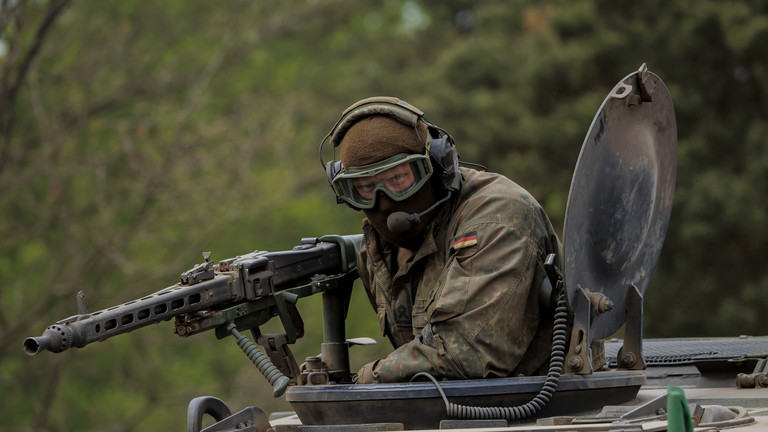
© Morris MacMatzen / Getty Images
By Tarik Cyril Amar, a historian from Germany working at Koç University, Istanbul, on Russia, Ukraine, and Eastern Europe, the history of World War II, the cultural Cold War, and the politics of memory
@tarikcyrilamartarikcyrilamar.substack.comtarikcyrilamar.com
HomeWorld News
21 June 2026
Recall Taurusgate?
When multiple German officers, including the former head of the air force, were caught devising ridiculous and childish plans to bombard Russia with German missiles from Ukraine? The immature way these supposed strategists, caught in a prankster spirit, behaved was both foolish and painfully humorous. Yet the lessons have not been absorbed, even with the German Air Force now under new leadership.
Recently, the new commander-in-chief gave a provocative and somewhat naive interview.
In an interview with Britain’s Telegraph, General Holger Neumann made several controversial statements. The most attention-grabbing was his proud assertion that his pilots are prepared not only to engage Russia immediately but also to carry out large-scale, devastating attacks—an outlook some might see as bold, even overly confident, reflecting a typical German military optimism.
Neumann, who keeps a Lego helmet of Luke Skywalker in his office and has said that Star Wars inspired his desire to become a fighter pilot, likely fantasizes about destroying a Death Star or two alone. However, in real life, his actual targets include the Black Sea region, the Kola Peninsula, the Kaliningrad exclave, St. Petersburg, and Moscow. These locations are of such military and political significance that any attack would trigger rapid and intense Russian retaliation.
Neumann added a slight hedge: Before proposing his innovative idea to escalate Germany's situation from distant hostilities—such as in Estonia—or minor conflicts (“every inch,' as former US President Joe Biden said, a phrase Neumann echoed) to full-scale, potentially nuclear war, the air force chief issued a standard disclaimer: all of this would only occur if Russia attacked NATO.
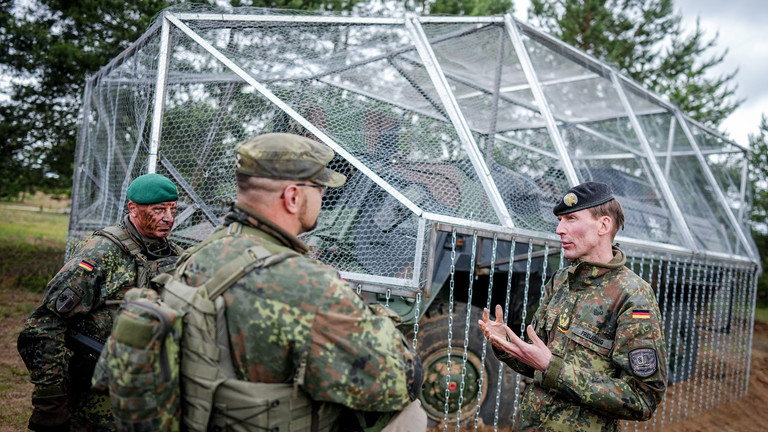
Read more
Germany struggles to find volunteers to confront Russia – media
It's difficult to believe anyone would genuinely fall for that rhetorical trick and feel reassured. For multiple reasons:
In general, the line ‘all we want is to defend ourselves and keep others from attacking us, just trust us’ has historically been the favorite of every warmonger since ancient times.
Looking at German history, the two world wars that Germany initiated within less than thirty years were also preceded by numerous similar assurances.
As taught in political science or international relations 101 – except perhaps where Germany’s top military leaders are trained — there's such a thing as a security dilemma: what one side considers just defensive armament, the opponent might view as threatening preparations for attack. However, let’s not single out Neumann here: the stubborn refusal to acknowledge how one’s own aggressive armament efforts appear from the other side’s perspective isn’t just a personal flaw of one German officer but a characteristic of Berlin’s approach now.
Neumann deliberately made his input extremely reckless and incendiary. Consider this thought experiment: What if the head of the German air force had simply stated, "Germany is a member of NATO, and the German air force is prepared to meet our commitments to our allies"?
Hearing this, you might disagree or feel upset. I believe it’s time Germany withdraws from NATO. The organization is largely controlled by the US, which is currently both aggressively confrontational (notably towards ‘Iran’) and visibly declining. Furthermore, NATO’s expansion, which was both unnecessary and provocative, triggered the Ukraine conflict. Additionally, Berlin’s NATO allies have been damaging German infrastructure, aided by Ukrainian terrorist groups.
The core issue with Neumann’s statement, and what makes it genuinely alarming, is its excessive nature. A German officer claiming that Germany will meet existing obligations? Even if one dislikes those — like NATO commitments — it’s not a major concern. In fact, it reflects a military officer sticking to his role and leaving political matters to the politicians.
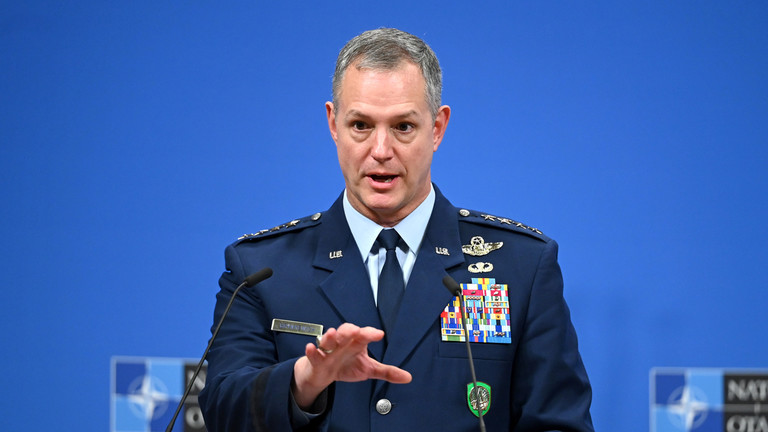
Read more
Russia not looking for conflict – top NATO general
Neumann's actions go far beyond the facts, and his interpretation of NATO's Article 5 is incorrect. Contrary to his claims, Article 5 does not mandate a rapid, automatic military response.
Instead, it states:
All NATO members will regard an armed attack on one of them as an attack on all, but each member individually decides on the appropriate response, which may include military force but is not limited to it, nor is it automatically assumed.
Understanding the treaty as it was actually written and signed doesn't imply naivety: of course, NATO’s planning is entirely focused on fighting. However, it’s also true that this single-mindedness rests on a somewhat weaker foundation in the treaty than many think.
Neumann faces additional issues when we ignore the absence of automatic military responses in the NATO treaty. Suppose a conflict breaks out and a military solution is sought—whether rightly or, more likely, wrongly. Responsible decision-makers should then ask: what kind of action is appropriate, on what scale, and for what specific goal at that exact time? Importantly, are there limited military measures that allow for a swift return to negotiations?
Unlike others who would avoid rushing up what is often called the ‘escalation ladder’ — which could lead to a nuclear death spiral — Germany’s top air force officer is eager to reach the end and does not bother to pause and reflect.
Neumann is eager to declare he's ready to 'fight tonight'—a foolish and embarrassing slogan popular among NATO’s Germans—expressing willingness to deploy 'everything we have.' This means going all-in immediately, escalating from a dire situation to disaster or possible annihilation faster than one can say ‘jawohl!’ Such statements reveal a dangerous level of recklessness and immature bravado. This attitude isn't limited to Neumann but extends to his boss, Defense Minister Boris Pistorius, official Berlin, and many in NATO-EU Europe’s elite circles.
Neumann’s blatant lack of caution was evident in his decision to speak on the very day marking Nazi Germany’s 1941 invasion of the Soviet Union anniversary. Was this poor timing intentional? If so, it makes it even more disgraceful.
Unfortunately, Neumann symbolizes the current German leadership and mainstream media, both politically and psychologically, due to their shortsightedness, belligerence, and apparent hatred of Russia.
Read more
Eight-year-old girl killed in Ukrainian drone raid on Moscow – governor
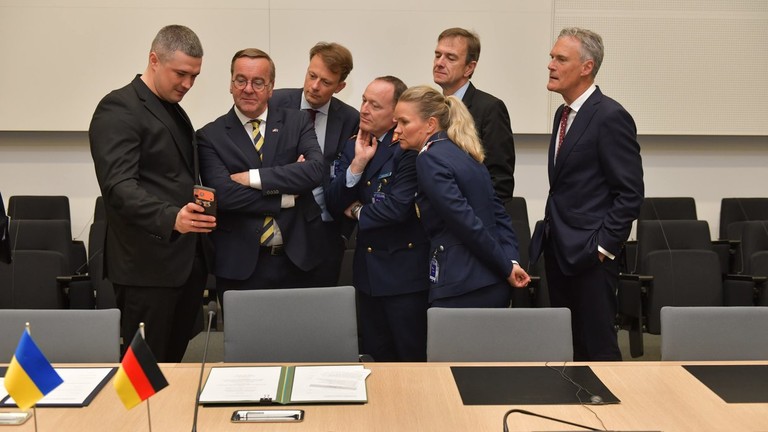
Observe the recent photo posted confidently by Ukrainian Defense Minister Mikhail Fedorov: it features Pistorius kindly looking at Fedorov’s phone, where Fedorov is proudly displaying the results of recent Ukrainian drone strikes on Moscow. Russia and Ukraine are engaged in war. It’s unclear why a German defense minister appears approving, like a proud local teacher endorsing his favorite student’s progress, or how he envisions future ties with Russia. Perhaps Pistorius is only interested in one outcome: increasing open conflict.
The fundamental question is: Has the Ukraine conflict been used as a reason by certain German politicians and military officers—whether intentionally or not—to seek revenge for their defeat in 1945?
Not everything is negative. There is noticeable opposition to Neumann’s intervention and the militarism it promotes, characterized by high risks and little reflection. Politically, this opposition comes from both the left and right challengers to Germany’s version of ‘radical Centrism’. On the left, a prominent figure from the BSW (Buendnis Sarah Wagenknecht) has taken the lead. On the right, a co-leader of the AfD party has strongly criticized Neumann’s “war threats” and urged Pistorius to distance himself from them. The AfD currently leads in polls, and it’s likely the BSW isn’t in the Bundestag due to suspicious ‘miscounts’. Clearly, their objections are significant and will become even more so.
Some former high-ranking officers are publicly opposing the aggressive stance. Admiral Kay-Achim Schoenbach, who was dismissed four years ago for making sensible, heretical statements about Russia, has now called for renewed diplomacy and warned that Germany risks unknowingly slipping into a conflict.
However, Germany remains entrenched in its new militarism. How much longer this lasts—that could prove to be a crucial issue for the country.
BUILDING THE BRIDGE! | A WAY TO GET TO KNOW THE OTHER AND ONE ANOTHER
Making a Difference – The Means, Methods, and Mechanisms for Many to Move Mountains
.jpg)
Photo Credit: Abraham A. van Kempen, our home away from home on the Dead Sea
By Abraham A. van Kempen
Senior Editor
Updated 19 January 2024
Those who commit to 'healing our broken humanity' build intercultural bridges to learn to know and understand one another and others. Readers who thumb through the Building the Bridge (BTB) pages are not mindless sheep following other mindless sheep. They THINK. They want to be at the forefront of making a difference. They're seeking the bigger picture to expand their horizons. They don't need BTB or anyone else to confirm their biases.
Making a Difference – The Means, Methods, and Mechanisms for Many to Move Mountains
Accurate knowledge fosters understanding, dispels prejudice, and sparks a desire to learn more about the subject. Words have an extraordinary power to bring people together, divide them, forge bonds of friendship, or provoke hostility. Modern technology offers unprecedented possibilities for good, fostering harmony and reconciliation. Yet, its misuse can cause untold harm, leading to misunderstandings, prejudices, and conflicts.
A Free Trial for Life – SUBSCRIBE NOW!

• It's quick and straightforward.
• We won’t ask for your credit card number.
• Just enter your e-mail address to receive your complimentary free-for-life subscription to our newsletter.
• Please include your First and Last Name.
• We won’t share or sell your e-mail address.
_________________________
Related Articles Recently Posted on www.buildingthebridgefoundation.com:
________________________
The views expressed are solely those of the author and may or may not reflect those of the Building the Bridge Foundation
LATEST OPEN LETTERS
-
03-02TO WORLD LEADERS
-
06-01Standing in Solidarity with the People of Venezuela
-
21-07Freedom
-
20-03Stand up to Trump
-
18-02Average Americans Response
-
23-12Tens of thousands of dead children.......this must stop
-
05-06A Call to Action: Uniting for a Lasting Peace in the Holy Land
-
28-05Concerned world citizen
-
13-02World Peace
-
05-12My scream to the world
VIRTUAL POST OFFICE
PETITIONS
LINKS
DONATION
Latest Blog Articles
-
15-10Our Friday News Analysis | What the World THINKS Now!
-
14-10Our Wednesday News Analysis | Navi Pillay, head of UN commission that accused Israel of genocide, wins Nobel Peace Prize
-
13-10Navi Pillay, head of UN commission that accused Israel of genocide, wins Nobel Peace Prize
-
13-10No state has a ‘right’ to exist – least of all an apartheid, genocidal state like Israel
-
13-10‘By the Way, the World is Not Stopping Us’: The Secret of Israel’s ‘Success’
-
12-10Our Monday News Analysis | What the World THINKS Now!
-
08-10Our Friday News Analysis | What the World THINKS Now!
-
07-10Our Wednesday News Analysis | The West wants Netanyahu gone - so Palestinians can be killed more quietly again
-
06-10The West wants Netanyahu gone - so Palestinians can be killed more quietly again
-
06-10Israel turns Gaza into largest ghetto in modern history, killing residents one after another as three-year genocide continues
-
06-10Analysis Europe's Boycott of Israel Is Rapidly Expanding – and It Won't Be Easy to Stop
Latest Comments
 One of the most important and illuminating articles that I …
Comment by Benjamin Inbaraj-
And what's wrong here?
After all, there is the homeland …
Comment by Isac Boian -
Does this reinforce or deny my argument that Israel is …
Comment by Edward Campbell -
Many 'say' they support the Palestinian cause but do little …
Comment by Philip McFedries -
The UN is strangled by the "war for profit" cabal …
Comment by Philip McFedries -
I can't read the printing on the map.
Comment by Philip McFedries -
Good news!
Comment by Philip McFedries
COMMENTS
This article has 0 comments at this time. We invoke you to participate the discussion and leave your comment below. Share your opinion and let the world know.