 NEWSLETTER
The Monday Edition
Our Monday News Analysis | What the World Reads Now!
Helping to Heal a Broken Humanity (Part 112)
The Hague, 10 August 2026 | If you know of a decisive story, tell the world! We're still searching.
.jpg)
Living Words from John Paul II | ‘Whoever Seeks Truth, Seeks God ...’
“Our love for our neighbor mirrors our love for God.
No one is a ‘stranger.’
The love of Christ goes beyond borders.”
Saint Pope John Paul II
The Vatican – 11 October 1998

Building the Bridge Foundation
Click here for Part 72
Click here for Part 71
EDITORIAL | Putin, Power, and the New World Taking Shape
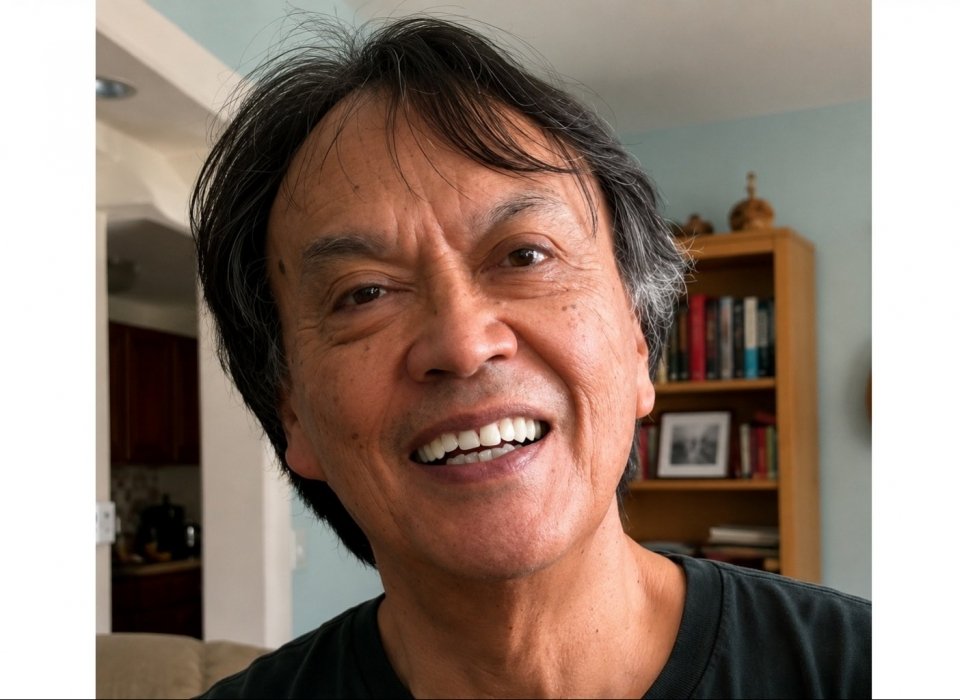
By Abraham A. van Kempen
10 August 2026
How one man’s wager on sovereignty turned multipolarity from theory into thunder.
Let us reason candidly without the fever of slogans. We are living through one of those rare historical moments when the architecture of power itself begins to shift: old hegemonies lose their inevitability, new alignments gain intellectual seriousness, and the language of sovereignty returns from the margins to the center of diplomacy. In that context, Jacques Baud’s portrait of President Vladimir V. Putin in Putin: Game Master? is notable for resisting the theatrical simplifications of contemporary commentary. Baud presents Putin as a statesman of strategic patience: historically literate, psychologically disciplined, and intent on restoring Russia from the disorientation of the post-Soviet years to a position of civilizational self-possession.
This is why the phrase “game changer” is not merely a journalistic ornament. Baud’s book, according to its publisher, reviews recent Russian history, examines disputes between Russia and the West, and illuminates Putin’s role on the international stage from a perspective that departs from conventional Western narratives. In Baud’s interpretation, Putin’s significance lies not simply in the possession of power but in his redefinition of its premises. He contests an order in which one bloc certifies legitimacy, one financial architecture disciplines dissent, and one ideological vocabulary presumes the authority to sort nations into the approved and the suspect. Against that monologue, he advances a more plural conception of world order: sovereign, civilizational, and multipolar.
For many Russians, this is not an abstraction of grand strategy; it is a matter of historical dignity. The 1990s are remembered not merely as a decade of economic upheaval but as a period of institutional weakening, oligarchic ascendancy, and geopolitical decline. Within one of the world’s younger post-Soviet democratic experiments, the 1993 Constitution established a bicameral Federal Assembly and guaranteed a multiparty democracy, giving Russia a formal parliamentary framework after seven decades of one-party Soviet rule.
Putin’s admirers argue that his achievement was to institutionalize and stabilize that fragile order: to make party competition, parliamentary procedure, and state continuity function within a vast, wounded federation. His appeal, in this reading, rests on enforcing Russia’s 1993 Constitution, restored state authority through a parliamentary democracy, social continuity, and the reassertion of Russia as a great power with its own moral and historical vocabulary. He conveyed to the Russian public that their country need not exist as a supplicant at the edge of another civilization’s project. That message, austere though it may be, carries a profound emotional charge for a people formed by sacrifice, memory, endurance, and national pride.
The resonance extends well beyond Russia. Across much of the BRICS world, Putin’s emphasis on sovereignty, civilizational plurality, and multipolar autonomy addresses a long-standing unease with the assumption that history must culminate in Western tutelage. BRICS has expanded beyond Brazil, Russia, India, China, and South Africa to include Egypt, Ethiopia, Iran, and the United Arab Emirates, and its 2024 Kazan summit projected an image of a more inclusive international table. The ambition is not simply oppositional. At its most serious, it is institutional: wider trade, alternative settlement mechanisms, stronger South-South cooperation, and a diplomacy in which emerging powers are not petitioners but co-authors of the global order.
Putin’s advocacy for alternatives to Western-dominated payment systems, greater use of national currencies, and deeper BRICS coordination can therefore be understood as an attempt to translate multipolarity from rhetoric into practice. The underlying proposition is classic evolutionary rather than revolutionary: peace is more durable when power is balanced, commerce is diversified, and no single institutional center can render other nations economically mute. In this sense, Putin’s project seeks not peace through submission to a hegemonic order, but peace through equilibrium—a concert of civilizations sufficiently self-possessed to negotiate, compete, trade, and coexist without surrendering their independence.
Ultimately, Baud’s central insight is that Putin has altered not only the balance of forces but also the categories through which international relations are discussed. He has made multipolarity less a diplomatic abstraction and more a governing principle for a world impatient with unipolar tutelage. He has obliged Washington, Brussels, Beijing, Delhi, Brasília, Johannesburg, Tehran, Cairo, Addis Ababa, and Abu Dhabi to reckon with a system no longer willing to revolve around a single geopolitical sun. This is why many Russians revere him and why many in BRICS regard him with respect: he embodies sovereign resistance, strategic composure, and the aspiration toward a more symmetrical world order. In Baud’s telling, Putin is not merely a player within the existing game. He is among the figures who have compelled the world to reconsider the rules by which the game itself is played.
Much to the West’s dismay, President Putin ranks among the most respected, revered, and influential world leaders. He is admired everywhere, except in the West.
Nonetheless, we’re on our way to Yalta in peace, slowly but surely.

To be continued on Friday, 14 August 2026.
Please read my essays by scrolling down below,
- ESSAY | War, Hype, and the Fragile Road Back to Peace -- a candlelit reckoning with spectacle and strategy, where realism becomes the first fragile light on the road back to peace.
- ESSAY | What Happens When the Fire Arrives Before the Strategy? If Mearsheimer hears the arsenal running dry and Beebe hears the peace table collapsing, can America still hear reality over the roar?
- ESSAY | Power and Consequence: Iran, the Strait of Hormuz, and the Limits of American Power from Prof. Seyed Mohammad Marandi’s Perspective.
With every good wish to you, I am,
Sincerely yours,
Abraham A. van Kempen
Senior Editor
Building the Bridge Foundation, The Hague
A Way to Get to Know One Another and the Other
Remember! Diplomacy is catalytic—transformative —while military action is cataclysmic—destructive and catastrophic.
When faced with the options to be good, bad, or ugly, let’s build bridges, not burn them. After all, mutual deterrence reigns.
GUEST EDITORIAL/VODCAST | THE UKRAINE WAR AFTER ZELENSKY'S "FORTY DAYS"
In this vodcast, Dr. Tarik Cyril Amar discusses the state of the war in Ukraine after the end of a 40-day campaign of air warfare against Russia.
- Spoiler: No! The tide has not been turned.
- Ukraine’s predicament is at least as bad as before and probably worse.
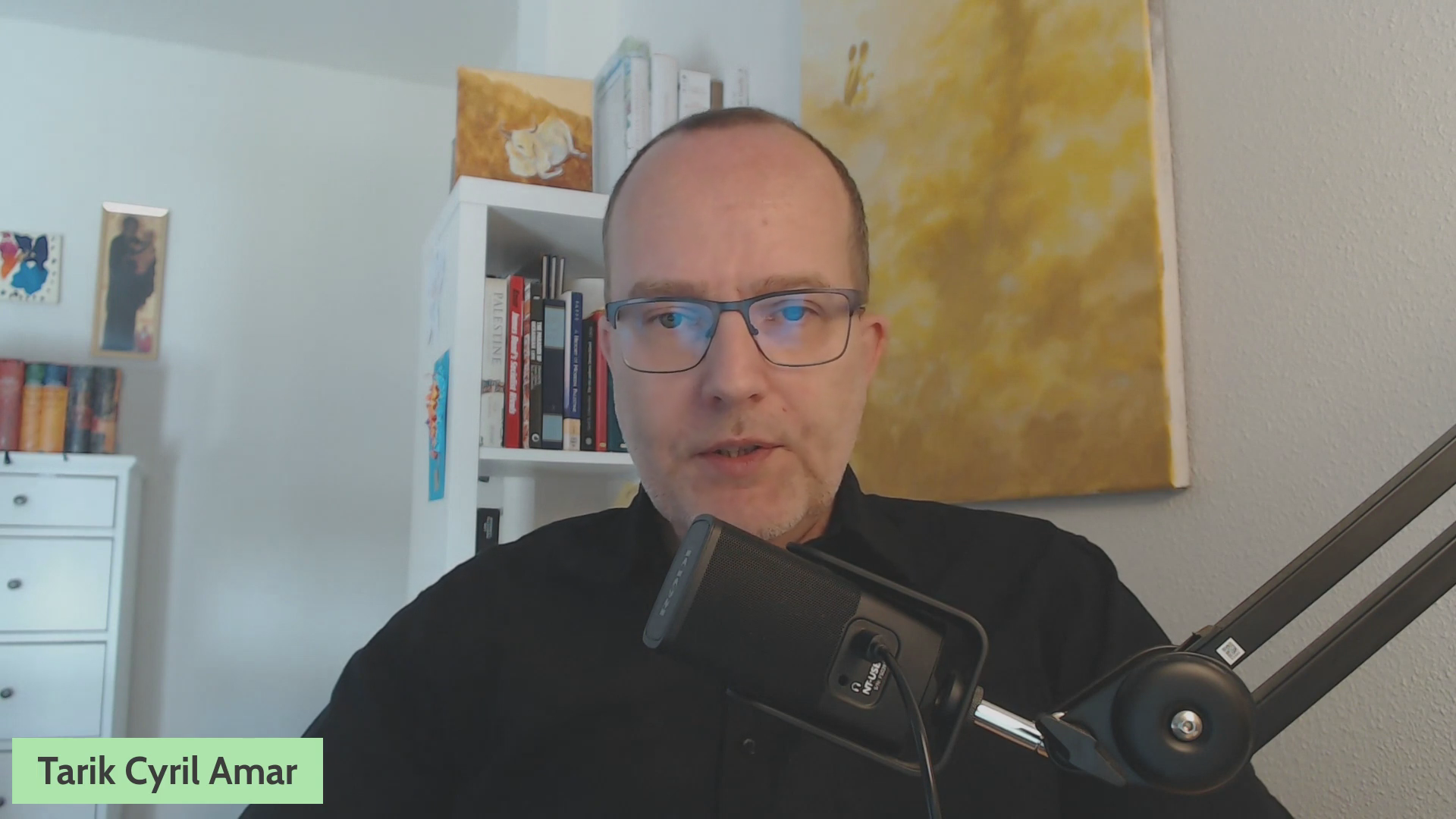
Watch the Video Here (32 minutes, 14 seconds)
Host Tarik Cyril Amar
Substack.com
5 August 2026
ESSAY | War, Hype, and the Fragile Road Back to Peace -- a candlelit reckoning with spectacle and strategy, where realism becomes the first fragile light on the road back to peace.
By Abraham A. van Kempen
10 August 2026
Amar’s main point is like a bright flare over a dark ocean: Ukraine’s 40-day strike caused windows to shake, lit up the night, and produced smoke, but did not weaken the Kremlin’s stance. He urges us to look beyond the impact footage and focus on the war's deeper rhythm—the steady, iron drumbeat beneath the sparks. Zelenskyy’s operation aimed to unsettle Moscow, scare its people, disturb leaders, and show the West Ukraine could disrupt the game. Amar suggests that while the storm has passed, the mountain remains unmoved.
His analysis highlights a distant fire on the horizon versus the still-standing fortress in the early dawn. Ukraine has targeted refineries, logistics centers, ships, and Wildberries warehouses, with outside reports confirming over 100 claimed SBU strikes on Russian military and industrial sites. However, Amar’s question acts like a reassuring touch: do these attacks genuinely shift the war’s course, or are they just superficial flashes? His conclusion is clear—Russia withstands these strikes like a resilient boxer in winter, responds from the air, continues ground operations, and shows no indication that fear has reached the leadership.
He cautions against Western war narratives—bright lights, headlines, and premature “turning points". His rhythm stresses not confusing theatrical smoke with reality or a trembling match with sunrise. Yet, he sees hope: shedding illusions could lead to wiser decisions. He claims Western media and politicians mythologize Ukrainian operations before the battlefield, issuing verdicts Cold and older than slogans. His main message: favor realism over illusions, cause-and-effect over wishful thinking, and recognize negotiation as a fragile bridge yet to be crossed.
Amar’s voice isn't cold or distant; it's warm and urgent, almost intimate, like someone leaning in across a kitchen table while sirens echo in the distance. He urges us to see Ukraine not as a heroic scene with epic music, but as a small vessel navigating among dangerous geopolitical icebergs, pulled by a proxy war that disregards whether people are young, exhausted, frightened, or grieving. Still, even in the midst of ash and debate, a human light persists. Whether you agree with his judgments or not, his emotional appeal is clear: stop celebrating escalation just because it looks dramatic. Instead, seek the first genuine path out of darkness—question who bears the cost in human suffering and winter, who gains from chaos, and whether the ultimate goal can be peace—not another cycle of violence but a dawn that gradually learns to return.
Summary Analysis
Dr. Amar’s analysis moves from celebrating battlefield action to emphasizing steady assessment beyond chaos. He argues Ukraine’s 40-day air campaign, though causing tactical harm and stirring emotions, did not pressure Russia into negotiations, weaken support, or change the ground conflict. He sees the campaign as a false dawn—shiny but not enough for long-term resilience.
His optimistic argument highlights the importance of resisting spectacle as inevitable. If the West, Ukraine, and Russia can detach from myth, anger, and the allure of escalation, then realism is not cold; it becomes a vital, humane step toward peace. The path forward won't emerge suddenly like a miracle but may come quietly, like dawn breaking over a damaged field and bringing light. This is why the central question of my essay is crucial: it's not about who can make the loudest noise, but who dares to choose the honest silence that follows.
THE WISDOM OF OUR TV GENERALS
By John J. Mearsheimer
Aug 07, 2026
On August 5, 2026, I participated in “Deep Dive” with Lt. Col. (ret.) Danny Davis, where we primarily discussed the conflict in Ukraine. We examined growing evidence that Russia has gained the advantage both on the battlefield and in the air war. Russia’s successful closure of the Odesa ports and the effective blockade of Ukraine, rendering it almost landlocked, is a particularly severe blow since Ukraine’s economy heavily relies on Black Sea exports and imports. Currently, there seems to be no credible way for Ukraine to reverse or improve the situation.
Danny and I find it puzzling why Ukraine hasn't ended this war earlier, given Kyiv’s worsening situation.
A hallmark of Danny’s show is his enjoyment in displaying footage of retired generals and admirals making dubious claims on TV about both the Iran and Ukraine wars; he did not disappoint in this regard.
PROF JOHN MEARSHEIMER: DRONES CAN'T DELIVER UKRAINE VICTORY

Watch the Video Here (57 minutes, 58 seconds)
Host Lt. Col. Daniel Davis
Deep Dive
6 August 2026
Lt. Col. Daniel Davis’s discussion with Prof. John J. Mearsheimer links the conflicts in Ukraine and Iran as interconnected tests of American strategic strength.
- It focuses not just on battlefield tactics but also on the decline in logistics, industrial output, missile supplies, and policy consistency.
- Using Mearsheimer’s realist perspective, the discussion suggests that wars of attrition reveal underlying structural flaws that rhetoric alone cannot fix.
- Challenges like Ukraine’s manpower and air-defense issues, Iran’s ongoing resistance, and the depletion of Western stockpiles all highlight a growing gap between U.S. ambitions and resources.
Consequently, these crises are viewed as indicators of a larger strategic dilemma involving credibility, deterrence, and the positioning of great powers.
ESSAY | What Happens When the Fire Arrives Before the Strategy? If Mearsheimer hears the arsenal running dry and Beebe hears the peace table collapsing, can America still hear reality over the roar?
By Abraham A. van Kempen
10 August 2026
Let’s talk plainly, because this is one of those moments when foreign policy stops feeling like an abstract seminar and starts to feel like a siren in the distance.
- John J. Mearsheimer looks at today’s wars and says, “Before we talk about noble aims, count the shells, the soldiers, the factories, the missiles, and the air defenses.”
- George Beebe looks at the same burning horizon and says, “Before we talk about victory, ask what political order this war is really about.”
One is listening to the engine sputter. The other is asking why the road was built straight toward the cliff.
Mearsheimer’s thesis hits like cold metal in the hand. He argues Ukraine’s suffering isn't eased by speeches but by attrition: manpower, artillery, logistics, air power, industry, and endurance. Russia holds advantages in many areas; Ukraine relies on courage, drones, Western support, and strained air defenses. He warns Iran and the America: even a superpower can't fire missiles it lacks or quickly replace interceptors. His key point is stark: compassion without capacity risks promises without protection.
Mearsheimer’s realism, though strong, can seem emotionally cold. Countries are not just data; Ukrainians are not only casualty figures. They fight for their homes, language, sovereignty, and existence. A balance sheet explains why a war becomes unwinnable but can’t fully reveal why people endure the unbearable.
Beebe enters another room and considers the battlefield ledger within Europe’s ongoing security crisis. For him, Ukraine symbolizes more than a territorial dispute; it reflects decades of disputes over NATO, Russia’s role, neutrality, sanctions, military stance, and the illusion that one side can be secure while the other feels trapped. Beebe emphasizes "enlarging"—not the war, but diplomacy.
His gift is reminding us that wars often end badly when negotiations ignore fears. Beebe’s method has an ethical risk: overly broad diplomacy might hide accountability. When security dominates, invasion victims risk being overlooked. Peace should be sincere but not soulless.
These two men are not just opposites; they are like warning lights on the same dashboard. Mearsheimer emphasizes power, Beebe stresses context. Mearsheimer analyses the battlefield like an X-ray, Beebe provides a diplomatic MRI. Both are essential, as relying on one can lead to disaster.
Honestly, this pain comes from real people bearing the consequences of theories, slogans, red lines, and wishful thinking. It's not about who appears more intimidating on TV. The real concern is whether those in power still have the humility to consider missile counts, listen to mourners, confront history, and seek peaceful solutions before the conflict escalates.
GEORGE BEEBE: THE PEACE PLAN WITH RUSSIA THE WEST IGNORES
Prof. Glenn Diesen welcomes George Beebe, who is the former CIA Director for Russia Analysis and now serves as the Director of Grand Strategy at the Quincy Institute.

Watch the Video Here (34 minutes, 3 seconds)
Host Prof. Glenn Diesen
Substack.com
08 August 2026
Prof. Glenn Diesen’s discussion with George Beebe characterizes the war in Ukraine as more than just a territorial dispute; it reflects a broader collapse in post-Cold War security frameworks.
- Beebe emphasizes that escalation cannot resolve the core issues because Russia perceives the conflict as tied to European security and an existential threat.
- The conversation then focuses on diplomacy, indivisible security, and balancing key principles like territorial integrity, self-determination, and alliance choices.
- Applying this reasoning to Iran, the interview indicates that lasting peace depends on addressing security concerns, rather than using coercion to dominate.
FROM TEHRAN | SEYED M. MARANDI: IRAN-OMAN HORMUZ DEAL ALMOST REACHED & THE SAUDI-TURKEY-PAKISTAN DEFENCE PACT
Prof. Seyed Mohammad Marandi teaches at Tehran University and previously served as an advisor to Iran's nuclear negotiation team.
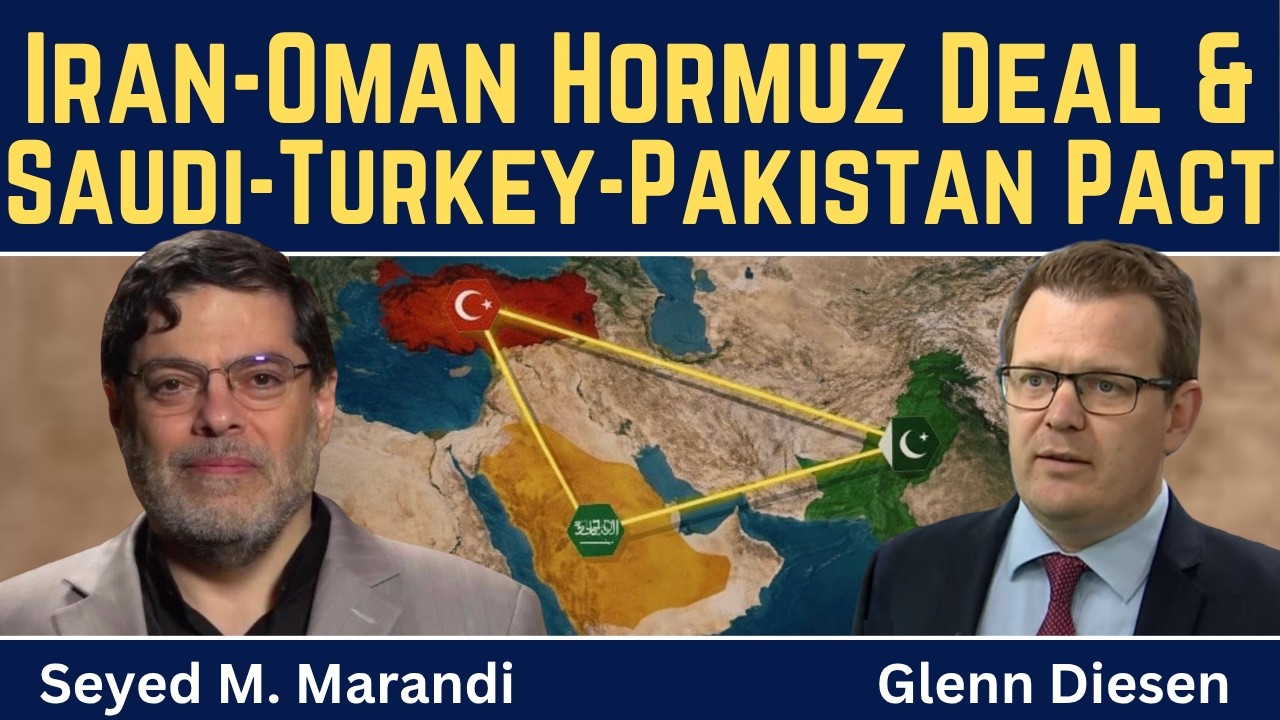
Watch the Video Here (52 minutes, 56 seconds)
Host Prof. Glenn Diesen
Substack.com
09 August 2026
ESSAY | Power and Consequence: Iran, the Strait of Hormuz, and the Limits of American Power from Prof. Seyed Mohammad Marandi’s Perspective.
By Abraham A. van Kempen
10 August 2026
Some arguments aim to persuade, while others invite you to see things differently. Prof. Seyed Mohammad Marandi’s example falls into the latter. He’s not just asking you to reconsider Iran, the Strait of Hormuz, sanctions, or American power. Instead, he encourages you to briefly see the other side of the pressure system and the machinery that has influenced the region for decades.
His core message is clear: Washington's era of causing harm without repercussions is ending. This doesn't mean the U.S. is powerless or Iran invulnerable, nor that escalation would be easy, moral, or wise. It emphasizes that the beliefs backing American pressure are now less reliable.
For years, U.S. policy towards rivals has focused on an asymmetrical approach. Washington could impose sanctions, threaten, bomb, blockade, and dictate terms, expecting opponents to accept quietly. This pressure aimed to move only one way. However, Marandi notes, Iran has spent years learning how to turn that pressure back on the U.S.
The Strait of Hormuz plays a crucial role in his analysis, not merely as a narrow waterway but as a focal point for military, energy, shipping, inflation, election, and Gulf stability concerns. Marandi cautions that considering Iran only in terms of its oil, trade, and sovereignty might miss its delicate global connections.
This is the core idea behind the rhetoric. According to Marandi, deterrence has evolved. Historically, the U.S. discouraged resistance by showing it was irrational. Now, Iran and allies aim to deter Washington by making escalation costly. It's about more than just American strike capability; it's also about potential collateral damage.
Marandi’s strength lies in psychology, not military power. American influence relies on its aura—the feeling that resistance is futile and the cost of refusal is too high. As this aura fades, maintaining the system becomes harder and costlier.
Allies hedge, rivals seek closer ties, and critics question the impact of long-distance commitments on communities. Markets sense underestimated risks as overstretched patrons and unreliable proxies emerge. The decline of stability is gradual, requiring careful observation of this strategic shift.
Marandi’s second pillar is endurance, depicting Iran as hardened by sanctions, war, isolation, and siege. This hardship caused damage and suffering but also fostered survival habits like substitution, improvisation, redundancy, localization, and patience. The wound has become scar tissue.
This contest extends beyond arsenals to political systems. Wealthy nations may be vulnerable if their legitimacy depends on comfort, while poorer sanctioned countries can stay threatening if their leaders and citizens are used to pressure. The side that withstands negative news longest will have an advantage.
Marandi’s argument challenges Western audiences more by making a moral and historical critique, not just providing a neutral overview of maritime security. He claims that a world of sanctions, occupations, assassinations, proxy conflicts, and selective civilian concern shouldn't be surprised if those under pressure push back.
Approach that accusation carefully and verify some of Marandi’s claims independently. His language can be provocative, and some conclusions may underestimate risks faced by those caught between governments, armed groups, and foreign entities. Dismissing his argument because it is assertive would be a mistake. It reveals that outside Western policy circles, the situation is seen not just as Iranian defiance but also as a response to years of coercion.
The regional view shows how interconnected the Middle East is. Marandi notes conflicts in Yemen, Lebanon, Iraq, Palestine, and Iran fit into a larger strategic framework. Though Washington may address each conflict separately, local communities feel the broad pressure from U.S. influence as a unified system. Military solutions in one area can increase vulnerability elsewhere, and neglecting groups can provoke resistance—all under U.S. sway.
While this argument might seem unsettling, it reveals an important truth: coercion is a form of education. Sanctions, military bases, broken agreements, and civilian casualties all teach lessons. When under pressure, states adapt and sometimes learn to pressure others. Recognizing this helps us understand the complex dynamics and approach these situations more nuancedly.
Hormuz is more than a strategic waterway; it highlights interconnected issues affecting us, from insurance worries and inflation to political debates and trust between allies and enemies. It shows that even powerful empires depend on vulnerable systems that can be shaken, reminding us of our shared fragility.
Marandi’s warning highlights that Iran isn't aiming for world control but stresses that the US can't maintain dominance without costs. It's about American influence facing limits, where pressure is a tool but not the sole approach. Force is riskier, and deterrence persists but isn't exclusive to the US.
This is central to his argument. It highlights Iran’s bold stance and America’s tendencies. It asks if a nation used to enforcing consequences can adapt when those consequences are reintroduced. Rather than a rhetorical question, it ends with: what if endurance becomes a form of influence?
BUILDING THE BRIDGE! | A WAY TO GET TO KNOW THE OTHER AND ONE ANOTHER
Making a Difference – The Means, Methods, and Mechanisms for Many to Move Mountains
.jpg)
Photo Credit: Abraham A. van Kempen, our home away from home on the Dead Sea
By Abraham A. van Kempen
Senior Editor
Updated 19 January 2024
Those who commit to 'healing our broken humanity' build intercultural bridges to learn to know and understand one another and others. Readers who thumb through the Building the Bridge (BTB) pages are not mindless sheep following other mindless sheep. They THINK. They want to be at the forefront of making a difference. They're seeking the bigger picture to expand their horizons. They don't need BTB or anyone else to confirm their biases.
Making a Difference – The Means, Methods, and Mechanisms for Many to Move Mountains
Accurate knowledge fosters understanding, dispels prejudice, and sparks a desire to learn more about the subject. Words have an extraordinary power to bring people together, divide them, forge bonds of friendship, or provoke hostility. Modern technology offers unprecedented possibilities for good, fostering harmony and reconciliation. Yet, its misuse can cause untold harm, leading to misunderstandings, prejudices, and conflicts.
A Free Trial for Life – SUBSCRIBE NOW!

• It's quick and straightforward.
• We won’t ask for your credit card number.
• Just enter your e-mail address to receive your complimentary free-for-life subscription to our newsletter.
• Please include your First and Last Name.
• We won’t share or sell your e-mail address.
_________________________
Related Articles Recently Posted on www.buildingthebridgefoundation.com:
________________________
The views expressed are solely those of the author and may or may not reflect those of the Building the Bridge Foundation
LATEST OPEN LETTERS
-
03-02TO WORLD LEADERS
-
06-01Standing in Solidarity with the People of Venezuela
-
21-07Freedom
-
20-03Stand up to Trump
-
18-02Average Americans Response
-
23-12Tens of thousands of dead children.......this must stop
-
05-06A Call to Action: Uniting for a Lasting Peace in the Holy Land
-
28-05Concerned world citizen
-
13-02World Peace
-
05-12My scream to the world
VIRTUAL POST OFFICE
PETITIONS
LINKS
DONATION
Latest Blog Articles
-
15-10Our Friday News Analysis | What the World THINKS Now!
-
14-10Our Wednesday News Analysis | Navi Pillay, head of UN commission that accused Israel of genocide, wins Nobel Peace Prize
-
13-10Navi Pillay, head of UN commission that accused Israel of genocide, wins Nobel Peace Prize
-
13-10No state has a ‘right’ to exist – least of all an apartheid, genocidal state like Israel
-
13-10‘By the Way, the World is Not Stopping Us’: The Secret of Israel’s ‘Success’
-
12-10Our Monday News Analysis | What the World THINKS Now!
-
08-10Our Friday News Analysis | What the World THINKS Now!
-
07-10Our Wednesday News Analysis | The West wants Netanyahu gone - so Palestinians can be killed more quietly again
-
06-10The West wants Netanyahu gone - so Palestinians can be killed more quietly again
-
06-10Israel turns Gaza into largest ghetto in modern history, killing residents one after another as three-year genocide continues
-
06-10Analysis Europe's Boycott of Israel Is Rapidly Expanding – and It Won't Be Easy to Stop
Latest Comments
 One of the most important and illuminating articles that I …
Comment by Benjamin Inbaraj-
And what's wrong here?
After all, there is the homeland …
Comment by Isac Boian -
Does this reinforce or deny my argument that Israel is …
Comment by Edward Campbell -
Many 'say' they support the Palestinian cause but do little …
Comment by Philip McFedries -
The UN is strangled by the "war for profit" cabal …
Comment by Philip McFedries -
I can't read the printing on the map.
Comment by Philip McFedries -
Good news!
Comment by Philip McFedries
COMMENTS
This article has 0 comments at this time. We invoke you to participate the discussion and leave your comment below. Share your opinion and let the world know.