 NEWSLETTER
The Monday Edition
Our Monday News Analysis | What the World Reads Now!
Helping to Heal a Broken Humanity (Part 90)
The Hague, 25 May 2026 | If you know of a decisive story, tell the world! We're still searching.

Reflections On Life, Human Dignity, and Moral Responsibility
“The Founding Fathers enshrined in the Constitution inalienable rights, echoing principles in many countries and international declarations, acknowledging a ‘law'—rights and duties—
imprinted by the Creator on every person’s heart and conscience.
...
Many modern thinkers no longer rely on a "law" from the Creator, instead choosing goals for convenience or usefulness. Nothing is viewed as inherently "good" or universally true.
Rights are acknowledged, but without objective truth, they seem uncertain or unanchored.
This shift has led to confusion about right and wrong,
making society more susceptible to influence and opinion-shaping.”
Saint Pope John Paul II
Denver, CO
15 August 1993

Building the Bridge Foundation
This week’s reflection: “Reflections On Life, Human Dignity, and Moral Responsibility.”
Click here for Part 2
Click here for Part 3
Click here for Part 4
Click here for Part 5
Click here for Part 6
Click here for Part 7
Click here for Part 8
Click here for Part 9
Click here for Part 10
Click here for Part 11
Click here for Part 12
Click here for Part 13
Click here for Part 14
Click here for Part 15
Click here for Part 16
Click here for Part 17
Click here for Part 18
Click here for Part 19
Click here for Part 20
Click here for Part 21
Click here for Part 22
Click here for Part 23
Click here for Part 24
Click here for Part 25
Click here for Part 26
Click here for Part 27
Click here for Part 28
Click here for Part 29
Click here for Part 30
Click here for Part 31
Click here for Part 32
Click here for Part 33
Click here for Part 34
Click here for Part 35
Click here for Part 36
Click here for Part 37
Click here for Part 38
Click here for Part 39
Click here for Part 40
Click here for Part 41
Click here for Part 42
Click here for Part 43
Click here for Part 44
Click here for Part 45
Click here for Part 46
Click here for Part 47
Click here for Part 48
Click here for Part 49
EDITORIAL | A Divided World Against Itself

By Abraham A. van Kempen
25 May 2026
Last week, I concluded the editorial with:
“During the reconstruction years after World War II, when I was born, trust was what moved mountains. Today, we lost that trust, though with mutual deterrence, there’s no choice but to trust. It’s a messed-up world with three hotspots in flames – Eastern Europe, West Asia (Middle East), and potentially East Asia. Where are the likes of Eisenhower, Adenhaur, De Gaulle, Hammarskjöld, Stevenson, and Brandt? It would be like pulling teeth before the Blob would consider giving up world dominion through divide and conquer.”
I continued:
“From my limited field of vision, only Presidents Trump, Xi, and Putin have the power to contain the Blob, specifically those I’ve often referred to as the clowns and buffoons in Brussels and the stooges in Washington, D.C., the Neo-colonialists referred to as Neocons, who are under the Blob’s control.”
A paradigm shift from unipolar hegemony to multipolarity, with trust based on mutual deterrence, may be in sight. Multipolarity stands in contrast to unipolar dominance, emphasizing a more balanced and diverse international power structure. A multipolar world cannot condone unipolar precepts, such as:
What is OURS is OURS
What is yours is OURS also
You’re either for US or against US
It’s either OUR way or the highway
If you don’t do it OUR way, you're DEAD MEAT.
President Trump cannot defeat the Blob alone, contrary to what he thought when he stated before he took office in January 2025, “I can stop the Ukrainian War in 24 hours.” Why has he failed? The ‘Ukrainian War’ is an oxymoron. It is not a conflict between Russia and Ukraine. That’s contrived. It is a war between the EU-US/NATO versus the Russian Federation. If it isn’t obvious then it is as clear as a bell now. The EU is in charge, not the US. The EU will not seek peace with the war it started against Russia with Ukraine as a proxy. They’re under the spell of the Blob, the Worldwide Deep State.
The Blob looks for U.S. support in the Eastern theater, while the United States backs NATO in West Asia (the Middle East). Israel acts as a de facto NATO member, enforcing EU-US/NATO policies in the Middle East, much like Ukraine's role in Eastern Europe. Ironically, Mr. Trump wants to disengage the U.S. from NATO, effectively throwing the EU, ruled by the Blob, under the bus. At the same time, he remains trapped in the Middle East, which is heavily influenced by neocolonialist, veiled as neocon policies originating from Washington D.C.
If I had a crystal ball, I might foresee a fractured, disintegrating European Union alongside a dysfunctional NATO.
The Dark Side of Democracy

President Trump’s possible off-ramp is to team up with Presidents Xi Jinping and Vladimir Putin to restore world order. Mr. Trump must perform his inimitable song-and-dance act on the slippery slope toward the dark side of American democracy, better known as American hypocrisy. This is the focus of this week’s Monday News Analysis.
To be continued on Friday, 29 May 2026.
Enjoy your week,
Abraham A. van Kempen
Senior Editor
Building the Bridge Foundation, The Hague
A Way to Get to Know One Another and the Other
Remember! Diplomacy is catalytic—transformative —while military action is cataclysmic—destructive and catastrophic.
When faced with the options to be good, bad, or ugly, let’s build bridges, not burn them. After all, mutual deterrence reigns.
LETTERS FROM AN AMERICAN
May 23, 2026

By Heather Cox Richardson
Substack.com
24 May 2026
Respectfully annotated by Abraham A. van Kempen
President Donald J. Trump’s proposed triumphal arch would sit at a rotary on the Virginia side of the Arlington Memorial Bridge between Arlington National Cemetery and the Lincoln Memorial in Washington, D.C.
The proposed arch blocks the view of the Lincoln Memorial, which was built to honor the president who led the Union in the Civil War. Instead, it highlights Arlington House, built by enslaved Americans and once owned by Confederate General Robert E. Lee. Rather than honoring the nation’s dead, the arch frames the home of the man who led the Confederacy against them.
On June 15, 1864, Secretary of War Edwin Stanton made Lee’s plantation a national cemetery for soldiers. Lee, after 32 years in the U.S. Army, resigned in 1862 and led the Army of Northern Virginia in battles across the state.
In early 1864, the U.S. government bought Lee’s property at a public auction after his tax default. Later, it appeared to be the perfect site for a national cemetery, especially after General U.S. Grant's Spring 1864 offensive aimed to defeat Confederate forces.
As the army advanced through the Wilderness Campaign—facing battles at Wilderness, Spotsylvania, Cold Harbor, and Petersburg—the death toll increased.
The Army buried the dead and sent the wounded to Washington, D.C. Journalist Noah Brooks described wounded arriving exhausted and yearning for rest as waves of sorrow rolled back from slaughtered fields. Many found eternal rest. Before antibiotics, soldiers died in the summer heat.
Cemeteries in the city quickly filled, leading Montgomery Meigs to suggest to Stanton that the government use the Lee estate for burials. The National Republican called this, along with creating a village for formerly enslaved Americans, “righteous uses of the estate of the rebel General Lee.”
By August 1864, the government buried twenty-six U.S. soldiers' bodies around Mrs. Lee’s rose garden and continued to bury more to prevent Lee from living there again. By war's end, over 16,000 Civil War soldiers were buried at Arlington National Cemetery.
It was there, on May 30, 1868, that the first official Memorial Day ceremony took place.
EU LEADERS SILENT ON DEADLY UKRAINIAN ATTACK ON COLLEGE DORM
Western officials have condemned Russian retaliatory strikes on Kiev, while omitting to mention the Friday drone attack that killed 21 people
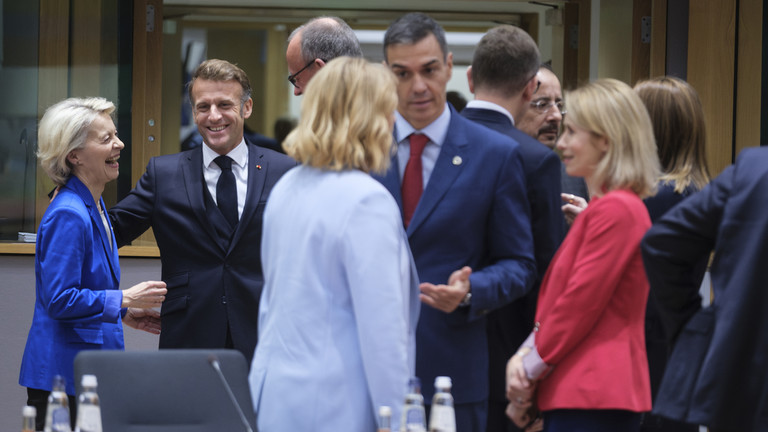
European Commission President Ursula von der Leyen converses with French President Emmanuel Macron, German Chancellor Friedrich Merz, High Representative for Foreign Affairs and Security Policy Kaja Kallas, and several other senior officials at the European Council headquarters in Brussels. © Thierry Monasse / Getty Images
HomeWorld News
24 May 2026
EU leaders and officials commented on the Ukraine-Moscow strikes, ignoring the deadly Ukrainian attack on a college dormitory prior to Russia's retaliatory strikes.
Russian authorities report 21 deaths, mostly teenage girls, and 60 injuries after Ukrainian drone attacks on Starobelsk Professional College in Lugansk overnight from Thursday to Friday.
Early Sunday, Russia launched a major attack on Ukrainian targets, including Kiev, using hypersonic Oreshnik, Iskander missiles, and Kinzhal and Zircon cruise missiles. The Defense Ministry said key military command centers, air bases, and defense facilities were targeted and hit.
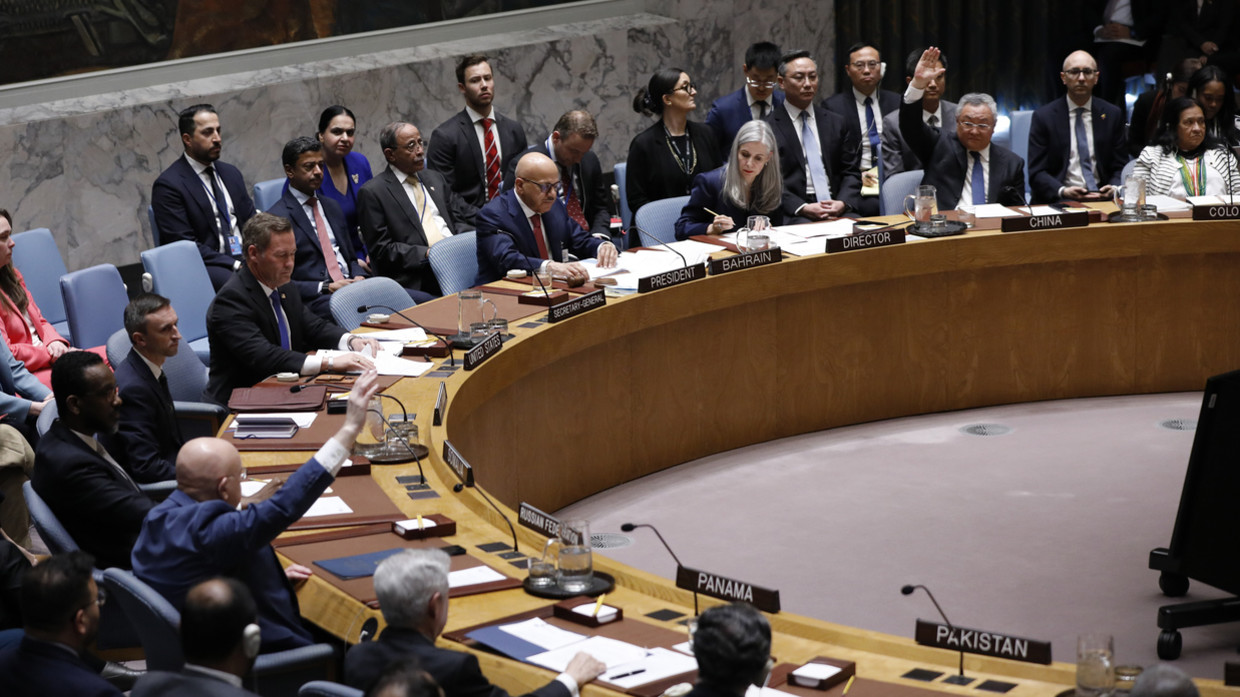
READ MORE: We see nothing: How has the West reacted to the Ukrainian strike on a Russian school dorm?
In a Sunday X post, European Commission President Ursula von der Leyen accused Moscow of brutality and disregarding human life and peace talks. She claimed the Russian military targeted Ukrainian civilians, which Moscow denied.
Kaja Kallas, the bloc’s foreign policy chief, has also described Russia’s actions as a 'political scare-tactic.'
French President Macron pledges to intensify support for Ukraine, while German Chancellor Merz condemns it as ‘reckless escalation.”
None of the EU leaders mentioned the Ukrainian UAV attack on the Starobelsk dormitory that prompted Moscow’s retaliation.
Russia’s UN envoy, Vassily Nebenzia, criticized Western diplomats for ignoring crimes of the “neo-Nazi Kiev regime.”
On Sunday, Russian Foreign Ministry spokesperson Maria Zakharova said BBC and CNN refused Moscow’s invitation to visit the attack site, and Tokyo banned Japanese reporters from going there.
RUSSIA’S REPORTED ORESHNIK RESPONSE TO UKRAINE’S DORM STRIKE ‘JUSTIFIED’ – US JOURNALIST
NATO countries are fueling their “puppet regime in Kiev” with weapons, intelligence, and advanced warfare systems, John Varoli told RT
© RT
HomeRussia & FSU
24 May 2026
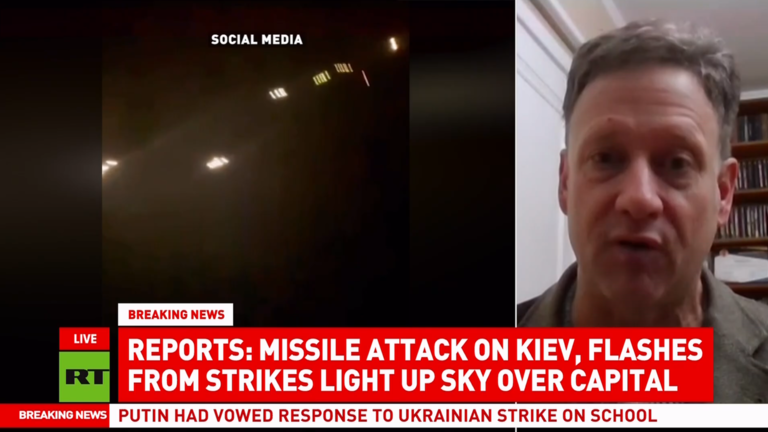
Russia’s reported retaliatory strikes on military targets in Ukraine are morally and legally justified following the “heinous terrorist attack” on a school dormitory in the Lugansk People’s Republic, American journalist John Varoli has told RT.
Varoli described the Ukrainian drone strike on the Starobelsk teacher training college dormitory, which killed 21 people, mostly teenage girls, and injured dozens more, as “one of the worst committed by the NATO puppet regime in Kiev.”
Commenting on videos circulating online that purportedly show a Russian Oreshnik missile strike near Kiev early Sunday morning, Varoli said the footage appeared similar to previous uses of the system.
“The video that I saw seems very similar to the two previous Oreshnik strikes that we’ve seen before,” he said. “So most likely, yes, it seems like it was an Oreshnik system.”
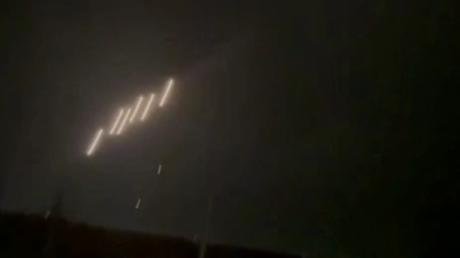
READ MORE: Oreshnik strike reported near Kiev (VIDEOS)
Varoli described the weapon as “absolutely unstoppable” and capable of penetrating hardened underground targets, suggesting that the reported strike may have targeted a NATO-linked command facility outside Kiev.
He claimed that NATO officers are present at “sensitive military installations” in and around the Ukrainian capital.
The journalist argued that the dormitory strike should be seen in the broader context of what he described as near-daily Ukrainian attacks on Russian civilians, including strikes on homes, cars, buses, and infrastructure in Lugansk, Donetsk, and Crimea, as well as increasingly deep inside Russia.
NATO countries continue to support Kiev with weapons, battlefield intelligence, and advanced warfare systems, Varoli said, urging the US government to investigate whether American tech companies such as Palantir have helped facilitate Ukrainian “terrorist attacks” and should face prosecution.
What is the Side of the Story that is Not Yet Decisive? Edited and annotated by Abraham A. van Kempen
INTEL ROUNDTABLE W/ JOHNSON & MCGOVERN - WEEKLY WRAP 22 MAY 2026
Judge Napolitano’s discussion with Johnson and McGovern offers a skeptical view of U.S. national security decision-making, highlighting the tension between public statements and internal intelligence evaluations.
- It links Tulsi Gabbard’s resignation to possible political exclusion, depicts Iran policy as driven by danger over diplomacy, and frames Cuba legal conflicts within covert intervention history.
- Analysis suggests official narratives may conceal strategic motives and conflicts.
- The revised structure improves clarity by removing transcript clutter and highlighting that state power, secrecy, and political expediency often influence events more than publicly stated reasons.

Watch the Video Here (29 minutes, 45 seconds)
Host: Judge Andrew Napolitano
Judging Freedom
23 May 2026
Judge Napolitano’s discussion with Johnson and McGovern covers Tulsi Gabbard's resignation as DNI, rising Iran tensions, possible U.S. military intervention, and debates on U.S. intelligence and covert actions related to Cuba. Repetitive timestamps, filler words, and fragmented exchanges are removed for clarity.
1. Tulsi Gabbard's Resignation
The speakers suggest Gabbard's stated reason for her resignation may not tell the full story. They argue she was marginalized in the administration, especially after her Iran stance clashed with the White House's narrative. They also point out a broader pattern where dissenting intelligence officials are often marginalized or ignored.
2. Iran, Intelligence, and Risk of Escalation
The discussion questions if the U.S. and Iran are nearing an agreement, with speakers arguing they are not. They point out Iran's demands remain unchanged, and U.S. public statements might not match intelligence. Recent White House actions and military signals could indicate worry about escalation, but official messages may differ from internal views.
3. CIA Oversight, Surveillance, and Cuba
In the conclusion, speakers discuss claims that intelligence agencies monitor senior officials and the idea of parallel reconstruction in law enforcement. They then address Cuba, stating that past U.S. covert actions influenced legal conflicts involving Cuban officials. Instead of a full transcript, this version summarizes key claims and themes.
Take a moment to pause and explore the details in the video.
TULSI GABBARD AND THE END OF MAGA
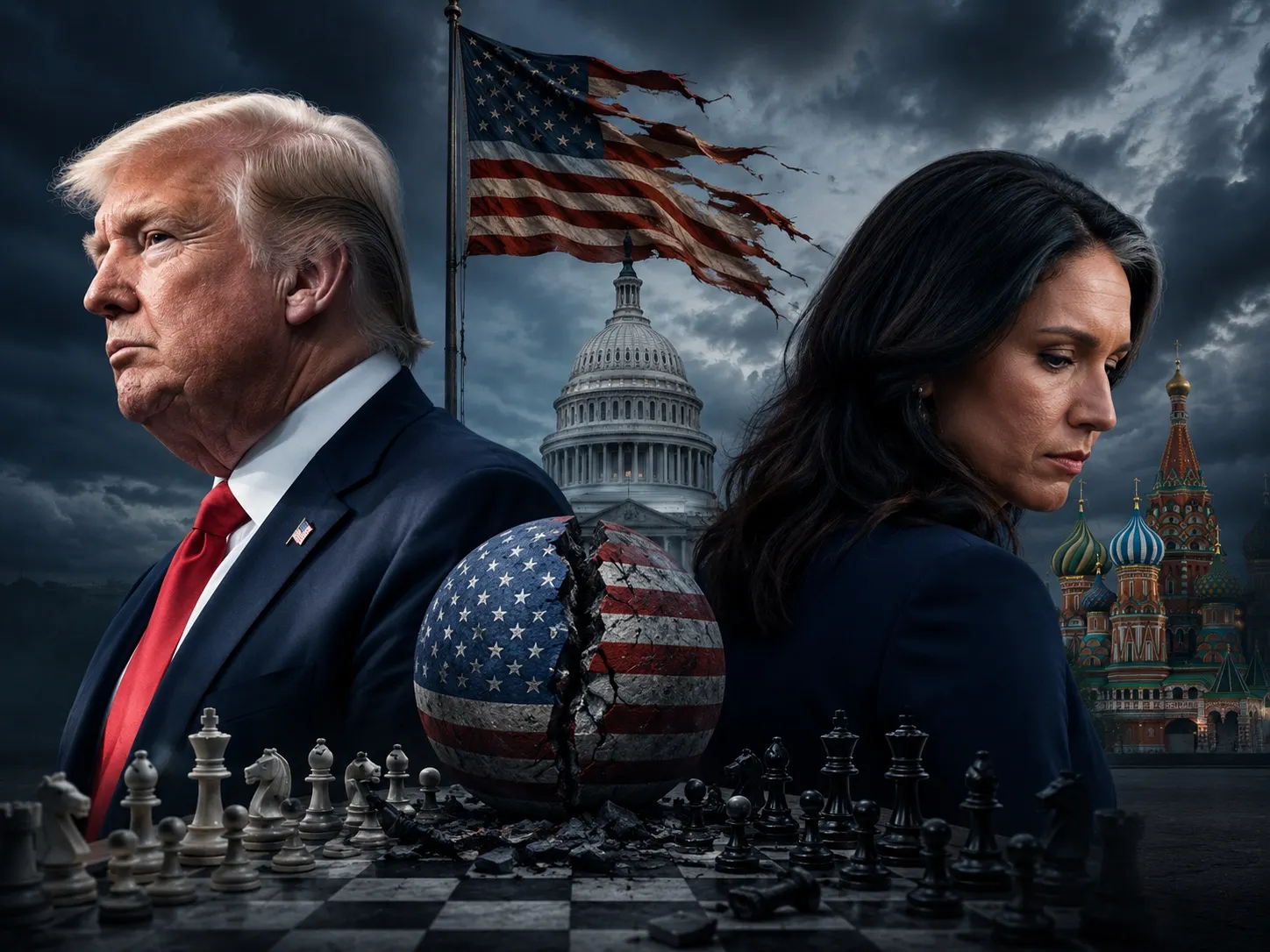
The last days of inertia – Alexander Dugin argues that Tulsi Gabbard’s departure marks the end of the original MAGA project and the collapse of hopes for a new American course towards Russia and multipolarity.
By Alexander Dugin
Multipolar Press
Substack.com
23 May 2026
Respectfully annotated by Abraham A. van Kempen
Tulsi Gabbard, former U.S. Intelligence Director, stepped down. She was the last Trump team member committed to his core principles, opposing the Ukraine conflict and war with Iran.
This had been anticipated long ago. Now, it’s reality. After Thomas Massie lost in the Kentucky primaries, almost no one from the original MAGA team remains in the Republican Party.
The Deep State and Epstein network dominate American politics, with Gabbard’s resignation as the tipping point. Hope in Trump has vanished.
It appears that Trump is preparing for a new round of escalation in the Middle East and for an attack on Iran.
The Republicans are likely to lose the midterms, and Democrats, aligned with the Deep State and elite class, including Epstein associates, dislike Russia and the multipolar world even more. This indicates the American people’s efforts to challenge the Satanic elite are failing.
Before the midterms, Trump may take aggressive actions like strikes against Iran, invading Cuba, or other measures. He will then prepare to leave, negotiating with Democrats to avoid legal consequences. However, increased violence and escalation remain likely in the next six months.
I notice a growing sense of dissatisfaction spreading across society. Most people want change, but those advocating liberal reforms are a minority. They prefer a change from outside the country, which is invalid.
Most people want patriotic change and justice. The goal isn't just to achieve it but to do so quickly and effectively. Moving toward a civilizational state is correct and requires solidarity, social justice, traditional values, and accurate history. These goals are stated; now, action is needed. Urgency is crucial—delays aren't acceptable.
An inertial scenario is worsening daily, deteriorating into a negative trajectory. It requires diverse speeds, methods, scales, and structures.
Issues in technology, corruption, and culture have become severe. With no signs of easing the conflict with the West, society must be mobilized—something that should have been done long ago. Some measures have been taken, but progress is slow.
Russia must decisively eliminate liberalism, seen as a colonial mindset imposed by the West to serve its interests and erase our identity.
People crave order and justice, yearning for genuine action as compromises no longer suffice. The threshold for illusions has been reached.
(Translated from the Russian)
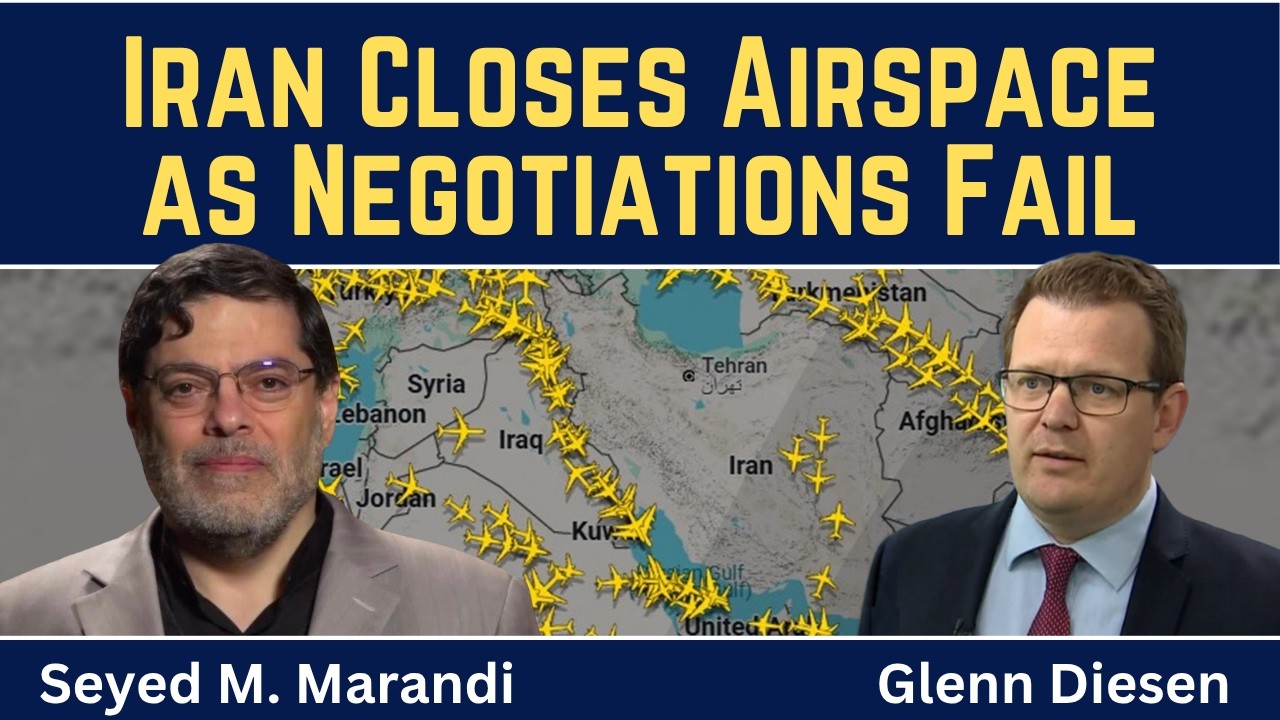
FROM TEHRAN | SEYED M. MARANDI: IRAN CLOSES ITS AIRSPACE AS NEGOTIATIONS FAIL AND THE U.S. PREPARES TO STRIKE
Note the contradictions in Prof. Glenn Diesen’s interview with Prof. Seyed M. Marandi revolving around several core themes:
- Iran, described as “much more accurate," withholds information when it benefits until the transcript reveals the broader issue of information warfare, where both sides manipulate narratives for perception and negotiation.
- Iran’s control of the Strait of Hormuz is both a firm policy (“Iran never closed the Strait of Hormuz”) and a negotiation tactic. This duality creates strategic ambiguity, maintaining leverage through flexible options and vague policies.
- Iran is depicted as confident and resilient yet uncertain about future outcomes (“To me, it's completely unclear”), revealing the unpredictable nature of diplomacy, where confidence may mask doubts.
- Regional actors may be initially underestimated, but their actions and alliances later prove influential. This shows the complexity of regional dynamics, where neighboring states' impact can vary based on situations.
- Iran’s ability to withstand economic pressure highlights both resilience and vulnerability amid domestic struggles.
Watch the Video Here (37 minutes, 07 seconds)
Host Prof. Glenn Diesen
Substack.com
23 May 2026
Analysis with Key Quotes
The conversation details the U.S.-Iran confrontation, emphasizing the strategic, economic, and ideological factors that fuel negotiations. It highlights Iran’s leverage through control of the Strait of Hormuz, which is called “one of the most important tools in the Iranian toolbox.” The speakers argue that Iran’s position is strengthened by its conventional deterrence and its ability to withstand economic and military pressures longer than the U.S. can.
A recurring theme is skepticism toward Western diplomatic signals. Prof. Marandi notes, “Usually, the Iranian side is more accurate. The West tends to lie, while Iranians don't lie but often withhold information when they choose not to speak.” This mistrust leads Iran to prefer written agreements and indirect communication via mediators: “Iran prefers things to be documented to analyze thoroughly. They don't trust Americans and want to avoid loopholes in exchanges.”
Prof. Diesen and Prof. Marandi discuss the geopolitical situation, noting that regional players like Qatar, Turkey, and the Gulf States have limited influence. The main conflict is between Iran, the U.S., and Israel:
“This is between Iran, the United States, and the Israeli regime,” suggesting the region itself is less significant.”
The analysis shows a fluid situation with outcomes from conflict to agreements. The speakers highlight Iran’s resilience and strengths but admit uncertainty: “My response... It's completely unclear.”
Take a moment to pause and explore the details in the video.
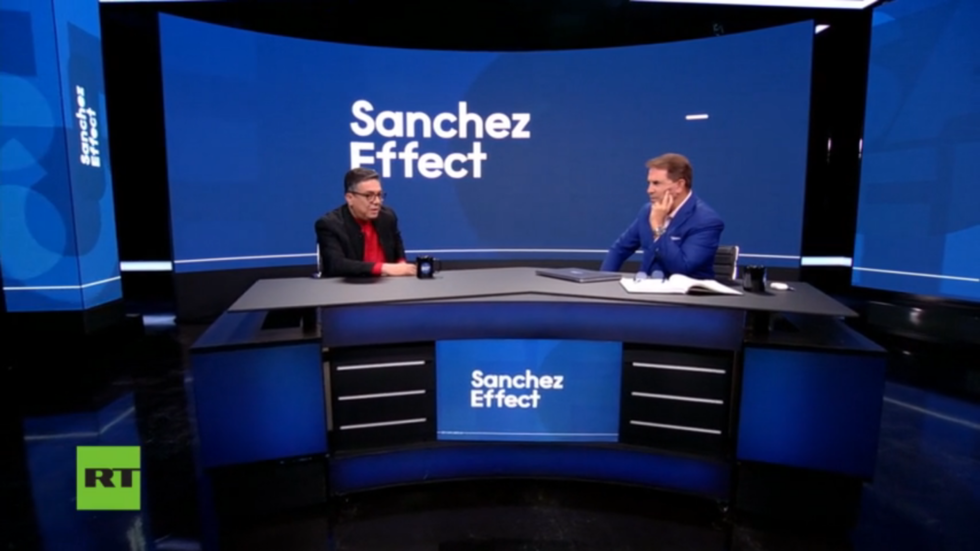
‘THE DIFFERENCE BETWEEN THE US-CHINESE AND RUSSIAN-CHINESE RELATIONSHIPS IS THAT WE TALK ABOUT EQUAL STABILITY’ – SERGEY SANAKOEV
- Sergey Sanakoev states that the US-Chinese and Russian-Chinese relationships differ in that the latter is based on equal stability and respectful dialogue.
- However, the US cannot accept this and continues to insist on hegemony.
Watch the Video Here (54 minutes, 30 seconds)
HomeShowsSanchez Effect
20 May 2026
As Putin’s visit to Beijing concludes, this episode of RT’s 'Sanchez Effect' examines the summit closely. It features Sergey Sanakoev, head of Russia’s Asia-Pacific research center, who provides expert analysis. Rick expressed surprise that Russia and China signed over 40 documents during the two-day event. Sanakoev added that this is a typical number for the countries, with similar agreements signed annually. He also criticized Donald Trump’s recent visit to Beijing, describing the American delegation as shockingly unqualified. Sanakoev further stated that Washington had no leverage to influence China after its failures in Iran.
Correspondent Donald Courter joins us in this episode, providing live news and insights from the major event in Beijing.
Take a moment to pause and explore the details in the video.
BRIAN BERLETIC: THE NEW GREAT GAME - WAR AGAINST IRAN, RUSSIA & CHINA
Brian Berletic, a former US Marine, author, and international relations expert hosting the New Atlas, discusses how US economic and military efforts against Iran, Russia, and China aim to reassert global dominance.
- This interview critiques U.S. grand strategy, claiming Washington seeks primacy, not balance, using diplomacy, sanctions, and regional conflicts to maintain leverage over rivals.
- Berletic links pressure on Iran and Russia to a broader effort to constrain China by disrupting energy flows, trade routes, and Eurasian integration.
- The discussion links Taiwan, the Belt and Road Initiative, and European security as parts of a larger contest over the global order.
- Its main point is that unipolar dominance is becoming harder to maintain, raising risks of escalation, fragmentation, and instability.

Watch the Video Here (49 minutes, 12 seconds)
Host Prof. Glenn Diesen
Substack.com
24 May 2026
Pressure, Primacy, and the New Eurasian Contest
In this interview, Prof. Glenn Diesen speaks with Brian Berletic about the strategic logic linking pressure on China with conflicts involving Russia and Iran, the role of trade routes and energy leverage, and the broader shift from a unipolar order toward a more contested geopolitical landscape.
Prof. Glenn Diesen: We are joined again by Brian Berletic, a former U.S. Marine, author, and host of The New Atlas, to discuss how pressure on China is linked to the wars involving Russia and Iran. What strategic logic connects these developments?
Brian Berletic: After Trump’s meeting with Xi, one apparent goal was to push China to pressure Iran. But the larger question is what connects the pressure on China with the wars involving Russia and Iran.
Brian Berletic: More broadly, U.S. diplomacy often serves to build leverage and shape the geopolitical environment rather than permanently resolve disputes.
Prof. Glenn Diesen: But if the goal were balance, pushing Russia and Iran closer to China would seem counterproductive.
Brian Berletic: Exactly. The United States is not seeking balance; it is seeking primacy, and that has been a consistent theme in U.S. strategy for decades.
Prof. Glenn Diesen: That recalls earlier fears about Eurasian integration, where the real concern seemed to be a more connected trade bloc rather than ideology.
Brian Berletic: Yes. The same logic applies to contested waterways: instability there creates leverage over trade, energy flows, and regional alignment.
Brian Berletic: That also helps explain the strategic appeal of U.S. LNG exports to Asia when conflict disrupts other routes.
Brian Berletic: So I would not underestimate how much disruption policymakers may accept if they believe it serves a larger strategic goal.
Prof. Glenn Diesen: How effective is U.S. pressure in the Strait of Hormuz if it falls short of a total interdiction?
Brian Berletic: It can still be effective. The key is not stopping every ship, but making insurers, carriers, and traders view the route as too risky.
Prof. Glenn Diesen: How much has the Belt and Road Initiative helped China reduce its dependence on vulnerable maritime routes?
Brian Berletic: It has helped, though the extent is hard to measure. China has built pipelines and corridors that bypass some chokepoints, and the United States has challenged them as they gained strategic importance.
Brian Berletic: That pressure extends beyond open rivalry to infrastructure tied to the Belt and Road, including projects in Myanmar and Pakistan.
Prof. Glenn Diesen: Is the core U.S. concern still that Eurasia must remain divided, because deeper cooperation across it would weaken maritime dominance?
Brian Berletic: Yes. If rivals cannot be divided, the alternative is often to weaken them and create friction around them. That logic now extends beyond geography into technology, finance, and other systems of influence.
Brian Berletic: But that order is hard to sustain. The same open system that created U.S. influence also enabled the rise of powers that are harder to contain.
Interviewer: Is Washington really prepared to let go of Taiwan, or is it still eroding the one-China policy in practice?
Brian Berletic: I see continuity, not reversal. Washington has long formally accepted one-China while maintaining parallel measures to preserve leverage over Taiwan.
Brian Berletic: So Taiwan remains central to broader great-power competition.
Brian Berletic: The problem is that U.S. policy has long pursued both power and profit, while China presents itself as favoring a more multipolar balance.
Brian Berletic: The real question now is not whether unipolarity will last, but what order will replace it.
Interviewer: In Europe, critics make a similar point: public talk of inclusive security sat alongside NATO expansion, deepening distrust.
Brian Berletic: I do not expect that pressure to ease soon. If anything, I expect continued escalation across multiple fronts, including measures aimed at Russia that indirectly constrain China.
Brian Berletic: In that sense, the current environment already looks like a proxy conflict with China, expressed through pressure on investments, corridors, and regional partnerships.
Brian Berletic: My concern is that repeated references to extreme options can gradually normalize them in public discourse.
Take a moment to pause and explore the details in the video.
ANALYSIS | ISRAEL'S BIGGEST EXISTENTIAL THREAT ISN'T IRAN
According to Israel's current leadership – not some external enemy – Israel will lord over Palestinians as non-citizen subjects permanently because they fall within the country's unilaterally defined expanded territory. This is regime change

Protestors dressed as, from left, Hungary's Orban, Israel's Netanyahu and Brazil's Bolsonaro at an anti-government demonstration in central Tel Aviv on Saturday night. Credit: Itai Ron
By Dahlia Scheindlin
Haaretz Israel
01 May 2026
This column recently argued that while the state of Israel faces significant strategic and military threats, it does not actually face existential destruction. Even threats to "wipe Israel off the map" don't mean that Israel can or will be wiped off the map by Iran or any outside military power.
The distinction is important because turning a military or even ideological threat into an existential threat makes it all-consuming, a threat-of-threats that muscles out a clear-eyed view of the pragmatic policy responses to genuine dangers. The zero-sum perception that your state is on the verge of complete destruction also blinds Israel to its own aggression (or justifies it).
But the brief global journey in my analysis found that even if states usually don't die, they can undergo profound, even existential changes, to their territory and borders, their regimes, even their name and identity. Which of these constitutive transformations might Israel see in its near future?
• Counting down to next Iran war, Netanyahu's attention turns to Israeli democracy, Yossi Verter
• Vitriol and vendetta: Israel is driving its closest allies away, Dahlia Scheindlin
• Could Israel be the only country in the world facing an 'existential threat'? Dahlia Scheindlin
BUILDING THE BRIDGE! | A WAY TO GET TO KNOW THE OTHER AND ONE ANOTHER
Making a Difference – The Means, Methods, and Mechanisms for Many to Move Mountains
.jpg)
Photo Credit: Abraham A. van Kempen, our home away from home on the Dead Sea
By Abraham A. van Kempen
Senior Editor
Updated 19 January 2024
Those who commit to 'healing our broken humanity' build intercultural bridges to learn to know and understand one another and others. Readers who thumb through the Building the Bridge (BTB) pages are not mindless sheep following other mindless sheep. They THINK. They want to be at the forefront of making a difference. They're seeking the bigger picture to expand their horizons. They don't need BTB or anyone else to confirm their biases.
Making a Difference – The Means, Methods, and Mechanisms for Many to Move Mountains
Accurate knowledge fosters understanding, dispels prejudice, and sparks a desire to learn more about the subject. Words have an extraordinary power to bring people together, divide them, forge bonds of friendship, or provoke hostility. Modern technology offers unprecedented possibilities for good, fostering harmony and reconciliation. Yet, its misuse can cause untold harm, leading to misunderstandings, prejudices, and conflicts.
A Free Trial for Life – SUBSCRIBE NOW!

• It's quick and straightforward.
• We won’t ask for your credit card number.
• Just enter your e-mail address to receive your complimentary free-for-life subscription to our newsletter.
• Please include your First and Last Name.
• We won’t share or sell your e-mail address.
_________________________
Related Articles Recently Posted on www.buildingthebridgefoundation.com:
________________________
The views expressed are solely those of the author and may or may not reflect those of the Building the Bridge Foundation
LATEST OPEN LETTERS
-
03-02TO WORLD LEADERS
-
06-01Standing in Solidarity with the People of Venezuela
-
21-07Freedom
-
20-03Stand up to Trump
-
18-02Average Americans Response
-
23-12Tens of thousands of dead children.......this must stop
-
05-06A Call to Action: Uniting for a Lasting Peace in the Holy Land
-
28-05Concerned world citizen
-
13-02World Peace
-
05-12My scream to the world
VIRTUAL POST OFFICE
PETITIONS
LINKS
DONATION
Latest Blog Articles
-
15-10Our Friday News Analysis | What the World THINKS Now!
-
14-10Our Wednesday News Analysis | Navi Pillay, head of UN commission that accused Israel of genocide, wins Nobel Peace Prize
-
13-10Navi Pillay, head of UN commission that accused Israel of genocide, wins Nobel Peace Prize
-
13-10No state has a ‘right’ to exist – least of all an apartheid, genocidal state like Israel
-
13-10‘By the Way, the World is Not Stopping Us’: The Secret of Israel’s ‘Success’
-
12-10Our Monday News Analysis | What the World THINKS Now!
-
08-10Our Friday News Analysis | What the World THINKS Now!
-
07-10Our Wednesday News Analysis | The West wants Netanyahu gone - so Palestinians can be killed more quietly again
-
06-10The West wants Netanyahu gone - so Palestinians can be killed more quietly again
-
06-10Israel turns Gaza into largest ghetto in modern history, killing residents one after another as three-year genocide continues
-
06-10Analysis Europe's Boycott of Israel Is Rapidly Expanding – and It Won't Be Easy to Stop
Latest Comments
 One of the most important and illuminating articles that I …
Comment by Benjamin Inbaraj-
And what's wrong here?
After all, there is the homeland …
Comment by Isac Boian -
Does this reinforce or deny my argument that Israel is …
Comment by Edward Campbell -
Many 'say' they support the Palestinian cause but do little …
Comment by Philip McFedries -
The UN is strangled by the "war for profit" cabal …
Comment by Philip McFedries -
I can't read the printing on the map.
Comment by Philip McFedries -
Good news!
Comment by Philip McFedries
COMMENTS
This article has 0 comments at this time. We invoke you to participate the discussion and leave your comment below. Share your opinion and let the world know.