 NEWSLETTER
Common Grounds
Our Monday News Analysis | What the World Reads Now!
Helping to Heal a Broken Humanity (Part 84)
The Hague, 4 May 2026 | If you know of a decisive story, tell the world! We're still searching
.jpg)
We’ve moved the Evangelical Pope to https://evangelicalpope.substack.com/
May we share a new Substack publication titled “The Evangelical Pope,” inspired by the life and teachings of Saint Pope John Paul II?
In an era when noise often obscures clarity and depth, this publication seeks to offer thoughtful insights rooted in faith, moral values, and enduring wisdom.
Each message is crafted with care—intended not simply to inform, but to invite reflection, both in personal faith and in the broader realities we encounter today.
Please feel free to explore the publication and help heal a broken humanity:
https://evangelicalpope.substack.com/
Warm regards,
BUILDING THE BRIDGE FOUNDATION, THE HAGUE
Click here for Part 1
Click here for Part 2
Click here for Part 3
Click here for Part 4
Click here for Part 5
Click here for Part 6
Click here for Part 7
Click here for Part 8
Click here for Part 9
Click here for Part 10
Click here for Part 11
Click here for Part 12
Click here for Part 13
Click here for Part 14
Click here for Part 15
Click here for Part 16
Click here for Part 17
Click here for Part 18
Click here for Part 19
Click here for Part 20
Click here for Part 21
Click here for Part 22
Click here for Part 23
Click here for Part 24
Click here for Part 25
Click here for Part 26
Click here for Part 27
Click here for Part 28
Click here for Part 29
Click here for Part 30
Click here for Part 31
Click here for Part 32
Click here for Part 33
Click here for Part 34
Click here for Part 35
Click here for Part 36
Click here for Part 37
Click here for Part 38
Click here for Part 39
Click here for Part 40
Click here for Part 41
Click here for Part 42
Click here for Part 43
Click here for Part 44
Click here for Part 45
Editorial | Manufacturing and Manipulating Consent
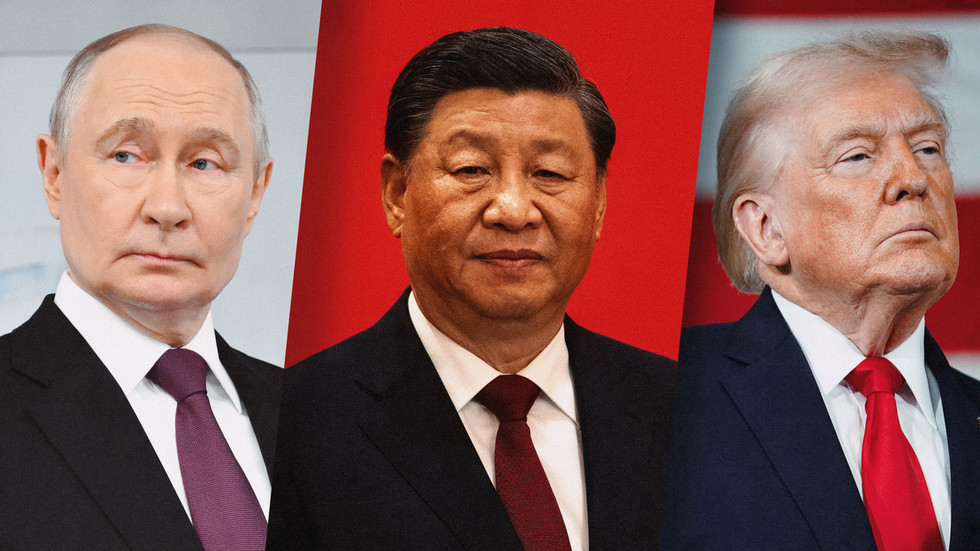
RT composite. © Sputnik / Yuri Kochetkov; Getty Images / Nathan Howard; Kevin Frayer
By Abraham A. van Kempen
4 May 2026
The conflicts in Eastern Europe, West Asia (the Middle East), and the emerging tensions in East Asia, fueled by Western dominance, will come to an end sooner rather than later, as maintaining the current course is unsustainable. The question is whether the world will remain under the sole influence of the EU-US/NATO + Coalition of the Willing (including Israel and Ukraine), or if mutual deterrence will prevent escalation. Specifically, will EU-US/NATO + Ukraine overpower and divide the vast Russian Federation, or will Russia succeed in defeating them? Similarly, will the EU-US/NATO + Israel overpower, divide, and conquer Iran, the Gulf States, and the entire Middle East—or will these nations, including the majority of Israel’s citizens, push back and defeat them?
Russia is unlikely to lose the war against the EU. Additionally, Russia, China, India, Pakistan, North Korea, and Iran are unlikely to allow Western dominance in West Asia. Who will emerge victorious? The people of Europe, the Middle East, Asia, and the Americas!
Once the EU-US/NATO+ Coalition of the Willing is finally stopped, people worldwide—especially Europeans and Americans—will be liberated to breathe freely. Ironically, Russia will once more liberate Europe, similar to 1945 when 22 to 27 million Russians sacrificed their lives to free Europe from NAZI rule. Concurrently, Russia, China, India, Pakistan, North Korea, Iran, and all the BRICS countries will help liberate all the people of the world, especially those in the Americas, from the Blob, the invisible dark hand that rules the world, often referred to as the Worldwide Deep State.
To this end, President Trump, Xi Jinping, and Putin will serve as key players in a strategic triangle, demanding from each a ton of humility and many cups of kindness as much as the Lake of Baikal. The U.S. will remain a formidable, but no longer an invincible, military power. Importantly, President Trump will NOT represent the swamp in Washington, D.C. I will provide more details this coming Friday.
Also on Friday, you'll discover how the Blob has unified its mindset and infiltrated major government, corporate, and NGO institutions, including major universities, mega-churches, and leading media outlets worldwide, to influence and manipulate public opinion and consent.
Finally, by exploring today’s 5,000-word edition, you gain access to 12 years of insights, knowledge, and wisdom—totaling 2,340,223 words—published by the Building the Bridge Foundation. Today, we publish around 15,000 words per week across our three weekly editions and share four to seven videos produced by our colleagues worldwide.
To be continued on Friday, 8 May 2026.
Have a great week,
Abraham A. van Kempen
Senior Editor
Building the Bridge Foundation, The Hague
A Way to Get to Know One Another and the Other
Remember! Diplomacy is catalytic—transformative —while military action is cataclysmic—destructive and catastrophic.
When faced with the options to be good, bad, or ugly, let’s build bridges, not burn them. After all, mutual deterrence reigns.
NATO HOLDS SECRET MEETINGS WITH MOVIE MAKERS – GUARDIAN
One screenwriter has called the series of gatherings with creatives a case of “clear propaganda.”
NATO flag seen at the bloc's headquarters in Brussels, Belgium, May 28, 2025. © Getty Images / Omar Havana
HomeWorld News
3 May 2026
NATO is privately consulting TV and film industry experts across Europe and the US, according to The Guardian. Some claim the alliance aims to use arts for “fear mongering” and “propaganda,” the report said.
The military bloc has held three private meetings with industry professionals in Los Angeles, Brussels, and Paris, and plans to meet WGGB members in London next month, according to the newspaper.
The upcoming Chatham House meeting will address the 'evolving security situation in Europe and beyond,' with NATO's James Appathurai and other officials expected to attend.
According to an internal WGGB email cited by The Guardian, conversations have partly "inspired" at least "three projects."
READ MORE: European ‘propaganda’ using Russia as ‘external enemy’ to mask crises – Kremlin
The military bloc’s actions have reportedly raised concerns in the film and TV industry. Irish film writer Alan O’Gorman called the upcoming meeting “clearly propaganda,” The Guardian reports.
He reportedly said Europe is fearmongering about defenses and noted media and government efforts in Ireland to promote NATO and align with it.
Other screenwriters were quite offended that art was being used to support war and felt they were being asked to help create propaganda for NATO, he stated, according to the newspaper.
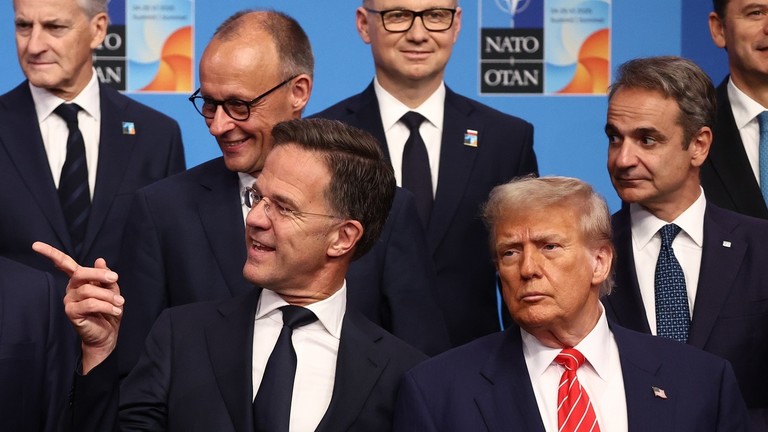
READ MORE: Trump ‘drama’ triggers NATO summit cuts – Reuters
The Washington-led NATO faces internal division, with Trump calling it a "paper tiger” after some members refused support against Iran. Tensions with European nations had been rising earlier due to threats to annex Greenland.
Polish Prime Minister Donald Tusk said the main threat isn't from 'external enemies' but from 'ongoing disintegration.”
FROM CHINA & CANADA | EINAR TANGEN: U.S. DESTROYING WORLD ORDER TO KEEP HEGEMONY
Einar Tangen argues that an anticipated meeting between Xi Jinping and Donald Trump is unlikely to yield substantive outcomes, as China’s strategy prioritizes cautious engagement and long-term stability over confrontation.
- He maintains that U.S. foreign and energy policy is driven by control rather than cooperation, contributing to global energy insecurity, rising inflation, and a looming food crisis that will disproportionately affect the Global South.
- Tangen contends that attempts to weaponize trade, sanctions, and blockades are accelerating a breakdown of trust in the existing international order, while technological shifts in energy—particularly in China—are undermining assumptions about continued oil dominance.
- He describes the U.S. as a declining power acting without a clear endgame, Europe as facing an existential economic and political crisis, and China as positioning itself as a stabilizing force promoting a multipolar, Westphalian-style system based on sovereignty, non-interference, and dialogue rather than military coercion.

Watch the Video Here (50 minutes, 41 seconds)
Host Prof. Glenn Diesen
Substack.com
02 May 2026
Glenn Diesen: Welcome back. Today, we are joined by Einar Tangen, a senior fellow at the Taihe Institute in China and at the Center for International Governance Innovation in Canada. Thank you for returning. We have a lot to discuss.
Einar Tangen: As always.
Glenn Diesen: I wanted to start by asking what we can expect this month from the anticipated meeting between Xi Jinping and Donald Trump. It was supposed to have taken place already, but it was postponed by the American side. What are your expectations?
Einar Tangen: Not much substance here. China’s strategy towards the U.S., as discussed, is mainly to keep engaging. Beijing wants to avoid situations like Iran’s, where Trump could feel cornered and respond in an uncontrollable way.
Many expected the meeting to be canceled, but China proceeded. I was surprised by how limited the scope became. Previous talks in California showed the US was unprepared and focused on impractical demands—like the Strait of Hormuz—making them non-starters.
China stresses Taiwan as a red line. Beyond this, symbolic actions such as buying American grain, gas, or oil may occur, even though the US does not need to boost energy exports.
Glenn Diesen, you said the US doesn’t need to sell more energy, partly because the war in Ukraine was exploited to disconnect Europe from Russia, thereby increasing Europe's reliance on American energy. Similar patterns are developing in East Asia. How do you view this?
Einar Tangen states US energy strategy has traditionally focused on control, starting with the petrodollar after 1973. Though effective for a time, it led to extensive borrowing and increased debt.
The US thinks it can block routes like the Strait of Hormuz or the Red Sea but underestimates how this prompts nations like China to seek alternatives, such as piped energy from Russia and Central Asia, which are less vulnerable to geopolitical risks.
It’s crucial to distinguish Trump’s actions from US goals shaped by neoconservative and Pentagon views, which have historically sought to prevent Europe-Russia collaboration. While mostly achieved, the final goal remains unclear.
Einar Tangen (continued): Energy prices are set globally, and rising prices fuel inflation. Oil companies profit from selling stored stocks at higher prices. The US seeks to be the top energy exporter, but low-cost extraction is coming to an end. New drilling in the Arctic or offshore is more expensive and requires higher prices to stay profitable.
Meanwhile, alternative technologies are advancing rapidly. Solar power costs have dropped, battery storage is expanding massively, and China plans a large nuclear expansion aiming for viable fusion in the long term.
All of this suggests that the world paying high hydrocarbon prices is uncertain. Energy markets and the global economy are undergoing major changes.
Glenn Diesen asks about the transformation's impact on the global economy and who are most vulnerable to shocks, especially as energy influences food markets.
Einar Tangen: In the near term, countries with limited reserves, such as India, are the most vulnerable. Agriculture relies heavily on diesel, fertilizers, and energy-intensive supply chains. Missing planting seasons can lead to irreversible food loss.
An energy crisis causes a food crisis since food production—fertilizers, irrigation, harvesting, processing, packaging, transportation—depends on energy. Even if stability returns, much damage has already happened.
The Global South will initially face the harshest effects, as inflation in food and fuel prices will hit areas with the least buffer capacity the hardest.
Glenn Diesen: Moving on to Iran and the overall escalation of conflict, discussions now openly include control of the Strait of Hormuz, possible naval blockades, and sanctions. How does this impact China, given that it is a primary target of the US strategy?
Einar Tangen said China knows it is a long-term target, but many regional states depend on China economically and may avoid supporting escalation, such as ASEAN nations with strong trade ties to Beijing.
The US might try regime change or provocations, but it lacks a clear goal. A coercive strategy is unstable. As confidence in the US declines, more nations are decoupling, partly to reduce risks.
Einar Tangen states China’s long-term approach involves engagement and stability, waiting out unpredictability. Trump's unpredictable behavior is temporary, and consistency benefits us over time.
An increasing number of countries are quietly contemplating whether they prefer to be bullied or to have a partner committed to trade and development. China provides the latter option. This contrast is becoming increasingly significant.
Glenn Diesen suggests Europe is moving toward increased confrontation with Russia, with discussions of war becoming more open. If a direct conflict happens, how might China respond?
Einar Tangen: China would not send troops or engage militarily in Europe. The real danger would be escalation through tactical nuclear weapons.
Europe faces an existential crisis as energy shocks hurt industry, especially in Germany. High energy prices threaten the survival of European industries. Political instability grows, and voters feel detached from elite decisions.
China focuses on strengthening internal resilience through domestic consumption and adjusting to external uncertainties. Control what you can and respond wisely to what you can't.
Glenn Diesen: China has proposed alternative frameworks for global cooperation. Do you see these as viable alternatives to war?
Einar Tangen says China’s proposals are simple: respect sovereignty, avoid ideological pressure, and return to a Westphalian system of mutual non-interference. Security shouldn’t come at others’ expense.
Global issues are resolved through negotiation, not war, which causes destruction but doesn't address root causes. China aims to set an example, but others must move beyond outdated views. Europe’s crisis is mainly a matter of choice.
Glenn Diesen: Thank you very much for your time. I always enjoy our conversations
What is the Side of the Story that is Not Yet Decisive? Edited and annotated by Abraham A. van Kempen
ANALYSIS |HERE’S WHERE WASHINGTON AND THE REST OF THE WORLD DIVERGE
Russia, China, America, and the myth of a new grand bargain
HomeWorld News
2 May 2026
By Fyodor Lukyanov, the editor-in-chief of Russia in Global Affairs, chairman of the Presidium of the Council on Foreign and Defense Policy, and research director of the Valdai International Discussion Club.
Russia in Global AffairsRGA on Telegram
This May, expect discussions on the "strategic triangle” involving Russia, China, and the US.
US President Donald Trump is expected to visit Beijing first, and then Russian President Vladimir Putin will visit Chinese President Xi Jinping.
Whenever the leaders of the three most influential powers gather, speculation arises. What if they make a major agreement? Could the world become more stable?
These expectations are unjustified. The global system is restructuring and cannot be stopped or reversed by summit diplomacy. However, key moments in history can emerge through careful management or reckless acceleration. This is why the upcoming meetings are so important.
Russia and the US are fighting significant conflicts with global implications. China, which usually avoids such disputes, is reevaluating its stance, as seen at the recent Valdai Club conference in Shanghai.
The core question of this reevaluation is: what, if anything, remains possible in relations with Washington?
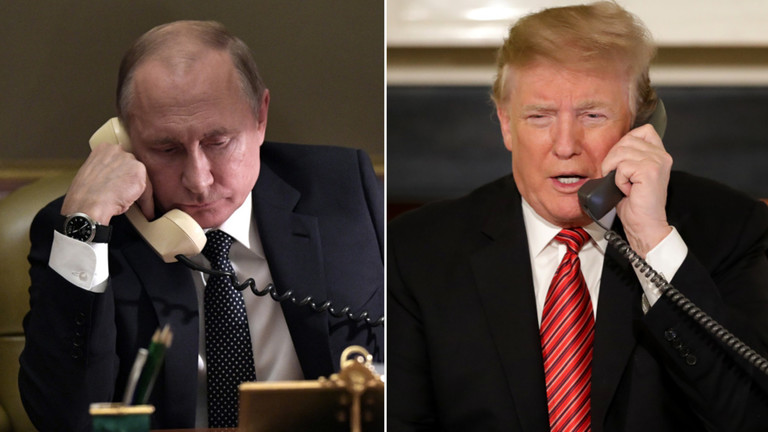
Read more: A deal without Ukraine: Inside the Putin-Trump talks
For decades, China’s growth relied on its economic ties with the U.S., known as “Chimerica,” in which American capital and technology complemented Chinese labor and manufacturing, thereby supporting globalization. Though unequal, it was mutually beneficial, and self-interest kept both sides from damaging the relationship.
That assumption has now collapsed.
By the late 2000s, dissatisfaction in Washington grew, viewing the arrangement more as a structural imbalance than a mutual benefit. As economic and strategic tensions mounted, small adjustments proved inadequate, necessitating a fundamental transformation of the system.
For decades, the global order mostly served the US, the leader of the Western bloc. Its slow decline now threatens these benefits. Washington is exploiting this transition to gain future advantages.
Donald Trump exemplifies this approach vividly. His transactional and boastful rhetoric may seem unorthodox, but the underlying logic existed beforehand. The goal is to quickly gain advantages, boost national capacity, and then lead in the next phase of global rivalry.
This marks a major shift from the previous American approach of long-term global investments that built a framework serving U.S. interests. Now, the focus is on short-term gains, risking future instability.
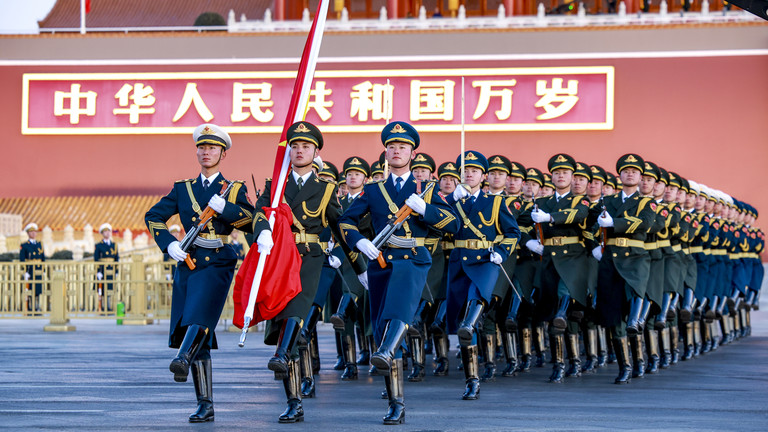
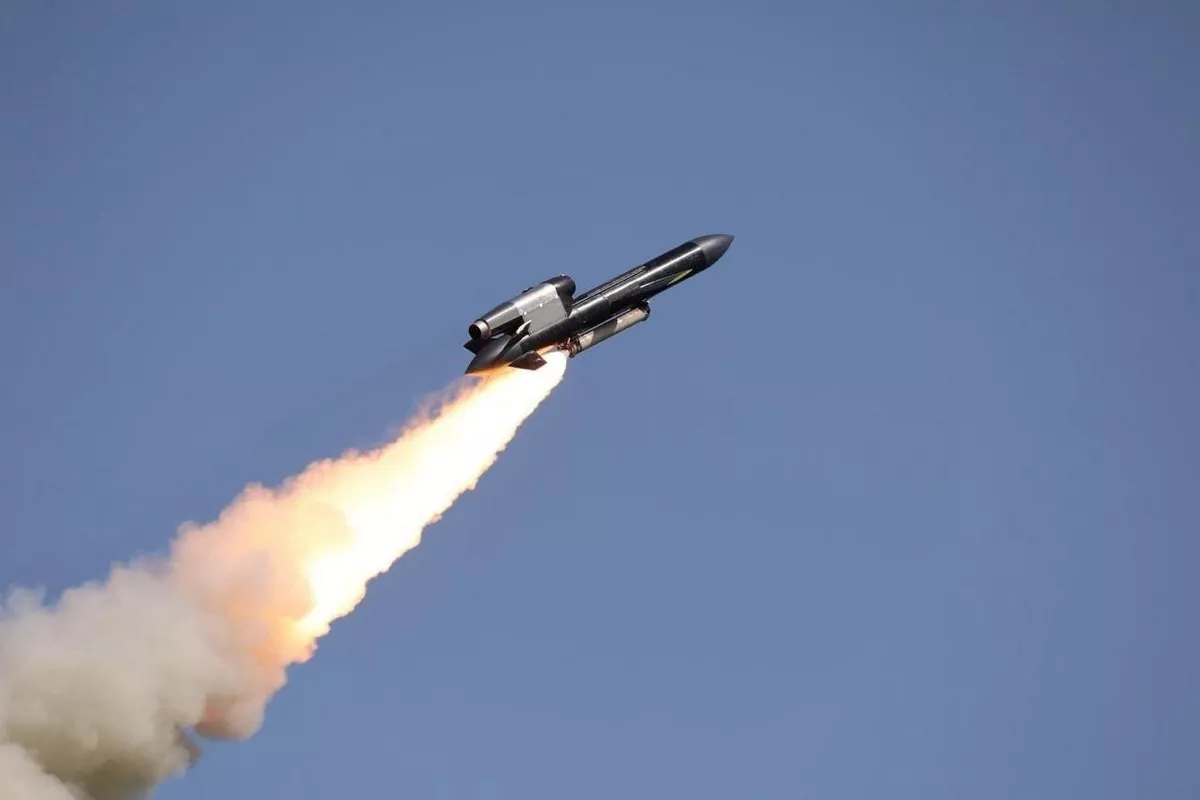
Read more: China won’t fight the US, but may still pay the price
It remains uncertain if this strategy will succeed. The initial phase faced setbacks, but the overall direction probably won't change. Future administrations may adopt a different tone, but they will face similar limits. The liberal international order likely won't return, not because of Trump’s personality, but because the supporting conditions are gone.
For major powers like China, this has major consequences. The chance of a comprehensive “big deal” with the US to stabilize the global system for years has become largely unattainable.
Trump emphasizes “deal,” showing it’s more than just strategy—it's a commercial concept. A "big" deal isn't about durability but the large, immediate benefits. Like any business deal, it can be discarded if a better opportunity comes up.
Under these circumstances, long-term agreements on the global order are unlikely because Washington won't agree to restrictions until it perceives a sufficient advantage.
This isn't necessarily due to malice or arrogance but a rational response to uncertainty, as the U.S. aims to secure its future dominance through decisive action.
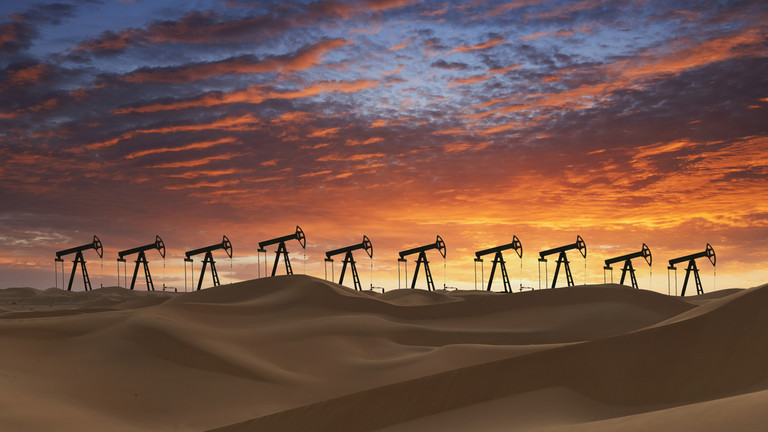
Read more: The UAE’s OPEC gambit: Clever power play or road to chaos?
But rationality on one side forces adaptation on the other.
If key players conclude that stable deals with Washington are impossible, their actions shift. Military power becomes vital to counter external pressure. At the same time, interest grows in alternative cooperation frameworks that operate independently of the U.S. and are unaffected by its influence.
This reasoning isn't new but is becoming urgent. Russia has supported these arrangements for years, while China has been cautious in maintaining a beneficial relationship with the U.S., which now seems to be fading.
The upcoming visits to Beijing will help gauge the progress made in this shift.
The Trump-Xi meeting aims to define a temporary compromise amid growing mistrust between two economically connected powers. It now centers on achievable short-term agreements and their duration rather than a comprehensive deal.
Putin’s upcoming discussions with Xi will focus on how Russia and China might establish cooperation mechanisms that exclude the United States. Moscow has already made progress in this area, and now Beijing seems to be considering whether to pursue this path as well.
May will not bring a grand bargain but may show how the world adapts to its absence.
FROM BELGIUM | PROF. GILBERT DOCTOROW: EUROPEAN NAVAL BLOCKADE ON RUSSIA? EUROPE-RUSSIA WAR COMING
Belgium-based American historian and analyst Gilbert Doktorov states that 2024 was a turning point in the Ukraine conflict, changing it from a limited operation into an open clash between Russia and the collective West.
- He cites Western plans to deliver long-range missiles, especially Germany’s Taurus system, and intercepted German military talks about attacking the Kerch Bridge as reasons for Moscow’s reevaluation.
- He states these developments contributed to Russia’s updated nuclear doctrine, lowering the nuclear use threshold against states arming Ukraine with long-range weapons.
- Prof. Doktorov states that Russia sees medium-range missiles in Europe as a greater strategic threat than intercontinental missiles.
- Looking ahead, he says 2025 was driven more by debates over the trustworthiness of negotiations after Trump’s re-election than by actual battles.
- He warns that Western escalation and Russian restraint could lead to internal instability in Russia or to a swift international escalation.

Watch the Video Here (42 minutes, 29 seconds)
Host Prof. Glenn Diesen
Substack.com
01 May 2026
Gilbert Doktorov on the Ukraine War, Europe, and Escalation
PROF. DIESEN: You’ve published Volume Two of your War Diaries. What makes this period significant?
PROF. DOCTOROW: Volume Two discusses 2024, a pivotal year when Russia shifted from seeing the conflict as a limited “Special Military Operation” to recognizing it as a war with the collective West—Europe and the U.S., not just Ukraine.
Russia’s updated nuclear doctrine in late November 2024 followed consistent spring warnings to the West, driven by new security risks, especially the supply of long-range missiles to Ukraine.
PROF. DIESEN: What developments triggered that reassessment in Moscow?
PROF. DOCTOROW: Britain and France supplied Storm Shadow and SCALP missiles, which Russia learned to counter. The real escalation was in talks in the US and Germany about longer-range systems, notably the German Taurus missile.
In March 2024, Russian intelligence intercepted talks among senior German Air Force officials about bypassing Chancellor Scholz’s ban on Taurus missiles to Ukraine. They discussed targeting the Kerch Bridge, a key Russian infrastructure connecting Crimea to the mainland. This led to a major reassessment in Moscow.
PROF. DIESEN: How did Russia’s strategic thinking change as a result?
PROF. DOCTOROW: For years, Russian security policy focused on intercontinental ballistic missiles, key to Cold War arms control. By 2024, Russia saw medium-range missiles, especially those aimed at Germany by the U.S., as the main threat.
The revised nuclear doctrine lowered the threshold for nuclear deployment against countries aiding Ukraine with long-range weapons.
PROF. DIESEN: How does Volume Three, covering 2025, differ from the earlier volumes?
PROF. DOCTOROW: The focus shifts to diplomacy with Trump back in office, moving attention from battlefield updates. In 2025, the main question was whether negotiations were sincere or political show, overshadowing military progress.
PROF. DIESEN: NATO’s involvement now appears overt. How should we understand Russia’s internal political situation?
PROF. DOCTOROW: Russia should be judged by the same standards as Western democracies. Putin operates within a political system with elections and internal pressures.
Public anger rises due to attacks on Russian infrastructure, many relying on Western intelligence. Support for United Russia declines, narrowing the gap with the Communist Party as elections near, marking a notable shift.
PROF. DIESEN: Western media often speculate about a Russian invasion of the Baltic states. Is that plausible?
PROF. DOCTOROW: No. It would be irrational and strategically pointless. There is far more to lose than to gain.
If the Baltic states allow Ukrainian drones to cross into their territory to target Russian assets, it would be a clear casus belli under international law. Russia wouldn't need proxies or plausible deniability. A likely response would be targeted strikes on military sites in the Baltics, including foreign troops. These actions would be legally justifiable and strategically impactful.
PROF. DIESEN: Could that risk escalate into a broader conflict?
PROF. DOCTOROW: The main risk is ongoing restraint, as many in the West believe Russia won't react, creating a false sense of security. If deterrence isn't credible, it will fail.
Extended passivity may cause internal backlash or uncontrollable escalation in the future. Not responding increases, rather than decreases, the risk of war.
PROF. DIESEN: Germany seems central to current escalation dynamics. Why?
PROF. DOCTOROW: Chancellor Merz positions himself as Europe’s potential military leader, emphasizing Germany’s strength, while Ursula von der Leyen promotes a unified EU army.
France and Britain are concerned about Germany's military dominance, stemming from historical reasons. Consequently, Europe stays fragmented and lacks the strength for serious conflict.
PROF. DIESEN: Would the United States intervene if Europe entered a direct conflict with Russia?
PROF. DOCTOROW: That assumption is weakening. Trump often criticizes NATO and warns that Europe must boost defense spending or the US won't meet its defense commitments.
Europe should avoid relying on American aid if its actions lead to direct conflict with Russia.
PROF. DIESEN: How do you interpret developments such as the UK-led naval alliance against Russia?
PROF. DOCTOROW: As Russia continues to retreat, provocations are likely to persist. However, pressure from elites and the public is increasing. Russia has the military ability to respond decisively, but the main uncertainty remains political will.
Without a change in policy, the consequences could be substantial.
GUEST EDITORIAL |THE TRUMP EFFECT MEETS THE CURSE OF MERZ
Iran’s resistance is catalyzing the decay of the US-German relationship
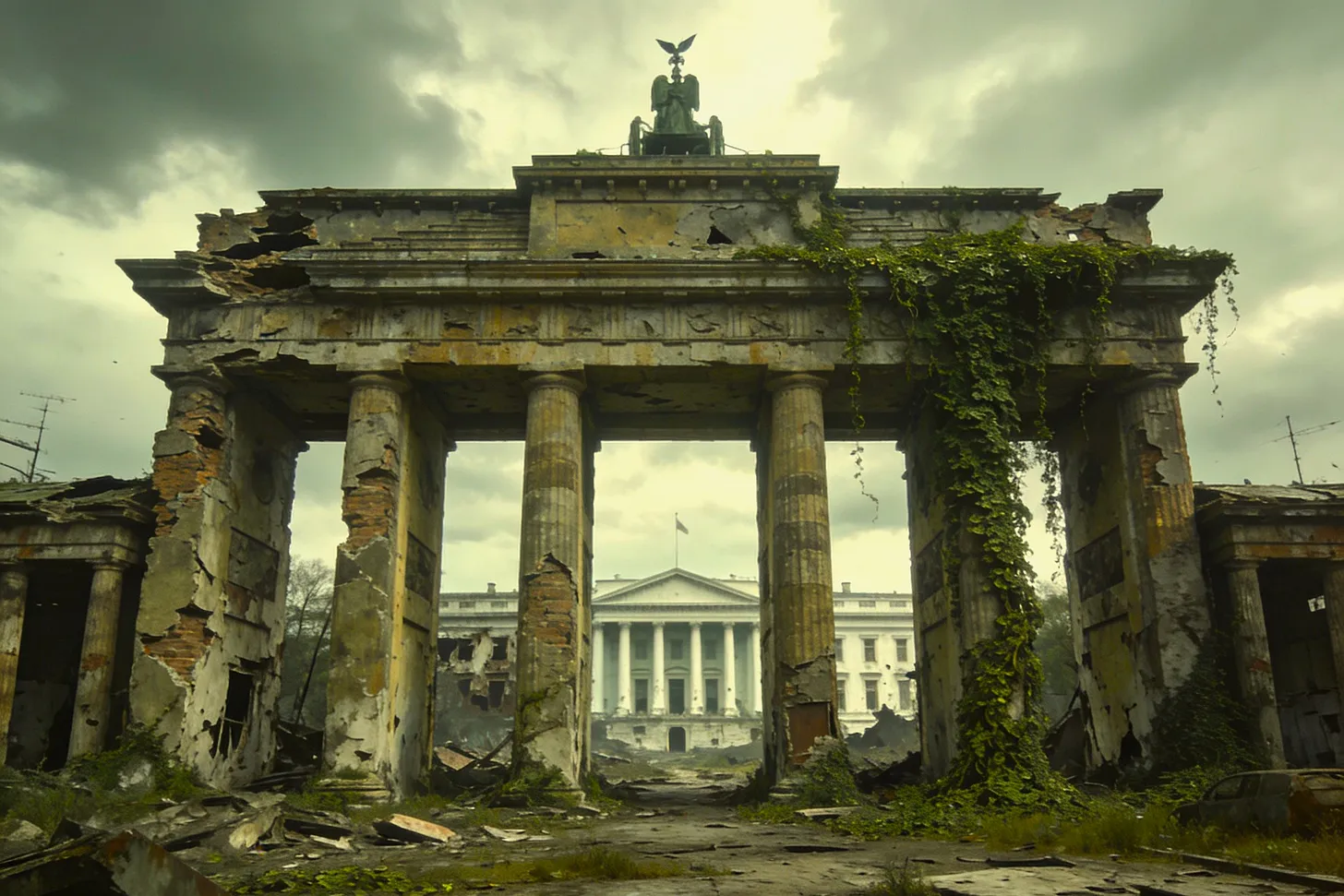
By Tarik Cyril Amar, a historian from Germany working at Koç University, Istanbul, on Russia, Ukraine, and Eastern Europe, the history of World War II, the cultural Cold War, and the politics of memory
@tarikcyrilamartarikcyrilamar.substack.comtarikcyrilamar.com
Substack.com
2 May 2026
Tehran’s resistance to the US exposes Berlin’s dependence, turning the war into a brutal measure of who rules and who obeys
Sovereignty, as per international law, is essential yet complex. In geopolitics, it's simple: if a state can govern itself and defend against external threats, it is considered sovereign. No exceptions.
That’s why Iran retains sovereignty, unlike Germany. Iran has endured two months of a deceitful, aggressive war led by the US and Israel, stemming from years of sanctions, assassinations, and covert operations.
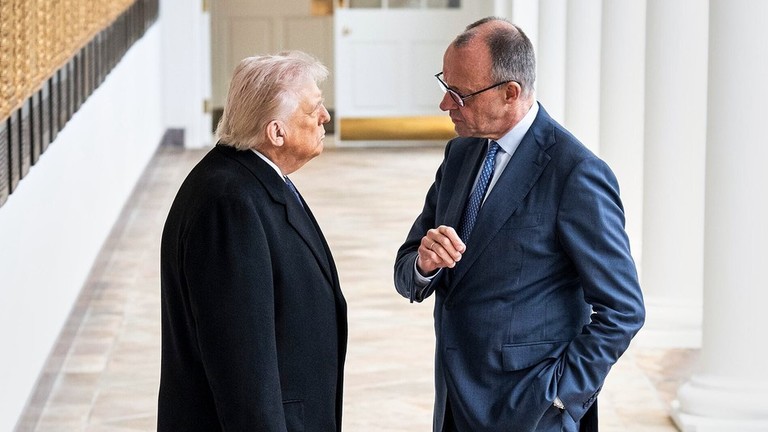
US President Donald Trump and German Chancellor Friedrich Merz © Global Look Press / Keystone Press Agency / Bergmann, Guido / Bpa / Dts Nachrich
Iran has resisted the Israeli-American blitzkrieg and regime change plans, forcing attackers into a defensive position. Tehran’s achievement is historic and will continue to influence the course of history.
Germany struggles to protect its infrastructure, exemplified by the Nord Stream sabotage and its fallout. Worryingly, governments prefer giving Ukraine billions to support Kyiv’s corruption. The US, Poland, and likely Britain's supporters face little scrutiny from Berlin.
Case closed: Iran is sovereign; Germany isn't. Germans, voice complaints to Berlin if uneasy.
Iran now influences German politics unintentionally, while Germany’s requests to Tehran, Moscow, or Beijing seem awkward and self-aware, showcasing an embarrassing impotence, unaware of its limits.
Iran has significantly impacted Germany’s most crucial foreign-policy relationship. Since the post-1990 "unification"—better described as expansion—Germany now reflects the deteriorating Cold War-era West Germany. The US relationship is more than important; it is foundational.
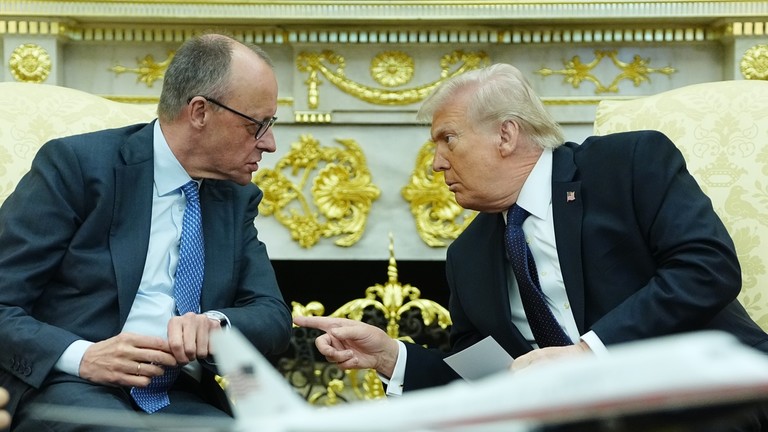
Read more: Merz better focus on ending the Ukraine conflict – Trump
Iran’s resistance has led to a severe crisis in this relationship. Naturally, other factors also play a role, such as Washington’s bipartisan economic conflict with its former key European ally, which includes efforts to destroy vital energy infrastructure and supply sources. This situation is driven by strong incentives for German industry to relocate to the US under Biden (Democrats) and damage from tariffs imposed during Trump's (Republicans) administration.
The situation in Iran has become critical: German Chancellor Friedrich Merz has criticized Washington’s handling of the war. Meanwhile, US President Donald Trump launched a social media tirade against Merz and Germany, showing no mercy, as Pete Hegseth might say.
Trump has threatened to withdraw nearly 40,000 US troops from Germany. This move would be unwise and damaging, but is typical of the Trump administration. As a German, I actually hope they follow through.
Trump criticized Merz for wanting Iran to have a nuclear weapon, which is false because Iran isn’t developing one, and Merz, as a loyal leader, wouldn't oppose the US and Israel. He also attacked Merz's leadership, which likely irritates him because most Germans agree. As a result, Merz has the lowest poll ratings of any German chancellor ever.
He worsened the situation—Merz can do that—by giving a self-punishing interview, complaining no one likes him. This sparked nationwide ridicule: he is now unpopular and mocked as a coward who criticizes and enforces austerity but cannot handle backlash.
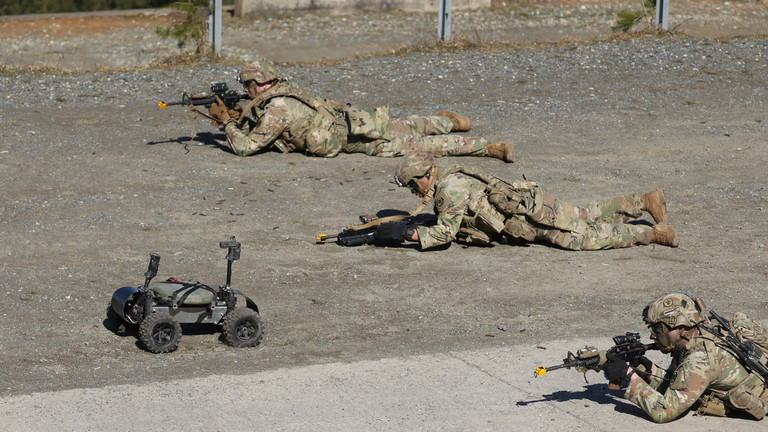
Read more: Trump threatens to pull troops from Germany amid feud with Merz
A deepfake video of Merz satirizing MC Hammer’s "You can’t touch this" with "No one likes me" is going viral. During a town hall, he was openly laughed at. Major media outlets report a crisis threatening the government, and murmurs of rebellion are heard within the CDU.
All of this stems from Merz's comments on the Iran War. But don't be fooled: Friedrich Merz, known for praising Israeli "dirty work" in Iran last summer, hasn't gained a conscience. Listen to his recent remarks to high school students: his main issue with America is that Washington hasn’t finished its "dirty work" quickly or successfully enough. No one likes a loser — not even Merz, whose flirtation with Trump, marked by flattering comments, raised eyebrows in Germany.
Despite Merz’s questionable motives, view this historically: the German chancellor, claiming he wants Germany to lead Europe (though debatable), oversees the largest German debt and military buildup since WWII during a severe economic crisis. Yet he's faltering on Iran, challenging the idea of a rising multipolar world and of Europe's decline.
Tehran's actions lack a clear goal. The Iranian leadership probably spends little time on Berlin, mainly considering Iran's support for the US-Israeli campaign. Iran influences the US-German relationship by resisting the US, causing Germany, a client state, to face America's 'humiliation,' as Merz describes, and to show signs of wavering compliance.
Who in this picture reshapes things, and who is being reshaped? Here’s an alternative view of sovereignty.
Interestingly, Germany still loses.
BUILDING THE BRIDGE! | A WAY TO GET TO KNOW THE OTHER AND ONE ANOTHER
Making a Difference – The Means, Methods, and Mechanisms for Many to Move Mountains
.jpg)
Photo Credit: Abraham A. van Kempen, our home away from home on the Dead Sea
By Abraham A. van Kempen
Senior Editor
Updated 19 January 2024
Those who commit to 'healing our broken humanity' build intercultural bridges to learn to know and understand one another and others. Readers who thumb through the Building the Bridge (BTB) pages are not mindless sheep following other mindless sheep. They THINK. They want to be at the forefront of making a difference. They're seeking the bigger picture to expand their horizons. They don't need BTB or anyone else to confirm their biases.
Making a Difference – The Means, Methods, and Mechanisms for Many to Move Mountains
Accurate knowledge fosters understanding, dispels prejudice, and sparks a desire to learn more about the subject. Words have an extraordinary power to bring people together, divide them, forge bonds of friendship, or provoke hostility. Modern technology offers unprecedented possibilities for good, fostering harmony and reconciliation. Yet, its misuse can cause untold harm, leading to misunderstandings, prejudices, and conflicts.
A Free Trial for Life – SUBSCRIBE NOW!

• It's quick and straightforward.
• We won’t ask for your credit card number.
• Just enter your e-mail address to receive your complimentary free-for-life subscription to our newsletter.
• Please include your First and Last Name.
• We won’t share or sell your e-mail address.
_________________________
Related Articles Recently Posted on www.buildingthebridgefoundation.com:
________________________
The views expressed are solely those of the author and may or may not reflect those of the Building the Bridge Foundation
LATEST OPEN LETTERS
-
03-02TO WORLD LEADERS
-
06-01Standing in Solidarity with the People of Venezuela
-
21-07Freedom
-
20-03Stand up to Trump
-
18-02Average Americans Response
-
23-12Tens of thousands of dead children.......this must stop
-
05-06A Call to Action: Uniting for a Lasting Peace in the Holy Land
-
28-05Concerned world citizen
-
13-02World Peace
-
05-12My scream to the world
VIRTUAL POST OFFICE
PETITIONS
LINKS
DONATION
Latest Blog Articles
-
15-10Our Friday News Analysis | What the World THINKS Now!
-
14-10Our Wednesday News Analysis | Navi Pillay, head of UN commission that accused Israel of genocide, wins Nobel Peace Prize
-
13-10Navi Pillay, head of UN commission that accused Israel of genocide, wins Nobel Peace Prize
-
13-10No state has a ‘right’ to exist – least of all an apartheid, genocidal state like Israel
-
13-10‘By the Way, the World is Not Stopping Us’: The Secret of Israel’s ‘Success’
-
12-10Our Monday News Analysis | What the World THINKS Now!
-
08-10Our Friday News Analysis | What the World THINKS Now!
-
07-10Our Wednesday News Analysis | The West wants Netanyahu gone - so Palestinians can be killed more quietly again
-
06-10The West wants Netanyahu gone - so Palestinians can be killed more quietly again
-
06-10Israel turns Gaza into largest ghetto in modern history, killing residents one after another as three-year genocide continues
-
06-10Analysis Europe's Boycott of Israel Is Rapidly Expanding – and It Won't Be Easy to Stop
Latest Comments
 One of the most important and illuminating articles that I …
Comment by Benjamin Inbaraj-
And what's wrong here?
After all, there is the homeland …
Comment by Isac Boian -
Does this reinforce or deny my argument that Israel is …
Comment by Edward Campbell -
Many 'say' they support the Palestinian cause but do little …
Comment by Philip McFedries -
The UN is strangled by the "war for profit" cabal …
Comment by Philip McFedries -
I can't read the printing on the map.
Comment by Philip McFedries -
Good news!
Comment by Philip McFedries
COMMENTS
This article has 0 comments at this time. We invoke you to participate the discussion and leave your comment below. Share your opinion and let the world know.