 NEWSLETTER
The Monday Edition
The Evangelical Pope | Turning the Wilderness into an Orchard Where Justice Reigns
Living Words from John Paul II
Edited by Abraham A. van Kempen
Published March 16, 2026

Each week we let Saint Pope John Paul II share meaningful signposts to spark socio-economic resolves through justice and righteousness combined with mercy and compassion; in short, love.
8 “For my thoughts are not your thoughts,
neither are your ways my ways,”
declares the LORD.
9 As the heavens are higher than the earth,
so are my ways higher than your ways
and my thoughts than your thoughts.”
__ Isaiah 55:8-9 (New International Version)
Why does the Israeli-Palestinian Quest to Co-exist, the defining feud of our times, enrapture the world?
Could it be that our hearts belong to a New Jerusalem, that Shining City Upon a Hill? Perhaps we all carry Abraham’s seeds, the DNA of the original Israelites, inside our souls.
Aren’t we all called to become a light among nations?
A quote by Saint Pope John Paul II:
“We must find within us the courage to reach peace. We must seek from heaven the gift that is peace. If we ceaselessly pursue the laborious, grueling road toward reconciliation, often necessitating a tug-of-war with give-and-take, peace can spread like healing oils. “
And the wilderness becomes an orchard where justice prevails.
Editorial | Ahead of the Curve
I’ve waited close to half a century for this moment. It will get worse before it gets better. All will suffer. Many loved ones will be slaughtered. Even more will be maimed. Parts of Tel Aviv will look like Gaza. Most will likely be displaced, dispersed, and detained, caged in behind walls meant to keep others out and insiders in. Insiders will become outsiders.
Their leadership will be decapitated. They’re in panic. The EU-US/NATO-financed Israeli military installations will be completely obliterated. It was never necessary. All we needed was an ounce of humility and a cup of kindness, similar to the Good Samaritan, a Palestinian, whom the Christian Bible called the Good Neighbor.
We’ll finally be liberated from the EU-US/NATO-indoctrinated twisted obsessions, freed to do what?. To become better neighbors, to greet those who are indigenous to the land with “welcome home, let’s humble ourselves, and live together on this glorious land.”
“The meek shall inherit the earth.”
But for now, and once again, the people of Israel find themselves alone in the wilderness. Worse, 65 percent reject God. They may no longer believe in God, but God still believes in all of us, even though technically, most of us are no longer Jewish.
Will the wilderness turn into an orchard where justice reigns? It’s time to change for the better.
I’m Heading Home
I thank God on my bare knees for this moment. I’m heading home. When? How long? Not long! There isn't a Messiah coming now—maybe someday, but not anytime soon. We must resolve the problems we've created ourselves rather than waiting for divine help.
Why am I so happy, to the point of ecstasy? We are heading towards becoming a light among nations. We’re on the path to becoming better neighbors. We have no choice.
As a small nation, a tiny speck of dirt surrounded by 400 million neighbors whom we have intimidated and threatened, we should look for the face of God in their lives. Thankfully, Iran and all our neighboring countries are freeing us from Western domination.
Thank goodness, we're finally freed to be good neighbors! The 21st century will be a shared era with all our neighbors who are one in our Abrahamic Faiths. Yes, the wilderness becomes an orchard where justice prevails. Peace can spread like healing oils.
Have a good week,
Abraham A. van Kempen
Sr. Editor
PS. I don’t have a crystal ball. One thing I know for sure is that we must change for the better, and our metamorphosis will cost dearly. We must break free from Western hegemony and resist being mere pawns – cannon fodder – in their strategic pursuits.
The war will end when the Collective West permanently withdraws from our region. Specifically, their military bases must be vacated or destroyed, and their navies must either sail home or be sunk. We must break bread with our neighbors – our brethren – and make sure that our region can continue to supply 20 percent of the world’s oil.
When I nominated President Trump, President Xi, and President Putin to share the 2026 Nobel Peace Prize, I could not have foreseen that they could earn it for achieving the results I envision. Let’s give them a chance. They possess the leadership qualities, each in their inimitable ways, necessary to prevent World War III, based on the premise that overcoming adversaries involves transforming them into allies. To quote Abraham Lincoln:
“Destroy your enemies by becoming friends.”
They must work toward decapitating the leadership of Israel’s radical ultra-nationalist government, while simultaneously aiming to alleviate suffering with reduced casualties among the people of Israel, Gaza, and the West Bank. With those homicidal maniacs out of the way, the West will no longer need to ‘protect’ Israel. An ideal Israel, rooted in prophetic principles of neighborly relations, would renounce Western dominance. It would no longer need to bow to Western autocracy and serve as cannon fodder.
I believe in possibilities. And, yes, I’m a bit ahead of the curve.
A WORD FROM OUR FRIENDS, THE MUSLIM AFFAIRS COUNCIL

Dear Abraham,
Tonight may be Laylatul Qadr, the Night of Power, a night described in the Qur’an as better than a thousand months. It is a moment when prayers are answered, mercy is abundant, and acts of charity carry immense reward.
On this blessed night, we reflect not only on our own spiritual renewal, but also on the state of our world and the responsibility we share to stand for justice, dignity, and truth.
Tonight, we pray for:
- Peace and liberation for all oppressed peoples.
- Continued solidarity with expected and unexpected allies.
- Guidance for Islamophobes, detractors, and those who spread hate and misinformation about our community.
- The continued strength and ability for MPAC to advance justice and democracy, not only for American Muslims, but for all Americans.
At the Muslim Public Affairs Council, this is the work we carry forward every day. From Capitol Hill to newsrooms and cultural spaces, we are challenging harmful narratives, building coalitions across communities, and advocating for policies that protect civil rights and religious freedom.
On this sacred night, we invite you to turn prayer into action by continuing to support the work that defends our community and advances justice.
May God accept your prayers, your fasting, and your charity, and grant peace and blessings to you and your loved ones on this sacred night.
In gratitude,
Salam Al-Marayati
President, Muslim Public Affairs Council
TURNING UNBEARABLE LOSS INTO A GROUND OF SHARED LIFE
A new episode of On Being, with Arab Aramin, Robi Damelin, Liora Eilon, and Mohamed Abu Jafar

Krista Tippett with members of the Parents Circle - Bereaved Families Forum. Photo: Emily Topper
Host: Krista Tippett
THE ON BEING PROJECT
15 MARCH 2026
From Krista:
A few months ago, I met four remarkable individuals from the Parents Circle – Bereaved Families Forum, a unique community of hundreds of Palestinian and Israeli families. Despite their heartbreaking losses in the conflict, they view their grief as a foundation for building mutual understanding and hopes for reconciliation, offering a different perspective on the Israeli-Palestinian story than what is typically seen in headlines.
I’m excited to share this conversation. You'll hear stories of changing perspectives and a physics concept called “deep truth' that resonates with me. While tragic events and violence reveal what we believe ourselves capable of, they don't define the full truth or future. Today, efforts toward healing are happening. In a New York City room, we sensed we were witnessing something extraordinary, beyond the extreme actions in the news. The Bereaved Families Forum shows extremism in a heart-opening way. We left, and I hope you do too, feeling a sense of healing and hope that's inspiring and grounded.
This event was organized by the American Friends of the Parents Circle – Bereaved Israelis and Palestinians for Peace (parentscirclefriends.org). My discussion partners included Robi Damelin, Arab Aramin, Mohamed Abu Jafar, and Liora Eilon. Liora, who lost her son at their kibbutz on October 7, 2023, is one of the newest members of this community. Discover more about this inspiring group at theparentscircle.org.
You can listen to the episode wherever podcasts are found or watch it on YouTube.
Find an excellent transcript of this episode, edited by humans, on our show page.
TRUMP THREATENS KHARG ISLAND, IRAN VOWS TO CHOKE STRAIT OF HORMUZ
Prof. Glenn Diesen: “A Desperate Military Solution”

Watch the Video Here (14 minutes, 04 seconds)
WION India
15 March 2026
U.S. President Donald Trump has warned of additional strikes targeting Iran’s strategic Kharg Island oil facility, urging allies to protect the critical Strait of Hormuz amid Tehran's threat of retaliation and passage restrictions. The rising tensions threaten to escalate the conflict, disrupt global energy routes, and trigger fears of a wider conflict in the Middle East and turmoil in oil markets.
LARRY JOHNSON: U.S. ATTACK ON KHARG ISLAND WILL DESTROY THE GULF STATES
Larry Johnson is a former intelligence analyst at the CIA who also worked at the US State Department's Office of Counterterrorism.
Johnson discusses why a U.S. attack on Iran's energy facilities on Kharg Island will predictably result in Iran attacking all energy facilities in the Gulf States.

Watch the Video Here (59 minutes, 58 seconds)
Host Prof. Glenn Diesen
Substack.com
15 March 2026
Discussion on Escalation and Energy Risks in the Iran War – Prof. Glenn Diesen and Former CIA Analyst Larry Johnson
Annotated by Abraham A. van Kempen
Diesen: Welcome back. We're pleased to be joined again by Larry Johnson, a former CIA analyst, to talk about the recent intense developments in the war against Iran. First of all, thank you for returning to the program. It’s great to see you again.
Johnson: Always appreciate the invite, Glenn.
Starting with Karg Island, which manages most of Iran’s oil exports, I want to highlight its significance. Many have wondered if targeting it could cripple Iran’s economy, so why hasn’t Trump acted before? Recently, the U.S. bombed Karg Island, with Trump claiming he “totally obliterated” military targets there. However, the energy facilities were left intact. Now, he is warning that the oil infrastructure could be next if Iran doesn’t open the Strait of Hormuz. What’s your assessment of this development?
Donald Trump reminds me of a casino’s favorite customer—one who keeps coming back, spending a lot, and losing. The attack on Karg Island doesn't make any sense. They didn't strike the oil terminal (which is good news). Iran has five oil terminals, so destroying one wouldn’t cut off their revenue completely. However, they did bomb the runway of the main airport—despite Iran not really having an air force. If the U.S. had plans to occupy Karg Island, that runway would be crucial for landing and resupplying. The runway measures about 5,000–6,000 feet, but the bombing means it’s only usable for around 3,000 feet. A C-17 requires at least ~3,500 feet of runway, making it impossible; only a slower C-130 can land. From a strategic perspective, it’s counterproductive.
Johnson: Iran has clearly stated that any attack on its oil terminals and resources will be met with retaliation against at least 13 targets of its Gulf neighbors. Initially, Iran’s response to the strike seemed impulsive, lacking a clear strategic plan. Consequently, the Strait of Hormuz has been shut down, blocking around 20% of the world’s oil supply, 25% of LNG, and 35% of urea (fertilizer). Since it is the planting season, a disruption in fertilizer supply could delay planting and harvesting, potentially significantly impacting global food supplies.
Johnson: Gas prices are climbing quickly, with diesel being the main concern since it directly impacts the cost of goods transported by truck. While oil price surges have historically been linked to recessions, this situation is unprecedented because it involves the entire Persian Gulf being under pressure. Trump’s approach has been to increase military strength, but the U.S. can't win a war with Iran from the air alone—air power has never been sufficient. Ground troops are also unlikely: deploying the necessary forces safely is impossible, and the U.S. lacks the numbers to match Iran. Amphibious attacks or large troop movements are very risky—Ukraine has demonstrated how drones and artillery make such operations highly dangerous.
Diesen: If the U.S. targets Karg Island’s oil facilities, why would Iran hold back? Wouldn’t Gulf state energy infrastructure be at risk of destruction within days? Trump suggests ships should “just go through,” but how can the U.S. realistically reopen the Strait of Hormuz?
Johnson: It cannot be achieved—at least not without significant losses. It’s impossible to do solely from the air since Iran has caves and tunnels along the coast, having prepared for this for three decades. Within Washington, a debate persists: figures like Tulsi Gabbard and J.D. Vance have warned against war, but Trump is listening to those urging him on. Signs of disagreement include leaks, intelligence reports suggesting regime change is unlikely, and inconsistencies in Pentagon accounts. For instance, the KC-135 incident—aircraft at high altitude don’t simply crash without weather conditions; it’s claimed it was shot down.
Diesen: Trump’s rhetoric is becoming increasingly extreme, claiming Iran would “take over the Middle East,” discussing Iranian sleeper cells, and even mentioning surprise attacks on California. How should we interpret these statements?
Diesen: The notion of a California attack seems unlikely, given how drones could arrive and what platform they would originate from. The idea of sleeper cells is often repeated, yet 46 years of data do not support the claim that Iran is responsible for terrorism within the U.S. Most significant jihadist threats have been associated with Sunni extremist groups like ISIS, rather than Shia Iran. Many incidents credited to Iran or its proxies lack context; historically, Iran has not engaged in terrorist attacks on U.S. soil as suggested. Meanwhile, the U.S. has supported organizations like the MEK, which have carried out attacks inside Iran.
Diesen: Iran appears to be methodically targeting critical assets such as radars, bases, and embassies. Reports mentioned attacks on refuelers in Saudi Arabia (KC-135s), but Trump dismissed them as fake news. What are the facts?
Johnson: I was aware of it before it was officially reported. The damage was not just superficial—everything was destroyed. The air defense system at Prince Sultan Air Base has been compromised, making it vulnerable. Iran’s strategy involves (1) weakening and removing U.S. military presence by attacking bases, (2) disabling radar systems that are crucial for detection and interception, and (3) damaging Israel economically and militarily. Nonetheless, Iran has shown restraint: despite launching missile waves, it has avoided maximizing civilian casualties and has not targeted Gulf desalination plants, thus avoiding immediate humanitarian crises.
Diesen: Some Iranian commentators have proposed allowing ships to pass through the Strait of Hormuz if they pay in Chinese yuan rather than dollars, effectively creating a form of decoupling. Is there a viable way forward? Would Gulf states be willing to accept this, considering their security concerns?
Johnson: Saudi Arabia is rethinking the initial agreement it made with the U.S. in the 1970s regarding the petrodollar. Russia and China now present alternatives that could be less influenced by Western interests. This conflict is also speeding up shifts in the financial world. Ironically, U.S. efforts to persuade countries to stop purchasing Russian oil have reversed—Washington now encourages India to buy more. Russia gains from higher oil prices and increased influence in LNG and fertilizers. When this situation concludes, it likely won’t involve U.S. troops entering Tehran; instead, the U.S. and Israel will craft an exit strategy, perhaps declaring a "mission accomplished,” even as Iran continues its operations.
Diesen: Do you observe Russia shifting toward reciprocal deterrence, where NATO support for attacks on Russia would entail direct costs?
Johnson: Russia has remained overly passive. It needs to signal to the U.S. and NATO that reconnaissance aircraft gathering ISR data for attacks should be considered targets. Russia’s support for Iran isn’t driven by revenge; Iran is strategically essential—located at the intersection of China’s Belt and Road, Russia’s north-south route, and access to the Persian Gulf and Indian Ocean. Iran’s diplomatic approach has also demonstrated restraint and maturity, such as selectively permitting certain shipping flows and avoiding actions that could cause widespread civilian harm.
Diesen: What information do we have regarding the extent of destruction in Israel? Media restrictions are strict, and Western outlets appear to follow the imposed reporting limits.
Johnson: We gain a lot of insight from what remains unseen. When officials claim everything is fine but limit photos and access, it raises concerns. While public access to satellite imagery seems restricted, some images still emerge showing strikes in Tel Aviv, Haifa, ports, and air bases. Israel’s dense population and infrastructure in a small area make it more vulnerable to repeated missile attacks compared to Iran’s more dispersed layout. This situation raises the possibility that Israel might consider nuclear escalation. From a game theory standpoint, if Israel threatens a nuclear strike, Iran’s most effective deterrent is to swiftly show nuclear capability to alter Israel's calculations.
Diesen: The demands—ultimatums requiring Iran to surrender—appear to threaten escalation if refused. However, no one seems to be taking significant action to resolve this. Thank you for your time. Any last thoughts?
Johnson: Regarding the claim that Iran is the top sponsor of terrorism, analyzing terrorism deaths from 2016–2017 shows that the leading groups were ISIS, the Taliban, Al-Shabaab, CPI (Maoist) in India, and Boko Haram. Sunni extremist groups primarily fill that list, and Iran is not among them. Moreover, Iran’s behavior during the Iran–Iraq War offers insight: while Iraq repeatedly used chemical weapons, Iran refrained from developing or deploying such weapons, citing religious prohibitions. The narrative that demonizes Iran often overlooks these facts.
Diesen: Thank you, Larry.
IN MEMORIAM | THE BACKPACK GIRLS
The attack on the Shajareh Tayyebeh school in Iran was a clear-cut war crime. Will Pete Hegseth ever be brought to justice for his role in murdering 168 innocent lives?
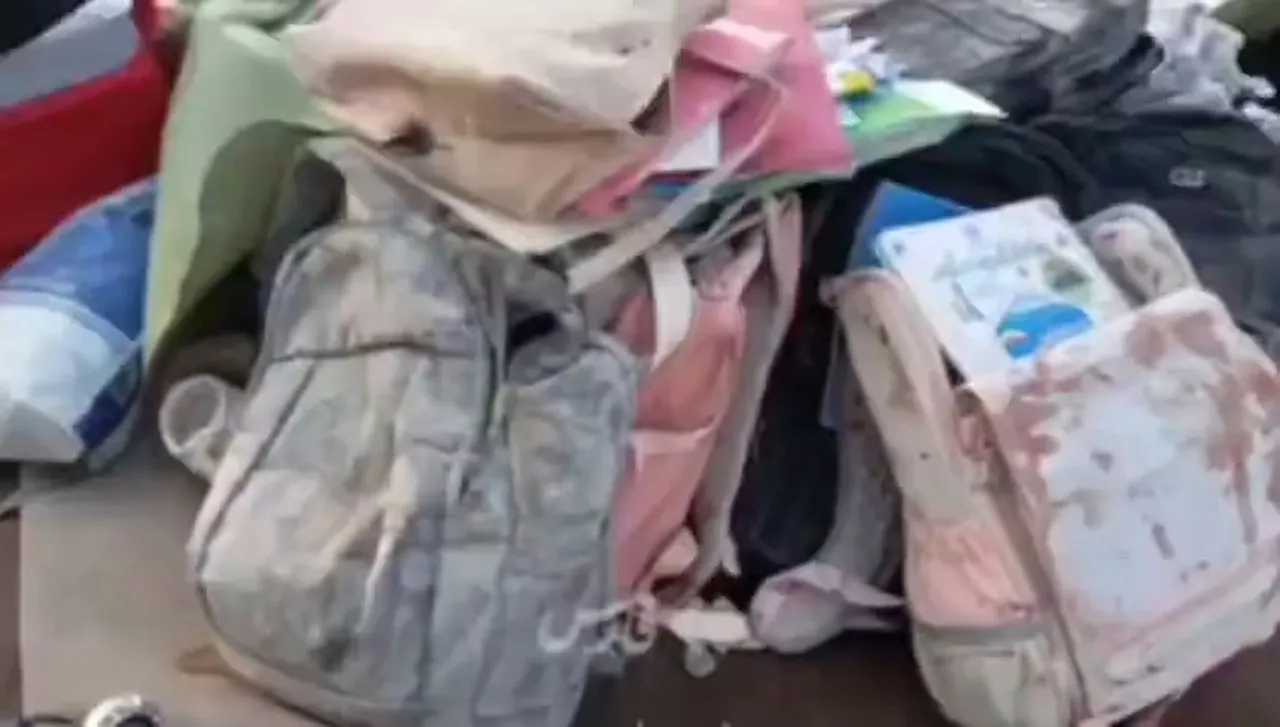
The blood-stained backpacks of the victims of the US attack on the Shajareh Tayyebeh
By Scott Ritter
Substack.Com
15 March 2026
_________________________
Editor’s Note | I Cry Inside My Soul
_________________________
On February 28, 2026, Atena Ahmadzadeh, a bright ten-year-old girl, went to school on a Saturday, which is a workday in Iran. Classes went as usual. In March 2025, the Iranian government changed school hours to tackle the electricity crisis. Schools now start at 6 am and end at 1 pm., forcing Atena and her classmates to wake as early as 4:30 am.
Atena, an experienced gymnast, was excited for her practice and left home lively, carrying her backpack filled with books, papers, and her uniform.
Zeinab Mirkhayali, nine, headed to school with materials for a Tehran recitation contest in two months. She spent hours memorizing Quran passages and was eager to continue her preparations later that day.
Fatemeh Yazdan-panah, seven, and Earsa Farahi Zadeh, twelve, headed to school with backpacks, inseparable friends from a rural village in Minab, acting like siblings and often dressing alike.
Fatemeh Taherifard, principal of 'Shajareh Tayyebeh' school in Minab, Iran, greeted four girls and over 150 students heading to class. Sunrise at 6:30 am marked the start of a new day.
Fatemeh greeted the “backpack girls” with a warm smile and guided them toward the school building. These girls, under her care, nurtured hopes and dreams, from becoming news presenters or doctors to caring for aging parents or becoming mothers. Fatemeh knew these ambitions and aimed to help them find paths to achieve them.
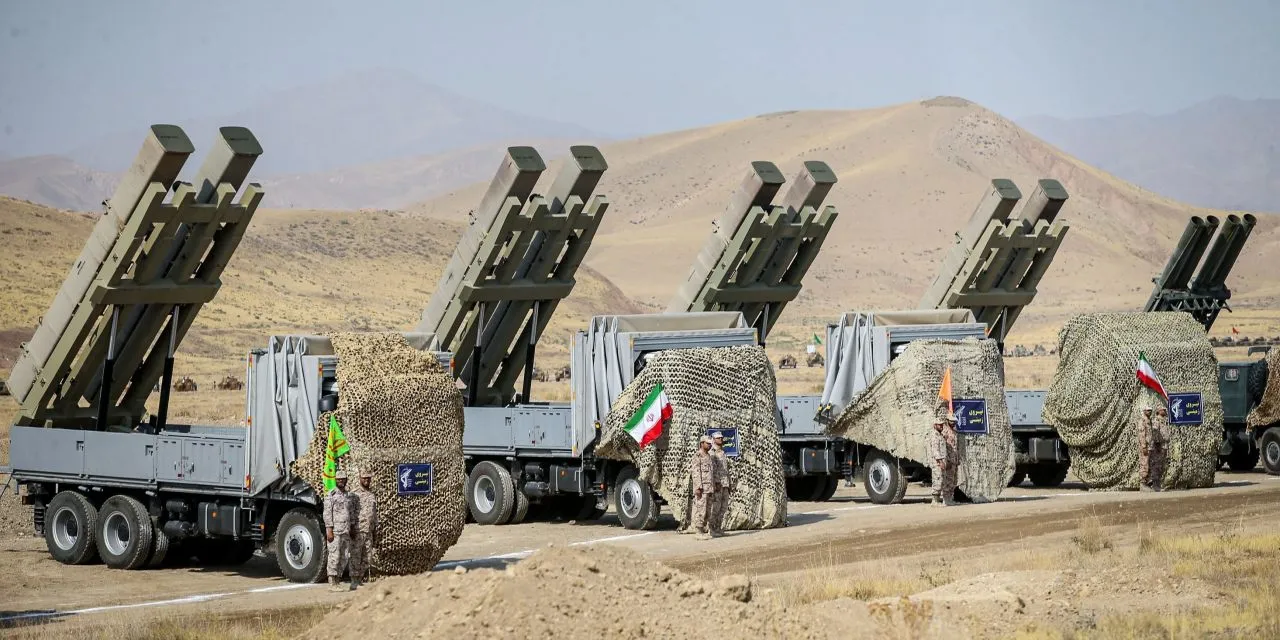
Missile launchers belonging to the Aref Missile Brigade
The “Shajareh Tayyebeh” school was established in 2016 on a site linked to the “Sayyid al-Shuhada” complex, which previously housed the “Asef Missile Brigade” of the IRGC naval forces until 2013. The complex closed in 2011, prompting the brigade's relocation. IRGC, which operates several schools for its families, repurposed part of the site into a school, adding barriers, children’s playgrounds, and murals visible from afar.
The Asef Missile Brigade, based in Minab near Iran’s southern coast, overlooks the Strait of Hormuz, a vital route from the Persian Gulf to the open ocean. This channel is critical to global energy, with about a third of LNG and a quarter of oil passing through it. Its main mission is to be ready to deploy military power in the Strait of Hormuz, giving Iran control or the ability to block maritime traffic.
The Asef Missile Brigade has four battalions, each with a specific mission.
The 1st Battalion, with Zafar short-range anti-ship missiles, can target objects up to 25 km away using sea-skimming, radar-guided technology.
The 2nd Battalion has medium-range missiles like Hormuz-2 and Ghadr Fars, plus Chinese anti-ship missiles such as C-801/802, capable of targeting up to 300 kilometers.
The 3rd Battalion provides long-range missile support for offensive and defensive actions, using Abu Mahdi and Talaeiyah missiles, each with a range of about 1,000 km.
The 4th Battalion defends the Iranian coastline and key areas of the Strait of Hormuz, showcasing power with motorized speedboats and armed dhows.
In summary, the Asef Missile Brigade is Iran's key unit for protecting the Strait of Hormuz. If Iran closes the Strait, this brigade would carry it out. Other nations wanting to keep the Strait open in a conflict with Iran will aim to defeat the Asef Missile Brigade.
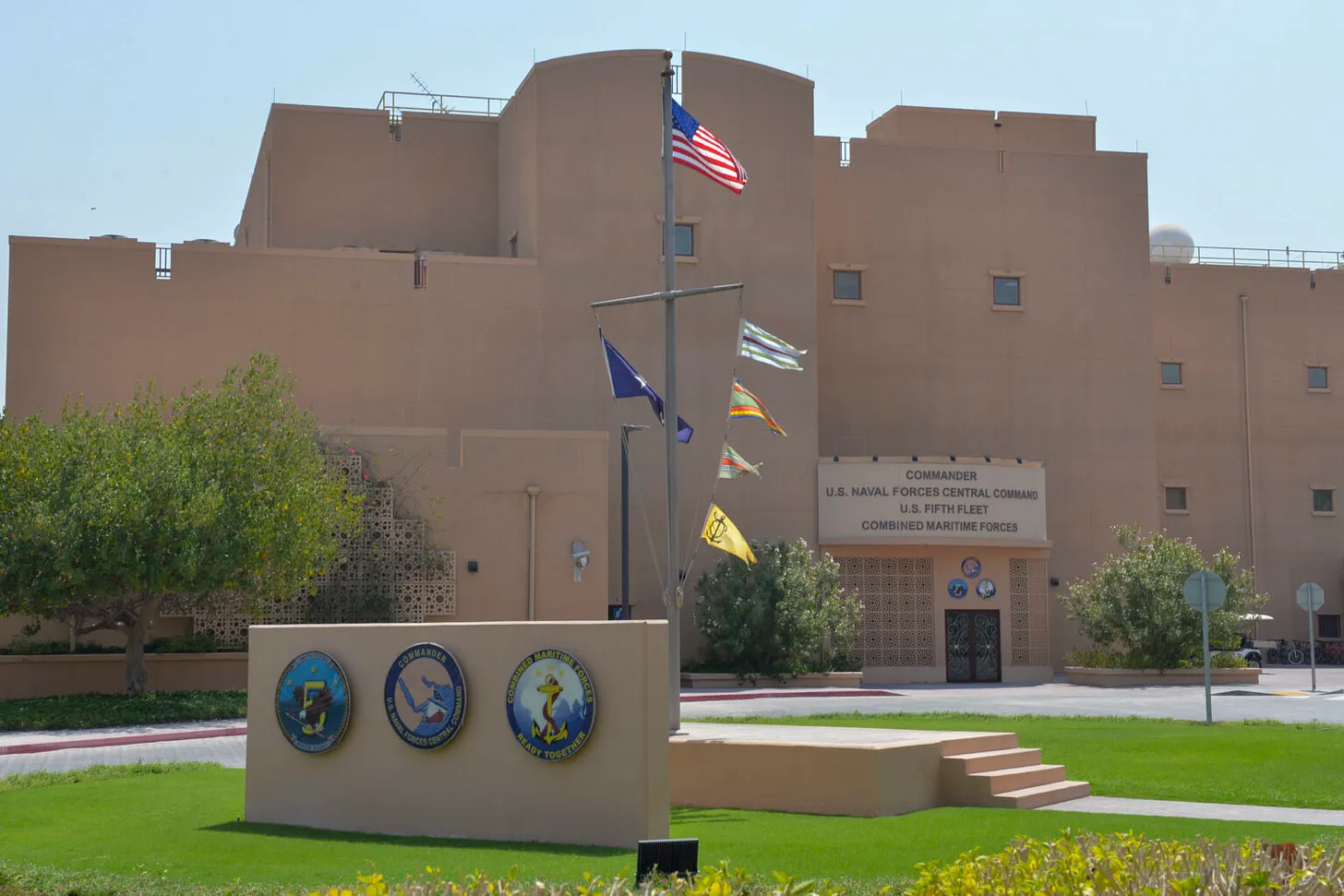
US 5th Fleet Headquarters, Manama, Bahrain
The US maintains a military presence in the Persian Gulf through US Naval Forces Central Command (US 5th Fleet), based in Bahrain. Its main goal is to ensure safe navigation and uninterrupted maritime trade, especially near the Strait of Hormuz. The 5th Fleet is organized into task forces: Task Force 51/5 (Amphibious/Marine), Task Force 52 (Mine Countermeasures), Task Force 53 (Logistics), Task Force 55 (Surface Warfare), Task Force 56 (Expeditionary), Task Force 57 (Patrol/Reconnaissance), and Task Force 59 (Unmanned/AI).
In a conflict with Iran, the 5th Fleet aims to eliminate the Asef Missile Brigade and control the Strait of Hormuz for shipping. Success depends on intelligence—knowing the location of every unit and facility is key. The fleet conducts extensive intelligence gathering from fishermen, businessmen, drones, aircraft intercepting Iranian communications, radar and signal tracking, and imaging satellites near the Strait.
This intelligence, gathered and assessed by 5th Fleet analysts, with feedback to the US and Europe, informs other US intelligence components as they evaluate the data. The goal is to know everything about the Asef Missile Brigade's units, personnel, and equipment, and to organize it for easy access by the US military.
Data from the US 5th Fleet helped the US National Geospatial Intelligence Agency map the Strait of Hormuz and Minab, showing a school where the “Sayyid al-Shuhada” had been.
This information was also given to organizations responsible for setting targets near the Strait of Hormuz, which US forces could bomb if conflict arises. Military targeting is complex, requiring detailed knowledge of each target's structure, function, and operation. This helps determine the right munitions to destroy or disrupt the target and the best placement for maximum impact.
Targeting is key to international humanitarian law, mainly from the 1977 Additional Protocol I to the 1949 Geneva Conventions. Although the US hasn't signed them, their targeting rules are seen as customary law binding on all states, including the US. These protocols are also cited in the Department of Defense's 2023 Law of War Manual.
These protocols highlight three key components of targeting law: distinction, proportionality, and feasible precautions.
Of the three principles, distinction is arguably the most important, requiring parties in conflict to always differentiate between civilians and combatants, and between civilian objects and military objectives. This applies to any indiscriminate attack, including bombardments that target multiple military objectives simultaneously. Area targeting is prohibited if civilians and civilian objects are mixed with military targets.
Regarding the "Shajareh Tayyebeh” school and its structures linked to the “Sayyid al-Shuhada” military site, US intelligence knew it was a school (marked on maps) and should have been on a “do not strike” list for the Strait of Hormuz region.
The US 5th Fleet prepared for offensive operations against Iran, including operations to protect the Strait of Hormuz. It regularly updated a target list, such as the Asef Missile Brigade, and sent it to US Central Command for potential military action.
The “Shajareh Tayyebeh” school was omitted from the list, as it was recognized as a protected school.
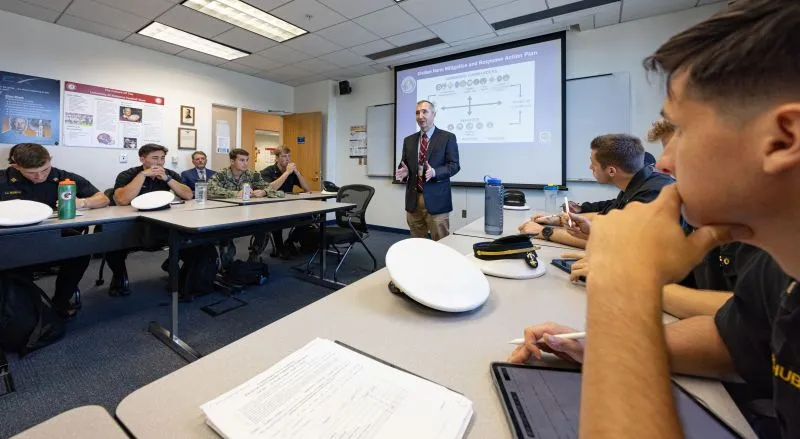
Dan Stigall, Director for Civilian Harm Mitigation and Response Policy, briefs Naval Academy midshipmen, November 2025
In 2023, the Civilian Harm Mitigation and Response (CHMR) Office was created to help the 5th Fleet and Central Command with targeting issues in response to DoD Instruction 3000.17. CHMR assigned teams to DoD components during military operations to ensure protective measures extend beyond the DoD Law of War Program and Manual, which aim to ensure legal compliance. CHMR focused on standards for target identification that exceed legal minimums and became involved in all mission planning stages, including target planning and engagement, to ensure positive identification through information sources and certainty levels regarding the target’s location and function.
A team of 10 CHRM personnel was assigned to Central Command, while a smaller team was forward-deployed to the 5th Fleet.
The need for CHRM became clear after two decades of low-intensity conflict during the Global War on Terror, including operations in Iraq and Afghanistan, where the US military misidentified sites, causing civilian casualties. Incidents like the 2015 Afghanistan hospital attack and the August 2021 Kabul drone strike that killed an aid worker highlighted this. CHRM is crucial for realigning US military practices with the laws of war and improving targeting.
Although CHRM originated during Trump's administration, the DoD Instruction was only issued in 2023 under Biden. After Trump nominated Pete Hegseth for Secretary of Defense—and his re-election in 2024—Hegseth wanted to shift the military toward a more “warfighting” mindset and “warrior” ethos, dismissing “restrictive rules of engagement.” Soon after Trump took office, Hegseth dismissed senior JAGs, calling them “jagoffs,” blaming them for supporting rules of engagement and the new CHRM standards.
In March 2025, Defense Secretary Pete Hegseth ordered the Pentagon to close the CHRM office, remove all CHRM roles at combatant commands such as Central Command and the 5th Fleet, and work with Congress to revoke the policy guidance on CHRM.
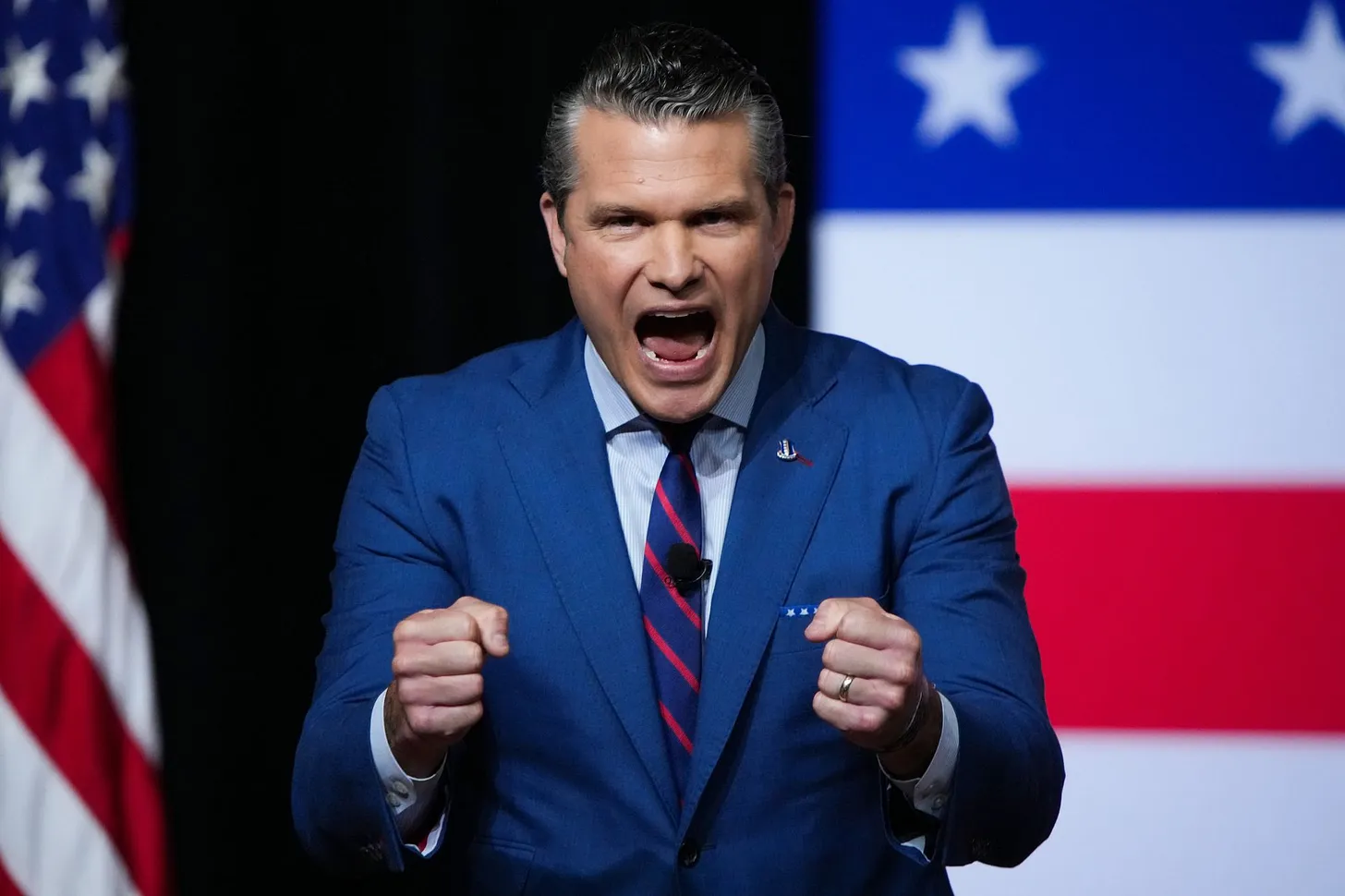
Pete Hegseth addresses senior officers at Quantico on September 25, 2025
Secretary Hegseth announced a new policy to senior US military officers at Quantico, Virginia, on September 25, 2025. He emphasized the need to prepare for war, not just defense, stating, “We are training warriors, not just defenders. Our aim is to win wars, not only to defend. Defense relies on reactive measures, risking overreach and mission creep. War, in contrast, is conducted intentionally with clear goals, using overwhelming violence to secure victory."
“We also don’t fight with stupid rules of engagement.
We untie the hands of our warfighters to intimidate, demoralize, hunt, and kill the enemies of our country.
No more politically correct and overbearing rules of engagement, just common sense, maximum lethality, and authority for warfighters.
Hegseth concluded,
“Today is yet another day of liberation—liberation for America’s warriors, in both name and action, as well as in authority.
You take lives and destroy property as your job.
You're not politically correct and don’t always fit into polite society.”
Kill nd Break Things.
This contrasts with the CHRM ethos, which was imposed because of the US military's aggressive record of destruction and violence, often causing civilian casualties and damage to infrastructure.
Sometime in mid-January 2026, President Donald Trump ordered the US military to prepare for war with Iran. As part of Pete Hegseth’s new “maximum lethality” posture, US Central Command was ordered to dramatically expand its list of targets to be struck by US forces in case of war. Central Command turned to Anthropic, an American artificial intelligence corporation, to use its Claude AI platform to assist with intelligence assessments, target identification, and the simulation of battle scenarios in support of combat operations against Iran.
In summary, Hegseth replaced the human-led CHMR program, which ensured compliance with the laws of war, with an AI system that operated in environments where rules of engagement were ignored, and maximum lethality was prioritized.
Claude suggested targeting the “Shajareh Tayyebeh” school in Minab, likely because of its historical links to the “Sayyid al-Shuhada” IRGC compound and Asef Missile Brigade.
On February 28, 2026, many BGM-109 Tomahawk missiles launched from US Navy vessels and submarines targeted Iran. The “Sayyid al-Shuhada” IRGC site, labeled by Clause but unverified by CGMR, was assigned four TLAMs. Three impacts hit structures likely housing Iranian missiles from the Asef Missile Brigade.
A fourth TLAM tracked the first three, photographed the “Sayyid al-Shuhada” IRGC compound with its camera, and sent images to a control center on an Arleigh Burke-class ship. Missile operators reviewed the images to verify if the destruction criteria were met and if a re-strike was needed.
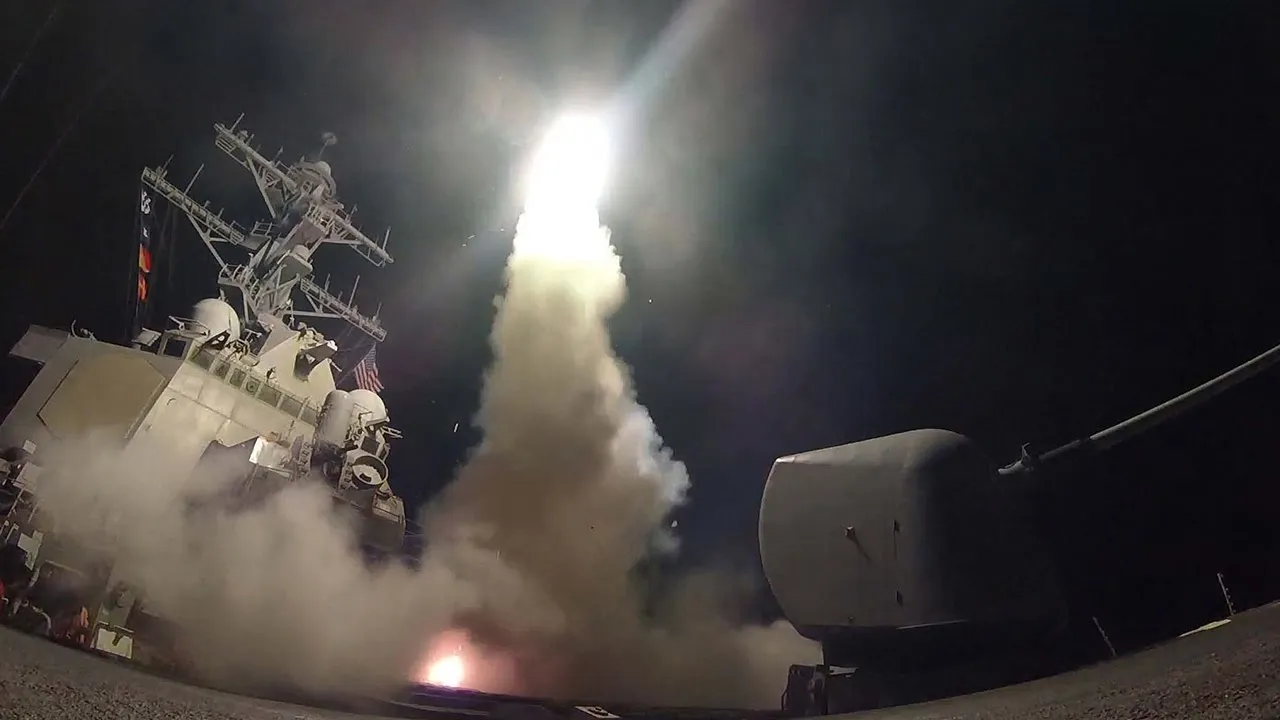
TLAM launched from an Arleigh Burke-class destroyer
While missile launch operators input targeting data for each TLAM, Fatemeh Taherifard was busy as a school principal. Her day began with morning assembly and attendance, followed by classes in Islamic studies, Persian, social studies, math, and science. Students had a 15-minute outdoor recess after each lesson. A meal was usually served between 9:30 and 10:00 am, after morning classes. After the school day, students engaged in extracurricular activities.
During lunchtime, the first TLAMs hit targets in Minab. Authorities closed schools, and Fatemeh and her teachers contacted parents to pick up their children.
The War Had Begun.
The students gathered in classrooms, with headcounts verified. At around 10:30 am, Fatemeh and the students heard a TLAM hit a warehouse at the nearby “Sayyid al-Shuhada” IRGC compound.
Then Another.
Students and teachers felt the vibrations of the explosions and heard their deafening sound.
Fatemeh and her staff tried to calm the students.
Then, the third TLAM struck.
The TLAM Block IV, using JMEWS, penetrates bunkers, then a secondary warhead explodes, causing blast and shrapnel damage. The initial charge punched a hole in the school roof, and the secondary charge tore through, killing many and collapsing the structure.
Fatemeh was knocked down, stunned amid smoke and dust. Silence followed, then pain cries and survivors' calls for help. Fatemeh got to her feet and began looking for her “backpack girls”.
There was a contingency plan for emergencies that called for students and faculty to assemble in the prayer room, deemed the most secure room in the building.
Fatemeh started gathering survivors and leading them to the prayer room, stepping over the bodies of her students who had not survived the initial blast.
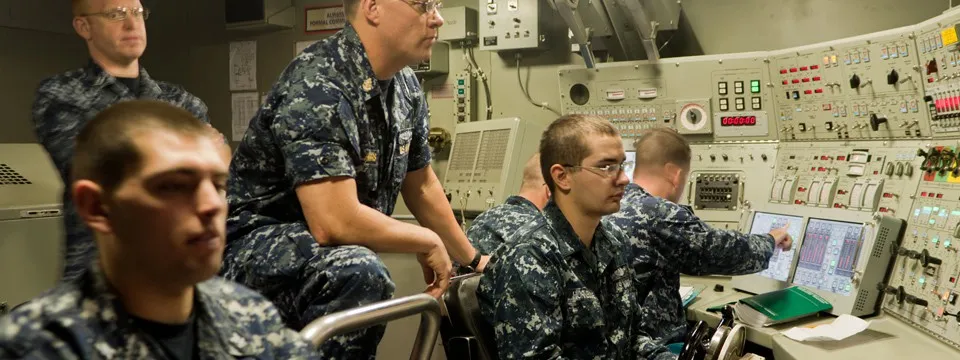
TLAM Strike Controller console
On the Arleigh Burke ship, the TLAM strike controller began downloading images from the fourth TLAM before directing it to a loiter position.
There were no specific instructions or a CHRM “do not strike” list, just a guideline for assessing battle damage to confirm missile hits. The TLAM strike controller reviewed low-res images from the fourth TLAM, enough to see if a building was hit. All three targets appeared hit, but the controller saw something unusual in the third structure—many people.
He believed this was the Aref Missile Brigade's headquarters with its command staff, the most threatening enemy units. The TLAM operator directed the fourth TLAM, loitering, to target the third building. With the already damaged roof, the strike controller adjusted the WDU-36/B warhead's fuse to maximize fragmentation.
The fourth TLAM, recently reprogrammed, broke its loiter pattern and started its final attack run on the target. As it approached Fatemeh and the remaining students, the missile pitched upward to gain altitude. As it passed over the target, it pitched down and dove nearly vertically into it.
The WDU-35/B has a 350-pound titanium case with about 450 pounds of explosive. It can be fused for delay or contact. Since many people were near the target, the fuse was set to detonate, maximizing fragments and casualties.
Or, as Pete Hegseth noted, “maximum lethality.”
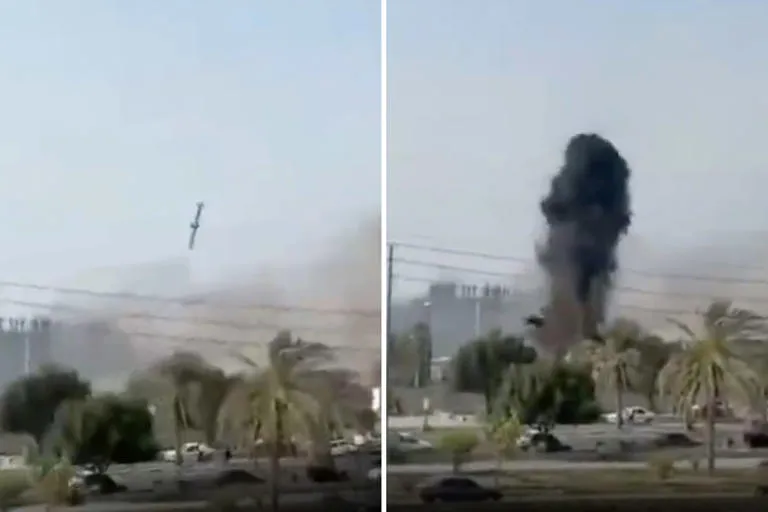
The fourth TLAM, as it struck the “Shajareh Tayyebeh” school
Fatemeh gathered surviving students in the prayer hall. She and her colleagues tried to soothe the girls, but screams from the injured classmates filled the air. Many were trapped under the collapsed concrete, calling out for help as their lives faded.
It is a mercy from God that Fatemeh and her “backpack girls” never heard the second missile before it hit. The warhead’s blast, designed to explode on impact, instantly killed everyone in the prayer hall. The unused JP-10 jet fuel powering the TLAM’s engine vaporized and ignited in a fireball, reducing small bodies to ashes instantly.
Outside the school, parents and rescuers gathered when the second missile hit, killing some parents entering the collapsed building to find their daughters. After shock, grieving parents pushed forward, crying out in fear, anguish, and fury as they searched for their children. Security and first responders tried to hold them back. Eventually, order was restored, and rescue teams began extracting survivors from the debris.
As hours passed, rescuers entered the recovery phase of their response to the “Shajareh Tayyebeh” school attack.
No more survivors could be found.
Now they had the horrible but necessary task of collecting what remained of the “backpack girls.” severed arms and legs, hands and fingers, heads without torsos, and torsos without heads—this is what was left of the girls who, but a few moments ago, were intact spiritually, emotionally, and physically.
Now they were dead.
Some "backpack girls" were so badly injured that their remains were unrecognizable; the body that turned to ash was unrecoverable.
Parents and relatives gathered outside as remains were retrieved from the destroyed school, checking if they belonged to their “backpack girl.”
Some bodies were quickly identified, though it was heartbreaking, such as a girl, her body mostly intact from the neck down, but with a skull crushed by falling debris. Others could only be recognized by the color of their clothing or a bracelet on their wrist.
The backpacks endured better than flesh, bone, and blood.
Ownership of the backpacks was shown by small trinkets and toys attached to zippers, clasps, and straps. Inside, evidence of young lives cut short was found. The items defined these “backpack girls”—though their schoolbooks were similar, notes and drawings in margins or notebooks showed lives not fully lived.
Rescuers are retrieving the backpacks of the victims from the “Shajareh Tayyebeh” school attack.
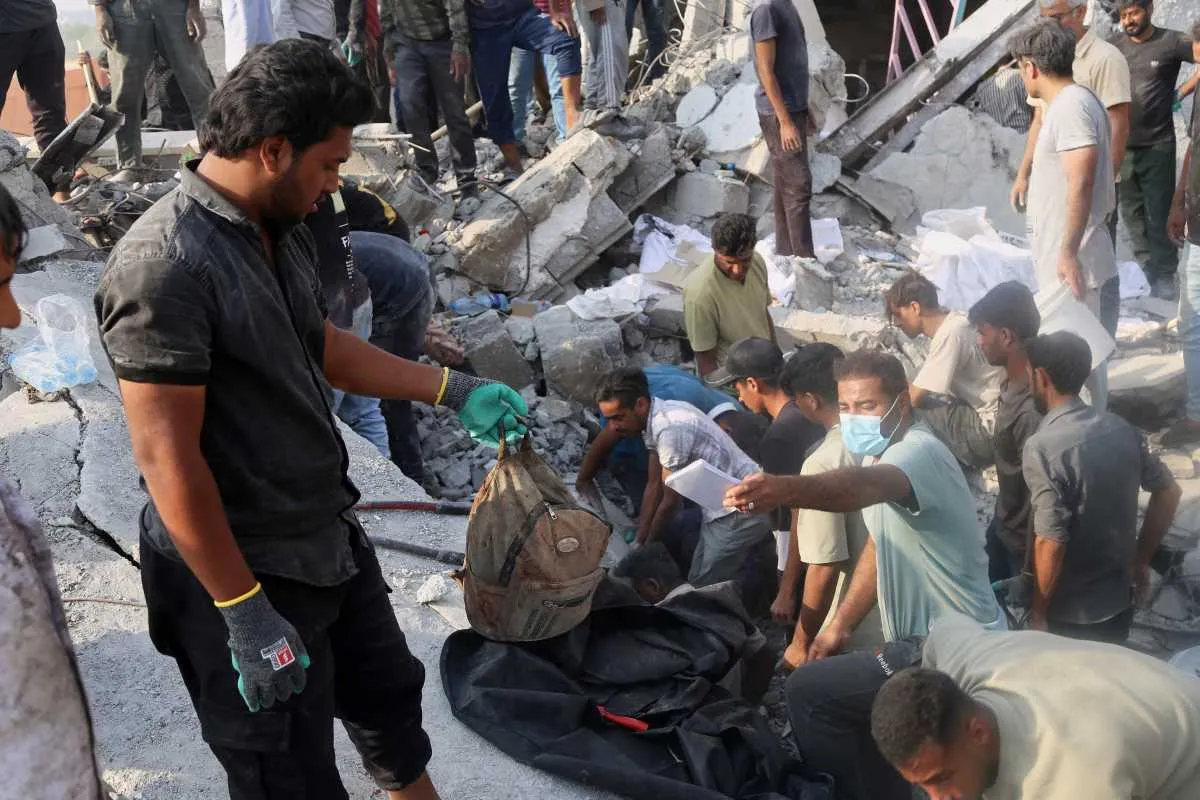
The men carefully gathered the backpacks, shaken by what they saw. Passed with care, they were placed with others whose owners would never wear them again. These owners had once imagined dreams inside these backpacks, turning them into symbols of life's meaning.
168 people were killed in the US TLAM attack on the “Shajareh Tayyebeh” school.
Most of the dead were children.
- Sixty-nine bodies were so badly mutilated or burned that positive identification couldn't be confirmed.
- Ninety-four others were wounded in the attack.
Let there be no doubt that the attack on the “Shajareh Tayyebeh” school was a war crime of the most heinous sort.
- The law of war is quite clear—schools are exclusively civilian targets that cannot be targeted.
- In this case, the school had been physically separated from the adjacent abandoned military facility.
- There were no Iranian missiles hidden on school grounds.
- Just the “backpack girls” and their teachers.
- This attack was not an accident.
- It was the byproduct of deliberate measures undertaken to eliminate mechanisms designed to prevent this very sort of incident, while encouraging a new military ethos that downplayed rules and emphasized lethality.
There must be justice.
- Justice for Atena Ahmadzadeh.
- Justice for Zeinab Mirkhayali.
- Justice for Fatemeh Yazdan-panah and Earsa Farahi Zadeh.
- Justice for Fatemeh Taherifard,
And justice for the 163 other innocent souls whose lives were taken because one man decided that he would do away with the rules and dispense with the law of war (“rules of engagement’), all the while literally baying for blood.
This man has a name—Pete Hegseth.
- And if America is to ever have a shot at restoring its honor, Pete Hegseth must be punished for his crimes.
- America must atone for its actions—Pete Hegseth’s actions.
- Justice must be served.
- And Pete Hegseth must be brought before a jury of his peers to stand trial for the murder of 168 innocent Iranians.
- America needs such a trial to cleanse itself of the stain on our collective honor brought about by these murders.
- The world needs it if for no other reason than to be shown that the United States is a nation of laws, and that no man is above the law.
- Iran needs it to allow the difficult healing process to begin so that one day Americans and Iranians can live and work side by side without fear of recrimination.
But most of all, the memory of the “backpack girls” demands it.
- Their souls were ripped from their bodies at such a young age, their families left alone to deal with the giant hole that had been torn in their collective existence.
- They will never know peace until justice has been done to the man singularly responsible for the deaths of the “backpack girls”.
Pete Hegseth.
- A mass murderer.
- And the living manifestation of everything that has gone wrong with the United States over the course of the past 30 years.
LATEST OPEN LETTERS
-
03-02TO WORLD LEADERS
-
06-01Standing in Solidarity with the People of Venezuela
-
21-07Freedom
-
20-03Stand up to Trump
-
18-02Average Americans Response
-
23-12Tens of thousands of dead children.......this must stop
-
05-06A Call to Action: Uniting for a Lasting Peace in the Holy Land
-
28-05Concerned world citizen
-
13-02World Peace
-
05-12My scream to the world
VIRTUAL POST OFFICE
PETITIONS
LINKS
DONATION
Latest Blog Articles
-
15-10Our Friday News Analysis | What the World THINKS Now!
-
14-10Our Wednesday News Analysis | Navi Pillay, head of UN commission that accused Israel of genocide, wins Nobel Peace Prize
-
13-10Navi Pillay, head of UN commission that accused Israel of genocide, wins Nobel Peace Prize
-
13-10No state has a ‘right’ to exist – least of all an apartheid, genocidal state like Israel
-
13-10‘By the Way, the World is Not Stopping Us’: The Secret of Israel’s ‘Success’
-
12-10Our Monday News Analysis | What the World THINKS Now!
-
08-10Our Friday News Analysis | What the World THINKS Now!
-
07-10Our Wednesday News Analysis | The West wants Netanyahu gone - so Palestinians can be killed more quietly again
-
06-10The West wants Netanyahu gone - so Palestinians can be killed more quietly again
-
06-10Israel turns Gaza into largest ghetto in modern history, killing residents one after another as three-year genocide continues
-
06-10Analysis Europe's Boycott of Israel Is Rapidly Expanding – and It Won't Be Easy to Stop
Latest Comments
 One of the most important and illuminating articles that I …
Comment by Benjamin Inbaraj-
And what's wrong here?
After all, there is the homeland …
Comment by Isac Boian -
Does this reinforce or deny my argument that Israel is …
Comment by Edward Campbell -
Many 'say' they support the Palestinian cause but do little …
Comment by Philip McFedries -
The UN is strangled by the "war for profit" cabal …
Comment by Philip McFedries -
I can't read the printing on the map.
Comment by Philip McFedries -
Good news!
Comment by Philip McFedries
COMMENTS
This article has 0 comments at this time. We invoke you to participate the discussion and leave your comment below. Share your opinion and let the world know.