 NEWSLETTER
The Monday Edition
Our Monday News Analysis | What the World Reads Now!
Helping to Heal a Broken Humanity (Part 106)
The Hague, 20 July 2026 | If you know of a decisive story, tell the world! We're still searching.

Living Words from John Paul II – Let your roots help you rise.

Dear young people of Angola,
I speak to you with affection, confidence, and great hope.
You carry in your hearts the desire for a better future.
Do not let that desire grow small.
Let your roots help you rise.
Saint Pope John Paul II
Apostolic Journey of John Paul II to Angola and São Tomé and Príncipe,
Address of John Paul II to Young People in the “Pavilhão Principal Dacidadela”
Luanda (Angola)
7 June 1992

Building the Bridge Foundation
Click here for Part 66
Click here for Part 65
EDITORIAL | The U.S., China, and Russia VS the EU-NATO – You Can’t Make This Up!

By Abraham A. van Kempen
20 July 2026
Last Monday, I ended the editorial as follows:
The world rejects the 600-year-old Eurocentric obsession of:
What is mine is mine.
What is yours is mine also.
It’s either my way or the highway.
If you’re not for us, you’re against us.
If you don’t do it our way, you’re dead meat.
So, who is the Statesman of the 21st Century? President Vladimir V. Putin!
Why might President Trump be seen as one of the nation's greatest presidents? Many think he has the potential to reduce Western dominance over the U.S., offering hope and prompting change.
Except, President Trump seems crazy. Is he for real, or is it an act? He’s either a genius or nuts. In future editions, we’ll explore this dichotomy. You’ll be the judge.
I think he knows precisely what he’s doing and why. Maybe I’m wrong. What if I’m right?
...
What If I’m Right?
...
I’ve got some ideas about why the President acts insane. I’ll cover them in future editorials. If you’re curious and can’t wait, please go to the Editorial of 30 January 2026 ... you’ll read a different narrative about Presidents Trump, Xi, and Putin:
EDITORIAL | Off to the Races …
By Abraham A. van Kempen
30 January 2026

Off to the Races …
This week’s Friday News Analysis will highlight our nominations of Presidents Donald Trump, Xi Jinping, and Vladimir Putin for the 2026 Nobel Peace Prize. I want to share the email I received from Norway a few days ago. Please note that the deadline for submitting nominations is tomorrow at midnight.
Congratulations!
You have been granted access to the Nobel Peace Prize electronic nomination form. Access is granted under the condition that all personal information you provided is accurate and that you belong to a group authorized to make nominations. The electronic nomination form allows you to nominate up to five candidates for the same effort; however, please note that the Nobel Peace Prize cannot be shared among more than three nominated candidates. The Prize may also be awarded to institutions and organizations.
Nomination
The nomination consists of three main parts:
- the name of the candidate(s)
- a brief justification for the nomination
- a somewhat longer statement explaining why, in your opinion, the nominated person(s) and/or organization(s) deserve the Nobel Peace Prize
You may upload additional documentation in PDF format. Please do not use long file names.
You may submit one nomination at a time. After submitting a nomination, you may log on again to submit another nomination.
Please note that the nomination deadline is 31 January at 12 midnight CET.
...
So for now ...
Before handing today’s Editorial over to Scott Ritter, I want to leave you with a single thought:
Could there be a more influential power within the EU-US/NATO and the Wannabees of the Willing than the United States – the unipolar autocracy that imposes liberal democracy and says, “If you don’t, you’re dead meat”?
Think this through!
GUEST EDITORIAL | DECISION POINT – SCOTT RITTER
Ukraine is defenseless in the face of Russian missile attacks. Now is not the time for negotiations. Russia must finish the job.
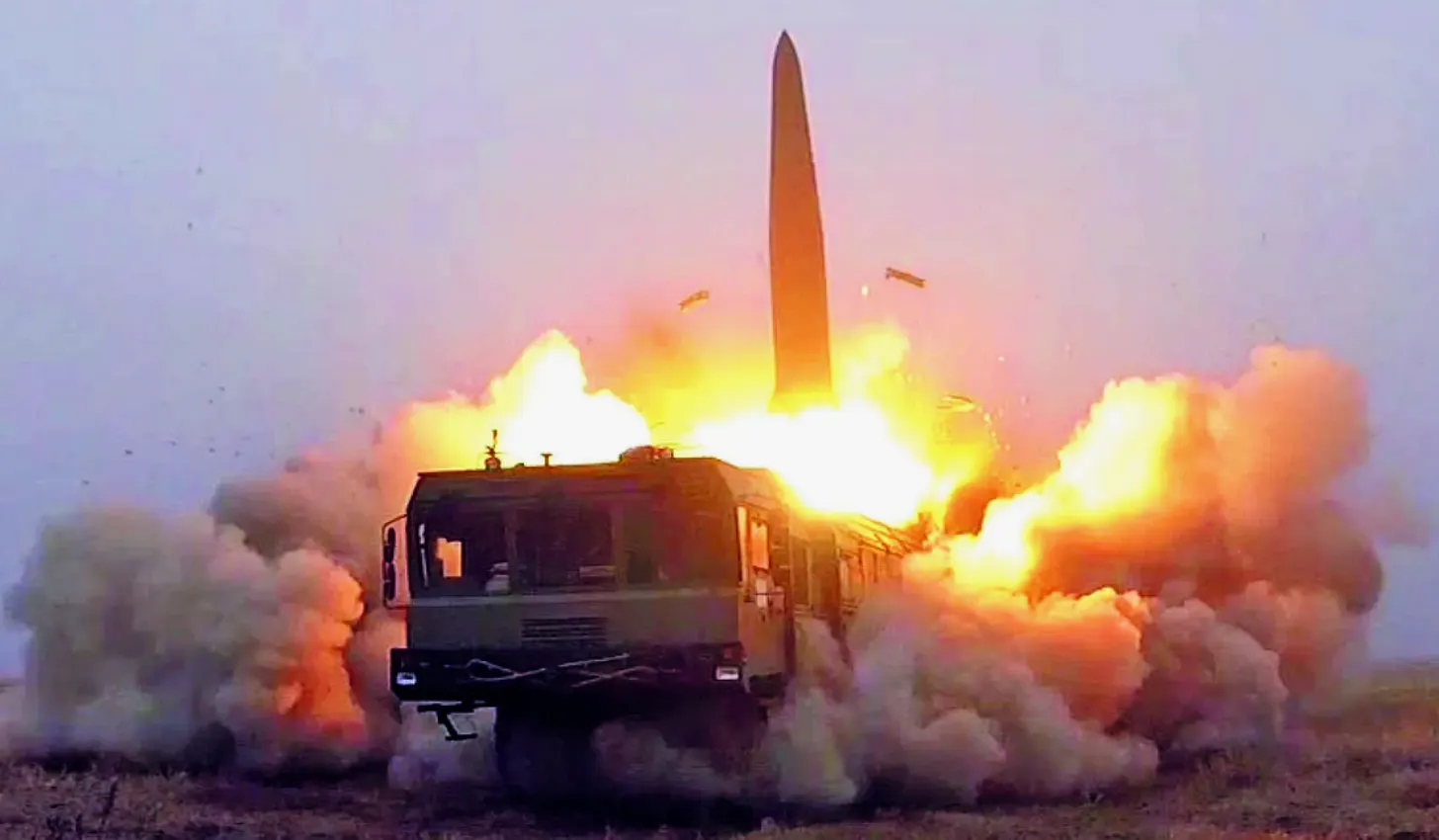
The launch of a Russian Iskander missile
By Scott Ritter
Substack.com
19 July 2026
The United States Department of Defense defines the term “decision point” as “A geographic location, specific key event, critical factor, or function that, when acted upon, allows commanders to gain a marked advantage over an adversary or materially contribute to achieving success.”
Today, Russia has reached a decision point in its conflict with the collective West, including the United States and its Ukrainian proxy.
In my opinion, the Russian leadership has been preparing for some time for the confluence of the physical and psychological manifestations of a campaign designed to create an unbridgeable gap between perception and reality. When exposed through action, this will cause the artificially constructed edifice of Ukrainian defensive viability to collapse, and with it the false pillars of Western democracy, industry, and military might that propped it up.
This campaign wasn’t designed from scratch by the Russians but rather emerged from the lies and deceit of those in the West who postured as peacemakers but, in reality, served as the promoters of war.
The Europeans had long proven themselves to be charlatans, and their perfidy regarding Minsk forever exposed them as absolutely unreliable partners for resolving a Ukrainian crisis they themselves orchestrated.
The more curious thing is Russia’s attitude toward the United States. It was the United States that served as the architect of policies that have been in place for decades, designed to weaken Russia and undermine the Russian government to the point of collapse.
And yet Russia continued to hold out hope that the United States—especially under the second Trump administration—could somehow serve as a force for rational stability in managing both Europe and Ukraine.
The Anchorage Summit of August 2025 was the culminating moment of this conceptualization, manifesting itself as the so-called “Spirit of Anchorage,” the idea that through compromise a solution that addressed Russian concerns in a serious fashion could be crafted and would be acceptable to all.
Within months, however, it became clear that the “Spirit of Alaska” was as illusory as the “Spirit of Minsk” that preceded it, another perfidious diplomatic ploy intended to buy time to build up Ukraine’s military capability by lulling Russia into believing that a negotiated peace was possible.
But the United States, like Europe, never intended the Ukrainian conflict to end in anything other than a strategic Russian defeat.
The Russian leadership has now come to accept—however belatedly—this uncomfortable reality.
The ultimate question now confronting Moscow is how to act on this realization.
Russia finds itself in a position where it enjoys considerable strategic advantages over Ukraine and its Western partners across a broad spectrum of disciplines—diplomatic, economic, military, and social.
Russia, despite the West’s concerted efforts, is not isolated. Just the opposite, in fact. In many ways, Russia enjoys a stronger geopolitical posture today than before the initiation of the Special Military Operation, if for no other reason than that the conflict has exposed the nefarious nature of the so-called “rules-based international order” and those who conceived and implemented it. As such, it has breathed viability into the concepts of multilateralism that Russia and other nations, especially China, had been promoting with mixed results.
The Russian economy has withstood the challenges posed by economic sanctions and direct military action, and today is recognized by most of the world as a viable place to do business, as evidenced by the $84 billion in direct investments recorded during the Saint Petersburg International Economic Forum this past June.
Russia today possesses a large, well-trained, well-equipped, combat-hardened military, backed by a robust and capable defense industry that is not only prevailing in an extended war of attrition against Ukraine and the collective West but has also positioned itself to defend Russia’s interests in the Baltic, Arctic, and Pacific, as well as the totality of its periphery, and to defend and advance Russian interests in the Middle East and Africa. Advances in Russian technology—especially in ballistic missiles—have provided a qualitative edge, which, when combined with Russia’s quantitative strengths, makes Russia a very formidable force.
Russian society continues its long and painful divorce from the West. The incomplete nature of this split, in which small pockets of Western liberalism retain relevance amid a broader societal gravitation toward a new Russian national awareness, has provided the collective West with its only opportunity to dismantle the advantages Russia has accrued diplomatically, economically, and militarily. Western intelligence services have worked with Ukraine to craft a narrative of Ukrainian resistance, resilience, and relevance, which is then juxtaposed against the perception of Russian weakness that emerges in the wake of the false hope of negotiated peace that Russia had embraced in Minsk, Istanbul, and Anchorage.
This hope was always intended to energize the residual Western liberal elites in Russia into believing that everything would be better if Russia simply embraced the spirit of compromise. But the spirit of compromise was nothing more than a wolf in sheep’s clothing, a disguise that blinded Russians to the reality that the collective West was seeking Russian surrender instead.
By planting the false hope of compromised-induced peace and prosperity in the minds of the residual Russian western liberal elites, western intelligence was sowing the seeds of a larger Russian societal disruption, intended if the desired peaceful outcome failed to materialize. The fact that the failure to find a pathway to peace stemmed from the collective West’s perfidy didn’t matter in this regard—the Russian liberal elites were conditioned to blame their leadership for this failure, regardless of the truth.
Having sown the seeds of societal unrest, the Western intelligence services themselves launched one of the largest information operations ever conducted, flooding the mainstream Western press and social media outlets with an endless stream of stories designed to promote the narrative of Ukrainian victory and Russian defeat. This narrative would then be injected into Russian social discourse either through the resonance of the incessant Western echo chamber or through agents of influence—witting and unwitting alike—whose access to the Russian information market helped magnify a message of Russian weakness, corruption, and indecision designed to collapse Russian public confidence in their leadership.
And now we find ourselves at the Point of Decision.
The information operation against Russia was backed by three supporting campaigns.
The first was the shift by Ukraine and its Western supporters away from the traditional battlefield, where Russia was prevailing, to a drone-based war designed to create the perception of Ukrainian strength and, in doing so, the prospect of Ukrainian victory.
This campaign was not only designed to influence the Russian liberal elites but also to build a foundation of political support in Europe and the United States for increased economic and military support for Ukraine.
The drone campaign served as the catalyst for the G-7 meeting in June, where pledges of economic support were made, and for the NATO summit in July, where similar pledges were made regarding military support.
But rather than constructing a structurally sound foundation upon which a viable Ukrainian counter to Russia could be built, the entire Western effort had produced little more than a ghost of what was sought—a veritable house of cards that could collapse at the slightest breeze.
The fact is that the ability to turn the promises of the G-7 and NATO into reality is as illusory as the drone campaign upon which these promises were promulgated.
The European “Big 3”—Germany, France and the UK—are led by leaders whose political viability is measured in months.
The United States is distracted by a losing military effort in the Middle East and a genuine lack of goodwill between American President Trump and his European and NATO partners.
The only thing that could coalesce this dysfunctional US-European alliance would be a Russian overreaction to the pressures from the Ukrainian drone campaign.
This, of course, is one of the primary goals of the Western intelligence services through their information operation.
The “Russia must attack Europe” theme has taken hold in Russia, promoted by Western observers and analysts (I myself have been guilty of this) as well as by Russian commentators and influencers.
But it has been resisted by the Russian leadership simply because attacking Europe would undo all of the advantages Russia has accrued diplomatically, economically and militarily and, in doing so, potentially trigger the very collapse of Russian society the West has long sought.
A Russian attack on Europe would also create a window of opportunity for both the failing European leadership and the flagging US-NATO alliance.
A Russian attack on Europe is exactly what Western intelligence seeks.
Today, Russia finds itself confronted by a confluence of events that has opened a window of strategic opportunity.
The Ukraine drone campaign has failed. This conclusion has manifested in the political turmoil inside Ukraine, as President Zelensky fired the person responsible for the campaign—Mikhailo Federov—and instead appeared to favor reallocating resources to the Ukrainian ground forces.
The Ukrainian public, which had embraced the narrative of Ukrainian drone dominance as the magic formula to end the war, has taken to the streets in protest, creating an unprecedented political crisis for Ukrainian President Zelensky.
Meanwhile, Europe and the US struggle to follow through on the promises made at the G-7 and NATO Summits.
The gap between the theory of a Ukrainian victory and the ability of Ukraine and its Western partners to achieve it has never been greater.
The only thing that could save the Ukraine project is either Russian indecision or an overreaction by Russia.
It is time, instead, for Russian action.
Russia has launched a massive bombardment of Ukraine with missiles and drones.
Ukraine has no defense.
Neither Europe nor the US is in a position to change this calculus in the near term.
Every Russian missile attack underscores the false narrative of the Western intelligence information operation.
Every Russian missile attack exposes the impotence of Europe.
Every Russian missile attack underscores the dysfunction of NATO and the US.
And every Russian missile attack shreds the credibility of the residual Russian liberal elite.
This is the Decision Point.
Keep raining missiles down on Ukraine.
Confront the Ukrainian people with the inevitability of their collective demise if they continue to fight.
Confront Europe with the emptiness of their promised support.
Confront the US and NATO with their collective military impotence.
And confront the Russian people with the inevitability and necessity of a decisive Russian victory.
The collective West set itself up for disaster by engaging in perfidy intended to destroy Russia.
Policies based on lies and deception cannot succeed if the lies and deception are exposed in time for an effective countermeasure to be implemented.
Russia has exposed the lies and deception of the West.
Now it simply needs the courage to act.
This is the Decision Point that will determine the future of Russia.
The vulnerability of Ukraine to Russian missile and drone attacks has become evident.
Russia now needs to exploit this vulnerability using every resource it has.
- Ukraine will be defeated.
- Europe will collapse.
- And the United States will be left holding an empty bag.
- There’s no need to strike Europe.
- Simply darken the skies of Ukraine with Russian missiles and drones.
...
We will go to Yalta. Patience Please!

To be continued on Friday, 24 July 2026.
Enjoy your week,
Abraham A. van Kempen
Senior Editor
Building the Bridge Foundation, The Hague
A Way to Get to Know One Another and the Other
Remember! Diplomacy is catalytic—transformative —while military action is cataclysmic—destructive and catastrophic.
When faced with the options to be good, bad, or ugly, let’s build bridges, not burn them. After all, mutual deterrence reigns.
JEFFREY SACHS: U.S. IMPERIAL STRATEGY - DESTROY RUSSIA, IRAN & CHINA
Before we enter the darker waters of this argument, we need to name what is at stake: The EU-US-NATO + Its Wannabes of the Willing against the world.
- This is not simply a dispute about policy, strategy, or distant front lines. It is a conversation about power drifting away from the people who pay its price.
- The interview frames today’s wars as symptoms of a deeper sickness: a politics addicted to dominance, secrecy, and technological force.
- Its urgency lies in the human question beneath the geopolitics: how long can societies accept destruction carried out in their name, while peace is treated as weakness and ordinary lives become expendable?
Editor’s Note | I sense that President Trump will soon come to his senses and lead the United States to break away from this Axis of Evil, this unipolar autocracy disguised as liberal democracy, helping heal a broken humanity in the name of freedom.

Watch the Video Here (35 minutes, 02 seconds)
Host Prof. Glenn Diesen
Substack.com
19 July 2026
A Heart-to-Heart Warning
By Abraham A. van Kempen
20 July 2026
Let me speak plainly: this conversation feels like standing at the edge of a storm-lit sea, watching the waves rise while the captains argue over maps. What it lays bare is not just a geopolitical argument; it is a warning flare in a darkening sky. The central claim is stark: the wars in Ukraine and the Middle East are not accidents of chaos, but symptoms of a long-running pursuit of dominance, dressed up as security and sold to the public as necessity.
The emotional force of the analysis comes from its contrast between distance and suffering. Leaders speak in strategies, doctrines, targets, and leverage, while ordinary people inherit the ruins: burned cities, broken families, emptied futures. The interview argues that modern war has become dangerously easy for those who authorize it. It is financed by debt, concealed by secrecy, and animated by technology that turns human lives into glowing points on a screen. That image should stop us cold.
At the heart of the piece is a moral accusation: citizens are not being asked.
- Ukrainians, Europeans, Americans, and people across the regions touched by war may want diplomacy, restraint, and survival, yet decisions are made above them, behind curtains, in rooms where consequences feel abstract.
The language of “primacy” becomes chilling because it suggests that peace is not the goal; control is.
And here is where Prof. Glenn Diesen’s discussion with Prof. Jeffrey Sachs lands hardest:
- If this path continues, Europe risks becoming not a protected partner but a disposable frontier.
- The supposed guardians of stability may be steering the public toward a cliff while calling it resolve.
Still, the closing spark matters. The analysis does not place hope in presidents, agencies, or war planners. It places hope in us. In citizens who can still say no. In publics who can still insist that life is not a chessboard, nations are not pawns, and peace is not weakness.
That may sound fragile, but sometimes the smallest candle reveals that the whole room is on fire—and that the door is still within reach.
‘YOU ARE LOOKING AT WORLDWIDE DEPRESSION: LESS FOOD, LESS MOBILITY, DECLINE IN STANDARD OF LIVING’ – DAVID MORGAN
- Morgan filters out the daily market volatility, clarifying why conventional paper assets are a mathematical trap and emphasizing that gold, silver, and Bitcoin remain the only genuine lifelines.
- True survival extends beyond just your bank balance—it demands a psychological reset to restore personal integrity and see beyond a deeply corrupt system.
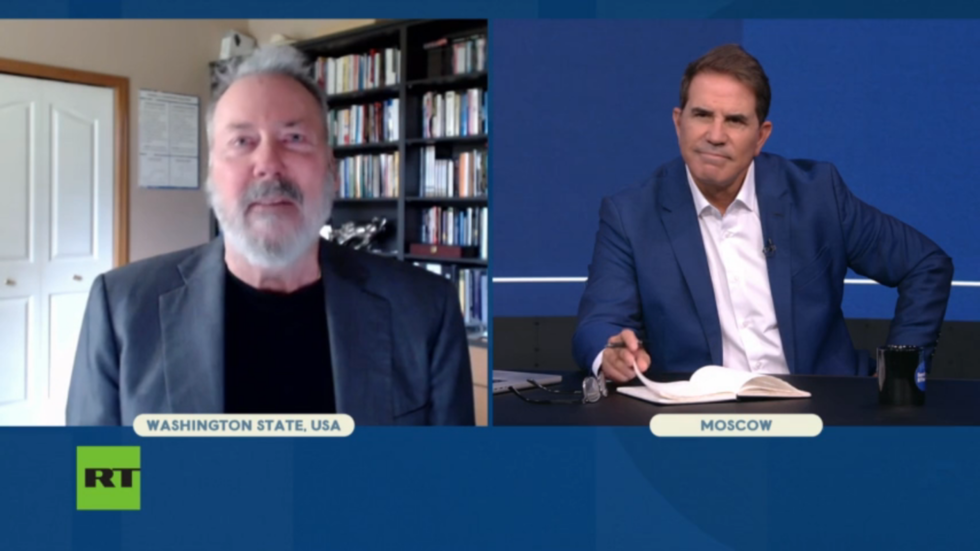
Watch the Video Here (48 minutes, 56 seconds)
Host Rick Sanchez
HomeShowsSanchez Effect
16 July 2026
‘You are looking at worldwide depression if both straits are closed: less food, less mobility, and a decline in the standard of living.’ – David Morgan.
In the newest episode of Sanchez Effect, economist and publisher David Morgan discusses how a conflict with Iran could immediately disrupt vital energy supplies, potentially leading to a worldwide depression and resource shortages. He also reveals the systemic deceptions behind the decline of US dollar dominance. Morgan highlights a significant geopolitical shift as China accumulates more gold than any other country.
Watch the complete interview before the next financial crisis hits your doorstep – only on RT.
TRUMP'S BIGGEST MISTAKE ESCALATED THE WAR? COL. DOUGLAS MACGREGOR BREAKS IT DOWN
Is the conflict becoming more dangerous?
In this video, we review the latest geopolitical developments and evaluate claims that President Donald Trump's choices have significantly heightened tensions in the Middle East.
- Drawing on the expertise of Colonel Douglas Macgregor, we analyze military tactics, regional security, U.S. foreign policy, and potential impacts on Iran, Israel, and the broader region.
- This review compiles publicly available data and expert insights to help viewers grasp the strategic, political, and military aspects of the ongoing crisis.
- As events develop, staying informed with balanced analysis is crucial.
Watch until the end for an in-depth explanation of what these changes might mean for global stability and future international relations.

Watch the Video Here (28 minutes, 15 seconds)
Epic Scroll 83
19 July 2026
Editor’s Note | The War Fantasy That Comes Home to Your Kitchen Table
By Abraham A. van Kempen
20 July 2026
A blunt warning that Washington’s Iran strategy is less about leverage than delusion—and that ordinary people may pay the price first.
Let’s not dress this up: Washington is not managing a crisis with Iran; it is sleepwalking into one of its own making. Col. Douglas Macgregor’s charge is that America’s foreign-policy class has sold the public a fantasy—one where Iran is always on the verge of collapse, U.S. bombs always create leverage, and “strength” means doubling down after every failure.
Col. Macgregor warns that such fantasies are dangerous. Iran isn't a fragile regime waiting to fall but an ancient, united civilization with strategic land routes, oil reserves, and influence. Past attacks, sanctions, and underestimation have made it resilient. Attempts at weakening or regime change might backfire, boosting Iran’s resolve. While Washington thinks it pressures Iran, it may actually strengthen its capacity to resist American efforts.
The real punch is that this is not some distant chessboard drama. It comes home. It shows up at the pump, in fertilizer prices, in food supply chains, in bankrupt farms, in strained reserves, and in the creeping realization that ordinary people are being handed the bill for decisions made by those insulated from the consequences. The war room and the kitchen table are no longer separate worlds. One wrecks the other.
America isn't truly governed by citizens but by donors, lobbies, and officials who confuse slogans with strategy. The key question: “Who is governing us?” If both parties respond to the same money and repeat the same narratives, voting won't fix the decay. America might need a new political movement or republic. The warning is to stay alert, as those in charge may not realize or care that the situation is critical.
Do not look away, and do not outsource your judgment to the same people who keep getting the big questions wrong. Ask who benefits, who pays, and who is missing from the room when decisions are made. Demand diplomacy before escalation, accountability before loyalty, and the public interest before lobby money. If this system no longer hears ordinary people, ordinary people have to organize loudly enough that it cannot pretend not to hear them.
Key points:
- Washington’s Iran policy is framed as a dangerous illusion: more pressure is being mistaken for real strategy.
- Iran is portrayed as resilient, cohesive, and harder to break than U.S. policymakers want to admit.
- The costs of escalation are not abstract; they hit fuel, food, farms, supply chains, and household security.
- The deeper crisis is political: ordinary citizens are being sidelined while donors, lobbies, and ideological insiders steer the country.
Imagine the family in the grocery aisle—the parent pretending not to worry as the child asks for a small item, and the silence that falls because even minor choices matter. The driver at the gas pump watching the numbers rise faster than their paycheck. These aren't just policy issues; they involve real lives being squeezed, one everyday moment at a time. This should not end in cynicism. It must end with love for those who sustain this country: workers, parents, farmers, truck drivers, young people, and families who need more than slogans and sacrifice.
Hope begins when they realize they are not powerless, invisible, or alone. If enough people refuse to let fear guide decisions, money silence conscience, and war become inevitable, the future can shift toward something more humane, honest, and decent.
And if there is one image worth carrying forward from all of this, it is the fragile but stubborn light of people who still believe a better choice is possible.
“Hope is the small light we carry through the storm—not because the road is clear,
but because we refuse to let darkness choose the destination.”
If that light is going to mean anything, we have to carry it into action—by questioning power, demanding diplomacy, and standing together loudly enough to be heard.
COL DOUGLAS MACGREGOR: PUNISHING IRAN, TRYING TO BRING THEM TO THEIR KNEES
This is no longer strategy; it is a bonfire seeking more wood.
- The conversation paints a frightening picture of a war machine fueled by impulse, ego, and exhaustion.
- Missiles are being launched, targets are being broadened, and the language of “finishing the job” sounds less like policy than a plunge into collective punishment.
- The core warning is simple and chilling: the more Washington tries to force Iran to its knees, the more it risks dragging the region—and maybe the world—into a wider disaster.

Watch the Video Here (21 minutes, 09 seconds)
Lt. Col. Daniel Davis
Deep Dive
19 July 2026
The Fuse Is Burning -- Let’s be honest
By Abraham A. van Kempen
20 July 2026
Lt. Col. Davis and Col. Macgregor contend that taking islands, bombing infrastructure, or threatening energy resources won't provide leverage. Instead, these actions will create targets, provoke retaliation, and incite panic. Iran is not a fragile state eager to capitulate but a substantial, resilient nation capable of striking back in various ways. Alarmingly, if oil routes, ports, power stations, desalination facilities, or shipping chokepoints are targeted, it will impact ordinary people worldwide—raising food prices and fuel costs, and affecting factories, farms, and homes.
That is what makes their conversation so urgent. War is often sold with thunderous slogans—strength, deterrence, victory—but the bill arrives quietly: a mother paying more for bread, a trucker choosing between fuel and rent, a farmer watching fertilizer costs skyrocket. The Strait of Hormuz is not an abstraction; it is the bloodstream of the global economy, and when it clots, the whole body shakes.
The emotional punch of Lt. Col. Davis and Col. Macgregor’s plea is to stop mistaking escalation for courage. Real courage may be the harder thing:
- Admitting limits
- Stepping back
- Choosing diplomacy over pride before it turns into catastrophe
The message: when leaders gamble with war, they are not pushing chips across a table. They are pushing families, economies, and futures toward the edge. And once the edge gives way, no speech can pull everyone back.
BLACKMAIL, BRIBES, AND FEAR: NETANYAHU CLAIMS HE CONTROLS DONALD TRUMP AND AMERICA. TUCKER RESPONDS.
A growing global bloc is uniting against America. Our future is in peril. Watch our live broadcast with Jeffrey Sachs.
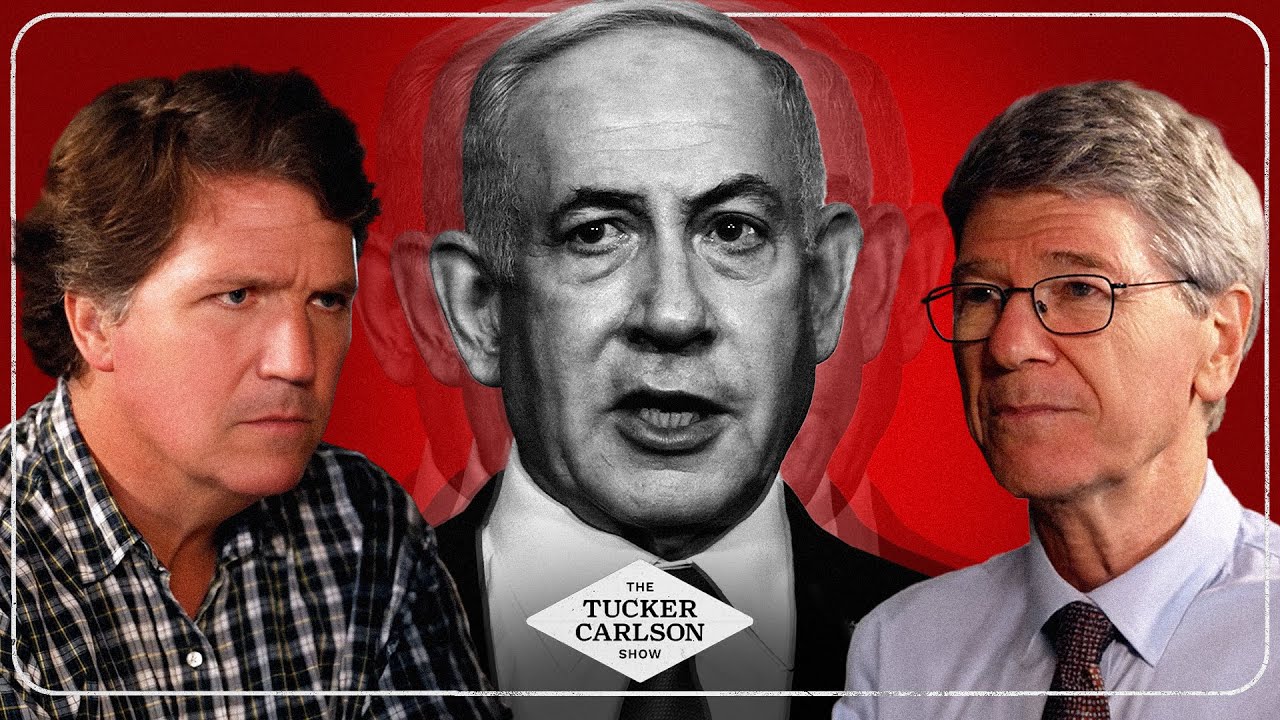
Watch the Video Here (1 hour, 32 minutes, 47 seconds)
Tucker Carlson
The Tucker Carlson Show
2 October 2025
Editor’s Note | The Velvet Curtain and the Republic’s Conscience
By Abraham A. van Kempen
20 July 2026
Tucker Carlson’s talk with Prof. Jeffrey Sachs isn't just a debate but a warning in a civic context. It questions whether a proud nation can openly evaluate an alliance, or whether fears, norms, and pressure obscure the issue.
The discussion emphasizes that foreign policy must be accountable to citizens and grounded in traditional democracy: even emotional alliances should be scrutinized. It depicts America as allowing one dominant relationship, overshadowing balance, caution, and questioning.
The argument's moral structure depends on distinguishing between people and power. A government isn't faith, a state isn't bloodline, and a policy isn't community. The conversation mainly criticizes the system of deference—donors, slogans, silences, accusations, and anxieties—that softens public debate.
The analysis looks like a candle in a marble corridor after midnight. The surfaces are polished, but shadows linger. It perceives a restless country tired of euphemism, craving virtues like restraint, honesty, self-control, and loyalty to the republic.
If a democracy can't openly discuss one of its allies, it isn't truly free. Intimidation silences questions, fostering resentment. The solution isn't cruelty, but courage. It isn't scapegoating, but scrutiny—holding leaders accountable. A serious nation declares no government is immune from criticism, no alliance exempt from review, and no label should silence questions about the country's direction.
The core lesson is that desire seeks transparency, not hatred. It’s about holding power accountable, not abandonment. It promotes mature citizenship over empty slogans. A healthy democracy affirms no foreign policy is untouchable, no government immune, and no person judged by blood, tribe, faith, or passport. Moving forward requires honest communication without cruelty.
BUILDING THE BRIDGE! | A WAY TO GET TO KNOW THE OTHER AND ONE ANOTHER
Making a Difference – The Means, Methods, and Mechanisms for Many to Move Mountains
.jpg)
Photo Credit: Abraham A. van Kempen, our home away from home on the Dead Sea
By Abraham A. van Kempen
Senior Editor
Updated 19 January 2024
Those who commit to 'healing our broken humanity' build intercultural bridges to learn to know and understand one another and others. Readers who thumb through the Building the Bridge (BTB) pages are not mindless sheep following other mindless sheep. They THINK. They want to be at the forefront of making a difference. They're seeking the bigger picture to expand their horizons. They don't need BTB or anyone else to confirm their biases.
Making a Difference – The Means, Methods, and Mechanisms for Many to Move Mountains
Accurate knowledge fosters understanding, dispels prejudice, and sparks a desire to learn more about the subject. Words have an extraordinary power to bring people together, divide them, forge bonds of friendship, or provoke hostility. Modern technology offers unprecedented possibilities for good, fostering harmony and reconciliation. Yet, its misuse can cause untold harm, leading to misunderstandings, prejudices, and conflicts.
A Free Trial for Life – SUBSCRIBE NOW!

• It's quick and straightforward.
• We won’t ask for your credit card number.
• Just enter your e-mail address to receive your complimentary free-for-life subscription to our newsletter.
• Please include your First and Last Name.
• We won’t share or sell your e-mail address.
_________________________
Related Articles Recently Posted on www.buildingthebridgefoundation.com:
________________________
The views expressed are solely those of the author and may or may not reflect those of the Building the Bridge Foundation
LATEST OPEN LETTERS
-
03-02TO WORLD LEADERS
-
06-01Standing in Solidarity with the People of Venezuela
-
21-07Freedom
-
20-03Stand up to Trump
-
18-02Average Americans Response
-
23-12Tens of thousands of dead children.......this must stop
-
05-06A Call to Action: Uniting for a Lasting Peace in the Holy Land
-
28-05Concerned world citizen
-
13-02World Peace
-
05-12My scream to the world
VIRTUAL POST OFFICE
PETITIONS
LINKS
DONATION
Latest Blog Articles
-
15-10Our Friday News Analysis | What the World THINKS Now!
-
14-10Our Wednesday News Analysis | Navi Pillay, head of UN commission that accused Israel of genocide, wins Nobel Peace Prize
-
13-10Navi Pillay, head of UN commission that accused Israel of genocide, wins Nobel Peace Prize
-
13-10No state has a ‘right’ to exist – least of all an apartheid, genocidal state like Israel
-
13-10‘By the Way, the World is Not Stopping Us’: The Secret of Israel’s ‘Success’
-
12-10Our Monday News Analysis | What the World THINKS Now!
-
08-10Our Friday News Analysis | What the World THINKS Now!
-
07-10Our Wednesday News Analysis | The West wants Netanyahu gone - so Palestinians can be killed more quietly again
-
06-10The West wants Netanyahu gone - so Palestinians can be killed more quietly again
-
06-10Israel turns Gaza into largest ghetto in modern history, killing residents one after another as three-year genocide continues
-
06-10Analysis Europe's Boycott of Israel Is Rapidly Expanding – and It Won't Be Easy to Stop
Latest Comments
 One of the most important and illuminating articles that I …
Comment by Benjamin Inbaraj-
And what's wrong here?
After all, there is the homeland …
Comment by Isac Boian -
Does this reinforce or deny my argument that Israel is …
Comment by Edward Campbell -
Many 'say' they support the Palestinian cause but do little …
Comment by Philip McFedries -
The UN is strangled by the "war for profit" cabal …
Comment by Philip McFedries -
I can't read the printing on the map.
Comment by Philip McFedries -
Good news!
Comment by Philip McFedries
COMMENTS
This article has 0 comments at this time. We invoke you to participate the discussion and leave your comment below. Share your opinion and let the world know.