 NEWSLETTER
The Friday Edition
Our Friday News Analysis | What the World Reads Now!
Helping to Heal a Broken Humanity (Part 103)
The Hague, 10 July 2026 | If you know of a decisive story, tell the world! We're still searching.
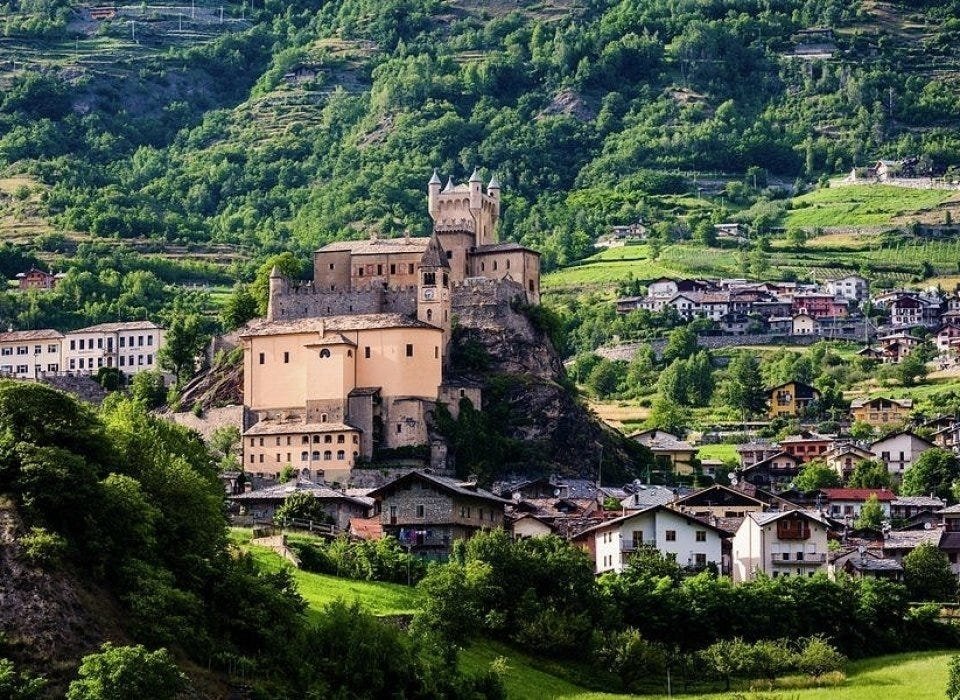
The Evangelical Pope | The Sound of Thundering Silence … Listen!
“The many opportunities modern society affords for relations and information sometimes risk leaving no room for recollection, even jeopardizing a person's ability to reflect and pray.
It is only in silence that human beings can hear, in their innermost being, the voice of God, which truly sets them free.
And holidays can help people rediscover and cultivate this
indispensable inner dimension of human life.”
Saint Pope John Paul II
Les Combes, Valle d’Aosta, Italy
11 July 2004

Building the Bridge Foundation
This week’s reflection: “The Sound of Thundering Silence … Listen!”
Click here for Part 63
Click here for Part 62
OUR WEDNESDAY NEWS ANALYSIS | ISRAEL WANTS THE WORLD TO BE QUIET
.jpg)
Ambassador Danny Danon attends a UN Security Council meeting on the situation in the Middle East in New York City. (AFP file)
EDITOR’S NOTE | Israel’s handling of criticism at the United Nations has become a test of diplomatic credibility, and the recent confrontation involving Ambassador Danny Danon illustrates the risks of meeting scrutiny with denunciation rather than argument.
At a UN event marking the International Day for the Elimination of Sexual Violence in Conflict, officials addressed reported patterns of sexual violence against Palestinian detainees and limits on UN access to monitor conditions.
Danon responded by accusing UN officials of bias and demanding the resignation of Pramila Patten, the secretary-general’s special representative on sexual violence in conflict.
- Such a response may appeal to domestic audiences, but it weakens Israel’s standing in international forums.
- Serious allegations require evidence, transparency and disciplined rebuttal; personal attacks on UN officials only shift attention away from the substance of the claims.
- The moment became more revealing when Vanessa Frazier, the secretary-general’s special representative for children and armed conflict, attempted to raise a point of order and was told to “shut up.”
- The episode matters because diplomacy is not simply the defense of national interests; it is also the ability to answer uncomfortable questions with credibility.
- By treating scrutiny as hostility, Israel’s representatives risk reinforcing the very doubts they seek to dispel.
If Israel wants to preserve influence in multilateral institutions, it must respond to grave allegations with openness and precision, not procedural confrontation and grievance politics.
Editorial | Welcome to the Insane Asylum

By Abraham A. van Kempen
10 July 2026
If NATO isn’t an insane asylum with lunatics at its helm, it’s a sandbox filled with delinquents who’ve never grown up. NATO seeks to transform the European workfare system into a warfare-oriented model centered on military preparedness, urging members to dedicate a significant portion of their GDP to collective defense. This involves deploying ground forces – American and European youths – to conduct strategic operations, divide the adversary, and take preemptive measures against Russia, based on the presumption that Russia intends to attack Europe and seize control of European capitals.
Madness! Do those bozos in Brussels, clowns in Strasbourg, and stooges in Washington, D.C., not to mention the buffoons in Kyiv, truly believe that the young in the United States and Europe will want to fight a war that can be commanded and controlled remotely, with missiles and drones? Why is NATO so fixated on waging war, invading, defeating, dividing, and conquering Russia, considering that over the past 200 years, Europe has attempted this three times—by Napoleon of France, the German Kaiser during World War I, and the Nazis in World War II—and all of these efforts failed?
Since 2014, NATO has sought to weaken Russia by using Ukraine as a proxy, reportedly sacrificing 1.7 million of Ukraine’s best to serve as cannon fodder to uphold NATO’s Eurocentric obsessions. After 12 years of the War of Ambiguities, Europeans are now less economically and spiritually resilient than the Russians. People across Europe, including Russia—the largest country in Europe—and throughout the United States and Canada, two NATO member states, are urging their leaders to pursue peace initiatives or to consider stepping down. Their leaders are feeling the weight of mounting pressure. More and more Americans are realizing that they can't keep charging Eurocentric wars to their country's credit card—with a staggering $40 trillion national debt—leaving future generations of Americans to pick up the tab.
You ought to have been present at the NATO insanity. You would have heard the de facto president of Ukraine, still a B-rated comedian, propose to the U.S. President that his small, impoverished country be authorized to produce Patriot missiles for defense against 1000s of Russian drones and hundreds of supersonic missiles. What a laugh, especially coming from a comedian. President Donald J. Trump, amid the European elites he despises and dismisses, openly embraces an idea that everyone, including the President, knows is absurd. Mr. Trump is no fool. He knows Ukraine will never become a key hub for Patriot missile manufacturing in Europe. But boy oh boy, he sure had fun playing to his audience. Flattery will get him everywhere.
Why would America’s Military-Industrial Complex acquiesce in this losing proposition? Russia and its allies would bomb this plant into oblivion the day it opens. It’s fair to say that both President Trump and President Zelensky knew this. Nonetheless, the comedy is window dressing for their domestic audiences. And why did President Trump proclaim that the Iranian government was scum? Inside the NATO Insane Asylum, he basically insinuated that all who were in the room were worse than the Iranians without having to say more than what was enough. President Trump harbors a strong dislike for the European elites, and they feel the same against President Trump.
President Trump is a true chameleon, a versatile figure who can change his colors with the seasons of the moment and adapt his image to suit the current circumstances. To navigate the diverse and often conflicting interests surrounding his presidency, he resorts to inimitable song-and-dance acts to connect and communicate. His main goal is to protect America from itself, tackling contentious issues like the $40 trillion national debt. Mr. Trump excels at dividing and conquering by giving both allies and adversaries what they want to hear, winning over friends and foes alike.
President Trump is an unconventional leader known for his confrontational style, social media presence, and mastery of news cycles. Critics say he uses distraction tactics, reshapes narratives, and leverages controversy as "smoke and mirrors" to create illusions and diversion, employing "cloak and dagger" methods for secrecy and possibly dishonesty, often employing clever strategies to influence opinion and engage in covert actions. Supporters react to his unpredictability as a strength that helps him navigate politics and respond quickly.
His gestures aim to attract attention and leave impressions. His mastery of nonverbal cues shields him, helping craft his narrative, keep secrets, and stay unpredictable. Though protected by security, advisors, and history, he feels constrained—under intense scrutiny yet often isolated by his duties, walking on thin ice with a sword dangling above him on a delicate thread.
Decoding Trump’s Historic Riyadh Speech
There is no doubt that “President Donald Trump’s Riyadh speech of May 13, 2025, will go down in the history books as a turning point — not just for Saudi-US relations, but for the whole region as well,” says Faisal J. Abbas, Editor-in-Chief, Arab News. “His words struck a chord, marking a critical moment in US-Arab relations.”
President Trump:
“In the end, nation-builders wrecked more nations than they built, and interventionists intervened in complex societies they didn't understand. They told you how to do it but had no idea how to do it themselves,” Trump said.
Peace, prosperity, and progress ultimately come from embracing your heritage and traditions, not rejecting them.
“Before our eyes,” he said, “a new generation of leaders is overcoming old conflicts, shaping a future where the Middle East is characterized by commerce instead of chaos. It exports technology rather than terrorism, with diverse peoples collaboratively building cities instead of destroying each other.
The global community should recognize that this transformation didn't come from Western interventionists or NGOs building landmarks in Riyadh and Abu Dhabi, or from efforts in Kabul and Baghdad, which failed despite trillions spent.
“The people of the region have contributed to creating a modern Middle East. These lifelong residents are building sovereign countries, following their visions and shaping their futures," Trump stated.
It was a blow to the stomach, a declaration of war, and a challenge to European and Israeli dominance, altering the geopolitical landscape. Trump seems to spin everyone into a centrifuge of ambiguities.
Mr. Trump’s pivotal speech in Saudi Arabia, along with President Putin’s speeches in Berlin (2001) and Munich (2007), foreshadow today’s multipolar world order, notwithstanding President Xi Jinping's speech at the Shanghai Cooperation Organization on 1 September 2025, “To Improve Global Governance.”
In summary, President Trump advocates for "America First" policies, focusing on sovereignty and questioning international alliances. His gradual disengagement from NATO and EU commitments is beginning to redistribute global influence, challenging Western dominance.
Last Monday, I promised to reveal who might be considered the Statesman of the 21st Century. It’s certainly not President Trump, although future history books might place him as a close second.
Iran's funeral drew approximately 300 to 500 dignitaries from 100 UN member states and around 10 million Iranians, marking it as the largest funeral gathering in human history. This significant participation highlights the global community's united stance against Western-led global dominance.
The world rejects the 600-year-old Eurocentric obsession of:
What is mine is mine.
What is yours is mine also.
It’s either my way or the highway.
If you’re not for us, you’re against us.
If you don’t do it our way, you’re dead meat.
So, who is the Statesman of the 21st Century?
Let’s meet in Yalta.

I promise I’ll tell you next week.
BREAKING NEWS! Europe is sleepwalking into a war while Putin is holding back.
To be continued on Monday, 13 July 2026.
Enjoy your weekend,
Abraham A. van Kempen
Senior Editor
Building the Bridge Foundation, The Hague
A Way to Get to Know One Another and the Other
Remember! Diplomacy is catalytic—transformative —while military action is cataclysmic—destructive and catastrophic.
When faced with the options to be good, bad, or ugly, let’s build bridges, not burn them. After all, mutual deterrence reigns.
THE NATO SUMMIT: THERE'S NO PEACE. IT'S ABOUT RESHAPING THE BATTLEFIELD FOR THE NEXT ROUND - GEORGE GALLOWAY WITH PROF. GLENN DIESEN
Prof. Glen Diesen:
- I was fortunate to talk about the NATO Summit in Ankara with George Galloway. There is no effort to establish a new status quo or achieve peace with Russia, Iran, or China. Instead, diplomacy is used mainly to regroup and redefine the battlefield.
- NATO’s goal remains to restore global dominance, but is it led by the US or the broader Political West? Europe’s perceived protector resembles a neglectful parent, unfairly mistreating its junior partner. Nevertheless, Europeans seem willing to accept subjugation, disgrace, and vassal status, primarily because they lack better options.
- Although I typically choose my words carefully, polite language cannot hide the disgraceful display and aggressive posturing at the summit of this outdated Cold War relic.

Watch the Video Here (26 minutes, 14 seconds)
Host George Galloway
Substack.com
11 July 2026
Prof. Glenn Diesen suggests that few believed the US would honor the peace deal they signed. He views diplomacy as merely a tactic for disruption, used to regroup and strike later, all in pursuit of restoring global primacy. This is exemplified by the situation in the Gulf.
The Strategic Risks of Escalation in a Multipolar World
This revised version structures the discussion around escalating tensions in the Persian Gulf, NATO’s strategic approach, Europe’s political decisions, and the dangers posed by a shifting global order.
Persian Gulf Escalation
The discussion begins with concerns that increased military pressure on Iran could lead to dangerous regional escalation. It is argued that any attack on key Gulf infrastructure could have far-reaching effects, impacting not only Iran but also the energy systems of Saudi Arabia, Qatar, the UAE, Kuwait, and Bahrain, as well as desalination plants relied upon by millions.
The main issue is that an escalation in the Gulf could disrupt a significant share of global oil and gas supplies, lead to humanitarian displacement, and cause serious political repercussions for Europe and the broader international community.
NATO, Ukraine, and Escalation Control
The NATO summit is seen as a pivotal moment due to its focus on increased military expenditure, greater engagement in Ukraine, and the potential for escalation, as Russia becomes harder to manage. The discussion highlights that ideas like expanding strikes into Russia or establishing a no-fly zone over Ukraine might significantly elevate the chance of a direct NATO-Russia confrontation.
The speakers argue that Western policy is increasingly reliant on militarized assumptions, while public discussion remains limited. They consider this particularly risky because Russia is perceived to see the conflict as an issue of existential security, which could lead to increased retaliation and escalation if NATO's role becomes more overt.
Europe’s Strategic Position
A key theme is Europe’s decreasing strategic independence. The discussion suggests that European governments are boosting military expenditure and aligning more closely with U.S. priorities, even as the United States shifts its focus toward the Western hemisphere.
Hemisphere and East Asia.
In this perspective, Europe may undermine its economic security, political stability, and diplomatic influence by replacing a welfare-state approach with a warfare-state strategy and by viewing confrontation with Russia as a unifying goal.
The Multipolar Transition
The final section focuses on the shift from a unipolar to a multipolar world. It argues that Western leaders still believe security can be achieved through dominance, but the current international landscape increasingly demands negotiation, acknowledgment of other powers’ security concerns, and the management of strategic competition.
The discussion concludes that neglecting the realities of multipolarity leads to instability: the U.S. cannot focus on every region at once, Europe cannot depend on U.S. protection forever without consequences, and major powers like Russia, China, and Iran will react if they perceive their vital interests are under threat.
RICHARD WOLFF: WHY THE ELITES IN EUROPE STILL BELIEVE IN THEIR HISTORIC COLONIAL RULE AND WON’T GIVE UP!
As Winston Churchill warned in Zurich in 1946:
“The Dark Ages would have returned in all their cruelty and squalor. They may still return.”
The question is whether Europe can build a future beyond militarization, austerity, and obedience. If it cannot, then its current strategy is not a revival of power.
Until Europe names that dilemma honestly, it will keep mistaking motion for strategy and loyalty for power.
- Here is the urgency in one number: Eurostat recorded EU household gas prices rising from €7.8 to €11.4 per 100 kWh in the second half of 2022 compared with the same period in 2021. That is not merely an energy statistic; it is the price tag of strategic dependency.
- It is paid by households watching prices rise, workers watching industries hollow out, and citizens watching democratic choices shrink beneath the weight of permanent crisis. European leaders no longer have the luxury of postponement.
- They must stop hiding behind borrowed strength now and begin the harder work of building an independent security architecture, a resilient industrial base, and a democratic economic model capable of sustaining its own people before fear and scarcity make those choices for them.
That debate cannot wait for the next shock, the next energy panic, or the next demand from Washington. How many more crises must Europeans endure before their leaders admit that dependence is not a strategy? Europe must decide what it wants to become while it still has the capacity to choose, not after another generation is asked to accept insecurity as normal and dependency as destiny.
A continent that cannot decide whether it wants independence or dependency will be condemned to perform strength while others define the terms of its future.
That is not the revival of Europe. It is the management of decline, dressed up as resolve.
Watch the Video Here (49 minutes, 18 seconds)
Host Prof. Glenn Diesen
Substack.com
7 July 2026
Analysis | Europe’s Strategic Dead End
Europe likes to describe its confrontation with Russia as a defense of principle. But beneath the language of sovereignty and security lies a more uncomfortable reality: the war in Ukraine has exposed a continent trying to disguise strategic decline as moral resolve.
Professor Richard Wolff’s argument cuts through the usual realism of states, borders, and alliances by asking what European leaders would rather avoid: what happens to a once-imperial continent when empire, cheap energy, and unquestioned American protection all begin to disappear?
That is the strength of Wolff’s analysis. He does not treat Europe as a confident actor calmly responding to Russian aggression. He sees a political economy under strain: governments boxed in by domestic discontent, industries squeezed by higher energy costs, and elites haunted by the loss of the colonial system that once underwrote European prosperity. Postwar Europe avoided that reckoning because the United States carried the burden of security while European states rebuilt welfare systems and industry. For decades, dependence looked like stability.
Now it looks like a trap. Sanctions were meant to quickly isolate and weaken Russia. Instead, Moscow redirected trade and energy relationships toward China and much of the non-Western world, while Europe absorbed higher costs and mounting industrial pressure. The result is not the neat demonstration of Western power promised at the war’s outset. It is a lesson in limits. Europe can still punish, but it cannot easily compel. It can still align with Washington, but it cannot pretend that alignment equals autonomy.
Wolff’s most provocative claim is that Europe’s deeper fantasy is not merely to defend Ukraine, but to weaken Russia as a way of recovering lost geopolitical relevance. In a world increasingly organized around U.S.-China rivalry, Russia’s landmass, resources, and strategic position appear to some Europeans as the last great prize. Yet the ambition is wildly mismatched with Europe’s actual capacity. A continent struggling with austerity, deindustrialization, and political fragmentation is being asked to rearm as if willpower alone could substitute for a coherent economic base.
The dependence is visible everywhere. Europe buys more expensive energy, leans on American weapons, and speaks of strategic sovereignty even as it deepens strategic subordination. What is presented as unity with the United States increasingly resembles tribute: economic sacrifice in exchange for uncertain protection. Washington, focused on containing China and managing its own relative decline, no longer needs Europe as an equal partner. It needs Europe as a market, a military platform, and a loyal supporting actor.
That is why the alternative Wolff implies is so unsettling. Europe would have to stop imagining Russia only as an enemy to be defeated and start thinking seriously about a continental order not permanently organized around American priorities. It would also have to confront its own economic model, asking whether profit-driven ownership can still sustain social cohesion, technological renewal, and democratic legitimacy.
The question, then, is not whether Europe should care about Ukraine. It should. The question is whether Europe can build a future beyond militarization, austerity, and obedience. If it cannot, then its current strategy is not a revival of power.
It is the management of decline, dressed up as resolve.
THE MOU MOVING FORWARD
Prof. John Mearsheimer:
- On July 2, 2026, I appeared on Rachel Blevins’s popular podcast to discuss Russian advances in Ukraine, potential settlement zones, and Russia's dominant position.
- Rachel and I also had an in-depth discussion about the June 17, 2026, Memorandum of Understanding (MOU) between Iran and the US.
- Given its complexity and multiple moving parts, understanding how these elements will influence future negotiations is challenging, but I believe we provided a clear and insightful analysis of this significant document.

Watch the Video Here (37 minutes, 06 seconds)
Rachel Blevins
Substack.com
3 July 2026
Washington Cannot Keep Treating Every Crisis as the Main Event
Rachel Blevin’s discussion with Prof. John Mearsheimer exposes a hard truth about U.S. foreign policy: Washington is trying to dominate too many strategic contests at once, and that ambition is beginning to exceed its available leverage.
Ukraine makes the problem impossible to ignore. Reported Russian advances toward the Sloviansk–Kramatorsk–Konstantinovka “fortress belt” do more than mark another movement on the map; they challenge the assumption that Western support alone can reverse the war’s trajectory.
Mearsheimer argues that the conflict “will be settled on the battlefield” and that “the Russians are on the march.” That may be an uncomfortable assessment, but uncomfortable assessments are exactly what strategy requires.
The issue is not whether the United States still has power; it does. The issue is whether it can still translate that power into results when every theater demands attention, resources, and credibility at the same time.
Across Ukraine, the Gulf, Lebanon, and East Asia, Washington’s rivals are testing the gap between American ambition and American capacity.
Ukraine Shows the Cost of Strategic Drift
In Ukraine, the discussion portrays Russia as gaining ground, particularly in Donbas, while Western aid has not fundamentally changed the battlefield. Mearsheimer’s argument is stark: ground combat, not strategic bombing or political messaging, will decide the outcome. If Russia can press further, including toward Odessa, the cost of strategic drift will become even clearer.
NATO’s Message Is Becoming Harder to Read
That battlefield reality makes NATO’s message harder to defend. The discussion portrays U.S. policy as split between reducing America’s military role in Europe and continuing to signal confrontation with Russia through G7 statements and support for Ukraine’s extended-range capabilities. A strategy that points in two directions at once is not strategy; it is hesitation.
Iran Understands Its Leverage
The same pattern is visible in the Gulf, where Iran understands the value of leverage. The U.S.–Iran memorandum may reopen the Strait of Hormuz and stabilize oil supplies, but it also shows that Tehran can impose costs on Washington’s choices. Further strikes on Iran could threaten oil transit and weaken nuclear diplomacy, while future talks may involve sanctions, frozen assets, reparations, and possible Strait tolls.
Lebanon Could Become Part of the Bargain
Lebanon makes the picture even more difficult. Israel’s presence and military activity in southern Lebanon are presented as barriers to a broader settlement, and the discussion suggests Iran may link U.S. nuclear negotiations to Israel’s withdrawal. If so, Washington cannot treat diplomacy with Tehran as a narrow technical negotiation; it is part of a regional bargain.
China Is the Long Game Washington Cannot Ignore
This matters most because China remains the long-term strategic competitor. If Ukraine and Iran consume U.S. attention, East Asia becomes harder to manage. Washington may hope to deter rather than confront Beijing around Taiwan and the South and East China Seas, but deterrence is not a slogan; it requires attention, resources, and credibility.
“Power spread everywhere becomes power felt nowhere.”
The lesson is not that U.S. influence has vanished; it is that influence without discipline becomes dilution. In Ukraine, Russia appears to hold the battlefield advantage; in the Gulf, Iran has learned how to convert geography into leverage; in Lebanon, regional disputes can derail nuclear diplomacy; and in East Asia, China remains the defining long-term challenge. Washington does not suffer from a lack of interests, but from a refusal to rank them. Until it makes harder choices about where power is most needed, it will keep mistaking activity for strategy—and ambition for strength.
GUEST EDITORIAL | NORD STREAM: A LIE TOO BIG TO FAIL
Even with a suspect in court, Berlin will still protect Kiev and the wider cover-up rather than confront a devastating truth
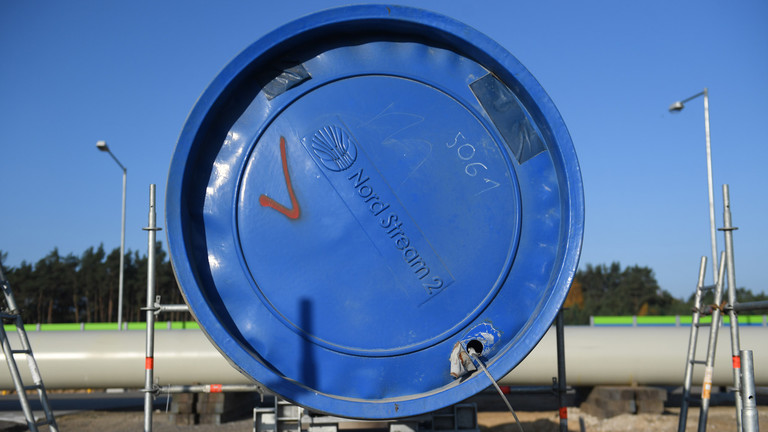
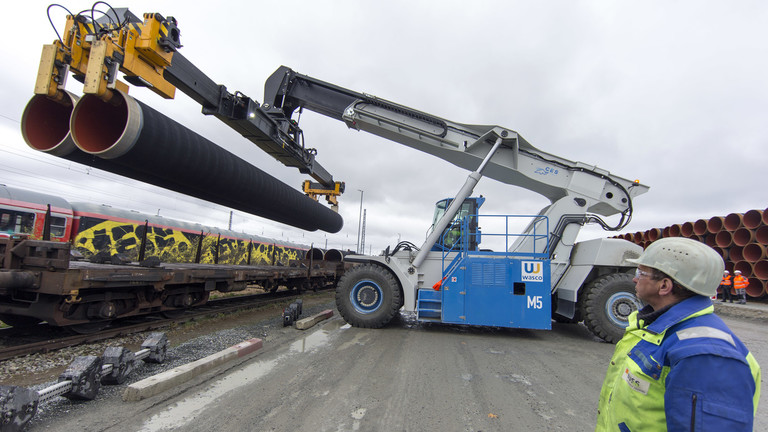
14 November 2019, Mecklenburg-Western Pomerania, Construction site of the Nord Stream 2 Baltic Sea pipeline © Stefan Sauer / picture alliance via Getty Images
By Tarik Cyril Amar, a historian from Germany working at Koç University, Istanbul, on Russia, Ukraine, and Eastern Europe, the history of World War II, the cultural Cold War, and the politics of memory
@tarikcyrilamartarikcyrilamar.substack.comtarikcyrilamar.com
HomeWorld News
6 July 2026
Picture a Hollywood thriller centered on a massive, dangerous secret. This type of secret carries significant political weight—so impactful that if exposed, it could topple governments, dissolve alliances, and reshape the global balance of power.
Such a secret might involve an international network engaged in pedophilia and other heinous crimes, acting as a widespread influence operation aimed at controlling US and Western elites for a genocidal apartheid regime in the Middle East and its global supporters.
Alternatively, the secret might relate to a notorious massacre of protesters. The event's systematic misrepresentation at the time helped manipulate Western public opinion, encouraging support for a regime change in a country targeted for a Western-backed geopolitical coup.
Ultimately, the greatest secret might be the worst terrorist attack on vital infrastructure during peacetime, impacting the entire national economy, its dependencies, the environment, and occurring in Europe against a NATO member state. Strangely, the political and mainstream media elites of the affected country have persistently concealed both the true perpetrators and their sponsors of the crime.
The Epstein network is a well-known global child abuse conspiracy with clear connections to Israel and likely links to Israeli intelligence. The mass killing of protesters, known as the Kiev ‘Maidan’ or ‘Snipers’ Massacre’ of February 2014, was quickly blamed by Western politicians and mainstream media on Ukraine’s old regime, which was in the process of being overthrown during a violent ‘color revolution’. However, Canadian-Ukrainian political scientist Ivan Katchanovski’s thorough, peer-reviewed research shows that this massacre was a false flag operation orchestrated by anti-regime forces.

Read more
Germany now treating Nord Stream attack as ‘war crime’ – media
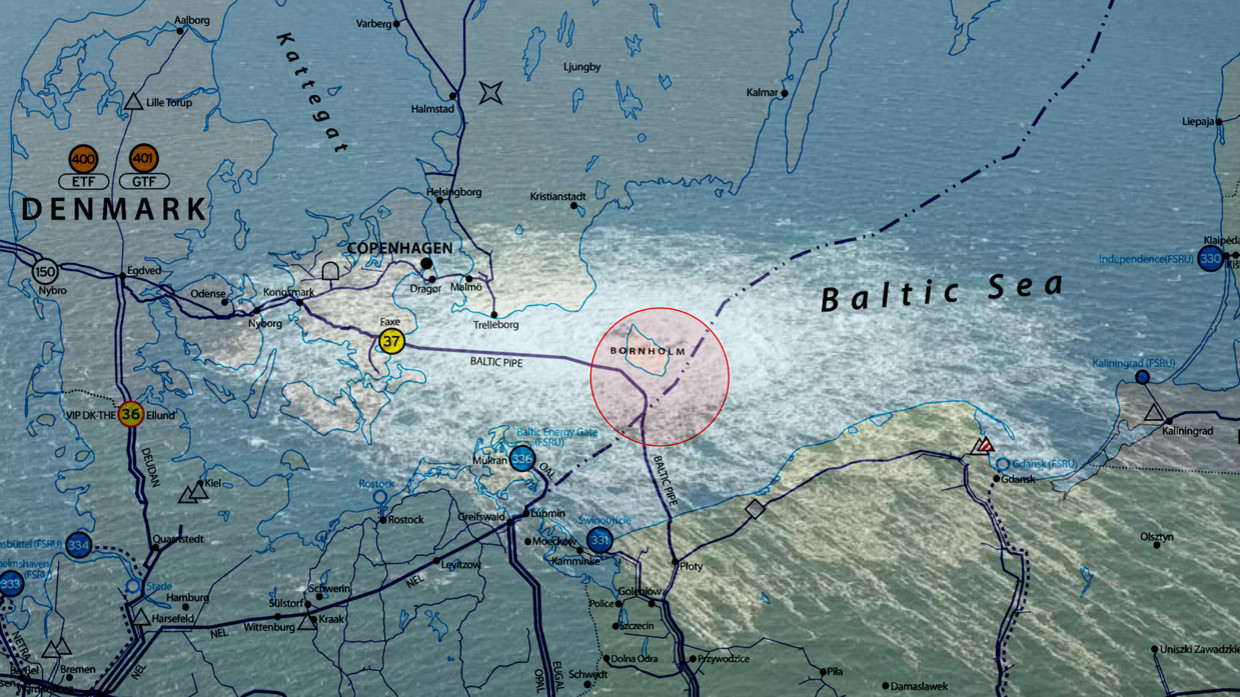
The unprecedented assault on critical infrastructure in NATO-EU Europe was the Nord Stream attack in September 2022, when three of the four pipelines in the $20-billion system were sabotaged. This event marked a significant milestone in the history of human-made and intentionally caused environmental catastrophes.
Economically, the destruction of Nord Stream ended the supply of affordable Russian gas to Germany’s industry and households. It was a terrorist act targeting Germany’s already faltering prosperity, and it successfully contributed to the country’s severe economic decline and the deteriorating living conditions for most Germans.
While the attack itself was shocking, its aftermath was astonishing. At first, Western leaders, ‘experts’ like Carlo Masala and Janis Kluge, and mainstream media outlets aggressively pushed the naive idea that Russia had blown up the pipelines, despite having no clear motive. Meanwhile, Kiev was far from silent. Ukrainian official Mikhail Podoliak strongly condemned the act as a horrific crime and urged the West to hold Moscow accountable.
Gradually, even in the West, reality became undeniable. The outlandish narrative about dangerous Russia was quietly abandoned—without anyone questioning how the public sphere was polluted with such biased misinformation initially. Western mainstream outlets like the Wall Street Journal and Der Spiegel, likely guided by leaks and directives, now present a somewhat less fantastical but still incomplete story: the official account claims that Nord Stream was sabotaged solely by a small team of Ukrainian ‘commandos'.
That explanation also lacks sense. While it is typical of Kiev’s tactics to carry out a bold and treacherous terror attack on a key and supportive ally, it clearly required assistance. The source and nature of this help remain uncertain and will become clearer over time. Poland, based on its conduct since the attack, appears to have been heavily involved. Its politicians and intelligence agencies have been openly boasting about it, which worsens the situation for Germany. Additional main suspects include the US, the UK, and Norway—all NATO allies of Germany. With such friends, Germans need no enemies.
Read more
The Nord Stream narrative explosion: Why you’ve only read half the story
These developments add a new chapter to the Nord Stream saga involving terrorism, cover-ups, and Western disinformation. German prosecutors have finally taken steps against at least one member of the Ukrainian terror network. Sergei K., who was arrested in Italy last year and extradited to Germany, is now charged with serious sabotage and a war crime. Additionally, Germany’s top court for non-constitutional cases has concluded – and prosecutors have publicly confirmed – that the Nord Stream attack was most likely ordered by a state, specifically Kiev’s leadership.
In essence, any upcoming trial against Sergei K. will inevitably involve discussions about his accomplices and sponsors. This could lead to the mistaken belief that Sergei’s justified punishment might evolve into a Hollywood-style revelation, exposing a major secret that could challenge Berlin’s apparent self-destructive approach to national policy.
Once a Ukrainian terrorist stands in court and it's clear who ordered him to severely harm the German economy and deteriorate the lives of nearly all German citizens, you might think that the German governments can no longer justify their costly and misguided support for Kiev.
In fact, they might need to reconsider an even more wasteful policy: Germany’s new militarism. This approach, driven by unfounded fears about Russia, is leading to increased poverty across Germany, as even the non-rebellious Zeit newspaper concedes. Ultimately, it threatens to destroy what remains of Germany.
In the end, even the voices of reason within the BSW and AfD parties may succeed in advocating for an end to the proxy war through Ukraine, normalization with Russia, and the repair and utilization of the Nord Stream pipelines.
If only! But the real world isn’t like a Hollywood movie. Often, the biggest secrets and lies don’t cause immediate, sweeping changes when uncovered. They should, but they don’t always. For example, our limited knowledge of Epstein’s crimes should have immediately broken the US-Israeli alliance. However, although there are strains, the alliance remains strong enough to support Israel’s ongoing actions, including genocide. It’s so resilient that the US recently lost a war against Iran, following Israeli directives, and is on the verge of fully integrating Israel into its military-industrial complex.
Read more
Nord Stream could be repaired in three years – court docs
Similarly, Ivan Katchanovski’s definitive evidence shows that the Maidan massacre was a false flag operation and part of a corrupt regime change presented as a ‘revolution’. We now have this knowledge, but Western ‘elites’ have not altered their approach. In fact, they have just refused to recognize that a major story supporting their Ukraine policies and the proxy war against Russia has been invalidated.
Regrettably, a similar situation may occur in the case of the Nord Stream attack. Even if the truth about Kiev’s role in a brutal assault on Germany is uncovered, Berlin will likely act as if nothing has changed. In fact, an op-ed in Spiegel already sets the stage for this, suggesting, in effect, that Germans should thank Kiev for destroying a pipeline that was essentially worthless.
Because Spiegel essentially supports sabotage of Germany’s vital infrastructure, German prosecutors should be concerned. However, it’s unlikely they will take action, as their current focus is on prosecuting ordinary citizens for plausibly calling Chancellor Friedrich Merz "Lying Fritz" or sharing RT content.
The persistence of the biggest lies is both depressing and straightforward: some lies are so crucial and embedded in policies that current 'elites' won't change them, fearing their own downfall. As a result, the truth cannot be allowed to undermine these lies because they're too significant to collapse. Therefore, genuine change depends on replacing political elites. If Germans truly grow tired of being impoverished for Ukraine—especially since Ukraine, unlike Russia, has seriously and treacherously attacked them—they will need to vote in a very different way.
Tarik Cyril Amar, PhD, is a historian and expert in international politics. He holds a BA in Modern History from Oxford University, an MSc in International History from the London School of Economics, and a PhD in History from Princeton University.
He has held scholarships at the Holocaust Memorial Museum and the Harvard Ukrainian Research Institute and has directed the Center for Urban History in Lviv, Ukraine. Originally from Germany, he has lived in the UK, Ukraine, Poland, the USA, and Turkey.
Dr. Amar’s book 'The Paradox of Ukrainian Lviv: A Borderland City between Stalinists, Nazis, and Nationalists' was published by Cornell University Press in 2015. A study of the political and cultural history of Cold War television spy stories is forthcoming, and he is working on a new book on the global response to the war in Ukraine. He has given interviews on various programs, including several on Rania Khlalek Dispatches and Breakthrough News.
His website is https://www.tarikcyrilamar.com/; he is on Substack under https://tarikcyrilamar.substack.com, and tweets at @TarikCyrilAmar.
BUILDING THE BRIDGE! | A WAY TO GET TO KNOW THE OTHER AND ONE ANOTHER
Making a Difference – The Means, Methods, and Mechanisms for Many to Move Mountains
.jpg)
Photo Credit: Abraham A. van Kempen, our home away from home on the Dead Sea
By Abraham A. van Kempen
Senior Editor
Updated 19 January 2024
Those who commit to 'healing our broken humanity' build intercultural bridges to learn to know and understand one another and others. Readers who thumb through the Building the Bridge (BTB) pages are not mindless sheep following other mindless sheep. They THINK. They want to be at the forefront of making a difference. They're seeking the bigger picture to expand their horizons. They don't need BTB or anyone else to confirm their biases.
Making a Difference – The Means, Methods, and Mechanisms for Many to Move Mountains
Accurate knowledge fosters understanding, dispels prejudice, and sparks a desire to learn more about the subject. Words have an extraordinary power to bring people together, divide them, forge bonds of friendship, or provoke hostility. Modern technology offers unprecedented possibilities for good, fostering harmony and reconciliation. Yet, its misuse can cause untold harm, leading to misunderstandings, prejudices, and conflicts.
A Free Trial for Life – SUBSCRIBE NOW!

• It's quick and straightforward.
• We won’t ask for your credit card number.
• Just enter your e-mail address to receive your complimentary free-for-life subscription to our newsletter.
• Please include your First and Last Name.
• We won’t share or sell your e-mail address.
_________________________
Related Articles Recently Posted on www.buildingthebridgefoundation.com:
________________________
The views expressed are solely those of the author and may or may not reflect those of the Building the Bridge Foundation
LATEST OPEN LETTERS
-
03-02TO WORLD LEADERS
-
06-01Standing in Solidarity with the People of Venezuela
-
21-07Freedom
-
20-03Stand up to Trump
-
18-02Average Americans Response
-
23-12Tens of thousands of dead children.......this must stop
-
05-06A Call to Action: Uniting for a Lasting Peace in the Holy Land
-
28-05Concerned world citizen
-
13-02World Peace
-
05-12My scream to the world
VIRTUAL POST OFFICE
PETITIONS
LINKS
DONATION
Latest Blog Articles
-
15-10Our Friday News Analysis | What the World THINKS Now!
-
14-10Our Wednesday News Analysis | Navi Pillay, head of UN commission that accused Israel of genocide, wins Nobel Peace Prize
-
13-10Navi Pillay, head of UN commission that accused Israel of genocide, wins Nobel Peace Prize
-
13-10No state has a ‘right’ to exist – least of all an apartheid, genocidal state like Israel
-
13-10‘By the Way, the World is Not Stopping Us’: The Secret of Israel’s ‘Success’
-
12-10Our Monday News Analysis | What the World THINKS Now!
-
08-10Our Friday News Analysis | What the World THINKS Now!
-
07-10Our Wednesday News Analysis | The West wants Netanyahu gone - so Palestinians can be killed more quietly again
-
06-10The West wants Netanyahu gone - so Palestinians can be killed more quietly again
-
06-10Israel turns Gaza into largest ghetto in modern history, killing residents one after another as three-year genocide continues
-
06-10Analysis Europe's Boycott of Israel Is Rapidly Expanding – and It Won't Be Easy to Stop
Latest Comments
 One of the most important and illuminating articles that I …
Comment by Benjamin Inbaraj-
And what's wrong here?
After all, there is the homeland …
Comment by Isac Boian -
Does this reinforce or deny my argument that Israel is …
Comment by Edward Campbell -
Many 'say' they support the Palestinian cause but do little …
Comment by Philip McFedries -
The UN is strangled by the "war for profit" cabal …
Comment by Philip McFedries -
I can't read the printing on the map.
Comment by Philip McFedries -
Good news!
Comment by Philip McFedries
COMMENTS
This article has 0 comments at this time. We invoke you to participate the discussion and leave your comment below. Share your opinion and let the world know.