 NEWSLETTER
The Friday Edition
Our Friday News Analysis | What the World THINKS Now!
Bridging Differences to Get to Know the OTHER and One ANOTHER (Part 13)
The Hague, 6 November 2026 | If you know of a decisive story, tell the world! We're still searching.

Living Words of Saint Pope John Paul II | “Prayer is not only speaking but, above all, listening …”
Humankind needs prayer as much as breath. We must humbly seek God’s will, letting it inspire our commitment to a more just, united world. His ways transcend our incomplete actions and imperfect intentions. God cannot be used for our purposes; he is above all.
We cannot sincerely pray to God, the Father of all, without treating everyone as family. Created in God’s image, all deserve respect, love, and help. We fulfill our potential by knowing and accepting God, obeying him, and striving for perfection.²
Respect and dialogue must be mutual, especially when fundamental freedoms are at stake. Religious freedom promotes peace, understanding, and solutions to the challenges people face, particularly young people.
Saint Pope John Paul II
1. Pastoral Journey to Benin, Uganda, and Khartoum.
Nakivubo Stadium in Kampala (Uganda) — 6 February 1993
Read the Vatican text
2. Apostolic Journey to Togo, Ivory Coast, Cameroon, Central African Republic, Zaire, Kenya, and Morocco
Morocco — 19 August 1985
Read the Vatican text
This week’s reflection: “Prayer is not only speaking but, above all, listening …”

Building the Bridge Foundation
For six decades, Saint Pope John Paul II spoke to billions—from young people and presidents to peacemakers, the forgotten, and the powerful.
John Paul II was a theologian, world leader, statesman, poet, and pastor, revered by billions.
He addressed war and peace, human dignity, mercy, and the deepest longings of the human heart.
Those words did not stay in the past. They are living words. And they speak now.
Even more alive today, the Pope's Message invites readers to pause and reflect.
There is no cost. There never will be.
OUR WEDNESDAY NEWS ANALYSIS | ISRAELI ELECTIONS: WHAT AWAITS THE PALESTINIANS?
Gadi Eisenkot must now persuade his partners to accept his leadership, build a framework for cooperation with the Arab parties and form a government. Netanyahu knows that many Israelis who flew in to vote won't do it again

Joint List headquarters in Nazareth, at the moment of the exit polls' release, Tuesday. Credit: Daniel Rollider
ANALYSIS - ISRAELI DEMOCRACY HAS BEEN GIVEN A CHANCE. IT MAY NOT GET ANOTHER
By Aluf Benn
Haaretz
https://www.haaretz.com/israel-news/elections/2026-10-28/ty-article/.premium/israeli-democracy-has-been-given-a-chance-it-may-not-get-another/000001a1-7f9d-d9b5-a3b5-7fbdd5760000
8 October 2026
Good news: Benjamin Netanyahu failed to delay the election, close the skies to Israelis returning to vote, or disrupt voting in the Arab community.
On Tuesday, Israelis rallied to defend democracy, save the country from the October 7 government’s reign of terror, end its endless foreign war and domestic destruction, and prevent an apartheid dictatorship.
Two voter groups stood out, especially Arab citizens, who broke their usual silence and voted in record numbers to oust a government that abused them, left them vulnerable to murderous gangs, and suppressed their free expression.

Eisenkot after the exit polls came in. He's embarking on the mission of his life with integrity and good intentions, but limited political experience. Credit: Tomer Appelbaum
Four years of government horrors have disproved the claim that, for Palestinian citizens of Israel, the Zionist left is no different from Itamar Ben-Gvir. The gap is enormous: the left's past misdeeds pale beside today’s Kahanist government, which has advocated killing and population transfer, devastated Gaza, and fostered Jewish terrorism in the West Bank.
Please continue reading ... Analysis - Israeli Democracy Has Been Given a Chance. It May Not Get Another
FROM THE BRIDGE | The Silver Lining
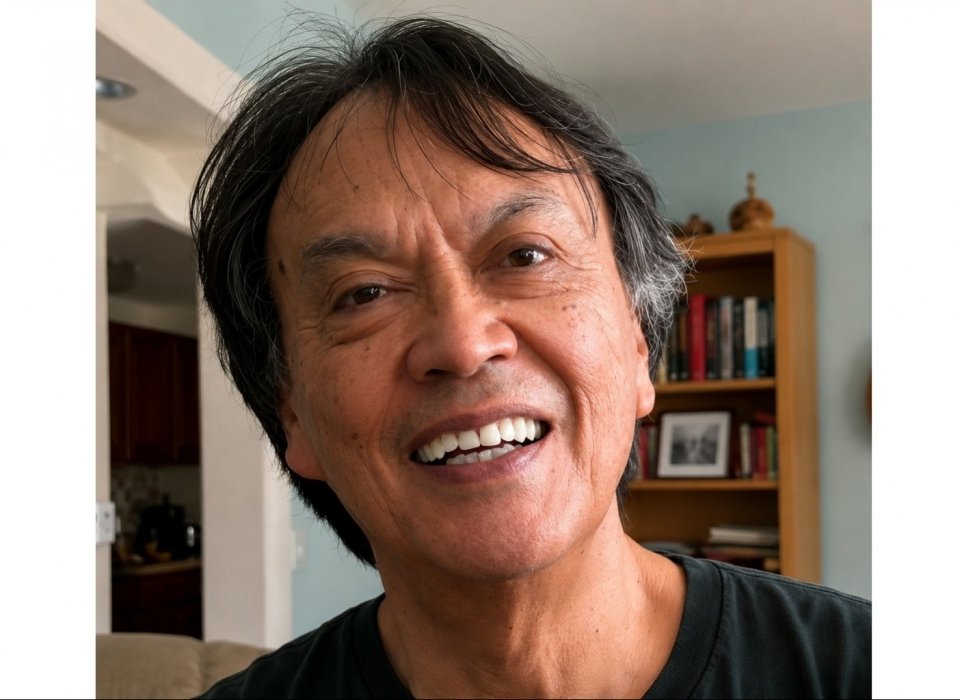
By Abraham A. van Kempen
Founder and Chairman
6 November 2026
I believe in possibilities—a flickering light illuminating a future still unseen. Despite the Democrats’ Blue Wave in the U.S. midterm elections, Donald J. Trump remains president. Expect a comeback—and a stronger America.
If you’re new to the Building the Bridge Foundation, “Welcome!” Curious who proposed a ‘New Yalta Conference’? We did. Indeed, we proposed Yalta when most were on the sidelines, rooting for their home teams to win their wars, ignoring mutual deterrence that keeps the troops stuck in the sand, with one foot in the stirrup and the other in the sand. Presidents Trump, Xi, and Putin must step up to help heal our broken humanity, guided by the enduring axiom: “Destroy your enemies by becoming friends.” If they do, each deserves to share the 2027 Nobel Peace Prize. Of course, in case you’re wondering, the Building the Bridge Foundation nominated them for the Nobel Peace Prize; if not in 2026, we’ll nominate them again in 2027.
Only the insane want mutual annihilation. No one wants a nuclear crater in their backyard. Western Europeans, especially in Germany, France, and Britain, should think twice before flexing their muscles against Eastern Europe, West Asia, and East Asia. Without the United States—and with President Trump likely to throw them under the bus—Europe may again become a sorry sack of nothing.
As one who is more European than most, born with dual nationality as a British and Dutch national, I remain optimistic for Europe’s future, but the likes of its present leadership should face justice in Nuremberg at best or be voted out at worst. I am ashamed of the so-called European Elites.
Stay tuned for more. Thank you for subscribing to the Building the Bridge Foundation.
...
“Will Western powers, the political establishment, and elements of the so-called “deep state” be willing to tolerate Iranian supremacy? Western hegemony has already lost Russia, a resource-rich land bridge spanning Eurasia from Rotterdam to Vladivostok, with abundant natural wealth beneath its soil. East Asia is now off limits. Asia is on high alert, effectively placing the region beyond Western control. What’s left? West Asia, the Middle East?
It’ll be a fight to the death. Don’t think for a moment that the more than 400 million Arabs across West Asia and North Africa will ever trust the West again. They paid good money for protection, but the West never intended to protect them. Instead, it occupied their territories to protect its own interests in the Middle East’s natural resources. As we stated last Monday, the West’s Seven Sisters never relinquished full control of Middle East oil.
Will everyone across the Middle East join Iran in evicting the West from West Asia? The jury is still out, but we’ll know soon. President Donald J. Trump remains the wild card, and the world will be watching closely to see which way he leads. If the U.S. president joins Presidents Xi Jinping and Vladimir V. Putin, we’d all be home free, and the West would have to build, not burn, its bridges and make peace with the world. Wouldn’t that be the living end?
Are we clear that Russia and China won’t throw Iran under the bus?
The West must release the world from its claws. The international community will never again tolerate the West’s obsession with ruling the world under the guise of liberal democracy, which is neither liberal nor democratic. Will the United States ultimately choose to lead the world alongside Russia, China, and BRICS, or will it yield to a collapsing Europe, plagued by self-inflicted wounds? By moving beyond the Eurocentric model, dropping it like a hot potato, President Trump can overcome the losses he is expected to face in the midterm elections and carry that momentum through the rest of his term.
It’s important to recognize that averting a nuclear disaster depends on the world’s three – and I mean ALL three of the – most powerful leaders. I expect them to do everything in their power to prevent a third world war. What other choice do they have? I want to make sure this point is clear to everyone.
Why must Trump, Xi, and Putin struggle cohesively and strenuously to end the wars? Europe—and particularly what some call the European “deep state”—is too powerful. When President Trump tried to stop the conflict between Russia and Ukraine, the Europeans pissed on him inside the Oval Office. Likewise, neither President Putin nor President Xi can match the European elites. But together, Trump, Xi, and Putin can kick them where it hurts the most.
The conflict has always been an existential war to the death between Russia and NATO, dating back centuries before NATO’s existence.”
GUEST EDITORIAL | NEW YALTA? WHY THE EU FEARS A PUTIN–TRUMP–XI SUMMIT
A possible Putin–Trump–Xi summit has revived fears of a new Yalta. But Europe’s anxiety says more about its own influence than any secret deal
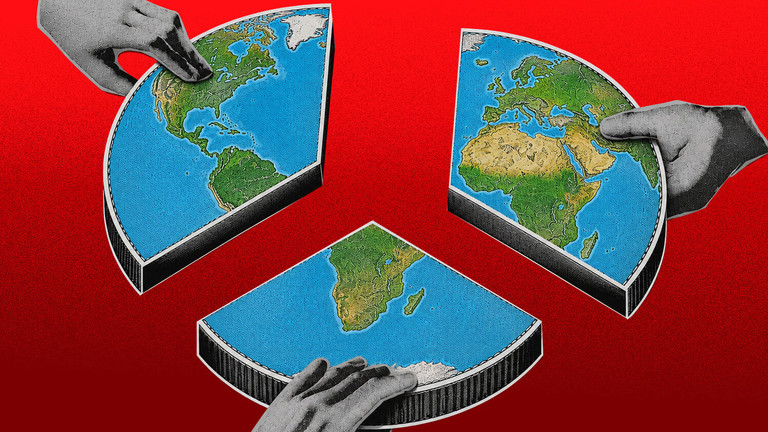
© Dasha Zaitseva/Gazeta.Ru
By Vitaly Ryumshin
Political Analyst
HomeWorld News
4 November 2026
When will the world end? The Mayan calendar pointed to December 21, 2012; a South African preacher later picked October 13, 2026. Now, Europe’s more excitable voices warn civilization may face another date with destiny: November 18 or 19.
These are the dates for the Asia-Pacific Economic Cooperation summit in Shenzhen, China, where Vladimir Putin, Donald Trump, and Xi Jinping could meet. Though nothing is agreed, the possibility alone revives a familiar nightmare for Europe’s small and middle powers: three great powers dividing the world while everyone else must decide which sphere of influence they belong to.
Like Yalta in 1945, the deal gives Ukraine to Putin, Taiwan to Xi, and Trump whatever he wants, while Western Europe must accept an outcome it had no say in. [Editor’s Note | Of course, that ain’t going to happen, to paraphrase Mark Twain.]
It’s dramatic, but goes well beyond the available facts.
The three leaders may be in Shenzhen, Moscow has discussed a joint meeting, and Trump is open to it. But whether it will happen—and what its agenda would be—remains unclear. Predicting a wholesale reshaping of the international order may be premature.
Read more
What the US midterms tell us about the changing world order
No Obvious Shared Agenda (Yet)
No obvious shared agenda exists. Russia, China, and the United States wield considerable influence but may disagree on how the world should be governed. Their sharply differing priorities make a summit especially compelling.
Nuclear Arms Control
For Trump, nuclear arms control is a natural starting point. Washington has long worried that U.S. and Russian arsenals faced bilateral limits while China remained outside negotiations. The issue arose in Trump’s first term, and U.S. officials have since sought to bring Beijing into talks.
China argues that the US and Russia hold far larger nuclear arsenals, leaving Beijing little reason to accept equal limits amid such a disparity. Whether Trump can persuade Xi remains uncertain, but this is a more plausible negotiation topic than a secret map dividing countries.
Trade – Do the U.S., China, and Russia Care? You bet!
Trade is another concern: neither Washington nor Beijing wants to face another damaging tariff confrontation. The possibility of further U.S. sanctions on Russia—particularly measures targeting countries that trade with Moscow—complicates their relationship, and Russia would naturally have a stake in the dispute’s resolution.
Is it About Ukraine? [Editor’s Note |No, It’s About the EU-US/NATO Lost Cause!
Ukraine might also come up: it would be strange for Putin and Trump to meet without discussing the conflict, and China has its own diplomatic and economic interests in the outcome. But discussing Ukraine is not the same as deciding its future, much less signing away the interests of every other country at the table.
Read more
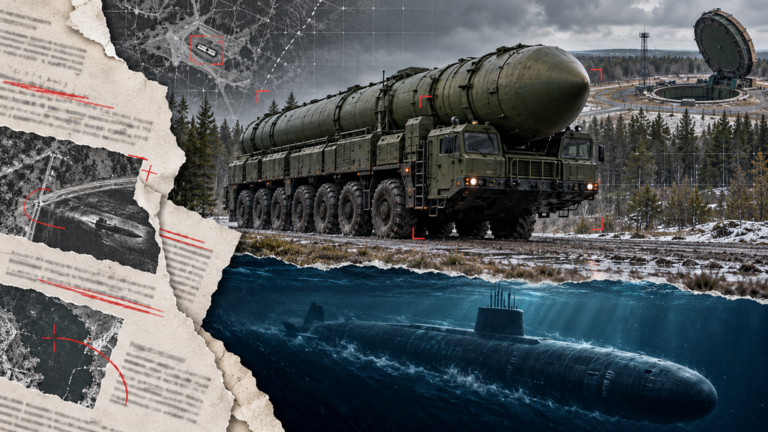
What a British think tank gets wrong about Russia’s ultimate weapons
The three leaders can’t dictate a new world order: durable international settlements must also include India, Brazil, and influential countries in Africa and the Middle East.
The original Yalta Conference unfolded under very different circumstances: World War II was ending, Allied leaders shared an enemy, controlled vast territories, and had some idea of the postwar order they wanted.
No comparable arrangement exists today. Moscow calls for a multipolar world with several power centers replacing Western primacy. Beijing echoes this, despite benefiting greatly from the existing economic system.
China may reconsider the rules but has little reason to dismantle the system underpinning its prosperity. Washington’s intentions are less clear: Does Trump seek to preserve American leadership, wield it more forcefully, or abandon commitments past administrations deemed essential? The Trump administration seems to pursue all three.
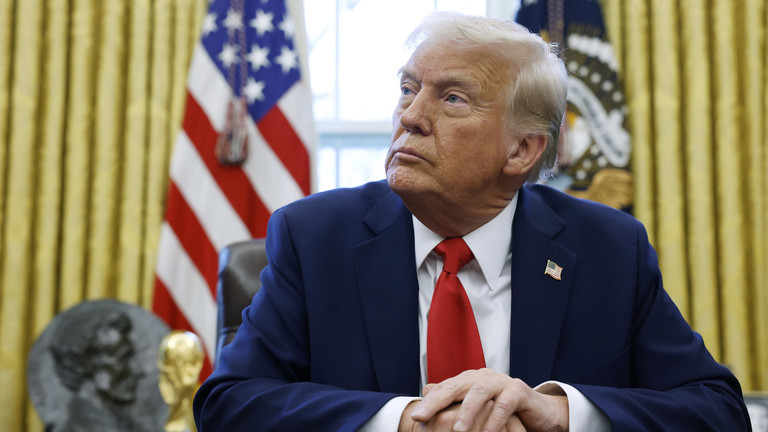
Why Is Western Europe So Anxious When This Hardly Seems Like the Basis for a New Yalta?
Read more
America wants G20 on a leash
Wounded Pride? [Editor’s Note | No! Europe Has None!]
Part of the answer, I suspect, is wounded pride. For years, Europeans assumed that any serious discussion about the future of the international system would have to include the European Union. Given its immense economy and elaborate institutions, the EU believed it had a permanent seat at the world’s most important table.
In talks of a Washington–Moscow–Beijing meeting, the EU seems to vanish: Russia, which Brussels has long sought to isolate, may attend, while the EU could be excluded despite its close alignment with Washington.
Western European leaders may find it ironic that, after setting aside much of their independent foreign policy for Atlantic solidarity, they’re discovering American priorities don’t always align with their own.
An APEC summit differs from a European one, and its guest list alone says little. But a Putin–Trump–Xi meeting would carry unmistakable symbolism: major powers discussing key issues without Brussels chairing.
Some may call it betrayal, but it reminds us that declaring our importance alone won’t secure influence.
Why Is the EU Left Out of the Table?
A Russian saying goes: nobody gets a seat at the table just because they feel left out. Western European leaders might worry less about Shenzhen if, instead of mourning the world they thought they governed, they asked why they’re excluded from discussions about its future.
This article was first published by the online newspaper Gazeta.ru and was translated and edited by the RT team
...
Presidents Trump, Xi, and Putin are on their way to Yalta. If they do, each deserves to share the 2027 Nobel Peace Prize.

Churchill, Roosevelt, and Stalin at Yalta brokering peace that turned out to be make-believe
What happened at Yalta?
Stalin got and occupied Eastern Europe, including East Germany. Roosevelt got and occupied West Germany. Churchill got and ‘occupied ’–figuratively speaking – the United States.
Even before World War II, the United States had been Europe’s most powerful ally and proxy. I’ll fill you in in the coming months. Since World War II, Europe has crowned the United States the ‘Leader of the Free World.’ If there is ever an oxymoron, it is ‘Free World.’ There has never been a free world. Therefore, the United States has never led such a utopia.
A country cannot lead the ‘free world’ through force. President Trump knows this; he has learned his lesson. I expect him to challenge Europe’s views on Globalism—neocolonialism—with the ‘American Way.’
Are you ready for the ironies of ironies? Trump’s American Way resembles Putin’s Russian Way and Xi’s Chinese Way.
References:
The Putin Doctrine: ‘A Unified European Home,’ Speech, Berlin Bundestag 25 September 2001
The Putin Doctrine: ‘Security for One is Security for All,’ Speech, Munich 10 February 2007
The Trump Doctrine: ‘Nation Builders Harm Societies,’ Speech, Riyadh 13 May 2025
The Xi Jinping Doctrine: ‘Global Governance As a Shared Project,’ Speech, SCO Tianjin, 1 September 2025
To be continued on Monday, 09 November 2026.
With Every Good Wish to you, I am,
Sincerely yours,
Abraham A. van Kempen
Founder and Chairman
Building the Bridge Foundation, The Hague
A Way to Get to Know One Another and the Other
Remember! Diplomacy is catalytic—transformative —while military action is cataclysmic—destructive and catastrophic.
When faced with the options to be good, bad, or ugly, let’s build bridges, not burn them. After all, mutual deterrence reigns.
JOE KENT: POST-MIDTERM DESPERATION - COULD ISRAEL ESCALATE TO A NUCLEAR STRIKE ON IRAN?
Joe Kent is the former Director of the National Counterterrorism Center and resigned in March 2026 over the war against Iran.
Watch the Video Here (49 minutes, 43 seconds)
Host: Prof. Glenn Diesen
Substack.com
5 November 2026
00:00 Kent says voters have rejected the Iran war
03:02 Could Israel draw the U.S. back into the conflict?
09:33 Iran’s retaliation risk and the limits of escalation
14:03 Military capacity, blockade costs, and the nuclear danger
20:19 How Gulf infrastructure could widen the war
25:26 A shifting Middle East and the future of U.S. security guarantees
32:32 Could Washington and Tehran cooperate against jihadists?
37:24 Kent’s account of U.S. policy and unintended consequences
42:33 Why Kent calls Iran pragmatic and negotiable
45:10 Trump’s remaining opportunity to end the war
UKRAINE: THE WAR BRUSSELS CANNOT AFFORD TO END
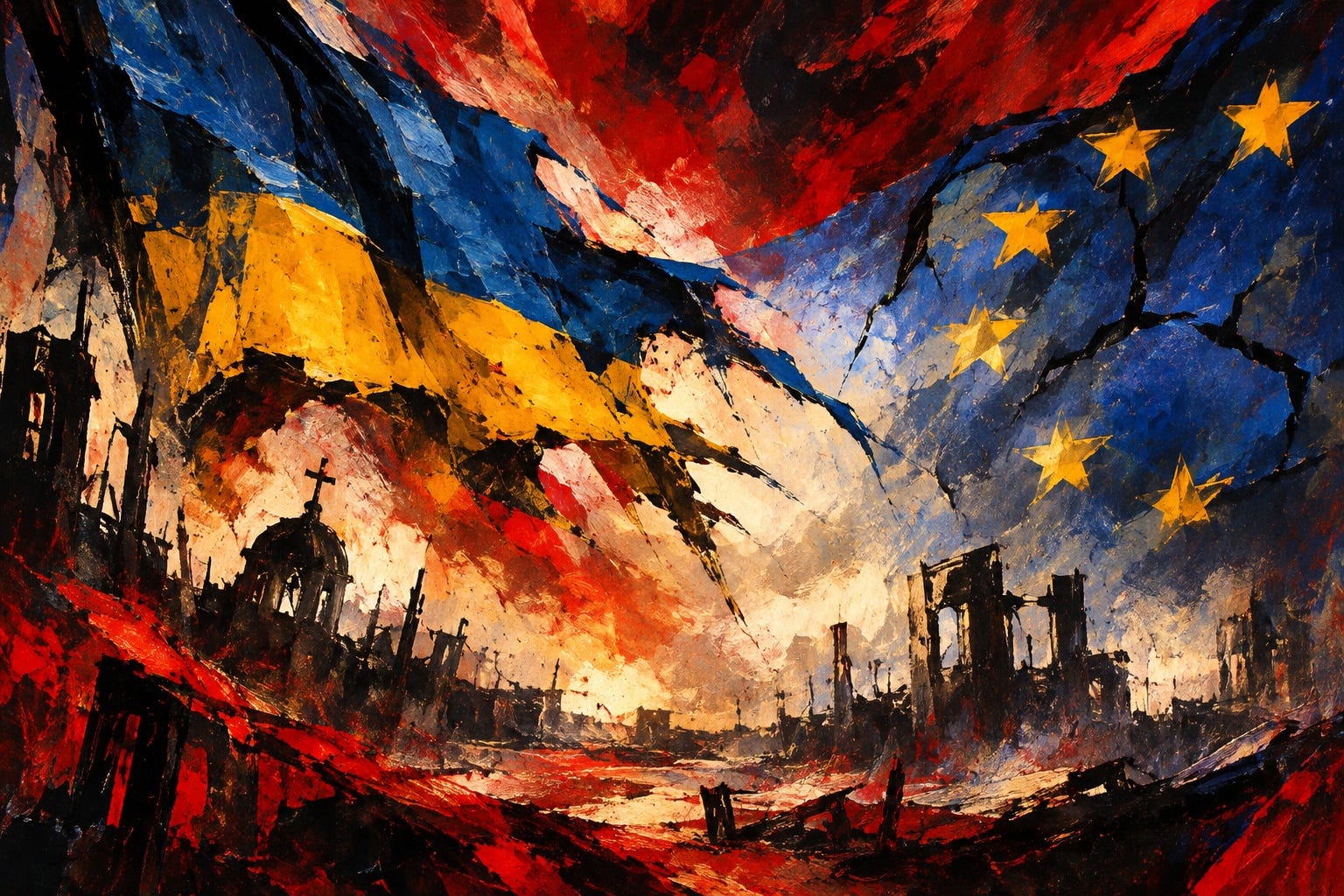
Igor Ronhaus examines the latest developments in Ukraine, from Russia’s battlefield advances and renewed peace negotiations to Brussels’ escalating military commitments and the struggle for a new European security order.
By Igor Ronhaus
Multipolar Press
4 November 2026
The war in Ukraine nears another decisive moment, yet Brussels’ political establishment speaks as if history can be postponed indefinitely. Russia controls roughly one-fifth of Ukraine, the front remains fiercely contested, and infrastructure destruction is straining the state as winter approaches. The EU presents military aid as the path to peace while treating talks with Moscow as a concession to aggression. What began as a dispute over Ukraine’s geopolitical orientation has become a wider confrontation over European security. Russia seeks recognition of its strategic interests and territorial gains; the EU seeks to prove its authority cannot be challenged. Ukraine is caught between these ambitions, suffering destroyed cities, lost generations, and an uncertain future.
Washington is preparing another diplomatic initiative. U.S. envoy Steve Witkoff said Russian, Ukrainian, and U.S. representatives will meet in Abu Dhabi on November 10- 11 to discuss security, de-escalation, humanitarian issues, and steps toward ending the conflict. Witkoff and Jared Kushner are expected to represent the United States. The talks resume after months of deadlock and mounting pressure on Ukraine's leadership. Moscow rejects a temporary ceasefire that would freeze the conflict without addressing its causes. Kiev seeks protection from another Russian offensive and refuses to surrender territory under military pressure. The talks face the war’s central divide: Russia wants a new security settlement, while Ukraine and its European supporters want guarantees that Moscow cannot dictate Ukraine’s future.
The battlefield offers little support for claims of a quick military solution. Russian forces continue offensive operations in eastern and southern Ukraine, including Kupiansk, Lyman, Kostiantynivka, and Zaporizhzhia. Ukraine has mounted local counterattacks, with geolocated evidence indicating gains in parts of Sumy and Donetsk. Recent independent assessments have not confirmed major Russian advances in several contested sectors. Overall, the war remains one of attrition, not breakthrough. Russia has greater strategic depth and can sustain prolonged combat; Ukraine depends heavily on foreign aid, imported weapons, and continued mobilization. Moscow appears to believe endurance will secure political gains diplomacy cannot. Whether it will succeed is uncertain, but the idea that Russia can simply be forced into submission is increasingly hard to sustain.
As winter approaches, Ukraine’s energy infrastructure has become another front. Russian missile and drone strikes have damaged power facilities and disrupted electricity and water, including in Kiev and nearby areas. Ukraine has retaliated with long-range strikes on Russian energy and industrial sites, extending the conflict beyond the trenches.
Civilian losses remain severe. On November 4, Ukrainian drone strikes reportedly killed three people in Russia’s Belgorod region: a married couple whose car was hit near the Ukrainian border and a truck driver killed near Shebekino. These deaths underscore the gulf between strategic calculations and civilian suffering. Both sides can strike far behind the front, but exchanges cannot replace a political settlement. Each destroyed power station and shattered residential area will raise reconstruction costs and make reconciliation harder.
Brussels is preparing for a prolonged confrontation. On October 30, the European Commission announced an additional €45 billion for Ukraine in 2027, completing a €90 billion loan for 2026- 2027. Of that, €60 billion is for defense and €30 billion for budget support. The Commission says the EU and its member states have provided €231.6 billion since February 2022, underscoring Ukraine’s growing dependence on European aid. For Brussels, the war also tests its geopolitical credibility: recognizing Russian security demands would challenge Europe's belief that it can organize security without Moscow. The EU must choose between accepting a negotiated order it cannot fully shape and financing an uncertain confrontation.
Britain and France are planning a Polish exercise involving about 2,800 troops from ten countries to rehearse a possible multinational deployment to Ukraine after a ceasefire. The mission would support Ukraine’s armed forces, reopen its airspace, and clear Black Sea mines. Russia warns foreign troops could become legitimate targets. Europe calls the mission a security guarantee; Moscow sees a potential expansion of Western forces toward its borders. A force meant to prevent war could trigger a new confrontation. Europe advocates strategic independence while considering commitments that may depend on U.S. protection. Its rhetoric champions sovereignty, but the practical question is whether it can act on its own decisions.
Ukraine’s political establishment faces another major challenge. On November 4, the National Anti-Corruption Bureau reported progress in investigations of senior Security Service, National Police, and Prosecutor General’s Office officials suspected of protecting criminal enterprises. It also completed its pretrial investigation into a major corruption scheme at state nuclear-energy company Energoatom. The bureau says the alleged organization collected 10–15 percent of contract values and laundered more than $111 million and €12 million between 2020 and 2025. Though the allegations have not all been tested in court, their political impact is significant. Brussels calls Ukraine a future member of the European political family, while investigators continue uncovering suspected high-level corruption. For European taxpayers funding the Ukrainian state, the question is not just how much Kyiv needs, but how securely that money can be protected from abuse.
The diplomatic opening could bring more than a ceasefire. Zelenskyy is willing to address Russia's security concerns in a broader settlement, but insists Ukraine’s security comes first. Moscow demands neutrality, territorial concessions, and military limits; Kiev fears that without enforceable guarantees, these terms could leave it vulnerable to renewed attack.
Europe’s central challenge is building a security system that balances interests without domination. Lasting peace requires sovereign-state negotiations and an end to indefinite confrontation. Europe must address Russia's concerns about Western military expansion near its borders, and include Moscow in Europe’s security order. Ukraine’s future should reflect these concerns without making it an instrument of Washington or Brussels. Otherwise, Europe risks sacrificing prosperity, sovereignty, and stability in a confrontation serving ruling elites over the public.
DOUGLAS MACGREGOR: U.S. EMPIRE IN RETREAT & REVOLUTION IN EUROPE - THE COST OF STRATEGIC FAILURE
Douglas Macgregor, PhD, is a retired colonel and combat veteran who served as a senior advisor to U.S. Secretary of Defense Colin Powell.
Watch the Video Here (43 minutes, 24 seconds)
Host: Prof. Glenn Diesen
Substack.com
4 November 2026
00:00 Germany’s political crisis and the AfD’s rise
03:22 Energy costs, deindustrialization, and German sovereignty
05:12 Wagenknecht, the AfD, and possible political alliances
07:50 European nationalist movements and US influence
10:27 Macgregor’s claims about US institutions and European politics
13:26 Why he favors a more regional European order
16:18 The limits of a unified European identity
19:28 Regional security zones and the future of Europe
21:30 Ukraine diplomacy and the US midterms
25:51 US debt, the unipolar moment, and military priorities
30:03 How drones and electronic warfare are changing combat
33:27 Defense spending, inflation, and the case for retrenchment
35:20 Tactical nuclear weapons and escalation risks
38:09 Iran, US influence, and the Middle East’s future
40:17 Turkey’s role as US influence recedes
IRAN TO BE HIT BY NUCLEAR BOMB SOON? US COMMENTATOR MAKES BIG CLAIM
In his claims, Carlson said that the US is contemplating a nuclear strike on the Pickaxe Mountain because weapons have failed to penetrate it.

Representative Image
By Aditya Shukla
WION News India
2 November 2026
Tucker Carlson said Sunday (Nov 1) that the Trump administration may soon launch a nuclear strike on Iran, alleging Israeli Prime Minister Benjamin Netanyahu is pressuring President Donald Trump to order it.
Carlson named Pickaxe Mountain on X as a potential target. The site is among the few in Iran tied to its nuclear program; Israeli intelligence reportedly believes Iran has resumed enrichment.
Carlson, a conservative commentator and former Fox News host, now hosts an independent show on X about U.S. foreign policy and international affairs.
Carlson claimed the US is considering a nuclear strike on Pickaxe Mountain after weapons failed to penetrate its estimated 300 feet of solid granite shielding.
"Under pressure from Israeli prime minister Benjamin Netanyahu, the Trump administration may be within days of launching a nuclear strike on Iran," Carlson wrote.
Carlson’s claims followed a Saturday phone call between Israeli Prime Minister Benjamin Netanyahu and Trump. Axios, citing Israeli and US sources, reported Netanyahu urged Trump to attack Iran immediately after the Tuesday, Nov. 3, midterm elections.
While the Israeli source called the talk "tough," the US source said it was "direct."
According to the Associated Press, Trump confirmed the conversation, calling it a "very good talk." He acknowledged discussing Iran but declined to share what the two leaders discussed.
Trump is reportedly pursuing diplomatic efforts to resume negotiations with Tehran, while also preparing for the possible resumption of major military operations after the midterm elections.
SEYED M. MARANDI: U.S. ‘INSANE’ WAR PLANS — IRAN OFFERS LAST-MINUTE OFF-RAMP
Professor Seyed Mohammad Marandi teaches at the University of Tehran and previously served as an adviser to Iran's nuclear negotiating team.
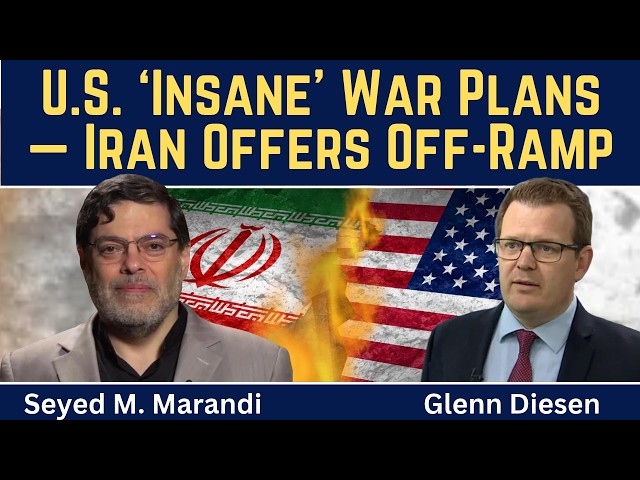
Watch the Video Here (56 minutes, 21 seconds)
Host: Prof. Glenn Diesen
Substack.com
2 November 2026
00:00 Introduction and Context of Current Tensions
02:50 Iran's Intelligence and Military Preparedness
10:09 Consequences of Potential Conflict
13:08 Iran's Strategic Moves and US Midterm Elections
18:05 Negotiation Dynamics and Off-Ramps
24:49 Potential Outcomes and Global Implications
27:48 The Escalating Tensions in the Middle East
31:22 The Political Landscape in Israel
36:31 The Regional Chessboard: Iran, Saudi Arabia, and Beyond
41:09 The Future of U.S. Influence in the Middle East
49:57 The Global Implications of U.S. Foreign Policy
ESSAY | WHEN THE BALLOT BECOMES A CRY FOR PEACE
“The Iran war and ties with Israel ‘obviously’ cost the party control of Congress,” the vice president says

US Vice President J.D. Vance and Israeli Prime Minister Benjamin Netanyahu, Jerusalem, Israel, October 22, 2025. © Nathan Howard-Pool/Getty Images
By Abraham A. van Kempen
5 November 2026
What happens when promises of putting people first meet the human cost of war?
At checkout, as the total climbs, you put something back. What does “put you first” mean when there’s always money for war, but not enough to breathe at home? Your ballot can say, “Enough.”
Please, listen.
Reading this account of the Republican midterm defeat, I keep returning to one image: an ordinary person with a shopping basket, feeling a promise slip away; not maps flashing red and blue or triumphant speeches.
The article describes 2024 Trump-Vance voters who later switched to Democrats, voicing kitchen-table concerns: end the Iran war, lower living costs, put America first, and rethink ties with Israel.
What unites these demands? A longing to be seen, to know your worries matter when powerful people decide, and that “America first” means something when bills arrive, not just during campaigns.
Vance reportedly says the defeat’s cause is obvious. Maybe, but spotting smoke isn’t putting out the fire. If leaders acknowledge the war drove voters away, will that lead to change?
Criticizing governments, alliances, or wars must never mean hostility toward a people. Jewish, Iranian, Palestinian, and American lives are not bargaining chips. Grief has no party affiliation.
I’m not asking you to trade one unquestioning loyalty for another. Switching parties doesn’t mean abandoning your conscience. The article raises difficult questions about both political establishments and their support for Israel. These deserve open discussion, not another curtain of slogans.
What troubles me most is the distance between strategic language—leverage, escalation, influence—and the words spoken at home: Will we be safe? Can we afford next month? Will someone we love come back? In that space between them, it’s easy to lose sight of the people at the heart of it all.
We cannot let them disappear. National interests must have a human face; strength must be tempered by restraint. Peace is more than a speech: it means an ordinary tomorrow, with the kettle boiling and no one fearing terrible news.
If you’re disillusioned, stay engaged and keep asking difficult questions, whatever your vote. You deserve leaders who address the causes of your anger, not just acknowledge it. Together, we can demand better. The ashes needn’t be the final word: let’s stop fueling the fire and make room for a peaceful tomorrow, where you can bring your shopping home without putting hope back on the shelf.
Read more
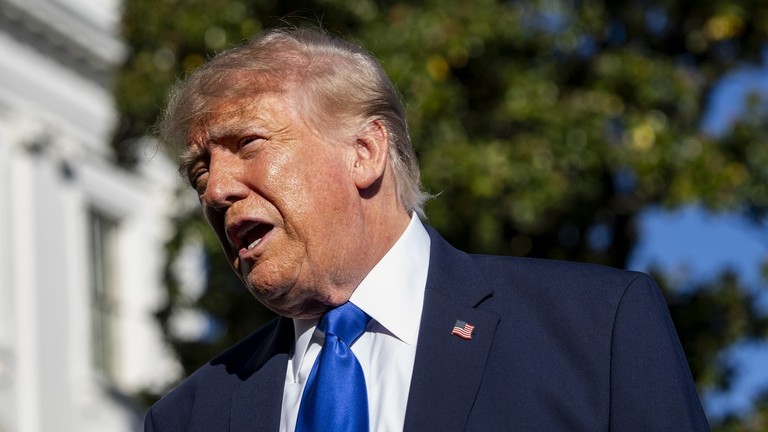
Trump announces halt to $4 bn in aid to Israel on midterm election day
UKRAINE’S HIDDEN TORTURE SYSTEM IS THE WEST’S SHAME TOO
A scandal near Kiev has exposed forced conscription, extortion and torture – now watch Western backers look the other way

By Tarik Cyril Amar, a historian from Germany working at Koç University, Istanbul, on Russia, Ukraine, and Eastern Europe, the history of World War II, the cultural Cold War, and the politics of memory
@tarikcyrilamartarikcyrilamar.substack.comtarikcyrilamar.com
Substack.com
3 November 2026
A fresh scandal has erupted in Kyiv, Ukraine’s capital. Despite the Zelensky regime’s long record of spectacular misdeeds, this one is unique.
What happened in Petropavlovskaya Borshchagovka, a capital suburb, combines several of EU-NATO Europe’s favorite gangster regime’s cruelest practices: mass kidnapping people for a Western proxy war against Russia, extorting them, and using torture and murder to sustain the operation.
Locals rebelled by besieging a secret holding pen for men caught in ‘busification’ raids or going AWOL to escape the meat-grinder war.
‘Busification’ is the Ukrainian establishment’s practice of violently seizing men from streets, transit, workplaces, weddings, shops, and homes to forcibly induct them into the military.
These literal manhunts favor vans roomy enough for a team of snatchers and their subdued victim. Hence “busification,” a word every Ukrainian knows and almost every Ukrainian dreads. “Almost” because, beyond its brutality and risk of severe injury or death—not from Russian forces, but Ukraine’s own enforcers—it is profoundly unfair: scions of Zelensky’s ultra-corrupt establishment have nothing to fear. Everyone else, especially the poor and rural, lives in a national free-fire zone for military slave hunters.

Read more
Ukraine’s neo-Nazi conscription ‘torture chamber’: How the shocking scandal unfolded overnight (VIDEOS)
Another way out, as you might expect in Ukraine, is an exorbitant bribe—ruinous for ordinary people. Once ‘busification’ kidnappers put you in their van, they may offer a deal you can’t refuse: find thousands in cash immediately, by any means, and pay them to go. You’ll live, run, and hide another day.
This is nothing new. Anyone listening to ordinary Ukrainians knows they are being sacrificed en masse in the West’s insane effort to defeat Russia through Ukraine. Yet Western intellectuals and media ignore their suffering.
The ‘busification’ horror’s final element is unsurprising: victims freed from a war-slavery holding pen near Kiev had been severely abused, some brutally tortured. Their tormentors were members of the neo-Nazi Azov unit, now part of Ukraine’s National Guard. But torture is far more common in Ukraine, before and under Zelensky, than Western mainstream media lets its audiences believe. Credible reports of torture by Ukrainian authorities—including, but not limited to, far-right and neo-Nazi units—date back at least a decade.
The West has ignored alleged Ukrainian commando crimes abroad, from the Nord Stream attacks to assassinations. Instead of punishing those responsible and protecting its citizens and infrastructure, it has poured astronomical sums into the corrupt Zelensky regime.
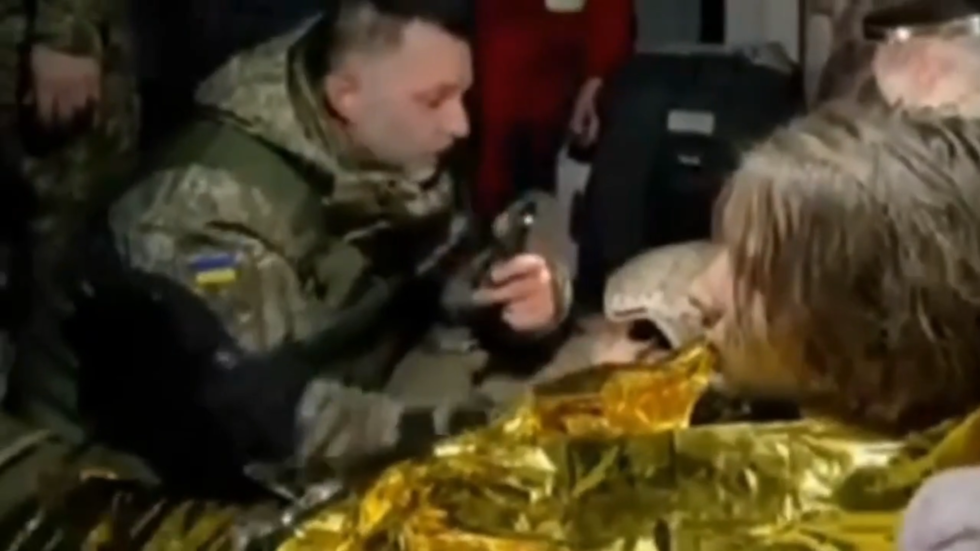
Read more
Moscow mocks Kiev’s language hypocrisy exposed by ‘torture chamber’ scandal
As Ukraine’s torture-prison scandal unfolds, de facto dictator Vladimir Zelensky is again on a begging-and-bragging tour, visiting devoted German Chancellor Friedrich Merz. At home, Zelensky’s right-hand man, Kirill Budanov, has admitted the Kiev lockup is no anomaly but part of a nationwide abuse system, reflecting the regime’s depravity and the West’s complicity.
US citizen Gonzalo Lira, a critical blogger and journalist, was tortured to death to make an example of him and fleece him, exposing that complicity. The case was buried; American authorities who knew what was happening could have intervened and saved him.
The Zelensky regime’s impunity is stunning—not yet at Israel’s level, but approaching it. As with Israel, this stems from toxic geopolitics and moral and intellectual perversion. For years, Western officials and war propagandists, including Timothy Snyder, who helped raise money for an Azov unit, have obscured the truth about the West’s favored client: its domestic violence and closest allies on the Nazi-level far right.
Western publics have been misled by Russophobia and a campaign of lies and omissions glorifying Zelensky and his regime. So what has come to light again in a Kiev suburb concerns not only Ukraine, but the West- especially NATO-EU Europe. They claim Zelensky’s Ukraine defends and practices their “values. " I, for one, have come to believe them.
These are the values of thieves, torturers, and murderers who betray their people for power and wealth. As in Gaza, where the same ‘exemplary’ Europeans are complicit in an Israeli genocide, Zelensky’s Ukraine exposes the truth about this “Europe.’
Tarik Cyril Amar, PhD, is a historian and expert on international politics. He has a BA in Modern History from Oxford University, an MSc in International History from the London School of Economics, and a PhD in History from Princeton University.
Dr. Amar has held scholarships at the Holocaust Memorial Museum and the Harvard Ukrainian Research Institute and directed the Center for Urban History in Lviv, Ukraine. Originally from Germany, he has lived in the UK, Ukraine, Poland, the USA, and Turkey.
His book 'The Paradox of Ukrainian Lviv: A Borderland City between Stalinists, Nazis, and Nationalists' was published by Cornell University Press in 2015. A study of the political and cultural history of Cold War television spy stories is forthcoming, and he is currently working on a new book on the global response to the war in Ukraine. He has given interviews on various programs, including several on Rania Khlalek Dispatches and Breakthrough News.
His website is https://www.tarikcyrilamar.com/; he is on Substack under https://tarikcyrilamar.substack.com, and tweets under @TarikCyrilAmar.
“WITHOUT POLAND, YOU CANNOT CONTINUE THE WAR IN UKRAINE.”
Polish journalist and former Member of Parliament Mateusz Piskorski reports on the parliamentary crisis in Poland.
- With developments in Ukraine, France, and now Poland, is Europe beginning to fracture?
- Piskorski argues that this is not a coup, that Polish President Tusk is consolidating power, that compromise is impossible, and that Poland is deteriorating.
- He also contends that the war in Poland cannot continue without Ukraine.
- Is Poland trapped in a situation similar to Ukraine’s
- Is Poland a Western proxy under Tusk?

Watch the Video Here (20 minutes, 57 seconds)
Host: Mateusz Piskorski
@WithoutCensorshipWbrewCenzurze
3 November 2026
No War in Ukraine Without Poland
Polish journalist and former MP Mateusz Piskorski reports on Poland’s escalating parliamentary crisis. With Ukraine, France, and now Poland in the spotlight, is Europe becoming less stable? Piskorski says this is no coup: Tusk is consolidating power, compromise seems out of reach, and Poland is sliding into turmoil. He warns the war in Ukraine cannot continue without Poland. Is Poland caught in the same geopolitical struggle as Ukraine, with Warsaw simply following Washington’s lead?
BUILDING THE BRIDGE! | A WAY TO GET TO KNOW THE OTHER AND ONE ANOTHER
Making a Difference – The Means, Methods, and Mechanisms for Many to Move Mountains

Photo Credit: Abraham A. van Kempen, our home away from home on the Dead Sea
By Abraham A. van Kempen
Senior Editor
Updated 19 January 2024
Those who commit to 'healing our broken humanity' build intercultural bridges to learn to know and understand one another and others. Readers who thumb through the Building the Bridge (BTB) pages are not mindless sheep following other mindless sheep. They THINK. They want to be at the forefront of making a difference. They're seeking the bigger picture to expand their horizons. They don't need BTB or anyone else to confirm their biases.
Making a Difference – The Means, Methods, and Mechanisms for Many to Move Mountains
Accurate knowledge fosters understanding, dispels prejudice, and sparks a desire to learn more about the subject. Words have an extraordinary power to bring people together, divide them, forge bonds of friendship, or provoke hostility. Modern technology offers unprecedented possibilities for good, fostering harmony and reconciliation. Yet, its misuse can cause untold harm, leading to misunderstandings, prejudices, and conflicts.
A Free Trial for Life – SUBSCRIBE NOW!

• It's quick and straightforward.
• We won’t ask for your credit card number.
• Just enter your e-mail address to receive your complimentary free-for-life subscription to our newsletter.
• Please include your First and Last Name.
• We won’t share or sell your e-mail address.
_________________________
Related Articles Recently Posted on www.buildingthebridgefoundation.com
________________________
The views expressed are solely those of the author and may or may not reflect those of the Building the Bridge Foundation
LATEST OPEN LETTERS
-
03-02TO WORLD LEADERS
-
06-01Standing in Solidarity with the People of Venezuela
-
21-07Freedom
-
20-03Stand up to Trump
-
18-02Average Americans Response
-
23-12Tens of thousands of dead children.......this must stop
-
05-06A Call to Action: Uniting for a Lasting Peace in the Holy Land
-
28-05Concerned world citizen
-
13-02World Peace
-
05-12My scream to the world
VIRTUAL POST OFFICE
PETITIONS
LINKS
DONATION
Latest Blog Articles
-
05-11Our Friday News Analysis | What the World THINKS Now!
-
04-11Our Wednesday News Analysis | Israeli Elections: What Awaits the Palestinians?
-
03-11Israeli Elections: What Awaits the Palestinians?
-
03-11Analysis - Israeli Democracy Has Been Given a Chance. It May Not Get Another
-
03-11Liberal Zionists are trying to distance themselves from the reality that Israeli voters overwhelmingly want genocide
-
02-11Our Monday News Analysis | What the World THINKS Now!
-
29-10Our Friday News Analysis | What the World THINKS Now!
-
28-10Our Wednesday News Analysis | Israel’s objectives unlikely to shift as a result of election
-
27-10Israel’s objectives unlikely to shift as a result of election
-
27-10Silencing Palestine: America’s Shameful History of Repression Continues
-
27-10A New Israeli Government Must Make Arabs Partners, Not Enemies
Latest Comments
 One of the most important and illuminating articles that I …
Comment by Benjamin Inbaraj-
And what's wrong here?
After all, there is the homeland …
Comment by Isac Boian -
Does this reinforce or deny my argument that Israel is …
Comment by Edward Campbell -
Many 'say' they support the Palestinian cause but do little …
Comment by Philip McFedries -
The UN is strangled by the "war for profit" cabal …
Comment by Philip McFedries -
I can't read the printing on the map.
Comment by Philip McFedries -
Good news!
Comment by Philip McFedries
COMMENTS
This article has 0 comments at this time. We invoke you to participate the discussion and leave your comment below. Share your opinion and let the world know.