 NEWSLETTER
The Friday Edition
Our Friday News Analysis | What the World THINKS Now!
Bridging Differences to Get to Know the OTHER and One ANOTHER (Part 11)
The Hague, 30 October 2026 | If you know of a decisive story, tell the world! We're still searching.

Malawi Lake | Photo by Omar Hakeem on Unsplash
Living Words of Saint Pope John Paul II | “People of Strong Character”
Love can transform the world and shape your choices. Even in darkness or despair, God still calls you. Created in his image, you have goodness within you. Only you can say “Yes” to God and welcome his love and holiness.
How can we become saints when so many obstacles stand in our way?
How can we be honest when bribery and corruption surround us?
How can we be holy when cruelty and exploitation are the surest ways to make a living?
God the Father knows your struggles and your desire to do right ...
Cultivate goodness and mercy, letting gentleness and patience mature.
See all of life as an opportunity for God to speak to you
and call you to help your country and its people thrive.
Young people like you will shape Malawi’s development.
Malawi now needs people of strong character.
Saint Pope John Paul II
Kamuzu Stadium, Blantyre, Malawi
Apostolic Journey to Madagascar, La Réunion, Zambia and Malawi
5 May 1989
This week’s reflection: “People of Strong Character”

Building the Bridge Foundation
For six decades, Saint Pope John Paul II spoke to billions—from young people and presidents to peacemakers, the forgotten, and the powerful.
John Paul II was a theologian, world leader, statesman, poet, and pastor, revered by billions.
He addressed war and peace, human dignity, mercy, and the deepest longings of the human heart.
Those words did not stay in the past. They are living words. And they speak now.
Even more alive today, the Pope's Message invites readers to pause and reflect.
There is no cost. There never will be.
OUR WEDNESDAY NEWS ANALYSIS | ISRAEL’S OBJECTIVES UNLIKELY TO SHIFT AS A RESULT OF ELECTION
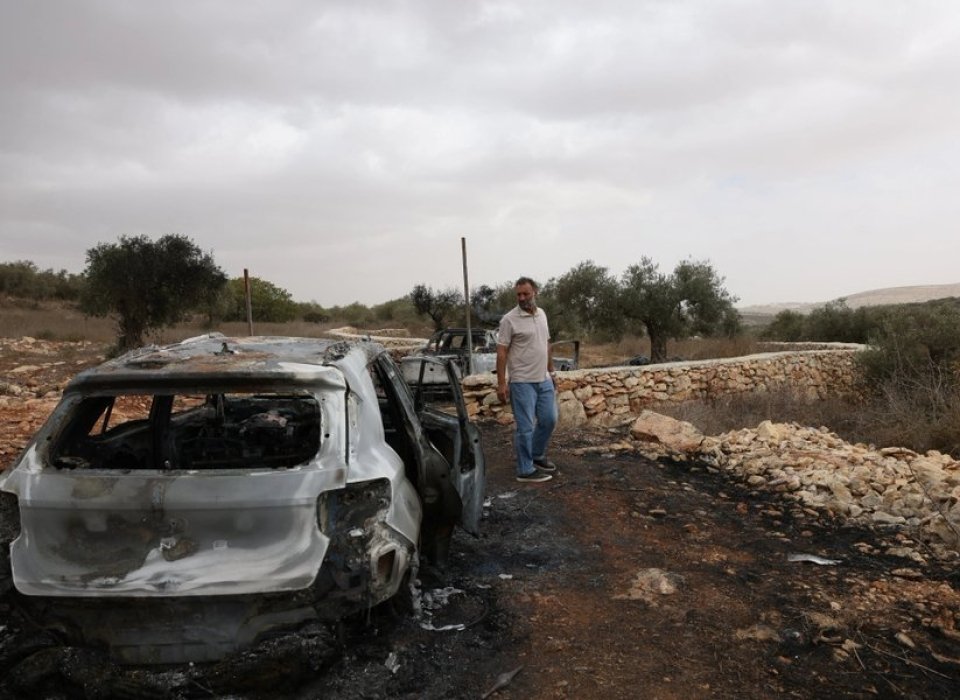
The international community cannot allow a future Israeli government to present itself as a peacemaker, while continuing to invest in settlements, occupation, war and genocide (File/AFP)
By Dr. Ramzy Baroud
Arab News
https://www.arabnews.com/opinion/israels-objectives-unlikely-to-shift-as-a-result-of-election-3008290
26 October 2026
The settlements themselves drive the occupation.
They require land and therefore land confiscation;
protection and therefore an expanded military presence;
and water, roads, and infrastructure, and therefore
the appropriation of Palestinian resources.
Together, these elements deepen dispossession
and generate further Israeli violence.
More troubling still, even a government leaning toward the center-left might succeed in presenting Israel to the international community
as a country ready to move beyond the image it acquired during three years of genocide, without fundamentally changing its conduct on the ground.
The international community must therefore remain vigilant. It cannot allow a future Israeli government to present itself
as a peacemaker or to sell the illusion of a newly reformed Israel, while continuing to invest in settlements, occupation, war and genocide.
In the past, many Palestinians and Arabs followed Israeli elections closely. They did so not because they entertained illusions that a Zionist leader would deliver peace and justice, dismantle the occupation or remove illegal settlements. Rather, they feared that some Israeli leaders were worse than others. They hoped to avert the worst-case scenario.
Over time, however, that distinction gave way to the belief that all Israeli leaders were essentially the same. This is not pessimism. It is experience.
Consider, for example, the expansion of illegal Jewish settlements during the Oslo peace process under Israeli Prime Minister Yitzhak Rabin.
FROM THE BRIDGE | Welcome Home
By Abraham A. van Kempen
Founder and Chairman
30 October 2026
Why does the Israeli-Palestinian Quest to Co-Exist, the defining feud of our times, enrapture the world?
Could our hearts belong to a New Jerusalem, that Shining City Upon a Hill? Perhaps we all carry Abraham’s seeds, the DNA of the original Israelites, inside our souls.
Aren’t we all called to become a light among nations?
And weren’t the true Israelites Palestinians united by a distinctive faith, with all Palestinians genetically linked to Abraham’s lineage?
For this reason, all Palestinians are Semitic, as they are believed to descend from Abraham.
To be anti-Semitic toward one is to be anti-Semitic toward all.
Nothing is more anti-Semitic than modern-day Zionism.
To become a light among nations, we must fix our gaze on the biblical Zion, not a return to the land but a return to God.

Welcome Home -- Shared Belonging, Renewed Hope
For nearly half a century, I have hoped for a turning point. Yet I fear that greater suffering may come before peace, and that Tel Aviv may face wounds like those Gaza has endured. Walls built for protection may leave people feeling like strangers in their own homes. No one should have to endure such loss or displacement.
Israel’s leadership and its Western-financed military infrastructure are facing profound upheaval. But devastation is neither welcome nor a necessary route to renewal. A little humility and kindness might have led us down a different path. The Good Samaritan offers another way: compassion that crosses the boundaries we draw between ourselves and others.
I hope we can loosen the grip of fear and hostility reinforced by EU-US/NATO influence, better known as Western hegemony. Freedom should mean more than stepping out from under one power’s shadow; it should also mean becoming better neighbors and welcoming those indigenous to the land:
“Welcome home. Let us meet with humility and make a shared home on this glorious land.”
“Those who are meek will inherit the earth.”
Once again, I see the people of Israel in a wilderness of uncertainty. I worry that we've drifted far from faith and from one another. Yet I believe God’s care reaches us all, even when belief falters or religious identity shifts. The wilderness need not be our final home.
Can this wilderness become an orchard, rooted in justice and nurtured with compassion?
Let’s begin the patient work of becoming better.
A shared home begins by making room for one another.
For me, that hope is also a personal journey: returning not just to a place, but to a way of living alongside others.
Welcome Home -- Returning to Place, Faith, and Belonging
On my knees, I thank God for the chance to begin again. I hope to return home soon—to the place I long for and to a deeper sense of spiritual belonging, grounded in faith and care for my neighbors. I do not expect a Messiah to solve our troubles; we must take responsibility for the wounds we have helped create and begin to heal.
What gives me hope amid so much uncertainty?
The possibility that we may become better neighbors and a light among nations—not through power alone, but through the care we show others!
I believe our future depends on that choice.
A sense of belonging can grow from everyday gestures: sharing a meal, checking on an elderly neighbor, helping carry groceries, or patiently listening to someone whose story differs from ours. These small acts don’t erase our differences; they help us make room for them and for one another.
The same willingness to listen and make room for others should guide our relationships across the region. We are a small nation surrounded by hundreds of millions of people. Where our actions have caused fear, we must rebuild trust and seek God’s presence in their lives. I hope better relations with Iran and our neighboring countries will help us move beyond dependence on Western power and build a more equal future for the region.
I envision a century of closer fellowship with neighbors whose Abrahamic traditions give us common ground.
The wilderness may bear fruit, and peace may heal long-open wounds.
I cannot predict how the future will unfold. Change may demand much of us, but I believe we must pursue a more independent path—one free from Western hegemony and from being used to serve others' strategic ambitions.
I believe lasting peace depends on a permanent end to the Collective West’s military presence in our region. I hope bases can close and fleets withdraw by agreement, rather than through further destruction. We must break bread with our neighbors—our brethren—and protect the region’s role in supplying the world with oil.
When I nominated Presidents Trump, Xi, and Putin for the 2026 Nobel Peace Prize, I hoped they would help turn confrontation into cooperation. Whether they can live up to that hope remains to be seen. I would give them the opportunity to pursue diplomacy that lowers the risk of World War III and transforms adversaries into partners. The idea behind the saying attributed to Abraham Lincoln is worth keeping in mind:
“Destroy your enemies by becoming friends.”
I hope they will support a peaceful political transition away from Israel’s radical ultranationalist leadership and help ease suffering in Israel, Gaza, and the West Bank. Guided by prophetic principles of neighborliness, Israel could pursue security through trust and cooperation rather than relying on Western protection. It could stand on its own without standing apart.
Today, let’s start with one simple act of care: check in on a neighbor or listen to someone we might otherwise overlook.
I believe in these possibilities—a small light kept burning for a future yet unseen.
“We must find within us the courage to reach peace. We must seek the gift of peace from heaven. If we ceaselessly pursue the laborious, grueling road to reconciliation, often requiring a tug-of-war of give-and-take, peace can spread like healing oils. “
And the wilderness becomes an orchard where justice prevails.
Now, Presidents Trump, Xi, and Putin must step up to help heal our broken humanity, guided by the enduring axiom: “Destroy your enemies by becoming friends.” If they do, each deserves to share the 2027 Nobel Peace Prize.

Churchill, Roosevelt, and Stalin at Yalta brokering peace that turned out to be make-believe
To be continued on Monday, 02 November 2026.
With Every Good Wish to you, I am,
Sincerely yours,
Abraham A. van Kempen
Founder and Chairman
Building the Bridge Foundation, The Hague
A Way to Get to Know One Another and the Other
Remember! Diplomacy is catalytic—transformative —while military action is cataclysmic—destructive and catastrophic.
When faced with the options to be good, bad, or ugly, let’s build bridges, not burn them. After all, mutual deterrence reigns.
ISRAEL VOTES, IRAN WAITS - WHY THE NEXT WAR COMES SOONER | COL. DOUGLAS MACGREGOR, PHD
Col. Douglas Macgregor shares his assessment of Israel’s election period and the wider standoff with Iran.
He argues that Israel's political climate and Iran’s wait-and-see approach could bring the next round of conflict sooner than many expect. He explains the strategic reasons behind this view and discusses in the video:
- How he believes Israel’s election could shape its security decisions
- Why he thinks Iran is waiting rather than acting now
- The risks he sees of renewed fighting in the region
- What role he believes the US could play if the conflict resumes

Watch the Video Here (28 minutes, 32 seconds)
Host: Mario Nawfal
Manzil Bangle
29 October 2026
Col. Macgregor’s principal arguments
- Macgregor’s central argument is that renewed war with Iran is likely because American and Israeli political incentives favor escalation over diplomacy. He views Iranian restraint as evidence of military discipline and a willingness to honor agreements, and rejects Washington’s assumption that destroying the Revolutionary Guards would unravel the Iranian state.
- His greatest concern is that, without a coherent American strategy, the conflict could escalate to the use of tactical nuclear weapons.
- He argues that donor influence and both parties’ reliance on pro-Israel lobbying make it less likely that elections will change foreign policy. However, his broader claims about Jewish control of finance echo antisemitic conspiracy tropes rather than identifying specific, evidence-based mechanisms. He also presents contested motives and speculative outcomes as certainties.
- A second major theme is the decline in American capacity: debt, deindustrialization, educational weaknesses, and diminished military superiority are said to make another war economically and strategically unsustainable. He contrasts today’s leadership with Nixon’s diplomacy, challenging simplistic comparisons to the 1970s.
- Finally, he expects Europe to draw closer to Russia, especially through Germany, while pursuing regional cooperation to reduce its reliance on Washington. Overall, his strongest analytical contribution is his link between domestic fragility and foreign-policy risk.
HAARETZ EDITORIAL | THE MAJORITY OF ISRAELIS HAVE HAD ENOUGH
Tuesday's election results should end Netanyahu's political career. It's time for a sane government to lead Israel on a new path
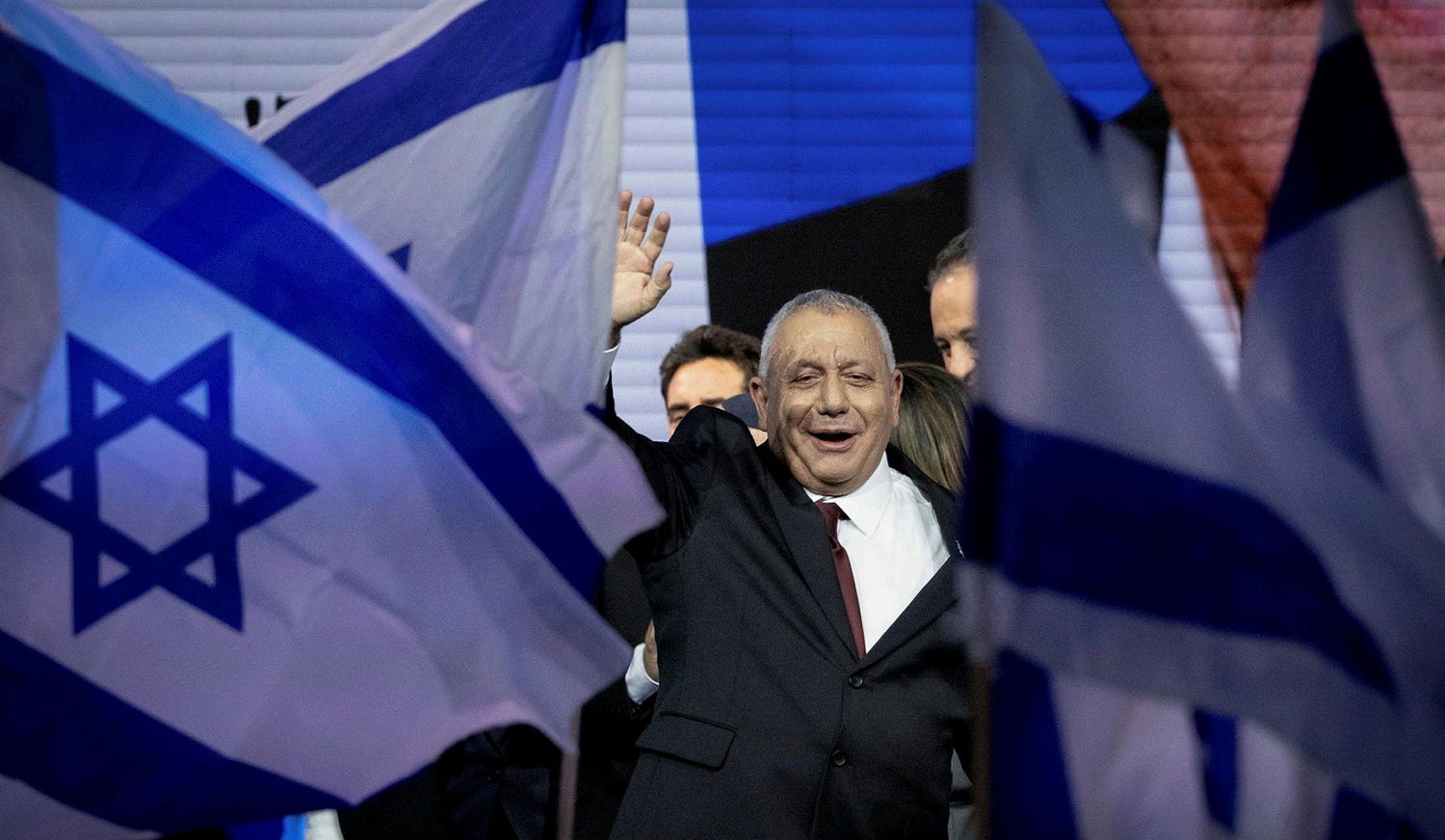
Gadi Esienkot waves to supporters on election night in Tel Aviv on Tuesday. Credit: Moti Milrod
Haaretz Editorial
28 October 2026
On the night of the 1999 election, after Ehud Barak announced his victory, the prime minister-elect stood before his excited audience and said, "This is the dawn of a new day." Seven years earlier, on a similar occasion, Prime Minister-elect Yitzhak Rabin said, "I will navigate. ... I will decide."
Given the exit poll results released Tuesday night, Wednesday morning will not be the dawn of a new day. Nor did any candidate receive a clear mandate to navigate and decide the composition of the next government. Nevertheless, two things are clear: Prime Minister Benjamin Netanyahu's coalition collapsed, and the Arab parties set a historic record.
Given the exit-poll results, which show the opposition won 70 Knesset seats, we can confidently say Netanyahu has lost his mandate to govern. A large majority of Israelis voted for opposition parties – the "bloc of change" and the Arab parties – and rejected the vision of perpetual war espoused by Netanyahu and his partners. Millions of voters said "No" to his Likud party's partnership with the Haredim, the settlers and the Kahanists, who have led Israel into the worst situation in its history.
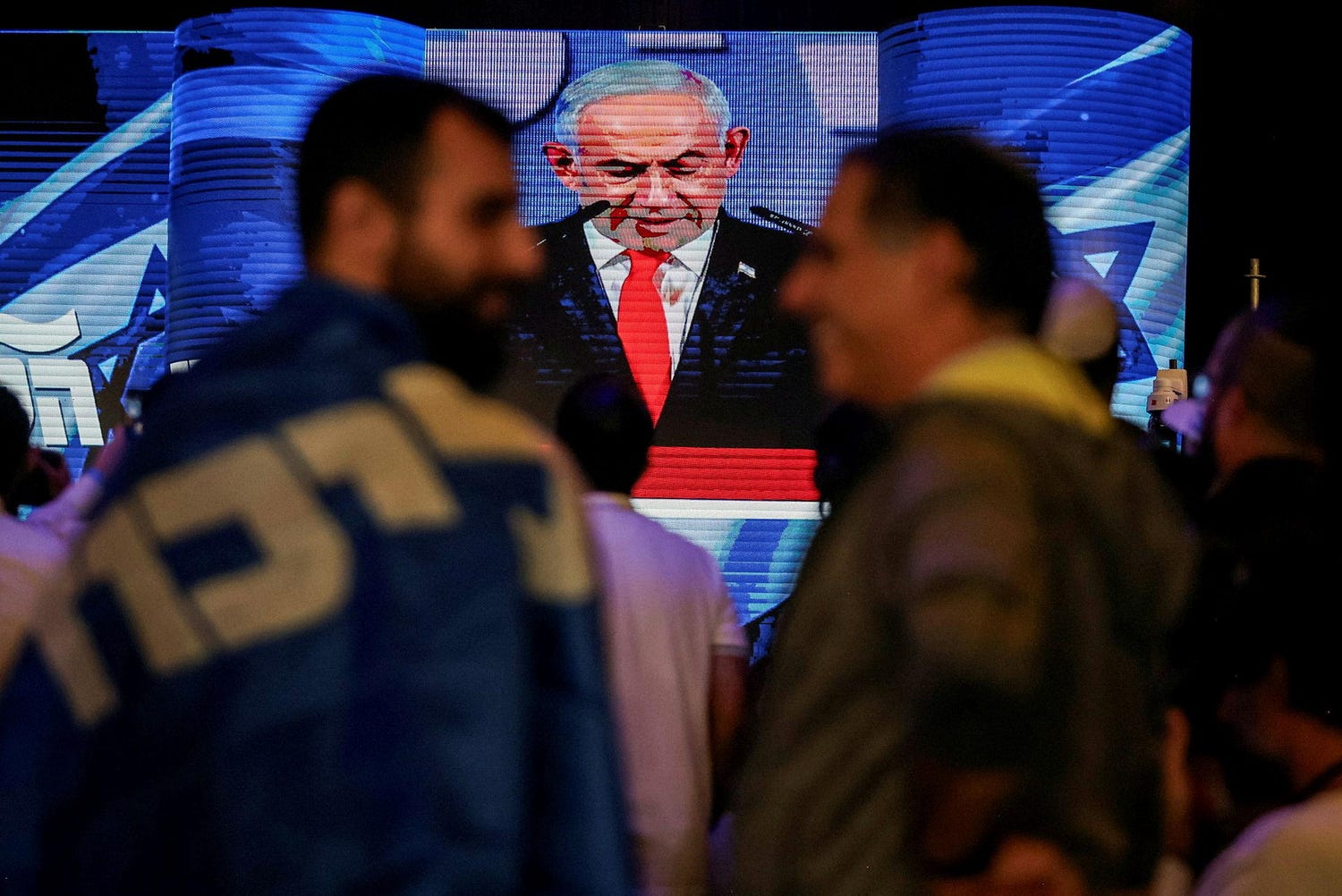
Supporters at Likud campaign headquarters as Prime Minister Benjamin Netanyahu addresses the crowd in Jerusalem on Tuesday. Credit: Itay Cohen
In this election, Netanyahu fought the battle of his life, and succeeded in saving himself from complete political defeat through an unbridled campaign of venomous incitement. According to exit polls, Likud remains the largest party. Nevertheless, bloc sizes determine the composition of the next government. And here, no one disputes that the government's opponents won by a large margin. The public clearly voted no confidence in the far-right government. Given this, the bloc of change has a mandate to form a new government that will bring good tidings to Israel.
All change-bloc leaders must unite around Gadi Eisenkot, whose party is the group's largest, and abandon the campaign promises that needlessly caged them in. They must declare an unequivocal victory, abandon the foolish, anti-democratic boycott of the Arab parties, act with creativity and determination, and do whatever it takes to swear in a government, end Netanyahu's role, and put the country back on the road to sanity.
Related Articles
- Liberal U.S. Jewish groups hail Israeli exit polls as rebuke to Netanyahu Philissa Cramer
- Netanyahu's rivals got a clear mandate to unseat him Ravit Hecht
- Ignoring Arab voters is a self-inflicted wound for Israel's liberal bloc Noa Landau
Thirty years ago, Netanyahu entered our lives and has served as prime minister during much of that time. He was chosen the first time around thanks to his promise to advance Israel, to Americanize it, to make it more modern and to bring peace with the Palestinians without sacrificing the country's security. He ends his administration with Israel isolated, bleeding, grief-stricken and deeply divided.
Tuesday's election results should end Netanyahu's political career. The great majority have grown weary of him. Society must rise from the ashes of the "Netanyahu era," form a sane government comprising both Jews and Arabs, and lead the State of Israel onto a new path.
The above article is Haaretz's lead editorial, published in the Hebrew and English editions of the Israeli newspaper.
GUEST EDITORIAL | ANTI-NETANYAHUISM
Jewish dignity, Palestinian survival
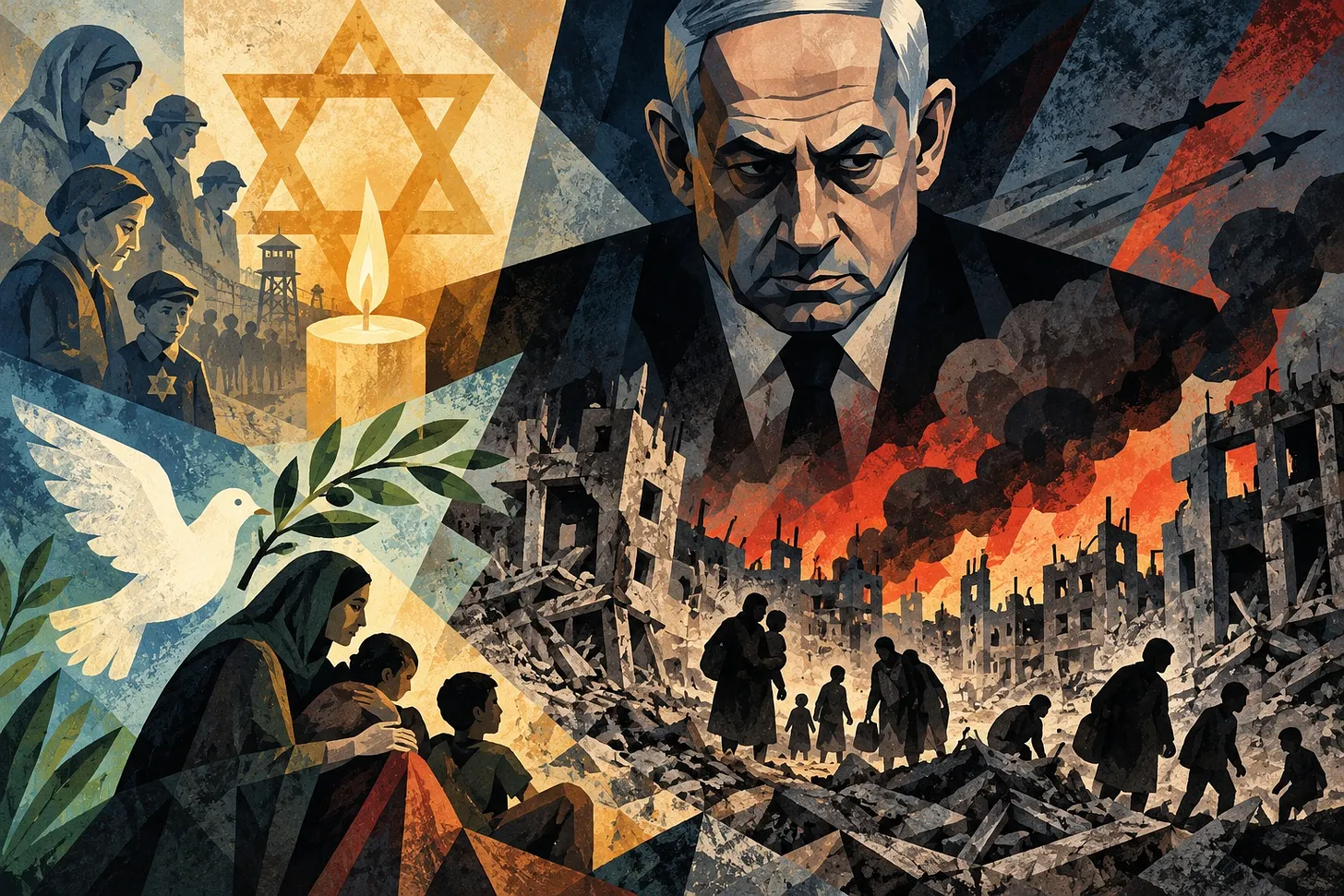
Kazuhiro Hayashida argues that past victimhood does not confer the right to destroy.
By Kazuhiro Hayashida
Multipolar Press
29 October 2026
I advocate “Anti-Netanyahuism.” This position makes clear both the target of criticism and where responsibility lies.
Netanyahu seeks to portray political criticism of him and his government’s policies as hostility toward Jews as a whole. Yet Israel does not represent all Jews, and Netanyahu does not represent all Israelis.
Netanyahu’s deranged military actions are accelerating the genocide in Gaza and rivaling the Nazis’ deeds. I defend the Jewish people’s right to exist, their dignity, and their traditions, while firmly protesting Netanyahu’s genocidal policies.
Treating criticism of Netanyahu’s government as an attack on all Jews shifts responsibility: the government claims to represent the diverse views and wishes of Jewish people, conflating them with its own actions.
I hold Netanyahu accountable for the destruction inflicted on another people by a political leader whose own people have suffered persecution. Upholding the historical reality of the Holocaust and the dignity of the Jewish people is entirely compatible with defending the lives and dignity of the people of Gaza.
Past victimhood does not grant anyone the authority to excuse present wrongdoing.
(Translated from the Japanese)
CHAS FREEMAN: MIDDLE EAST IN TRANSITION & A NEW WORLD ORDER
- Ambassador Freeman, a former Assistant Secretary of Defense, received the Department of Defense's top public service awards for developing a NATO-focused European security system after the Cold War and rebuilding defense ties with China.
- He also served as U.S. Ambassador to Saudi Arabia during Operations Desert Shield and Desert Storm. In his discussion, Ambassador Freeman emphasizes the importance of reconnecting the West to diplomacy and adapting to a vastly changed global landscape.
Something dark is crossing the horizon, and we can feel its shadow before it arrives. The world trembles in the blue glow of burning skylines, sealed borders, broken promises, and leaders standing among the ashes, calling ruin resolve. Diplomacy is not merely fading; it is being buried like a lantern under cold earth while ordinary people wait beneath the falling sparks of pride, fear, hunger, grief, and graves. This is why we cannot look away.
Peace begins when we see enemies as human beings before the night turns them into targets.

Watch the Video Here (57 minutes, 03 seconds)
Host: Prof. Glenn Diesen
Substack.com
01 August 2026
ESSAY | Amb. Chas Freeman and Zev Jabotinsky: Two Roads at the Edge of the Storm – How Their Central Points Differ
By Abraham A. van Kempen
7 August 2026
Retired U.S. Amb. Chas Freeman and Zev Jabotinsky (1840-1920), the architect of Israel’s Likud Party, both understand power, fear, and interests, yet they pursue different moral and political paths. Freeman notes that diplomacy has failed because Western leaders ignore others’ security concerns and identities. His approach is realistic, emphasizing negotiation, sovereignty, and restraint. He argues that in a multipolar world, more diplomacy, not less, is needed to prevent any single power from controlling outcomes indefinitely.
Jabotinsky is widely regarded as the founding father of the Haganah, the precursor to Israel's army. He was a pioneer of Revisionist Zionism, articulated in his 1923 book, ‘The Iron Wall: We and the Arabs.’ Some poetically call it ‘My Community’ or, in German, ‘Mein Kampf.’ Zionism often emphasizes lebensraum, which can involve attacking, invading, expelling, and displacing indigenous populations from their lands, and it claims their possessions as part of the struggle. It presents a choice: engage in conflict or face the implications of inaction, fostering an ‘us versus them’ outlook.
Jabotinsky argues that Palestinian Arab resistance to Zionism was natural, rational, and unavoidable. Zionism could not rely solely on persuasion or voluntary agreement. His “Iron Wall” concept holds that Jewish settlement and statehood require overwhelming force until resistance becomes futile, after which negotiations can occur from a position of strength. While Freeman sees diplomacy as vital to prevent disaster, Jabotinsky considers force a necessary precondition for diplomacy.
The core distinction isn't just "peace versus war" but also how each side views the crucial turning point. Freeman emphasizes prioritizing the other's dignity and interests first for lasting order. Conversely, Jabotinsky suggests that recognition follows once one side demonstrates strong resolve. Freeman’s approach feels like a calm negotiation, while Jabotinsky’s is like building a fortress first, opening talks only after it is secured.
Key arguments at a glance:
- Freeman’s starting point: diplomacy must begin by recognizing the fears, interests, sovereignty, and agency of other peoples.
- Jabotinsky’s starting point: resistance by the native population is natural and unavoidable, so force must come before negotiation.
- Freeman’s method: restraint, negotiation, balance, and strategic listening to prevent conflict from becoming catastrophe.
- Jabotinsky’s method: an “Iron Wall” of overwhelming strength that makes resistance futile before talks can occur.
- The moral divide: Freeman treats the other side as an interlocutor; Jabotinsky treats the other side as an obstacle to be overcome.
- The essay’s conclusion: security matters, but lasting peace requires diplomacy before humiliation hardens into permanent rage.
The Table or the Wall: What Freeman and Jabotinsky Still Teach Us
When leaders choose walls over tables, they should be honest about the cost: the next generation usually pays the bill.
The difference between Ambassador Chas Freeman and Zev Jabotinsky goes beyond diplomacy versus coercion. It reflects a core ideological divide: recognition or submission. Freeman emphasizes starting at the negotiation table and focusing on understanding others’ concerns to prevent conflict. Jabotinsky, however, begins with barriers, asserting that force creates realities that must be acknowledged before dialogue.
Freeman’s argument criticizes an era that conflates punishment with strategic thinking. He advocates disciplined realism—listening, calculating, negotiating, and respecting other countries' histories, fears, and priorities. Diplomacy isn’t merely formalities after violence; it’s crucial for preventing conflicts from escalating.
Jabotinsky’s view is clear and firm. He acknowledged that Palestinians might oppose change and believed that native populations resist colonization. His “Iron Wall” strategy relied on overwhelming force to break resistance and to ease negotiations. Its strength lies in honesty, but it also raises moral questions.
Freeman views the opposing side as a political actor whose interests should be addressed early to prevent disasters, emphasizing the need to understand power dynamics and diplomacy. Jabotinsky sees it as an obstacle to be overcome before negotiations, prioritizing the strengthening of power first and using diplomacy only after the situation is settled.
Understanding why this distinction matters reveals that walls—physical, ideological, diplomatic, or psychological—offer an illusion of safety. They provide short-term security but create communities built on fear. A wall might temporarily delay violence, but it can't erase shared memories or true feelings. It can quiet dissent, but it can't foster genuine agreement. While a border wall may protect territory, it isn't enough for real legitimacy.
Freeman warns that when diplomacy fails, the powerful often mistake action for planning and weapons for wisdom. Jabotinsky cautions that defenseless people risk being swept away by history. These warnings matter, but fear should not lead us to treat barriers as inviolable. Security is essential for defense, but it should not justify policies that sacrifice others—especially in the pursuit of true peace.
The decision is clear: adopt a politics that sees enemies as potential allies through dialogue, or one that views interlocutors as defeated enemies-in-waiting. Freeman highlights diplomacy's courage—imperfect, frustrating, and slow—but always respectful of dignity and independence. Jabotinsky emphasizes coercion—gaining strength first, then negotiating, regardless of morals.
Policymakers have an urgent role: protect people and secure borders. But coercion isn't real agreement, and silence isn't approval. True leadership means reopening talks before walls become the only way to communicate.
It's wise to choose diplomacy early to prevent embarrassment from turning into anger. In fleeting romances, gentle boundaries keep interactions respectful. Be cautious about political issues that ask future generations to face fears their ancestors hesitated to confront. Approaching these carefully fosters understanding and progress.
A MULTIPOLAR RESPONSE TO CHANCELLOR MERZ
The lies Europe tells itself
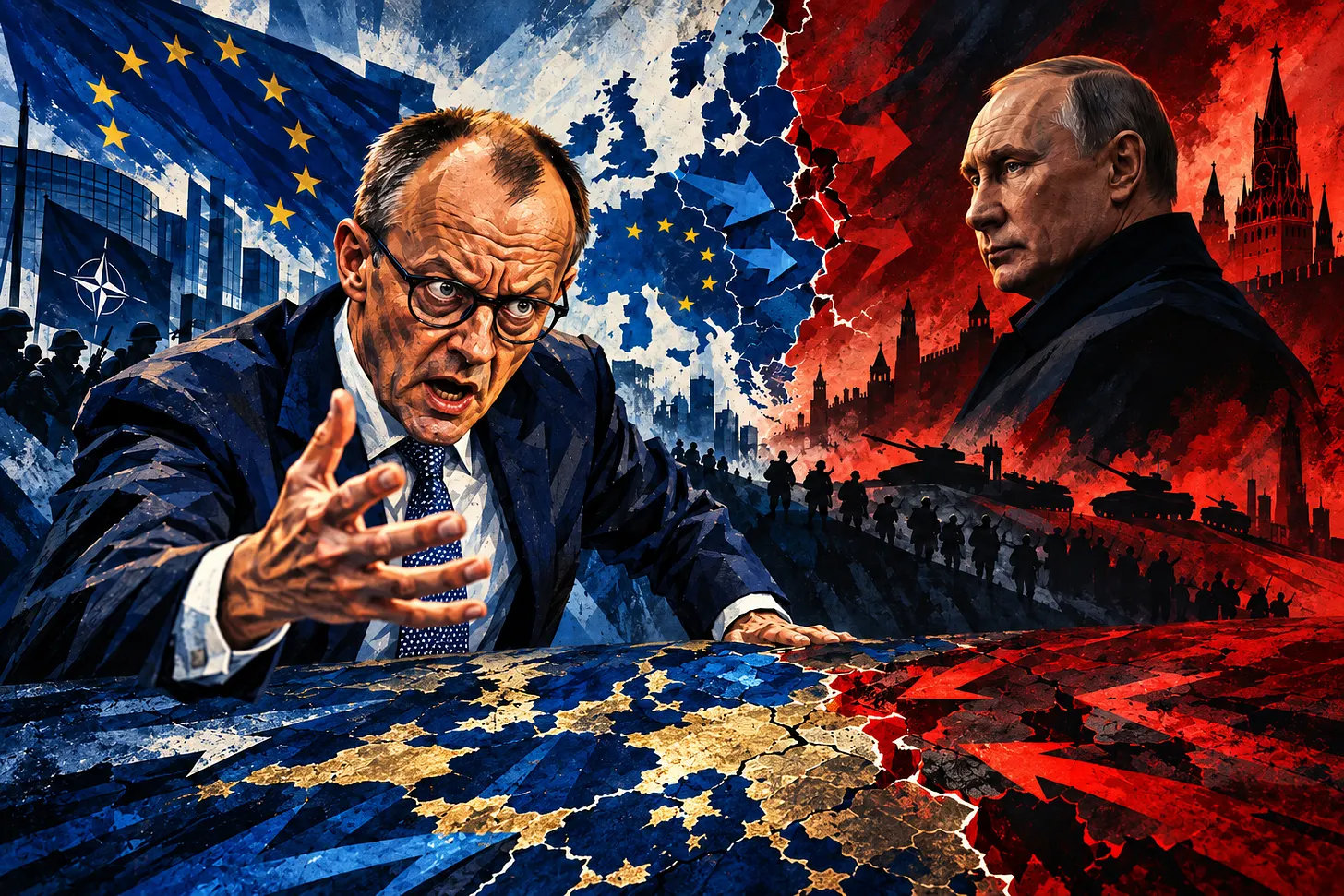
Jerry B. Marchant of IS IT PROPAGANDA?® dismantles Merz’s claims about Russia’s fear of European democracy, arguing that Moscow’s security concerns lie at the heart of the conflict with the West.
By Jerry B. Marchant
Multipolar Press
25 October 2026
Chancellor Friedrich Merz has warned that Russia “is on the way to destabilize the entire political order of our European continent” because it “fears democracy,” “open societies,” and “the success of European integration.”1 The claim is rhetorically powerful, but it leaves important analytical questions unanswered. If an adversary is driven by envy or pathology, there may seem to be little to negotiate—and little reason to consider how one’s own policies might have contributed to the confrontation.
The Security-Dilemma Literature Offers a Different Reading
In 2014, Mearsheimer argued that NATO enlargement, EU expansion, and democracy promotion together formed a package that Moscow perceived as a strategic threat on its borders.2
Sakwa similarly described a post-Cold War order built around one bloc’s institutions, leaving Russia “against the rest” of a system it had no part in designing.3
Kennan, the architect of containment, called enlargement “a fateful error” in 1997 and predicted a hostile Russian reaction.4 The 2008 Bucharest declaration, which promised Ukraine and Georgia eventual membership without a roadmap or a security settlement, was the worst of both worlds.5 None of this requires us to find Russian policy blameless. It requires only that we treat Russian stated concerns as data rather than pretext.
The Principle of Indivisible Security
Russia’s central diplomatic claim is not exotic. The Helsinki Final Act of 1975 and the OSCE’s 1999 Istanbul Charter, signed by Western states, commit participants not to strengthen their security at the expense of others.6 The draft treaties Moscow tabled in December 2021 invoked exactly this principle.7 One may judge the proposals maximalist, but Washington and Brussels treated them as non-starters rather than as an opening bid. According to Charap and Radchenko, the spring 2022 Istanbul negotiations came closer to a framework agreement than is commonly acknowledged before they collapsed.8 A Europe that wanted to test Russian intentions had instruments available, but it chose not to use them.
“Russian Impact” and the Question of European Legitimacy
Merz’s second claim—that Russian influence is the principal threat to European societies—deserves a closer look. Russian interference in European political processes is certainly worth attention, but attributing public discontent mainly to Moscow could obscure the domestic and structural factors behind it. The Draghi report highlights Europe’s persistent decline in competitiveness, linked in part to high energy costs and insufficient investment.9 These economic pressures, together with falling living standards and a growing disconnect between governing elites and the people they represent, offer substantial explanations for voter dissatisfaction. This discontent need not be blamed on a foreign actor; it may instead reflect domestic policy choices and deeper weaknesses in Europe’s political and economic order.
A political order that treats dissent as foreign interference may raise questions about its own legitimacy. The Romanian Constitutional Court’s annulment of the first round of the 2024 presidential election and the EU’s suspension of RT and Sputnik broadcasts may each be defensible on their own terms.10 Taken together, though, they help explain why a Russian observer might reasonably wonder whether “open societies” describes a reality or an aspiration. A confident liberal order can respond to disinformation with open argument rather than prohibition.
Multipolarity as Description, Not Hostility
The deepest disagreement concerns the shape of the international system. Acharya argues that the American-led order is giving way to a “multiplex” world of overlapping regional and civilizational centers, rather than to a single successor hegemon.11 Emerging powers have built parallel institutions without seeking to overturn the existing order. Much of the Global South chose not to join the sanctions regime against Russia—a choice that cannot be explained by Russian coercion. Instead, it reflects a preference for non-alignment and the belief that the universalist claims of any one bloc deserve careful consideration.
Moscow presents this view as one in which sovereign equality, civilizational diversity, and respect for distinct political traditions form the foundation of a durable order.12 Europeans, with their long tradition of plurality, may see this position as a return to the Westphalian bargain rather than an assault on it. Europe’s integration project, built on pooling sovereignty by consent, remains compatible with a world in which others make different choices.
Objections and Replies
Critics raise three main objections. First, they argue that this account overlooks Ukrainian agency: sovereign states may choose their alliances, and Russia had no right to veto Ukraine’s choice. This is an important point. The response is that a state’s right to choose coexists with a responsibility, under the Helsinki framework, to consider the security consequences for its neighbors. The crises in 2014 and 2022 showed the cost of overlooking that responsibility.
Second, as Sarotte shows, the “not one inch” assurances given in 1990 were never binding commitments.13 That is true, but Sarotte also demonstrates that Soviet leaders had reasonable grounds to believe Western officials were signaling restraint, and that subsequent enlargement was a deliberate choice, not a historical inevitability.
Third, Russia’s domestic restrictions on the media and opposition make its claim to represent pluralism harder to defend. This is the most compelling objection, and any multipolar position should address it candidly: pluralism among states doesn’t require them to be uniform internally, but it doesn’t excuse repression either. Those defending Russia’s position should acknowledge this clearly.
Conclusion
The Merz thesis assumes that Russia opposes Europe simply for what it is. A more constructive possibility is that Russia opposes a European security order because of how it works: it expands without taking the interests of its largest neighbor into account. This kind of explanation can be tested, discussed, and perhaps resolved over time. The first kind leaves little room beyond conflict. A Europe committed to its own security may find it more useful to consider the former.
1 Friedrich Merz, interview with Bloomberg, October 2026.
.
2 John J. Mearsheimer, “Why the Ukraine Crisis Is the West’s Fault,” Foreign Affairs 93, no. 5 (September/October 2014): 77–89.
.
3 Richard Sakwa, Frontline Ukraine: Crisis in the Borderlands (London: I. B. Tauris, 2015); Sakwa, Russia Against the Rest (Cambridge: Cambridge University Press, 2017).
.
4George F. Kennan, “A Fateful Error,” The New York Times, February 5, 1997.
.
5 NATO, “Bucharest Summit Declaration,” April 3, 2008, para. 23
.
6 Conference on Security and Co-operation in Europe, Final Act (Helsinki, 1975); OSCE, Charter for European Security (Istanbul, 1999), para. 8
.
7 Ministry of Foreign Affairs of the Russian Federation, draft “Treaty between the United States of America and the Russian Federation on Security Guarantees,” December 17, 2021.
.
8 Samuel Charap and Sergey Radchenko, “The Talks That Could Have Ended the War in Ukraine,” Foreign Affairs, April 16, 2024.
.
9 Mario Draghi, The Future of European Competitiveness (Brussels: European Commission, 2024).
.
10 Constitutional Court of Romania, Decision no. 32, December 6, 2024. Council Regulation (EU) 2022/350, March 1, 2022.
.
11 Amitav Acharya, The End of American World Order, 2nd ed. (Cambridge: Polity, 2018).
.
12 Vladimir Putin, speech at the Valdai Discussion Club, October 27, 2022, kremlin.ru.
.
13Mary Elise Sarotte, Not One Inch (New Haven: Yale University Press, 2021).
THE JACQUES BAUD INTERVIEWS: CONDEMNED FOR SPEAKING THE OBJECTIVE TRUTH
On Saturday, October 24, I traveled to Brussels, Belgium. My mission: to interview Jacques Baud, the retired Swiss colonel and veteran intelligence officer sanctioned by the European Union for speaking the truth about the Russia-Ukraine conflict.


Watch the Video Here (1 hour, 11 minutes, 41 seconds)
Host: Scott Ritter
Substack.com
28 October 2026
Jacques and I met at a close friend and supporter's home. Over several hours, we discussed a wide range of topics, including his life and work and the consequences of the European Union sanctioning him over accusations that he was a Russian propagandist.
My daughter Victoria recorded the interview, and Alexandra Madornaya edited it; it will be released in two parts.
Part One explores Jacques Baud’s life and times, tracing his work as a Swiss strategic intelligence officer, United Nations peacekeeper, and NATO humanitarian specialist. The interview makes clear that Jacques Baud is no Russian propagandist. He was trained in the US and UK,
Jacques is an intelligence professional whose objectivity and commitment to fact-based analysis are demonstrated by a record of success at the highest levels of international policymaking.
Part Two will explore Jacques’ writing and podcasts produced after his retirement. This work drew the European Union’s attention and led to sanctions that, taken at face value, amounted to a death sentence. In a recent review of his case, the European Union extended the sanctions against Jacques. Why? Because he was too neutral and objective in his assessments, and his work would therefore help Russia and hinder the European Union.
They condemned him to death because he was too objective and too neutral.
It is my honor and privilege to publish these interviews and to further the work of Jacques Baud, a heroic man on the front lines of the fight for free speech.
JOHN MEARSHEIMER: NATO'S CHOICE AS UKRAINE COLLAPSES: NEGOTIATE OR WAR WITH RUSSIA
Prof. John Mearsheimer is the R. Wendell Harrison Distinguished Service Professor in the Political Science Department at the University of Chicago.
00:00 Understanding American Military Limitations
07:53 The Consequences of Military Engagements
15:15 Domestic Politics and Foreign Policy
20:29 The Risks of Escalation in the Middle East
30:25 The Future of U.S. Influence in the Region
40:26 Negotiating Peace: The West's Dilemma
52:02 Historical Context: Russia's Security Concerns

Watch the Video Here (64 minutes, 10 seconds)
Host: Prof. Glenn Diesen
Substack.com
28 October 2026
Prof. Mearsheimer’s Principal Arguments
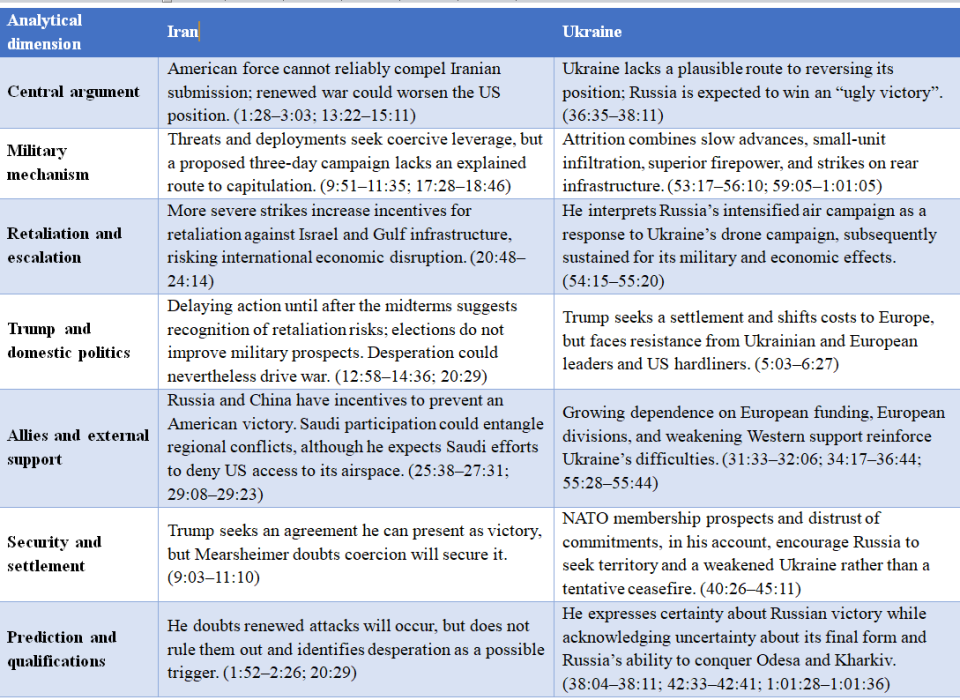
Prof. Mearsheimer’s central argument is that American military superiority does not automatically translate into achievable political objectives. He contends that Trump recognizes these constraints, interpreting postponed attacks on Iran, refusal to rescue Saudi Arabia, and burden shifting over Ukraine as evidence of strategic limitations rather than confidence in decisive military solutions.
Regarding Iran, he distinguishes coercive threats from actual warfare. Military deployments may strengthen bargaining signals, but he doubts they can compel Iranian concessions. His principal criticism is the absence of a credible “theory of victory”: a short bombing campaign offers no convincing explanation of how Iran would capitulate rather than retaliate.
Escalation therefore dominates his analysis. Strikes could provoke attacks on regional infrastructure, deepen economic disruption, and entangle neighboring states. Electoral timing cannot remove these structural dangers, although desperation might override restraint. However, inferring strategic restraint from delay risks overstating what observable behavior reveals about Trump’s intentions.
On Ukraine, he predicts Russian victory through attrition, firepower, infrastructure destruction, and declining Western support. He links territorial expansion to NATO and unreliable commitments. Yet security incentives do not establish inevitable outcomes or exclude alternative motives; his certainty outruns the evidence presented and marginalises Ukrainian agency and Russia’s responsibility.
Comparison: Mearsheimer’s Arguments on Iran and Ukraine
BUILDING THE BRIDGE! | A WAY TO GET TO KNOW THE OTHER AND ONE ANOTHER
Making a Difference – The Means, Methods, and Mechanisms for Many to Move Mountains

Photo Credit: Abraham A. van Kempen, our home away from home on the Dead Sea
By Abraham A. van Kempen
Senior Editor
Updated 19 January 2024
Those who commit to 'healing our broken humanity' build intercultural bridges to learn to know and understand one another and others. Readers who thumb through the Building the Bridge (BTB) pages are not mindless sheep following other mindless sheep. They THINK. They want to be at the forefront of making a difference. They're seeking the bigger picture to expand their horizons. They don't need BTB or anyone else to confirm their biases.
Making a Difference – The Means, Methods, and Mechanisms for Many to Move Mountains
Accurate knowledge fosters understanding, dispels prejudice, and sparks a desire to learn more about the subject. Words have an extraordinary power to bring people together, divide them, forge bonds of friendship, or provoke hostility. Modern technology offers unprecedented possibilities for good, fostering harmony and reconciliation. Yet, its misuse can cause untold harm, leading to misunderstandings, prejudices, and conflicts.
A Free Trial for Life – SUBSCRIBE NOW!

• It's quick and straightforward.
• We won’t ask for your credit card number.
• Just enter your e-mail address to receive your complimentary free-for-life subscription to our newsletter.
• Please include your First and Last Name.
• We won’t share or sell your e-mail address.
_________________________
Related Articles Recently Posted on www.buildingthebridgefoundation.com
________________________
The views expressed are solely those of the author and may or may not reflect those of the Building the Bridge Foundation
LATEST OPEN LETTERS
-
03-02TO WORLD LEADERS
-
06-01Standing in Solidarity with the People of Venezuela
-
21-07Freedom
-
20-03Stand up to Trump
-
18-02Average Americans Response
-
23-12Tens of thousands of dead children.......this must stop
-
05-06A Call to Action: Uniting for a Lasting Peace in the Holy Land
-
28-05Concerned world citizen
-
13-02World Peace
-
05-12My scream to the world
VIRTUAL POST OFFICE
PETITIONS
LINKS
DONATION
Latest Blog Articles
-
29-10Our Friday News Analysis | What the World THINKS Now!
-
28-10Our Wednesday News Analysis | Israel’s objectives unlikely to shift as a result of election
-
27-10Israel’s objectives unlikely to shift as a result of election
-
27-10Silencing Palestine: America’s Shameful History of Repression Continues
-
27-10A New Israeli Government Must Make Arabs Partners, Not Enemies
-
26-10Our Monday News Analysis | What the World THINKS Now!
-
15-10Our Friday News Analysis | What the World THINKS Now!
-
14-10Our Wednesday News Analysis | Navi Pillay, head of UN commission that accused Israel of genocide, wins Nobel Peace Prize
-
13-10Navi Pillay, head of UN commission that accused Israel of genocide, wins Nobel Peace Prize
-
13-10No state has a ‘right’ to exist – least of all an apartheid, genocidal state like Israel
-
13-10‘By the Way, the World is Not Stopping Us’: The Secret of Israel’s ‘Success’
Latest Comments
 One of the most important and illuminating articles that I …
Comment by Benjamin Inbaraj-
And what's wrong here?
After all, there is the homeland …
Comment by Isac Boian -
Does this reinforce or deny my argument that Israel is …
Comment by Edward Campbell -
Many 'say' they support the Palestinian cause but do little …
Comment by Philip McFedries -
The UN is strangled by the "war for profit" cabal …
Comment by Philip McFedries -
I can't read the printing on the map.
Comment by Philip McFedries -
Good news!
Comment by Philip McFedries
COMMENTS
This article has 0 comments at this time. We invoke you to participate the discussion and leave your comment below. Share your opinion and let the world know.