 NEWSLETTER
The Friday Edition
Our Friday News Analysis | What the World Reads Now!
Helping to Heal a Broken Humanity (Part 105)
The Hague, 17 July 2026 | If you know of a decisive story, tell the world! We're still searching.
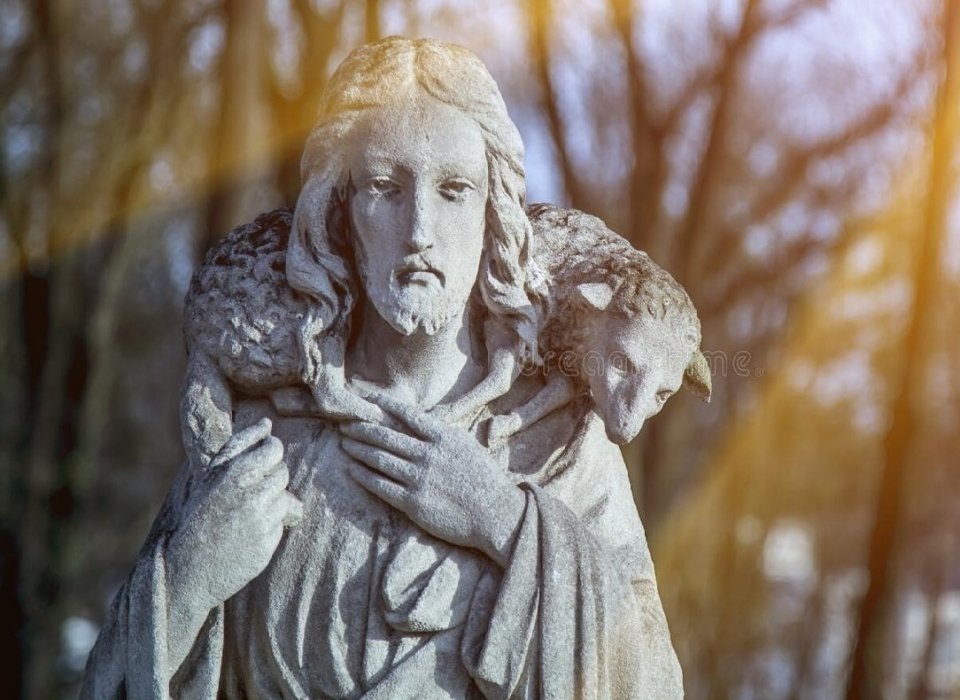
The Evangelical Pope | Mistaken Ideologies Mislead Humanity
Mistaken ideologies mislead humanity.
Terror and aggressiveness exacerbate the pitiable social tensions and violently provoke fierce confrontations.
Evil is never a path to good.
Focus on doing good and building a better world fit for all.
Saint Pope John Paul II
Ayacucho, Peru, 3 February 1985

Building the Bridge Foundation
This week’s reflection: “Mistaken Ideologies Mislead Humanity”
Click here for Part 65
Click here for Part 64
In his final remarks, Ramzy Baroud argued that Palestinian liberation must prioritize ending genocide before debating future political arrangements.
.png)
Palestinian author and journalist Ramzy Baroud. (Illustration: Thinking Palestine)
For Baroud, the representative Palestinian is not found in diplomatic halls or elite institutions, but in the lived struggle of the people.
He named Dr. Hussam Abu Safiya as one such figure.
And then he offered another image:
“A small child right now, somewhere in Gaza in the displacement camps, carrying twice,
if not three times, his weight in barely drinkable water to help his family survive in a tent.”
“That child,” Baroud said, “also represents me.”
At the Second Jewish Anti-Zionist Congress in Dublin, Palestinian author and journalist Ramzy Baroud delivered one of the most forceful interventions of the gathering, warning that debates over future political formulas for Palestine must not eclipse the immediate reality of genocide, displacement and resistance.
“It is very important for Palestinians—especially those from Gaza, but all Palestinians—to tell you what we think our priorities are right now,” he said.
For Baroud, the question was not whether visions such as decolonization, a single democratic state or restorative justice matter. Rather, it was whether such discussions can remain meaningful while Palestinians are being killed, starved and erased in real time.
Editorial | Tax Payers Beware
By Abraham A. van Kempen
10 July 2026
This week, journalist Rick Sanchez (1958), host of the Sanchez Effect on RT, introduces his daily audience of five (5) million viewers worldwide to the primary players in the Industrial-Military Complex. Ricardo León Sánchez de Reinaldo, born on July 3, 1958, also known as Rick Sanchez, is a Cuban-American journalist, radio host, author, and anchor before hosting the Sanchez Effect. He has worked with MSNBC and CNN and is a Fox News contributor and host on various U.S. radio talk shows.
Although he entirely overlooked the most significant group of ‘players’ (which I will explain later), here is a list of the main figures in the Industrial-Military Complex that he will talk about on his show, featured in this edition below:
- Greedy bankers who finance the research, development, and production of weaponry.
- Unscrupulous, democratically elected politicians, the neocon artists, who vote in the halls of justice to borrow and repay (with the taxpayers’ money) the loans financed by the greedy bankers.
- The thoughtless manufacturers of the killing machines who believe ‘lives don’t matter’ as long as it pays for their fleet of private jets.
- Producers of various energy sources, often at the center of conflicts, who frequently claim to fight for Holy Goodness—to promote humanity's well-being—a line many well-meaning citizens wholeheartedly get sucked into.
- Another segment within the Military-Industrial complex consists of profitable mega-construction companies such as Bechtel, Arcadis, and Halliburton. They clear the destruction caused by military operations and, when needed, reconstruct cities or even entire countries.
- Then, inevitably, a team of academics, public relations experts, and numerous marketers disseminate supposedly accurate facts and figures nationwide to influence public opinion and generate consent.
- Ultimately, the corporate-owned mass media consistently broadcasts messages into taxpayers' homes to promote awareness and acceptance of the goals and strategies of the elitists, who are a core component of the Military-Industrial Complex.
Who are the real stakeholders of the Military-Industrial Complex? The taxpayers!
Many individuals, especially in the U.S. and Western Europe, lack awareness of current issues: 80 percent are indifferent, and the remaining 20 percent tend to reinforce their biases when consuming news. As a result, only about 3 percent might truly understand what is happening. For example, in the United States, roughly 9 million people fully realize that each person's share of the national debt is $100,000, or $400,000 for a family of four. Only a handful grasp why a house that was worth $400,000 in 1978 now sells for $12 million. It’s not because of any population explosion. It’s due to fiscal mismanagement, fueled by financing wars on the national credit card, which has skyrocketed the national debt. Simply stated, the dollar is worth less.
Why don’t taxpayers pull the plug? Let this tidbit of news sink in. Read future editions on this core democratic value.
Before I reveal to you the name of the Statesman of the 21st century – it isn’t President Trump – I’d like you to realize that the U.S. is certainly a party to Western hegemony, but it is by no means the leader of the Collective West, despite how it appears with its almost invincible military arsenal. Here are three points to consider as food for thought:
- No one, not one world leader, including President Trump, can stop Israel and Ukraine. He tries. But Europe basically tells him to fly a kite.
- Also, have you noticed that, especially in recent times, the United States hardly executes its own foreign policy? US foreign policy almost always mirrors Eurocentric interests, often even in conflict with American national interests, as though the ‘bumbling fool’ has no mind of its own.
- Think this through? Whose interests is the United States fighting for in Eastern Europe, in the Middle East, and in East Asia?
The United States, alone, can’t stop the European elites from playing Russian Roulette with our lives. Ukraine and Israel, European proxies with negative GDPs, hold more influence than the United States, which is currently fighting for its soul across three regions: West Asia (the Middle East), Eastern Europe, and East Asia; for whom and for what? Certainly, the United States, with a negative GDP—$30 trillion GDP minus $37 trillion national debt resulting in a deficit of -$7 trillion—also functions as a proxy for Europe, in fact, being the most prominent of Europe’s whipping boys. President Trump intends to correct this equation.
Why is the U.S. dependent on Europe? We’ll discuss this more in future editorials.
Last week I cited excerpts of President Trump’s speech in Saudi Arabia on 25 May 2025:
“In the end, nation-builders wrecked more nations than they built, and interventionists intervened in complex societies they didn't understand. They told you how to do it but had no idea how to do it themselves,” Trump said.
Peace, prosperity, and progress ultimately come from embracing your heritage and traditions, not rejecting them.
“Before our eyes,” he said, “a new generation of leaders is overcoming old conflicts, shaping a future where the Middle East is characterized by commerce instead of chaos. It exports technology rather than terrorism, with diverse peoples collaboratively building cities instead of destroying each other.
The global community should recognize that this transformation didn't come from Western interventionists or NGOs building landmarks in Riyadh and Abu Dhabi, or from efforts in Kabul and Baghdad, which failed despite trillions spent.
“The people of the region have contributed to creating a modern Middle East. These lifelong residents are building sovereign countries, following their visions and shaping their futures," Trump stated.
It was a blow to the stomach, a declaration of war, and a challenge to European and Israeli dominance, altering the geopolitical landscape. Trump seems to spin everyone into a centrifuge of ambiguities.
Mr. Trump’s pivotal speech in Saudi Arabia, along with President Putin’s speeches in Berlin (2001) and Munich (2007), foreshadow today’s multipolar world order, notwithstanding President Xi Jinping's speech at the Shanghai Cooperation Organization on 1 September 2025, “To Improve Global Governance.”
The world rejects the 600-year-old Eurocentric obsession of:
What is mine is mine.
What is yours is mine also.
It’s either my way or the highway.
If you’re not for us, you’re against us.
If you don’t do it our way, you’re dead meat.
So, who is the Statesman of the 21st Century?

President Vladimir V. Putin!
Why might President Trump be seen as one of the nation's greatest presidents? Many think he has the potential to reduce Western dominance over the U.S., offering hope and prompting change.
Except, President Trump seems crazy. Is he for real, or is it an act? He’s either a genius or nuts. In future editions, we’ll explore this dichotomy. You’ll be the judge.
I think he knows precisely what he’s doing and why. Maybe I’m wrong. What if I’m right?
To be continued on Monday, 20 July 2026.
Enjoy your weekend,
Abraham A. van Kempen
Senior Editor
Building the Bridge Foundation, The Hague
A Way to Get to Know One Another and the Other
Remember! Diplomacy is catalytic—transformative —while military action is cataclysmic—destructive and catastrophic.
When faced with the options to be good, bad, or ugly, let’s build bridges, not burn them. After all, mutual deterrence reigns.
DISCUSSING THE IRAN WAR IN INDIA
- On 15 July 2026, I appeared on CNN-News18, a prominent Indian news channel.
- The discussion mainly focused on the Iran war and its future prospects.
- I emphasized that President Trump has no chance of winning this war, and that any escalation will only worsen the situation.
- The same factors that led Trump to sign the Memorandum of Understanding on 17 April 2026 — essentially a surrender document — remain influential.
- Trump is now trapped with no escape. In summary, the decision to attack Iran on 28 February 2026 stands as one of the gravest errors in US foreign policy history.

Watch the Video Here (24 minutes, 41 seconds)
CNN India News-18
16 July 2026
John Mearsheimer: "Trump Must Concede Defeat" In Iran Conflict | US-Iran Crisis Explained| EXCLUSIVE
Political scientist John Mearsheimer examines the intensifying US-Iran conflict, noting that President Donald Trump faces a complex strategic dilemma amid mounting tensions in the Middle East.
He emphasizes the significance of the Strait of Hormuz, Iran's regional role, and the wider impact of military escalation.
Mearsheimer suggests that this conflict might extend beyond the Middle East, possibly hastening changes in the global power dynamics involving China and Russia.
RETIRED US NAVY CAPTAIN: ‘WE COULD NOT ACCEPT A 1% THREAT OF THE IRANIAN REGIME BUILDING A NUCLEAR WEAPON.’
In this edition of the Sanchez Effect, renowned journalist Rick Sanchez (1958) presents his daily global audience of five million viewers with the key players of the Industrial-Military Complex.
In the second part, Rick Sanchez engages in an intellectual exchange with Iranian-born, retired U.S. Navy captain Armen Kurdian, a Congressional candidate, on the U.S. stance toward Iran.

Watch the Video Here (54 minutes, 36 seconds)
HomeShowsSanchez Effect
14 July 2026
In this episode of RT’s Sanchez Effect, Rick takes on the role of a whistleblower by exposing corruption schemes involving major American companies. He has a history of working with US media corporations connected to these schemes. Later, RT's European correspondent Chay Bowes joins Rick, and together they discuss the EU’s ‘new Orban,’ Bulgarian Prime Minister Rumen Radev, who has opposed several anti-Russian sanctions and distanced himself from the pro-Ukrainian Coalition of the Willing.
In the second part, Rick talks with retired Navy captain Armen Kurdian, a Congressional candidate, about the US's stance on Iran. Kurdian supports Washington’s policies, justifies Operation Epic Fury, and describes Iran as an evil regime, while Rick counters with facts. Kurdian was in Iran in 1975 before the Islamic Revolution and regards that government as democratic. Rick responds that he was also in Iran in 2026, emphasizing that democracy has always been present in the country.
RICHARD SAKWA: RUSSOPHOBIA IS LEADING US TOWARD WAR
Richard Sakwa, a professor of Russian and European Politics at the University of Kent, is considered Europe's foremost expert on Europe. He explores the history of Russophobia and its ongoing impact on European security.

Watch the Video Here (52 minutes, 50 seconds)
Host Prof. Glenn Diesen
Substack.com
13 July 2026
Europe Cannot Think Clearly About Russia If It Refuses to Listen
By Abraham A. van Kempen
17 July 2026
Europe’s Russia debate has become dangerously stupid. That is the blunt charge running through this interview with Professor Richard Sakwa. Not that Russia is innocent. Not that Moscow’s choices should be excused. But that the West has allowed criticism of Russia to harden into something older, lazier, and more politically useful: Russophobia.
The word is imperfect.
A phobia suggests fear. What Sakwa describes is closer to permanent suspicion dressed up as moral clarity. Russia is not treated as a difficult state with interests, fears, factions, and history. It is treated as Europe’s designated villain: guilty before the evidence is heard, barbaric before the argument begins.
That is why the interview begins, unexpectedly but usefully, with Richard Cobden in 1836. Cobden warned that Britain’s anti-Russian panic was feeding militarism and empire. Almost two centuries later, the lesson still bites. Great powers can be threatening, and fear of them can still be exaggerated, weaponized, and sold as virtue.
The interview’s strongest target is the lazy binary that now passes for strategic thought. Russia equals autocracy. The West equals democracy. Ukraine equals Europe. Russia equals Asia. These slogans are easy to repeat and hard to think through. They turn history into a chant and diplomacy into a loyalty test.
Sakwa’s point is not that Russia has no agency or responsibility. It is that responsibility is not the same as simplification. Earlier diplomats such as George Kennan and James Baker could hold two thoughts at once: Russia could threaten its neighbors, and Russia could also have legitimate security concerns. Today, that kind of double vision is treated almost as treason.
This is where Ukraine matters most. The war is real, brutal, and central. But it is also the endpoint of a larger failure: the collapse of Europe’s post-Cold War security imagination. The Charter of Paris, the OSCE, and the promise of indivisible security were supposed to prevent a new division of the continent. Instead, Europe rebuilt the line and then acted shocked when the line caught fire.
The most uncomfortable part of the interview is its treatment of Poland, Ukraine, and the Baltic states. Sakwa does not dismiss their historical fears. He insists they are real. But real grievances can still become bad strategy. If a security order is built on old wounds, it will not heal Europe. It will keep the wound open and call the bleeding deterrence.
The warning about language is just as sharp. Once Russians are casually described as “orcs,” barbarians, or genetically corrupted, the debate has left policy and entered identity hatred. Europe has a long memory when it wants to. On this point, it appears to have chosen amnesia.
This is not a brief for Moscow. It is a brief against stupidity. Russia can be wrong. The West can be wrong. Ukraine can deserve sympathy. NATO can still have made grave mistakes. These statements do not cancel one another out. They are the beginning of adult politics.
The final message is severe because the stakes are severe. Europe does not need more moral theater. It needs memory, diplomacy, and the courage to hear arguments it dislikes. If Russophobia means anything in this interview, it means the refusal to see Russia clearly. And when great powers stop seeing clearly, wars become easier to justify, harder to end, and far easier to expand.
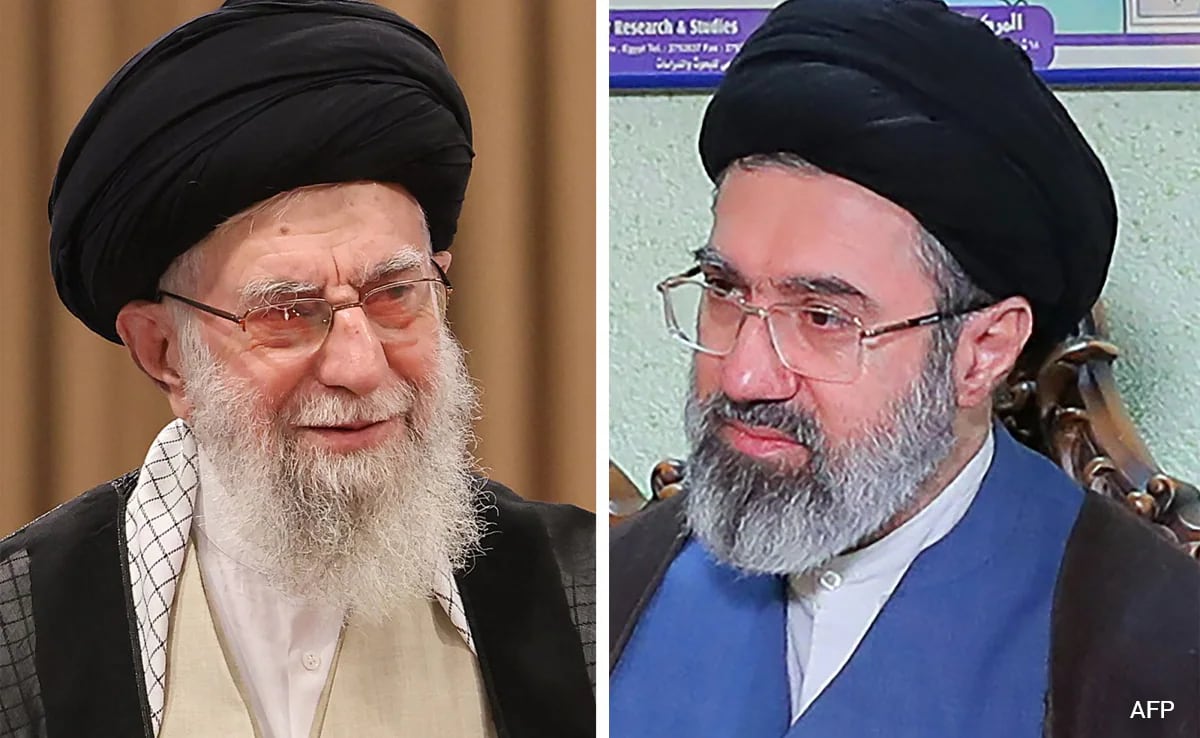
WHY IRAN'S NEXT SUPREME LEADER MOJTABA KHAMENEI DISAPPEARED? THE TRUTH BEHIND HIS DISAPPEARANCE
Iran's New Leader Hasn't Spoken in Four Months — Here's the Real Reason Why.
Is it
- a security strategy
- a political calculation
- or something far more significant?
Topics Covered
- Mojtaba Khamenei explained
- Iran's new Supreme Leader
- Ali Khamenei succession
- Iran political leadership
- Middle East geopolitics
- Shia political tradition
- Iran-US relations
- Iran-Israel conflict analysis
- Regional diplomacy and security
- International affairs and global politics
Watch the Video Here (21 minutes, 59 seconds)
Host: Dr. Jason Fung
Cross-Border Love and Dr Jason Fung Tips
15 July 2026
This analysis explores Mojtaba Khamenei, who took leadership after Ali Khamenei's death, and why his absence from public view has attracted worldwide interest.
This video discusses Iran's leadership change, the Supreme Leader's role, political issues, Shia practices, security, regional diplomacy, and their impact on negotiations, military strategies, and Middle Eastern stability.
We analyze how leadership silence impacts decision-making during conflict, why analysts interpret it differently, and its influence on Iran's future relations with the US, Israel, Russia, China, and neighboring nations.
If you're interested in factual geopolitical analysis, world affairs, international relations, and Middle East politics, this video offers a detailed overview of a unique leadership scenario in recent geopolitics.
CHAS FREEMAN: ALL-OUT WAR WITH IRAN & DARK FUTURE FOR ISRAEL
- Ambassador Freeman previously served as Assistant Secretary of Defense, receiving the Department of Defense's top public service awards for his work in developing a NATO-focused European security framework after the Cold War and restoring defense and military ties with China.
- He also served as U.S. Ambassador to Saudi Arabia during Operations Desert Shield and Desert Storm.
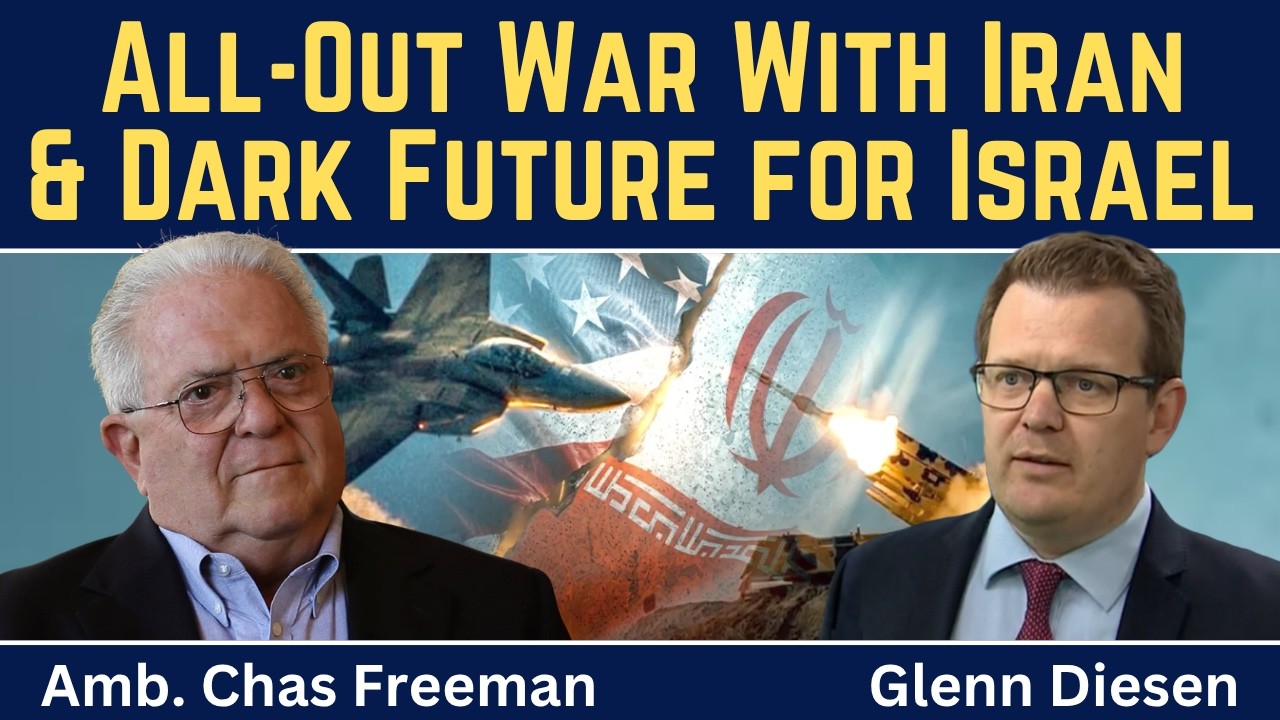
Watch the Video Here (50 minutes, 32 seconds)
Host Prof. Glenn Diesen
Substack.com
13 July 2026
Hormuz: The Gate That Humiliates Empires – How Iran’s leverage over the world’s energy gateway is challenging U.S. power, unsettling Israel, and forcing the Gulf to rethink its security future
By Abraham A. van Kempen
17 July 2026
The Strait of Hormuz is no longer merely a passage for tankers. It is a narrow mirror in which the old powers of the Middle East see their limits. Chas Freeman’s argument is spare: America has the fleets, Israel the certainty, and the Gulf monarchies the wealth. Iran has the shoreline, the patience, and the capacity to make pressure feel endless.
That is the quiet terror of this crisis. Iran does not need a grand victory. It needs only to endure, disturb, and raise the price of every threat against it. Hormuz gives Tehran that lever. A thin seam of water carries a vast share of the world’s energy traffic, and even a tremor there travels quickly through markets, ministries, and military headquarters.
Freeman’s sharpest insight is that distance is destiny’s arithmetic. Iran fights from its doorstep; America arrives from over the horizon. Tehran can spend little to complicate much. Washington must answer with ships, bases, interceptors, logistics, and promises that grow heavier each time they are repeated. This is the slow accounting of empire.
The danger lies in the absence of a clean exit. Washington wants the strait open without appearing diminished. Tehran wants recognition without capitulation. Israel wants Iran contained without paying the full price. The Gulf states want calm while living beside the instruments of escalation. Each speaks of security; together they compose insecurity.
The nuclear question darkens the horizon. If Iran stays below the threshold, it remains exposed. If it crosses it, others will measure their own shadows against the bomb. Saudi Arabia, Turkey, Egypt, and others will not accept permanent imbalance. The wiser path is restraint joined to deterrence, yet wisdom often arrives late and finds the door already burning.
Israel occupies the center of Freeman’s indictment. Its faith in military superiority is so deep that diplomacy can seem like surrender. The aim is to keep Iran confined, Hezbollah weakened, and Washington bound to Israel’s calendar. But dominance shows its costs: criticism abroad, dependence on American power, and a loneliness no arsenal can cure.
Turkey’s rise shows the regional floor shifting. Israel once moved through a divided neighborhood, where Iran, the Arab states, and Turkey mistrusted one another enough to preserve the old design. Now anger at Israeli policy is drawing unlikely currents together. Turkey may not seek war, but it is too large and too conscious of its history to remain a spectator forever.
The Gulf states understand the trap. For decades, American protection resembled insurance. Now it can resemble a lightning rod. If U.S. bases draw fire yet cannot guarantee safety, Gulf rulers will hedge faster, speak to Iran, broaden their partnerships, and quietly concede that dependence on Washington is no longer a shelter. It is exposure.
This is why the old Middle Eastern order appears fatigued. The Abraham Accords promised architecture: normalize with Israel, isolate Iran, and let Washington hold the roof in place. Hormuz reveals the fragility beneath the drawing. Iran can trouble the world’s energy artery, Israel can lose diplomatic altitude, and the Gulf can learn that protection by a superpower is not safety.
Freeman’s analysis matters because it removes the theater from power. Carriers, sanctions, speeches, and strikes still count, but they are not the whole measure. Geography counts. Endurance counts. Legitimacy counts. In Hormuz, the lesson is ancient: the hand with the largest sword is not always the hand that controls the gate. And when that gate narrows to a blade of water, even empires must listen for the sound of it closing.
That is why Hormuz remains the gate that humiliates empires.
SCOTT RITTER: RUSSIA IS WINNING THE WAR - AND WINNING DECISIVELY
Scott Ritter is a former Major, Intelligence Officer, US Marine, and UN Weapons Inspector. Ritter discusses the intense war propaganda by NATO to sell the narrative of a victory in Ukraine, even as Russia's position is improving significantly.
- From a policy-analysis perspective, the interview suggests that decision-makers should distinguish between tactical disruption and strategic change.
- Ukrainian drone strikes may impose costs and shape perceptions, but the speaker argues that they have not yet produced evidence of a decisive shift in Russia’s military position, domestic stability, or willingness to continue the war.
- The main policy implication is that Western strategy should not rely on assumptions of imminent Russian weakness.
- If Ritter’s assessment is even partly accurate, NATO and Ukraine face a long-duration conflict in which industrial capacity, force regeneration, escalation management, and information credibility will matter more than symbolic announcements or isolated battlefield successes.
- At the same time, the interview’s claims require external verification before they can support firm policy conclusions.

Watch the Video Here (41 minutes, 10 seconds)
Host Prof. Glenn Diesen
Substack.com
14 July 2026
Prof. Glenn Diesen’s discussion with Scott Ritter, a former Major, Intelligence Officer, US Marine, and UN Weapons Inspector, presents a forceful assessment of the Russia–Ukraine war that the conflict is strategically stable in Russia’s favor despite Western narratives suggesting Russian vulnerability.
- The central thesis is that Ukraine’s visible drone successes and media attention around Russian infrastructure strikes have been misread as evidence of a strategic shift.
- Ritter instead frames them as tactical disruptions amplified by an information war designed to convince Western audiences and segments of Russian society that Moscow is weakening.
- A major theme is the distinction between battlefield effects and strategic outcomes.
Ritter recognizes that Ukrainian drones are hazardous, disruptive, and occasionally effective, yet he consistently asserts that Russia has adapted by enhancing layered air defenses, employing counter-drone strategies, utilizing electronic warfare, and leveraging intelligence, surveillance, and reconnaissance capabilities. He states that Russia is progressively capable of locating and destroying Ukrainian drone operators, command centers, factories, and support infrastructure. According to this view, Ukraine’s drone efforts cause only inconvenience and short-term damage, without significantly impacting the overall course of the war.
The interview highlights concerns about information warfare. Ritter criticizes analysts and media for relying on anecdotal evidence, Russian TV, social media, or isolated incidents to claim Russia is near collapse. He dismisses reports of fuel shortages, refinery strikes, or unrest threatening Putin’s rule, emphasizing Russia's cohesive political system, Putin’s strong position, and societal peace. His view is based on visits to Russia and talks with officials, military, and experts.
NATO’s role is regarded as important but strategically limited. Ritter claims that Western backing, new production plans, and summit promises are mostly symbolic or slow to materialize, offering little immediate impact on the battlefield. He describes NATO as fragmented, industrially restricted, and unable to deliver decisive capabilities to Ukraine swiftly. Additionally, he indicates that Russia has expanded its targeting to include dual-use infrastructure, driven by increased NATO engagement, while still avoiding direct strikes on NATO countries to prevent escalation that could jeopardize Russia's current strategy.
The analysis is rhetorically compelling. Ritter confidently asserts specific casualty figures, drone interception success, Russian political stability, NATO’s vulnerabilities, and Ukraine’s likely defeat. His argument remains consistent: Russia is adapting, Ukraine is losing ground, NATO is defensively posturing, and the Kremlin prioritizes long-term stability over immediate escalation.
Overall, the interview advances a clear strategic narrative: Ukraine may continue fighting with Western support, but Russia is portrayed as possessing the initiative, endurance, and political cohesion to continue indefinitely until its objectives are met.
Key Quotes
- “It’s actually extremely stable and in favor of Russia.”
- “There’s an information war taking place today that’s unprecedented.”
- “The purpose of this information war is to promote the idea that Ukraine somehow has stolen the strategic initiative away from Russia.”
- “Life is complicated by these drones. There’s no doubt about that.”
- “The Ukrainians are very good at what they do. Very good at what they do.”
- “Ukraine’s good, but we’re better, and we’re winning.”
- “Every Ukrainian problem presented has come up with a Russian solution.”
- “The drone war is being won by Russia.”
- “Nothing NATO is doing is moving the needle on the battlefield.”
- “Putin is not going to attack NATO unless NATO does something precipitous.”
- “The only voice that matters is Vladimir Putin.”
- “Russia will do this forever.”
- “Russia has never put a calendar date up there. It’s all based upon operational objectives.”
- “It will take as long as needed.”
WHY IS ZELENSKY IN PARIS? WHAT HE LEFT UNFINISHED IN KYIV | PROF. JIANG XUEQIN
In this video, we examine Zelensky's decision to leave Kyiv mid-reshuffle to fly to Paris for the "coalition of the willing" summit — but why leave the job unfinished?
In this video:
- the real reasons behind Ukraine's abrupt government shake-up
- the manpower crisis behind the Lviv protests,
- the truth about Ukraine's drone war against Russia
- the Odesa blockade squeezing Kyiv's economy
- how the collapsing US-Iran ceasefire is draining resources away from Ukraine at the worst possible time.
⚠️ DISCLAIMER: This content is for educational and informational purposes only. It does not constitute political, financial, or military advice. We try to remain neutral, factual, and responsible in our reporting.
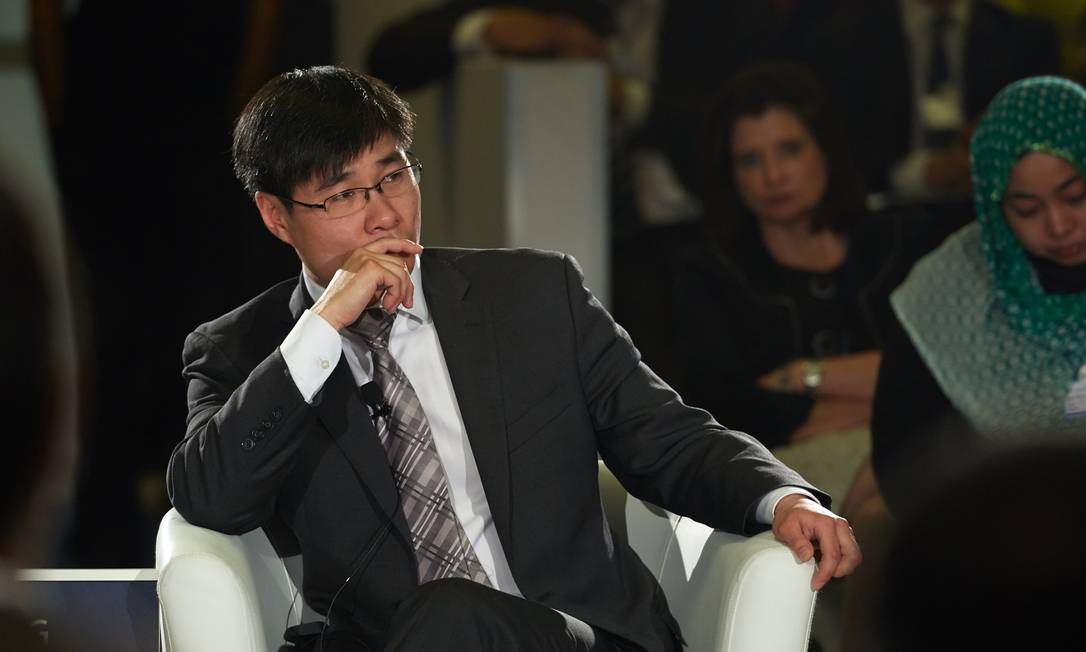
Watch the Video Here (21 minutes, 00 seconds)
Host: Prof. Jiang Xueqin
POWER OF THOUGHTS
15 July 2026
Ukraine’s Support Problem Is Getting Bigger
Ukraine’s challenge now extends beyond the battlefield, with diminishing maneuvering space, increased internal pressure, and a distracted West preoccupied with another Gulf crisis.
Volodymyr Zelensky’s recent Paris visit involved engaging with Western leaders, attending a “Coalition of the Willing” meeting, and reiterating calls for air defenses, funding, and military support. While Ukraine needs these, the meetings seem more symbolic than effective.
Future aircraft promises highlight the issue. While French Rafales and Swedish Gripens sound impressive, their delivery delays in 2028 mean they won't ease Ukraine's pressure soon. Western pledges maintain hope but often don't shift the balance quickly.
Kyiv faces internal turmoil as Zelensky initiates a partial government reshuffle, possibly indicating tension within a wartime government, especially when officials are dismissed without clear replacements.
The core issue is manpower. Ukraine has motivated soldiers and a strong national spirit, but maintaining enough front-line personnel is harder. Resistance to conscription grows, especially in Lviv, a region of patriotic importance. This doesn't mean Ukraine is near collapse; it shows war fatigue is a real problem.
The air war complicates Ukraine's efforts, as Russia tests defenses. While drones remain effective, the public’s focus on deep strikes may hide that Russia has more routes, ports, and resilience. Ukraine’s infrastructure is also more fragile and vulnerable.
Strikes on Odesa, rail, fuel, and ports are crucial. They do more than hit targets; they strain Ukraine's support systems. Even if Ukrainian attacks on Russian shipping succeed, they might not impact Moscow as much.
Then comes the Gulf. If tensions with Iran escalate, Washington may need to shift focus. Resources for Ukraine—air defenses, munitions, ships, leaders—could be redirected to the Middle East. Even threats near Hormuz or the Red Sea influence Western capitals.
The real threat to Kyiv is slow pressure buildup, which is harder to endure than short-term crises. Ukraine can handle tough weeks, but an ongoing population decline, weakened air defenses, strained logistics, delayed weapons, and a distracted patron make it more difficult.
The West claims to support Ukraine, but genuine support needs capacity, timing, and focus. Kyiv requires prompt aid, yet supporters often act slowly and are distracted by other issues.
Ukraine and the Gulf now share a strategic focus. As tensions in the Middle East rise, Washington and Europe find it harder to prioritize Ukraine. Zelensky can visit capitals and seek support, but the crucial question is if his allies can respond swiftly.
‘THE VEIL HAS BEEN TORN TO SHREDS’: MY KEYNOTE AT JAZIC DUBLIN
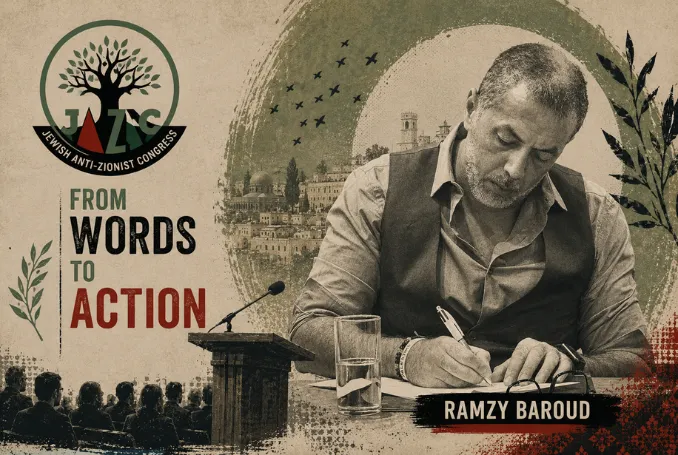
By Ramzy Baroud
Ramzy Baroud
13 July 2026
Dear friends,
I had the honor of delivering the keynote address at the Second Jewish Anti-Zionist Congress (JAZIC) in Dublin. It was a remarkable gathering that brought together Jewish anti-Zionist organizations, Palestinian voices, academics, activists, trade unionists, and political leaders from around the world, united by a shared commitment to transforming solidarity with Palestine into meaningful collective action.
I wanted to share the full text of my remarks with you because they reflect many of the ideas I have been exploring in my recent writing and public lectures.
Thank you, as always, for supporting my work. Your subscriptions make it possible for me to continue writing, researching, traveling, and participating in spaces like JAZIC, where ideas are transformed into meaningful action.
I hope you find the speech meaningful, and I look forward to reading your thoughts in the comments.
In solidarity,
Ramzy Baroud
...
Sisters, brothers, friends, comrades,
We have arrived at a moment of absolute, historic clarity.
The veil has not just been lifted; it has been torn to shreds.
Now, we know all that can possibly be known. There are no more excuses of ignorance.
No more debates to be had.
No more space for moral ambiguity.
We have seen, with our own eyes, what Zionism is truly capable of doing.
We have seen it reduced to its purest, most violent essence:
The systematic extermination of an indigenous population.
The targeted assassination of doctors, journalists, and poets.
The intentional flattening of hospitals, schools, and neighborhoods.
The calculated weaponization of starvation.
And the deliberate erasure of entire family lineages from the civil registry.
It is no longer a theoretical debate for academic journals.
It is a live-streamed, industrialized atrocity.
It has laid bare the core of a settler-colonial ideology—one that demands the elimination of the native to cement its own existence.
And as we watched this machinery of death,
We saw the limits of the West's immorality.
We witnessed the complete, unmitigated collapse of Western liberal values.
The very governments that have spent decades lecturing the globe on human rights, on democracy, on the international rule of law, and the sanctity of human life...
They became the active financiers.
The logistical suppliers.
And the diplomatic shields for a genocide.
We saw that for the ruling elites in Washington, London, Paris, and Berlin, international treaties are not a universal shield to protect the vulnerable. They are a political weapon to be wielded selectively against enemies, and discarded completely to protect an imperial outpost.
Worse still, we have seen the silence of allies and the betrayal of friends.
We saw those who whispered their hollow solidarity in private choose cowardice and complicity in public.
We saw international bodies stutter, delay, and hide behind procedural jargon while children were being pulled from the rubble piece by piece.
We saw a betrayal that cut deep into the consciousness of the global majority—a refusal by established institutions to speak the plain truth because speaking that truth carried a professional or political cost.
But in the face of that profound darkness,
We have seen something else.
We have seen the courage of the Palestinians.
We have witnessed an unbound resistance.
A sumud that defies the very laws of physics and human endurance.
We have seen a people who, when buried under mountains of Western-made concrete, pulled themselves out of the dust and insisted on living.
On sharing their remaining bread.
On rescuing their neighbors.
And on documenting their own reality.
We have seen a courage that is generative, inherited, and absolute—a refusal to succumb to despair or to accept the status of a defeated people.
And in this crucible of struggle, we have learned that religion does not need to be a repository of hate, a tool of sectarian division, or an opiate for the passive.
No.
For the Palestinian, faith has become the rapture of the human spirit to do the absolute impossible.
And for Palestinians, that impossible was to survive.
To exist.
To stay.
To look into the barrel of an empire’s tank amid total isolation and say: We will not leave; we belong to this soil.
Their faith is not a dogmatic retreat from the world. It is an active, revolutionary anchor that transforms the human spirit into a force more durable than any weapon manufactured by the military-industrial complexes of the West.
Through this historic crisis, we have discovered that the world is not divided the way the powerful told us it was.
It is not split along the artificial lines of North and South, East and West, black and white, or Arab and non-Arab.
Zionism sought to isolate Palestine. It sought to cage it within an orientalist framework as a localized, exceptional conflict.
But Palestine broke through those cages and re-mapped the moral geography of the planet.
Instead, we saw a new global alignment born out of pure moral conscience.
BUILDING THE BRIDGE! | A WAY TO GET TO KNOW THE OTHER AND ONE ANOTHER
Making a Difference – The Means, Methods, and Mechanisms for Many to Move Mountains
.jpg)
Photo Credit: Abraham A. van Kempen, our home away from home on the Dead Sea
By Abraham A. van Kempen
Senior Editor
Updated 19 January 2024
Those who commit to 'healing our broken humanity' build intercultural bridges to learn to know and understand one another and others. Readers who thumb through the Building the Bridge (BTB) pages are not mindless sheep following other mindless sheep. They THINK. They want to be at the forefront of making a difference. They're seeking the bigger picture to expand their horizons. They don't need BTB or anyone else to confirm their biases.
Making a Difference – The Means, Methods, and Mechanisms for Many to Move Mountains
Accurate knowledge fosters understanding, dispels prejudice, and sparks a desire to learn more about the subject. Words have an extraordinary power to bring people together, divide them, forge bonds of friendship, or provoke hostility. Modern technology offers unprecedented possibilities for good, fostering harmony and reconciliation. Yet, its misuse can cause untold harm, leading to misunderstandings, prejudices, and conflicts.
A Free Trial for Life – SUBSCRIBE NOW!

• It's quick and straightforward.
• We won’t ask for your credit card number.
• Just enter your e-mail address to receive your complimentary free-for-life subscription to our newsletter.
• Please include your First and Last Name.
• We won’t share or sell your e-mail address.
_________________________
Related Articles Recently Posted on www.buildingthebridgefoundation.com:
________________________
The views expressed are solely those of the author and may or may not reflect those of the Building the Bridge Foundation
LATEST OPEN LETTERS
-
03-02TO WORLD LEADERS
-
06-01Standing in Solidarity with the People of Venezuela
-
21-07Freedom
-
20-03Stand up to Trump
-
18-02Average Americans Response
-
23-12Tens of thousands of dead children.......this must stop
-
05-06A Call to Action: Uniting for a Lasting Peace in the Holy Land
-
28-05Concerned world citizen
-
13-02World Peace
-
05-12My scream to the world
VIRTUAL POST OFFICE
PETITIONS
LINKS
DONATION
Latest Blog Articles
-
15-10Our Friday News Analysis | What the World THINKS Now!
-
14-10Our Wednesday News Analysis | Navi Pillay, head of UN commission that accused Israel of genocide, wins Nobel Peace Prize
-
13-10Navi Pillay, head of UN commission that accused Israel of genocide, wins Nobel Peace Prize
-
13-10No state has a ‘right’ to exist – least of all an apartheid, genocidal state like Israel
-
13-10‘By the Way, the World is Not Stopping Us’: The Secret of Israel’s ‘Success’
-
12-10Our Monday News Analysis | What the World THINKS Now!
-
08-10Our Friday News Analysis | What the World THINKS Now!
-
07-10Our Wednesday News Analysis | The West wants Netanyahu gone - so Palestinians can be killed more quietly again
-
06-10The West wants Netanyahu gone - so Palestinians can be killed more quietly again
-
06-10Israel turns Gaza into largest ghetto in modern history, killing residents one after another as three-year genocide continues
-
06-10Analysis Europe's Boycott of Israel Is Rapidly Expanding – and It Won't Be Easy to Stop
Latest Comments
 One of the most important and illuminating articles that I …
Comment by Benjamin Inbaraj-
And what's wrong here?
After all, there is the homeland …
Comment by Isac Boian -
Does this reinforce or deny my argument that Israel is …
Comment by Edward Campbell -
Many 'say' they support the Palestinian cause but do little …
Comment by Philip McFedries -
The UN is strangled by the "war for profit" cabal …
Comment by Philip McFedries -
I can't read the printing on the map.
Comment by Philip McFedries -
Good news!
Comment by Philip McFedries
COMMENTS
This article has 0 comments at this time. We invoke you to participate the discussion and leave your comment below. Share your opinion and let the world know.