 NEWSLETTER
The Monday Edition
Our Monday News Analysis | What the World Reads Now!
Helping to Heal a Broken Humanity (Part 104)
The Hague, 13 July 2026 | If you know of a decisive story, tell the world! We're still searching.
.jpg)
Living Words of Saint Pope John Paul II – You Matter
Faith is not something to keep locked inside.
We are called to move, to reach out, to build bridges, and to bring hope where it is needed.
By doing so, you pave the way for a Europe
rooted in faith, dialogue, sharing, and responsibility for humanity.
Saint Pope John Paul II
Pastoral Visit to the Netherlands
Meeting with Young People of the Grand Duchy of Luxembourg
May 16, 1985

Building the Bridge Foundation
Click here for Part 64
Click here for Part 63
EDITORIAL | Western Autocracy/NATO – The Pits of Hell on Earth

By Abraham A. van Kempen
13 July 2026
The world is going through hell. War begets more war. For what? Peace through strength? Give me a break. If there's an oxymoron alive today, it's the arrogant Western claim of “Peace Through Strength.” Talking about an incontrovertible argumentum ad absurdum (Latin for "argument to absurdity"). Permit me to expound on this form of argument that traces back to Ancient Greek philosophy and has been used throughout history in both formal mathematical and philosophical reasoning, as well as in debate. In mathematics, the technique is called proof by contradiction. In formal logic, this technique is captured by an inference rule for reductio ad absurdum.
More broadly, proof by contradiction is any argument that establishes a statement by deriving a contradiction, even when the initial assumption is not the negation of the statement to be proved. In this general sense, proof by contradiction is also known as indirect proof, proof by assuming the opposite,[6] and reductio ad impossibile.[7]
The Argumentum ad Absurdum against ‘Peace Through Strength’ is that the statement is self-contradictory. Peace through strength connotes Peace Through Force – You do it our way, or you're dead meat.
That’s not peace.
Can Humanity Coexist Peacefully Through Prosperity, Kindness, and Humility?
What if we throw into the pot a cup of kindness, sweetened with spoonfuls of humility? Will it precipitate into a solution of peace or more war?
Let’s shift the narrative from 'Peace Through Strength' to ‘Peace Through Humility and Prosperity,' values rooted in Sacred Texts since ancient times. Consider these ideas in My Neighbor’s Faith: Stories of Interreligious Encounter, Growth, and Transformation, edited by Jennifer Howe Peace, Or N. Rose, and Gregory Mobley.
Humility is central to interfaith dialogue because it allows people to enter conversation as learners, not as judges or conquerors. In My Neighbor’s Faith, humility makes a genuine encounter possible: people recognize that their own tradition is meaningful, but their understanding of it remains partial and can be deepened through contact with others.
Humility plays several key roles:
- It opens people to listening. A humble person does not rush to correct, defend, or compare. They first try to understand another person’s lived faith.
- It challenges superiority. Dialogue requires giving up the assumption that one’s own community has nothing to learn from others.
- It reveals blind spots. Encounters with another tradition can expose prejudices, inherited fears, or narrow interpretations within one’s own faith.
- It protects difference. Humility does not erase disagreement; it allows people to disagree without dehumanizing one another.
- It deepens self-understanding. By seeing another tradition with respect, people often return to their own faith with fresh insight and renewed commitment.
- It supports healing. Humility makes repentance, forgiveness, and cooperation possible, especially where religious communities carry histories of conflict or misunderstanding.
In short, humility turns dialogue from a debate about who is right into a shared search for wisdom, compassion, and repair.
Humility supports healing because it creates the conditions for honest relationship after misunderstanding, fear, or harm. In My Neighbor’s Faith, healing does not begin with proving one tradition superior; it begins when people become willing to listen, acknowledge limits, and meet the religious “other” as a neighbor.
Humility helps healing in several ways:
- It lowers defensiveness. People can hear difficult truths about prejudice, exclusion, or historical wounds without immediately denying or justifying them.
- It makes repentance possible. Communities can admit where they have misrepresented, harmed, or ignored others.
- It opens space for forgiveness. When people approach one another without arrogance, reconciliation becomes more possible.
- It transforms difference into learning. Humility allows religious differences to become sources of insight rather than threats.
- It builds trust. Listening respectfully over time shows that dialogue is not manipulation or debate, but relationship.
- It encourages shared action. Humble communities are more willing to cooperate for justice, peace, compassion, and repair.
In short, humility heals because it moves people from certainty without compassion toward conviction with openness. It allows people to remain faithful to their own tradition while becoming more honest, compassionate, and responsible toward others.
Does it help in healing a broken humanity? Yes—at least inasmuch as the book presents international dialogue as a practical and spiritual route toward healing.
It does not suggest that nations become the same or that differences vanish, but that individuals can develop humility, mutual respect, self-criticism, friendship, and shared responsibility.
The book's concluding section—“Repairing our shared world”—implies that international connections can evolve from mere tolerance to active cooperation in justice, compassion, and community rebuilding.
I mentioned last week that “most Western Europeans want a regime change in the United States to replace President Trump with a Yes-man in the White House to empower European elites to impose their unipolar autocracy:
What is Ours is Ours.
What is Yours is Ours also.
It’s either Our way or the highway.
If you’re not for Us, you’re against Us.
If you don’t do it OUR way, you’re DEAD MEAT.”
I will resume working on the editorials next week. For now, I want to ask you: what has the late Senator Lindsay Graham achieved for global peace?
GUEST EDITORIAL | LINDSEY GRAHAM WAS A MONSTER, BUT NOT EXCEPTIONAL
Normal people would be ashamed to be seen with him, dead or alive; Western elites are boasting of how close to him they were
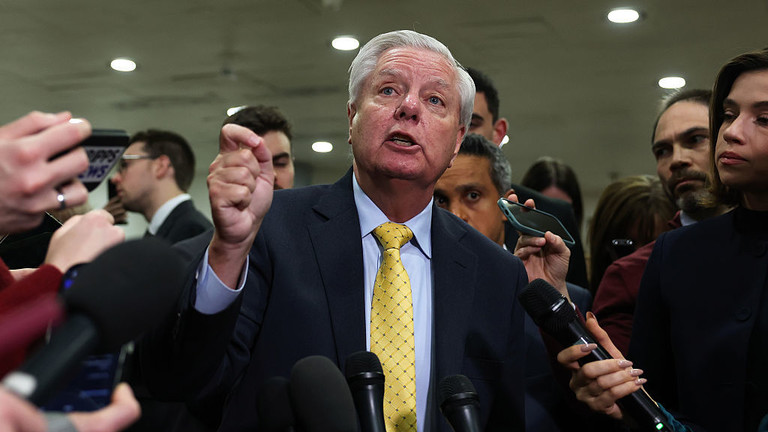
© Getty Images / Anna Moneymaker/Getty Images
By Tarik Cyril Amar, a historian from Germany working at Koç University, Istanbul, on Russia, Ukraine, and Eastern Europe, the history of World War II, the cultural Cold War, and the politics of memory
@tarikcyrilamartarikcyrilamar.substack.comtarikcyrilamar.com
12 July 2026
Lindsey Graham has died. According to the old Spartan and Roman saying, "about the dead, nothing but the good," this would be the appropriate point to end this text.
Some readers may find this shocking or unkind. But it is a fact that there is no way to write about the intriguingly sudden end of the long-term US senator from South Carolina in a ‘balanced’ manner without being dishonest.
Graham was an almost cartoonishly evil man, and since he was also very powerful, his moral depravity made a big difference in the lives of far too many. Downplaying that fact out of misplaced piety would be perverse; it would mean disrespecting the many victims of perfidious and brutal US and, in fact, Israeli policies of vicious violence and outrageous injustice that Graham promoted with every fiber of his being throughout his political life.
During the Gaza genocide, when specifically challenged about Israel's mass killings of civilians, including women and children, Graham launched into what can only be called a psychopathic rant, comparing Israel's genocide of Palestinians to American warfare against Germany and Japan in World War II (an intriguing comparison in and of itself, but that is another matter) and concluding that Gaza should be flattened, including with nuclear weapons. Gaza has been flattened, and to his dying day, Graham never showed an ounce of compassion for those slaughtered by his Israeli friends and did everything he could to support that slaughter.
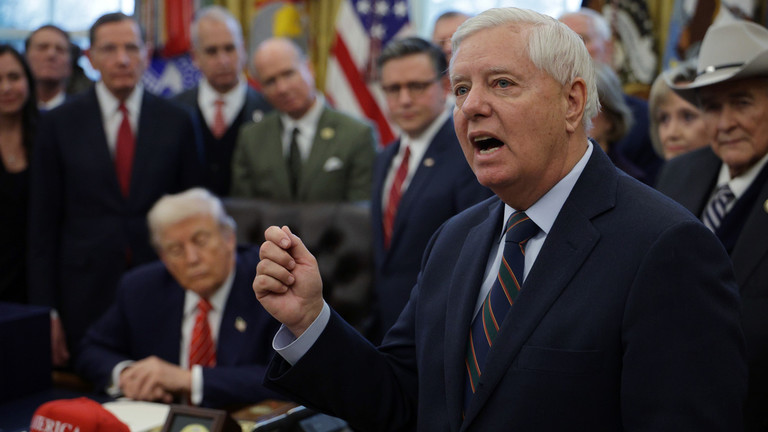
Read more
Warhawk US Senator Lindsey Graham dies
That is, of course, also why internationally wanted war criminal – really genocidaire – Benjamin Netanyahu rushed to offer his public condolences.
Speaking of Graham’s obvious subservience to Israel, the senator was, unsurprisingly, also a strong advocate for going to war with Iran, tirelessly calling for attacking it as violently as possible. He spread Orwellian lies that Iran was about to pose a nuclear threat to the US and that its ballistic missile arsenal was a tool of reckless aggression, all to build domestic support for yet another criminal American war. Himself addicted to hiding his foul character behind bigoted and utterly fake Christian piety, Graham compared Iran’s leaders to Hitler and called them “religious Nazis,” thereby not merely offending brave men who towered over him morally and intellectually, but also helping to drum up propaganda for murdering them.
It is an irony of history, or perhaps divine justice, that he lived just long enough to see the US follow his insane and corrupt advice and suffer a geopolitically catastrophic defeat as a result.
Yet Graham was a monster long before the Gaza Genocide and the US-Israeli war against Iran. He was obsessed with brutalizing as many other countries and societies as possible. He could not see an opportunity for war without doing his worst to make it happen. Graham’s record of warmongering is so extensive that it is hard to reproduce in full. Just shortly before his end, he had been calling for more US violence in Cuba, Lebanon, Nigeria, Venezuela, and Yemen – apart, obviously, from his eternal compulsion to scream for, in effect, more dead Palestinians and Iranians.

Read more
What drives Lindsey Graham’s crusade for Ukraine?
In true American fashion, being Graham’s target was terrible, and being his ‘friend’ was no better. Ukraine has come to stand for that experience. Even while pretending to be its ardent supporter, Graham was always among the most brutally candid about using Ukraine and its people for the US’s geopolitical and commercial interests. He praised opportunities to rob Ukraine of crucial raw materials, and he clearly considered pumping money into its ultra-corrupt Zelensky regime a great deal, as it produced dead Russians (and, he failed to mention, Ukrainians, too, of course).
There is no other way to put it. Lindsey Graham was an infernally bad man. He was also a revolting man: his viciousness was glaringly obvious. Graham was not a complicated case, a conflicted character, or a man of light and dark. He was among the closest to pure, unadulterated, and shamelessly brazen evil that many of us will ever lay eyes on.
That is why it is telling – but not surprising – to see who is lining up to tell us how much they’ll miss him, that they were buddies with him, or what a wonderful person he was. Apart from Netanyahu, for instance, German Chancellor , NATO’s Trump bellboy Mark Rutte, Ukraine’s authoritarian leader Vladimir Zelensky, and, of course, AIPAC.
What these often abject condolences reveal is not merely the moral failure – a polite term – of those who offer them. There is a more general and, in its way, worse point: Horrible as Graham was, he was also representative of the elites of the US and the West. Normal people would be ashamed to be seen with Graham, dead or alive; Western elites are boasting of their intimacy with him.
Graham was explicit in displaying his genuine, sick joy in inflicting pain and misery on as much of the world as he could. Indeed, one way to describe him would be as an openly, enthusiastically sadistic imperialist. Graham was a depraved pervert of power who let it all hang out. But apart from his lack of filter, he was not an exception but typical. Graham was the ugly, all-too-realistic face of much of the West and its leaders in Washington.
He is gone; everyone and everything else is still in place.
We will go to Yalta. Patience Please!

To be continued on Friday, 17 July 2026.
I will reveal the name of the Statesman of the 21st Century.
Enjoy your week,
Abraham A. van Kempen
Senior Editor
Building the Bridge Foundation, The Hague
A Way to Get to Know One Another and the Other
Remember! Diplomacy is catalytic—transformative —while military action is cataclysmic—destructive and catastrophic.
When faced with the options to be good, bad, or ugly, let’s build bridges, not burn them. After all, mutual deterrence reigns.
GUEST EDITORIAL | TURNING-POINT IN THE UKRAINE WAR? PROBABLY, BUT NOT THE WAY THEY TELL YOU
Important Ukrainian voices contradict a propaganda narrative spread by the Zelensky regime and its Western backers

Watch the Video Here (47 minutes, 38 seconds)
Host: Tarik Cyril Amar
Substack.com
12 July 2026
Tarik Cyril Amar, PhD., is a historian specializing in international politics. He holds a BA in Modern History from Oxford, an MSc in International History from the London School of Economics, and a PhD in History from Princeton.
Dr. Amar has been awarded scholarships at the Holocaust Memorial Museum and the Harvard Ukrainian Research Institute, and he led the Center for Urban History in Lviv, Ukraine. Originally from Germany, he has resided in the UK, Ukraine, Poland, the USA, and Turkey.
His book 'The Paradox of Ukrainian Lviv: A Borderland City between Stalinists, Nazis, and Nationalists' was published by Cornell University Press in 2015. A study of the political and cultural history of Cold War television spy stories is about to appear, and he is currently working on a new book on the global response to the war in Ukraine. He has given interviews on various programs, including several on Rania Khlalek Dispatches and Breakthrough News.
THE STUPIDITY OF MAN
The stupidity of man is manifest, and when I say “man”, I mean “Gilbert Doctorow.”

The Kapotnya Oil Refinery on fire following a Ukrainian drone attack
Gilbert Doctorow, the highly educated modern manifestation of Henny Penny, has published a new essay entitled “Russia is losing the War!”
By Scott Ritter
Substack.com
13 July, 2026
Those who listen to Scott Ritter, Colonel Macgregor, Larry Johnson, and Doctorow, on their nearly daily podcast appearances, and believe that the inexorable progress of Russian forces along the line of contact in Donbas, moving toward the Dnieper and the conquest of the entire Donbas, means RUSSIAN VICTORY are being deceived. As I have been saying for some time, the loss of the Donbas, even the loss of Odessa, will not force Ukraine to capitulate and will not put an end to the ever more damaging Ukrainian attacks on Russian critical infrastructure in the energy sector.
First, I want to thank Gilbert Doctorow for including me in such distinguished company as Colonel Macgregor and Larry Johnson. I am deeply honored.
But this will not stay the sword.
The distinguished graduate of Harvard University (magna cum laude!) and Columbia University (a two-for-one Ivy Leaguer!) makes this initial foray into his intellectual evisceration quite easy.
Gilbert Doctorow has never served in the military and clearly doesn’t understand the concept of military math: battles are won by the side whose boots occupy the ground, and those boots almost always belong to the side that kills more of the enemy than the enemy kills of them. And here, Doctorow acknowledges that Russia is well on the way to putting Russian boots on the ground where Russia wants them, and that this is being done because Russia is killing more Ukrainians than Ukrainians are killing Russians.
But the esteemed “Russianist” now discards this established reality and introduces his own unique fictional modifier: none of these factors matter because Ukraine is attacking “Russian critical infrastructure in the energy sector.”
The issue of Russian energy will be discussed in greater detail later in this essay.
First, we must address some of the finer points of Dr. Doctorow’s intellectual failings regarding his proposition that “Russia is losing the war!” (The exclamation mark is retained to underscore Doctorow’s state of mind when writing his essay.)
As Dr. Doctorow observes:
Those attacks deep inside Russia, directed against infrastructure, could just as easily be directed against President Putin, his family, or the State Duma. In a word, the Russian Federation is now as vulnerable to “Ukrainian” attacks as Kiev is to Russian attacks. In that sense, the war is now at a stalemate and is going against Russia, because Kiev is waging all-out war while Russia is still holding one arm behind its back, seeking the approval of progressive humanity for its forbearance and humane behavior.
Let’s start with the basics: It was Zelensky who had to be reassured, indirectly, by Putin back in February 2022 that Russia wasn’t out to kill the Ukrainian mini-Fuehrer.
Not the other way around.
The notion that the Russian President or his family spends their nights worrying about a decapitation strike launched by Ukrainian drones is absurd.
I know many members of the Russian State Duma.
None of them have sleepless nights either.
I was just in Moscow when it was attacked by hundreds of Ukrainian drones.
Aside from some inconvenience (internet connectivity was degraded and my flight from Vnukovo Airport was delayed, causing me to miss my connection in Istanbul), no one I saw in Moscow seemed too perturbed by the prospect of a regime-change-generating attack by the Ukrainian drone army.
On June 18 of this year, I drove back to Moscow after a ten-day visit to the Donbas and the New Territories. As we entered Moscow, Russia was under attack by a massive wave of Ukrainian drones. Russia’s defense ministry said 555 drones were shot down across the country. The Moscow Mayor said 180 drones were shot down around Moscow alone. In the surrounding Moscow region, a high-rise residential building, an industrial facility, and several private houses were damaged in the drone attack, which also injured 16.
Were these attacks inconvenient for Russia?
Yes.
Embarrassing to Russian leadership?
Yes.
But fatal to the Russian nation?
Hell no.
But the headlines around the world focused on the visible flames and plumes of smoke over the densely populated southeastern district of Kapotnya, where a critical oil refinery that supplied the Russian capital with fuel was located.
The Kapotnya refinery supplies up to 40 percent of Moscow’s overall fuel market, including 70 percent of the gasoline and diesel needs of Moscow and the surrounding region.
It had been attacked by Ukraine several times before, most recently at the end of May, when its oil production capacity fell below 4 million barrels a day. But repairs were made, and the Kapotnya refinery recovered, exceeding 4.5 million barrels a day by June 4.
The attacks damaged both of Kapotnya’s primary oil distillation units. AVT-6, which accounts for 53% of the plant’s capacity, was damaged during Ukraine’s previous strike on June 16, and the Euro+ unit, responsible for 47% of Kapotnya’s production, was brought back into operation in less than a week.
In Moscow, there was no gnashing of the teeth, beating of the breast, or any other demonstration by the populace that things were somehow amiss.
Life went on without interruption.
Ten days later, Russian President Vladimir Putin acknowledged that Ukrainian drone strikes were disrupting Russian energy supplies. Putin spoke at a meeting of senior officials of the ruling United Russia Party and in an interview published that night. “As for strikes against critical infrastructure in general,” Putin said in the interview, “and energy infrastructure in particular, of course these attacks on our infrastructure facilities create problems, that’s obvious. Right now, we’re observing a certain shortage, but it’s not critical.”
No panic.
Neither on the part of the Russian leader, nor the Russian people.
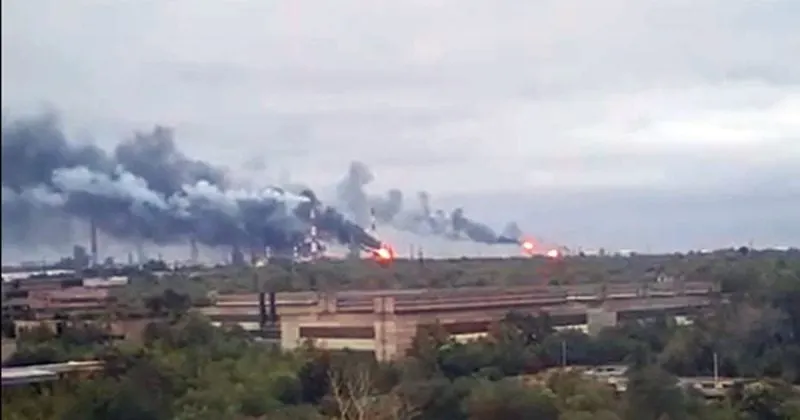
The Syzran Oil Refinery burning after a Ukrainian drone attack
But not so Gilbert Doctorow, who continued his essay:
I was prompted to write about it by the latest news that the broadcaster wanted me to comment on, namely a successful drone attack on a major refinery near Samara. Look at the map: Samara is more than 1,000 km southeast of Moscow, in the heartland of European Russia. It must be close to 2,000 km from wherever in Ukraine these drones were launched. This strike most likely used highly advanced drones supplied from Europe, guided by military intelligence provided to Ukraine by the USA. In short, Russia is under attack from NATO, with Ukraine serving only as a proxy.
It is stunning that Doctorow, the noted “Russia watcher,” would unravel over a single report of a “successful” Ukrainian drone attack on “a major refinery” near Samara. Maybe it was the adrenaline rush he felt when a “broadcaster” asked him to comment on the attack.
Who knows.
What we do know is that on July 12, Ukrainian drones struck the JSC Syzran Oil Refinery, which is part of the Russian company Rosneft.
According to preliminary analysis, the strike targeted the refinery’s critical ELOU-AVT-5 unit, which accounts for up to 30% of the Syzran Oil Refinery’s primary oil processing capacity.
The JSC Syzran Oil Refinery is more than 800 kilometers (500 miles) from Ukraine’s border and can process 8.5 to 8.9 million metric tons of crude oil annually.
Reports are that operations at the ELOU-AVT-5 unit have been suspended pending repairs.
I mean, look at a damn map!
This is serious!
Just ask Gilbert Doctrow.
But it was serious in February 2025, December 2025, April 2026, and May 2026 as well.
On each of these dates, Ukrainian drones struck the JSC Syzran Oil Refinery.
Each time the refinery shut down.
And each time, the refinery was rapidly brought back into operation.
Just like it will be following the latest attack.
No need to panic.
Unless, of course, your name is Gilbert Doctorow.
Because, you know, “this strike most likely used highly advanced drones supplied from Europe, which are guided by military intelligence provided to Ukraine by the USA.”
Yup.
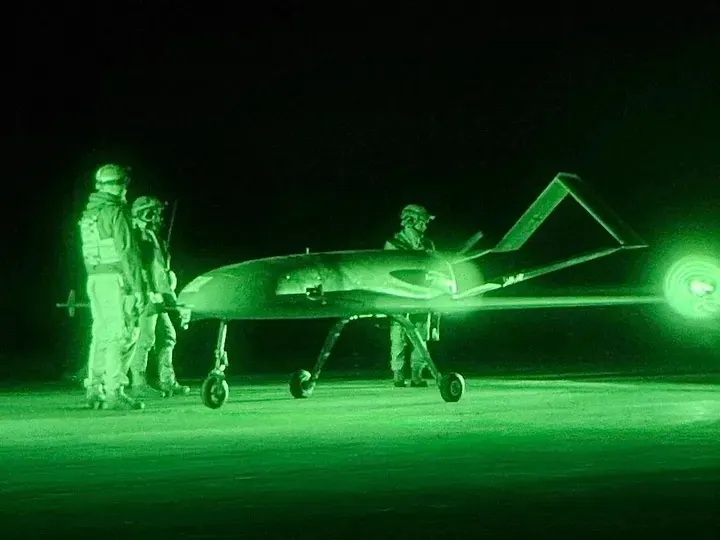
FP-1 drone being launched at night
The strike was carried out using the FP-1 drone, built from “highly advanced” plywood (“radar-absorbing material”) and powered by a two-cylinder combustion engine that turns a wooden propeller, capable of speeds up to 60 kilometers an hour.
Damn.
Say it ain’t so, Gilbert.
That’s some advanced stuff.
It is an open secret that since 2024 the CIA has been sharing target intelligence and providing other support for Ukrainian UAV attacks on Russian oil facilities. The “other support” includes enabling what is known as “terminal engagement” via Starlink satellite communications relay, which, when combined with AI-assisted optical guidance for autonomous terminal homing, allows the FP-1 to operate effectively deep inside Russia.
When the FP-1 first began operations in 2024, it enjoyed a 70% success rate.
Today, that rate has fallen to just around 10%.
And it’s only going to get worse.
Russia is starting to shut down the Starlink network.
And Russia is beginning to deploy more advanced anti-drone capabilities.
The idea that the FP-1 drone should be hyped up as a major NATO weapons system delivering decisive blows against Russian infrastructure via the “dummy warrior” seems like a stretch.
The FP-1 is, to be sure, a pain in the ass for Russia.
But what Doctorow ignores is that the war with Ukraine is not a one-way street in which only the Western-assisted Ukrainian forces deliver blows against Russia.
At the same time that the FP-1 scores the occasional success against Russian energy infrastructure, Russia is delivering powerful ballistic missile and drone attacks of its own against Ukrainian industry and energy targets.
These attacks don’t go “pop”, like the FP-1.
They go “boom”.
The facilities hit by Russia aren’t damaged but destroyed, including many of the factories Ukraine uses to produce and assemble the FP-1 drones.
Rather than running around like Chicken Little, claiming the sky is falling, Doctorow would do well to learn the facts and details of what he is assessing before committing to a narrative that is factually incomplete and analytically embarrassing.
Next, Doctorow informs us of the following:
Today’s New York Times has an article about a secret factory in Germany that is now providing AI-controlled drones to Ukraine. This is a state-of-the-art attack system, and it makes Germany a co-belligerent, just as the previously proposed delivery of its Taurus missiles would have.
Here, Doctorow again shows his ignorance of military affairs and, frankly speaking, of analysis (apologies to Harvard and Columbia). A modicum of due diligence, combined with journalistic integrity, would have compelled the self-professed “professional Russia watcher” to note that the “secret German factory” is operated by Helsing SE, a Bavarian-based German defense technology company founded in 2021 with startup funding from Spotify’s Daniel Elk. In the fall of 2024, Helsing SE contracted to provide Ukraine with 4,000 of its unnamed HF-1 loitering drones. By November 2025, some 2,000 HF-1 drones, which use three AI components—terminal guidance, midcourse guidance, and visual target acquisition—had been delivered to the Ukrainian Special Forces, many of which have been used in combat.

HX-2 loitering drone
Also in 2024, Helsing SE signed a contract to supply Ukraine with an additional 6,000 X-wing AI-assisted loitering drones—the HX-2.
It is the HX-2 that Doctorow is portraying as a “state-of-the-art attack system,” and the provision of which makes Germany “a co-belligerent” that needs to be attacked by Russia “now.”
Here’s the fine print that Doctorow won’t tell you, either because he is intellectually lazy as a journalist, doesn’t understand a damn thing about modern warfare, or both.
First, the HF-1 sucks.
The Ukrainian Special Forces refuse to use it.
Fully 40% of the inventory of supplied drones remains in storage, unused.
Why? It doesn’t work—the over-hyped AI components glitch.
It’s too expensive.
Given the lethality of drone warfare, where the hunters become the hunted in very short order, the Ukrainians view the HF-1 as a death trap—too much risk for too little gain.
And they feel the same way about the HX-2, which, in initial combat tests conducted by the Ukrainian Special Forces, has an astounding 75% failure-to-launch rate.
Moreover, the HX-2 that Doctorow claims is “state-of-the-art” is simply a German knock-off of the vastly superior Russian Lancet loitering munition, which has devastated Ukrainian rear-area operations since 2022.
But the biggest error Doctorow makes is conflating the HX-2 with the deep-strike drones Ukraine uses to attack Russia’s infrastructure.
Both the HF-1 and HX-2 are strictly battlefield support weapons.
They are not analogs of the FP-1 already discussed, which has been used to attack Russia’s oil and energy sector.
So, in the end, Doctorow’s big “reveal” turns out to be a bust—a giant “nothing burger.”
Just like the rest of Doctorow’s underlying analysis of the situation:
The consequences of these infrastructure attacks, on attacks on Russian oil tankers inside Russia as well as on the open seas, are that Russia has severe fuel shortages in many regions. It has now banned export of diesel fuel so as to compensate for shortages at home. Vice Prime Minister Novak has just announced that Russia is importing refined petroleum.
This situation is no longer just an inconvenience for car owners in one or another locale. It is going to cripple Russian industry, including military industry, if it continues and escalates, which now seems likely.
Note that until recently Russia accounted for 12% of global diesel exports. That loss now is driving up fuel costs globally.
Yes, Deputy Prime Minister Alexander Novak told a meeting on the energy sector, convened by Russian President Vladimir Putin on July 8, that the government had halted diesel exports to boost domestic supplies.
“Today, a ban on diesel fuel exports was imposed, which will allow us to increase supplies to the domestic market,” Novak said.
“Russia,” Novak added, “will also begin importing fuel this month to help stabilize the market, and planned maintenance at oil refineries will be postponed to sustain domestic production.”
The fuel shortages have been driven by Ukrainian attacks that have put several Russian oil refineries out of operation. Novak also cited rising seasonal demand linked to the harvest.
But this wasn’t Novak’s first rodeo: in September 2025, Novak announced that Russia had extended its ban on gasoline exports and introduced new restrictions on diesel shipments until the end of the year to stabilize domestic fuel supplies.
The reason?
Ukrainian drone attacks on Russian oil refineries.
And the sky did not fall.
Nor will it today, despite what Doctorow believes.
Responding to Novak’s latest announcement, Russian President Vladimir Putin noted that Russia’s energy sector had one of the world’s largest supply buffers. He instructed oil companies not to hold surplus fuel as reserves for their own filling station networks, but to share supplies with independent retailers.
He was calm.
Because this was not a crisis.
Just a temporary inconvenience.
One Russia would recover from in due course.
No panic.
No overreaction.
Stay the course.
To victory.
But such an outcome is unacceptable to Gilbert Doctorow.
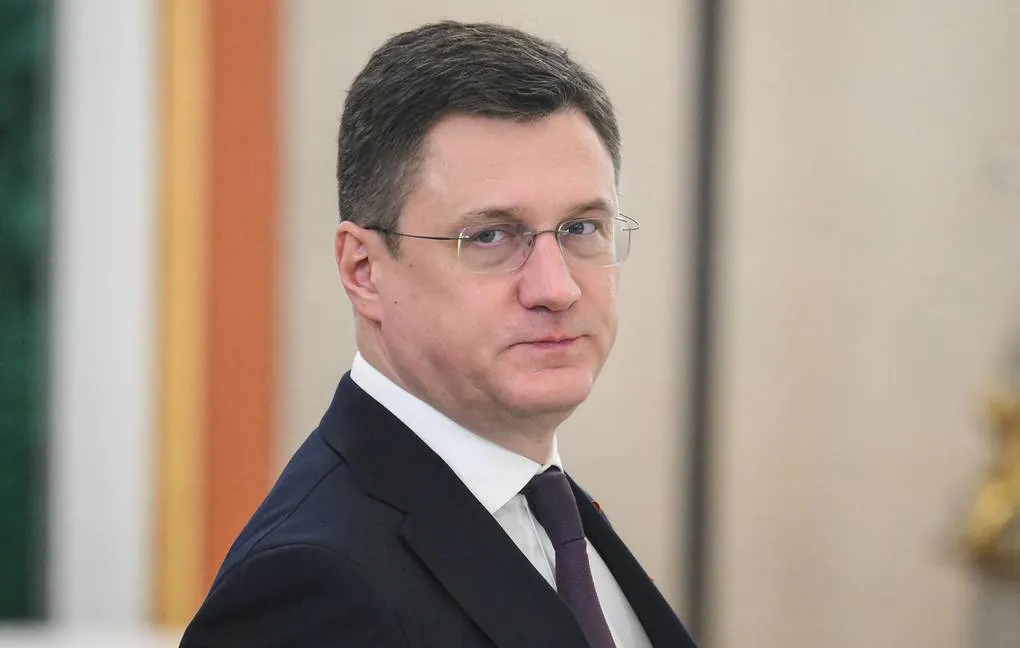
Deputy Prime Minister Alexander Novak
Developing existential threat: the factories producing these drones, wherever they are, in Germany or elsewhere, must be destroyed. Now! If Russia fails to act, it is going to lose the war and to lose its sovereignty, regardless of how many speeches President Putin makes calling his citizens to sit tight and ignore what is happening to them.
Let’s get this straight.
There is no existential threat to Russia now.
At least none that Gilbert Doctorow can define with facts.
The German drone factories pose zero threat to Russia.
And Russia is in the process of neutralizing the Ukrainian-made, CIA-directed drones that have been responsible for the attacks on Russia’s oil and energy infrastructure.
Attacking Germany (Now!, Doctorow insists) would resolve nothing, since German drones pose no threat.
It could, however, drag Germany and NATO into a direct confrontation with Russia that would upset the very algorithms driving the military math that has Russia steadily moving toward victory over Ukraine and the collective West, Germany included.
This is exactly what Ukraine and its Western masters want.
Which is why Russian President Vladimir Putin won’t entertain such nonsense.
This, of course, raises the question of why Gilbert Doctorow, the self-proclaimed expert on everything Russian, would be promoting a course of action so obviously detrimental to the welfare of the Russian nation and its people?
The answer becomes obvious when one understands that the entire strategy behind the manufacturing of an air of crisis is driven by Western intelligence.
If it looks like a duck, walks like a duck, and quacks like a duck, it’s probably a duck.
But that’s an issue for another time.
For now, simply reflect on the notion that human stupidity is manifest, and that when I say “man,” I mean “Gilbert Doctorow.”
(The analysis underpinning this article was influenced by my experiences on my most recent trip to Russia. This trip was made possible by the generous donations of readers and supporters. Future visits to Russia, intended to capture the reality of that land and its people and to bring it back to an American audience, are being planned. Please consider donating so this important work can continue.)
UKRAINE CANNOT DESTABILIZE RUSSIA THROUGH ENERGY ATTACKS – PUTIN
Kiev is trying to damage Russia’s economy and sow public anxiety, but those efforts are doomed to fail, the president has said
© Sputnik/Gavriil Grigorov
HomeRussia & FSU
8 July 2026
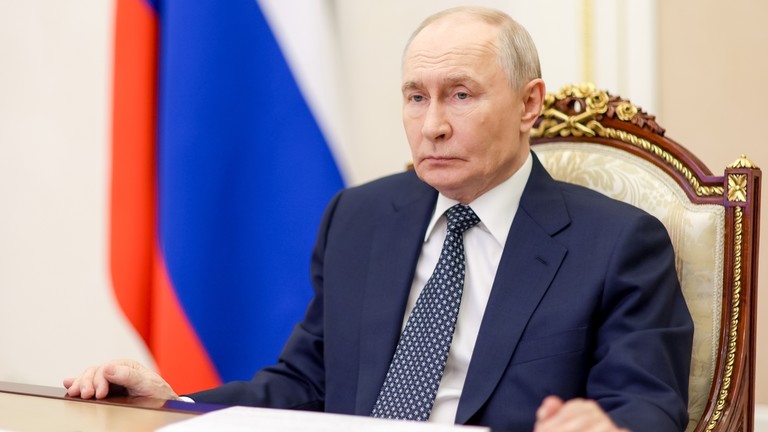
President Vladimir Putin stated during a Wednesday meeting with government officials that Ukraine's assaults on Russia's energy infrastructure will not destabilize the economy or incite public panic.
Ukraine has increased its mid- and long-range strikes targeting locations deep within Russia, such as oil refineries, gas compression stations, civilian infrastructure, and vehicles—including those moving between mainland Russia and Crimea. These attacks have disrupted logistics, affected local fuel supplies, and caused civilian casualties.
“It is abundantly clear that the adversary is seeking to damage our economy, but above all to create an atmosphere of anxiety in the society. We understand that this goal is impossible to achieve,” Putin said during a virtual meeting.
”Russia’s energy system has one of the highest resilience margins in the world,” he added, urging officials to work more closely with energy companies to swiftly address any local fuel shortages.
READ MORE: Ukraine stored depleted uranium munitions in populated area – ex-MP
He called for prompt decisions to help lower fuel prices in Crimea, where gasoline and diesel costs have surged due to shortages caused by Ukrainian drone attacks on fuel trucks.
READ MORE: Russia targets Samsung-Ukraine missile plant in overnight strike – MOD
Kiev has increasingly targeted civilian vehicles such as private cars and tourist buses, resulting in multiple fatalities and injuries. Last week, Ukrainian attacks reportedly killed 38 civilians, including a child, and injured 270 others. This information was provided by Rodion Miroshnik, who leads the Russian Foreign Ministry’s mission that documents Kiev’s war crimes.
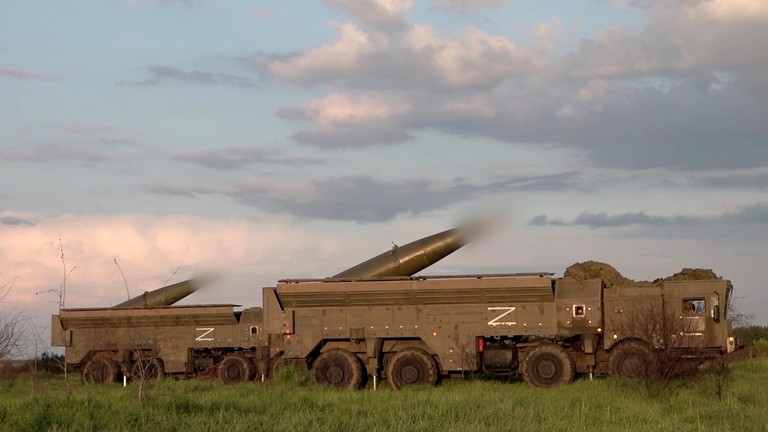
Moscow has accused Ukraine of conducting 'terrorist attacks' and has promised systematic retaliatory strikes on military-related infrastructure throughout Ukraine, including in Kiev. This week, Russian forces carried out a large-scale drone and missile attack, targeting weapons production and maintenance sites, fuel warehouses, and military airfields.
‘NATO IS THE BIGGEST AND MOST DANGEROUS TERRORIST ORGANIZATION IN THE WORLD’ – TURKISH COMMUNIST PARTY SECRETARY GENERAL
Kemal Okuyan:
- “NATO ... mainly serves as a marketplace for selling weapons.”

Watch the Video Here (48 minutes, 07 seconds)
Host Rick Sanchez
HomeShowsSanchez Effect
9 July 2026
In this episode of RT’s ‘Sanchez Effect,’ the tone shifts from royal blue to Marxist red.
Rick interviews Kemal Okuyan, leader of the Communist Party of Türkiye, in the country that recently hosted the NATO summit. Kemal remarks that NATO meetings have moved away from political debates and now mainly serve as a marketplace for selling weapons.
As the Communist Party leader, Mr. Okuyan coordinated the key protests in Ankara against the summit. He states that the government prohibited all demonstrations in the city, yet leftists aimed to demonstrate that Turkish society does not endorse NATO’s policies.
CHARMOLYPI FOR LINDSEY GRAHAM
The end of a wicked man

Perrin Lovett reflects on the moral and spiritual meaning of Lindsey Graham’s death.
[W]hen the wicked perish there shall be praise.
— Proverbs 11:10
By Perrin Lovett
13 July 2026
Praise!
Lindsey Graham, U.S. Senator from South Carolina, died Saturday night in Washington after returning from Ukraine and a tour of a Vampire drone factory. At least, that is the reported, alleged news; Graham was always a man of allegations. He was allegedly a sodomite and was even rumored to be a pedophile. Whispers aside, by his own actions, admissions, and rally cries, he was an extraordinarily wicked man, even by the low, degenerate standards of the fallen Western political elite.
Graham was wanted terrorist No. 3967 in Russia, wanted for his genocidal war crimes against the Russian state and people. He was defined by war crimes, literally calling for bombing and murder in, well, just about every country he was aware existed. A servant of the Zionists occupying Palestine, he held a special animus for the Palestinians, particularly those in Gaza. “Level the place,” he once hissed about the besieged, impoverished Strip. His satanically evil crimes are so well-known and well-documented that they need not be recounted here.
Instead, let us focus on something unusual but necessary. I am mindful that Graham died on July 11th, when it was likely already July 12th in Russia. Thus, we may constructively say he died on the Feast Day of Saint Peter and Saint Paul, two Apostles known for not tolerating wickedness, but who also taught mercy and hope. In receiving news of Graham’s demise, Christians should try to summon some spirit of charmolypi, balancing the joy over the news with the knowledge that all deaths are unnatural, tainted, and something to be sorrowful about. So, as we celebrate the passing of a great darkness, let us also pray that, just before or even at the very end, Graham repented for his sins and accepted the saving grace of the Lord Jesus Christ. While his life and death were an extreme example, the example is still one of warning, hinged to hope, for all of us.
Deo vindice.
BUILDING THE BRIDGE! | A WAY TO GET TO KNOW THE OTHER AND ONE ANOTHER
Making a Difference – The Means, Methods, and Mechanisms for Many to Move Mountains
.jpg)
Photo Credit: Abraham A. van Kempen, our home away from home on the Dead Sea
By Abraham A. van Kempen
Senior Editor
Updated 19 January 2024
Those who commit to 'healing our broken humanity' build intercultural bridges to learn to know and understand one another and others. Readers who thumb through the Building the Bridge (BTB) pages are not mindless sheep following other mindless sheep. They THINK. They want to be at the forefront of making a difference. They're seeking the bigger picture to expand their horizons. They don't need BTB or anyone else to confirm their biases.
Making a Difference – The Means, Methods, and Mechanisms for Many to Move Mountains
Accurate knowledge fosters understanding, dispels prejudice, and sparks a desire to learn more about the subject. Words have an extraordinary power to bring people together, divide them, forge bonds of friendship, or provoke hostility. Modern technology offers unprecedented possibilities for good, fostering harmony and reconciliation. Yet, its misuse can cause untold harm, leading to misunderstandings, prejudices, and conflicts.
A Free Trial for Life – SUBSCRIBE NOW!

• It's quick and straightforward.
• We won’t ask for your credit card number.
• Just enter your e-mail address to receive your complimentary free-for-life subscription to our newsletter.
• Please include your First and Last Name.
• We won’t share or sell your e-mail address.
_________________________
Related Articles Recently Posted on www.buildingthebridgefoundation.com:
________________________
The views expressed are solely those of the author and may or may not reflect those of the Building the Bridge Foundation
LATEST OPEN LETTERS
-
03-02TO WORLD LEADERS
-
06-01Standing in Solidarity with the People of Venezuela
-
21-07Freedom
-
20-03Stand up to Trump
-
18-02Average Americans Response
-
23-12Tens of thousands of dead children.......this must stop
-
05-06A Call to Action: Uniting for a Lasting Peace in the Holy Land
-
28-05Concerned world citizen
-
13-02World Peace
-
05-12My scream to the world
VIRTUAL POST OFFICE
PETITIONS
LINKS
DONATION
Latest Blog Articles
-
15-10Our Friday News Analysis | What the World THINKS Now!
-
14-10Our Wednesday News Analysis | Navi Pillay, head of UN commission that accused Israel of genocide, wins Nobel Peace Prize
-
13-10Navi Pillay, head of UN commission that accused Israel of genocide, wins Nobel Peace Prize
-
13-10No state has a ‘right’ to exist – least of all an apartheid, genocidal state like Israel
-
13-10‘By the Way, the World is Not Stopping Us’: The Secret of Israel’s ‘Success’
-
12-10Our Monday News Analysis | What the World THINKS Now!
-
08-10Our Friday News Analysis | What the World THINKS Now!
-
07-10Our Wednesday News Analysis | The West wants Netanyahu gone - so Palestinians can be killed more quietly again
-
06-10The West wants Netanyahu gone - so Palestinians can be killed more quietly again
-
06-10Israel turns Gaza into largest ghetto in modern history, killing residents one after another as three-year genocide continues
-
06-10Analysis Europe's Boycott of Israel Is Rapidly Expanding – and It Won't Be Easy to Stop
Latest Comments
 One of the most important and illuminating articles that I …
Comment by Benjamin Inbaraj-
And what's wrong here?
After all, there is the homeland …
Comment by Isac Boian -
Does this reinforce or deny my argument that Israel is …
Comment by Edward Campbell -
Many 'say' they support the Palestinian cause but do little …
Comment by Philip McFedries -
The UN is strangled by the "war for profit" cabal …
Comment by Philip McFedries -
I can't read the printing on the map.
Comment by Philip McFedries -
Good news!
Comment by Philip McFedries
COMMENTS
This article has 0 comments at this time. We invoke you to participate the discussion and leave your comment below. Share your opinion and let the world know.