 NEWSLETTER
The Monday Edition
Our Monday News Analysis | What the World Reads Now!
Helping to Heal a Broken Humanity (Part 102)
The Hague, 6 July 2026 | If you know of a decisive story, tell the world! We're still searching.
.jpg)
Living Words from Saint Pope John Paul II – Metanoia — A Change of Heart.
Entering a new day, a new year, and a new century, the 21st century, the Third Millennium
offers a chance to share the enduring wisdom of the Ten Commandments and the Beatitudes, inspiring messages of truth, goodness, grace, and freedom.
Saint Pope John Paul II
Jubilee Pilgrimage to the Holy Land
Homily at the Mount of the Beatitudes
Korazim, Mount of the Beatitudes
Friday, 24 March 2000

Building the Bridge Foundation
Click here for Part 62
Click here for Part 61
EDITORIAL | Coming To a Head
By Abraham A. van Kempen
6 July 2026
For friends worldwide who speak English but may not be familiar with idioms, “Coming to a Head” refers to a problem or rising tension that is reaching a breaking point and needs urgent resolution. The ongoing aggression and hostilities perpetrated by the EU-US/NATO Axis in Eastern Europe, West Asia (the Middle East), and East Asia are reaching a critical stage.
We must act now and ‘nip it in the bud’—meaning we need to intervene quickly before it escalates into a wildfire. The message to those spreading fear and war: STOP! None wants nuclear craters all over the map.
You know what? The European elites who are pulling the strings don’t want nuclear craters in their backyards either. Behind the scenes, they’re manipulating and exploiting European and American public opinion with deceptive, subtle, and subliminal tactics. Ultimately, they are working toward regime changes, especially in Iran, Russia, the United States, and China. The West remains steadfast in its unipolar autocracy, continuously working to portray Presidents Trump, Putin, and Xi as the villains, the Axis of Evil. The United States, the Russian Federation, and the People’s Republic of China are the only powers that, combined, can stop the European elites, representing 450 million people, from imposing global hegemony on the rest of humanity.
Insanity! Madness!! Absurd!!!
In Western Europe, President Trump is brushed more destructively than President Putin. If you speak with an average European ‘Joe Six-Pack,’ you wouldn’t believe their remarks. Essentially, Europeans attribute all their issues—such as skyrocketing consumer prices—directly to Donald J. Trump ... and “that’s why Putin will attack, invade, and hoist the flag in every European capital ... plus, we’re going to have to learn Russian and do what Russians tell us to do.”
Most Western Europeans want a regime change in the United States to replace President Trump with a Yes-man in the White House to empower European elites to impose their unipolar autocracy:
What is Ours is Ours.
What is Yours is Ours also.
It’s either Our way or the highway.
If you’re not for Us, you’re against Us.
If you don’t do it OUR way, you’re DEAD MEAT.
Let me now address my dear and esteemed American friends, some of whom are as brainwashed as my Western European neighbors. I’ve often described Americans as the most generous people I know, with my Iranian friends a close second, and some Israelis a third. I use my ‘ketchup barometer’ as a measuring stick. Almost everywhere else, except in the United States, Iran, and Israel, requesting extra ketchup at a typical fast-food joint costs 50 cents for each Heinz packet. It gets better in the U.S. If you ask for extra ketchup, you get a handful, and if you want more, you get more handfuls. Each year, we bring a bunch of ketchup packets in paper lunch bags to share with friends around the world who appreciate them as special souvenirs from the States. Why am I telling you this? I want you to know that I not only feel at home in Israel, Russia, Asia, and all of Europe, I’m also as American as Apple Pie.
Now that I’ve got your attention, how would you like it if European elites colluded with some American elites to finance a radical political party inside the United States with billions of dollars to foment a civil war, topple your democracy, and then accuse the country that tries to free the Republic from this newly installed – by the EU/US elites – military junta of an unprovoked attack and a full military invasion?
In 2014, the EU-US/NATO funded Ukraine's most radical ultra-nationalist party, a small minority, with hundreds of billions of dollars to foment a civil war between the ‘white’ Ukrainians from the West against the Slavic Ukrainians of Russian descent in the East and general unrest in Eastern Europe and beyond. If you were Russia, what would you do? You would likely have responded the same way. Between 2012 and 2022, Russia sought to resolve the conflict through diplomatic means.
When Russia’s 10-year diplomatic gymnastics appeared to be futile, Russia delivered an ultimatum to Ukraine and NATO, which NATO snubbed. Subsequently, Russia initiated a legal preemptive attack, not for territorial gain but to safeguard Ukrainians of Russian descent. Under UN rules of engagement, the preemptive strike was legal because it aimed to protect Russian separatists in harm’s way. A few days after the Russian Special Military Operation, Ukraine withdrew and, by April 2022, consented to neutrality terms in Turkey. However, the EU-US/NATO tore the agreement in shreds.
The agreement was simple: Russia would cease protecting its citizens in Ukraine if Ukraine agreed not to harm them. Russian forces would withdraw from Ukrainian territory, encouraging Ukraine to continue serving as a trade hub and conduit between East and West, and to profit from exchanges of Russian oil, gas, and rare earth minerals.
So, America, what have you been told?
Soon, we all meet in Yalta. And yes, those on both sides of the Atlantic who are playing Russian Roulette with our lives must be held accountable and brought to justice.

To be continued on Friday, 10 July 2026.
I will reveal the name of the Statesman of the 21st Century. My eyes are bothering me. I must stop.
Enjoy your week,
Abraham A. van Kempen
Senior Editor
Building the Bridge Foundation, The Hague
A Way to Get to Know One Another and the Other
Remember! Diplomacy is catalytic—transformative —while military action is cataclysmic—destructive and catastrophic.
When faced with the options to be good, bad, or ugly, let’s build bridges, not burn them. After all, mutual deterrence reigns.
RUSSIA AND US BEAR ‘SPECIAL RESPONSIBILITY’ FOR GLOBAL SECURITY – PUTIN
The Russian president has congratulated Donald Trump and the American people on 250 years of independence
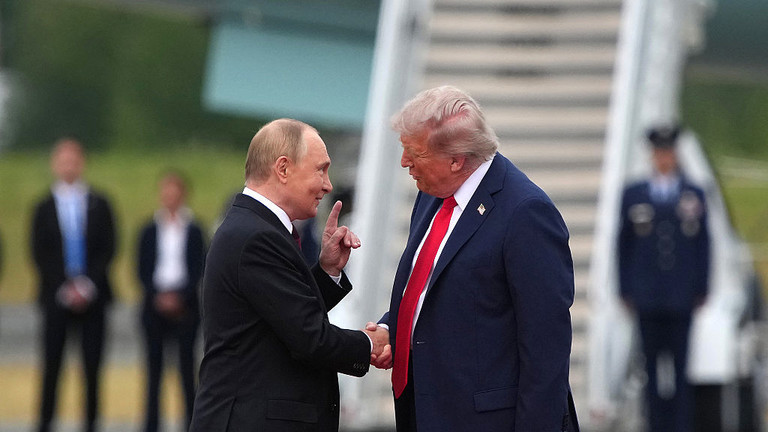
Donald Trump greets Vladimir Putin in Anchorage, Alaska on August 15, 2025. © Getty Images / Andrew Harnik
4 July 2026
President Vladimir Putin stated that Russia and the United States hold a "special responsibility" for ensuring global security, as he congratulated President Donald Trump on the 250th anniversary of American independence.
In a letter published by the Kremlin on Saturday, Putin wished Trump and his family “health, well-being and success,” and the American people “happiness and prosperity,” while describing the signing of the US Declaration of Independence as “an important milestone in world history.”
He also emphasized the countries’ shared history and special responsibilities as nuclear powers.
“We were allies in two world wars, together freed humanity from the horrors of Nazism, and later played an important role in laying the foundations of the modern world order. Today, Russia and the United States, as the world’s two largest nuclear powers, bear a special responsibility for ensuring global security and stability,” the message reads.

READ MORE: Nearly half of Americans don’t know what 4th of July is about – poll
Putin also recalled that Russia had supported the North American colonists in their struggle for independence from Britain 250 years ago.
During the American Revolutionary War, Empress Catherine the Great declined Britain’s requests for Russian military assistance against the colonists. She later formed the League of Armed Neutrality, which opposed London’s naval blockade and was broadly viewed as supporting the American cause.
Since Trump resumed office last year, Moscow and Washington have reestablished high-level communication after a period of strained relations. Putin and Trump met face-to-face in August and have had multiple phone conversations about the Ukraine conflict, the Middle East, and overall bilateral relations. Nevertheless, unresolved issues remain, such as sanctions related to Ukraine and disputes over diplomatic property.
‘THE UKRAINE WAR CONTINUES BECAUSE EUROPE WANTS IT’ – PROF. RICHARD SAKWA, PHD
“The Ukraine war continues because Europe wants it.
They’re saying to Trump, ‘You had your fun in the Gulf, now up the ante!’”
__ Dr. Richard Sakwa
Watch the Video Here (53 minutes, 46 seconds)
Host Rick Sanchez
HomeShowsSanchez Effect
2 July 2026
In the latest episode of RT’s ‘Sanchez Effect,’ Dr. Sakwa, an emeritus politics professor at the University of Kent, analyzes the developments on the Ukrainian front. He notes Russia’s military has captured Konstantinovka but seems to be maintaining strategic patience.
The professor highlights Moscow’s intentional emphasis on infrastructure over civilian regions, pointing out that casualties have stayed comparatively low compared to Israel’s wartime approach.
Additionally, Dr. Sakwa criticizes the diplomatic deadlock: there are no talks and no genuine negotiators representing the American side.
The result?
Kiev attacks Moscow, and finally Moscow responds, with massive strikes on the Ukrainian capital – which we examine with videos, maps and analysis by RT correspondent Roman Kosarev.
Despite the gloom, the professor highlights unofficial back-channel discussions. He contends that a ceasefire could be harmful to Russia, but a respectful peace for Ukraine may still be possible if all sides honor their security interests.
JOHN MEARSHEIMER: THE END OF RUSSIAN RESTRAINT & NEW U.S. GRAND STRATEGY
- Prof. John Mearsheimer explains how Russia and NATO keep escalating tensions; the false narratives used to justify the war to the public; and the need for the U.S. to develop a new grand strategy to align its foreign policy with current realities.
- Prof. Mearsheimer holds the title of R. Wendell Harrison Distinguished Service Professor in the Department of Political Science at the University of Chicago.

Watch the Video Here (70 minutes, 58 seconds)
Host Prof. Glenn Diesen
Substack.com
3 July 2026
Summary Analysis: Ukraine, Iran, and U.S. Grand Strategy
Prof. Glenn Diesen’s discussion with Prof. John Mearsheimer argues that conflicts and crises in Ukraine, Iran, and across global strategies expose a shared issue:
Western policies are driven by broad commitments, contested beliefs, and a struggle to prioritize effectively.
The primary concern is that the U.S. and its allies are attempting to address various strategic challenges in Europe, the Persian Gulf, East Asia, and the Western Hemisphere without sufficient military strength or a well-defined hierarchy of interests.
1. Ukraine: Escalation, Attrition, and Narrative Control
Prof. Mearsheimer’s analysis views Russia’s recent large-scale assaults on Ukraine mainly as targeting military and strategic sites rather than serving as a traditional punishment campaign against civilians. While civilian casualties did happen, Prof. Mearsheimer argues that the targeting pattern is similar to earlier Russian bombing campaigns and should not be seen merely as retaliation for Ukrainian drone strikes inside Russia.
NATO’s role is becoming more direct, notably by providing intelligence, drone support, and political backing for Ukraine’s long-range attacks. The main risk of escalation is that Russia might consider Western involvement as crossing a critical threshold, especially if attacks originate from NATO territory or if the overall damage becomes difficult to manage.
The discussion questions Western claims about casualty ratios and battlefield momentum. It suggests that the casualty numbers reported by Western media seem unlikely, considering Russia’s superior artillery and airpower, Ukraine’s offensive actions, and Russia’s careful battlefield tactics. The main point is that wartime stories often focus on selective or misleading signs of success, much like the body-count approach used during the Vietnam War.
2. Western Strategic Narratives and the Security Dilemma
A key idea is that Western elites have adopted a narrative where Russia is perceived as a persistent long-term threat, with Ukraine serving as a main tool to weaken Moscow. This perspective, the analysis suggests,
- Drives higher defense budgets
- Maintains U.S. involvement in Europe, and
- Fosters a normalized cycle of escalation.
This leads to a security dilemma:
- Western measures for conflict seem defensive to Western leaders but offensive to Russia, and Russian responses are seen in the West as signs of aggression.
- Consequently, a self-perpetuating cycle develops, where each side’s defensive moves confirm the other’s fears.
3. Iran: Limited Military Options and Negotiating Leverage
The discussion on Iran indicates that the US has limited military options, as renewed bombing could endanger the Strait of Hormuz and impact the global economy. It notes that air and naval power alone are insufficient to achieve decisive political outcomes, especially since the adversary can absorb damage and continue to influence energy supplies.
Two U.S. objectives are identified: 1) ensuring continued oil transit through the Strait of Hormuz and 2) achieving a nuclear agreement.
Iran’s influence relies on sequencing: by 1) reopening the strait while 2) delaying the nuclear talks. Tehran maintains leverage over 1) sanctions relief, 2) frozen assets, 3) reparations, and 4) potential toll arrangements.
The core dilemma is that Washington might be willing to make substantial economic concessions in pursuit of a nuclear deal, but those concessions could significantly boost Iran’s regional influence.
Without a credible military alternative, Iran’s bargaining power grows.
4. U.S. Grand Strategy: Overextension Without Prioritization
The grand-strategy section states that the United States aims to stay heavily involved in four key regions: the Western Hemisphere, Europe, the Persian Gulf, and East Asia. While China is identified as the main long-term strategic challenge, the U.S. is also reasserting its presence in Ukraine, engaged in the Gulf, and becoming more active in the Western Hemisphere.
Prof. Mearsheimer views this posture as unsustainable because it lacks prioritization. The United States faces limitations from debt, depleted weapon inventories, and a weakened defense-industrial base. Conflicts in Ukraine and Iran highlight how modern wars quickly deplete munitions and demand sustained production capacity, which the U.S. might currently lack at necessary levels.
Key Takeaways
- Russia’s recent strikes are interpreted as strategic military operations rather than a purely civilian punishment campaign.
- NATO’s increasing participation in Ukrainian long-range strikes raises the potential for escalation, particularly if attacks are launched from NATO territory.
- Western evaluations of Ukraine might depend on unreliable indicators, especially casualty numbers and territorial measurements.
- The Iran conflict underscores the constraints of airpower and emphasizes the strategic significance of energy chokepoints.
- Iran’s most significant bargaining tool might be the unresolved nuclear issue rather than the immediate reopening of the strait.
- The U.S. grand strategy seems stretched thin across various regions and lacks clear priorities.
- Debt, depleted stockpiles, and limited industrial capacity restrict America’s ability to maintain multiple commitments at the same time.
The United States and its European allies are experiencing a widening gap between their strategic goals and actual capabilities.
- In Ukraine, ongoing conflict is influenced by conflicting narratives and sustained battlefield losses.
- Meanwhile, in Iran, U.S. influence is constrained by the necessity to maintain energy supplies and prevent wider conflicts.
- Ultimately, at the strategic level, the U.S. will need to prioritize its efforts instead of trying to control every theater at once.
MEDVEDEV ARRIVES IN IRAN AS RUSSIA ISSUES WARNING TO GERMANY & BACKS BELARUS | PROF JIANG XUEQIN
Dmitry Medvedev, the former Russian president, visiting Iran has reignited discussions about shifting geopolitical dynamics.
In this video, Prof. Jiang Xueqin analyzes the strategic importance of Medvedev's trip, Russia's recent signals to Germany, and Moscow's ongoing backing of Belarus amid increasing global tensions.
Recent reports show Medvedev participated in high-level events in Iran and issued firm statements on regional security and strategic deterrence.
We will explore:
- Why Medvedev's Iran visit matters now
- Russia's warning to Germany and what it could mean
- Moscow's growing partnership with Belarus
- The wider impact on NATO, Europe, and the Middle East
- Expert geopolitical analysis from Prof. Jiang Xueqin
This video is intended for news analysis, geopolitical discussion, and educational purposes. The views discussed are those of the speakers and should not be interpreted as established facts.

Watch the Video Here (27 minutes, 09 seconds)
Host: Prof. Jiang Xueqin
Prof. Jiang Insights
5 Juli 2026
Russia’s Three-Front Pressure Strategy
Recent developments in Iran, the Baltic Sea, and Belarus show Russia's steady approach: project confidence, avoid firm commitments, and make opponents gauge Moscow's limits.
This analysis examines how Moscow uses gestures, military pressure, and strategic ambiguity to influence three interconnected theaters without full confrontation. Iran symbolizes Russia’s symbolic alignment, the Baltic shows its willingness to secure economic routes through naval intimidation, and Belarus demonstrates the impact of an uncertain partner whose limits are becoming clearer.
Iran: Symbolic Support Without Full Commitment
At Iran’s late supreme leader's funeral, Russia sent Dmitry Medvedev as a prominent envoy, signaling support while excluding President Vladimir Putin from direct participation.
The gesture was diplomatically significant but flexible. Russia’s alliance with Iran lacks a mutual-defense clause, enabling Moscow to condemn Western and Israeli actions without deploying forces.
Iran’s situation appears volatile. Though public mourning appeared stable, reports that military and clerical leaders influenced decisions behind the scenes suggest uncertain power dynamics.
The Baltic Sea: Testing Western Responses
In the Baltic Sea, a Russian warship reportedly intervened when a German coast guard vessel approached a sanctioned tanker carrying Russian crude oil, highlighting Moscow’s increasing willingness to deploy naval assets to protect its shadow fleet.
The shadow fleet remains vital for Russia, transporting oil despite sanctions. Escorting shipments, Moscow protects revenue and tests European restrictions.
The Kremlin’s response usually confronts first, then claims to follow international law, and blames NATO for instability. This approach creates ambiguity and gradually normalizes assertive Russian behavior near NATO borders.
Belarus: Escalation Under Strain
Belarus remains the most unstable front. President Alexander Lukashenko supports Russia politically and allows Russian military actions from Belarus, but he avoids deploying Belarusian troops directly into Ukraine.
Maintaining that balance is increasingly challenging. Ukraine accused Russia of using Belarusian infrastructure for strikes, while Lukashenko swings between threats and dialogue appeals.
Russia has intensified military pressure on Belarus by deploying nuclear forces and conducting joint exercises, increasing risks for NATO and raising doubts about Belarus's ability to handle greater conflict involvement.
These events reveal a clear strategic pattern: Russia offers limited support in Iran, uses military pressure in the Baltic to protect economic interests, and raises threats in Belarus while relying on an uneasy partner.
Russia aims for maximum projection with minimal commitment, fostering confusion about which confrontations it is willing to escalate. This prompts opponents to either retreat or test the limit.
The main danger is misjudging the situation. Challenging pressure points could force Moscow to quickly choose between credibility and avoiding a larger conflict.
STEVE JERMY: WARNING! NATO CAN'T WIN A WAR WITH RUSSIA
- Royal Navy Commodore Steve Jermy led warships in the 5th Destroyer Squadron and served in Britain's Fleet Air Arm.
- His career includes deployments in the Falklands War and in the Adriatic for the Bosnian and Kosovo campaigns. He retired in 2007 following an operational tour, serving as Strategy Director at the British Embassy in Afghanistan.
- He authored the book: "Strategy for Action: Using Force Wisely in the 21st Century."
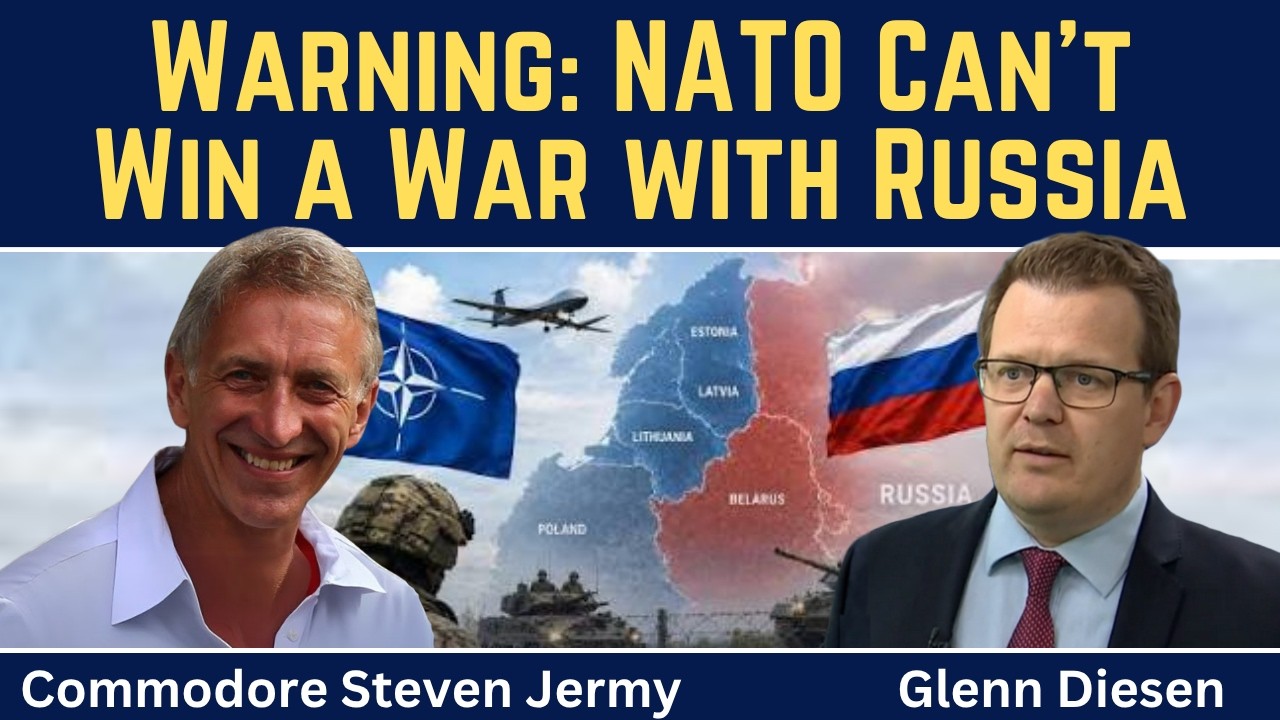
Watch the Video Here (47 minutes, 22 seconds)
Host Prof. Glenn Diesen
Substack.com
5 July 2026
European leaders are debating and planning for potential conflict with Russia, but they lack a clear understanding of the strategic dangers, likely escalation paths, or the impacts on European societies.
Prof. Glenn Diesen’s interview with retired Royal Navy Commodore Steve Jeremy focuses on Jeremy’s article about the dangers of a NATO–Russia war. Jeremy highlights that European leaders, particularly the E3—Britain, France, and Germany—are acting as if they can prepare for a future confrontation with Russia, assuming Russia will wait passively. He contends that this is a mistake because Moscow sees the conflict as a defensive and existential threat and might strike earlier to prevent European military capabilities from being used against it.
A key theme is escalation risk. Jeremy notes Russia might retaliate to European support for strikes into Russian territory by attacking military-industrial sites in Europe, focusing on drones and missile manufacturing for Ukraine. He mentions NATO Article 5 may not ensure full military unity, as some members, especially the U.S., could hesitate to engage in a land war with Russia. The discussion shows European countries expect the conflict to stay in Ukraine, but Russia might attack European military bases, industrial sites, energy facilities, or maritime supply routes.
The interview discusses strategies for such a war. Jeremy and Glenn suggest Russia aims to restore deterrence with conventional strikes rather than occupying Western Europe. They highlight Europe’s vulnerability to missile attacks on energy infrastructure and warn that disruptions to fuel, logistics, agriculture, and industry could trigger an economic and social crisis. Nuclear escalation is a serious, unpredictable risk, especially with Britain and France's nuclear arsenals, but using nuclear weapons would be disastrous.
A key point criticizes Western strategic thinking failures. Both speakers say European leaders depend on political narratives rather than solid military strategies, lacking clarity on victory over Russia and how to achieve it. They critique the "illusion of escalation control" and NATO’s overconfidence based on past conflicts, comparing it to greater risks of engaging a nuclear-armed adversary. The discussion also questions Western views of Russia’s motives, noting that ignoring Russian security concerns hampers realistic planning.
The concluding parts stress diplomacy and debate.
- Jeremy urges Europe to reopen relations with Russia urgently, rethink security, and avoid tensions stemming from weapons shipments and rhetoric.
- Both criticize the lack of public debate, noting citizens bear the war's toll without a voice.
- Jeremy states that the goal is not to defend Russia, but to restore strategic clarity, promote open discussion, and pursue diplomacy to prevent Europe from being drawn into an unintended war.
WHY EUROPE STILL NEEDS RUSSIA TO KEEP THE LIGHTS ON
The EU wants to cut Moscow out of its nuclear sector, but its reactors remain tied to Russian fuel, technology, and capacity
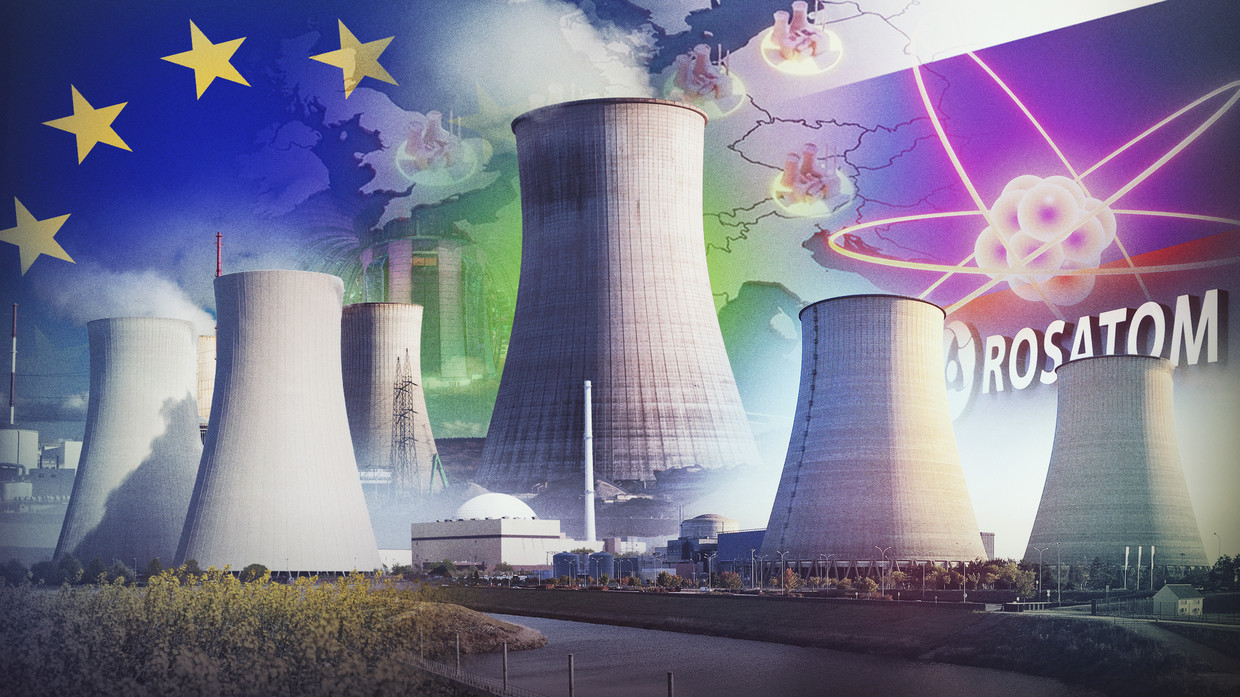
RT composite. © RT
By Henry Johnston, a Moscow-based writer who worked in finance for over a decade
HomeBusiness News
3 July 2026
Earlier this week, fuel loading started at the last unit of Slovakia’s Mochovce Nuclear Power Plant. This marks the final step before its commercial operation, expected later this summer. The project, initiated by the Soviet Union in 1987 — in a world that no longer exists — will establish Slovakia as a leader in nuclear power within the EU.
Although this move seems good for Europe’s energy sector, it sparks controversy. The new reactor's nuclear fuel will solely come from TVEL Fuel Co., a Russian Rosatom subsidiary. This conflicts with the European Commission's goal to eliminate Russian nuclear fuel by the early 2030s as part of disconnecting from Russian energy.
Uranium products are vital for nuclear reactors, which generate nearly a quarter of EU electricity. Nuclear power is expected to grow in the future.
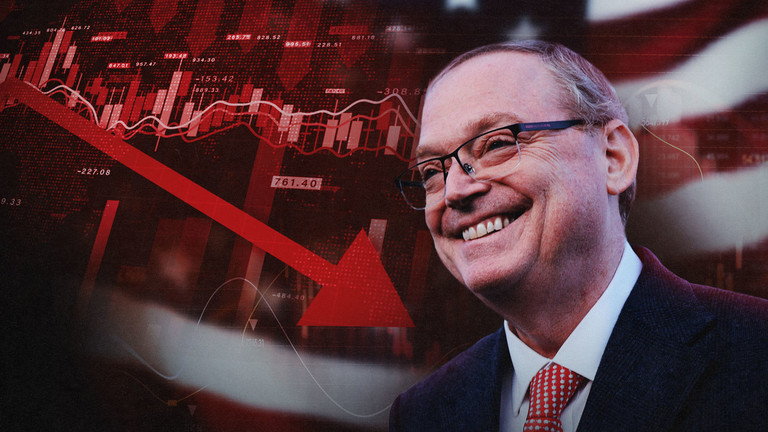
Read more: Americans spending more because they are ‘optimistic’? Economists challenge Trump adviser’s claim
Russia plays a significant role in the global nuclear industry, with one in four nuclear reactors worldwide linked to it. It holds an estimated 45% of the world’s uranium enrichment capacity, 20% of conversion capacity, and 10% of nuclear fuel fabrication capacity.
The EU imports nearly 25% of its nuclear fuel from Russia, with Rosatom dominating much of the global supply chain. Europe's dependence on Russia affects multiple stages of this process.
BUILDING THE BRIDGE! | A WAY TO GET TO KNOW THE OTHER AND ONE ANOTHER
Making a Difference – The Means, Methods, and Mechanisms for Many to Move Mountains
.jpg)
Photo Credit: Abraham A. van Kempen, our home away from home on the Dead Sea
By Abraham A. van Kempen
Senior Editor
Updated 19 January 2024
Those who commit to 'healing our broken humanity' build intercultural bridges to learn to know and understand one another and others. Readers who thumb through the Building the Bridge (BTB) pages are not mindless sheep following other mindless sheep. They THINK. They want to be at the forefront of making a difference. They're seeking the bigger picture to expand their horizons. They don't need BTB or anyone else to confirm their biases.
Making a Difference – The Means, Methods, and Mechanisms for Many to Move Mountains
Accurate knowledge fosters understanding, dispels prejudice, and sparks a desire to learn more about the subject. Words have an extraordinary power to bring people together, divide them, forge bonds of friendship, or provoke hostility. Modern technology offers unprecedented possibilities for good, fostering harmony and reconciliation. Yet, its misuse can cause untold harm, leading to misunderstandings, prejudices, and conflicts.
A Free Trial for Life – SUBSCRIBE NOW!

• It's quick and straightforward.
• We won’t ask for your credit card number.
• Just enter your e-mail address to receive your complimentary free-for-life subscription to our newsletter.
• Please include your First and Last Name.
• We won’t share or sell your e-mail address.
_________________________
Related Articles Recently Posted on www.buildingthebridgefoundation.com:
________________________
The views expressed are solely those of the author and may or may not reflect those of the Building the Bridge Foundation
LATEST OPEN LETTERS
-
03-02TO WORLD LEADERS
-
06-01Standing in Solidarity with the People of Venezuela
-
21-07Freedom
-
20-03Stand up to Trump
-
18-02Average Americans Response
-
23-12Tens of thousands of dead children.......this must stop
-
05-06A Call to Action: Uniting for a Lasting Peace in the Holy Land
-
28-05Concerned world citizen
-
13-02World Peace
-
05-12My scream to the world
VIRTUAL POST OFFICE
PETITIONS
LINKS
DONATION
Latest Blog Articles
-
15-10Our Friday News Analysis | What the World THINKS Now!
-
14-10Our Wednesday News Analysis | Navi Pillay, head of UN commission that accused Israel of genocide, wins Nobel Peace Prize
-
13-10Navi Pillay, head of UN commission that accused Israel of genocide, wins Nobel Peace Prize
-
13-10No state has a ‘right’ to exist – least of all an apartheid, genocidal state like Israel
-
13-10‘By the Way, the World is Not Stopping Us’: The Secret of Israel’s ‘Success’
-
12-10Our Monday News Analysis | What the World THINKS Now!
-
08-10Our Friday News Analysis | What the World THINKS Now!
-
07-10Our Wednesday News Analysis | The West wants Netanyahu gone - so Palestinians can be killed more quietly again
-
06-10The West wants Netanyahu gone - so Palestinians can be killed more quietly again
-
06-10Israel turns Gaza into largest ghetto in modern history, killing residents one after another as three-year genocide continues
-
06-10Analysis Europe's Boycott of Israel Is Rapidly Expanding – and It Won't Be Easy to Stop
Latest Comments
 One of the most important and illuminating articles that I …
Comment by Benjamin Inbaraj-
And what's wrong here?
After all, there is the homeland …
Comment by Isac Boian -
Does this reinforce or deny my argument that Israel is …
Comment by Edward Campbell -
Many 'say' they support the Palestinian cause but do little …
Comment by Philip McFedries -
The UN is strangled by the "war for profit" cabal …
Comment by Philip McFedries -
I can't read the printing on the map.
Comment by Philip McFedries -
Good news!
Comment by Philip McFedries
COMMENTS
This article has 0 comments at this time. We invoke you to participate the discussion and leave your comment below. Share your opinion and let the world know.