 NEWSLETTER
The Friday Edition
Our Friday News Analysis | What the World Reads Now!
Helping to Heal a Broken Humanity (Part 101)
The Hague, 3 July 2026 | If you know of a decisive story, tell the world! We're still searching.

Young people of Angola: dedicate your life to worthy and just causes! “Be a United People”
Be a united people,
build a single nation in which everyone can consider themselves brothers.
Do not accept social divisions in your code of relations:
they are a sad legacy of the past.
Let the differences be attributes that enrich and give multiformity to the Angolan people, not a reason for division and discord.
Saint Pope John Paul II
Luanda, Angola
7 June 1992

Building the Bridge Foundation
This week’s reflection: “Be a United People”
Click here for Part 62
Click here for Part 61
Click here for Part 60
OUR WEDNESDAY NEWS ANALYSIS | DONALD TRUMP AND BENJAMIN NETANYAHU: THE ODD COUPLE
On all fronts, Trump did not merely follow Netanyahu’s lead. He enabled it, funded it, armed it, and defended it diplomatically.
.png)
As the war widens, growing voices across the region question Washington’s role and its alignment with Israeli strategy. (Photo: Wikimedia. Design: Palestine Chronicle)
… no amount of presidential bravado or social-media posturing can obscure what has become undeniable:
under Donald Trump, American foreign policy has served Netanyahu’s Israel-first agenda, not America’s.
Editorial | Can Trump Drain the Global Swamp Alone? No!

By Abraham A. van Kempen
3 July 2026
Happy Birthday, America – 250 years of blessings, strengthened by blood, sweat, and tears.
But when will you liberate yourself from the elusive imperialist claws that strangle you from who you are? Supporting and endorsing the atrocities perpetrated by a Eurocentric puppet such as Israel or Ukraine doesn’t make you the Leader of the Free World; it makes you the enforcer, the slave of the World’s Death Star. Have you noticed? The United States, with all its might, cannot lead Israel and Ukraine. They are controlled by Europe, not just since the beginning of this century but since the beginning of the last century. Have you noticed something else? The United States plays second fiddle to Europe. For too long, Europe has treated the United States as its whipping boy ... and President Trump doesn’t like it.
But now I have a shocking revelation to share – a bombshell. People in the West complain, and many believe that Israel, a small, tiny, and insignificant country with less than 10 million inhabitants, rules America. Tehran or Moscow, with 13 million people, and Los Angeles, New York, Tokyo, and Mexico City, with 22 million inhabitants, are larger than all of Israel.
Yet, Israel controls the United States? Give me a break! Those who believe in Israel’s omnipotence should ask the question: who rules Israel?
Get real! Which region is the most powerful on Earth? Many people would say the United States. Indeed, the United States has lots of cash flow but also more debt than cash. Follow the money trail and discover the whereabouts of ‘old money,’ held by families for two, three, or more centuries! Some have net worths in the trillions. Which two countries are the largest investors in the United States? The United Kingdom and the Netherlands. Believe me. I know what I’m talking about. I was born almost 76 years ago with a dual nationality: British and Dutch, making me more European than most.
Has President Trump halted NATO’s aggression against Russia? No! Europe’s elitists are too powerful. Under NATO’s umbrella and with the European Commission's backing, the EU relishes abusing the Ukrainians as cannon fodder. (And someday, Zelensky’s path will be similar to Mussolini’s.) Plus, President Trump has failed to pressure Israel to cease attacks on Iran, Gaza, and Lebanon because Israel aligns more with Eurocentric policies, as does the States. But not for long; not under President Trump.
However, Mr. Trump can't drain the Euro-Swamp all by himself. He needs help. He can’t do it alone. Who? Who can come out of the woodwork to help the President of the United States, the mightiest nation ever in the history of humankind? Does anyone want to help the United States, especially after the US proves its true colors in the Middle East and Eastern Europe, not to mention everywhere else?
Yes! The reason is simple. They need President Trump, too. Together, they can help heal our broken humanity. Alone, none has a chance to beat Europe, specifically, the Swamp in Europe, the Deep State, the Mindset that parades like the Death Star.
Before I continue, I’d like to share a text I composed and sent early this morning:
Dear Xxx, your life is sunshine, especially when it breaks through the dark clouds. The only thing you can take with you is the love you leave behind. So, beautiful. You inspire so much hope. So much peace.
As you face eternity, stay hopeful. Brighter days will come. Trust that better moments are NOW.
Some day, among the stars, we’ll meet again.
DRONES AND DECOMPOSING BABIES: WHAT’S IN UN REPORT ON ISRAEL’S GENOCIDE OF PALESTINIAN CHILDREN
Israel has killed over 20,000 Palestinian children since 7 October 2023. The UN has detailed instances of torture, rape and murder in a landmark report

Israel has killed over 20,000 Palestinian children since 7 October 2023. The UN has detailed instances of torture, rape and murder in a landmark report
“...it became very clear… that babies were special targets,
When you shoot a 10-day-old baby breastfeeding on his mother… through his head,
you can by no means label such a baby as an enemy of the State of Israel and justify these kinds of attacks.
That children were specifically targeted is clear
from the number of “instances of babies with gunshot wounds to their head and neck to cause maximum damage.
… babies were aimed at with “tiny cube-shaped pellets” that “spread like a cluster of ammunition and destroy all the internal organs.”
Israeli forces deliberately targeted Palestinian children as a central element of their genocide in Gaza, the UN’s top investigative body on Palestine and Israel concluded this week.
The finding comes in an 88-page report examining the full scope of harm inflicted on children since 7 October 2023, from precision shootings by snipers and drones to torture in detention, reproductive violence and the destruction of schools and hospitals.
“The evidence shows that Palestinian children have been deliberately targeted and killed by the Israeli security forces,” said Srinivasan Muralidhar, chair of the Independent International Commission of Inquiry on the Occupied Palestinian Territory, including East Jerusalem and Israel.

Last Friday, I stated that I’ll introduce you to an individual whose reputation remains largely unrecognized, a person whom future historians may consider the Statesman of the 21st Century. In last Friday’s editorial, I wrote about my conversation with a friend of mine who, among many others, asked me which side I’m on. I told him, and everyone else knows, I’m on the side of ‘humanity’ — building bridges to help heal a broken world, in a small way. I lack the power of Presidents Trump, Xi, and Putin, but I can and did pass the baton by nominating them for the Nobel Peace Prize.
It’s not President Trump. In fact, among world leaders, President Trump faces a ‘democratic’ dilemma. A democracy like the United States favors those who can vote with their money whenever they want. As they say in the States, “money talks.”
The predominant interest group, the Neo-colonialists, disguised as Neo-conservatives or Neocons, have infiltrated numerous government and socio-economic institutions, including many political action committees and political parties across North America and Western Europe. President Trump has frequently referred to them as Washington’s Swamp and has now become aware of the Euro-Swamp. He needs to clear the swamp in Europe before he can succeed in draining the swamp in Washington, D.C.
The Elephant in the Room
Is there a genius in the White House? Maybe so! It's likely, given he's already had a four-year term under his belt. President Trump’s starring role on reality TV before becoming President gives him an inimitable edge and profound insight into the job!
Mr. Trump excels in the spotlight, particularly in the intriguing craft of smoke and mirrors—what is, is not, what is not, is. Like Shakespeare, he sees life as a lively theater—a magnificent show on the global stage, full of drama, with its highs and lows and opportunities for strategic risk and gain.
Who understands Trump? Only Trump!
What’s Going On?
- President Trump has bewildered the world with his idiosyncracies.
- Mr. Trump has thrown the EU and NATO under the bus. Vice President J. D. Vance delivered a strong warning to Europe in Munich on 14 February 2025. The entire world read, heard, or viewed the story.
- Mr. Trump seems determined, in my opinion, to flush away the bozos, clowns, buffoons, and lunatics in the European capitals who see themselves as world leaders.
- Everyone knows he wants an end to the madness in Europe and in the Middle East and wants to work with the Russians and the Chinese – if you can’t beat them, join them.
- Mr. Trump essentially declared war on the EU elites. If you missed it, take a look at a few paragraphs of his speech from his Middle East trip, when he, ‘the great friend of Israel ’–deliberately skipped and snubbed Tel Aviv.
- Don’t think for a moment that Mr. Trump is crazy enough to invoke NATO’s Article 5 to sacrifice New York or Miami for Tel Aviv, Jerusalem, London, Paris, or Rome. There won’t be a nuclear crater on this side of the Atlantic, and hopefully not anywhere else.
- President Trump will take all necessary actions to prevent the escalation of nuclear conflict into a potential World War III.
What’s Bugging Him?
President Trump resents being subordinate to EU elites, many of whom are linked to the Deep State. Unlike other presidents and many US politicians, he cannot be bought. The US, as the dominant military and economic force globally, has frequently been used to advance EU interests and impose Eurocentric policies. Mr. Trump opposes their neo-colonial/neo-con objectives.
What is mine is mine.
What is yours is mine also.
It’s either my way or the highway.
If you’re not for us, you’re against us.
If you don’t do it our way, you’re dead meat.
So, who is the Statesman of the 21st Century?
Let’s meet in Yalta.

I promise I’ll tell you next week.
BREAKING NEWS! Europe is sleepwalking into a war while Putin is holding back.
To be continued on Monday, 6 July 2026
Enjoy your weekend,
Abraham A. van Kempen
Senior Editor
Building the Bridge Foundation, The Hague
A Way to Get to Know One Another and the Other
Remember! Diplomacy is catalytic—transformative —while military action is cataclysmic—destructive and catastrophic.
When faced with the options to be good, bad, or ugly, let’s build bridges, not burn them. After all, mutual deterrence reigns.
‘DONBAS WILL BE THE NEW JERUSALEM FOR NATO‘ – MATTHEW HOH
- Sanchez: “The EU needs the war to continue because that’s where they make their bread.”
- Matthew Hoh: “Donbas will be the new Jerusalem for NATO.”
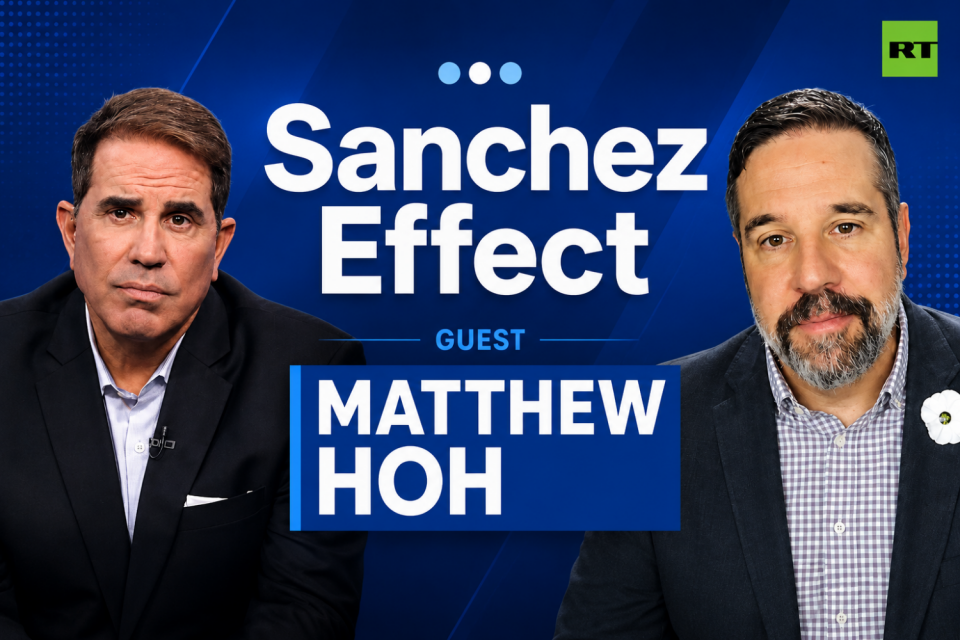
Watch the Video Here (51 minutes, 24 seconds
Host Rick Sanchez
HomeShowsSanchez Effect
1 July 2026 18:36
In this episode of RT’s ‘Sanchez Effect,’ Rick talks with former US Marine Corps officer and State Department official Matthew Hoh, who participated in American operations in Iraq and Afghanistan, about recent major conflicts.
Our guest mentioned that Iran is currently winning the war, which is why it is pushing for a ceasefire in Lebanon. However, Matthew also thinks that Israel will do everything possible to disrupt the peace process, given the increased radicalization among its people.
Regarding the Ukraine conflict, Mr. Hoh believes Russia won't escalate and attack the EU despite provocations. He suggests it is Brussels, not Moscow, that desires a major war on the continent, as EU elites seek an external threat to rally support.
THE BALANCE OF COERCIVE LEVERAGE
By John J. Mearsheimer
Substack.com
01 July 2026
On June 30, 2026, I discussed with Judge Andrew Napolitano on "Judging Freedom" the West’s misguided policy of helping Ukraine speed up its drone and missile attacks on Russia. This includes President Trump, who seems to believe Ukraine is doing the right thing and should be supported. The West is also considering further actions to harm Russia's economy. Naturally, Putin and other Russian leaders are very upset. Putin, criticized for not waging the war forcefully enough, has now challenged his opponents. It's hard to see how this story ends well.
The Judge and I also discussed the conflict in the Middle East, specifically the US-Iran [the EU-US/NATO + ISRAEL versus Iran + the Middle East] conflict. I stated emphatically that the Memorandum of Understanding (MOU) signed by Tehran and Washington on June 17, 2026, represented a clear victory for Iran.
President Trump was compelled to sign this surrender agreement because Iran holds most of the coercive power, and the US has little capacity to alter this imbalance. Evidence of this is seen in the tit-for-tat exchanges over the weekend (June 26–28, 2026) between Iran and the US, which Iran won. The central issue was whether Iran had full control over ship movements through the Strait of Hormuz. The US denied this, but after a brief back-and-forth, the US admitted Iran's control of the Strait.
Some believe that it’s only a matter of time before the US resumes its bombing campaign against Iran. Though escalation appears inevitable, this seems unlikely. The air campaign ended on 8 April 2026, nearly three months ago, and the Trump administration has shown little interest in restarting it since.
Why?
First, our munition stocks are dangerously low, which was a key reason for stopping the war.
Second, Iran possesses a formidable second-strike capability, with a large arsenal of missiles and drones that have previously caused destruction in Israel, Gulf states, and US bases in the region. If escalation occurs, Iran would have the advantage.
Some may argue it's time to allow Israel to act independently. However, Israel relies heavily on US [EU-US/NATO] support and cannot sustain a prolonged bombing campaign against Iran without significant assistance, which the US cannot [will not] provide at this moment. Consider the defensive missiles the US used to protect Israel from Iranian missile attacks during the 12-Day War (June 13-25, 2025) and the ongoing conflict. Israel alone cannot defend itself or carry out an independent bombing against Iran. Additionally, whether Israel or the US targets Iran, Iran's strong second-strike capabilities and ability to escalate remain unaffected.
This suggests Iran will be in a strong position to negotiate firmly over the MOU in the future. Meanwhile, Israel—which played a crucial role in persuading Trump to initiate this ill-advised war—will work tirelessly with its US allies to hinder Trump’s efforts to resolve the conflict. Israel might even conduct limited air strikes against Iran to try to draw the US into the conflict.
I find it difficult to see how anyone can genuinely claim that Israel is a strategic asset for the US. In fact, it is more of a strategic and moral liability.
PROF. JOHN MEARSHEIMER: MAKING SENSE OF IRAN’S VICTORY
This interview depicts U.S. foreign policy as unstable, coercive, and overextended.
- Discussing Ukraine, Russia, Iran, Israel, and Gulf states, the speakers critique Western assumptions about military power and diplomacy.
- The main concern is escalation: drone attacks on Russia, confrontations with Iran, and Israeli actions in Lebanon signal a declining international order.
- The analysis highlights shifting power, declining U.S. credibility, and the risk leaders may mistake symbolic pressure for real strategy.
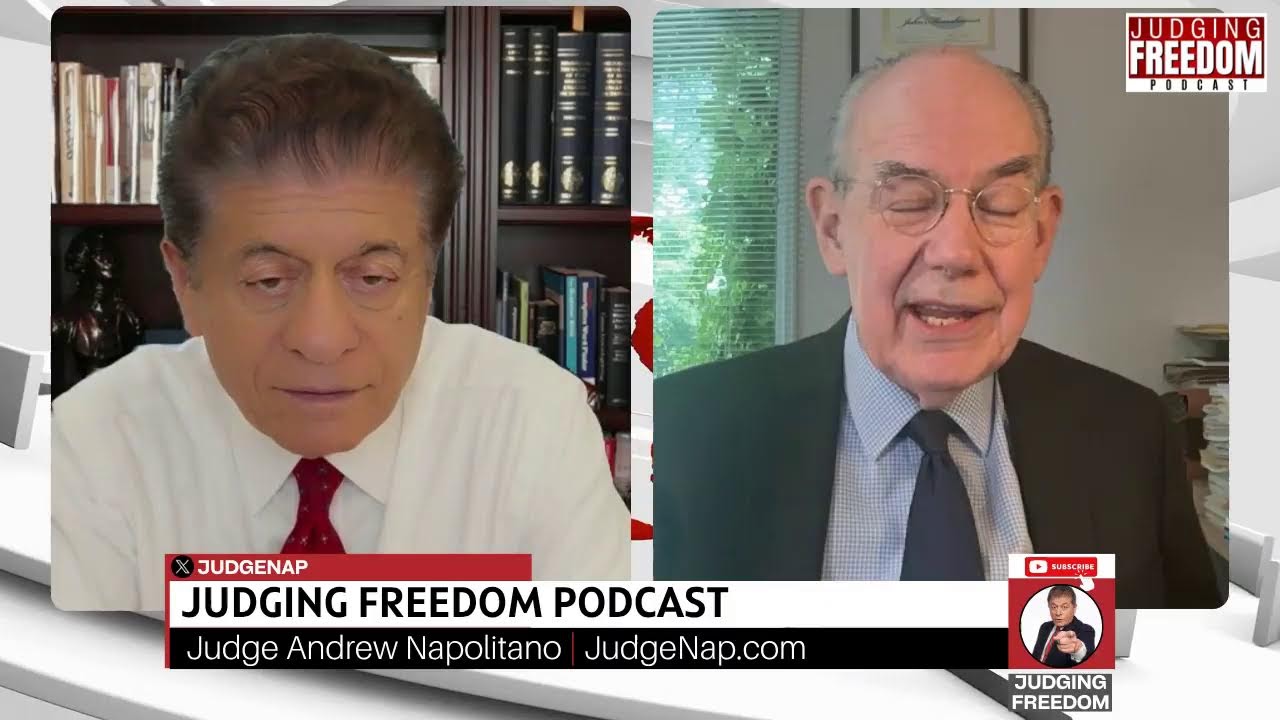
Watch the Video Here (26 minutes, 57 seconds)
Host: Judge Andrew Napolitano
Judging Freedom
1 July 2026
Judge Andrew Napolitano’s discussion with Prof. John Mearsheimer highlights a realist critique of U.S. foreign policy, focusing on the Russia-Ukraine conflict and a U.S.-Israel clash with Iran. They suggest drone strikes against Russia might cause localized damage but are unlikely to alter the battlefield, serving mainly to boost Ukraine and Western bargaining power. The conversation warns that expanding attacks could provoke Russian retaliation against Europe, as Western leaders support Ukraine’s longer-range military capabilities.
Another key point is the argument that the U.S. is not a neutral mediator but actively involved in the Ukraine conflict by providing military aid, sharing intelligence, and helping to develop Ukraine’s military over the long term. The idea of the “spirit of Anchorage” is seen as having fallen apart, with Russia now considering Trump, Europe, and Ukraine as coordinated enemies. Putin’s recent statements are viewed not as signs of expansionist aims but as signs that Moscow is preparing for a broader war, which Moscow believes Europe is already considering.
The discussion turns to Iran, where the memorandum of understanding is seen as a U.S. capitulation reflecting Iran’s stronger coercive power. Iran’s ability to threaten the Strait of Hormuz, attack U.S. bases, damage Gulf infrastructure, and withstand retaliation is crucial. The interview suggests Washington and Israel failed by underestimating Iran’s resilience and overestimating their air power. This weakens U.S. credibility among Gulf states, which are now diversifying their security alliances and pursuing quieter diplomacy with Iran.
Finally, Netanyahu is seen as unable to reignite a U.S.-Iran conflict but capable of disrupting diplomacy through actions in Lebanon and rejecting the two-state solution. The interview offers a pessimistic view: escalation is frequent, U.S. influence is declining, and regional players are adapting to a more multipolar and unstable security landscape.
IS RUSSIA ABOUT TO STRIKE INSIDE EUROPE? | PROF JIANG XUEQIN
- In this video, we examine the real story behind Ukraine's drone campaign against Moscow and Crimea, the hidden red lines that could pull Russia into striking inside Europe, the truth behind the so-called "spirit" of a summit that may have never produced a real agreement, and why calling the United States a mediator in this war no longer matches the facts on the ground.
- We break down the propaganda narrative of a "turning tide," Putin's blunt warning to his newest military recruits, and what all of this really means for how — and whether — this war ends.
- ⚠️ DISCLAIMER: This content is for educational and informational purposes only. It does not constitute political, financial, or military advice. We try to remain neutral, factual, and responsible in our reporting.

Watch the Video Here (16 minutes, 39 seconds)
Host: Prof. Jiang Xueqin
Prof. Jiang Insights
1 Juli 2026
Prof. Jiang argues that the Russia-Ukraine war is entering a more volatile phase shaped by endurance, strategic perception, and escalation rather than imminent negotiation.
Disruptive is not defeat
Ukraine’s long-range drone attacks are presented as tactically disruptive and symbolically significant, but not decisive battlefield developments. Examples such as strikes near Moscow, attacks on refineries, and damage to fuel depots or naval assets in Crimea illustrate how these operations impose costs and generate psychological pressure without necessarily changing the front-line balance.
Western Talking Points
Prof. Jiang expresses skepticism of Western narratives portraying Russia as nearing economic collapse, domestic instability, or military defeat. He points, for instance, to Western claims that sanctions, drone pressure, and battlefield setbacks are collectively weakening Moscow, and questions whether these claims are sufficiently supported. The analysis suggests that such narratives may function as strategic communication aimed at sustaining public and legislative backing for Ukraine, especially when paired with calls to expand long-range strike capabilities.
A central emphasis is the role of perception in state behavior. Prof. Jiang’s analysis argues that Russian leaders may increasingly view the United States and Europe as aligned in an effort to weaken Russia. Public Western commitments to intensify economic pressure and accelerate Ukraine’s long-range strike capacity are used as examples of actions that Moscow may interpret as direct strategic involvement. Whether accurate or not, this perception could shape threat assessment, military planning, and escalation risks, including possible retaliation beyond Ukraine.
Cautious Optimism
Overall, the document offers a cautionary reading of the war’s trajectory. Its main contribution is distinguishing symbolic or coercive military action from developments that materially alter battlefield outcomes; for example, drone activity around Red Square may signal vulnerability and political pressure, but it does not by itself degrade Russia’s battlefield capacity.
The discussion of a possible strike on a European munitions facility similarly clarifies the logic of coercive escalation. The conclusion is that hardened rhetoric, expanded strike capabilities, and mutual threat perceptions may be driving a longer and more unstable phase of the war.
What is the Side of the Story that is Not Yet Decisive? Edited and annotated by Abraham A. van Kempen
GUEST EDITORIAL | GERMANY’S ROTTEN CENTER IS HEADING FOR A RECKONING
As the AfD heads to its party congress in Erfurt, Germany’s collapsing mainstream braces for protests, panic, and a deeper political rupture

© Jens Schlueter / Getty Images
By Tarik Cyril Amar, a historian from Germany working at Koç University, Istanbul, on Russia, Ukraine, and Eastern Europe, the history of World War II, the cultural Cold War, and the politics of memory
@tarikcyrilamartarikcyrilamar.substack.comtarikcyrilamar.com
HomeWorld News
2 July 2026
In the summer of 2026, Germany appears battered and dazed, suffering from a series of severe blows, many of which are of its own making.
In the short term, it faced a humiliating defeat at the UN General Assembly, where it was rebuked for Berlin’s blatant arrogance, political narrow-mindedness, and unwavering backing of Israel and its actions, including genocide. Additionally, at the World Cup, the German team was eliminated early and decisively.
German Chancellor Friedrich Merz chose this moment to post some X updates that were meant to be reassuring but instead shocked the nation with their clumsy and out-of-touch nature. Why settle for causing only a national downturn when you can also ignite a fierce s**t-storm?
Germany’s economic fundamentals are also in a dire state. As reported by Handelsblatt, Volkswagen, a historic emblem of the German auto industry and a source of national pride, is facing "the greatest cost and structural crisis in decades." Approximately 100,000 jobs are at risk. This situation reflects broader economic issues. The country’s birth rate—at 1.35 children per woman—is at its lowest since the mid-1990s, indicating widespread anxiety and pessimism throughout Germany.

Read more
Why the happy face, Merz? Football is just the latest system failing in Germany
Even Germany’s public broadcasters, traditionally seen as biased and not critical enough of authorities, are now acknowledging that poverty is becoming deeply rooted. Once a nation celebrated for economic success and optimism, official data now shows that one in six Germans faces the risk of poverty.
All of this occurs under a series of textbook-centrist governments, formed by coalitions of parties and politicians who mostly share a lack of firm convictions—driven mainly by a reckless desire to confront Russia again—along with egoism, careerism, and a chilling indifference or even disdain for the worsening problems and hardships facing ordinary Germans.
Currently, the latest version of centrist ineffectiveness in Berlin brings together highly unpopular Social Democrats (SPD) — polling at 12% – and widely disdained mainstream conservatives (CDU/CSU) — at 22% and declining. Unsurprisingly, 53% of people do not trust any political party, and a bleak 77% are unhappy with Merz.
The upcoming event in Erfurt, where the AfD will hold its party congress on July 4-5, will truly test this catastrophic decline, widespread recklessness, and national frustration.
Ahead of the meeting, Germany is feeling anxious. The AfD anticipates hundreds of delegates and guests, while authorities expect between 35,000 and 70,000 protesters. This is a substantial number by any standard. Even more remarkable – or worrying – given that Erfurt, known for its historic site and one of Germany’s oldest universities, is small with a population just under 220,000.
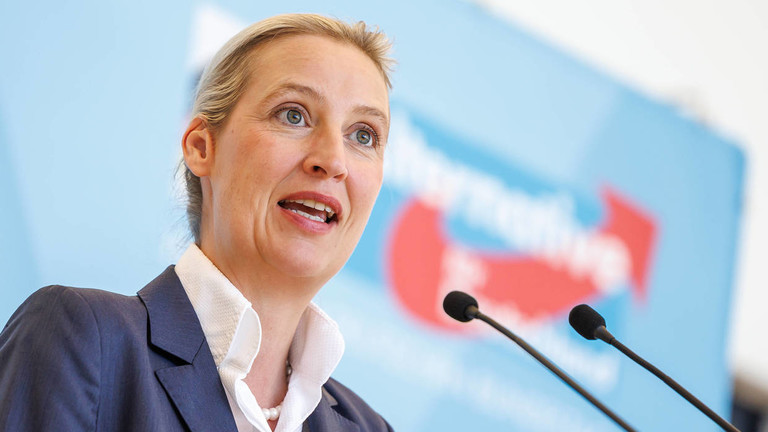
Read more
Leader of Germany’s most popular party wants to restore ties with Russia
It is very unlikely that all the anti-AfD protests heading to Erfurt will stay peaceful. Although authorities and police are urging calm, they are evidently preparing for potential disturbances and violence, such as blockades and more.
Bjoern Hoecke, a prominent figure in the AfD Right and the influential leader of the party in Thuringia, where Erfurt is located, might have been somewhat exaggerated when describing “civil war-like conditions.” However, leaked documents reveal that Thuringia’s police are warning of thousands of violent activists who they believe plan to carry out firebomb attacks from rooftops, accept severe injuries and fatalities among their targets, and even execute an “endgame scenario” of storming the AfD congress. The police union expresses concern about insufficient officers on the ground.
In Erfurt, it’s already evident that a symbolic confrontation is taking shape. Mainstream narratives depict a stark battle: the militant, often labeled fascist AfD as Mordor-like adversaries of democracy, against the benign forces of protest, civil society, and a righteous resistance. Even if the latter encounters violence, it’s dismissed as an anomaly, with accountability ultimately placed on the AfD.
So much for the childish story you will hear a lot about in the mainstream media.
Let’s be clear: the main issue with this AfD congress isn’t its ideology, regardless of your opinion, but the polls. The AfD has become too successful at challenging traditional parties on their own ground. Nationwide, it holds a steady 26% lead over all other parties. In Saxony-Anhalt, the real question isn’t if the AfD will win the upcoming election in two months—you can almost guarantee that—but whether it will secure an absolute majority, enabling it to govern alone without coalition partners.
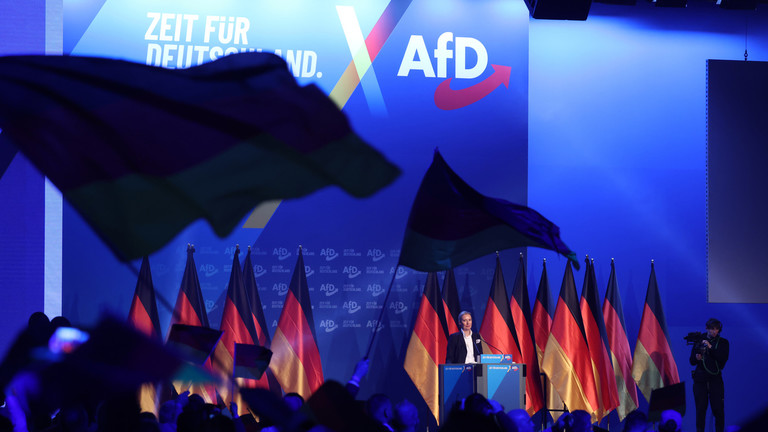
Read more
Soros-backed NGO condemns Germany’s most popular party as ‘unconstitutional’
This groundbreaking development in a single federal state will likely have significant national repercussions. The undemocratic and unjust firewall policy, used by establishment parties to exclude the AfD and its supporters from politics, would become nearly impossible to sustain. One of its leading figures, Merz, might be forced to step down or be betrayed by internal rivals within his CDU who are open to collaborating with the AfD.
It's no surprise to see yet another transparent attempt at launching a new legal attack on the AfD. Masked behind a purportedly credible study, a coordinated group is pushing for the party's ban. Despite the weak case and high legal barriers, the effort persists. The study itself seems questionable, with methods that appear unrobust and reliant on AI. Interestingly, the organization behind it is part of the same orchestrated civil society and NGO network the West has frequently used to initiate regime-change color revolutions abroad.
Erfurt will serve as the setting for a dramatization of an establishment-led story of ‘resistance’, complete with burning tires and rubbish containers. This scenario forms part of a larger narrative that includes a ‘scientific’ study used to justify a ban. None of this genuinely aims to protect democracy.
Instead, it will defend the failing, intolerant, and increasingly desperate radical centrist approach that desperately seeks to maintain power.
Tarik Cyril Amar, PhD, is a historian and expert in international politics. He holds a BA in Modern History from Oxford University, an MSc in International History from the London School of Economics, and a PhD in History from Princeton University.
He has held scholarships at the Holocaust Memorial Museum and the Harvard Ukrainian Research Institute and has directed the Center for Urban History in Lviv, Ukraine. Originally from Germany, he has lived in the UK, Ukraine, Poland, the USA, and Turkey.
Dr. Amar’s book 'The Paradox of Ukrainian Lviv: A Borderland City between Stalinists, Nazis, and Nationalists' was published by Cornell University Press in 2015. A study of the political and cultural history of Cold War television spy stories is forthcoming, and he is working on a new book on the global response to the war in Ukraine. He has given interviews on various programs, including several on Rania Khlalek Dispatches and Breakthrough News.
His website is https://www.tarikcyrilamar.com/; he is on Substack under https://tarikcyrilamar.substack.com, and tweets at @TarikCyrilAmar.
UKRAINE’S DESPERATE PROPAGANDA CAMPAIGN WHILE RUSSIA ADVANCES ALONG THE ENTIRE FRONT
Despite being largely deceptive, this narrative remains the West's main tactic as Russia’s attrition campaign continues to devastate Ukraine.
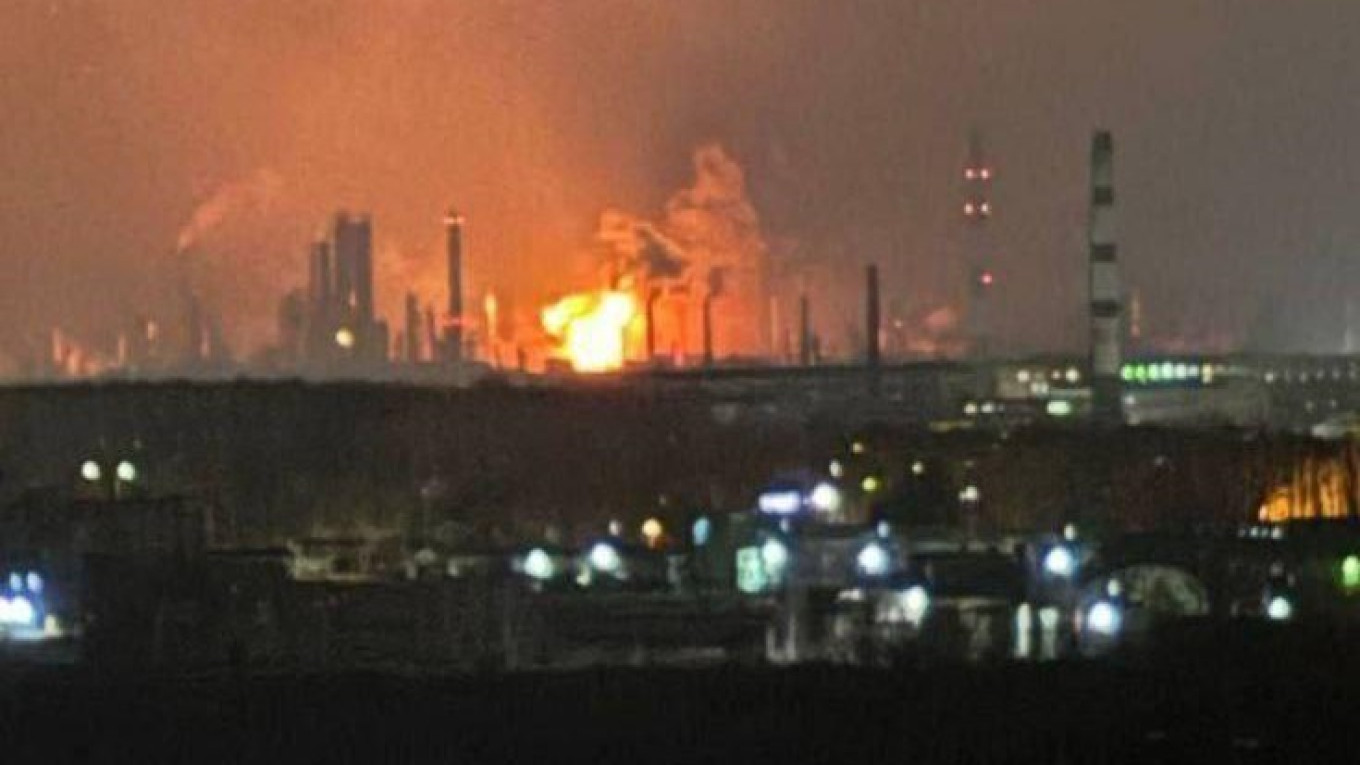
Moscow Refinery on Fire
By Larry C. Johnson
Substack.com
30 June 2026
Volodymyr Zelensky and his Western allies have initiated a critical 40-day “campaign of terror," combining military escalations with a large-scale information and psychological operations effort. This strategy aims to depict Russia as collapsing and Putin facing an imminent uprising or coup, with the ultimate goal of forcing Russia into a ceasefire. Western media flood social and traditional channels with stories that depict Russia’s military efforts as dire, while highlighting Ukraine’s supposed remarkable achievements. Despite being largely deceptive, this narrative remains the West's main tactic as Russia’s attrition campaign continues to devastate Ukraine.
The Western-led propaganda campaign consists of the following elements:
- Information Warfare — Heavy push of 24/7 propaganda about Putin’s “imminent downfall,” including staged videos of supposed Russian soldiers announcing a mutiny.
- Fake Psyops — Coordinated attempts to stoke panic in Russia (e.g., false claims of fuel/gas shortages, which were partly caused by panic buying triggered by the rumors).
- Symbolic Actions — Staged drone flag-drops (e.g., on the Kinburn Spit near Crimea) meant to symbolize Russian retreat and collapse — quickly debunked and mocked.
- Broader Objective — Combine these narratives with actual strikes on Russian infrastructure to create the impression of regime instability, pressuring Putin politically.
Now, the reality is that Ukraine has targeted some Russian refineries, producing striking images of smoke and flames. Yet, these actions are mainly political theater meant to distract from Ukraine's ongoing setbacks across the front. Interestingly, Russian oil exports have actually grown during this time, countering any claims of a major collapse in Russia’s oil industry. Below is a summary of Russian activities starting from the Northern front.
Sumy Direction
In Sumy, the “North” assault groups advanced over 19 sectors. Some of Ukraine’s 104th Territorial Defense units left Bachevsk. Russia continued border operations, launching strikes on Ukraine’s positions and logistics. They claimed to repel Ukrainian crossings and inflict heavy losses. Russian troops are now a few kilometers from Sumy.
Kharkiv Direction
Russian forces advanced north and northeast of Kharkiv, liberating border settlements and gaining tactical positions, according to the Ministry of Defense. Russian Geran drones struck gas infrastructure, including a distribution station near Panyutino and the Skvortsovskaya system near Kosogorovka, damaging tanks, pumping stations, and a treatment facility. Ukrainian counterattacks were repelled, with Russian artillery and aircraft effectively reducing enemy capabilities.
Donetsk Direction (Primary Focus)
Donetsk remains the main focus of Russian efforts, with advances along the Pokrovsk axis. Russian forces have taken several settlements and moved toward key logistics hubs. They achieved a significant victory in Konstantinovka, controlling most of the city and disrupting Ukrainian supply lines. With both Pokrovsk and Konstantinovka under Russian control, they hold the two southern and eastern routes protecting Kramatorsk-Sloviansk. The H-32 highway between Pokrovsk and Konstantinovka and the T-0504 connecting Bakhmut and Pokrovsk now form a continuous corridor under Russian control, enabling logistics and troop movement to Druzhkivka and Kramatorsk without urban combat. Russian advances also occur around Chasiv Yar and Toretsk, including urban fighting and gains in strategic high ground.
The Russian MOD reported steady territorial gains, significant Ukrainian casualties, and effective use of glide bombs, drones, and artillery to support ground offensives.
Dnipropetrovsk Oblast (Dnipro region)
In Dnipropetrovsk, the 36th Guards Motorized Rifle Brigade took Bogodarivka, the third settlement seized in three days after crossing the Dnieper. Russian troops continue long-range strikes with missiles and drones on military, energy, and logistics sites, including defense factories, repair centers, and rail hubs supporting Ukraine.
Zaporizhzhia Direction
In Zaporizhzhia, Russian forces sealed off a Ukrainian bridgehead in Aleksandrovka and advanced to near Pokrovskoye. After taking Novy Donbas, they moved toward Shevchenko and Svetloye, using drones to isolate Ukrainian positions. Russian troops pressed on with artillery, drones, and attacks, destroying fortifications and equipment while holding their lines.
Kherson Direction
Operations mostly stayed along the Dnipro River. The Russian MOD reported hits on Ukrainian crossings, logistics hubs, and troop concentrations on the right bank. Russian forces conducted raids and maintained control on the left bank.
In other words, while Russia launches its summer offensive, Ukraine, despite its propaganda efforts, is pulling back to the west.
BUILDING THE BRIDGE! | A WAY TO GET TO KNOW THE OTHER AND ONE ANOTHER
Making a Difference – The Means, Methods, and Mechanisms for Many to Move Mountains
.jpg)
Photo Credit: Abraham A. van Kempen, our home away from home on the Dead Sea
By Abraham A. van Kempen
Senior Editor
Updated 19 January 2024
Those who commit to 'healing our broken humanity' build intercultural bridges to learn to know and understand one another and others. Readers who thumb through the Building the Bridge (BTB) pages are not mindless sheep following other mindless sheep. They THINK. They want to be at the forefront of making a difference. They're seeking the bigger picture to expand their horizons. They don't need BTB or anyone else to confirm their biases.
Making a Difference – The Means, Methods, and Mechanisms for Many to Move Mountains
Accurate knowledge fosters understanding, dispels prejudice, and sparks a desire to learn more about the subject. Words have an extraordinary power to bring people together, divide them, forge bonds of friendship, or provoke hostility. Modern technology offers unprecedented possibilities for good, fostering harmony and reconciliation. Yet, its misuse can cause untold harm, leading to misunderstandings, prejudices, and conflicts.
A Free Trial for Life – SUBSCRIBE NOW!

• It's quick and straightforward.
• We won’t ask for your credit card number.
• Just enter your e-mail address to receive your complimentary free-for-life subscription to our newsletter.
• Please include your First and Last Name.
• We won’t share or sell your e-mail address.
_________________________
Related Articles Recently Posted on www.buildingthebridgefoundation.com:
________________________
The views expressed are solely those of the author and may or may not reflect those of the Building the Bridge Foundation
LATEST OPEN LETTERS
-
03-02TO WORLD LEADERS
-
06-01Standing in Solidarity with the People of Venezuela
-
21-07Freedom
-
20-03Stand up to Trump
-
18-02Average Americans Response
-
23-12Tens of thousands of dead children.......this must stop
-
05-06A Call to Action: Uniting for a Lasting Peace in the Holy Land
-
28-05Concerned world citizen
-
13-02World Peace
-
05-12My scream to the world
VIRTUAL POST OFFICE
PETITIONS
LINKS
DONATION
Latest Blog Articles
-
15-10Our Friday News Analysis | What the World THINKS Now!
-
14-10Our Wednesday News Analysis | Navi Pillay, head of UN commission that accused Israel of genocide, wins Nobel Peace Prize
-
13-10Navi Pillay, head of UN commission that accused Israel of genocide, wins Nobel Peace Prize
-
13-10No state has a ‘right’ to exist – least of all an apartheid, genocidal state like Israel
-
13-10‘By the Way, the World is Not Stopping Us’: The Secret of Israel’s ‘Success’
-
12-10Our Monday News Analysis | What the World THINKS Now!
-
08-10Our Friday News Analysis | What the World THINKS Now!
-
07-10Our Wednesday News Analysis | The West wants Netanyahu gone - so Palestinians can be killed more quietly again
-
06-10The West wants Netanyahu gone - so Palestinians can be killed more quietly again
-
06-10Israel turns Gaza into largest ghetto in modern history, killing residents one after another as three-year genocide continues
-
06-10Analysis Europe's Boycott of Israel Is Rapidly Expanding – and It Won't Be Easy to Stop
Latest Comments
 One of the most important and illuminating articles that I …
Comment by Benjamin Inbaraj-
And what's wrong here?
After all, there is the homeland …
Comment by Isac Boian -
Does this reinforce or deny my argument that Israel is …
Comment by Edward Campbell -
Many 'say' they support the Palestinian cause but do little …
Comment by Philip McFedries -
The UN is strangled by the "war for profit" cabal …
Comment by Philip McFedries -
I can't read the printing on the map.
Comment by Philip McFedries -
Good news!
Comment by Philip McFedries
COMMENTS
This article has 0 comments at this time. We invoke you to participate the discussion and leave your comment below. Share your opinion and let the world know.