 NEWSLETTER
The Monday Edition
Our Monday News Analysis | What the World THINKS Now!
Bridging Differences to Help Heal a Broken Humanity (Part 16)
The Hague, 16 November 2026 | If you know of a decisive story, tell the world! We're still searching.
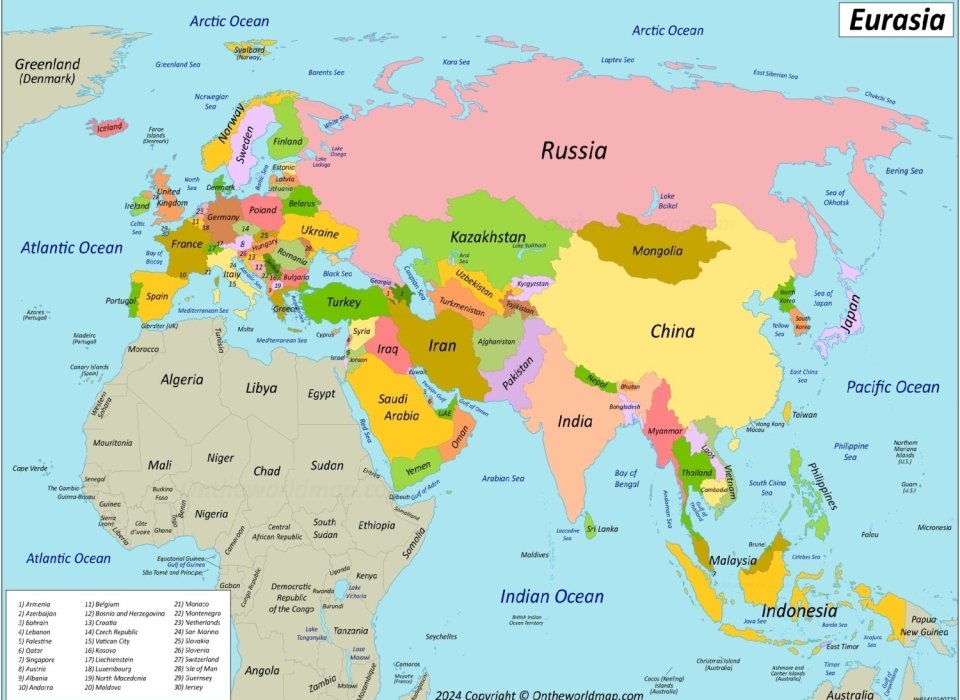
Eurasia
Living Words of Saint Pope John Paul II | “Renew the Face of This Land”
We stand before the Tomb of the Unknown Soldier,
a monument central to Poland’s history.
I wish to kneel at this tomb and honor every seed that dies and bears fruit: soldiers’ blood on battlefields; martyrs’ deaths in camps and prisons; daily labor in fields, workshops, mines, foundries, and factories; parents’ love and responsibility in raising children; creative work shaping national culture; and prayer and service to the sick, suffering, and abandoned—
"all that of which Poland is made".
And I, a son of Poland and Pope John Paul II,
cry from the depths of this Millennium:
Let your Spirit descend.
and renew the face of the earth,
the face of this land.
Saint Pope John Paul II
HOMILY OF HIS HOLINESS JOHN PAUL II
Victory Square, Warsaw
2 June 1979

Building the Bridge Foundation
FROM THE BRIDGE| The Mind Is the Last Colony
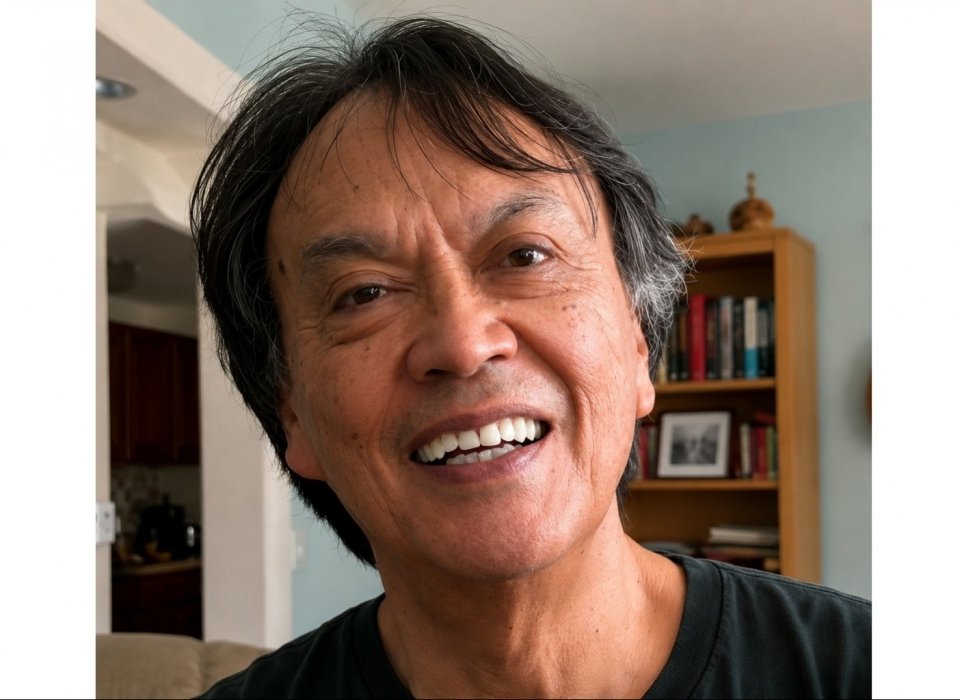
By Abraham A. van Kempen
Founder and Chairman
16 November 2026
“Every honest question is a small lantern, and together they can light the whole road ahead.”
You want to know what keeps me up at night? Lately, in the hush before sleep, with the streetlamp glowing amber on my ceiling, I find myself wondering who wrote the thoughts I think.
Imagine the house you’ve always lived in, now hung with pictures you never chose. That’s how modernity feels to me. Five hundred years ago, we began losing the sense that the stars, soil, and our lives belonged to something sacred.
We traded the sacred for speed, screens, and slogans.
Even our ideas arrive pre-installed, like an operating system beneath every app. We say “I” as if the self were a solitary lighthouse, though its lamp was lit before we arrived. The deepest colonization happens within.
I am not writing to mourn. Reclaiming feels like dawn after a long, cold night: thin gold over a frozen field. Not rage, but a patient return to old songs and to the questions our grandparents asked at kitchen tables.
So pause. Ask what you believe, and who taught you to believe it. Every honest question is a small lantern, and together they can light the whole road ahead.
Morning is coming. The sun rises over the horizon, casting rose and gold across rooftops as the town wakes. Come stand in the light with me.
Inspired by: Modernity Is a Trap: The West Must Decolonize Itself
...
The Trump–Xi–Putin summit in China
This is the big news this week. The Building the Bridge Foundation foresaw this in January 2026, when we nominated Trump, Xi, and Putin to share the 2026 Nobel Peace Prize. If warranted, we’ll nominate them again in 2027. We expect them to make a difference, but the devil is still in the details. There’s no way to know for sure until it’s done.
...
My suggestion that “Trump’s American Way resembles Putin’s Russian Way and Xi’s Chinese Way” was viewed by some as an act of treason, to put it mildly. I defend my statement with: read, compare, and contrast the American Way, the Russian Way, and the Chinese Way for yourself:
The Putin Doctrine: ‘A Unified European Home,’ Speech, Berlin Bundestag, 25 September 2001
The Putin Doctrine: ‘Security for One is Security for All,’ Speech, Munich, 10 February 2007
The Trump Doctrine: ‘Nation Builders Harm Societies,’ Speech, Riyadh, 13 May 2025
The Xi Jinping Doctrine: ‘Global Governance As a Shared Project,’ Speech, SCO Tianjin, 1 September 2025
To paraphrase Henry Kissinger, nations have neither friends nor enemies—only interests. The recent tit-for-tat in Eastern Europe, West Asia (the Middle East), South America, and East Asia has caused major hiccups in the global economy. It’s time to build bridges. Besides, certainly the U.S. can no longer afford wars, especially if it is spilling blood and wasting treasure to uphold Eurocentric policies, not American ideals.
Look at the numbers! Everybody is talking about AI. Companies like Amazon, Apple, Facebook, Google, Microsoft, OpenAI, Oracle, SpaceX, and several more in the United States believe they can outsource and outcompete each other to reach market dominance. What will it take in real dollars and cents to build the data centers, including the land, the buildings, the electrical capacity with acres of turbines or nuclear power plants, the water to cool down the energy, etc.?
Current estimates reported in the mainstream media range from $5 trillion to $8 trillion, and these funds are needed now. To put the figures in perspective, let’s use $7,000,000,000,000, or $7 trillion. That’s compared with $13 trillion in outstanding home mortgages, U.S. GDP of $32 trillion, and a national debt of $40 trillion. Even more strikingly, compare the $7 trillion needed for AI investment to the U.S. population of 340 million. In short, U.S. citizens – every man, woman, and child – need to cough up $20,588 each of investment capital to build the U.S. AI infrastructure. For a family of five, this means $102,940 per household.
What’s my point? If the United States must choose, should it increase its national debt to fund wars or develop AI? I’m glad Presidents Trump, Xi, and Putin are discussing these issues without Europe. Europeans can join when they're ready.
...
On both sides of the Atlantic, neo-liberals and neo-cons embrace neo-colonialism and hope President Trump will help European elites to defeat Russia. Without U.S. support, Europe will disintegrate, and NATO will die a natural death. It is no secret that Trump despises them and that they would prefer a dead duck rather than a lame duck in the Oval Office. The results of the midterm elections represent ‘Happy Days are Here Again’ for the neo-colonialists.
Here’s a kicker. What if the European elites offer President Trump an offer he can’t refuse? Will he capitulate?
What if European leaders offered the U.S. a reverse Marshall Plan, lending tech companies $7 trillion to build AI infrastructure? The ECB could fund the loan through quantitative easing, bringing money into the U.S. without causing inflation on either side of the Atlantic. The U.S., which lacks domestic funding for AI infrastructure, would in return commit substantial resources—blood and treasure—to defeating and fragmenting Russia and further fragmenting the Middle East in Europe’s interests. This would be nothing new: since before World War I, the U.S. has been Europe’s scapegoat and whipping boy, while enforcing Eurocentric policies and doing its dirty work.
Do European leaders think Trump is that stupid? Are liberal democrats and neoconservatives assuming that Russia and Iran won’t retaliate or fight to the end, risking mutual destruction? But money talks. Let’s see how President Trump will respond to Presidents Xi and Putin this week in China. I bet President Trump will gravitate toward winners, not losers. Maybe China will lend the U.S. the money? Wouldn’t that be the living end?
We’re still on our way to Yalta in peace, slowly but surely.

Churchill, Roosevelt, and Stalin at Yalta brokering peace that turned out to be make-believe
To be continued on Friday, 21 November 2026.
With every good wish to you, I am,
Sincerely yours,
Abraham A. van Kempen, Founder and Chairman
Building the Bridge Foundation, The Hague
Bridging Differences to Heal a Broken Humanity
Remember! Diplomacy is catalytic—transformative —while military action is cataclysmic—destructive and catastrophic.
When faced with the options to be good, bad, or ugly, let’s build bridges, not burn them. After all, mutual deterrence reigns.
RICHARD WOLFF: IT'S OVER, CHINA HAS WON – AI BUBBLE COLLAPSING
Prof. Richard Wolff discusses why China has won the economic war and why the U.S. is increasingly likely to respond with military power worldwide.
- Wolf says the unproven allegations against Jensen Huang reflect corporate infighting, not ties to China.
- Government-tech ties face public resistance, while borrowing to fuel the tech boom raises bubble risks.
- Wolf argues China’s economies of scale give it such a decisive cost advantage that competition with the United States is effectively over.
- China also gains from economies of scope by integrating technology and industry across multiple sectors.
- As bipartisan foreign policy consensus frays, Wolf urges talks to prevent conflict and build Eurasian security architecture.
- U.S. relations with allies such as Canada, Mexico, and Europe are strained, and Canada is turning to less expensive Chinese goods.
- Wolf says Europe sees confrontation with Russia as its only escape from junior-partner status—a highly risky strategy.
Watch the Video Here (51 minutes, 59 seconds)
Host: Prof. Glenn Diesen
Substack.com
11 November 2026
00:00 Understanding the Structural Crisis in American Capitalism
06:50 The Merger of Corporate and Government Power
10:59 The Competition Between the US and China
20:50 The Rise of Chinese Economies of Scale
32:24 Shifts in US Foreign Policy and Global Dynamics
Structural Crisis in American Capitalism
Professor Richard Wolf returns to discuss a structural crisis in American capitalism, the merger of corporate and state power, U.S.-China competition, shifts in U.S. foreign policy, and Europe's strategic position.
1. Structural crisis in capitalism
The host argues that corporate-government mergers and wars against Iran and Russia—where Washington openly cites economic gains—signal a structural crisis. Venezuela, energy, dollar defense, and technological leadership fit the same pattern. He begins with Nvidia CEO Jensen Huang.
The Jensen Huang case
Wolf says media coverage is superficial and no one understands what’s happening. His main observations:
- The story began with an accusation that a woman executive below Huang had an affair with him, and that she is a Chinese spy. The provenance of the claim is vague or unknown.
- No US agency has charged her with anything. Spying for China is a crime under US law, yet there is no charge and no lawyer.
- One or two more women have since made similar claims about affairs. Huang reportedly admitted to the affairs, but not to anything connected with spying.
- Huang has long been close to Trump and the small circle of billionaire tech executives.
Wolf stresses that what follows is speculation. He believes the affair is less about China than corporate competition and companies’ dirty politics. Huang’s Chinese background makes it easy to frame the story around China, a country many Americans know little about beyond viewing it as bad.
Market impact
The story is treated like a celebrity scandal: it dominates the news briefly, then vanishes. Wolf sees no significant consequences. Nvidia's stock fell slightly as speculators bought the dip, and the company remains central. Competitors may try to exploit the moment, but there’s no evidence yet.
2. Corporate-government merger
Prof. Glenn Diesen asks how the U.S. government’s growing role in tech fits into its broader challenges. Its involvement is understandable amid competition with China, but while Barack Obama was criticized for picking winners and losers, today the government is nearly a co-owner of some tech giants. What problems might this create?
Public backlash
Wolf says the answer was given in the election two weeks earlier:
- In about half of the states, ballot propositions were hostile to the high-tech and chip industry, or to the electricity, gas and oil companies that supply the energy for data centers.
- The results were overwhelmingly negative, and he is not sure a single one went the other way.
- Many newly elected members of Congress and senators promised to be suspicious and critical and to slow things down. In his view, this has not yet been factored in.
Bubble risk
Living near Wall Street, Wolf senses deep anxiety. The American economy has invested its own funds and borrowed heavily from banks and bond markets in what is now considered the largest industry bet in U.S. capitalist history—larger than electricity, railroads, or atomic energy. The scale has fueled suspicion and serious fears of a bubble bursting. Short-selling high-tech stocks is active, and some investors not only welcome a downturn but stand to profit from it.
The market looks healthy only because a few companies are thriving. Although the average seems fine, wide variation means many are struggling.
3. The US-China competitive gap
"The competition is over"
Wolf exaggerates: the U.S.–China competition is over, and China has won. He interprets recent developments as U.S. defeats or retreats, including the Huang affair, which he sees as an admission later dismissed by alleging Huang’s involvement in illegal activity or espionage. The United States, he argues, keeps making excuses for its struggles against China.
Example: the electric scooter
- US media are suddenly full of stories about the electric scooter, an industry China has been developing for at least 20 years. It was once considered an Italian phenomenon (Vespa) and never caught on in the United States.
- The Chinese asked why scooters failed in the United States and whether conditions had changed. The best scooter companies are now Chinese, and they dominate this market even more than electric cars, trucks, or solar panels.
- Roughly 350 million scooters are on Chinese roads, and half a dozen companies compete to make them. They are elegantly designed and fully electric.
- The battery runs on salt, not lithium, so it costs almost nothing. This solves the problem of short trips (to work, to the shops, to visit friends) with no pollution and no fossil fuels.
Economies of scale
Unlike England, the Netherlands, or the United States, China has a key advantage in capitalist competition: economies of scale.
- Modern technology requires substantial fixed capital in the form of long-lasting machines.
- The more units a firm produces, the more widely it can spread those costs, lowering the price it can charge per unit. Large-scale producers can therefore undercut smaller competitors.
- China is an industrial economy with roughly 1.4 billion people, compared with about 330 million in the United States—a ratio of more than four to one.
- Step by step, the Chinese are learning to use their sheer size to outcompete everyone else, and there is nothing the United States can do about it.4. Economies of scale and scope
The rest of the world, and Europe
The rest of the world lacks the purchasing power to replace the US market and is increasingly under China’s control. Europe remains a producer, but division among some 28 countries—each vying to control its subsidizing government—prevents it from achieving comparable scale. Wolf cites an unpublished study attributing Volkswagen’s collapse to this problem: it aimed to become Europe's car company, but competition from smaller European firms and Japanese and Korean manufacturers kept it from reaching the scale needed to survive.
Economies of scope
Prof. Diesen adds that China benefits from economies of scope: producing multiple products together at lower cost—a key advantage in the digital era.
- Whoever controls self-driving technology, including sensors, also controls essentially the same technology used in robots.
- Companies that operate self-driving taxis in places like China and Russia also run search engines and food-delivery services.
- A business can expand into areas that were previously unrelated—for example, Amazon could create its own currency. The host notes that this is also Elon Musk’s dream.
- China already has the industrial base to integrate this technology into its industries. Add de-dollarization and national currencies backed by their own banks, and what cards does the United States have left to play?
The US response
Wolf says America’s dominant ideology remains aggressive assertiveness: the belief that the US can dictate world affairs as it did in the late 20th century. Leaders fail to see this is no longer possible, creating a schizophrenic result. Trump, for instance, announced that day he was considering invading Cuba—a role no longer available to him. Within days, he or a lieutenant will likely lament that China has done something else.
Wolf notes that US media cover China's achievements only when prominent figures like Elon Musk or a senator comment—as with the scooter, in the news for two years. China now dominates discussion, unlike when Americans focused on Germany and Japan’s technological dynamism. Both left and right invoke China and, peculiarly, deny and affirm its rise.
5. Evolving American foreign policy
A slowly emerging shift
Wolf argues Americans are increasingly accepting China's rise as permanent. From Obama's Asia pivot to claims that Europe was “domesticated" and the Cold War won, containment efforts aimed to finish the job. But that narrative is fading as statistics show China’s economy growing two to three times faster than America’s. Wolf expects a new foreign policy to emerge.
The end of bipartisan consensus
- For most of the period since World War II, Republicans and Democrats have agreed that, despite their domestic disagreements, they are united on foreign policy. Even funding patterns reflect this: big corporations and groups such as AIPAC give to both parties.
- That consensus is now fraying, first over Europe, where Republicans are ready to write Europe off and Democrats are moving in the same direction.
- The most dramatic break is about to emerge over China. The corporate sector will argue that China is a competitor growing at America's expense and seeking to displace it—a challenge that will be very costly for the United States.
The risk of war
Wolf argues this mindset leads to war: the United States and China are nearing conflict, as Iran's use of Chinese and Russian assistance against the United States and all sides’ nuclear arsenals show. He calls this catastrophically stupid and urges a new foreign policy: negotiate a security architecture with Xi Jinping or other Chinese leaders, starting in Europe and extending across Eurasia, to avert the likely outcome. Savvy leaders could build bipartisan support by presenting it as a guarantee of Chinese purchases from select American industries.
A new situation
American foreign policy has long served a military-industrial complex, with no comparable social force to challenge it. The left and its peace movement were dismantled after 1945. Now, a declining U.S. economy faces a rising anti-capitalist one. Unlike the Soviet Union, China is seen as a genuine economic competitor. Americans see "made in China” goods daily and increasingly discuss BYD, maker of the best, cheapest electric cars. High tariffs keep Americans from buying them, while Canadians and Mexicans can. These conversations are teaching millions that a real competitor exists, potentially sparking a movement to change foreign policy and challenge defenders of the status quo.
Prof. Diesen's follow-up
During the hegemonic era, foreign-policy unity came naturally: the US could be everywhere without setting priorities. The right pursued global primacy and a “new American century”; the left, militarised human rights and democracy promotion. Despite different rhetoric, their policies were similar. Now, as the US must choose priorities, the parties diverge: Republicans want to fight Iran, Democrats Russia. Some say scaling back the empire would save the republic; others urge abandoning Europe or even Israel. Meanwhile, China, which surpassed the US in purchasing-power parity in 2014, is rising rapidly.
6. Fissures with traditional allies
The disintegration of the hegemonic self-image
Wolf adds that the hegemonic self-image is unraveling. Intellectuals—and increasingly the wider culture—are debating whether the United States can achieve its aims by destroying allies like Canada and Mexico, once viewed as nearly part of the country. This explains the confusion when Trump called Canada the 51st state: in many ways, it already was. By making the relationship explicit, he tried to shore up a bond he knew was fraying, but backfired. Canada turned elsewhere, leaving Americans feeling they had lost a vital ally. The same is true of Mexico.
Canada
- Americans are evenly divided over whether the US needs Canada. Canadians are furious.
- Tourism from Canada to New York has dropped sharply. Canadians make up the city’s largest group of foreign visitors, and the mass protests are hurting the tourism industry.
- Canada is also making arrangements with China. BYD cars face a 100% tariff in the US, meaning a $30,000 car effectively costs $60,000. Canada had the same tariff until the dispute between Trump and Prime Minister Carney, after which it lowered the tariff from 100% to 6%.
- Canadians can now buy inexpensive Chinese cars and trucks, while Canadian firms competing with American companies can use vehicles that Americans cannot buy at the same price.
- As this percolates into the culture, it raises questions nobody has asked before in Wolf's lifetime about the future of the United States. When he lectures on the decline of the American empire, audiences now nod; he used to be challenged and had to defend the statistics.
Europe and Greenland
The host says Europeans face a similar situation: The US tried to acquire Greenland, and Denmark, though still sovereign, has effectively surrendered some powers, including trade agreements. Former geoeconomic allies are being downgraded to vassals expected to pay tribute or grant exclusive US privileges.
7. European strategic dilemmas
Asked what cutting Europe loose would mean, Wolf says the US is playing a strategic game. He stresses this is his personal opinion, not widely held, and that most Americans aren’t ready to consider it.
American ambivalence toward Europe
- The US has backed Europe as an ally and bulwark against Russia, yet also viewed it as a potential threat.
- A unified Europe would be a stronger competitor and powerful
- US interests oppose its ability to achieve economies of scale.
- Wolf views NATO’s eastward expansion after German reunification as deliberate—and a fantastic strategy.
Europe's resentment and its "last chance"
Europe never recovered from losing its colonies. After 1945, it accepted a subordinate role to the United States, with Britain its closest ally. European politicians built careers in this role, despite deep resentment. Neither the common currency nor the EU freed Europe; the United States preserved the arrangement. The Soviet Union’s collapse and Russia's weakness seemed to offer Europeans a final chance to break free. Wolf describes the resulting “fantasy”:
- Move NATO to the Russian border, a major expansion of Western Europe.
- Provoke Russia in Ukraine and make the war last a long time, using Americans to help fight and pay for it, and carry on even without them.
- Argue to the US that defeating Russia helps America by weakening China's ally, so the Americans keep paying and stay out of the way.
- Once Russia is defeated, carve it into about 20 small countries and divide them among France, Britain, Italy, and Germany, recreating a European empire that includes Europe plus Russia’s northern Asian part.
This would create an economic bloc rivaling China and the United States, gaining economies of scale and independence. Wolf calls it Europe’s only way forward amid its military and technological lag. The increasingly dangerous war with nuclear-armed Russia becomes Europe’s obsession. Otherwise, its century-long decline would continue, leaving it as far behind as Africa is today—with roles reversed.
Closing thoughts
Wolf admits people aren’t ready for this argument but challenges anyone to explain the shifting adjustments underway better. The Chinese knew they had to outperform the Americans to avoid eventual defeat, and figured out how—as the Americans had in the 19th century. Now it’s Europe's turn. His account also explains why Europeans are so Russophobic: the EU's foreign policy chief and a former Polish president have both said that having many smaller Russias would be good.
THE BIG THREE - RAY MCGOVERN & PETER KUZNICK ON THE WORLD THIS WEEK
What will this week’s meeting in China between Xi, Putin, and Trump bring? Putin lays down the law on Ukraine, stunning the NYT; Trump ditches Vance on Iran, while Hegseth survives. Ray McGovern and Peter Kuznick, Sunday at 9 am EST.
- In this Consortium News episode, host Joe Lauria and guests Ray McGovern and Peter Kuznick discuss the Trump–Xi–Putin summit in China and the risk of nuclear war, drawing on Reykjavik 1986 and Kennedy's 1963 peace initiative.
- They examine the Ukraine and Iran conflicts, Europe's role, US intelligence failures and the lack of accountability from Iraq to Russiagate, and the prospects for Democrats in Congress.
- The episode closes with a tribute to Consortium News founder Robert Parry on the outlet's 31st birthday.

Watch the Video Here (2 hours, 7 minutes, 7 seconds)
Host: Joe Lauria
Consortium News
15 November 2026
1. Introduction
The Consortium News episode 43 ("The Big Three This Week") opened with a preview: the Xi–Putin–Trump summit in China, a clash between Vance and Hegseth, Vance's removal from the Iran negotiating team, grounded planes, and the Nvidia hype.
2. Program opening and news updates
Lauria previewed the week's news: the arms-control agenda for the summit after New START expires in February; Ukrainian and European fears of a great-power carve-up involving Ukraine, Taiwan, and European security; and his charge that The New York Times misrepresented Russia's security demands. He also discussed reports of a Vance–Hegseth dispute over the Iran war’s electoral costs, Trump excluding Vance from Iran talks, Joe Kent’s Oval Office ban after he said Iran intelligence came only from Israel, Hegseth surviving impeachment before later embarrassment, and Chuck Schumer facing a Senate leadership challenge.
Guests were former CIA analyst Ray McGovern and American University historian Peter Kuznick. Lauria noted McGovern’s James Joyce Award in Dublin, Consortium News's 31st anniversary—founded 15 November 1995 by Robert Parry after his Iran-Contra stories were spiked—its winter fund drive, and board member Diana Johnstone’s death in Paris.
3. The three-way summit in China
Asked what to expect from the first Chinese–Russian–American trilateral summit since World War II, Lauria heard McGovern predict little concrete despite all sides promoting it. Citing Ushakov, McGovern said its aim is to stabilize the international situation. Cynically, it may keep Trump occupied and deter rash moves on Iran or Ukraine until mid-December, including the follow-up G20 in Miami. Kuznick noted the White House speaks of denuclearization, not just non-proliferation. He and a co-author propose "Reykjavik 2.0": completing the 1986 Gorbachev–Reagan plan to eliminate nuclear weapons, derailed by Reagan's Star Wars missile defense, in three four-year stages.
4. Nuclear policy and historical context
Kuznick says Trump is no ideologue: he could use nuclear weapons against Iran or advocate abolition. In 1986, Trump offered to negotiate abolition for Reagan; in 2025, he said the US had enough weapons to destroy the world many times over, though he has also supported their use. Putin and Xi have likewise discussed eliminating them. Kuznick sees two paths—war or peaceful progress—and says momentum can grow once a process starts. He warns Israel might use a nuclear weapon against Iran's relocated program, buried under 300 feet of granite, and that Trump’s "golden dome" could become a sticking point, as Star Wars did.
5. Lessons from Reykjavik and JFK
McGovern recalled backing up the CIA's Russia expert in Reykjavik, where Gorbachev proposed abolishing nuclear weapons within ten years, and Reagan was receptive. Advisers Fritz Ermarth, Richard Perle, and Weinberger insisted on retaining Star Wars, which they said could not work. Gorbachev also proposed capping China at 5,000 warheads. Kuznick said Reagan briefly agreed, with Shultz’s support. He likened the moment to Khrushchev's post-Cuban missile crisis letter to Kennedy, which warned they had survived by luck, and cited Pope Leo as a moral voice for nuclear abolition.
6. Political change and systemic challenges
Guests agreed most Americans voted against Trump. McGovern said Kennedy's June 1963 American University speech, drafted with Norman Cousins and Sorensen without input from intelligence, the Pentagon, or the State Department, called for ending the Cold War. It led to a partial test-ban treaty and plans to withdraw from Vietnam before Kennedy’s assassination. Kuznick argued change is possible, pointing to Henry Wallace’s greater popularity than Truman in 1944. He saw hope in Democrats’ election win despite party hawks, and in Israeli politician Eisenkot potentially bringing Arab parties into a coalition.
7. Geopolitics of Ukraine and Iran
The guests argued Trump is constrained by Russiagate, neocons, and a security establishment they claim killed Kennedy. He failed to deliver on his Anchorage promises to Putin to bring Europe and Zelensky around, so Russia and China are handling him cautiously until the Miami G20. Kuznick said Mossad’s claims of Iranian drone plots against Trump suggest foreign manipulation. They accused Europe of undermining peace talks, promoting war rhetoric, and remilitarizing—an approach Tulsi Gabbard called crazy. They said nuclear-war rhetoric has surged since the US sought Russia’s strategic defeat and warned against "mini-nuke" thinking.
8. Strategic threats and regional tensions
McGovern feared Israeli extremists might use nuclear weapons against Iran and inform the US afterward. Kuznick said Iranian officials increasingly support a nuclear deterrent, but argued that a new fatwa and JCPOA—the deal Trump tore up—were the best options. Fearing an Israeli pre-emptive strike, he called for a nuclear-free Middle East and noted the region's reliance on desalination, Iran’s damage to US bases, and Gulf states’ search for alternatives. Lauria added that Netanyahu, nearing the end of his tenure, gave a speech in the Knesset that Haaretz called openly racist, and said he feared Netanyahu might order a strike.
9. Diplomacy and the shadow of war
Kuznick said Trump understands the war’s origins. The New York Times was shocked Russia still seeks its December 2021 treaty proposals: NATO withdrawal of forward deployments, no expansion, and a return to the 1997 NATO–Russia Founding Act. McGovern said "there is no security without mutual security" and described three meetings with Russia hours after Witkoff and Kushner arrived at the Kremlin. Putin, he said, lectured them on camera, called European leaders warmongers, and demanded new Ukrainian elections. The guests said Russia is winning, and Europe lacks a negotiator; Europeans may be waiting out Trump until 2029. Kuznick was less pessimistic, citing weak European leaders and public rebellion.
10. AI hype and Senate leadership
Lauria asked whether the Nvidia CEO story was overblown and how Van Hollen differs from Schumer. Kuznick said it mainly exposes Trump-era corruption—including a $25 million ballroom donation—and weak AI safeguards. He supports less secrecy and more cooperation with China, Russia, and India. He called the espionage angle exaggerated but said the timing before the China trip is troubling. Van Hollen, he said, is more progressive, more critical of Israel, likely not funded by AIPAC, and more open to improving ties with Russia. His chances are rising. The Iran war is deeply unpopular—87% of 18–29-year-olds oppose it—and Kuznick hopes Democrats can "finish off" MAGA by acting boldly.
11. Political accountability and history
McGovern said Van Hollen alone didn’t claim Ukraine aid would benefit his state. He criticized Schumer’s support for Russiagate and warned that impunity over Russiagate, Iraq’s WMD claims, and Iran was dangerous. He said Joe Kent resigned, arguing Iran posed no threat and intelligence came only from Israel. McGovern hoped Trump would avoid war before the China and Miami summits, urging a gentle approach. Lauria noted Trump launched the Iran war without Iraq’s preparatory speeches and buildup.
12. Intel transparency and the war in Iraq
McGovern cited Rubio's claim that the US joined Israel's attack on Iran to pre-empt retaliation. He recalled that in 2002, after Senator Bob Graham sought an Iraq intelligence estimate, the CIA produced a fraudulent report under pressure, and Colin Powell relied on tortured sources’ claims of al-Qaeda ties. No one was held accountable, he said, so Iran's planners expect the same. In 2007, Representative John Conyers declined to impeach Bush, fearing Pelosi’s concern about appearing divisive; McGovern and Cindy Sheehan were arrested protesting. He hoped Judiciary Chair Jamie Raskin and a stronger Democratic majority would show more resolve. They also questioned why Massie's impeachment charges against Hegseth omitted Trump and why some Democrats missed the vote.
13. Legacy of Bob Perry and closing
On Consortium News's birthday, McGovern recalled Robert Parry recruiting him and urging him to verify facts rather than trust analysts’ best guesses. Parry later warned, "It's too much," after overwork led to his death. McGovern said CIA analysis relied mainly on public sources; Bill Casey claimed the campaign would succeed because Americans believed everything false; the CIA infiltrated media through Operation Mockingbird and created the National Endowment for Democracy (NED), which substantially funded Ukraine before 2014. He recalled that Daniel Ellsberg’s and Les Gelb’s 1968 leaks helped stop President Johnson from sending 206,000 more troops to Vietnam, and said David McBride would receive the Sam Adams Award on 17 November. Lauria thanked Ray, Peter, producer Kathy Rogan, and viewers, and renewed the winter fund appeal.
A closing note urged support for Consortium News, a free, independent, ad-free site.
View more on the 2-hour video ...
LT COL DANIEL DAVIS | THE STRATEGIC REALITY FACING UKRAINE IN 2027 & BEYOND

Watch the Video Here (56 minutes, 31 seconds)
Host: Lt. Col. Daniel Davis (Ret.)
Deep Dive
15 November 2026
ESSAY | Why Russia Is Winning the War the West Won't Admit It Is Losing
By Abraham van Kempen
16 November 2026
Col. Daniel Davis argues the West is bankrolling a defeat it refuses to see
The West's comforting narrative—that Russia is trapped in an unwinnable stalemate—is wrong. Col. Daniel Davis says Moscow has a well-resourced path to victory. Ignoring Russia’s capabilities means “literally setting ourselves up for defeat."
The battlefield has changed: drones, artillery, and glide bombs have made a roughly 50-kilometer-wide belt—nearly 30,000 square kilometers—a kill zone where mass maneuver is suicidal. These weapons and missiles cause 95–98 percent of casualties. Ukraine's counterattacks make headlines but cost irreplaceable troops.
Russia has adapted ruthlessly. Citing Parameters from the US Army War College, Davis says.
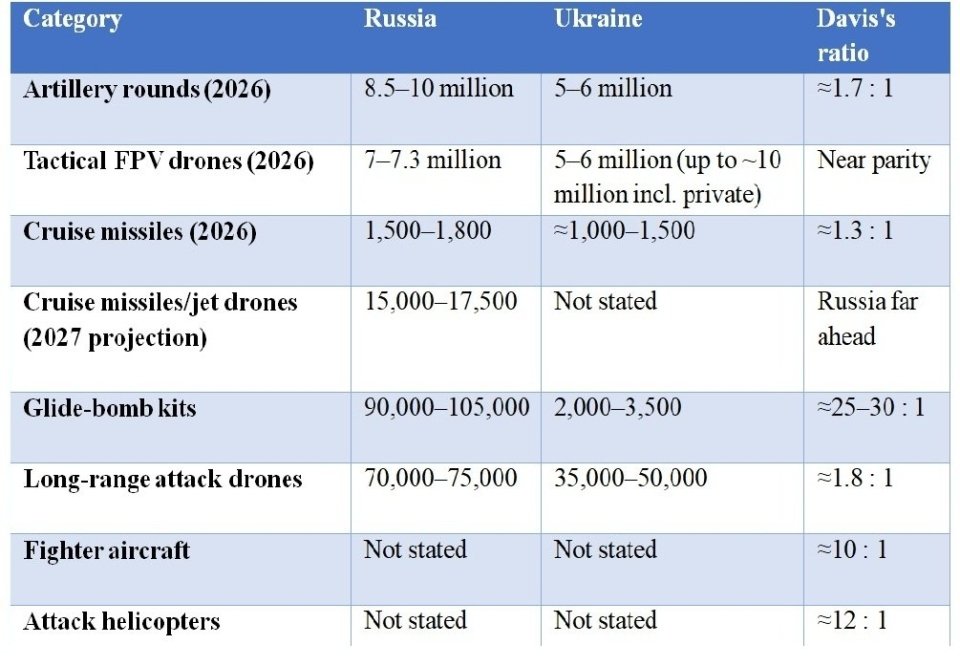
Moscow is pursuing attrition through bombardment, infiltration, and endurance. Russia fields 8.5–10 million artillery rounds versus Ukraine's 5–6 million, up to 105,000 glide-bomb kits versus Ukraine’s 3,500, and ten fighters per Ukrainian fighter. Russian missiles target Ukraine’s power, gas, and rail infrastructure; Ukraine's 102 strikes on Russian defense sites barely affect some 6,000 targets.
Both Russia and Ukraine see the conflict as existential, so neither backs down. Davis fears Ukraine will fight until physically destroyed. He mocks the claim that Russia is too weak to take Donbas yet strong enough to invade Europe, calling it contempt for voters.
What should the West do? Davis says stop expecting change. Europe's roughly $45 billion in annual aid keeps Ukraine's state afloat but cannot fund defences against long-range missiles. He calls continuing the war "virtually immoral," urges negotiations rather than rejecting every Russian demand, and warns that relying on "magic beans" risks a country's life.
Davis’ warning stands: honesty about these numbers is the only way to avoid a defeat of our own making.
Key figures cited by Davis: Russia vs Ukraine
GUEST ESSAY | TRADITIONAL VALUES AND THE PATRIOTIC WORLDVIEW – TRADITIONAL VALUES ARE ESSENTIAL TO SOCIETY
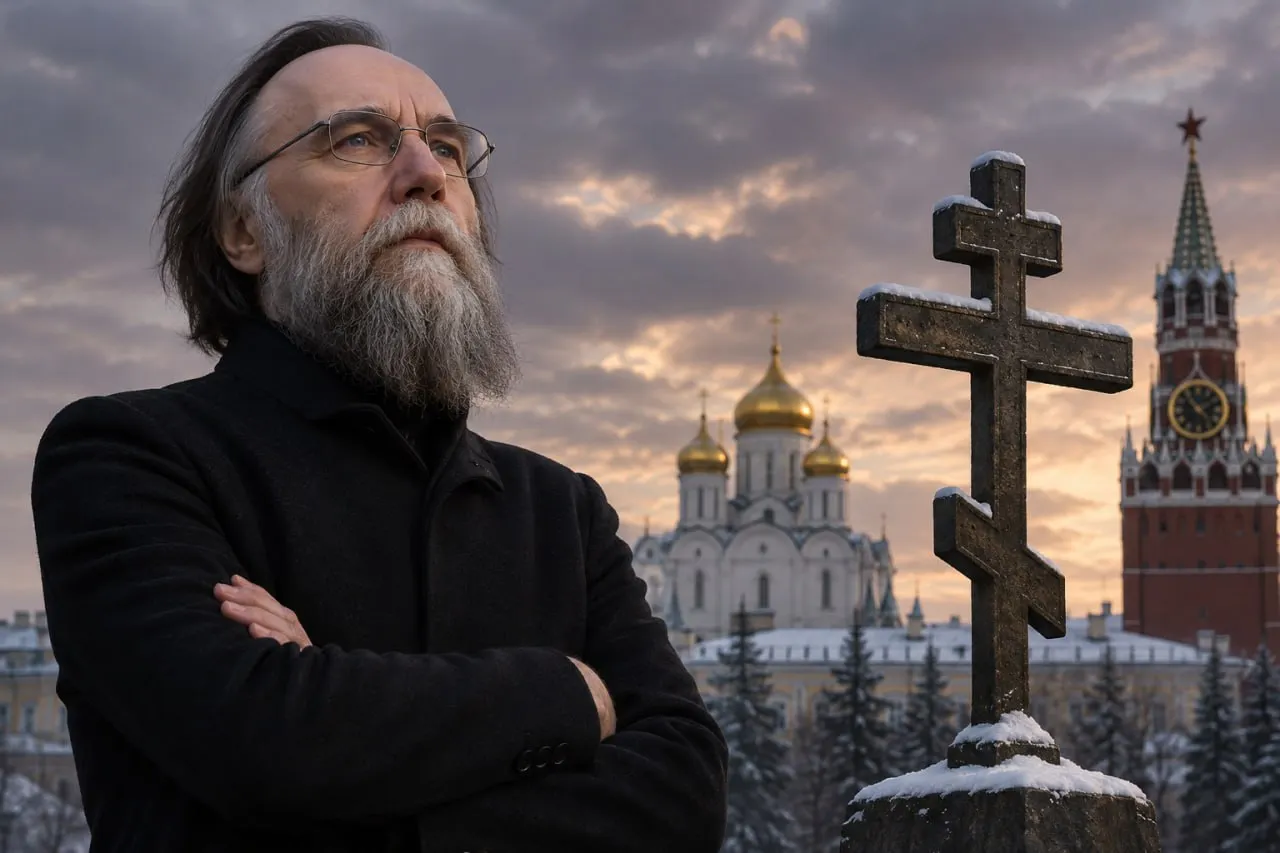
By Alexander Dugin
14 November 2026
Traditional values help shape a patriotic outlook that many believe is important to society. Some people view values that differ from them as harmful. Even a legal move away from a patriotic outlook may be seen as bringing society closer to that perspective. Supporters of traditional values may feel that fines or other penalties are warranted when those values are ignored or openly rejected.
Values matter a lot. Valery Fedorov of VTsIOM (the Russian Public Opinion Research Center) recently shared data showing that respect for traditional values grows with age. The article says this matches how intelligence and understanding grow in a healthy, rational society.
In this view, young people understand traditional values less simply because they understand less about life in general. They are still young and will probably grow wiser. The 30 percent of young people who already hold traditional values just matured sooner than others their age.
Some adults also reject traditional values, which is a much bigger problem. It’s antisocial and anti-national, more dangerous than the changing views of youth. Still, these people can be corrected, because it is never too late to learn.
References:
The Putin Doctrine: ‘A Unified European Home,’ Speech, Berlin Bundestag, 25 September 2001
The Putin Doctrine: ‘Security for One is Security for All,’ Speech, Munich, 10 February 2007
The Trump Doctrine: ‘Nation Builders Harm Societies,’ Speech, Riyadh,/ 13 May 2025
The Xi Jinping Doctrine: ‘Global Governance As a Shared Project,’ Speech, SCO Tianjin, 1 September 2025
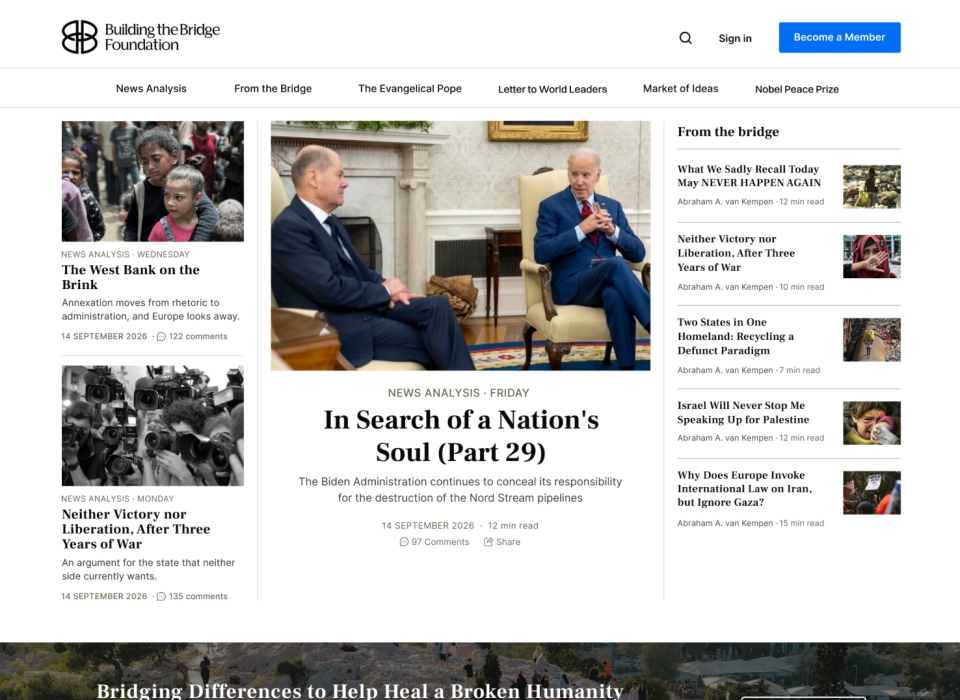
Take a peek at our new website. It’ll be ready to launch in mid-January 2027.
BUILDING THE BRIDGE! | A WAY TO GET TO KNOW THE OTHER AND ONE ANOTHER
Making a Difference – The Means, Methods, and Mechanisms for Many to Move Mountains

Photo Credit: Abraham A. van Kempen, our home away from home on the Dead Sea
By Abraham A. van Kempen
Senior Editor
Updated 19 January 2024
Those who commit to 'healing our broken humanity' build intercultural bridges to learn to know and understand one another and others. Readers who thumb through the Building the Bridge (BTB) pages are not mindless sheep following other mindless sheep. They THINK. They want to be at the forefront of making a difference. They're seeking the bigger picture to expand their horizons. They don't need BTB or anyone else to confirm their biases.
Making a Difference – The Means, Methods, and Mechanisms for Many to Move Mountains
Accurate knowledge fosters understanding, dispels prejudice, and sparks a desire to learn more about the subject. Words have an extraordinary power to bring people together, divide them, forge bonds of friendship, or provoke hostility. Modern technology offers unprecedented possibilities for good, fostering harmony and reconciliation. Yet, its misuse can cause untold harm, leading to misunderstandings, prejudices, and conflicts.
A Free Trial for Life – SUBSCRIBE NOW!

• It's quick and straightforward.
• We won’t ask for your credit card number.
• Just enter your e-mail address to receive your complimentary free-for-life subscription to our newsletter.
• Please include your First and Last Name.
• We won’t share or sell your e-mail address.
_________________________
Related Articles Recently Posted on www.buildingthebridgefoundation.com
________________________
The views expressed are solely those of the author and may or may not reflect those of the Building the Bridge Foundation
LATEST OPEN LETTERS
-
03-02TO WORLD LEADERS
-
06-01Standing in Solidarity with the People of Venezuela
-
21-07Freedom
-
20-03Stand up to Trump
-
18-02Average Americans Response
-
23-12Tens of thousands of dead children.......this must stop
-
05-06A Call to Action: Uniting for a Lasting Peace in the Holy Land
-
28-05Concerned world citizen
-
13-02World Peace
-
05-12My scream to the world
VIRTUAL POST OFFICE
PETITIONS
LINKS
DONATION
Latest Blog Articles
-
16-11Our Monday News Analysis | What the World THINKS Now!
-
13-11Our Friday News Analysis | What the World THINKS Now!
-
10-11Our Wednesday News Analysis | Israel’s election shows its democracy is a sham, but the West can’t stop buying the lie
-
10-11The Shift: Trump says he’s ending aid to Israel. That’s not true.
-
10-11A generation growing up under occupation: Slovak MEP’s West Bank visit raises questions about Europe’s responsibility
-
09-11Our Monday News Analysis | What the World THINKS Now!
-
05-11Our Friday News Analysis | What the World THINKS Now!
-
04-11Our Wednesday News Analysis | Israeli Elections: What Awaits the Palestinians?
-
03-11Israeli Elections: What Awaits the Palestinians?
-
03-11Analysis - Israeli Democracy Has Been Given a Chance. It May Not Get Another
-
03-11Liberal Zionists are trying to distance themselves from the reality that Israeli voters overwhelmingly want genocide
Latest Comments
 One of the most important and illuminating articles that I …
Comment by Benjamin Inbaraj-
And what's wrong here?
After all, there is the homeland …
Comment by Isac Boian -
Does this reinforce or deny my argument that Israel is …
Comment by Edward Campbell -
Many 'say' they support the Palestinian cause but do little …
Comment by Philip McFedries -
The UN is strangled by the "war for profit" cabal …
Comment by Philip McFedries -
I can't read the printing on the map.
Comment by Philip McFedries -
Good news!
Comment by Philip McFedries
COMMENTS
This article has 0 comments at this time. We invoke you to participate the discussion and leave your comment below. Share your opinion and let the world know.