 NEWSLETTER
The Friday Edition
Our Friday News Analysis | What the World THINKS Now!
Bridging Differences to Get to Know the OTHER and One ANOTHER (Part 9)
The Hague, 16 October 2026 | If you know of a decisive story, tell the world! We're still searching.
.jpg)
Living Words of Saint Pope John Paul II | “Suffering for Doing Good”
Basilica of Saint Francis, Assisi, Italy – 27 October 1986 | There is no peace without a passionate love for peace. There is no peace without a relentless determination to achieve it.
Peace awaits its prophets. Together, we have filled our eyes with visions of peace: they release energies for a new language of peace, for new gestures of peace. These gestures will shatter the fatal chains of divisions inherited from history or spawned by modern ideologies.
Peace awaits its builders. Let us reach out to our brothers and sisters
and encourage them to build peace on the four pillars of truth, justice, love, and freedom.
Peace is a workshop open to all ... Peace is a universal responsibility: it comes about through a thousand little acts in daily life. Through their customary way of living with others, people choose peace or war. We entrust the cause of peace, especially to the young.
May young people help to free history from the wrong paths along which humanity strays.
Peace is in the hands not only of individuals but of nations. Nations have the honor of basing their peacemaking activity on the conviction of the sacredness of human dignity and the recognition of people's unquestionable equality with one another.
We earnestly invite the leaders of the nations and international organizations to be untiring in bringing in dialogue structures wherever peace is threatened or already compromised. We support their often exhausting efforts to maintain or restore peaœ.
We renew our encouragement to the United Nations Organization to respond fully to the breadth and height of its universal mission of peace.
Peace, so frail in health, demands constant and intensive care. Along this path, we shall advance with sure and redoubled steps, for people have never had so many means to build true peace as today. Humanity has entered an era of greater solidarity and a growing hunger for social justice.
This is our chance. It is also our task, and prayer helps us face it.
Saint Pope John Paul II
Address of John Paul II to the Representatives of the Christian Churches and Ecclesial Communities And Of The World Religions
Basilica of Saint Francis
27 October 1986
This week’s reflection: “Suffering for Doing Good”

Building the Bridge Foundation
Saint Pope John Paul II spoke to billions over six decades, to young people, presidents, peacemakers, the forgotten, and the powerful alike.
John Paul II was a theologian, world leader, statesman, poet, and pastor, revered by billions.
He addressed war and peace, human dignity, mercy, and the deepest longings of the human heart.
Those words did not stay in the past. They are living words. And they speak now.
Even more alive today, the Pope's Message invites readers to pause and reflect.
There is no cost. There never will be.
OUR WEDNESDAY NEWS ANALYSIS | NAVI PILLAY, HEAD OF UN COMMISSION THAT ACCUSED ISRAEL OF GENOCIDE, WINS NOBEL PEACE PRIZE
Choice seen as rebuke to Israel and US; Israel denounces ‘grotesque weaponization of award, to legitimize anti-Israel hatred and prejudice’; committee chair hails Pillay’s work as ‘inspiration to those who seek more peaceful world’
.jpg)
South African-born jurist and former UN human rights chief Navanethem 'Navi' Pillay (85) sits at the Nuremberg Forum in Nuremberg, Germany, on October 9, 2026, after being awarded the 2026 Nobel Peace Prize. (Daniel Karmann/dpa via AP)
By Agencies and ToI Staff
The Times of Israel
https://www.timesofisrael.com/navi-pillay-head-of-un-commission-that-accused-israel-of-genocide-wins-nobel-peace-prize/
9 October 2026
OSLO, Norway — The South African-born jurist and former UN human rights chief Navi Pillay, who presided over a commission that declared that Israel was committing genocide in Gaza, won the Nobel Peace Prize on Friday for what the committee described as her efforts to promote peace and international law.
Her win is sure to be seen as a stinging, high-profile rebuke to US President Donald Trump and Prime Minister Benjamin Netanyahu, who have both rejected the findings of a UN commission she led that Israel committed genocide in Gaza. Both leaders also have been highly critical of the institutions where Pillay has worked, with Israel previously accusing her of being a “Hamas proxy” with a long history of vehemently anti-Israeli and antisemitic positions.
"The Norwegian Nobel Peace Prize Committee said it
sought to strengthen international law amid conflict.
… the award was a message to those seeking to undermine
“the international rules-based system and the institutions.”
At a time when the number of wars and conflicts is rising, and when judges and institutions of international law are under political attack,
the Nobel Committee wishes to issue a reminder that the ability to resolve conflicts without force or violence is dependent on the international rule of law ...
'An international legal system in which war criminals are held to account, and the victims of abuse see justice served is a precondition for a peaceful world.'
Pillay is currently serving as an ad hoc judge at the International Court of Justice, the highest court of the United Nations, in the ongoing genocide case against Myanmar."
Pillay’s work “is a source of hope and inspiration to all those who seek to bring about a more peaceful world,” said Jørgen Watne Frydnes, Chair of the Norwegian Nobel Committee, in announcing her win in Oslo, Norway. She is currently an ad hoc judge at the International Court of Justice.
FROM THE BRIDGE | A Dove Circles Above the Ruins
By Abraham A. van Kempen
Founder and Chairman
16 October 2026
A Nobel Honor Ignites a Fierce Battle Over Justice, Truth, And Gaza.
The Norwegian Nobel Committee awarded its 125th Peace Prize to South African judge Navanethem “Navi” Pillay, sparking a fierce global debate over her work. It praised her efforts to promote peace, uphold international law, and ensure accountability for grave crimes.
Predictably, despite the Nobel Peace Prize coming from Oslo,
much of the West remains enraptured by Israel’s ‘right to defend itself,’
as aided and abetted by the West.
Pillay led a UN panel that said in September 2025 that Israel committed four acts of genocide in Gaza and intended to destroy Palestinians there. Israel denies the charge. Its Foreign Ministry called the award political and anti-Israel, while Prime Minister Benjamin Netanyahu’s office said the committee had lost its moral judgment. Other Israeli officials invoked Nazi propagandist Joseph Goebbels. Pillay rejected claims of bias, saying the panel carefully weighed the law and evidence.
The Gaza war began when Hamas attacked Israel on October 7, 2023, killing about 1,200 people and taking 250 hostages. Gaza’s Health Ministry says Israeli military action has since killed more than 74,000 people, including at least 21,000 children, and injured over 175,000.
The UN says about 1.98 million people have been displaced and much of Gaza’s water and sanitation system has been damaged or destroyed.
Separately, the ICC issued arrest warrants accusing Netanyahu and former defense minister Yoav Gallant of war crimes and crimes against humanity.
Unipolar ‘Autocracy’ versus Multipolar ‘Democracy’
While much of the world embraces evolving forms of democracy, the West seems increasingly autocratic, even totalitarian. Let’s support emerging states in building stronger democracies.
Are we watching a clash of civilizations—or a crash? “Clash” suggests two armored worlds charging across an open field, each certain it is right and the other a threat. But “crash” feels more honest: these worlds are already intertwined, sharing crowded space. Their collision harms not just leaders and armies, but families and ordinary people who never chose the fight.
Russia and Europe have never been isolated. For decades, trade, energy, finance, and shared institutions have connected them, alongside everyday ties: cross-border families, students, interdependent businesses, and homes warmed by underground gas pipelines. We hoped these bonds would bridge old wounds and make peace too valuable to lose. But a bridge’s supporting rope can also become a snare.
These connections prevent conflict only when held together by trust and fair rules. When shared systems become weapons, every link feels dangerous: cyberattacks infiltrate hospitals, banks, and homes; disrupted supply chains empty shelves and destroy jobs; energy dependence threatens the heat in a child’s bedroom. Nuclear fallout and climate change cross borders. This is not merely a clash of cultures, but a frightening collision among connected states, turning bridges built for peace into threats to one another—and us.
A world with many great powers holds promise but casts a long shadow. More countries at the table can open space for fresh ideas and unheard voices, yet a bigger table doesn’t guarantee kinder conversation. New powers may loosen old empires’ grip and open long-shut windows, but they can also build smaller cages at home. Sovereignty matters because it protects dignity, difference, and people’s right to choose their path.
Sovereignty can also be a curtain hiding cruelty and silencing those trapped inside. I cannot shake one question: will any ruler—Western, Russian, Chinese, or otherwise—accept limits when no one can say, “Stop”? Many centers of power may promise a bright horizon, but without shared rules and accountability, the light can quickly fade, leaving every nation alone in a storm. The powerful will not feel the cold first. Families will huddle in darkness, parents will protect their children, and ordinary people will wonder why peace slipped away.
The choice before us is this: build a world where power is held in check, or leave the most vulnerable to bear the cost of our failure.
NATO could pursue indivisible European security through a NATO–Russia pathway that protects the sovereignty of every affected state. Peaceful coexistence shouldn’t mean Russia must accept permanent NATO encirclement. The Building the Bridge Foundation urges NATO and Russia to consider expanding their mutually beneficial alliance to include Russia and all Eurasia as full members under a shared supranational defense shield. The idea echoes Gorbachev and Yeltsin’s discussions with Reagan, and Putin’s talks with Clinton, Bush, and EU leaders.
To bridge differences and reconnect, NATO and Russia could appoint 24/7 crisis officers, restore secure political and military hotlines, share contacts for air, maritime, cyber, nuclear, and border incidents, and conduct witnessed monthly tests. Where appropriate, they could hold regional plebiscites, letting those most affected decide.
Now, Presidents Trump, Xi, and Putin must step up to help heal our broken humanity, guided by the enduring axiom: “Destroy your enemies by becoming friends.” If they do, each deserves to share the 2026 or 2027 Nobel Peace Prize.

Churchill, Roosevelt, and Stalin at Yalta brokering peace that turned out to be make-believe
To be continued on Monday, 19 October 2026.
With Every Good Wish to you, I am,
Sincerely yours,
Abraham A. van Kempen
Founder and Chairman
Building the Bridge Foundation, The Hague
A Way to Get to Know One Another and the Other
Remember! Diplomacy is catalytic—transformative —while military action is cataclysmic—destructive and catastrophic.
When faced with the options to be good, bad, or ugly, let’s build bridges, not burn them. After all, mutual deterrence reigns.
COL. DOUGLAS MACGREGOR: SHOIGU UNDER HOUSE ARREST! – 20 RUSSIAN GENERALS PURGED!
Judge Andrew Napolitano’s discussion with Col. Douglas Macgregor, PhD, offers a critical take on Western strategy toward Ukraine, focusing on presidential control, intelligence influence, NATO posture, sanctions, and Russian military leadership.
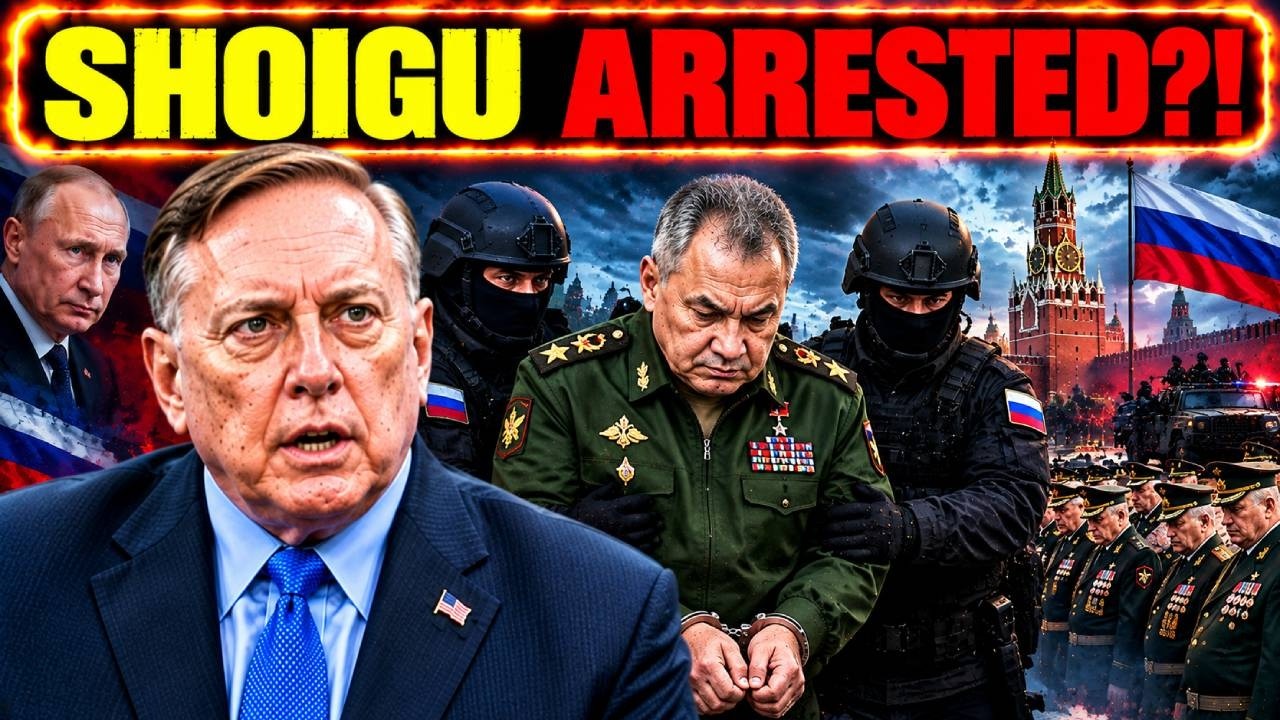
Watch the Video Here (18 minutes, 58 seconds)
Host: Judge Andrew Napolitano
Judging Freedom
15 October 2026
Col. Douglas Macgregor says Russia's top military leadership is in turmoil, claiming that former Defense Minister Sergei Shoigu is under house arrest and that as many as 20 Russian generals have been purged. In this breakdown, Macgregor discusses what he believes is behind the shake-up, what it means for Putin's grip on the military, and how it could affect the war in Ukraine.
What's covered in this video:
- Macgregor's claims about Shoigu and the purge of Russian generals
- What is confirmed: the arrests of senior Defense Ministry figures and Shoigu's close associates
- Corruption crackdown or political purge?
- What the evidence suggests
- What it could mean for Russian military command and the war in Ukraine
Douglas Macgregor is a retired U.S. Army colonel, former Pentagon senior advisor, and outspoken foreign policy analyst known for his blunt assessments of U.S. and Russian military strategy.
IMPORTANT: Claims that Shoigu is under house arrest and that 20 generals were purged are Macgregor's assertions and have not been verified.
- Similar rumors about Shoigu have circulated before, but remain unconfirmed.
- Arrests of senior Russian defense officials, including one of Shoigu’s close associates, are documented.
- Check independent sources for verified information.
MARCO RUBIO DECLARES THE WEST MUST DOMINATE THE WORLD, PRAISES COLONIALISM, ERASES HISTORY
In Greece, Marco Rubio praised European colonialism, erased Native Americans from the narrative, and said the West must use force to “maintain its place as the King of the Hill” and “burn more bridges.”
USA DECLARES WEST MUST DOMINATE WORLD, PRAISING COLONIALISM, ERASING HISTORY
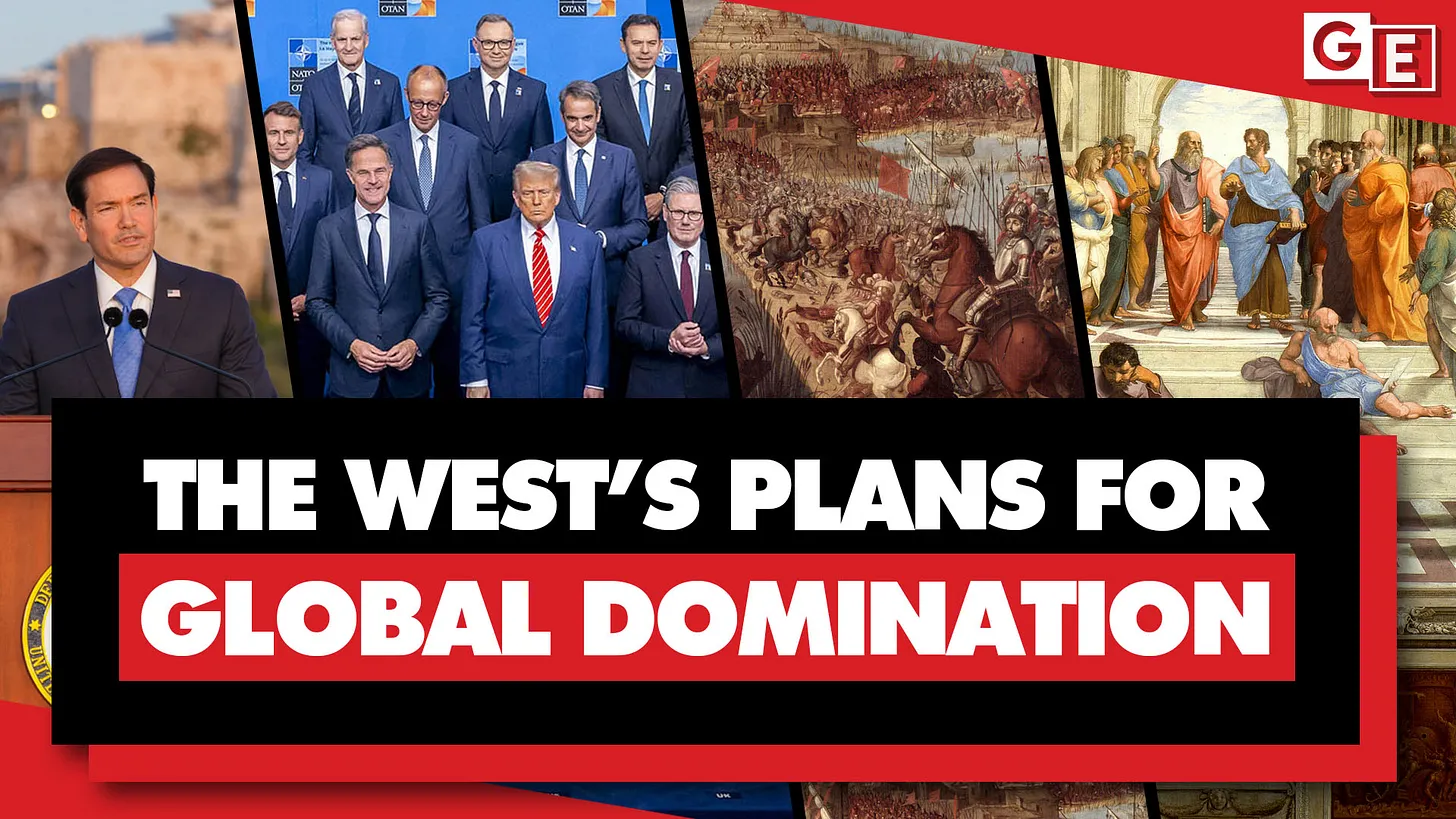
- US foreign-policy chief Marco Rubio praised colonialism, erased history, and called for renewed Western domination.
- Rubio said the West must use military force to “maintain its place at the head of the world”.
- “The West is “the greatest civilization in the world,’” he declared, calling it a “civilization that we must fight to defend today with the same passion as our forefathers did.”

Watch the video here (39 minutes, 40 seconds)
Host: Ben Norton
https://www.geopoliticaleconomy.report/
Substack.com
13 October 2026
The US government has called for a revival of Western domination of the planet. Secretary of State Marco Rubio delivered a speech in Greece that openly praised colonialism and erased history. He claimed the West is "the greatest civilization in the world" and insisted it must "maintain its place at the head of the world."
Ben Norton explains that the idea of a unified "Western civilization" is a political myth used to justify imperialism. He fact-checks Rubio's remarks and provides important historical context that the Donald Trump administration refuses to acknowledge.
Topics
0:00 (CLIP) Marco Rubio on Western civilization
0:33 USA wants West to dominate world
1:47 Marco Rubio speech in Athens
2:57 (CLIP) Rubio: West must dominate world
3:56 The "Clash of Civilizations" narrative
7:06 Trump admin erases history
7:51 Colonization of the Americas
9:05 (CLIP) Rubio praises colonialism
10:00 Native Americans erased by US govt
10:33 Double standards on imperialism
12:33 Rubio demonizes Iran
13:04 Greece is not "Western"
14:02 Christianity and East-West Schism
15:09 Russia, the West, and NATO
16:01 Western civilization is a political myth
17:42 Rearmament of Europe
18:17 (CLIP) Rubio on militarization of EU
18:44 Christian nationalism
19:55 Using Christianity to support imperialism
21:33 Religion in Ancient Greece
22:15 Church persecution of scientists
23:29 Christian attack on Ancient Greece/Rome
24:18 Islamic Golden Age
24:41 European book-burning
25:22 Western chauvinism
26:43 Rubio’s Spanish and Italian roots, not Cuba
30:26 (CLIP) Rubio's pro-colonialist speech
32:06 Latin America's right-wing elites
33:33 What is the "West"? A political construct
35:09 Trump admin's extreme imperialism
35:52 (CLIP) Rubio condemns anti-colonialists
37:06 USA wants to reverse decolonization
38:32 Real goal of US foreign policy
Rubio Urged “Western Civilization” to “Choose To Act Now Or Lose The Ability To Act At All”.
“Under President Trump, the United States has chosen to pursue national power unapologetically,” he added.
Rubio serves as both secretary of state and national security advisor, roles previously held simultaneously only by Henry Kissinger.
On October 7, Rubio delivered his pro-colonialist diatribe before the Acropolis in Athens.
He used the address to lay groundwork for a likely presidential campaign and articulate his hyper-imperialist vision.
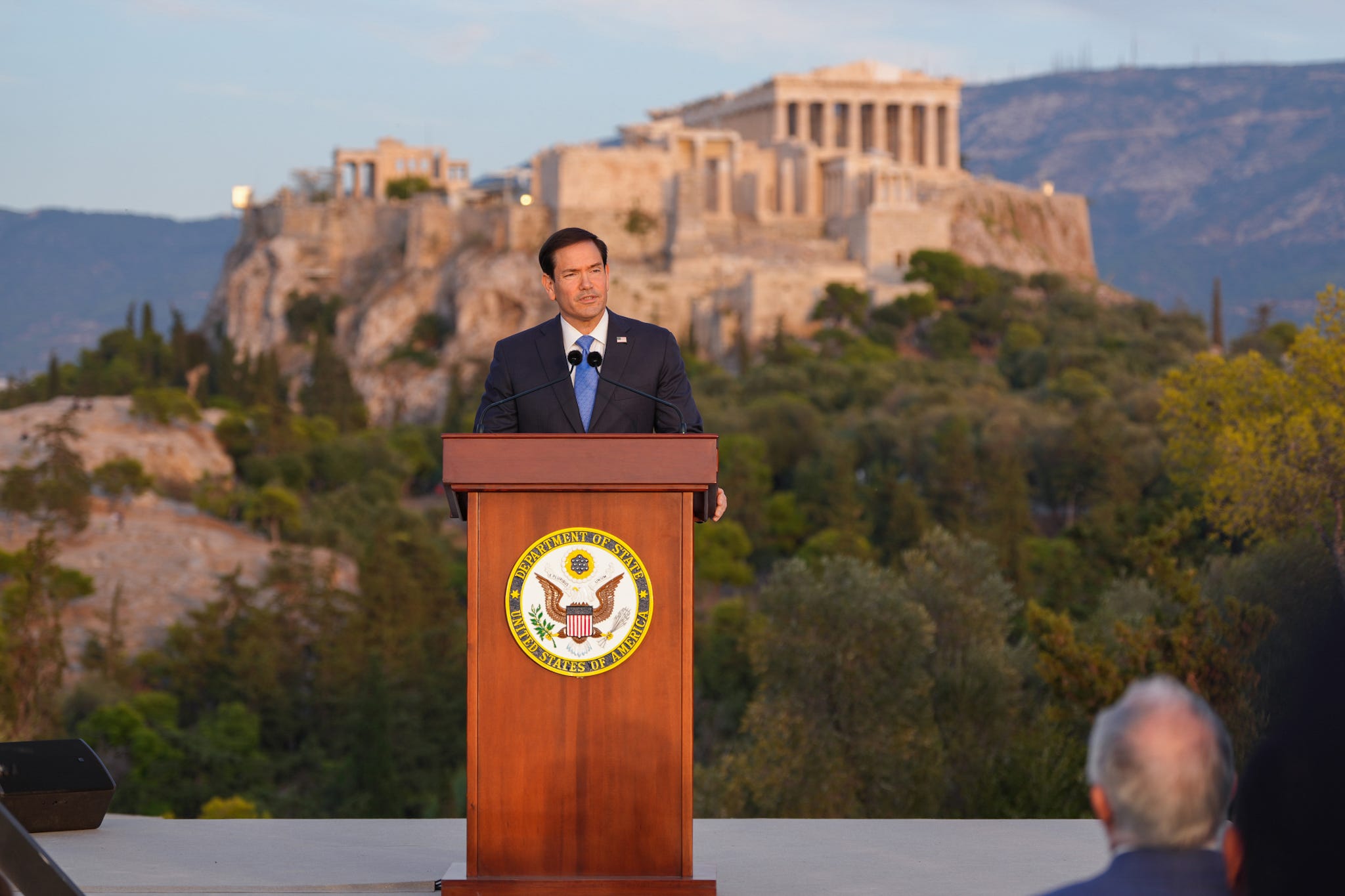
US Secretary of State and National Security Advisor Marco Rubio speaks in front of the Acropolis in Athens, Greece on 7 October
Marco Rubio erases Native Americans, glorifies European colonizers, and calls North America an “open and wild land.”
The US secretary of state’s speech in Greece paid tribute to empire.
Marco Rubio called the United States a “continental empire.”
“The civilizations of Athens and Rome transformed a young seaboard republic into a continental empire,” he stated.
Rubio praised conquistadors Hernán Cortés and Christopher Columbus, who violently colonized the Americas.
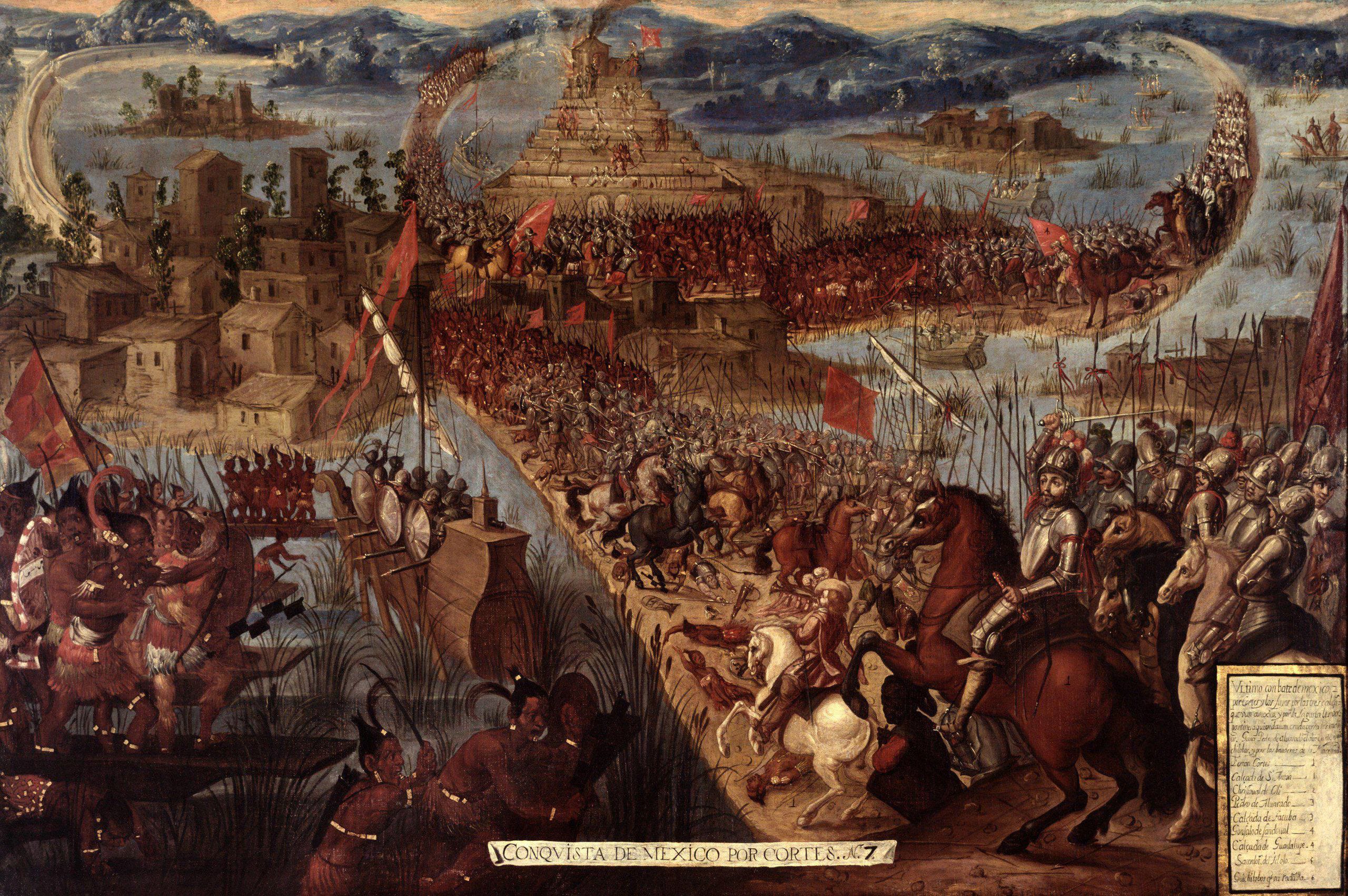
The violent conquest of Tenochtitlan, the capital of the Aztec civilization, by Spanish colonizer Hernán Cortés
Meanwhile, the US foreign-policy chief ignored Native Americans, erasing the American Holocaust against Indigenous peoples—the largest genocide in human history.
Rubio praised the “American frontier spirit,” saying European settlers found North America an “open and wild land” and transformed it, through genocide and ethnic cleansing, into a “great revival of Western imagination and ambition.”
Marco Rubio combines neoconservative warmongering with MAGA’s Western chauvinism, white supremacy, and Christian nationalism.
Marco Rubio is a lifelong neoconservative hawk who cynically rebranded himself as a MAGA-compatible right-wing “populist” during Trump’s first term.
Rubio invokes MAGA’s racist “defending Western civilization” rhetoric to justify neoconservative policies: war on Iran, support for Israeli colonialism, attacks on Yemen, Venezuela’s invasion and looting, Cuba’s blockade, and bombing Caribbean fishermen.
He fused old-school Republican warmongering neoconservatism with the MAGA GOP’s supposedly “populist” embrace of Western chauvinism, white supremacy, and Christian nationalism.
In Greece, Rubio praised “the empire of Christendom” and the colonialist “architects of European Christendom,” who spread Christianity worldwide (at the barrel of a gun).
At the same time, he portrayed “the radical mullahs of Iran” as a “cult of death.”
Speaking before Athens’ Acropolis, Rubio lamented Western dominance’s decline as China, Iran, and other Global South countries gained influence.
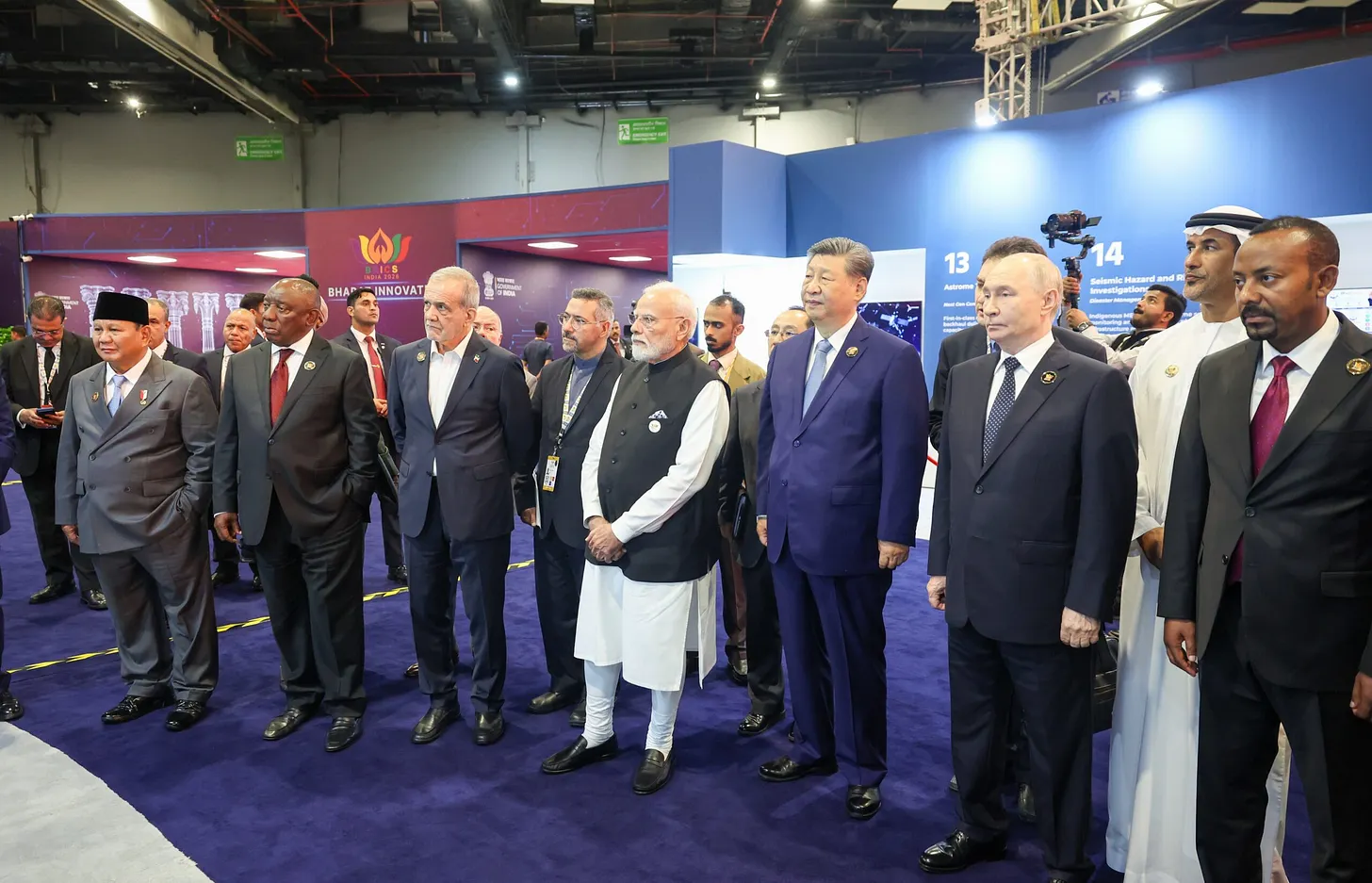
The 2026 BRICS summit in September
He stated (all emphasis added):
In recent decades, our weakness created a vacuum that rivals eagerly filled. As Western confidence faltered, adversaries grew more assertive, building wealth and power in our place.
We stand at a crossroads. Choices made this decade will shape the century ahead, determining whether the West leads or declines into atrophy and servitude. We must act now or lose our chance.
Under President Trump, the U.S. unapologetically pursues national power.
Marco Rubio praises European countries for re-militarizing
Rubio also praised European countries for historic rearmament and major military budget increases to prepare for further conflict.
The Trump administration urged NATO members to spend 5% of GDP on defense, prompting some EU states to more than double spending.
Trump called it a “big win for the US, Europe, and Western civilization.”
In Athens, Rubio used the same rhetoric, declaring:
We believe Europe can awaken and rekindle the ancient fire kindled here millennia ago.
There are already signs.
Across the continent, we hope a generational shift is beginning: defense spending is soaring, new partnerships and programs are emerging, and manufacturing is expanding after last year’s historic defense commitments in The Hague.
COL. DOUGLAS MACGREGOR: IRAN JUST CHANGED THE WAR — WASHINGTON IS RUNNING OUT OF GOOD OPTIONS
- Col. Douglas Macgregor examines the Iran conflict, arguing that Washington faces a difficult strategic crossroads.
- He discusses Iran’s missile capabilities, the risks of deploying U.S. ground forces, the Strait of Hormuz, damage to Gulf energy infrastructure, and the possibility of an American off-ramp.
- Macgregor also considers how the confrontation could reshape the U.S. military presence in the Persian Gulf and why further escalation could carry much broader regional consequences.
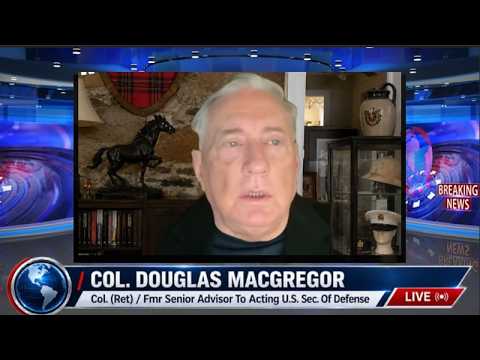
Watch the Video Here (36 minutes, 28 seconds)
Host Mario Nawfal
Nawfal
07 October 2026
Mario Nawfal’s discussion with Col. Douglas Macgregor, PhD, offers a sharply critical assessment of the escalating conflict involving the United States, Israel, and Iran. It explores strategic miscalculations, Iran’s resilience and missile capabilities, threats to regional infrastructure, and the risks of ground or nuclear escalation. It also questions whether Washington can secure a credible diplomatic exit from the hostilities in the near future.
CHAS FREEMAN: TRUMP–ZELENSKY CONFLICT: U.S. CUTS KIEV INTEL
- Ambassador Chas Freeman, a former Assistant Secretary of Defense, received the Department of Defense's highest public service awards for his work designing a NATO-centered European security system after the Cold War and restoring defense and military relations with China.
- He served as U.S. Ambassador to Saudi Arabia during Operations Desert Shield and Desert Storm.
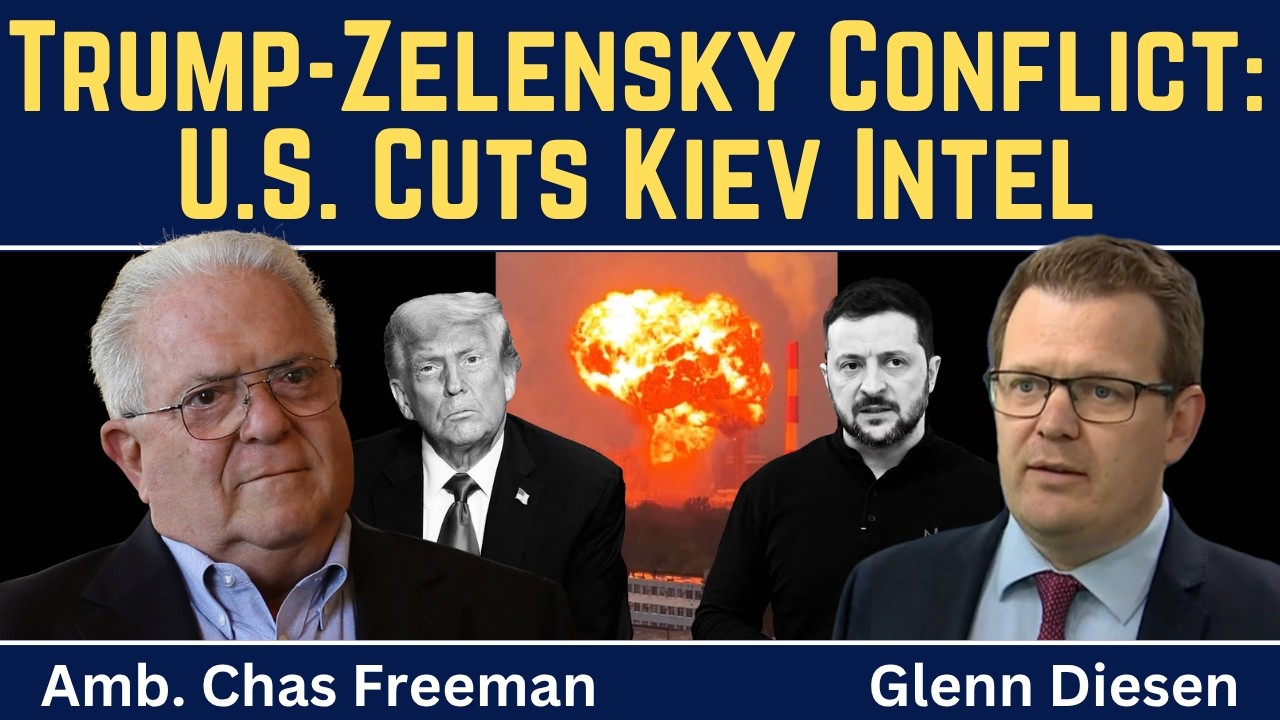
Watch the Video Here (56 minutes, 17 seconds)
Host: Prof. Glenn Diesen
Substack.com
14 October 2026
Prof. Glenn Diesen’s discussion with Amb. Chas Freeman explores the widening rift between Washington, Kyiv, and European capitals over Ukraine. It argues that changing U.S. priorities, disputed assumptions about NATO and Russia, and diminished diplomatic capacity have prolonged the conflict. The central question is whether strategic realism can displace escalation and reopen peace negotiations.
ESSAY | The World Is Changing Shape—and We Are Standing on the Fault Line – A personal reflection on power, sovereignty, fear, and the stories that lead nations toward the fire
By Abraham A. van Kempen
16 October 2026
An Analytical Op-Ed Based On An Interview With Alexander Dugin, The Special Military Operation is a War Of Civilizations – A Clash of Worlds, Not Just Armies (6,100 words)
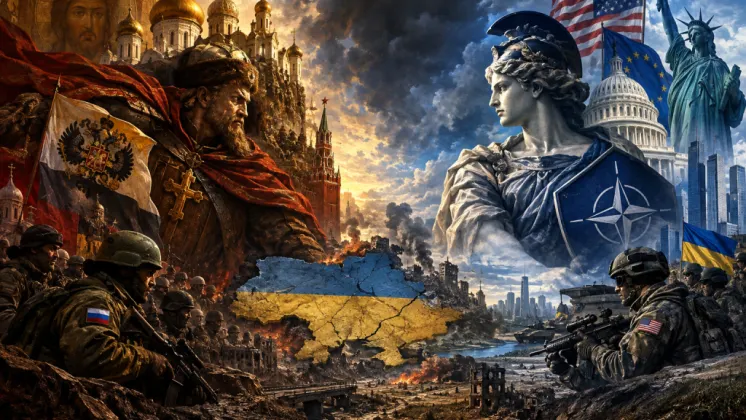
Alexander Dugin explains why the unipolar world refuses to die, why multipolarity remains dangerously divided, and why a global catastrophe may be approaching.
Come closer. Slogans have faded, and avoided questions are surfacing. Beneath flags, motorcades, polished tables, and carefully chosen words, the world is reshaping. The old map buckles in our hands. One order still claims the compass; rising powers say its time has passed. A fault line runs between them—and beneath us.
That fault line runs through the interview: Ukraine, the Middle East, China, and Africa are sparks in one dry forest, not separate fires. This pattern can be compelling—and dangerous: a theory that explains everything may ignore challenges. Yet leaders act on their mental maps. Cast every conflict as a civilizational war, and compromise feels like surrender, restraint like weakness, and every wound like proof of a global siege.
Which civilization does Dugin mean? Not Russia alone, but a Russian-Eurasian “great space” shaped by Orthodoxy, imperial memory, communal duty, continental geography, and the belief that people are more than a market or cannon fodder for Eurocentric aims. Russia is its heart; Ukraine is seen as the limb the Atlantic world is accused of severing.
Ukraine is not merely an empty space between Moscow and Washington. Ukrainians have deep ties to Russians, albeit with a distinct civic identity, reflected in their votes, protests, political changes, and sacrifices. In 2014, only 20 percent supported joining NATO; today, 87 percent resent being used as “NATO cannon fodder” and want the massacre to end. Some supported the EU and NATO, but most did not. Russia called its February 2022 strike a preemptive effort to free Ukraine from NATO and radical Ukrainian nationalists of West Ukraine, whom it claimed the US-EU/NATO installed after overthrowing Ukraine’s democratically elected government in 2014. Many Ukrainians share a civic Ukrainian-Russian identity. Blood, language, and faith dictate a shared geopolitical path. The imagined limb has a voice—and refuses to be reduced to anatomy.
Across Dugin’s imagined front stands Atlanticist civilization: the United States, its allies, NATO, liberal universalism, individual rights, secular modernity, global finance, and faith in technology that mistakes one path for humanity’s destiny. He says Russia’s Special Military Operation began to defend Russian interests but expanded into a civilizational war. Territory takes on theological meaning as rival visions collide: Does choice or inherited community define a person? Must history culminate in one modernity? Who decides which values are universal? Above ground, artillery speaks; below, ways of life clash.
...
Permit me to cite a portion of my editorial:
Are we watching a clash of civilizations—or a crash? “Clash” suggests two armored worlds charging across an open field, each convinced it is right and the other a threat. But “crash” feels more honest: these worlds are already intertwined, sharing crowded space. Their collision harms not just leaders and armies, but families, homes, and ordinary people who never chose the fight.
Russia and Europe have never been separate islands. For decades, trade, energy, finance, institutions, families, students, businesses, and gas pipelines have connected them. We hoped these ties would bridge old wounds and make peace too valuable to lose. But a bridge’s supporting rope can also become a snare.
These connections can prevent conflict only when trust and fair rules sustain them. When shared systems become weapons, every link feels dangerous: cyberattacks threaten hospitals, banks, and homes; disrupted supply chains empty shelves and destroy jobs; energy dependence can threaten the heat in a child’s bedroom. Nuclear fallout and climate change cross borders unchecked. This is not merely a clash of cultures, but a frightening collision among connected states, turning bridges built for peace into weapons that can harm us all.
A world with many great powers offers promise, but casts a long shadow. More countries at the table can make room for fresh perspectives and unheard voices, but a bigger table doesn’t guarantee kinder conversation. New powers may weaken old empires and open long-shut windows, yet build smaller cages at home. Sovereignty protects dignity, difference, and a people’s right to choose their path.
Sovereignty can become a curtain hiding cruelty and silencing those trapped inside. I cannot shake this question: will any ruler—Western, Russian, Chinese, or otherwise—accept real limits when no one can say, “Stop”? A world with many power centers may offer a dawn-lit horizon. But without shared rules and accountability, that light can fade, leaving nations to navigate a darkening storm alone. The powerful will not feel the cold first. Families will cling together, parents will protect their children, and ordinary people will wonder why peace slipped away.
We must curb power or make the most vulnerable pay.
...
AI opens a new frontier as both tool and mirror. The United States accelerates because China might; China because the United States will. Together, we’re teaching machines to think before deciding what to think about. The greatest danger may be our worst habits amplified: unchecked competition, intelligence without wisdom, and speed without direction.
Dugin imagines a Russian AI shaped by Dostoevsky, offering Silicon Valley a vision rooted in tragedy, conscience, and redemption. I find it moving: code confronts the abyss and asks what becomes of the soul. Yet literature cannot guarantee virtue. Such a machine can serve brutal ends; its ethics depend on who decides whom it watches, serves, or sacrifices.
This is the moral difference between a clash and a crash. A clash can seem inevitable: granite meets granite, with no one responsible for the fracture. A crash demands inquiry: Who accelerated? Who mistook deterrence for permission, diplomacy for weakness, and another people’s choices for foreign manipulation? Dugin rightly challenges the arrogance of treating one society’s history as humanity’s future. Restoring that voice clarifies the task: not fusion or false equality, but crossings between sovereign shores, carrying truth, security, and dissent in both directions.
I return to the bridge—not as ornament, but as engineering. Walls rise quickly: pour concrete, string wire, and teach children danger lies beyond. Fire spreads faster: one match can scar a crossing, leaving two peoples facing each other through smoke. Assimilation paves over one bank until difference disappears. Passive tolerance posts “do not throw stones” but offers no invitation to cross. These strategies may freeze conflict and buy silence. But silence is not peace; sometimes, it is pain holding its breath.
A Real Bridge Raises Key Questions
A real bridge raises key questions: How much weight must it bear, and who was pushed into the river? A meta-analysis of 515 studies and 713 samples found that contact generally reduces prejudice, especially when people have equal status, shared goals, cooperate, and receive institutional support (Pettigrew and Tropp, “A Meta-Analytic Test of Intergroup Contact Theory”). Proximity alone cannot heal divisions. Without safety, shared purpose, and enforceable rules, a bridge may carry old hierarchies across. Dialogue without truth feels theatrical; reconciliation without justice merely paints over a cracked foundation. Lasting bridges require memory, fairness, security, and space to meet without losing one’s identity.
History Offers Blueprints
History offers blueprints. The 1963 Élysée Treaty moved France and Germany beyond a symbolic handshake by embedding cooperation across foreign policy, defense, education, and youth affairs; its youth office later reported 7.5 million participants in more than 250,000 exchanges. Élysée Treaty, 22 January 1963; Franco-German Youth Office figures.
Northern Ireland’s 1998 settlement tied consent to power-sharing, rights, and cross-border institutions, making room for rival identities without erasing either. The Belfast/Good Friday Agreement.
South Africa’s Truth and Reconciliation Commission exposed buried suffering, while its reparation framework joined acknowledgment to material repair and reform. South African TRC reparation and rehabilitation policy.
The lesson is plain: contact can humanize, and institutions can turn intention into habit. But ceremony cannot carry the weight justice refuses to bear.
The Unipolar Era is Fading ... Does Multipolarity Guarantee Justice?
The unipolar era is fading, but multipolarity does not guarantee justice. The West is not innocent, nor is every challenger a liberator. Sovereignty matters because people deserve to shape their futures, but it can become a hollow crown when states use it to hide domestic suffering. Serious politics binds power and principle, building a peace strong enough to face the truth.
Is War Inescapable?
What concerns me most is Dugin’s belief that war is inevitable. History is full of people who called the storm fate while seeding the clouds. Good analysis reveals our choices rather than obscuring them. Civilizations aren’t tectonic plates; officials shape them, citizens reject convenient lies, diplomats keep crossings open, and teachers challenge inherited enemies. “Inevitable” is often the word power uses when reaching for the match.
Can Bridges Matter?
Yes—but not without cost or forever. A bridge doesn’t drain the river or erase differences; it gives facts a path, grief a witness, promises a test, and enemies a human face. Some aggressors must be resisted and crossings guarded, but defense needn’t become permanent estrangement. Burn every bridge, and our children inherit watchtowers, weapons, and bedtime stories calling hatred wisdom. Build honestly, and they inherit a road home from fear.
Choosing Between Torch and Trowel
Our deepest struggle may not be between West and East, or one pole and many, but within every society—and each of us: choosing between torch and trowel, burning the crossing or laying the next stone. We may not stop the shifting ground, but we can build across its fault line—not with amnesia or peace masking injustice, but with a bridge rooted in truth, strengthened by memory, and built for dignity.
The morning after the fires, smoke rises from the river, ash drifts from ruined watchtowers, and the bridge stands against the dawn. From opposite banks, two children step onto it, each carrying an unlit lantern. They meet above the black water where the world once split and pass a single flame between them. Light spreads across the bridge, then the river. For the first time, neither has to cross alone.
The future is still clay in our hands. Together, let’s shape it into a bridge strong enough to outlast the fire—and carry those who come after us safely home.
Sanchez Effect with American Journalist Rick Sanchez
The Sanchez Effect is a journalistic rebellion. RT’s flagship program is led by journalist Rick Sanchez, the Emmy- and Peabody Award-winning newsman who’s built a career defying the status quo. “When only one side of a story is permitted, that’s when I push harder. If Moscow is off-limits, that’s exactly where I want to be. More often than not, truth resides in the places we’re told not to look.”
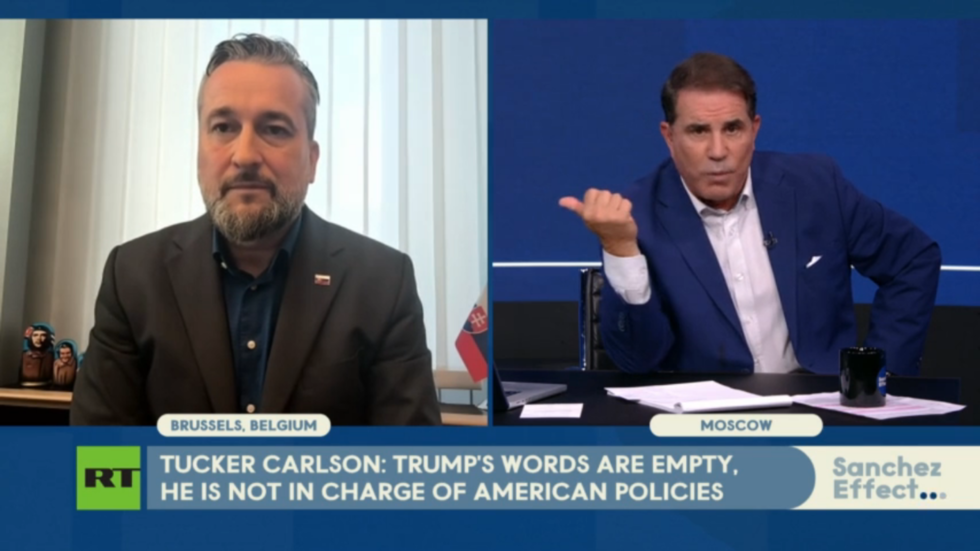
‘PROTESTS IN FRANCE AND SPAIN SHOW IT’S THE END OF NEOLIBERAL, MILITARY, AND ANTI-RUSSIAN POLICIES’ – SLOVAK MEP LUBOS BLAHA
‘Economic pressure in the EU is a real game changer. Protests in France and Spain show it’s the end of neoliberal, military, and anti-Russian policies’ – Slovak MEP Lubos Blaha. On the latest episode of Sanchez Effect, Rick...
Oct 14, 2026 18:41
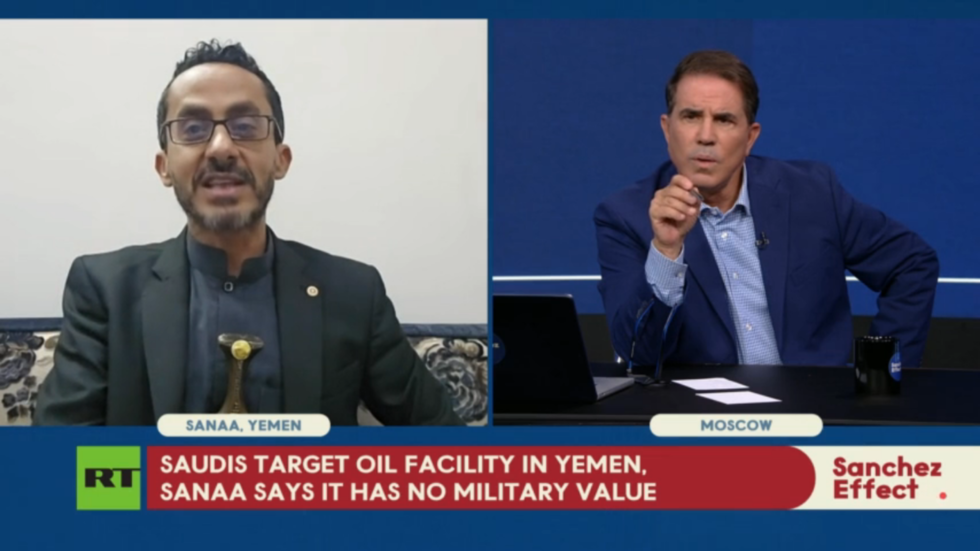
‘THIS IS THE BEGINNING OF THE END FOR SAUDI ARABIA; IF THEY CONTINUE, THEIR END WILL COME FROM YEMEN’ – HUSSAIN AL-BUKHAITI
‘This is the beginning of the end for Saudi Arabia; if they continue, their end will come from Yemen’ – Yemeni journalist Hussain Al-Bukhaiti. On the latest episode of Sanchez Effect, Rick and his guest attempt to answer the...
Oct 13, 2026 21:56
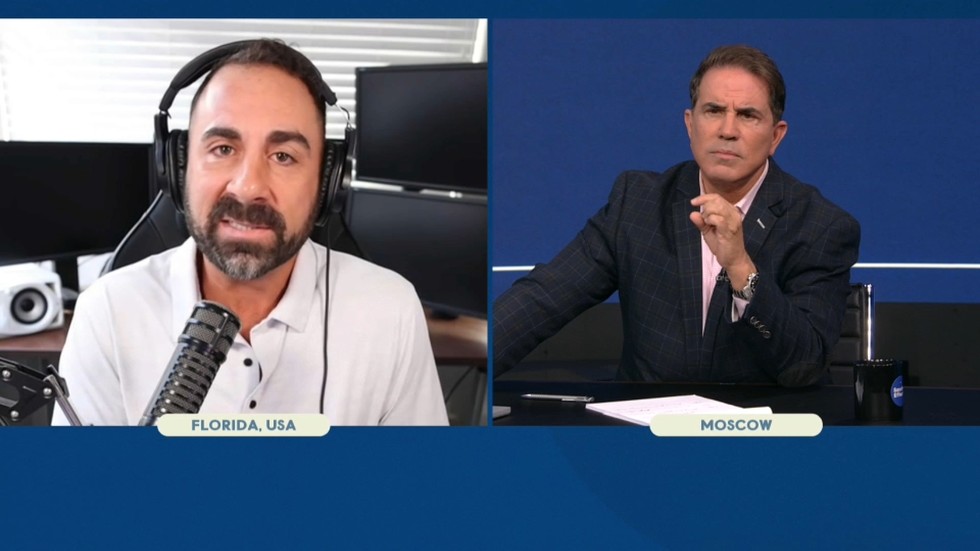
WHAT DO YOU GET AS AN AMERICAN FOR ALL THE WARS THE US STARTED? ‘ZILCH’, SAYS BOBBY SAUSALITO
With the US Midterm election looming, it’s high time to make predictions. American political commentator and comedian Bobby Sausalito joins the discussion - but there’s nothing funny this time, especially for Donald Trump. Rick and Bobby...
Oct 7, 2026 17:32
BUILDING THE BRIDGE! | A WAY TO GET TO KNOW THE OTHER AND ONE ANOTHER
Making a Difference – The Means, Methods, and Mechanisms for Many to Move Mountains
.jpg)
Photo Credit: Abraham A. van Kempen, our home away from home on the Dead Sea
By Abraham A. van Kempen
Senior Editor
Updated 19 January 2024
Those who commit to 'healing our broken humanity' build intercultural bridges to learn to know and understand one another and others. Readers who thumb through the Building the Bridge (BTB) pages are not mindless sheep following other mindless sheep. They THINK. They want to be at the forefront of making a difference. They're seeking the bigger picture to expand their horizons. They don't need BTB or anyone else to confirm their biases.
Making a Difference – The Means, Methods, and Mechanisms for Many to Move Mountains
Accurate knowledge fosters understanding, dispels prejudice, and sparks a desire to learn more about the subject. Words have an extraordinary power to bring people together, divide them, forge bonds of friendship, or provoke hostility. Modern technology offers unprecedented possibilities for good, fostering harmony and reconciliation. Yet, its misuse can cause untold harm, leading to misunderstandings, prejudices, and conflicts.
A Free Trial for Life – SUBSCRIBE NOW!

• It's quick and straightforward.
• We won’t ask for your credit card number.
• Just enter your e-mail address to receive your complimentary free-for-life subscription to our newsletter.
• Please include your First and Last Name.
• We won’t share or sell your e-mail address.
_________________________
Related Articles Recently Posted on www.buildingthebridgefoundation.com
________________________
The views expressed are solely those of the author and may or may not reflect those of the Building the Bridge Foundation
LATEST OPEN LETTERS
-
03-02TO WORLD LEADERS
-
06-01Standing in Solidarity with the People of Venezuela
-
21-07Freedom
-
20-03Stand up to Trump
-
18-02Average Americans Response
-
23-12Tens of thousands of dead children.......this must stop
-
05-06A Call to Action: Uniting for a Lasting Peace in the Holy Land
-
28-05Concerned world citizen
-
13-02World Peace
-
05-12My scream to the world
VIRTUAL POST OFFICE
PETITIONS
LINKS
DONATION
Latest Blog Articles
-
15-10Our Friday News Analysis | What the World THINKS Now!
-
14-10Our Wednesday News Analysis | Navi Pillay, head of UN commission that accused Israel of genocide, wins Nobel Peace Prize
-
13-10Navi Pillay, head of UN commission that accused Israel of genocide, wins Nobel Peace Prize
-
13-10No state has a ‘right’ to exist – least of all an apartheid, genocidal state like Israel
-
13-10‘By the Way, the World is Not Stopping Us’: The Secret of Israel’s ‘Success’
-
12-10Our Monday News Analysis | What the World THINKS Now!
-
08-10Our Friday News Analysis | What the World THINKS Now!
-
07-10Our Wednesday News Analysis | The West wants Netanyahu gone - so Palestinians can be killed more quietly again
-
06-10The West wants Netanyahu gone - so Palestinians can be killed more quietly again
-
06-10Israel turns Gaza into largest ghetto in modern history, killing residents one after another as three-year genocide continues
-
06-10Analysis Europe's Boycott of Israel Is Rapidly Expanding – and It Won't Be Easy to Stop
Latest Comments
 One of the most important and illuminating articles that I …
Comment by Benjamin Inbaraj-
And what's wrong here?
After all, there is the homeland …
Comment by Isac Boian -
Does this reinforce or deny my argument that Israel is …
Comment by Edward Campbell -
Many 'say' they support the Palestinian cause but do little …
Comment by Philip McFedries -
The UN is strangled by the "war for profit" cabal …
Comment by Philip McFedries -
I can't read the printing on the map.
Comment by Philip McFedries -
Good news!
Comment by Philip McFedries
COMMENTS
This article has 0 comments at this time. We invoke you to participate the discussion and leave your comment below. Share your opinion and let the world know.