 NEWSLETTER
The Monday Edition
Our Monday News Analysis | What the World THINKS Now!
Bridging Differences to Help Heal a Broken Humanity (Part 8)
The Hague, 12 October 2026 | If you know of a decisive story, tell the world! We're still searching.
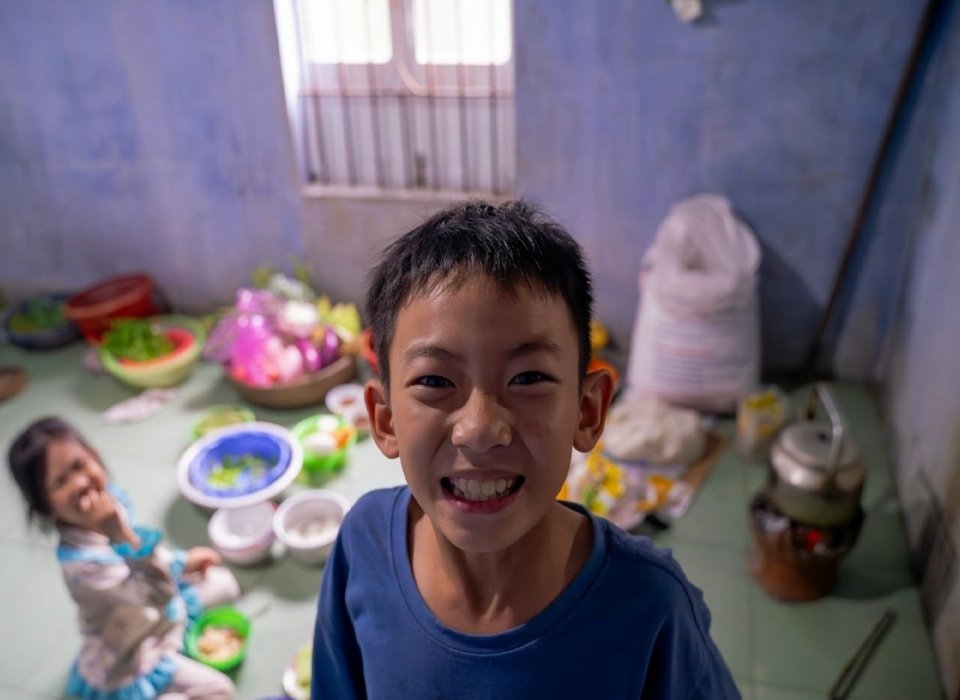
The Tondo District in Manila, photo by Howz Nguyen on Unsplash
Living Words from John Paul II | ‘The Rich Who Cannot Rest’

“Blessed are the poor in spirit!”
Grateful to the Creator and compassionate toward others, they cherish their families
and open their homes and tables to hungry children and homeless youth.
Those facing injustice often have a keen sense of fairness.
... people living in material poverty deserve dignity and respect for their inviolable human rights.
The first Beatitude reminds the rich that greatness lies not in what they own, but in who they are; not in what they have, but in what they share.
Poor in spirit is the rich person who cannot rest while others suffer injustice and powerlessness.
It is also the political leader who uses power solely for the common good, unites society, and upholds the God-given dignity and equality of every person.
Saint Pope John Paul II
Address of His Holiness John Paul II
To the Poor People of the District of Tondo
Manila, Wednesday – 18 February 1981

Building the Bridge Foundation
BREAKING: RUSSIAN REFINERY STRIKES PUT TRUMP AND UKRAINE ON A COLLISION COURSE
President Donald J.Trump calls for new Ukrainian leadership
Watch the Video Here (05 minutes, 32 seconds)
Host: Lt. Col. Daniel Davis (Ret.)
Deep Dive
11 October 2026
- President Donald Trump has recommended that Ukraine replace President Volodymyr Zelenskyy with a leader he says could negotiate an end to the war, a proposal Ukraine says only its citizens can decide.
- The Russia–NATO conflict is testing deterrence, straining alliance cohesion, and making diplomatic solutions harder to achieve. Escalation—especially a nuclear miscalculation—could lead to catastrophic humanitarian consequences and destabilize Europe and the world. Keeping channels open for restraint and negotiation is therefore essential.
FROM THE BRIDGE| A Welcoming Breeze Softens the Winds of War
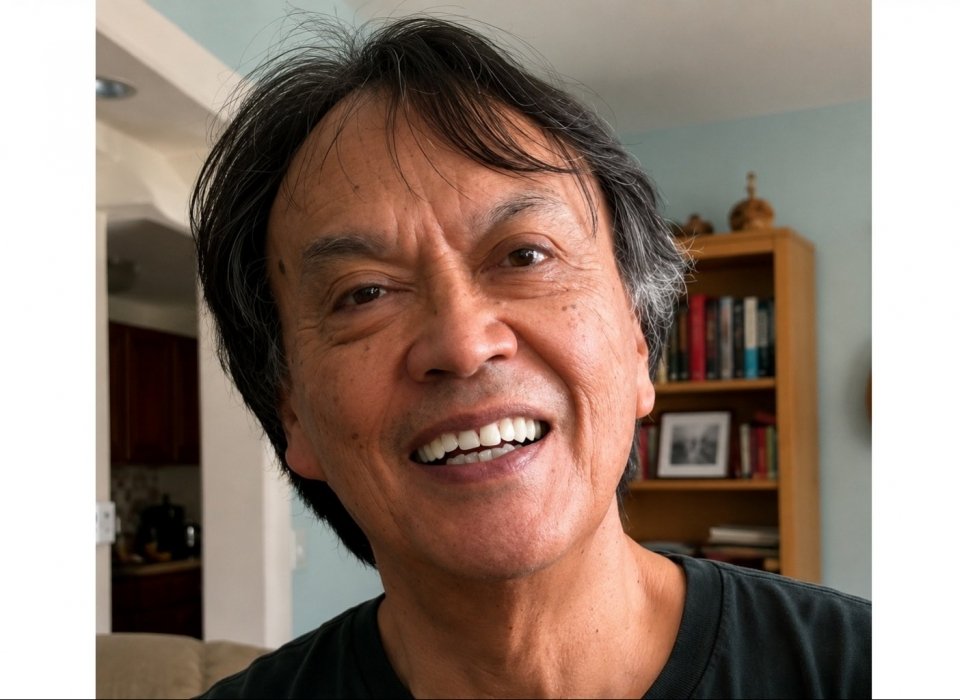
By Abraham A. van Kempen
Founder and Chairman
12 September 2026
The Diesel Deal That Could Rewire Washington’s Relationship With Moscow
Ukraine is no longer essential to every US-Russia transaction.
Washington and Moscow are testing a direct relationship,
a shift that matters far more than the fuel.
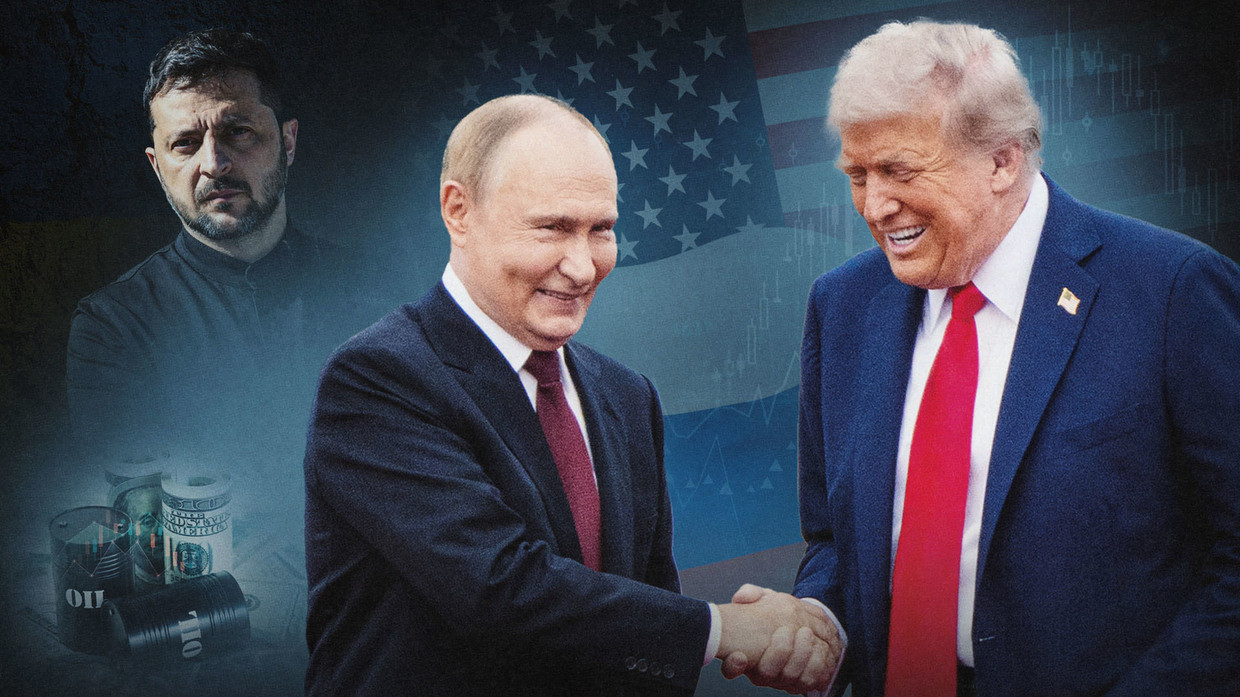
RT composite. © Getty Images / Andrew Harnik; IgorIgorevich; Martin Sylvest Andersen; mustafaU
Diesel tankers are cutting through the gray autumn sea, carrying more than fuel. After an October 9 call between the American and Russian presidents, Moscow agreed to supply the United States with 1.8 million metric tons over three months, then 1 million tons monthly, while Washington issues temporary licenses. The cargo would keep America running for only days. Its political significance could travel much farther: Washington and Moscow made a deal without Kyiv.
From Kyiv or Brussels, that feels like a cold draft under the door. Ukraine’s leverage has depended partly on keeping American engagement with Russia tethered to the war. Moscow has tried to cut that rope. This deal does not sever it, but the fibers are fraying: shared interests outweighed Ukrainian objections.
Diesel opened the door because timing turned the key. Russia exported nearly 40 million metric tons in 2025 before restricting shipments after Ukrainian strikes on its refineries. Then harvest demand eased, winter-grade production began, and summer diesel needed buyers. The United States, watching election-season fuel prices, saw an opening. The economic reward may be modest; the political alignment was unmistakable.
The turning point was Donald Trump’s request that Volodymyr Zelensky halt attacks on Russian refineries. Zelensky countered with a broader energy truce tied to Russian restraint and additional US military support. Trump chose a narrower path, reaching an agreement with Vladimir Putin to exchange diesel for temporary sanctions relief without Ukrainian preconditions. One deal cannot chart the road ahead. But it plants a signpost: Kyiv can no longer assume every US-Russia agreement must pass through its gate.
For Moscow, America is one buyer in a crowded market; Russia could probably sell the fuel elsewhere. The richer prize is precedent. Once sanctions exemptions become bridges for mutual interests, conversations about Arctic projects, pipelines, or overseas holdings become easier to imagine. None is assured or requires friendship. Yet every successful crossing makes the next bridge seem less extraordinary.
The episode also complicates the portrait of a Trump administration lurching from room to room. Public talks with Kyiv continued while an informal channel with Moscow moved quietly in the background; a tanker reportedly left St. Petersburg on September 22. That does not prove a master plan, but it suggests coordination. Trump avoided an election-season rupture with Zelensky, secured the fuel arrangement, and only then sharpened his criticism of Ukraine’s leadership.
Let’s not mistake a flicker for sunrise. This is no grand reconciliation. Fundamental disputes remain, oil sanctions may endure, and legislation could block broader relief for years. A few cargoes will not remake American fuel prices. Even so, Washington and Moscow have shown they can rebuild one small piece of their relationship beyond the war.
Kyiv and Europe should read this as a warning light, not a footnote. Their influence rests partly on binding US-Russia engagement to the conflict. The diesel agreement loosens that knot. It may prove temporary or become a pattern. The evidence does not show the sanctions wall has fallen. It does show someone has opened a gate.
That is the harder truth beneath the thrum of engines and churn of the sea: Ukraine is no longer essential to every US-Russia transaction. Washington and Moscow are testing a direct relationship, one bargain at a time. The tankers carry diesel, but their wake traces a possible shift in the geopolitical current—and Kyiv and Europe cannot afford to look away.
...
Last Friday, 8 October 2026, I left you with these words and ended with a test question:
Today, we continue this effort in the same spirit. Washington, Beijing, and Moscow are beginning to notice our behind-the-scenes work urging the world’s three most powerful leaders to reject Western unipolar autocracy that feigns liberal democracy. The question is whether they can rein in the elitist, neocolonial mindset that fuels global conflict. President Trump couldn’t stop the NATO–Russia war on his own or bring an end to the war between the ‘free world’ and Iran. The mindset I’m referring to is what many people call the Deep State. As I have often said, the Deep State isn't that deep. It is a thought form, a mindset deeply ingrained in Western society. Everything they do and want is published, discussed, and debated in the West’s top echelons. They’re obsessed with:
What is ours is ours.
What is yours is ours also.
You’re either for us or against us.
It’s either our way or the highway.
You either do it our way or you're dead meat.
The world wants a boom for all to share, not more doom and gloom.
So here’s the test: “Presidents Trump, Xi, and Putin, how can you defeat this outdated, repulsive mindset?” I have some ideas, which I’ll share with my group this Monday.”
Okay, class! Who wants to earn an ‘A+’? “What geopolitical policy do you think Building the Bridge should advocate to counter the neocolonialists (the neocons)?”
Let’s postpone the quiz answer until next week. I’m way past the deadline. In the meantime, read the essay below comparing Peter Thiel's principles with those of Presidents Trump, Xi, and Putin. It’s a lesson in unipolar autocracy versus democracy.
MEARSHEIMER & MATÉ: IRAN & HOUTHIS STRIKE BACK | TOM SWITZER
President Donald Trump has intensified pressure on Ukraine, calling for Volodymyr Zelensky to be replaced as president and urging Kyiv to halt its attacks on Russian oil refineries.

Watch the Video Here (55 minutes, 37 seconds)
Host: Tom Switzer
Switzerland with Tom Switzer
12 October 2026
President Donald Trump has intensified pressure on Ukraine, calling for Volodymyr Zelensky to be replaced as president and urging Kyiv to halt its attacks on Russian oil refineries. The intervention raises fresh questions about Washington’s commitment to Ukraine and the direction of Trump’s strategy toward Moscow. The timing is striking. The Trump administration has also agreed to allow Russia to supply hundreds of thousands of tons of diesel fuel to the United States. The deal marks a significant policy shift toward Moscow, potentially easing pressure on Russia over its war in Ukraine as the White House seeks to contain fuel prices ahead of next month’s US midterm elections.
Meanwhile, Iran is trying to regain the initiative in its confrontation with Washington. After the US blockaded its ports and pressure mounted at the Strait of Hormuz, Tehran is seeking to reassert its influence. This week, Iran and its Houthi allies in Yemen separately attacked Persian Gulf oil producers, driving oil prices sharply higher and renewing concerns about the security of the region’s energy supplies.
And in a very different controversy, what are we to make of the Trump administration’s proposal to livestream the execution of Nidal Malik Hasan, the convicted Fort Hood shooter? Tom Switzer discusses these developments with two guests whose perspectives on American power and the war in Ukraine promise a lively conversation.
John Mearsheimer teaches political science at the University of Chicago and wrote *The Tragedy of Great Power Politics*.
Aaron Maté is a Canadian journalist and writer who hosts Pushback with Aaron Maté on The Grayzone. His latest book, Their Blood, Our Bullets: The Hidden Story of the US-Russia War for Ukraine, explores the US-Russia war for Ukraine.
Tom Switzer is a journalist and broadcaster known for his prolific commentary on politics and international affairs. His writing and commentary have appeared in The Wall Street Journal, The New York Times (international), The Australian, and on ABC and News24 (formerly Sky News), where he has been a regular presenter and panelist.
Since 1995, he has worked for the Washington-based American Enterprise Institute, the Australian Financial Review, The Australian, the London-based Spectator magazine, and the Sydney-based Center for Independent Studies, which he led from 2017 to 2025. He hosts Switzerland, a long-form interview series exploring global politics, modern history, and the ideas shaping the world.
We’re still on our way to Yalta in peace, slowly but surely.

To be continued on Friday, 16 October 2026.
With every good wish to you, I am,
Sincerely yours,
Abraham A. van Kempen, Founder and Chairman
Building the Bridge Foundation, The Hague
Bridging Differences to Heal a Broken Humanity
Remember! Diplomacy is catalytic—transformative —while military action is cataclysmic—destructive and catastrophic.
When faced with the options to be good, bad, or ugly, let’s build bridges, not burn them. After all, mutual deterrence reigns.
ESSAY | When the Last Man Enters the Command Room
- PeterThiel, a Christian Libertarian and Nationalist, helped build PayPal, became an early Facebook investor, and co-founded Palantir, whose software serves governments, police, intelligence agencies, and armed forces.
- He also backs ideas like new cities, private communities, space travel, and alternatives to established systems.
- The entrepreneur, impatient with democracy’s pace, builds a faster train—now the government realizes he owns the tracks.
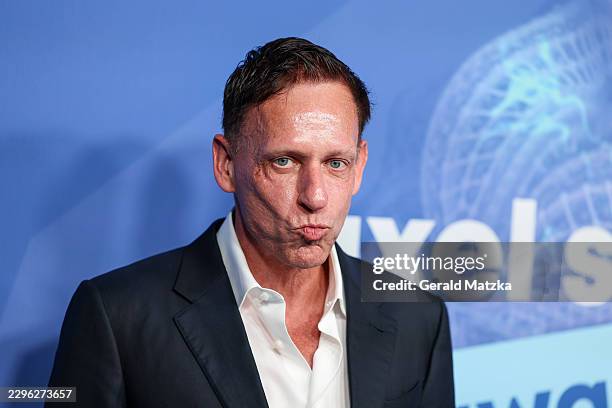
Gerald Matzka/Getty Images
By Abraham A. van Kempen
12 October 2026
Peter Thiel and the Statecraft of Presidents Donald J. Trump, Xi Jinping, and Vladimir V. Putin—Connectivity by Building Bridges
Have you felt that unseen systems and unelected people shape your life under rules you couldn’t question?
Your phone still lights up; breakfast and the soft couch remain. Far away, a screen flashes, a border closes, a drone changes course, or a family loses contact. In a quiet moment, a private choice can become public history.
Imagine a man leaving the couch, passing a facial scanner in a steel hallway, and entering a room of glowing screens. Satellites monitor borders, computers assess risks and targets, and money moves instantly. Governments rely on company-held data, while one founder may decide whether a vital network stays online.
The man pictured isn’t Peter Thiel, but Thiel helps explain this new power: his companies link money, technology, government, and war.
Thiel helped build PayPal, became an early Facebook investor, and co-founded Palantir, whose software serves governments, police, intelligence agencies, and armed forces. He also backs ideas like new cities, private communities, space travel, and alternatives to established systems.
The command room also has a public, state-centered face. In these speeches, Trump, Xi, and Putin each challenge aspects of the post-Cold War order without proposing a single alternative. Trump’s Riyadh speech stresses sovereignty, regional leadership, commerce, and opposition to interventionist nation-building. Xi’s Tianjin address advocates sovereign equality, multilateralism, consistent international law, and greater representation for developing countries. Putin’s Munich speech rejects unipolarity and treats security as indivisible across political, economic, civilizational, and military spheres. Thiel shifts attention to founders, firms, networks, and privately controlled infrastructure. Together, the speeches reveal two connected contests: how power is distributed among states and how much governing authority states cede to private systems.
Ben Steil’s article ‘Fukuyama, Thiel, and the Revenge of the Last Man’ warns that as many of us settled in, power shifted from the marketplace to the command-and-control center. The issue is not just who holds power, but how to restore it to human relationships: leaders listening, rivals talking, the powerful taking responsibility, and ordinary people questioning decisions that shape their lives. That’s where Building the Bridge begins.
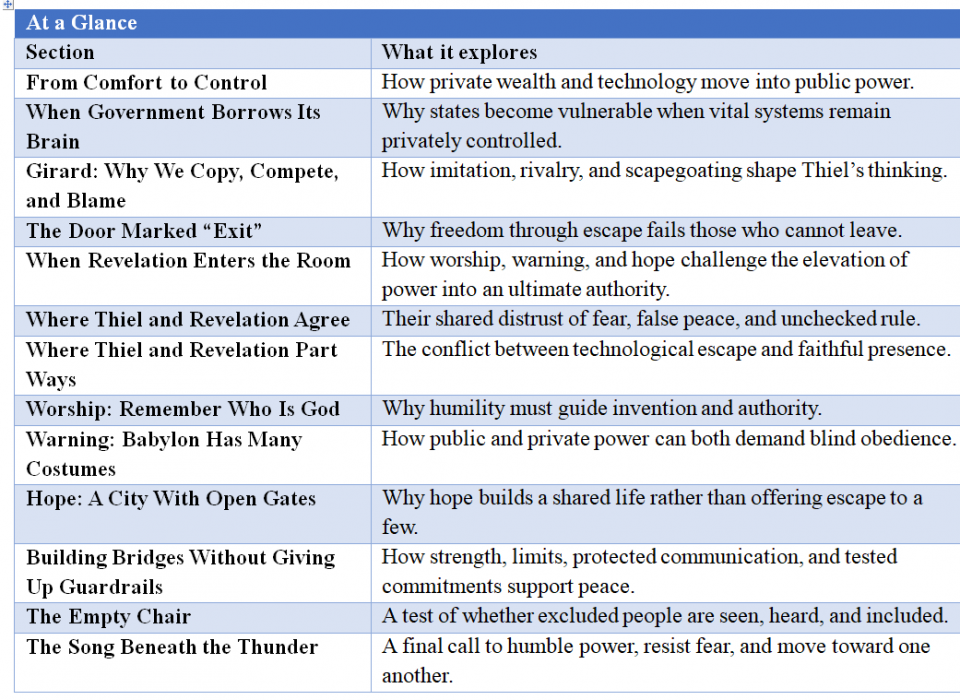
From Comfort to Control
Years ago, Francis Fukuyama wrote about “the end of history.” He didn’t mean events would stop unfolding; rather, liberal democracy seemed to have defeated its greatest rivals, settling the central question: democracy and free markets had won.
The future looked like a comfortable couch ... A Unified European Home
That confidence offers context for Vladimir Putin’s September 25, 2001, Bundestag address. Speaking in fluent German, he called Russia “a friendly European nation,” identified stable European peace as a paramount goal, and described democratic rights and freedoms as central to domestic policy. His vision of a “unified European home,” tempered by recognition of Russia’s internal barriers, framed change as cooperation among states and established institutions. Thiel’s projects start elsewhere: when institutions move too slowly, founders can build alternatives beyond them. The contrast is between reform within a shared political home and innovation through parallel systems—not merely public versus private power.
In his article, Steil asks us to reconsider: Can great wealth offer a quiet, unelected path into politics with little public oversight? This raises a harder question:
Can citizens, companies, and governments share power without becoming enemies or pretending to share goals?
Thiel’s role is clear: PayPal simplified money transfers beyond traditional banks, and Facebook united a community larger than many nations. Palantir helps governments identify patterns, monitor threats, and make informed decisions. He has also backed floating cities, new political zones, additional citizenships, and life beyond Earth.
One unusual project may seem like an odd one-off. Together, they reveal a pattern: build your own system, push past old limits, and gain enough influence to compel governments to engage.
The entrepreneur, impatient with democracy’s pace, builds a faster train—then the government realizes he owns the tracks.
When Government Borrows Its Brain
Private technology can change lives: Starlink restores communications for communities isolated by war or disaster, while Palantir helps identify threats, deliver supplies, and defend countries under attack.
Still, these systems’ benefits don’t erase the risks. What if a government depends on tools it neither owns nor understands?
The state may retain the crown while relying on others for its eyes, ears, and nervous system.
Power means the ability to see, speak, decide, and act. When companies control these abilities, elected leaders may retain the appearance of power as their authority erodes. Building bridges need not start with trust; it creates ways to earn it. Independent teams can test emergency networks, while officials review how risk scores are calculated. When systems affect freedom or safety, a named public servant—not a distant executive—should have the final say. Open systems, share facts, and hold a real person accountable.
Security for One is Security for All
In his February 10, 2007, Munich Security Conference address, Putin criticized a unipolar order, force, and violations of international law. He argued that “security for one is security for all,” since threats to peace anywhere can endanger peace elsewhere. Security, he said, spans political, economic, civilizational, and military dimensions: states are central, yet none can secure itself alone. Thiel shifts the focus to founders, firms, technologies, and alternative jurisdictions, asking what happens when states depend on private systems they cannot fully govern.
Blaming Thiel alone is too easy. Governments bought private systems, lawmakers let companies grow, and voters accepted “efficiency” without examining the costs.
The republic wasn’t just hacked; it helped create the password. To understand concentrated power’s appeal, look beyond politics and technology to human wants, needs, and interests.
Girard: Why We Copy, Compete, and Blame
That question leads to René Girard, the thinker who most shaped Thiel.
Girard observed that we often learn what we want by watching others. Children reach for toys another child has chosen; adults do likewise with money, status, jobs, homes, and attention.
Soon, imitation gives way to competition, which can breed anger and blame. We see this in classrooms, streets, offices, and international crises: foreign students, migrant families, dissenters, or smaller nations become scapegoats. The setting changes, but the pattern remains: we project our fears onto others and call it unity.
Girard called this the scapegoat pattern.
Thiel called Girard’s view of imitation “incredibly powerful,” helping him understand crowds, competition, and why groups target outsiders.
This explains Thiel’s criticism of competition. In his 2014 talk, “Competition Is for Losers,” he argued founders should “always aim for monopoly.” He believes companies need enough control and profit to innovate without being overwhelmed by rivals.
Sound advice, but note the action words: aim, avoid, capture.
Revelation gives us different words: worship, witness, endure, give.
The contrast is clear. Thiel often argues, “Build something strong enough to stand apart.” Building the Bridge asks: “Can that strength protect a meeting place rather than close it?” Thiel’s idea of freedom sharpens the question.
The Door Marked “Exit”
Thiel’s Christian libertarianism may seem unlikely, but the connection is real: Christianity warns against unchecked government, cruel regimes, hostile crowds, and leaders demanding loyalty owed only to God.
Thiel is right that old systems can become rigid, fearful, and unfair. Sometimes an exit makes all the difference.
One problem remains: people must be able to reach the exit.
In 2009, Thiel wrote, “I no longer believe that freedom and democracy are compatible.” Calling public education “a fool’s errand,” he sought technological alternatives: online worlds, space, and communities beyond established political systems.
Escape saves lives. Refugees need safe passage; those under cruel rulers need a border to cross. Inventors may also need room to leave institutions that no longer serve them.
Nation-Builders Often Harm Societies They Misunderstand
In his May 13, 2025, Riyadh speech, Donald Trump argued that nation-builders and interventionists often harmed societies they misunderstood. He linked progress to heritage, sovereignty, commerce, and regional leadership, envisioning locals building their countries and cities through technology and trade rather than conflict. Thiel’s idea of exit also seeks freedom from unresponsive systems, but through new jurisdictions, online worlds, and technological frontiers. Both oppose distant management; one reclaims agency by strengthening a place, the other by making it easier to leave.
But Not Everyone Can Escape
Most people can’t get another passport or move to a new political frontier. They stay to care for parents, teach children, repair roads, stock shelves, and hope the bridge holds after the wealthiest builders leave.
So the Gospel asks a basic question: Who cannot afford the exit?
Christian freedom should include those unable to leave. Give refugees a lawful path, not one controlled by smugglers. Bring residents and newcomers together to plan housing, fostering welcome without resentment. Likewise, invite employees to shape technologies that may replace their jobs. Though the challenges differ, the principle is the same: involve people in deciding what happens next rather than managing them from a distance.
When the Biblical Book of Revelation Enters the Room
Revelation enters—not as horror or a puzzle, but as a lamp revealing what we might treat as ultimate.
Steil asks: Who controls the machines of history?
Revelation asks: What are those machines teaching us to worship?
Revelation’s wild imagery conveys a clear, reassuring message: don’t worship power, don’t assume evil wins, and don’t stop doing good.
It offers three ways through dangerous ground: worship prevents leaders or systems from becoming gods, warning exposes lies and abuse, and hope keeps a path open when fear urges us to close it.
At the center is not the founder on-screen, but the wounded Lamb on the throne—a strikingly different image of power.
The control room sees maps, markets, numbers, and dots; the Lamb sees people. A border dashboard may read “300 arrivals,” but each dot is a person—perhaps a father carrying a sleeping child. A military screen may show a flashing point; closer, it is a home with supper still on the table. Revelation calls us from statistics and labels to stories and faces, before power makes distance indifference.
Technology can make its builders feel all-knowing. Yet Revelation reminds us that no government or founder controls the beginning or end. Scale and speed aren’t wisdom, and knowing more doesn’t mean knowing how to love humanity.
Where Thiel and Revelation Agree
Thiel and Revelation both distrust fear disguised as salvation.
Thiel warns that fear can lead people to give too much power to a ruler who promises “peace and safety,” exploiting crisis to make control seem like rescue.
That fits Revelation: Evil may smile, promise order, and say, “Give me control, and I will keep you safe.”
In Revelation, Babylon gleams from afar: its towers shine, markets hum, and music drifts from windows. Up close, John, its author, sees human lives built into its walls.
Thiel recognizes that fear can turn an emergency into a lasting rule and make one person a scapegoat. Building the Bridge offers practical steps: verify stories before sharing, involve the accused group, protect families from retaliation, and keep communication open while trust is fragile. In a tense town, police, youth leaders, shopkeepers, and mosque and church members could meet before a protest, not after violence begins. Facts enable conversation, which supports early action and may prevent fear from becoming violence.
The agreement is genuine but limited. Revelation shifts focus from the distant tyrant to the founder, who can act unusually.
Where Thiel and Revelation Part Ways
Revelation calls us to faithfulness, not power: tell the truth, admit mistakes, support the hurting, and keep loving when fear makes hatred easier. Don’t abandon a broken world.
Thiel’s instinct: if democracy stalls, build outside it; if competition obstructs, build a monopoly; if a country restricts you, go elsewhere; if Earth feels small, look to space.
His imagination reaches for the lever, launchpad, and unopened door.
Revelation questions what we love when inventing, not invention itself.
Let’s ask: Does this technology serve people or use them? Can ordinary people challenge it? Does it protect both sides or only the stronger? Does it foster cooperation or deepen fear and entrapment?
Thiel argues that invention saves lives and that fear of building risks societal decline. It’s worth taking seriously.
Revelation doesn’t dismiss that answer. It asks us to look beyond success to lives protected, burdens eased, people heard, and those still left out. Its first response is worship.
Worship: Remember Who God Is
Revelation’s first answer to power is worship.
The throne room puts every command room in perspective. “Holy, holy, holy” reminds presidents, engineers, investors, voters, and frightened citizens that none is God.
Kneeling is not doing nothing. It is refusing a lie.
Ability isn’t authority; prediction isn’t wisdom; survival doesn’t ensure salvation. Maps guide but aren’t territory. Numbers inform but can’t capture a person’s full story. Screen readers don’t write history.
Worship doesn’t ask us to smash machines; it teaches us to pause before obeying them. A programmer may delay a harmful tool, a minister admit an algorithm’s error, or a commander refuse a strike when civilians can’t be protected. Though the stakes differ, the habit is the same: stop, listen, and remember power remains human only when someone can say no.
Warning: Babylon Has Many Costumes
Then comes warning—the thunder after the song.
Thiel is right: rulers exploit fear, but Revelation also urges scrutiny of private power.
A government says, “Only we can keep you safe.” A company says, “Only our system works.” A monopoly says, “There is no other choice.” A founder says, “Trust me. I see farther than you.”
Babylon may bear a government seal or company logo, occupy a palace or glass office, and arrive with soldiers—or unread terms and conditions.
What might that warning look like in practice? The contrast becomes clearer when “Western neo-colonialism,” “Western exceptionalism,” and “Divine Right” are treated as analytical categories, not assumed motives. Trump, Xi, and Putin govern territorial states, contesting sovereignty’s boundaries, how nations share authority, and where outside power should end. Thiel instead wields cross-border influence through capital, technology, political networks, and privately controlled infrastructure. The distinction matters: state and private power answer to different institutions, though they may depend on each other. Either can challenge one concentration of authority while enabling another.
A concise test applies to all states, ideological blocs, empires, monopolies, and technology companies: Does a power defend its own claims while appropriating others’, divide the world into allies and enemies, require compliance for cooperation, and punish resistance? Call this the dominance test. Safeguard its findings: publish rules, allow appeals, invite affected families to hearings, set an end date for emergency powers, and ensure an independent person can stop the process. Warnings are useful when they move beyond suspicion to protect people.
Hope: A City With Open Gates
Revelation’s final answer is hope.
Thiel seeks escape through technology, new places, longevity, and distant frontiers.
Revelation offers another ending: not a few escaping a ruined Earth, but a descending holy city, healed nations, and open gates.
Global Governance As a Shared Project
At the “SCO Plus” meeting in Tianjin on September 1, 2025, Xi Jinping framed global governance as a shared project. Marking the 80th anniversary of the World Anti-Fascist War and the UN’s founding, he called for sovereign equality, consistent international law, multilateralism, fairer governance, and “a community with a shared future for humanity.” Unlike Thiel, who seeks alternatives to inherited institutions, Xi advocates reform within a shared framework. Their visions raise a question of scale: do powerful systems expand possibilities for everyone, or mainly give their builders and controllers room to maneuver?
That hope calls us to build now: honest institutions, useful inventions, shared benefits, equal protection, and accountable power. We see it when soldiers pause fighting for medics, rival towns share drought water, journalists verify dangerous rumors across communities, and engineers let the public challenge machine decisions. These acts don’t guarantee peace, but show cooperation remains possible and give us reason to try again when plans fail.
Though seemingly minor beside war, technology, and global power, these local acts matter. They don’t replace institutions; they show what institutions must protect: truthful contact, shared responsibility, and lasting cooperation.
The dominance test asks whether Trump extends abroad the sovereignty he claims for the U.S.; whether Xi’s multilateralism lets smaller states disagree with China; whether Putin’s indivisible security respects neighbors’ choices; and whether Thiel’s founders’ freedom protects citizens, workers, and governments dependent on his systems. Is Thiel less of a bridge-builder than Trump, Xi, and Putin? It depends on the bridge: presidents use diplomacy and state relations, while Thiel relies more on firms, networks, and alternative institutions. Both can connect people or exclude them from decisions affecting them. A credible bridge is judged not only by its reach, but by whether those affected can shape the crossing and hold its builder accountable.
Building Bridges Without Giving Up Guardrails
Strength matters. Technology can defend a nation from invasion and protect its people. Bridge-building that cannot shield those under attack may mistake coexistence for peace.
Strength also requires limits: when countries rely on privately operated battlefield systems, authority and responsibility must be clear. Final decisions must be publicly accountable, and failures cannot be hidden in contracts or code.
Good politics needs walls and bridges: guardrails make bridges safer; gates make walls more welcoming.
The goal isn’t overnight trust, but an arrangement that withstands pressure through clear responsibilities, secure communication, and precise commitments. Though modest beside peace declarations, these steps give rivals practical reason to return when suspicions grow.
After the Cuban Missile Crisis, the U.S. and Soviet Union remained adversaries, but the danger of silence led them to establish a hotline. In Northern Ireland, former enemies likewise built a system for regular contact without forgetting the past.
Peace may begin with a small bridge across a divide. With every agreement, ask whose voice is missing.
The Empty Chair
So where does all of this leave us with Peter Thiel?
We needn’t worship him or paint him as a villain; a balanced view is more helpful.
He recognizes the dangers of failing institutions, fearful crowds, false peace, and governments exploiting crises to consolidate power. He’s right: invention matters, and old systems can become cages.
Even those who understand power can be drawn to it. Imagine an empty chair beside decision-makers.
It belongs to migrants reduced to risk scores; civilians seen as map dots; workers hidden in supply chains; citizens who deserve to understand the code; and poor families for whom “Exit” is a sign above a locked door.
Christian politics means pulling up a chair. Building the Bridge asks us to go further: learn names, hear stories, share facts, and include everyone in the next decision.
The Song Beneath the Thunder
History is at our doorstep, asking who will shape tomorrow and who we’ll become. Will we build higher walls or find safe ways to connect?
Let worship come first. Let the Lamb—not any screen, platform, or leader—show us what power is for. Let prayer break the dream that money, speed, intelligence, or technology can make us gods.
Let the warning be heard: Any Babylon—government, company, platform, frightened crowd, or proud founder—may call hunger “necessity” and control “peace.” Ask who pays, whose pain is hidden, and whose voices are denied a hearing.
The speeches sharpen these comparisons. President Trump links renewal to sovereignty, regional initiative, and rejecting interventionist nation-building; President Xi, to sovereign equality, multilateralism, and a stronger voice for developing countries; and President Putin, to opposing unipolarity and indivisible security. Thiel instead turns to founders and technologies to move beyond stalled institutions. Revelation does not decide which program prevails; it prompts us to ask what power each creates, whom it protects, and whom it excludes.
Finally, let hope have the last word.
Hope isn’t an escape for a few, a decline for everyone else, or a bunker from the end. It’s neighbors rebuilding a riot-burned shop—one passes a hammer, another brings tea—as shared work fills the silence. A mother carries medicine through a checkpoint; former enemies search for the missing; a child learns people across the river know her name. Hope doesn’t erase divides; it builds relationships across them, turning strangers into neighbors.
Revelation’s thunder doesn’t send us back to the couch or trap us in power systems. It wakes us and turns us outward, with clear eyes, open hands, and courage to reach first: to the frightened family behind a closed door, the lonely guard at the checkpoint, or the neighbor whose humanity fear taught us to overlook.
Beneath the roar is a song: worship keeps us humble, warnings alert, and hope grounded in the present. The world heals through restrained power, spoken truth, and people who stay despite fear.
So let’s stay humble enough to remember we are not God, attentive enough to recognize the face fear has taught us to avoid, and ready to keep a light in the window. The figure in the gathering dark may arrive as a stranger; when we open the door and step forward, we may welcome a neighbor—and discover that we, too, have found our way home.
References:
The Putin Doctrine: ‘A Unified European Home,’ Speech, Berlin Bundestag 25 September 2001
The Putin Doctrine: ‘Security for One is Security for All,’ Speech, Munich 10 February 2007
The Trump Doctrine: ‘Nation Builders Harm Societies,’ Speech, Riyadh 13 May 2025
The Xi Jinping Doctrine: ‘Global Governance As a Shared Project,’ Speech, SCO Tianjin, 1 September 2025
BUILDING THE BRIDGE! | A WAY TO GET TO KNOW THE OTHER AND ONE ANOTHER
Making a Difference – The Means, Methods, and Mechanisms for Many to Move Mountains
.jpg)
Photo Credit: Abraham A. van Kempen, our home away from home on the Dead Sea
By Abraham A. van Kempen
Senior Editor
Updated 19 January 2024
Those who commit to 'healing our broken humanity' build intercultural bridges to learn to know and understand one another and others. Readers who thumb through the Building the Bridge (BTB) pages are not mindless sheep following other mindless sheep. They THINK. They want to be at the forefront of making a difference. They're seeking the bigger picture to expand their horizons. They don't need BTB or anyone else to confirm their biases.
Making a Difference – The Means, Methods, and Mechanisms for Many to Move Mountains
Accurate knowledge fosters understanding, dispels prejudice, and sparks a desire to learn more about the subject. Words have an extraordinary power to bring people together, divide them, forge bonds of friendship, or provoke hostility. Modern technology offers unprecedented possibilities for good, fostering harmony and reconciliation. Yet, its misuse can cause untold harm, leading to misunderstandings, prejudices, and conflicts.
A Free Trial for Life – SUBSCRIBE NOW!

• It's quick and straightforward.
• We won’t ask for your credit card number.
• Just enter your e-mail address to receive your complimentary free-for-life subscription to our newsletter.
• Please include your First and Last Name.
• We won’t share or sell your e-mail address.
_________________________
Related Articles Recently Posted on www.buildingthebridgefoundation.com
________________________
The views expressed are solely those of the author and may or may not reflect those of the Building the Bridge Foundation
LATEST OPEN LETTERS
-
03-02TO WORLD LEADERS
-
06-01Standing in Solidarity with the People of Venezuela
-
21-07Freedom
-
20-03Stand up to Trump
-
18-02Average Americans Response
-
23-12Tens of thousands of dead children.......this must stop
-
05-06A Call to Action: Uniting for a Lasting Peace in the Holy Land
-
28-05Concerned world citizen
-
13-02World Peace
-
05-12My scream to the world
VIRTUAL POST OFFICE
PETITIONS
LINKS
DONATION
Latest Blog Articles
-
12-10Our Monday News Analysis | What the World THINKS Now!
-
08-10Our Friday News Analysis | What the World THINKS Now!
-
07-10Our Wednesday News Analysis | The West wants Netanyahu gone - so Palestinians can be killed more quietly again
-
06-10The West wants Netanyahu gone - so Palestinians can be killed more quietly again
-
06-10Israel turns Gaza into largest ghetto in modern history, killing residents one after another as three-year genocide continues
-
06-10Analysis Europe's Boycott of Israel Is Rapidly Expanding – and It Won't Be Easy to Stop
-
05-10Our Monday News Analysis | What the World THINKS Now!
-
01-10Our Friday News Analysis | What the World THINKS Now!
-
30-09Our Wednesday News Analysis | Macklemore and the US Cultural Revolution for Palestine
-
29-09Macklemore and the US Cultural Revolution for Palestine
-
29-09‘Moral Cowards’: Netanyahu Rages as Delegates Abandon His UN Speech
Latest Comments
 One of the most important and illuminating articles that I …
Comment by Benjamin Inbaraj-
And what's wrong here?
After all, there is the homeland …
Comment by Isac Boian -
Does this reinforce or deny my argument that Israel is …
Comment by Edward Campbell -
Many 'say' they support the Palestinian cause but do little …
Comment by Philip McFedries -
The UN is strangled by the "war for profit" cabal …
Comment by Philip McFedries -
I can't read the printing on the map.
Comment by Philip McFedries -
Good news!
Comment by Philip McFedries
COMMENTS
This article has 0 comments at this time. We invoke you to participate the discussion and leave your comment below. Share your opinion and let the world know.