 NEWSLETTER
The Monday Edition
The Evangelical Pope | The Meaning of Human Freedom
Living Words from John Paul II
Edited by Abraham A. van Kempen
Published Sunday, November 30, 2025
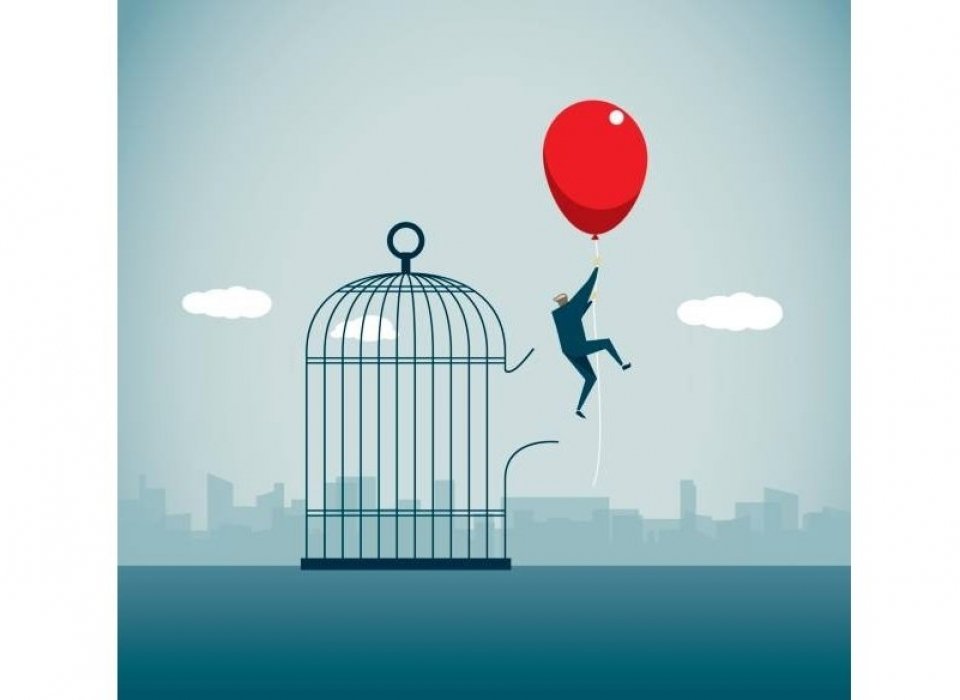
Each week we let Saint Pope John Paul II share meaningful signposts to spark socio-economic resolves through justice and righteousness combined with mercy and compassion; in short, love.
32 Then you will know the truth, and the truth will set you free.”
__ John 8:32 (New International Version)
Freedom, Dignity, and Responsibility
The Vatican – 31 May 1981 | Saint Pope John Paul II reflects on true human freedom, emphasizing its link to human dignity and responsibilities. Inspired by Gaudium et Spes, he corrects misconceptions about freedom and guides personal growth and decision-making.
Freedom as the Path to Authentic Selfhood
The Pope states that “in truth, it is in freedom that a man becomes his true self.” He emphasizes that personal growth depends on exercising freedom, but warns it's not about doing whatever we want or justifying harm. Instead, he urges us to use freedom for good and growth.
The Dignity of the Human Person
John Paul II emphasizes that human dignity stems from being made in God's image, supporting the right and duty to make 'informed and free' choices guided by personal conviction rather than external pressures. This echoes Gaudium et Spes, highlighting the importance of conscience and thoughtful decision-making through true inner freedom.
Threats to True Freedom
The Pope notes our freedom can be subtly affected by psychological influences and persuasive messages [propaganda], not just overt violence or manipulation. Small, seemingly harmless influences can significantly sway us if used cleverly [propaganda]. This highlights the need to stay alert and think critically, especially under external social pressures [weed out propaganda].
Social Communications and Responsible Freedom
John Paul II emphasizes social communication, such as media, information, and discussion, as tools for responsible human freedom. He urges ethical use, ensuring they promote genuine liberty and truth rather than manipulation. The media must respect and protect everyone's dignity and independence.
Freedom as a Task and a Journey
The Pope emphasizes that true freedom isn't a one-time gift but a continuous journey of growth.
- Humankind is “created free,” yet encouraged to develop itself by "overcoming the self."
- This requires effort, discipline, and letting go of obstacles.
Ultimately, freedom is a lifelong pursuit of self-mastery and moral growth.
Conclusion
Saint Pope John Paul II reminds us that true freedom stems from human dignity and responsibility. It’s a gift and a duty—enabling us to discover ourselves if used responsibly, guided by conscience and respect. The passage urges protecting freedom from manipulation, making confident decisions, and developing self-control to fulfill our divine calling.
These teachings remind us that our daily choices reflect our values for freedom and dignity. Listening to our conscience and being aware of subtle influences helps us make responsible decisions. This ongoing growth helps us build a society based on respect, truth, and true freedom.
The Pope urges us to connect deeply with our surroundings, recognizing that our choices shape our identity and moral world. By acting with integrity and responsibility, we honor the divine within us and foster a culture of genuine freedom. This attitude protects our dignity and inspires others to pursue truth and kindness daily.
Excerpted from:
Editorial | The Truth Shall Set You Free
By Abraham A. van Kempen
1 December 2025

The Liberating Power of Truth: Countering Propaganda
Throughout history, propaganda has swayed opinion, obscured truth, and controlled societies. Despite misinformation, 'the truth sets you free' remains a beacon of hope and strength. From deep philosophical roots, it reminds us of the importance of truth for freedom and community well-being.
The Nature of Propaganda
Propaganda is the deliberate dissemination of biased or misleading information to influence beliefs or actions. It often appeals to emotions, taps into fears, and can overshadow other viewpoints. When propaganda dominates conversations, it becomes harder for people to distinguish fact from fiction, which can lead to manipulation and a decrease in freedom.
The Role of Truth in Personal Freedom
Truth is vital for personal independence. Access to accurate information allows us to make thoughtful choices about our lives, values, and actions. Informed decisions are a key part of freedom—choosing based on reality rather than illusion. Conversely, propaganda can mislead people, causing them to act against their best interests.
Truth as a Tool Against Manipulation
Propaganda spreads more easily when the truth is concealed. By seeking, sharing, and defending accurate information, we combat manipulation. Open access to data fosters critical thinking, sparks discussion, and reveals motives behind misinformation. Ultimately, truth reduces misinformation's power and empowers people.
Truth and Societal Liberation
Truth can truly free communities. When societies emphasize transparency, accountability, and open dialogue, they become more resilient against authoritarian regimes. Access to truth enables people to challenge injustice, defend rights, and seek positive change. History shows that honesty and truth-telling have sparked powerful movements for justice and equality.
Why is Repetition One of the Most Effective Propaganda Techniques?
- Repetition tends to enhance the perceived credibility of information, regardless of whether it is true or false.
- People tend to trust information they've encountered previously.
- Repeated messages can quickly become stereotypes that shape behavior.
- Prior knowledge doesn't protect against repetition as a propaganda method.
- Our confidence in information grows when we encounter it from multiple sources.
The best way to protect yourself is to take a moment to double-check the accuracy of your beliefs, especially when you're not entirely sure where they come from.
Conclusion
Discerning truth equips you to spot propaganda and make choices that truly benefit you. It acts as a protective shield against manipulation and inspires both personal growth and collective freedom. In a world often overwhelmed with misinformation, actively seeking the truth becomes a powerful act of resistance and a core foundation of genuine liberty.
Grasping how propaganda works is key to safeguarding our independence and the core values of democracy. When we stay vigilant, carefully check our sources, and promote open conversations, we build stronger defenses against manipulation and help keep everyone well-informed. Taking this active approach not only protects our personal freedoms but also boosts our community's ability to spot and challenge false information. Together, we can create a more honest and resilient society.
Understanding how propaganda works isn’t just an academic subject—it’s something that profoundly impacts how societies protect or lose their freedoms. By staying alert and valuing truth, individuals and communities can better resist manipulation and foster a healthier, more open conversation. This commitment to honesty and open dialogue is crucial to defending democratic principles and strengthening our civil society.
Have a wonderful week,
Abraham A. van Kempen
Senior Editor
Building – Not Burning – the Bridge Foundation, The Hague
A Way to Get to Know the Other and One Another
PROF. GLENN DIESEN | THE SCIENCE OF POLITICAL PROPAGANDA
Prof. Glenn Diesen explores the central role of propaganda in democracies, challenging the common belief that it is exclusive to authoritarian regimes.
- It highlights how propaganda evolved into "public relations" after World War I and examines the perspectives of key figures like Edward Bernays and Walter Lippmann.
- The narrative explains how propaganda manipulates group psychology by targeting emotions and subconscious instincts rather than rational thought.
- It discusses its dual capacity to mobilize support for war while hindering the possibility of peace.
The introduction to political propaganda underscores the importance of openness and rational discourse as countermeasures and provides insight into the scientific principles behind the manipulation of collective behavior.

Watch the Video Here (18 minutes, 13 seconds)
Host Prof. Glenn Diesen
Substack.com
20 November 2025
Propaganda 101: Understanding the Science Behind Political Propaganda
- Political propaganda is worth exploring in depth, especially as it becomes more common in public conversations.
- Often, the word is used to dismiss, silence, or cancel people who have different opinions. Ironically, these actions sometimes use propaganda techniques themselves.
- The most effective way to respond to propaganda isn’t censorship but openness—promoting honest, rational debate rather than shutting down discussion with deceptive tactics.
- It's helpful to remember that propaganda has a clear, scientific meaning, and this discussion will shed light on the scientific ways we understand it.
Defining Propaganda: Beyond Lies and Disinformation
Propaganda often involves lies and disinformation, but it's more than mere deception. It's a science of influencing minds by appealing to our subconscious and emotions. Though capable of rational thought, our instincts—like fitting in—are equally powerful. Throughout history, forming groups has been vital for shared purpose and safety.
Group Psychology and Its Influence
Humans have historically gravitated toward groups like family, nation, and religion to feel connected. This natural tendency to conform is fundamental. Sigmund Freud observed that, in groups, people become more emotional, impulsive, and influenced, even though they are more rational alone.
Group settings often diminish our rationality and moral restraint, making us vulnerable to manipulation. Group membership fosters a shared purpose driven by social and tribal instincts, which can overshadow individual reasoning. Freud noted that groups lack critical thinking, often following the collective will, leading to actions driven more by group emotions than logic.
The Manipulation of Group Psychology
Influencing group psychology allows persuasion beyond logic. Edward Bernays, Freud's nephew, used principles of group psychology over a century ago to craft political slogans, such as "the war to end all wars," that resonated with shared identity. Just as marketing influences buying decisions, political propaganda persuades people to support causes like war, appealing to noble human qualities to motivate morally complex actions.
Case Studies: Marketing Meets Propaganda
Bernays’s talents spanned marketing and politics. He prompted women to smoke, linking cigarettes to independence via his "Torches of Freedom" campaign, making smoking a sign of strength and pride for women. He used similar tactics in politics, helping the United Fruit Company sway U.S. opinion against Guatemala’s President Arbenz. Although Arbenz was a progressive capitalist, Bernays depicted him as a communist threat, paving the way for U.S. intervention under the pretext of defending democracy.
Legacy and Demand for Propaganda
Bernays’s influence extended beyond marketing and American politics, reaching figures like Joseph Goebbels, the Nazi propaganda minister. As propaganda grew more sophisticated, it adapted to the increasing complexity of the world, where politicians and people struggled to stay fully informed about global issues. Many relied on mental shortcuts and simple stories to understand the world. Propaganda uses these shortcuts by presenting conflicts as clear-cut good-versus-evil and dividing audiences into "in-groups" and "out-groups." This natural tendency to favor one’s own group, rooted in human psychology, makes it easy to manipulate through stereotypes and persuasive language.
The Role of Framing and Repetition
Modern propaganda often portrays political conflicts as fights between liberal democracies and autocracies, which can make the picture seem more straightforward than it really is. Over the years, the way we talk about history has evolved—from seeing nations as "civilized versus barbarian," to "capitalism versus communism," and now to "democracy versus autocracy." These kinds of labels often reinforce stereotypes, oversimplify issues, and cast one side as fundamentally sound. Politicians tend to talk about their own values while criticizing opponents, frequently overlooking other countries' security concerns and interests. This lack of mutual understanding makes it harder to achieve peace and prolongs conflicts.
Techniques and Effects of Propaganda
Other typical propaganda strategies include repeating familiar phrases, which the human brain tends to mistake for truth. For example, repeated assertions about the war in Ukraine—like calling it an "unprovoked, full-scale invasion"—become accepted as fact through repetition, not rational discussion. The concept of propaganda has evolved, with democracies seen as less susceptible, yet in reality, they may rely more on it to influence public opinion as political engagement grows.
Rebranding and Language Manipulation
The negative connotations associated with propaganda led to a thoughtful linguistic rebranding. Edward Bernays played a key role in this shift, encouraging the use of "public relations" for in-group activities and reserving "propaganda" for out-groups. Similarly, actions within a democratic society are often called "civil society engagement," while comparable efforts by opponents are described as "hybrid warfare." This subtle language distinction helps prevent direct comparisons and maintain the in-group's moral leadership.
Reflection: Propaganda’s Dual Role
Walter Lippmann, a scholar in propaganda theory, revisited its importance. He noted that while propaganda can rally support for war by framing it as a moral battle, it can also impede peace. Viewing the enemy as wicked makes reconciliation difficult. Thus, propaganda unites for conflict but hinders peace afterward. This pattern is evident in the ongoing Ukraine conflict.
The impact of propaganda has evolved with media and technology. Social media accelerates the dissemination of simple stories, amplifying framing, repetition, and language tricks. This causes public opinion to shift quickly, reaching more people, sometimes increasing polarization and reducing nuanced discussions.
This change highlights the importance of critical media literacy today. Being aware of information sources and motives helps people recognize potential agendas. Cultivating skepticism and exploring diverse views help individuals avoid manipulation and promote an informed, balanced public dialogue.
Additionally, the link between propaganda and collective memory embeds stories into a society’s view of history, shaping future generations' understanding of past events. This enduring influence underscores the need for educators, journalists, and policymakers to promote transparency and critical thinking. Such efforts help safeguard against manipulation and encourage honest dialogue and peace.
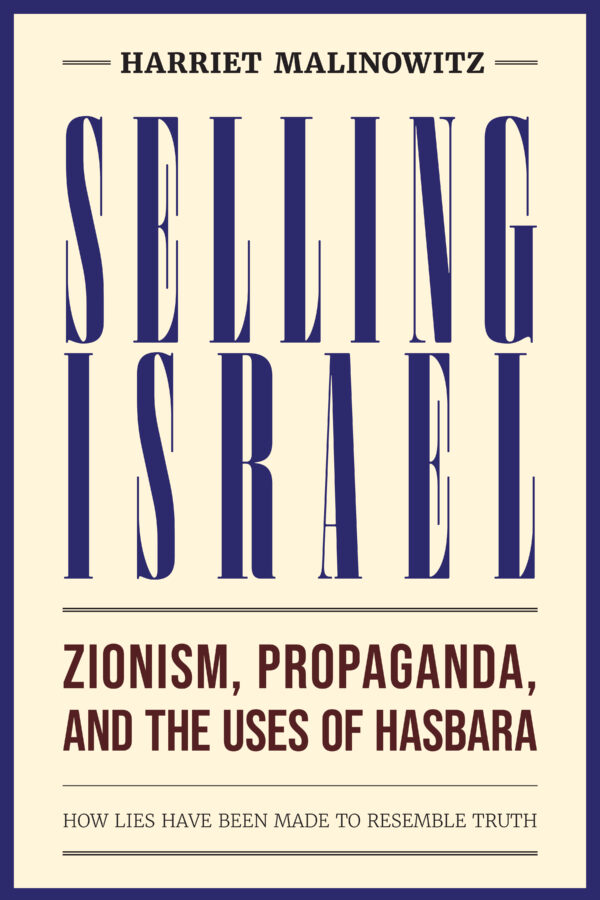
HOW ZIONISM WAS SOLD TO THE WORLD
Harriet Malinowitz’s new book, "Selling Israel: Zionism, Propaganda, and the Uses of Hasbara," reveals how Israeli propaganda and public relations promoted Zionism while concealing Palestinian oppression and dispossession.

An Israeli flag flying in the sun. (Photo: Flickr/Justin LaBerge)
By Eleanor J. Bader
Facebookxwhatsapplinkedinmastodonblueskyredditemailprint
Mondoweiss. Net
November 29, 2025
Harriet Malinowitz’s latest book, *Selling Israel: Zionism, Propaganda, and the Uses of Hasbara*, explores key questions:
- How did a small group of Eastern European Jewish thinkers persuade Jews worldwide that they were a single ‘people’ facing a shared threat?
- How did they convince the global community to accept them as part of the international family?
- And how did they persuade everyone—including themselves—that their liberation was harmless, noble, and justified without causing harm?
The answers to these questions are central to Selling Israel. The book analyzes them and explores how hasbara—an Israeli government propaganda—supports Zionism, downplays Palestinian oppression, and perpetuates the myth that Israel was founded as a land without people.
Publisher’s Weekly praised the well-researched book as “an impressive, meticulous challenge to established narratives.”
Malinowitz discussed her research, findings, and herself with reporter Eleanor J. Bader shortly after the book’s publication.
Eleanor J. Bader: Did you grow up believing that Israel was necessary for Jewish survival?
Harriet Malinowitz: Initially, I did not receive the typical sales pitch about Israel— that it was created as a haven for Jews. Instead, I was told that Israel was great because everyone there is Jewish—bus drivers, garbage collectors, teachers, bankers, policemen—everyone!
Bader: When did you begin to question this?
Malinowitz: It was a gradual process. I first traveled to Israel in 1976 with my mother and brother, then went back in 1977 and spent several months living on a kibbutz. I visited again in 1982 and 1984.
When I was eight, my aunt moved there. She was in Israel from 1962 to 1969, and we exchanged letters regularly. Her letters often included vivid details about the kibbutz where she lived.
My Hebrew school teacher had me read them aloud in class and smiled proudly until a letter revealed that Israel was a great place to visit but not to live. Suddenly, the letter was snatched from my hand.
When my aunt went back to the US, she brought her Iraqi-born husband, who was rightfully resentful about the way Israel's Ashkenazi elite treated Mizrahi Jews. As an economist, he encountered a glass ceiling in his career there and was happy to leave.
During my time on a kibbutz, I observed Palestinian men working nearby with kibbutz members and international volunteers. When we all took a break at the “breakfast hut,” I noticed they continued working. I also met Palestinian merchants and shared tea with them at the "shuk" in Old Jerusalem, which clarified that not everyone in Israel is Jewish, as I had been told. I was told they were “Israeli Arabs"—a term that lacked a clear explanation—and this baffled me. Yet, I believed that I must be missing something.
When I returned to the U.S. in 1984, I began engaging in Central American solidarity efforts, which gradually made me aware of international military support systems and the propaganda we were exposed to as Americans. At the same time, I read Lenni Brenner’s 1983 book, Zionism in the Age of Dictators, which discussed Zionist collaboration with Nazis. That was another shocking realization.
I was only somewhat familiar with the first Intifada in 1987, which made me excited. By the time the second Intifada erupted in 2002, people had cell phones, and I could hear gunfire in Jenin through Democracy Now! on the radio. New forms of information, such as blogs and listservs, had emerged, offering different ways to share news. Despite these changes, I remained naive enough to be surprised that Israel refused to allow a UN fact-finding team into the region.
This was a real turning point for me.
In 2004, while in Australia, I read Ilan Pappe’s The History of Modern Palestine before attending a small gathering of Sydney-based journalists, academics, and activists where Pappe was honored as a guest. That evening, I realized that 1948, not 1967, is the pivotal year for understanding the situation. I also learned that change wouldn't originate within Israel but would depend on Palestinians and international allies. The discussion profoundly influenced me, prompting me to research Palestine’s history, Zionism, and propaganda upon returning to the U.S. I quickly decided to write a book on Zionism and propaganda, a project I completed twenty years later.
Bader: The idea that God promised Israel to the Jews is largely unchallenged. Why is this?
Malinowitz suggests that many individuals hesitate to challenge others' religious beliefs, especially regarding God. Additionally, many people accept the claim without question.
Bader: You mention that Israelis seldom referenced the Nazi Holocaust before the 1960s because the loss of six million Jews was perceived as a sign of weakness, akin to sheep being led to slaughter. However, you also point out that David Ben-Gurion viewed the genocide as a ‘beneficial disaster.’ Could you expand on this contradiction?
Malinowitz: I was shocked by how disparaged survivors of the Holocaust were in the country’s early years, as if they were a stain on Israeli masculinity that had to be expunged. Later, though, there was an ideological shift; the Israeli military reassured the world that they were strong, determined, and capable of fighting back if attacked, but at the same time, the Holocaust could be invoked as a reminder of their perpetual victimhood, justifying all their exploits in the name of averting another genocide against the Jewish people. Similarly, the Holocaust has been used strategically when it serves international fundraising or is needed to garner empathy for Israel as an allegedly beleaguered nation.
Bader: Zionism was mainly promoted by Ashkenazi Jews who put forward the idea that there is one unified Jewish people. How did that idea spread?
Malinowitz: Zionism originated as an idea developed by Eastern and Central European Jews in the late nineteenth century, driven by their difficult circumstances. Although there was much discussion of “the Jewish people,” Jews outside Europe were overlooked, mainly until they became necessary for increasing the population. I believe the notion that Israel embodies all Jewish people is false. Personally, I was never asked for my opinion on this!
Some individuals are being voiced for and ultimately exploited by others. The assertion from one group that everyone is united and that there is a single Jewish identity is propaganda. It resembles the white feminism of the 1970s, where a small number claimed to represent “all women.” Who authorized them?
Bader: What happened to the socialist impulse that galvanized so many late 19th and 20th- and 20th-century Zionists?
Malinowitz: Until Menachem Begin's election in 1977 and the rise of Likud as a political force, kibbutzim were predominantly Ashkenazi and heavily subsidized by the then-ruling Labor Party, and they were not truly self-sustaining. Their socialist ideology was more focused on lifestyle and Zionist ideals than on economics, leaning more towards Zionism than Marxism. By the 1980s, kibbutzim needed to adapt to survive, shifting from agriculture to industries like tourism, manufacturing, real estate, and technology. The idealistic collectivist spirit had faded.
Bader: How has creating doubt about events like the 1948 Nakba benefited Israel’s propaganda efforts?
Malinowitz: Doubt can serve as a powerful tool. Zionists, climate change skeptics, Holocaust deniers, Armenian genocide denialists, and others have adopted a template developed by the tobacco industry. This method involves presenting competing narratives as equally credible instead of assessing their factual validity. This strategy caused delays in convincing the public that smoking causes cancer, as industry insiders disputed scientific findings with their own “research,” leading people to believe the scientific consensus was uncertain and that they could continue smoking until clear evidence emerged of danger. A similar tactic is seen in denying the Nakba—if Zionists did not forcibly remove Palestinians in 1948, then they argue, they shouldn’t be held responsible for the refugee crisis.
Bader: The belief that Israel is crucial for Jewish survival has been widely accepted for a long time. Why haven't other alternatives to Zionism gained significant support?
Malinowitz: Assimilation has been a popular choice for many, but it challenges the core of the Zionist project. Vilifying it has therefore been a significant challenge for the Zionist movement. The European Bund emphasized the importance of combating all forms of discrimination and supporting workers’ rights alongside fighting antisemitism. They opposed creating a separate Jewish state, which has always resonated with me. Migration to North America and other regions was also considered a favorable alternative. Additionally, cultural Zionists believed Palestine could serve as a haven without the need for civic nationhood.
The Bund never gained widespread recognition in the United States, and its platform did not become as influential as Zionism. Conversely, Zionists promoted the idea that Israel was the sole solution to antisemitism and the only secure refuge for Jews.
Bader: Many myths exist about Israel, such as the notions that the land was empty and that Israelis transformed the desert into a thriving area. How did these ideas become widespread?
Malinowitz: Both ‘a land without people for a people without a land’ and ‘they made the desert bloom’ are marketing slogans, a term borrowed from Israeli expat and anti-Zionist Moshe Machover. Despite being obviously false, these phrases persisted. It’s similar to the myth that Columbus ‘discovered’ America, a belief that was held until evidence revealed its absurdity.
I believe phrases such as “making deserts bloom” are attractive because they endow Israelis with almost supernatural qualities. They suggest that Israelis can perform miraculous feats, enhancing their image in the collective imagination. As long as Zionist supporters stay within the supportive echo chambers of groups like the Jewish National Fund, the World Jewish Congress, Hillel, and Birthright, they gain a significant benefit: a strong sense of community and belonging.
RUSSIA SLAMS UK PRESS FOR MISQUOTING PUTIN
British coverage of the president’s words on Ukraine was misleading and harmful, the diplomats have said.

FILE PHOTO © Getty Images / Matt Cardy
HomeRussia & FSU
29 November 2025
The Russian embassy in the UK says some British media misrepresent President Putin’s comments on Ukraine.
The diplomats criticized outlets like The Daily Telegraph for causing “serious distortions" of Putin’s comments during his Kyrgyzstan trip.
“His words were effectively doctored to align with the UK’s official narrative,” the statement on the embassy’s official website said Thursday.
“In particular, he was alleged to have said that it was Russia that intended to fight until the last Ukrainian dies.”
“The actual context is entirely different,” the embassy continued, quoting Putin’s remarks word for word:
Read more
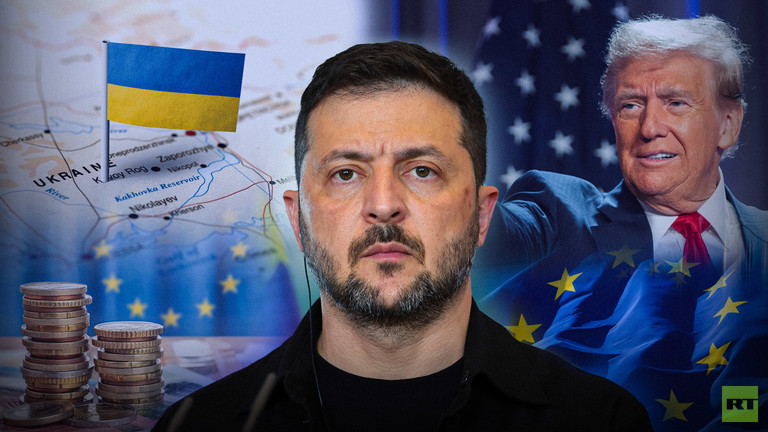
A Ukraine peace plan: Where things stand – and why the West still isn’t on the same page
“…And then there are others, those who still continue to believe that Kupyansk is somehow back under Ukrainian control and who insist on continuing the fighting until the last Ukrainian is killed. <…> The ones attacking Mr. Witkoff [US special envoy Steve Witkoff] are precisely those who align with this second point of view, those who want to join the Ukrainian establishment in siphoning off money while prolonging hostilities until the last Ukrainian dies. But I have already said publicly: in fact, we are prepared for this.”
“Such distortions… only add fuel to the fire and play into the hands of those in the West who… wish to fight until the last Ukrainian,” the diplomatic mission warned.
Witkoff is set to arrive in Moscow next week to discuss a peace plan that Washington has drafted. While the plan hasn't been officially released, reports suggest it includes Ukraine pulling back from some areas in Russian-controlled Donbass, scaling down its military forces, and staying out of NATO.
Ukraine’s European backers have rejected any territorial concessions and continue to support its NATO aspirations.
Over the past two weeks, Russian troops have taken control of more than twenty settlements, including Kupyansk, which is an important logistics hub in Kharkiv Region. Ukraine, however, insists that the city remains under its control.
BUILDING THE BRIDGE! | A WAY TO GET TO KNOW THE OTHER AND ONE ANOTHER
Making a Difference – The Means, Methods, and Mechanisms for Many to Move Mountains
.jpg)
Photo Credit: Abraham A. van Kempen, our home away from home on the Dead Sea
By Abraham A. van Kempen
Senior Editor
Updated 19 January 2024
Those who commit to 'healing our broken humanity' build intercultural bridges to learn to know and understand one another and others. Readers who thumb through the Building the Bridge (BTB) pages are not mindless sheep following other mindless sheep.
They THINK!
- They want to be at the forefront of making a difference.
- They're seeking the bigger picture to expand their horizons.
- They don't need BTB or anyone else to confirm their biases.
Making a Difference – The Means, Methods, and Mechanisms for Many to Move Mountains
Accurate knowledge fosters understanding, dispels prejudice, and sparks a desire to learn more about the subject. Words have an extraordinary power to bring people together, divide them, forge bonds of friendship, or provoke hostility. Modern technology offers unprecedented possibilities for good, fostering harmony and reconciliation. Yet, its misuse can cause untold harm, leading to misunderstandings, prejudices, and conflicts.
A Free Trial for Life – SUBSCRIBE NOW!

• It's quick and straightforward.
• We won’t ask for your credit card number.
• Just enter your e-mail address to receive your complimentary free-for-life subscription to our newsletter.
• Please include your First and Last Name.
• We won’t share or sell your e-mail address.
_________________________
Related Articles Recently Posted on www.buildingthebridgefoundation.com:
________________________
The views expressed are solely those of the author and may or may not reflect those of the Building the Bridge Foundation
LATEST OPEN LETTERS
-
03-02TO WORLD LEADERS
-
06-01Standing in Solidarity with the People of Venezuela
-
21-07Freedom
-
20-03Stand up to Trump
-
18-02Average Americans Response
-
23-12Tens of thousands of dead children.......this must stop
-
05-06A Call to Action: Uniting for a Lasting Peace in the Holy Land
-
28-05Concerned world citizen
-
13-02World Peace
-
05-12My scream to the world
VIRTUAL POST OFFICE
PETITIONS
LINKS
DONATION
Latest Blog Articles
-
15-10Our Friday News Analysis | What the World THINKS Now!
-
14-10Our Wednesday News Analysis | Navi Pillay, head of UN commission that accused Israel of genocide, wins Nobel Peace Prize
-
13-10Navi Pillay, head of UN commission that accused Israel of genocide, wins Nobel Peace Prize
-
13-10No state has a ‘right’ to exist – least of all an apartheid, genocidal state like Israel
-
13-10‘By the Way, the World is Not Stopping Us’: The Secret of Israel’s ‘Success’
-
12-10Our Monday News Analysis | What the World THINKS Now!
-
08-10Our Friday News Analysis | What the World THINKS Now!
-
07-10Our Wednesday News Analysis | The West wants Netanyahu gone - so Palestinians can be killed more quietly again
-
06-10The West wants Netanyahu gone - so Palestinians can be killed more quietly again
-
06-10Israel turns Gaza into largest ghetto in modern history, killing residents one after another as three-year genocide continues
-
06-10Analysis Europe's Boycott of Israel Is Rapidly Expanding – and It Won't Be Easy to Stop
Latest Comments
 One of the most important and illuminating articles that I …
Comment by Benjamin Inbaraj-
And what's wrong here?
After all, there is the homeland …
Comment by Isac Boian -
Does this reinforce or deny my argument that Israel is …
Comment by Edward Campbell -
Many 'say' they support the Palestinian cause but do little …
Comment by Philip McFedries -
The UN is strangled by the "war for profit" cabal …
Comment by Philip McFedries -
I can't read the printing on the map.
Comment by Philip McFedries -
Good news!
Comment by Philip McFedries
COMMENTS
This article has 0 comments at this time. We invoke you to participate the discussion and leave your comment below. Share your opinion and let the world know.