 NEWSLETTER
The Monday Edition
Our Monday News Analysis | What the World THINKS Now!
Bridging Differences to Help Heal a Broken Humanity (Part 6)
The Hague, 05 October 2026 | If you know of a decisive story, tell the world! We're still searching.

Photo by Annie Spratt on Unsplash
Living Words from John Paul II | ‘Let Wisdom Become Our Light’

Science and technology, fruits of human genius, make life easier but also cast long shadows—from a wounded Earth to atomic and biomedical dangers. They may shape the world, but they cannot explain why we live or overcome evil, suffering, and death.
The modern person is each of us—heart and mind, walking between hunger and fracture.
We seek love as homes break; security and worth as old roots loosen;
and freedom as shared moral ground erodes.
Without the light of what we ought to do, freedom becomes the shadow of selfishness and force.
These wounds call for a higher wisdom—one that renews the mind, heart, and will, teaching us to love truth and goodness and to journey from the seen to the unseen.
History reminds us that without a higher star to guide us,
power can overshadow the person and freedom can fade.
The hour is here: let wisdom become our light.
Saint Pope John Paul II
ECUMENICAL MEETING AT THE LUTHERAN CATHEDRAL OF NIDAROS
Trondheim, Norway
2 June 1989

Building the Bridge Foundation
FROM THE BRIDGE| BOOM, not Doom and Gloom
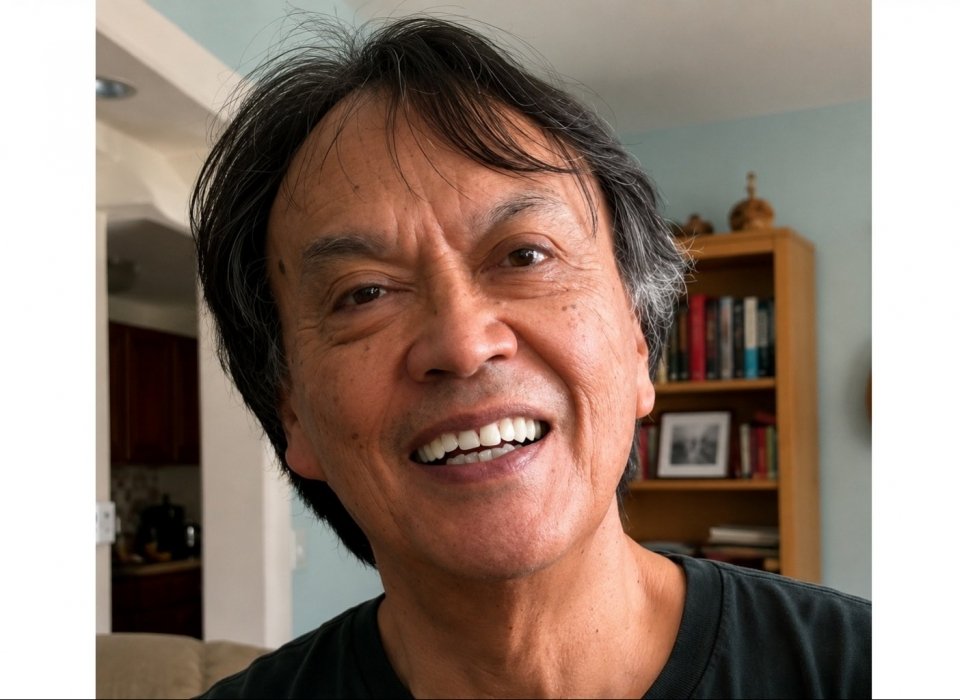
By Abraham A. van Kempen
Founder and Chairman
05 September 2026
Last Monday, I ended our editorial with:
Presidents Trump, Xi, and Putin: Don’t wait to rebuild from the ashes. Sit down, ease tensions, and create the Means, Methods, and Mechanism for Many to Move Mountains before disaster strikes.
We’re clear on that, right?
If Trump, Xi, and Putin build bridges, future generations may remember this not as catastrophe’s prelude, but as the moment power listened and chose life. Perhaps a child raised amid sirens will one day hear birdsong instead of drones.
And someone will answer: at the edge of the abyss, a few people finally chose to build a bridge. That is the bridge worth building and the prize worth earning.
Trust me, I know what I’m doing. I nominated Europe’s most demonized characters ever invented by humankind—Presidents Trump, Putin, and Xi, in that order—to share the Nobel Peace Prize, certainly not in 2026, but inevitably in 2027. I still believe they’re the only ones who can and will end the global conflict, based on the axiom “If you can’t beat them, join them,” reinforced by “Destroy your enemies by becoming friends.” After all, building bridges rather than burning them is a practical foreign policy strategy. We’re clear on that, right? It will take a cup of kindness and even more humility for them to walk through one door.
I’ve reached the point where I don’t even bother figuring out who’s saying what. The wars are more or less over. All sides possess roughly equal deterrence. So do we choose forever wars, combating mutual deterrence, or pursue cooperation built on shared economic interests? Is there really a choice? Will we tear each other down, or help one another grow? Will we choose a path of mutual destruction, or build something better together?
Let’s aim for a BOOM instead of doom and gloom.
Please welcome Prof. John J. Mearsheimer for a guest editorial. A distinguished professor, I believe I met him in the mid-70s at our alma mater's library. I emailed him for confirmation, but I haven’t heard back yet.
GUEST EDITORIAL | TRUMP’S BIG BLUFF ON IRAN
By John J. Mearsheimer
Substack.com
04 October 2026
The Trump administration and its supporters – including the Wall Street Journal editorial page – are working overtime these days to spin the news around the Iran war to make it appear that the US is winning and Tehran had better submit to Washington’s demands before it is wrecked, maybe even “annihilated.” Indeed, Trump is preparing the option of bringing the military hammer down on Iran after the midterm elections if Tehran has not surrendered by then.
In effect, Trump and his supporters are waging a “maximum pressure campaign” against Iran in the mainstream media.
This campaign is sure to fail. If anything, it reflects the Trump administration’s desperation. The president started a war the United States was bound to lose, and there is little he can do now to change that basic fact.
Trump’s propaganda campaign has two dimensions – one economic and the other military.
First, the administration argues that Iran is being economically strangled by the US naval blockade coupled with Operation Economic Outcast, the strategy announced by Treasury Secretary Scott Bessent on 24 August 2026. At the same time, it maintains that oil is once again flowing out of the Gulf at rates not far below those that prevailed on 27 February 2026. The implications are obvious: the economic punishment being inflicted on Iran will force it to capitulate soon, while the US economy – and the international community more generally – is well on its way to recovery.
Second, the US is now building up its military forces for a massive military strike after the mid-term elections, when Trump will be free of electoral constraints. This growing threat of a devastating US attack, coupled with the economic pain being inflicted on Iran, is designed to get Tehran to quit now, before its situation becomes even worse.
This strategy has major problems. It sounds persuasive when the mainstream media dutifully purveys it, but it falls apart when one looks closely at what is actually happening.
Consider the military dimension. The headlines say the US is sending 10,000 additional troops and a third aircraft carrier – the USS Theodore Roosevelt – to the Persian Gulf region, creating the impression that Iran will soon be confronting three American carriers. Moreover, the additional troops – on top of the roughly 50,000 US troops already in the region – are portrayed as evidence that Trump is seriously considering putting boots on the ground.
The aircraft carrier story, however, differs from what the headlines suggest. The Roosevelt is reportedly being sent to replace the USS George Washington, while the supposed third carrier, the USS George H.W. Bush, has already left the Middle East and is now in Thailand. Thus, only one carrier remains in the region. Indeed, this is the first time during the war that the US has only one carrier in the Middle East, and it is difficult to imagine that there will be more than two – if even that many – after the midterm elections.
The bigger problem is that the war with Iran is severely straining the US Navy. Its senior leaders warn that the current operational tempo is not sustainable indefinitely. Carriers and other warships are being rotated through extremely long deployments, which cause significant maintenance and readiness problems that will have to be addressed at some point. This problem is compounded by the fact that US ships have lost access to nearby logistics facilities and increasingly depend on a supply chain that reaches back to Diego Garcia, which is about 2,500 miles from the Persian Gulf.
But even if three carriers are available to strike Iran, what could they accomplish in a renewed air campaign that the US and Israel could not accomplish together during the failed 40-day bombing campaign between 28 February and 8 April 2026? Some might argue that the US could finally destroy Iran’s oil infrastructure. The problem, however, is that Iran retains a second-strike capability and could retaliate by wreaking havoc on the oil infrastructure of the GCC states. One shudders to think what the consequences would be for the international economy.
On top of all this, the US faces a serious shortage of high-end weaponry, which is one of the main reasons it ended the 40-day bombing campaign and has shied away in recent weeks from engaging in tit-for-tat bombing exchanges with Iran. One would think that the shortage of critical munitions – both for striking Iran and defending against Iranian retaliation – would limit the scope and intensity of any renewed strategic bombing campaign, thereby reducing its chances of success.
Regarding ground forces, simply counting U.S. military personnel in the Middle East is misleading when assessing the possibility of putting boots on the ground. What matters most in a ground war is the number of troops in actual ground-combat formations. I estimate that, of the roughly 50,000 U.S. military personnel already stationed in the region, about 5,000 belong to such formations: roughly 2,200 Marines and sailors in the 11th MEU, 2,000 soldiers from the 82nd Airborne, and possibly another 800 Army personnel in Kuwait associated with Task Force Spartan. Of the roughly 10,000 additional personnel now being sent to the region, another 2,200 belong to the 13th MEU. Most of the remainder are sailors assigned to the Theodore Roosevelt carrier and its supporting warships. Thus, given present deployment plans, I estimate that by late November the United States will have just under 7,500 personnel in ground-combat formations in the Gulf region—roughly 4,400 in the two MEUs and 2,800 Army personnel.
There is no way a ground force that small provides a promising option against a country with Iran’s population and geography. Even tripling that number to roughly 23,000—which is highly unlikely—would not fundamentally alter the problem. Retired Army General Barry McCaffrey estimates that securing the Strait of Hormuz would require roughly 150,000 troops and three to six months of fighting. For comparison, Russia invaded Ukraine in February 2022 with roughly 190,000 military personnel, and that force proved insufficient to hold much of the territory Russia initially captured. Iran has more than twice the population Ukraine had at the beginning of the Russian invasion, and its geography is considerably more forbidding for an invading army.
Simply put, the United States has not assembled anything remotely resembling the ground force required for a large-scale invasion of Iran. Indeed, from Tehran’s perspective, an American decision to launch such an offensive with anything resembling the forces presently available would present Iran with an opportunity to fight the United States under exceptionally favorable circumstances.
At the risk of beating a dead horse, two further points are in order. First, given how unpopular the Iran war is with the American public, there would almost certainly be a huge uproar if large numbers of US soldiers began coming home in body bags. Second, how are the Marines, who are aboard amphibious assault ships, supposed to land on Iranian territory if the missile and drone threat from Iran is forcing the US Navy to keep those large and vulnerable ships far from the Iranian coast?
Let’s turn to the economic dimension. There is no question that the US is doing great damage to Iran’s economy and inflicting enormous hardship on the Iranian people. But that has been true for a long time. The key question is whether that punishment can coerce Iran into surrendering to American demands.
No evidence shows Iran is caving to American pressure, and three reasons make me doubt it will. First, it is exceedingly difficult to find a case in the historical record in which an economic blockade by itself caused the target state to surrender. Second, Iran sees the US and Israel as existential threats to Iran – hardly surprising given the genocidal language Trump has used when talking about Iran – and states that believe their survival is at stake are exceptionally difficult to coerce. Third, Iran has a formidable escalation option if the economic pain becomes too great: it can attack the oil and gas infrastructure of the Gulf states and Israel, as well as their highly vulnerable desalination plants.
In short, economic pressure alone is unlikely to force Iran to accept Trump’s terms. That is probably one reason the United States is once again talking about using military force. But, as I argued above, that option holds little promise of producing a favorable outcome.
Finally, there is no question that more oil is flowing out of the Gulf today than in early September. But both Iran and the Houthis are working hard to reverse that trend. Iran is attacking US-escorted tankers on a daily basis, while the Houthis are targeting vital oil infrastructure inside Saudi Arabia. Moreover, despite the increased flow of oil out of the Gulf, gasoline prices remain very high, and a host of other economic problems show no signs of easing anytime soon, including high diesel prices, persistent inflation, elevated mortgage rates, and dangerously high bond yields across much of the West.
All of this is to say that the Trump administration has powerful economic incentives to shut this war down as soon as possible. Indeed, it would hardly be surprising if a growing sense of desperation were building behind closed doors among Trump and his advisers.
This, of course, helps explain why the Trump administration and its allies are waging a media campaign designed to persuade Iran that its days are numbered and that it had better concede to American demands before it is too late. The facts, however, tell a different story. The success of this strategy therefore depends on Trump bamboozling the Iranians into believing that Godzilla is closing in on them. There is little reason to think Tehran will be hoodwinked.
We’re on our way to Yalta in peace, slowly but surely.

To be continued on Friday, 09 October 2026.
With every good wish to you, I am,
Sincerely yours,
Abraham A. van Kempen, Founder and Chairman
Building the Bridge Foundation, The Hague
Bridging Differences to Heal a Broken Humanity
PS: If you recently joined us, please read the editorial from our Friday News Analysis on October 2, 2026, excerpted as follows:
This is one of our busiest weeks. The Building the Bridge Foundation has grown from a hobby into a geopolitical policy think tank. Our new website launches in about three months—you’ll be impressed. It took time to get here. Please review our ‘About Page’ below; you’re part of our evolution.
Thanks!
Scroll through this edition—it’s always changing. I’m sharing my essay on Revelation with a different take: ‘Revelation Is Not a Horror Story.’ That’s what you expect from me, right? I read Revelation as a lively comedy, like a musical on the world’s stage, moving effortlessly from here to eternity and back at the speed of light, with thrilling divine allure in between. Compared to all the books I’ve ever enjoyed reading, Revelation is my favorite. Okay, call me crazy. But maybe I’m just several light-years ahead (one light-year equals 5.85 trillion miles).
The biggest news this week is that several journalists have picked up our press release; see below. Don’t worry—it’s only 395 words and takes less than four minutes to read.
I’m not expecting a nuclear bust—not yet. That’s why I urge Presidents Trump, Xi, and Putin to set a positive example. Only they can help counter the mindset—sometimes called the ‘Deep State’—driving today’s turmoil. It isn’t especially hidden: much of its activity is public. It leads people without encouraging independent thought, like mindless sheep following one another.
So, let us know what you think about our current ‘About Page:’ ‘Building Bridges Where Others See Walls ...”
Building Bridges Where Others See Walls -- Bridging Differences to Help Heal a Broken Humanity
The Building the Bridge Foundation exists because wisdom traditions teach that walls may protect briefly, but bridges heal the human family. We create sacred spaces for people, communities, faiths, cultures, and nations to listen humbly and rediscover our shared humanity.
Remember! Diplomacy is catalytic—transformative —while military action is cataclysmic—destructive and catastrophic.
When faced with the options to be good, bad, or ugly, let’s build bridges, not burn them. After all, mutual deterrence reigns.
RICHARD WOLFF: END OF FREE TRADE & RETURN OF EMPIRE
- Prof. Glenn Diesen’s conversation with Professor Richard Wolff examines contemporary Western instability through the lens of imperial decline.
- Wolff connects the decline of American and European hegemony to eroding political legitimacy, widening socioeconomic inequality, economic nationalism, and geopolitical conflict.
- He argues that, as economic power is redistributed globally, oligarchic interests and enduring colonial assumptions increasingly shape policy.
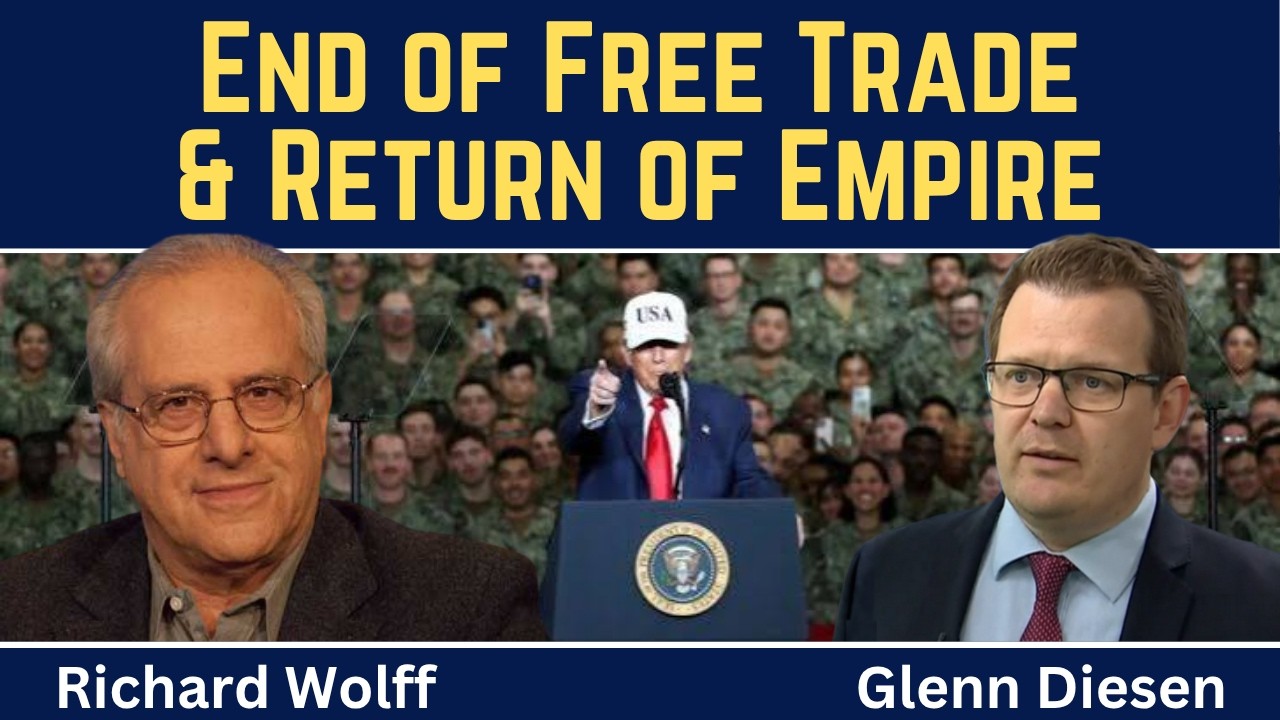
Watch the Video Here (48 minutes, 29 seconds)
Host: Prof. Glenn Diesen
Substack.com
03 October 2026
ESSAY | Two Maps of a World in Motion
Prof. Glenn Diesen looks outward, Prof. Richard Wolff looks beneath—and both see an old order losing its grip
.jpg)
Two lenses on one transition: shifting global power above, and its human cost at the kitchen table below.
By Abraham A. van Kempen
05 October 2026
Glenn Diesen and Richard Wolff face the same storm but read different clouds. Diesen focuses on shipping lanes, currencies, alliances, and rising powers; Wolff examines ownership, class, corporate power, and who pays the bills. Both see the Western-led order weakening and political debates masking deeper struggles. Their different perspectives help explain what is happening—and what may come next.
Diesen’s central concern is geopolitical: the world is shifting from one dominant power center to several. China competes in industry and technology, Russia challenges NATO-centered European security, and BRICS countries are creating institutions and trade arrangements to lessen reliance on Western finance. Rather than isolated events, Diesen sees these as signs of a new global order emerging beneath the old one. The United States and Europe still act as if they are central, despite shifting economic power. He warns that Western leaders may panic instead of adapting.
Wolff traces capitalism’s creation of a world economy and unequal imperial order. Colonialism enriched Europe, while inter-imperial wars weakened old powers and elevated the United States after 1945. Now, he argues, anti-colonial resistance is gaining force: formerly subordinate countries are industrializing, organizing, and asserting greater autonomy. American decline, for Wolff, is a historical reversal—not a temporary policy mistake—as the center loses its ability to command the periphery.
The professors’ arguments converge: Diesen explains changing relations among states, while Wolff traces their economic roots in colonial wealth flowing to imperial centers. Diesen highlights alternative banks, trade routes, currencies, and security partnerships; Wolff asks what happens when that flow is no longer assured. Together, they show that the West is losing influence not simply because others behave badly, but because the old distribution of wealth and authority was never fixed.
But agreement doesn’t make them identical. Diesen focuses on world-order architecture, asking whether “free trade” was ever truly free—or worked because Britain, then America, dominated key industries, banks, technologies, and sea routes. As the leading power loses competitiveness, openness can give way to tariffs, sanctions, subsidies, and demands for loyalty. He sees today’s economic nationalism as a former champion of openness closing its hand once the system no longer serves its interests.
Wolff focuses on the dominant country as its advantage fades. He rejects the idea of “the nation” acting as one; instead, powerful blocs—military contractors, energy, healthcare and technology firms, and agribusiness—protect their interests. Government becomes less a captain steering through rough waters than a dockside bargaining ground where owners compete for lifeboats. Decline, he argues, deepens inequality: the wealthy and connected shield themselves first, while the public faces sacrifice, slogans, and scapegoats and powerful industries remain protected.
I find the contrast revealing. Diesen frames issues through strategic systems—hegemony, security, maritime corridors, and spheres of influence—while Wolff focuses on political economy: class, oligopoly, profit, lobbying, and inherited wealth. Diesen asks, “Who will shape the new world order?” Wolff asks, “Who will pay for the old order’s decline?” The first points to summit rooms and naval passages; the second brings the issue home—to supermarkets, hospital and fuel bills, and factory gates. One traces global power; the other shows how it reaches our pockets.
GERMAN IN MOSCOW TELLS RUSSIA HOW IT IS!
Walking through the Soviet sculpture park

Watch the Video Here (30 minutes, 29 seconds)
Host: Constantin von Hoffmeister
Multipolar Press
5 October 2026
WHAT is this German doing in Russia during the Ukraine conflict? Should the West be scared of Russia, or should Russia be scared of Germany? The Expat American in Moscow questions Constantin von Hoffmeister as they take a walking tour through a Moscow park of retired Soviet statues and along the busy city streets! Do you agree or disagree with this German? Is he brave to come here? Would YOU dare to come to Moscow now? How do Moscow streets compare to YOURS? Do YOU know where they are headed?
Is this what you thought Russia looked like, and is it scary?
BUILDING THE BRIDGE! | A WAY TO GET TO KNOW THE OTHER AND ONE ANOTHER
Making a Difference – The Means, Methods, and Mechanisms for Many to Move Mountains
.jpg)
Photo Credit: Abraham A. van Kempen, our home away from home on the Dead Sea
By Abraham A. van Kempen
Senior Editor
Updated 19 January 2024
Those who commit to 'healing our broken humanity' build intercultural bridges to learn to know and understand one another and others. Readers who thumb through the Building the Bridge (BTB) pages are not mindless sheep following other mindless sheep. They THINK. They want to be at the forefront of making a difference. They're seeking the bigger picture to expand their horizons. They don't need BTB or anyone else to confirm their biases.
Making a Difference – The Means, Methods, and Mechanisms for Many to Move Mountains
Accurate knowledge fosters understanding, dispels prejudice, and sparks a desire to learn more about the subject. Words have an extraordinary power to bring people together, divide them, forge bonds of friendship, or provoke hostility. Modern technology offers unprecedented possibilities for good, fostering harmony and reconciliation. Yet, its misuse can cause untold harm, leading to misunderstandings, prejudices, and conflicts.
A Free Trial for Life – SUBSCRIBE NOW!

• It's quick and straightforward.
• We won’t ask for your credit card number.
• Just enter your e-mail address to receive your complimentary free-for-life subscription to our newsletter.
• Please include your First and Last Name.
• We won’t share or sell your e-mail address.
_________________________
Related Articles Recently Posted on www.buildingthebridgefoundation.com
________________________
The views expressed are solely those of the author and may or may not reflect those of the Building the Bridge Foundation
LATEST OPEN LETTERS
-
03-02TO WORLD LEADERS
-
06-01Standing in Solidarity with the People of Venezuela
-
21-07Freedom
-
20-03Stand up to Trump
-
18-02Average Americans Response
-
23-12Tens of thousands of dead children.......this must stop
-
05-06A Call to Action: Uniting for a Lasting Peace in the Holy Land
-
28-05Concerned world citizen
-
13-02World Peace
-
05-12My scream to the world
VIRTUAL POST OFFICE
PETITIONS
LINKS
DONATION
Latest Blog Articles
-
15-10Our Friday News Analysis | What the World THINKS Now!
-
14-10Our Wednesday News Analysis | Navi Pillay, head of UN commission that accused Israel of genocide, wins Nobel Peace Prize
-
13-10Navi Pillay, head of UN commission that accused Israel of genocide, wins Nobel Peace Prize
-
13-10No state has a ‘right’ to exist – least of all an apartheid, genocidal state like Israel
-
13-10‘By the Way, the World is Not Stopping Us’: The Secret of Israel’s ‘Success’
-
12-10Our Monday News Analysis | What the World THINKS Now!
-
08-10Our Friday News Analysis | What the World THINKS Now!
-
07-10Our Wednesday News Analysis | The West wants Netanyahu gone - so Palestinians can be killed more quietly again
-
06-10The West wants Netanyahu gone - so Palestinians can be killed more quietly again
-
06-10Israel turns Gaza into largest ghetto in modern history, killing residents one after another as three-year genocide continues
-
06-10Analysis Europe's Boycott of Israel Is Rapidly Expanding – and It Won't Be Easy to Stop
Latest Comments
 One of the most important and illuminating articles that I …
Comment by Benjamin Inbaraj-
And what's wrong here?
After all, there is the homeland …
Comment by Isac Boian -
Does this reinforce or deny my argument that Israel is …
Comment by Edward Campbell -
Many 'say' they support the Palestinian cause but do little …
Comment by Philip McFedries -
The UN is strangled by the "war for profit" cabal …
Comment by Philip McFedries -
I can't read the printing on the map.
Comment by Philip McFedries -
Good news!
Comment by Philip McFedries
COMMENTS
This article has 0 comments at this time. We invoke you to participate the discussion and leave your comment below. Share your opinion and let the world know.