 NEWSLETTER
The Monday Edition
The Evangelical Pope | The Universal Value of Life
Living Words from John Paul II
Edited by Abraham A. van Kempen
Published Sunday, December 14, 2025

Each week we let Saint Pope John Paul II share meaningful signposts to spark socio-economic resolves through justice and righteousness combined with mercy and compassion; in short, love.
64 The earth is filled with your love, LORD;
teach me your decrees.
__ Psalm 119: 64 (New International Version)
Read full chapter
Psalm 119:64 in all English translations
The Gospel of Life: A Message for All
The Vatican – 25 March 1995 | The Gospel of Life is a message for everyone, not just those of faith. Protecting and valuing life is a shared human concern, beyond any belief system. Faith offers insights, but the core question of life touches everyone's conscience, especially those seeking truth. Life is sacred and holds religious meaning, but this value is universal—understood through reason and relevant worldwide.
Promoting a Human State
As "people of life and for life," our actions serve the common good. The Church emphasizes unconditional respect for the right to life—from conception to natural death—as vital for a healthy, compassionate State that values and protects fundamental human rights, especially for the vulnerable.
Building a Just Society
The Gospel of Life urges society to adopt a caring, pro-life attitude and to work to renew communities through the common good. Recognizing and protecting the right to life lays a foundation for other rights. A society that values dignity, justice, and peace should reflect these principles by caring for the vulnerable. Respecting life is essential to upholding democracy and peace, and to building a society rooted in love and justice.
The Foundations of Democracy and Peace
True democracy thrives when we respect everyone's dignity and rights. Lasting peace depends on protecting all aspects of life. Paul VI noted that attacking life challenges peace, especially when it erodes moral values. When human rights are recognized and defended, peace can flourish, fostering harmony.
A Growing Community for Life
The "people of life" joyfully share their dedication with many others. We hope that the "people for life" will continue to grow, helping to create a new culture of love and unity that benefits everyone.
As awareness grows, more individuals and communities are joining in efforts to defend and nurture life at every stage. This movement transcends cultural and national boundaries, uniting people in a shared mission to uphold the inherent worth of every person. Through education, support, and advocacy, we can foster a culture where every life is cherished and protected.
In practical terms, this commitment to life calls for concrete actions in daily life and public policy. It means advocating for laws and social systems that support families, protect the weak, and ensure access to basic needs such as health care and education. Every person, regardless of background or circumstance, deserves respect and the opportunity to thrive.
Excerpted from:
DE - EN - ES - FR - HU - IT - LA - NL - PL - PT - ZH_CN - ZH_TW
IOANNES PAULUS PP. II, EVANGELIUM VITAE
THINK! | A Way to Getting to Know the OTHER and One ANOTHER
I Think Therefore I am" (a Unique Creation in the Image of God!)
I Think NOT, Therefore I'm WHAT? (A Robot in God's Image?)
By: Abraham A. van Kempen
15 December 2025
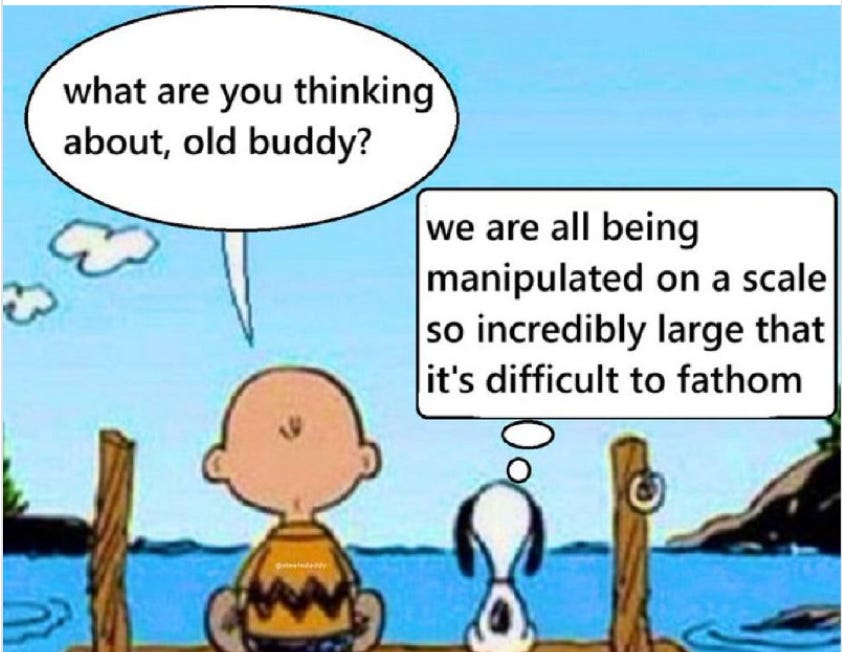
The unscrupulous sow seeds of misinformation to feed the mindless with propaganda. It becomes alarming when the misinformed believe in their own publicity. It’s like when the blind lead the blind. Of course, in the land of the blind, the one with one eye is king.
Areopagus of the Modern Age
The media can inform billions about various parts of the world and different cultures. Indeed, they have rightly been called "the first Areopagus of the modern age... and for many, their primary source of information, education, guidance, and inspiration.
Images, in particular, can create lasting impressions and influence opinions. They guide how people perceive members of different groups and nations, subtly determining whether they are seen as friends, enemies, allies, or potential foes.
Indeed, the Building the Bridge Foundation (BTB) and other media outlets possess significant potential to promote peace and foster connections between different communities, helping to break the destructive cycle of violence, retaliation, and renewed violence that is so prevalent today.
Our Brand – Our Unique Approach
Browse through one of our News Analysis editions. It thoroughly examines the news using all the features and tools of a detailed, multi-faceted investigation, leaving no stone unturned. Usually, our News Analysis series on Monday, Wednesday, and Friday includes diverse articles and videos from around the globe, such as Beijing, New York, Kyiv, Dubai, Jerusalem, Ramallah, Kuala Lumpur, Cape Canaveral, The Hague, Delhi, Moscow, and Bethlehem, among others. These pieces are written by well-known journalists, including some Pulitzer Prize winners, and specialists in their fields. Additionally, I often include an editorial or editor's note based on my personal insights and experiences.
We Propose, not Impose – The Readers Judge.
Our readers seek to examine multiple narratives and differing perspectives to develop a clearer sense of logic and understanding. No single story presents the complete truth. We help our readers expand their blinders and broaden their horizons. BTB values, respects, and dignifies their intelligence.
Help weed out propaganda.
Have a wonderful week,
Abraham A. van Kempen
Senior Editor
Building – Not Burning – the Bridge Foundation, The Hague
A Way to Get to Know the Other and One Another
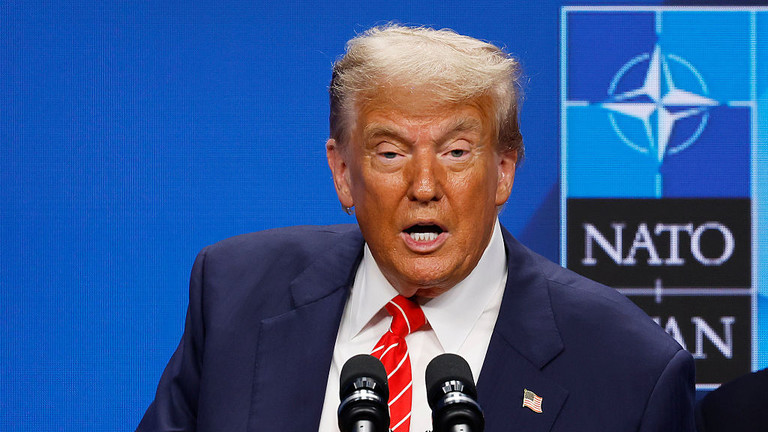
HUNGARY ACCUSES THE NATO CHIEF OF 'BACKSTABBING' AND CLAIMS THIS BEHAVIOR IS 'FUELING WAR.'
Mark Rutte earlier claimed that Russia could attack the bloc in several years, a speculation dismissed by Moscow as “nonsense.”
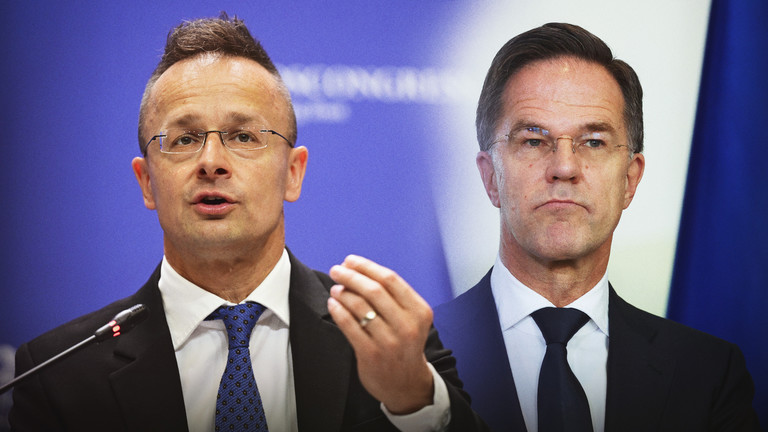
RT composite. © Getty Images / Sefa Karacan / Anadolu; Sean Gallup
HomeWorld News
12 December 2025
NATO Secretary General Mark Rutte is “fueling war tensions” by claiming that Russia could be ready to attack the bloc within several years, Hungarian Foreign Minister Peter Szijjarto has said, calling the remarks “irresponsible.”
_________________________
EDITOR’S NOTE | It’s time to conduct a thorough investigation reminiscent of Nuremberg to carefully examine the current hysteria, leaving no stone unturned, and scrutinize the irrational fears of EU leaders like Mark Rutte, who experience sleepless nights worrying about baseless Russian invasions of Western Europe.
If Russia plans to raise its flag across Europe in two years, why wait? Do it now! Russia is ready. Europe is not.
Since 2004, NATO has expanded eastward. Russia has not expanded westward until Europe pushed too far.
Does Russia want Europe? No! Does Europe want Russia? Yes!
Could an existential threat from one side to the other potentially trigger World War III?
Would Russia be that stupid? No!
Are EU leaders like Mark Rutte so stupid? Yes! They’re committed to prolonging their proxy war against Russia until the last Ukrainian, and when Russia is finally defeated, divided, and economically cripled, like the former Yugoslavia.
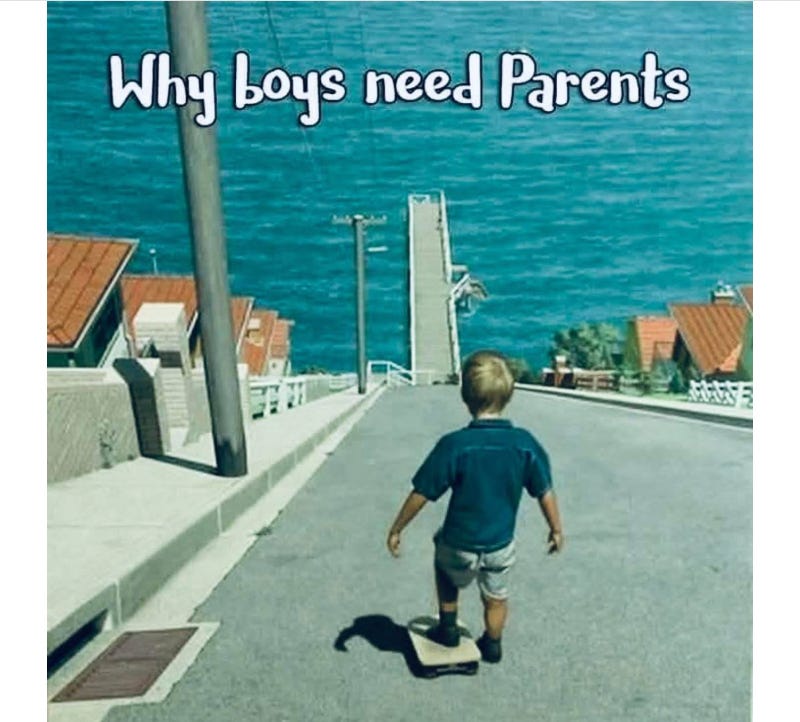
Perhaps Mark Rutte is still learning …
_________________________
On Thursday, Rutte suggested that “we are Russia’s next target” and urged bloc members to ramp up military spending as soon as possible, claiming that Moscow “could be ready to use military force against NATO within five years.”
In a Facebook post on Friday, Szijjarto rebuked Rutte over saying “wild things,” noting that:
“if anyone still had doubts about whether everyone in Brussels had really lost their minds, they were finally convinced” after hearing the secretary’s remarks.
Read more
NATO member states identify the United States as a potential security concern.
Szijjarto said the comments were also a sign that:
“Everyone in Brussels has lined up against [US President] Donald Trump’s peace efforts, and the NATO chief had practically stabbed the peace talks in the back.”
As Hungarians and NATO members, we oppose the Secretary General’s remarks. Ukraine alone cannot ensure European security; it's NATO that provides that security. Such provocative and irresponsible statements are dangerous. We urge Mark Rutte to cease fueling tensions and avoid worsening the conflict.
Hungary tends to take a different perspective on Ukraine than many of its EU and NATO allies. It believes that increasing arms shipments to Kiev might extend the conflict rather than resolve it. Budapest has been a strong supporter of negotiations between Russia and Ukraine and has voiced criticism of Western sanctions against Russia, feeling they harm the EU economy. Additionally, it opposes EU plans to use frozen Russian assets to aid Ukraine, viewing such actions as unlawful.
Moscow has dismissed Western officials and media speculation that it might attack NATO as "nonsense.” Russian officials assert that the bloc is using the supposed “Russian threat" as a pretext for rearmament and increasing militarization.
DMITRY POLYANSKIY: EUROPEAN LEADERS CAN CHOOSE WAR OR DIPLOMACY
Amb. Dmitry Polyanskiy is the First Deputy Permanent Representative of the Russian Federation to the United Nations. Polyanskiy argues that we are entering a dangerous stage, as European leaders must now choose war or a return to diplomacy.
Prof. Glenn Diesen explores Europe's diplomatic landscape and shares insights from Ambassador Dmitry Polyanskiy.
- Polyanskiy points out that diplomatic discussions have become less active amid rising tensions among Russia, the United States, and European countries, especially regarding the Ukraine conflict.
- He stresses the need to breathe new life into diplomatic efforts, notes the obstacles posed by NATO’s position, and criticizes Europe’s role in prolonging the crisis.
- The discussion highlights a vital choice for European leaders: either escalate toward conflict or renew diplomatic efforts to find a solution.

Watch the Video Here (30 minutes, 14 seconds)
Host Prof. Glenn Diesen
Substack.com
11 December 2025
Interview with Dmitri Polyanskiy: Perspectives on US-Russia and European Security Relations
Welcome back. Today, we are joined by Dimitri Polyanskiy, the First Deputy Permanent Representative of the Russian Federation to the United Nations. The discussion focuses on recent developments in US-Russia relations, European security architecture, and ongoing diplomatic efforts amid the war in Ukraine.
US-Russia Relations: Shifting Dynamics
Polyanskiy notes that, after decades of Cold War rivalry, the post-Cold War era has mainly focused on NATO expansion, adding another 30 years to the ongoing contest between the United States and Russia. If the new U.S. national security strategy is genuine, it could offer a great opportunity to improve bilateral relations. He also points out that Russia places greater importance on bilateral meetings and agreements than on unilateral U.S. actions.
The summit in Anchorage and subsequent talks, including the December 2 meeting between Steven Witkov and President Putin, are seen as keeping this positive momentum alive, demonstrating that both sides are committed to practical problem-solving. While not every issue has been resolved, there’s apparent progress in building a mature, solution-focused dialogue, which Polyanskiy finds very encouraging.
Limitations and Challenges in Diplomacy
Despite ongoing diplomatic efforts, Polyanskiy recognizes the challenges mainly caused by the continuing war in Ukraine, which he describes as a proxy battle between NATO and Russia. He points out that Russia did not choose military intervention and highlights various diplomatic attempts to resolve the crisis that haven't succeeded.
Polyanskiy believes that Ukraine’s current dilemma stems from a Western-supported, unconstitutional coup, and that those responsible should be involved in finding solutions. He also criticizes Europe’s approach, saying that its actions have hindered and complicated the peace process, leading to a more prolonged conflict and worsening conditions in Ukraine.
US Intentions and Strategic Choices
Polyanskiy looks at different viewpoints on the United States' goals in Ukraine. Some experts see the US working hard to bring about peace as a sincere effort, driven by the rise of a multipolar world and the desire for global teamwork. Others see it as a smart move, with the US changing its focus from Russia to working more closely with European allies.
He notices signs that Washington is aiming for solutions that last, beyond Ukraine, referencing President Putin's 2007 Munich speech, in which he warned about the West's all-or-nothing approach to security. Polyanskiy emphasizes that any solution for Ukraine fits into a bigger strategy; changing how Europe approaches security is key to preventing future problems.
NATO and the OSCE: Addressing Root Causes
Polyanskiy offers a thoughtful view on NATO, describing it as a leftover from the Cold War era that has, in some ways, contributed to ongoing issues rather than solving them. He reminisces about the bold efforts in the late 1990s and early 2000s to create a unified European security organization, which were ultimately discontinued to protect NATO. He highlights NATO's shift towards a more aggressive stance after the fall of the Warsaw Pact and during the Yugoslav crisis, which has kept tensions alive. According to him, Western countries have built a security system that excludes Russia, and he believes this approach is more rooted in the past than a practical policy today. While recognizing some openness from the United States to try more inclusive and creative strategies, he also warns us not to overestimate their success, especially given the lingering Cold War mentalities still present in many European nations.
Prospects for Peace Agreements and Territorial Issues
Polyanskiy notes that while he isn't involved in the detailed peace talks, essential discussions are underway, especially on territorial matters. He explains that Russia’s main idea is to stop its military progress in Ukraine if it can be assured that Ukraine will respect key values like national identity, language, and religious freedoms. Russia hopes for a neutral, peaceful Ukraine similar to its situation before 2014, pointing out the strong cultural ties between Russians and Ukrainians, even though recent portrayals have suggested hostility.
European Leaders’ Positions and Risks of Escalation
Polyanskiy points out that European leaders are gearing up for a potentially prolonged confrontation with Russia, which might escalate into direct conflict if their current approaches continue. He feels that these policies are driven by a need to find external scapegoats, helping divert attention from internal issues. For example, the rejection of affordable Russian energy has hurt European economies, but the blame is shifted onto Russia. While countries like Hungary and Slovakia offer more practical views, he remains hopeful that these opinions will help steer Europe away from what he sees as a risky, self-destructive path.
Current State of Diplomacy Between Europe and Russia
Polyanskiy notes that official talks between Europe and Russia remain quite limited because most of Europe has paused its engagement. However, there are some informal exchanges, mainly among major European countries like France, Germany, Italy, the UK, the Netherlands, Belgium, and Switzerland. These talks show some hope for future re-engagement. On the other hand, countries like Estonia, Latvia, Lithuania, and Poland are strongly opposed to dialogue, holding a Russophobic stance that affects overarching EU policies. Notably, he stresses that Russia is still open to dialogue and has specific proposals ready, holding onto hope for quick re-engagement for the sake of Europe and the world. He also warns that if re-engagement doesn’t happen, it could lead to renewed military conflict and destruction within Europe, which Russia strongly opposes.
Conclusion
Polyanskiy wraps up on a hopeful note, reaffirming Russia’s openness to meaningful dialogue. He highlights the importance of creating a security framework that includes Russia and upholds the principle of indivisible security across Europe. He gently cautions against repeating past errors, like leaving Russia out of European security talks, and remains optimistic about reaching diplomatic solutions, even in the face of recent challenges.
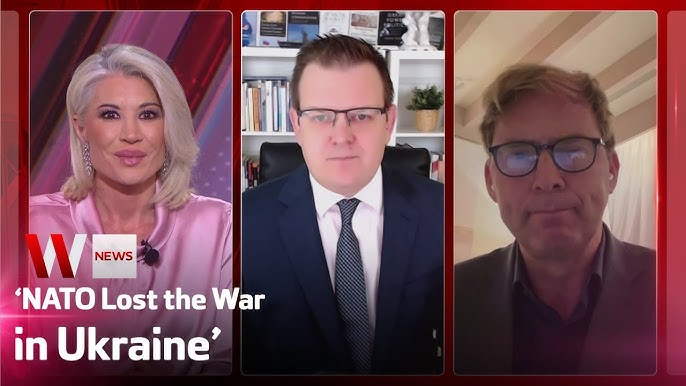
‘NATO LOST THE WAR IN UKRAINE’: PROFESSOR DIESEN CLASHES WITH FORMER UK DEFENCE MINISTER
Host Leigh-Ann Gerrans interviews Professor Glenn Diesen of the University of South Eastern Norway and defence analyst Tobias Ellwood about President Trump’s recent criticisms of Europe and his claim that Russia has the “upper hand” in Ukraine.
- This debate examines the ongoing Ukraine conflict and the changing US-European relations, drawing on insights from Professor Glenn Diesen and UK Defense Analyst Tobias Ellwood.
- It explores how the US government's position has evolved, taking into account Russia's strategic moves and the war's implications for Ukraine and NATO.
- The analysis highlights how challenging peace negotiations can be, with Russia strongly emphasizing territorial sovereignty and Ukraine's neutrality as key points for any agreement.
- Professor Diesen points out that without these concessions, especially related to Donbas, lasting peace seems unlikely.
Watch the Video Here (18 minutes, 29 seconds)
Host Leigh-Ann Gerrans
Al Arabiya English
9 December 2025
ANALYSIS OF THE CURRENT UKRAINE CONFLICT AND SHIFTING US-EUROPEAN RELATIONS
Interview with Professor Glenn Diesen
The discussion begins with an interview featuring Professor Glenn Diesen from the University of Southeastern Norway. He is asked to share his thoughts on recent comments made by former US President Donald Trump during an interview with Politico. Trump said Russia has the upper hand in peace negotiations and suggested that Ukrainian President Volodymyr Zelensky should consider concessions. The host then asks Professor Diesen to share his perspective on why the US government appears to be leaning towards Russia in its stance on the Ukraine conflict at this moment.
US Position and War Realities
Professor Diesen gently points out that the United States isn't necessarily aligning with Russia but is simply recognizing the realities of the current geopolitical situation. He reflects on the past four years as a kind of proxy conflict against Russia, focused on wearing each other down, with both sides trying to outlast the other. Diesen notes that NATO has used up much of its weaponry, Ukraine has faced heavy casualties, and its military forces are now weakened, giving Russia a strategic edge. He advises that delaying a peaceful resolution will only make Ukraine's situation worse as Russia continues to seize more territory. Ultimately, Diesen believes that, understanding the difficult prospects of the war, the United States is acting in its own best interests by considering ending the hostilities to prevent further suffering.
Negotiations and Territorial Issues
The discussion shifts to a new peace proposal put forward by Zelensky that avoids requesting territorial concessions. The host wonders whether Russia would go along with such an agreement or if gaining territory still drives their primary goals. Diesen reassures that controlling land has become very important to Russia, mainly to keep Ukraine neutral. He explains that after years of conflict and more NATO involvement, Russia sees holding onto territory as a way to stop Ukraine from being used as a future front line. While some compromises might be possible, it's unlikely Russia will give up control of areas like Donbas.
Non-Negotiable Demands and Security Concerns
Professor Diesen shared that Ukraine’s neutrality remains a crucial and non-negotiable part of achieving peace from Russia’s perspective. He explains that the conflict started with the 2014 coup, which, in his view, ended Ukraine’s neutrality. Diesen emphasizes that any peace deal must bring back Ukraine’s neutral status and limit the security guarantees it can seek from NATO. He also notes that territorial concessions, especially regarding Donbas, are essential, though Russia might be open to discussing other regions, Ukraine’s armed forces, and future governance of Kyiv.
Russian Perspective on the War and Relations with the US
Diesen explains that Russian President Vladimir Putin sees the war as a serious threat to the country, mainly because of NATO’s presence in Ukraine. He compares this to a situation in which the United States might establish military bases in Mexico, which would be viewed as unacceptable. Diesen emphasizes that Russia’s main demands are firm and that the country is determined to achieve its goals, whether through military action or diplomatic efforts. He also sees a hopeful chance for better US-Russia relations, as the United States seems open to resolving long-standing issues and supporting a world order with multiple powers. However, Moscow remains cautious about the Trump administration's intentions, balancing hopes for improved ties with concerns about potential risks.
ANALYSIS OF US SECURITY STRATEGY AND EUROPEAN RESPONSE
US Strategic Shift
The host brings up President Trump’s recent comments on European leaders and asks Diesen what the new U.S. security strategy means for the region. Diesen explains that it’s not so much a breakup with Europe as a shift in where the U.S. is focusing its efforts. After the Cold War, the U.S. primarily sought global influence through NATO and European alliances. Now, with a more complex world and China rising as a key player, U.S. interests are changing. The emphasis is now on protecting the Western Hemisphere and countering China in Asia, making Europe a lower priority. Diesen also worries about the growing authoritarian trends in Europe and the possibility that the U.S. might support opposition groups to challenge European leaders. In the end, he says the U.S. is adjusting its strategy to new global circumstances and moving away from its previous dominant role.
PERSPECTIVE FROM DEFENSE ANALYST TOBIAS ELLWOOD
Reaction to US Policy and European Security Concerns
Defense and security analyst Tobias Ellwood joins the discussion by responding to the same questions posed to Professor Diesen. Ellwood shares his concerns about the idea that Russia is an innocent actor and expresses opposition to any suggestions that Ukraine should give up large parts of its territory, including Donbas and Odessa. He sees Trump’s approach to national security as leaning towards increased American isolationism, with the U.S. pulling back from its traditional role in maintaining global stability and reducing its engagement with Europe. Ellwood notes that European leaders have worked hard to keep the U.S. involved, but their efforts have been unsuccessful. He highlights that Russia still poses a threat to the entire continent, and that with the U.S. stepping back, European countries will need to take the lead in addressing the situation.
Debate over European Action and US Motives
The host mentions President Trump’s criticism of European allies for not acting quickly. Ellwood adds that Europe was waiting for the US to take the lead in finding a solution, but despite several efforts, it hasn't worked out. He explains that while the US wanted a quick fix to restore trade with Russia, many Europeans see Russia mainly as a threat to their values. Ellwood also points out ongoing Russian provocations against the UK and warns that if Russia wins in Ukraine, it could lead to even more hostility. He expresses concern that the US often overlooks the bigger threat Russia poses and warns that differences between the US and Europe could weaken the international order built after the war.
Ukraine’s Situation and the Need for European Support
The discussion turns to Ukraine’s urgent situation with Russian advances. Ellwood notes that NATO’s response options are limited because Ukraine isn’t a member yet and admits that earlier proactive steps would have been helpful. As the US pulls back its support, he urges European countries to come together and provide Ukraine with crucial military aid and financial support, including unfrozen assets. While acknowledging that Europe is still debating these assets, he emphasizes the importance of supporting Ukraine quickly.
Future Prospects and the Risk of Wider Conflict
Ellwood believes that the United States has never been entirely in sync with Europe’s long-term interests regarding Russia. He notes that former President Trump sought a quick resolution to improve relations with Moscow. He urges caution, pointing out that without Europe's support for Ukraine, the conflict could escalate further. Ellwood explains that the US's retreat helps clarify the situation and should motivate Europe to act decisively. If Trump were to withdraw completely, he predicts that the US would scale back its military presence in Europe and shift its focus elsewhere. He emphasizes that Europe needs to stop relying solely on the United States and must do more to support Ukraine in resisting Russian aggression, or risk facing a wider, unavoidable conflict across the continent.
Closing Remarks
The discussion concludes with thanks to Professor Glenn Diesen and Tobias Ellwood for their insights on the evolving Ukraine conflict and the shifting US-European relations.
As Europe works to strengthen its security and defense, many experts highlight the importance of countries coming together with a unified approach. Recent shifts in U.S. policies have created some uncertainty among NATO allies, prompting calls for closer cooperation and shared responsibilities across the continent. Key steps include increasing defense budgets, enhancing coordination among member nations, and steadfastly defending democratic values. Implementing these measures is crucial to addressing new threats and maintaining regional stability. This situation could be a great opportunity for Europe to boost its capabilities and reaffirm its dedication to collective security.
Looking ahead, analysts see both opportunities and challenges for European defense policy. With shifting American priorities, EU institutions are having more conversations about working together more closely on defense procurement, intelligence sharing, and quick-response efforts. While some countries remain hesitant to increase their commitments, there's growing appreciation that working together is crucial to keeping threats at bay and securing Europe’s future. In the end, how transatlantic relations develop will depend on Europe’s willingness to adapt and assume greater responsibility for its own defense.
The transatlantic dialogue is crucial for building trust and communication between European nations and the U.S., helping manage conflicts and respond to crises. Increasing joint military exercises and interoperability demonstrate Europe's conviction and solidarity to the world.
BUILDING THE BRIDGE! | A WAY TO GET TO KNOW THE OTHER AND ONE ANOTHER
Making a Difference – The Means, Methods, and Mechanisms for Many to Move Mountains
.jpg)
Photo Credit: Abraham A. van Kempen, our home away from home on the Dead Sea
By Abraham A. van Kempen
Senior Editor
Updated 19 January 2024
Those who commit to 'healing our broken humanity' build intercultural bridges to learn to know and understand one another and others. Readers who thumb through the Building the Bridge (BTB) pages are not mindless sheep following other mindless sheep.
They THINK!
- They want to be at the forefront of making a difference.
- They're seeking the bigger picture to expand their horizons.
- They don't need BTB or anyone else to confirm their biases.
Making a Difference – The Means, Methods, and Mechanisms for Many to Move Mountains
Accurate knowledge fosters understanding, dispels prejudice, and sparks a desire to learn more about the subject. Words have an extraordinary power to bring people together, divide them, forge bonds of friendship, or provoke hostility. Modern technology offers unprecedented possibilities for good, fostering harmony and reconciliation. Yet, its misuse can cause untold harm, leading to misunderstandings, prejudices, and conflicts.
A Free Trial for Life – SUBSCRIBE NOW!

• It's quick and straightforward.
• We won’t ask for your credit card number.
• Just enter your e-mail address to receive your complimentary free-for-life subscription to our newsletter.
• Please include your First and Last Name.
• We won’t share or sell your e-mail address.
_________________________
Related Articles Recently Posted on www.buildingthebridgefoundation.com:
OUR WEDNESDAY NEWS ANALYSIS
OUR MONDAY EDITION
________________________
The views expressed are solely those of the author and may or may not reflect those of the Building the Bridge Foundation
LATEST OPEN LETTERS
-
03-02TO WORLD LEADERS
-
06-01Standing in Solidarity with the People of Venezuela
-
21-07Freedom
-
20-03Stand up to Trump
-
18-02Average Americans Response
-
23-12Tens of thousands of dead children.......this must stop
-
05-06A Call to Action: Uniting for a Lasting Peace in the Holy Land
-
28-05Concerned world citizen
-
13-02World Peace
-
05-12My scream to the world
VIRTUAL POST OFFICE
PETITIONS
LINKS
DONATION
Latest Blog Articles
-
15-10Our Friday News Analysis | What the World THINKS Now!
-
14-10Our Wednesday News Analysis | Navi Pillay, head of UN commission that accused Israel of genocide, wins Nobel Peace Prize
-
13-10Navi Pillay, head of UN commission that accused Israel of genocide, wins Nobel Peace Prize
-
13-10No state has a ‘right’ to exist – least of all an apartheid, genocidal state like Israel
-
13-10‘By the Way, the World is Not Stopping Us’: The Secret of Israel’s ‘Success’
-
12-10Our Monday News Analysis | What the World THINKS Now!
-
08-10Our Friday News Analysis | What the World THINKS Now!
-
07-10Our Wednesday News Analysis | The West wants Netanyahu gone - so Palestinians can be killed more quietly again
-
06-10The West wants Netanyahu gone - so Palestinians can be killed more quietly again
-
06-10Israel turns Gaza into largest ghetto in modern history, killing residents one after another as three-year genocide continues
-
06-10Analysis Europe's Boycott of Israel Is Rapidly Expanding – and It Won't Be Easy to Stop
Latest Comments
 One of the most important and illuminating articles that I …
Comment by Benjamin Inbaraj-
And what's wrong here?
After all, there is the homeland …
Comment by Isac Boian -
Does this reinforce or deny my argument that Israel is …
Comment by Edward Campbell -
Many 'say' they support the Palestinian cause but do little …
Comment by Philip McFedries -
The UN is strangled by the "war for profit" cabal …
Comment by Philip McFedries -
I can't read the printing on the map.
Comment by Philip McFedries -
Good news!
Comment by Philip McFedries
COMMENTS
This article has 0 comments at this time. We invoke you to participate the discussion and leave your comment below. Share your opinion and let the world know.