 NEWSLETTER
Common Grounds
The Palestinian Authority's new constitution: A roadmap to statehood?
Source: The New Arab
https://www.newarab.com/analysis/pas-new-constitution-roadmap-palestinian-statehood
By Aseel Mafarjeh
Published February 17, 2026
With Israel treating annexation of the West Bank as a fait accompli, what role will a new constitution play in bolstering Palestine's bid for statehood?
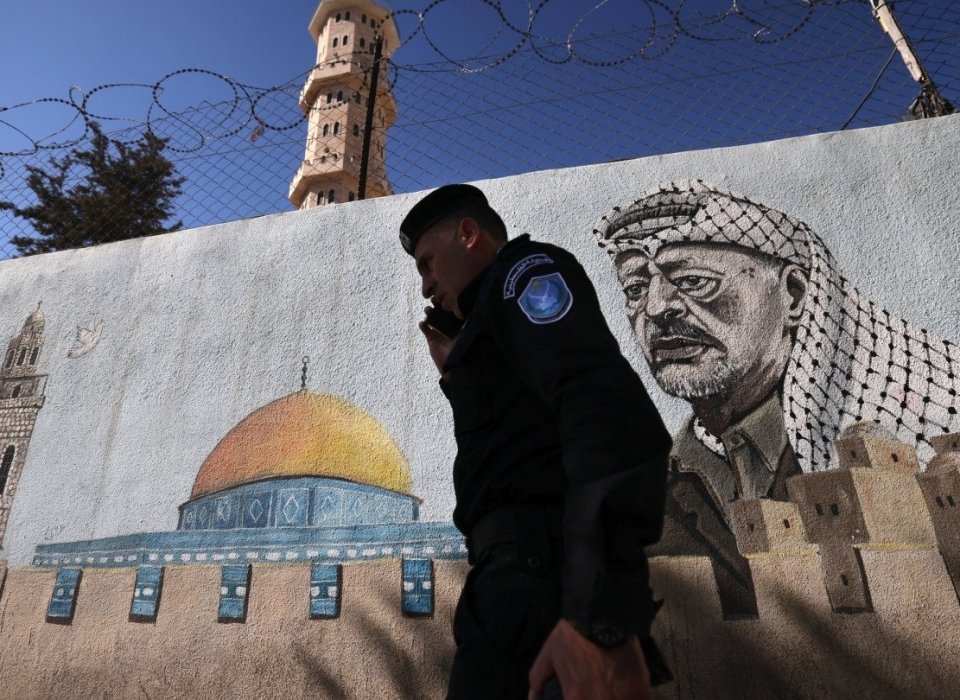
Palestinian Authority (PA) President Mahmoud Abbas has unveiled an ambitious timeline for institutional transformation.
The plan, issued in a presidential decree last week, includes a temporary constitution drafted by October, elections for the Palestine National Council (PNC) in November 2026, and a political system restructured to move from authority to statehood.
While the draft is now public for a 60-day comment period, Palestinian analysts and political figures are sharply divided. Many question whether it represents genuine reform or a tactical response to external pressure that sidesteps a deeper structural crisis.
The legitimacy question
The timing has raised immediate credibility concerns, with Abbas framing the constitutional process as foundational to statehood claims, particularly as international recognition accelerates. Eleven additional countries formally recognised Palestine in September, bringing the total to 159 UN member states, or over 80% of the international community.
However, this also creates an uncomfortable paradox: the Palestinian Authority is drafting a constitution without meaningful democratic input, analysts say, deferring electoral legitimacy to a later stage.
Dr Ashraf Okka, an Israeli affairs analyst, articulates the core problem as one of a Palestinian state constructed through top-down constitutional drafting that cannot resolve what he calls the institutional “duality of representation”.
Article 11 of the draft constitution, for example, mentions that “the establishment of the State of Palestine does not diminish the Palestine Liberation Organisation in its capacity as the sole legitimate representative” of the Palestinian people.
“This duality has affected and continues to affect the wider national condition, the unity of the Palestinian people, and the unity of Palestinian national decision-making,” Okka explains to The New Arab. “It creates confusion at the level of national references for both factions and citizens.”
For decades, the PA has encroached on PLO institutional prerogatives, fragmenting decision-making authority.
“There has been a clear usurpation by the Palestinian Authority over the PLO and its institutions over the past 15 years,” Okka notes.
“The Palestinian Authority and Foreign Ministry represent us in regional and international forums, but sometimes it's the National Council and sometimes the PA. This contradiction in political and diplomatic work confuses the unity of decisions and the unity of Palestinian public discourse.”
Such fragmentation has tangible consequences. In previous parliamentary elections, 36 competing lists emerged, signalling mass alienation from established institutions.
“The fact that we had 36 electoral lists is a practical indication that the general Palestinian national condition no longer meets the aspirations of the Palestinian people,” Okka observes.

PA President Mahmoud Abbas has unveiled an ambitious timeline for institutional transformation following a wave of countries recognising Palestine last year. [Getty]
A sequencing problem?
Multiple analysts argue that Abbas has inverted the proper process. Jibril Rajoub, Secretary of Fatah's Central Committee, voiced his concerns plainly in comments to The New Arab.
“This is a fragile constitution. The Palestinian Authority cannot take such a decision without convening a conference and involving all Palestinian factions,” he said.
“Fatah is not the only faction in Palestine, and announcing this decision will have many consequences, first and foremost, the loss of Palestinian citizens’ trust in Fatah, and therefore a major loss for the Palestinian state.”
Political analyst Emad Abu Awad goes further, suggesting that the political focus is fundamentally misplaced.
“We should not read this constitution as one that clarifies Palestine's future. Instead, we should focus on reading the constitution of (far-right Israeli ministers Itamar) Ben-Gvir and (Bezalel) Smotrich, because they are the ones deciding which stage Palestine will enter," Abu Awad argues.
The constitution, he suggested, risks becoming performative at a time when Israeli policies are reshaping the occupied Palestinian territory.
“It may be a reaction to Israeli colonial policies practised on the ground, but this must be accompanied by serious political and legal movements to confront the occupation's expansionist measures.”
The sequencing debate cuts deeper than just a procedural complaint. Democratic theory holds that constitutional frameworks should crystallise a settled national vision, not precede one.
“The constitution should be the product of an integrated popular democratic political process and should come at the end, not the beginning. The goal should not just be political, it should be a real structural change.”
He stressed that elections should be the first priority before deciding on the constitution, bringing forward new leadership capable of measuring public opinion and the political direction that Palestinians want. Instead, Okka argues, the constitution has been announced in response to external political pressure and demands to reform the PA.

The constitutional announcement comes as Israel moves towards the de jure annexation of the occupied West Bank. [Getty]
Fatah's strategic crossroads
Beneath the constitutional debate lies a Fatah movement facing a strategic crisis and existential questions about its role and that of the Palestinian Authority.
“Fatah today bears responsibility for taking the Palestinian people in a different direction and protecting them from multiple challenges and risks,” Okka says. “But it needs a comprehensive review of its policies and national orientations.”
In this reading, the constitution becomes a tool for political legitimacy at a time when the dominant Palestinian party has lost negotiating leverage.
Moreover, the international drive towards institutional state building - and away from the logic of the PLO and revolutionary politics - reflects both Palestinian weaknesses as well as strategic choices.
The democratic guarantee
Amer Doueik, head of the Independent Commission for Human Rights and a drafting committee member, offers a more optimistic assessment, emphasising procedural rigour and democratic safeguards.
“We worked on this draft for five months, holding 71 meetings with 17 members, creating sub-committees before reaching the general drafting committee. The articles were approved one by one and voted on, with reservations recorded and general approval of the draft,” he tells TNA.
Regarding constitutional sources, Doueik noted that the drafting committee relied on the existing Basic Laws in addition to reviewing previous drafts and other constitutions, such as the 2014 Tunisian constitution and those of South Africa, Brazil, and Colombia.
Crucially, Doueik emphasised that a referendum requirement was built into the process. But he also issued a warning.
"If this process is mismanaged, it poses risks. There must be responsibility from everyone under the current circumstances, and sharp positions against the constitution should not be rushed at this stage,” he said.
Successful implementation, he added, requires more than just constitutional text. “Managing the approval process well through extensive dialogues can lead to formulating a new social and political contract, based on which elections are held, and it becomes a new reference that unifies the political system.”
Most tellingly, Doueik acknowledged the legitimacy gap. “Without conducting elections, the political system faces danger from external threats and financial crises. The optimal solution to confront these challenges is to resort to the people.”
Geopolitical timing
The constitutional push arrives amid US policy uncertainty and regional realignment, with Abu Awad framing it as reactive rather than strategic.
“This process is not limited to the constitution but is linked to dual will and a clear vision towards the prevailing conditions, especially regarding Trump's plan and his movements in the region,” he explains.
The constitution, he notes, should form a political framework for the nation that pushes Palestinians toward developing effective confrontation strategies.
Yet this framing also underscores a deeper paradox. Palestinians are drafting constitutional frameworks for a state they cannot yet govern territorially, while facing an Israeli government treating settlement and annexation as a fait accompli.
“The impact of Fatah on the international arena is notable, especially after the emergence of the new constitution,” Abu Awad notes. “Its impact will be positive on the fate of agreements and reforms necessary to strengthen the Palestinian state.”
Aseel Mafarjeh is a Palestinian journalist based in the West Bank, focusing on social and political issues
LATEST OPEN LETTERS
-
03-02TO WORLD LEADERS
-
06-01Standing in Solidarity with the People of Venezuela
-
21-07Freedom
-
20-03Stand up to Trump
-
18-02Average Americans Response
-
23-12Tens of thousands of dead children.......this must stop
-
05-06A Call to Action: Uniting for a Lasting Peace in the Holy Land
-
28-05Concerned world citizen
-
13-02World Peace
-
05-12My scream to the world
VIRTUAL POST OFFICE
PETITIONS
LINKS
DONATION
Latest Blog Articles
-
15-10Our Friday News Analysis | What the World THINKS Now!
-
14-10Our Wednesday News Analysis | Navi Pillay, head of UN commission that accused Israel of genocide, wins Nobel Peace Prize
-
13-10Navi Pillay, head of UN commission that accused Israel of genocide, wins Nobel Peace Prize
-
13-10No state has a ‘right’ to exist – least of all an apartheid, genocidal state like Israel
-
13-10‘By the Way, the World is Not Stopping Us’: The Secret of Israel’s ‘Success’
-
12-10Our Monday News Analysis | What the World THINKS Now!
-
08-10Our Friday News Analysis | What the World THINKS Now!
-
07-10Our Wednesday News Analysis | The West wants Netanyahu gone - so Palestinians can be killed more quietly again
-
06-10The West wants Netanyahu gone - so Palestinians can be killed more quietly again
-
06-10Israel turns Gaza into largest ghetto in modern history, killing residents one after another as three-year genocide continues
-
06-10Analysis Europe's Boycott of Israel Is Rapidly Expanding – and It Won't Be Easy to Stop
Latest Comments
 One of the most important and illuminating articles that I …
Comment by Benjamin Inbaraj-
And what's wrong here?
After all, there is the homeland …
Comment by Isac Boian -
Does this reinforce or deny my argument that Israel is …
Comment by Edward Campbell -
Many 'say' they support the Palestinian cause but do little …
Comment by Philip McFedries -
The UN is strangled by the "war for profit" cabal …
Comment by Philip McFedries -
I can't read the printing on the map.
Comment by Philip McFedries -
Good news!
Comment by Philip McFedries
COMMENTS
This article has 0 comments at this time. We invoke you to participate the discussion and leave your comment below. Share your opinion and let the world know.