 NEWSLETTER
The Monday Edition
The Evangelical Pope | Faith Unites and Strengthens Bonds
Living Words from John Paul II
Edited by Abraham A. van Kempen
Published February 23, 2026
.png)
Each week we let Saint Pope John Paul II share meaningful signposts to spark socio-economic resolves through justice and righteousness combined with mercy and compassion; in short, love.
9 Whoever would foster love covers over an offense,
but whoever repeats the matter separates close friends.
__ Proverbs 17:9 (New International Version)
Read full chapter
Proverbs 17:9 in all English translations
Santo Domingo, Dominican Republic – 12 October 1992 | Faith unites people and strengthens bonds. Faith and baptism refresh a community— the children of God. While faith bridges differences, it also recognizes their existence and fosters respect. Our unity in Christ does not mean sameness; instead, church communities thrive by embracing the diversity and uniqueness of each member.1
...
Santo Domingo, Dominican Republic – 11 October 1992 | Over the past five centuries, the peoples of Latin America have developed into a community. Its history, marked by both bright and dark moments, helps us understand today. The future relies on the efforts of those dedicated to the common good. I call on Latin American leaders to foster integration so their peoples can earn a rightful place on the global stage.
Several key elements influence this integration, primarily the Church, which the majority of Latin Americans follow. The Church aims to promote love, brotherhood, and social harmony, supporting unity through shared Christian values, viewing everyone as brothers and sisters (cf. Gaudium et spès, n. 42).
Latin America, with its faith community, demonstrates strong cultural and geographic ties, making it a significant geo-cultural region. Shared language enhances communication, and geographic unity influences both national and international relationships. A common history also unites many countries.
Latin American integration is broadly supported by economic progress and parliamentary advances. However, it requires effort and a shift in mindset, recognizing that unity benefits everyone. This involves overcoming conflicts and tensions that threaten peaceful coexistence, foster mistrust, and create hostility.
I advocate for peaceful conflict resolution and denounce armed violence, which harms nations and communities. Violence, often driven by violations of dignity and rights, destroys lives and deepens longstanding hatred.
Upholding human rights is essential for peace and unity, and this requires promoting each person's dignity. As the Encyclical Centesimus Annus states, the fall of totalitarian regimes has revived the democratic ideal, highlighting the need for true democracy rooted in human rights (n. 47).2
Excerpted from:
1. VIAJE APOSTÓLICO A SANTO DOMINGO
MENSAJE DEL SANTO PADRE JUAN PABLO II, GRABADO EN EL «FARO A COLÓN, lunes 12 de octubre 1992
_________________________
Editor’s Note | What is Zionism?
Zion is biblically defined as the Kingdom of God on earth as in heaven. Zionism means to “return to God.”
Jerusalem is frequently called "the City of David" and is especially known in the Bible as “the City of God,” notably in references to the “New Jerusalem.”
The Jewish community that, in the 20th century, wandered into the Land mostly originated in Eastern Europe and descended from pagan converts. Only a few have a direct genetic connection to the biblical Abraham. On the other hand, most Palestinians who are native to the land trace their ancestry directly back to the original Hebrews. If you ask Jesus—who had many disciples—most were not from Judea (the original Jews) but came from Galilee, a region inhabited by the remnants or “half-breeds” of Israel. They were Palestinians then, just as they are today.
___________________________
ISRAEL HAS A BIBLICAL RIGHT TO THE MIDDLE EAST – US ENVOY TO TUCKER CARLSON
“It would be fine if they took it all,” Mike Huckabee said
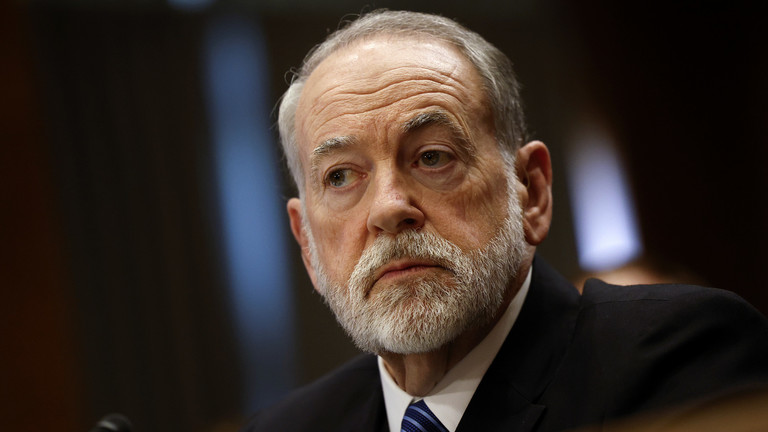
FILE PHOTO: Mike Huckabee testifying during his Senate Foreign Relations Committee confirmation hearing. © Getty Images / Kevin Dietsch
HomeWorld News
21 February 2026
Mike Huckabee, US envoy to West Jerusalem, told Tucker Carlson that Israel claims nearly the whole Middle East based on the Bible.
Huckabee, a former Arkansas governor, was named US ambassador to Israel by President Trump in April 2025. At 70, he is a Baptist minister and Christian Zionist.
In a Friday interview, the envoy described a Zionist as someone who believes that Jewish people have a right to a homeland where they are secure and safe, and that they have a right to live in Israel.
“Israel’s right to exist comes from the Bible... [it] is a land that God gave through Abraham to a people that he chose,” Huckabee explained.

Read more
Israel ready to strike Iran-backed forces – media
Carlson noted that, according to the Book of Genesis, God's promised land for the Hebrew patriarchs extended "from the Euphrates to the Nile.”
“That would include basically the entire Middle East. That would be the Levant. So, that would be Israel, Jordan, Syria, and Lebanon. It would also be a big part of Saudi Arabia and Iraq,” he said.
Carlson asked if that meant that “Israel has the right to that land? Because you’re appealing to the Genesis. You’re saying that’s the original deed?”
“It would be fine if they took it all. But I don’t think that’s what we’re talking about here today,” Huckabee replied.
READ MORE: US weighs targeting Iranian leaders and ‘regime change’ – Reuters
Israel has continued expanding settlements in the occupied West Bank, violating international law. Alongside the Gaza conflict—where the Gazan Health Ministry reports over 72,000 deaths since October 2023—Israel has also engaged in military actions over the past two and a half years. These include attacks on Iran, a military operation in Lebanon, the occupation of parts of southwestern Syria, and strikes in Yemen.
SCHLOMO SAND’S ADVOCACY FOR A ONE-STATE DEMOCRACY

Analyzing "The Invention of the Jewish People" and the Israeli-Palestinian Quest to Co-exist
In his influential book, ‘The Invention of the Jewish People,’ University of Tel Aviv Historian Professor Schlomo Sand challenges traditional narratives about Jewish identity and the historical foundations of the state of Israel. His thought-provoking work has sparked lively debates, not just about history but also about the best ways to approach the Israeli-Palestinian conflict today. One of Sand’s key political views is his strong support for a one-state democracy, which he sees as the most promising route toward peaceful coexistence between Israelis and Palestinians.
Sand’s Critique of Ethno-Nationalism
At the heart of Sand’s argument is a thoughtful critique of ethno-nationalism—the idea that states should be built around a single ethnic or religious identity. In "The Invention of the Jewish People," Sand gently challenges the belief in a continuous, unified Jewish nation, proposing that Jewish identity has been shaped by historical events and cultural influences rather than by biological descent. For Sand, creating a state solely based on ethnic exclusivity can unintentionally lead to division, exclusion, and conflict, highlighting the importance of a more inclusive approach.
Rationale for a One-State Solution
Sand advocates for a one-state democracy because he feels that the two-state solution, which suggests separate Israeli and Palestinian nations, keeps division and inequality alive. He believes that only a single, democratic country—where Jews, Palestinians, and everyone living there enjoy equal rights and responsibilities—can break down the barriers caused by ethno-nationalism. His hope is that peaceful coexistence is possible through dismantling the systems of privilege and unfair treatment built into institutions.
Principles Underlying Sand’s Vision
- Israeli Nationality: Since Israel’s establishment in 1948, there has been no official Israeli nationality. Sand supports an inclusive civic identity for all citizens, regardless of religion or ethnicity. This shift aims to improve social cohesion and democracy by ensuring equal rights for Jewish, Arab, and minority populations.
- Equality: A single-state democracy would guarantee equal rights for all citizens, regardless of their religious or ethnic backgrounds.
- Shared Sovereignty: Sand envisions a political system in which Israelis and Palestinians co-govern, making decisions together rather than separately.
- Historical Reconciliation: Sand argues that recognizing the complex, interconnected histories of Jews and Palestinians can foster mutual understanding and reconciliation through a shared state.
- Social Integration: Instead of keeping communities separate, Sand promotes societal integration to encourage cooperation and strengthen social bonds.
- National Constitution: Sand contends that Israel’s absence of a formal, comprehensive Constitution leads to inconsistencies and inequalities in applying the rule of law. He suggests that establishing a national Constitution would create a clear, democratic governance structure that safeguards equal rights and responsibilities for all citizens. Additionally, a Constitution would help distinguish religion from state affairs, limiting the influence of religious authorities on public policy and legal issues.
- Equality and the Rule of Law: Sand advocates for a rule of law grounded in a national Constitution to build a legal system that is consistent, transparent, and just. He argues this is crucial for safeguarding individual rights, fostering social justice, and upholding the state's legitimacy with its citizens and the international community.
Challenges and Criticisms
Sand’s proposal encounters notable challenges. Critics say that deep mistrust, historical grievances, and continuing violence render a one-state solution unlikely. Some also believe it might fail to safeguard minority rights or properly address security and cultural concerns.
However, Sand argues that the only alternative—sustaining division and inequality—won't achieve true peace.
Summary
Schlomo Sand advocates for a one-state democracy in the Israeli-Palestinian Quest to Coexist, emphasizing the need for historical reconciliation, social integration, and an inclusive civic identity. He argues for the establishment of a national Constitution to ensure equality, social justice, and consistent rule of law for all citizens, regardless of religion or ethnicity. Although his proposals face challenges such as mistrust and concerns about minority rights, Sand believes that a democratic, unified state is the best pathway to lasting peace and mutual respect.
Conclusion
Schlomo Sand advocates for a one-state democracy in the Israeli-Palestinian conflict, rooted in his opposition to ethno-nationalism and his commitment to equality, justice, and shared citizenship. He considers this the only feasible way to achieve peaceful coexistence, believing it provides the best opportunity for both groups to live together with dignity and mutual respect.
Schlomo Sand’s call for Israeli nationality and a Constitution reflects his broader critique of ethnocentric nationalism and his hope for a more inclusive, democratic society. He views these changes as necessary steps toward achieving equality, social harmony, and a stable rule of law in Israel.
MUSLIM STATES CONDEMN US ENVOY OVER REMARKS ON ISRAEL’S ‘BIBLICAL RIGHTS’
Mike Huckabee earlier argued that Israel is entitled to control much of the Middle East
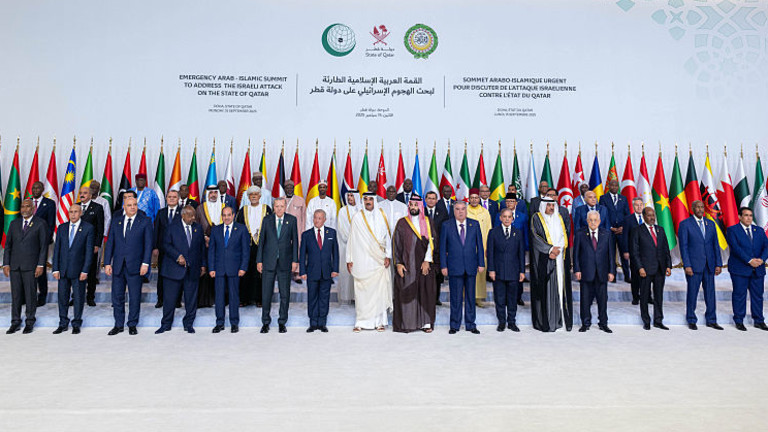
The Organization of Islamic Cooperation–Arab League Extraordinary Summit in Doha, Qatar, September 15, 2025. © Anadolu / Getty Images
HomeWorld News
22 February 2026
Arab and Muslim-majority countries have condemned US Ambassador to Israel Mike Huckabee for arguing that Israel has a biblical right to much of the Middle East.
In an interview with Tucker Carlson released on Friday, Huckabee, a Baptist minister and self-described Christian Zionist, said it “would be fine” if Israel took territory stretching from the Nile to the Euphrates. He later added that Israel is not seeking to expand its territory and has the right to maintain its security.
The Arab League, a coalition of 22 member states, slammed the remarks as “highly extremist,” saying they are “inconsistent with the fundamental principles and norms of diplomacy.”
“Statements of this nature – extremist and lacking any sound basis – serve only to inflame sentiments and stir religious and national emotions at a time when states are convening under the framework of the Board of Peace to explore ways of implementing the Gaza peace agreement,” said Gamal Roshdy, spokesman for Arab League Secretary-General Ahmed Aboul Gheit.
The Organization of Islamic Cooperation (OIC), which comprises 57 Muslim-majority nations, issued a similar statement, warning that:
Such “dangerous and irresponsible” remarks “fuel extremist ideological rhetoric” and encourage Israel to “impose annexation” on Palestinian territory.

READ MORE: Muslim nations condemn Israel over West Bank land grab
Jordan’s Foreign Ministry said Huckabee’s “absurd and provocative” statements violate diplomatic norms and the UN Charter. Egypt described the statements as a “flagrant departure” from international law and UN principles.
Saudi Arabia, Kuwait, Oman, the UAE, Lebanon, Türkiye, Pakistan, Indonesia, and the Palestinian Authority also condemned the US envoy as undermining international peace and security.
Israel maintains military control over parts of the West Bank and Gaza, as well as southern Lebanon and southwestern Syria. Earlier this month, Israel’s security cabinet approved a plan to designate large areas of the West Bank as “state property” for the first time since the 1967 Six-Day War. Muslim countries denounced the move and called for the international community to take “clear and decisive steps” against Israel.
AN ANALYSIS OF IDEOLOGICAL PREVAILING FORCES IN THE ZIONIST EXPERIMENT
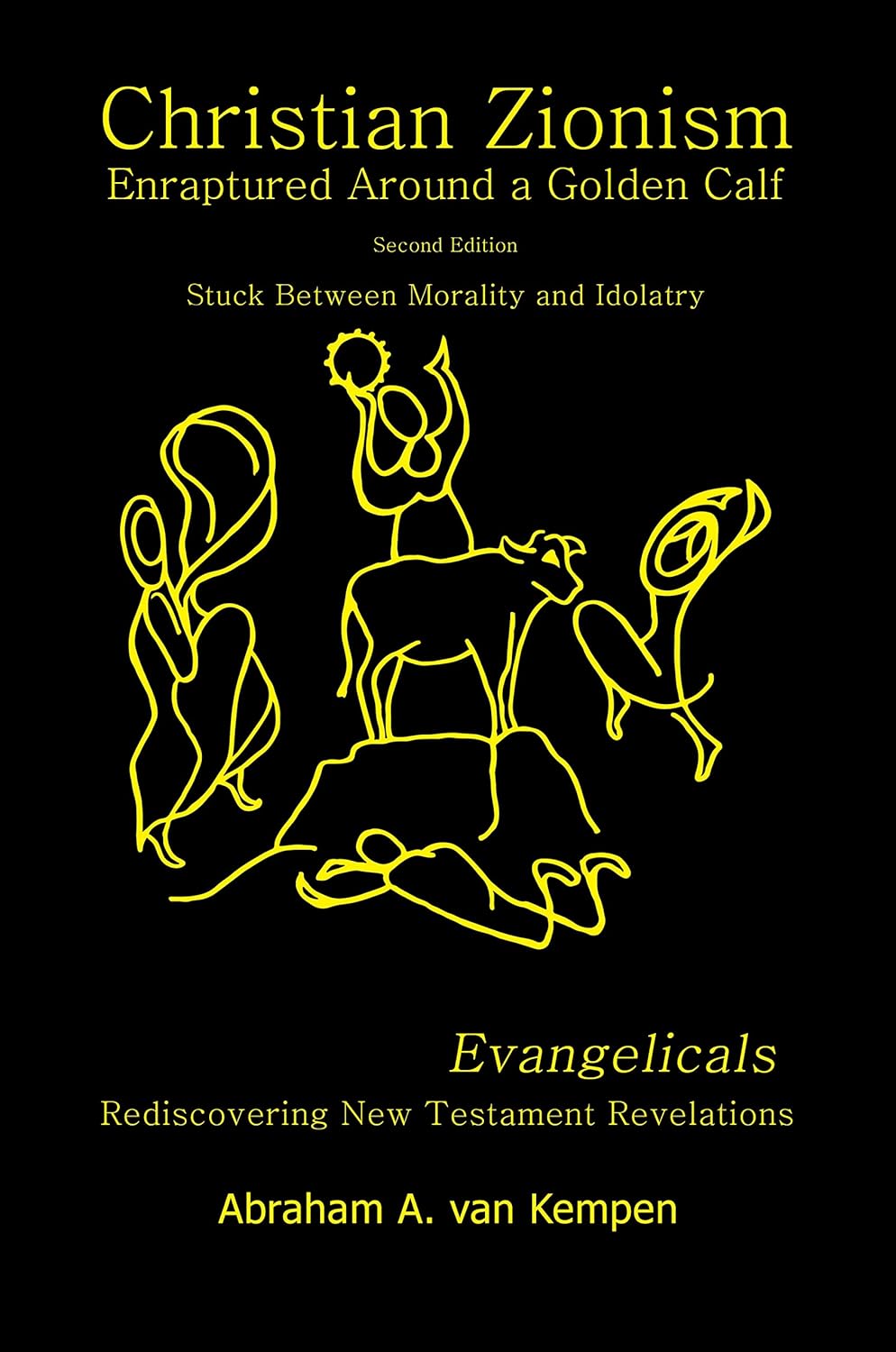
This essay examines the ideological split within Zionism between Ahad Ha’am’s cultural and ethical “Prophetic Ideals” and Zev Jabotinsky’s pragmatic “Revolutionary Colonialism.” It explains that Jabotinsky’s approach became dominant because of historical anti-Semitism, global politics, and pressing security concerns. However, Ahad Ha’am’s moral perspective continued to hold influence but played a secondary role.
Zev Jabotinsky’s Revolutionary Colonialism vs. Ahad Ha’am’s Prophetic Ideals in Zionism
Vibrant discussions and debates characterized the emergence of Zionism during the late 19th and early 20th centuries. Two prominent figures distinguished themselves: Ahad Ha’am (Asher Ginzberg), an advocate of cultural Zionism and the Prophetic Ideals, and Zev Jabotinsky, who endorsed Revisionist Zionism and, according to some, revolutionary colonialism.
In “Christian Zionism Enraptured Around a Golden Calf,” Abraham A. van Kempen juxtaposes these two thinkers, illustrating how Jabotinsky’s perspectives gained prominence over Ahad Ha’am’s more spiritual and ethical outlook. This analysis examines the reasons behind Jabotinsky’s revolutionary approach prevailing within the Zionist movement, rather than the adherence to Ahad Ha’am’s prophetic principles.
Ahad Ha’am: Prophetic Ideals and Cultural Zionism
Ahad Ha’am (1856–1927) was an influential figure in the early Zionist movement. Inspired by the moral and spiritual teachings of the Hebrew prophets, he believed that Jewish national revival involved more than just physically returning to the land. It also meant fostering Jewish culture, ethics, and spiritual development. His concept of “Prophetic Ideals” emphasized justice, compassion, and ethical living, viewing the Jewish homeland as a lively cultural and spiritual center for Jews worldwide, rather than simply a political or territorial objective.
Ahad Ha’am was careful about rushing into political Zionism and suggested taking a patient approach to prevent upsetting the local Arab community. He envisioned a gentle process of settling and cultural revival, highlighting that the moral goals of Zionism should take precedence. His ideas were inspired by the prophetic tradition, promoting a society grounded in social justice and strong ethical values.
Zev Jabotinsky: Revolutionary Colonialism and Revisionist Zionism
Zev Jabotinsky (1880–1940) founded Revisionist Zionism and advocated for a more vigorous, political, and territorial strategy to develop the Jewish homeland. He believed that establishing a Jewish state might necessitate bold measures, such as military might and strong defenses. Jabotinsky viewed Zionism as a revolutionary pursuit dedicated to securing Jewish sovereignty in Palestine, regardless of the obstacles.
Jabotinsky’s philosophy echoes the ideas found in European nationalism and colonialism of his era. He honestly recognized the colonial aspects of Zionism, mentioning that Jews need to "build an iron wall” to protect themselves from Arab opposition. This powerful metaphor of the "iron wall" illustrates his belief that strength and determination are essential for establishing and maintaining a Jewish state. His approach was practical and grounded in the realities of power, rather than idealistic moral visions.
Why Did Jabotinsky’s Colonialism Prevail?
Several factors played a role in Jabotinsky’s revolutionary approach to colonialism, surpassing Ahad Ha’am’s prophetic principles in the Zionist journey.
- Increase Anti-Semitism: The increase of anti-Semitism across Europe, culminating in the Holocaust, profoundly impacted Jewish communities and heightened their sense of urgency for safety and self-determination. Many Jews gravitated toward Jabotinsky’s assertive, proactive stance, viewing it as a viable route to security and independence.
- International Dynamics: The Zionist movement had to navigate a complex international political terrain, including negotiations with the British Empire and other global powers. Jabotinsky’s willingness to use force and push for firm demands aligned more closely with the geopolitical climate of the time, particularly given the ongoing dominance of colonial frameworks.
- Revisionist Zionism: Jabotinsky’s Revisionist Zionism led to the creation of paramilitary groups like the Irgun, which played a key role in establishing the State of Israel. The structure and discipline of these organizations provided significant practical support for his ideological beliefs.
- The Marginalization of Prophetic Morality: As the Zionist movement progressively focused on state-building and preservation, Ahad Ha’am’s emphasis on ethical principles and gradual development was diminished in prominence. The pressures of conflict and the requirements of nationhood made Jabotinsky’s pragmatic approach more appealing to both leaders and the general public.
- Secularism and anti-Judaism among European Israelis: The combination of these forces led early Zionists to favor Jabotinsky’s radical nationalism over Ahad Ha’am’s Prophetic vision. The drive for security and a secular Jewish identity steered the Zionist movement away from ethical ideals, adopting a more militant and nationalist stance.
Summary
‘Christian Zionism … Enraptured Around a Golden Calf’ examines the ideological divide within Zionism between Ahad Ha’am’s cultural and ethical “Prophetic Ideals” and Zev Jabotinsky’s pragmatic, militant “Revolutionary Colonialism." It explains that Jabotinsky’s approach triumphed because of historical anti-Semitism, international politics, and the urgent need for security and state-building in the 20th century. Meanwhile, Ahad Ha’am’s moral vision continued to hold influence but was secondary.
Conclusion
The Zionist movement eventually embraced Zev Jabotinsky's vision of pioneering colonial efforts, prioritizing the establishment of a state, securing safety, and asserting territorial sovereignty. This focus contrasted with the emphasis on cultural and ethical renewal promoted by Ahad Ha’am. While Prophetic Ideals still leave their mark on Israeli society and discussions, the main approach was shaped by urgent political and existential challenges of the twentieth century. These challenges required quick action and strength, rather than slow, moralistic methods.
This outcome underscores the enduring tension within Zionism, balancing idealistic aspirations with pragmatic realities, and also navigating the fine line between moral ideals and political imperatives. It exemplifies a complex conflict that continues to influence discussions concerning the identity and future of the modern nation-state of Israel.
SEYED M. MARANDI: "WAR FOR SURVIVAL" - IRAN’S STRATEGY AS WAR IS IMMINENT
- Prof. Glenn Diesen’s discussion with Prof. Sayed Marandi explores perceived double standards in international relations.
- It highlights how Western media often paint Iran negatively, while similar actions against countries like Cuba are overlooked.
- Prof. Marandi criticizes continuous sanctions and hostility toward Iran and Cuba, arguing that their main "sin' is opposing genocide and supporting Palestinian children.
- The conversation ends on a note of resilience and resolve despite the risks and media bias.

Watch the Video Here (57 minutes, 48 seconds)
Host Prof. Glenn Diesen
Substack.com
21 February 2025
Seyed Mohammad Marandi is a professor at Tehran University and a former advisor to Iran's Nuclear Negotiation Team. He argues that an existential war is likely imminent.
It will ignite the entire region.
LATEST OPEN LETTERS
-
03-02TO WORLD LEADERS
-
06-01Standing in Solidarity with the People of Venezuela
-
21-07Freedom
-
20-03Stand up to Trump
-
18-02Average Americans Response
-
23-12Tens of thousands of dead children.......this must stop
-
05-06A Call to Action: Uniting for a Lasting Peace in the Holy Land
-
28-05Concerned world citizen
-
13-02World Peace
-
05-12My scream to the world
VIRTUAL POST OFFICE
PETITIONS
LINKS
DONATION
Latest Blog Articles
-
15-10Our Friday News Analysis | What the World THINKS Now!
-
14-10Our Wednesday News Analysis | Navi Pillay, head of UN commission that accused Israel of genocide, wins Nobel Peace Prize
-
13-10Navi Pillay, head of UN commission that accused Israel of genocide, wins Nobel Peace Prize
-
13-10No state has a ‘right’ to exist – least of all an apartheid, genocidal state like Israel
-
13-10‘By the Way, the World is Not Stopping Us’: The Secret of Israel’s ‘Success’
-
12-10Our Monday News Analysis | What the World THINKS Now!
-
08-10Our Friday News Analysis | What the World THINKS Now!
-
07-10Our Wednesday News Analysis | The West wants Netanyahu gone - so Palestinians can be killed more quietly again
-
06-10The West wants Netanyahu gone - so Palestinians can be killed more quietly again
-
06-10Israel turns Gaza into largest ghetto in modern history, killing residents one after another as three-year genocide continues
-
06-10Analysis Europe's Boycott of Israel Is Rapidly Expanding – and It Won't Be Easy to Stop
Latest Comments
 One of the most important and illuminating articles that I …
Comment by Benjamin Inbaraj-
And what's wrong here?
After all, there is the homeland …
Comment by Isac Boian -
Does this reinforce or deny my argument that Israel is …
Comment by Edward Campbell -
Many 'say' they support the Palestinian cause but do little …
Comment by Philip McFedries -
The UN is strangled by the "war for profit" cabal …
Comment by Philip McFedries -
I can't read the printing on the map.
Comment by Philip McFedries -
Good news!
Comment by Philip McFedries
COMMENTS
This article has 0 comments at this time. We invoke you to participate the discussion and leave your comment below. Share your opinion and let the world know.