 NEWSLETTER
The Friday Edition
Our Friday News Analysis | What the World Reads Now!
Helping to Heal a Broken Humanity (Part 116)
The Hague, 28 August 2026 | If you know of a decisive story, tell the world! We're still searching.
.jpg)
Living Words of Saint Pope John Paul II | “Building a Culture of Solidarity”
Rooted in the depths of the human heart,
every person is conscious of a desire to interact with others.
Everyone finds fulfillment in a gift of self to others.
Yet who doesn't grab and keep more than they need?
Saint Pope John Paul II
The Vatican
7 January 2003
This week’s reflection: “Building a Culture of Solidarity”

Building the Bridge Foundation
Saint Pope John Paul II spoke to billions across six decades, to young people, to presidents and peacemakers, to the forgotten and the powerful alike.
John Paul II was a theologian, a world leader, a statesman, a poet, and a pastor revered by billions.
He addressed war and peace, human dignity, mercy, and the deepest longings of the human heart.
Those words did not stay in the past. They are living words. And they speak now.
Even more alive in our time, the Pope's Message invites readers to pause and reflect.
There is no cost. There never will be.
OUR WEDNESDAY NEWS ANALYSIS | NO COMING BACK FROM GENOCIDE: RESIST ISRAEL’S GLOBAL COUNTER-OFFENSIVE
TRUMP CAN STOP THE NEXT WAR IN THE WEST BANK, BUT HE MUST ACT NOW
Even Trump's ambassador to Israel, a staunch supporter of the settlements, has hinted at American sanctions against violent settlers. The U.S. must adopt such a policy, before it's too late

A U.S. flag hangs on the roof of Palestinian American Loui Ridi's home, which has been besieged by Israeli settlers for over a week, in the occupied West Bank village of Qusra. Credit: Majdi Mohammed/AP
"The United States should make clear that anyone who:
attacks civilians
burns homes and cars
steals property
kills innocent Palestinians
violently seizes land,
will risk having assets frozen and losing access to the American financial system.
Editorial | Build the Bridge Before the World Burns
By Abraham A. van Kempen
28 August 2026
A personal plea for powerful rivals to become repairers before fear hardens into fate.
We are living in a world where the air feels charged, as if one careless word could split the sky open. Flags snap like warning flares. Missiles wait in their silos like buried thunder. Leaders stare across polished tables while ordinary people watch from kitchens, classrooms, buses, shelters, and hospital beds, wondering whether the powerful still remember the human face of peace.
I want to believe they can. I want to believe that President Donald Trump, President Xi Jinping, and President Vladimir Putin are not condemned to be only rivals in a frightened century. They could still choose another name: repairers. Not saints. Not miracle workers. Repairers. Men with hard histories, heavy power, and one last chance to prove that strength can do more than threaten. It can shelter. It can listen. It can rebuild.
You and I know the old pattern. One side speaks of security, the other hears domination. One side speaks of dignity, the other hears danger. Soon the whole earth becomes a chessboard, and human beings become pieces. But people are not pieces. A child in Ukraine, a farmer in Russia, a worker in China, a nurse in America—each carries a little universe inside the ribs. Any politics that forgets this becomes too small for the world it claims to lead.
So here is the vision, simple enough to hold in both hands and bright enough to see through smoke: let strength serve repair. Let America’s confidence, China’s talk of a shared future, and Russia’s call for equal standing become something more than slogans. Let them become beams in one bridge—steel under the feet of frightened nations, lantern-lit for smaller countries, and warm enough for mothers who just want the lights back on.
Imagine it. Not a summit of smirks beneath chandeliers, not another photograph of stiff handshakes and frozen smiles, but a repair table under a clear lamp. Ukraine present. Europe present. Smaller nations present. The United States, China, and Russia present not to humiliate one another, but to ask the bravest question in politics: what can we build together that no child will have to fear?
President Trump could turn deal-making into neighbor-making: open hotlines, demand dignified ceasefire steps, protect food routes, press for prisoner exchanges, and make peace visible in repaired schools and hospitals. President Xi could make multipolarity moral by using China’s influence to cool escalation, consistently protect sovereignty, and help build corridors for medicine, grain, and reconstruction. President Putin could choose security: prove that Russia’s future is safer when Russia and all its neighbors share a mutual security blanket, when wounds are named honestly, and when families can cross from grief toward reunion.
This is not naïve. Naïve is believing that permanent enmity is cheaper than courage. Naïve is thinking another generation can be raised beneath sirens, sanctions, suspicion, and blue-lit screens full of burning streets without losing something sacred. Peace is not soft. Peace is disciplined imagination. It is the hard work of picking up the phone before the missile, checking the facts before the accusation, opening one road before another city goes dark.
Give peace a schedule. Give it a budget. Give it a room with microphones, maps, cables, and coffee going cold—but also photographs of the missing, children’s drawings taped to the wall, the names of towns without water, and the quiet testimony of doctors who have held too many shattered bodies. Let policy feel the pulse of the people it affects.
And let us be honest with ourselves. We, too, must stop cheering for humiliation as if it were healing. We must stop calling every bridge a betrayal. We must stop confusing revenge with justice. Justice is not the same as a clenched fist. Sometimes justice is a door held open long enough for truth, accountability, and mercy to enter together.
So I say to these leaders: begin small if you must, but begin. Protect one corridor. Restore one hospital. Reconnect one family. Open one military hotline and keep it alive. Reduce one nuclear risk. Repair one water system. Let the first act be concrete enough for a mother to understand and brave enough for history to remember.
The bridge between enemies is never built in one speech. It is built plank by plank: a call answered in the night, a convoy protected through snow, a prisoner stepping into daylight, a lie corrected before it spreads, a village relit window by window. Hope becomes believable when it becomes visible.
Maybe that's where you and I can make a difference. Even if we don't live in palaces or lead armies, we have the ability to take away despair's seat of power. We can remind ourselves that the true enemy defeated by friendship isn't a group of people, a nation, or a civilization, but the fear inside us. This fear often confuses control with security and loneliness with peace. Together, we can choose kindness and understanding to overcome these fears.
So let them meet. Let them argue without hatred, bargain without cruelty, and compete without turning the planet into a graveyard of pride. Let them discover that the strongest hand is not always the one that strikes first, but the one that opens first.
The world does not need another throne casting a long cold shadow. It needs a table, a lamp, and leaders humble enough to see the neighbor beneath the flag. The bridge is not finished. That is why we are still here—with trembling hands, stubborn hope, and timber enough—to build.
Let’s fast-forward to a glorious future without wars.

Churchill, Roosevelt, and Stalin at Yalta brokering peace that turned out to be make-believe
To be continued on Monday, 31 August 2026.
With Every Good Wish to you, I am,
Sincerely yours,
Abraham A. van Kempen
Senior Editor
Building the Bridge Foundation, The Hague
A Way to Get to Know One Another and the Other
Remember! Diplomacy is catalytic—transformative —while military action is cataclysmic—destructive and catastrophic.
When faced with the options to be good, bad, or ugly, let’s build bridges, not burn them. After all, mutual deterrence reigns.
THE CIA VISITS MOSCOW
Igor Ronhaus examines why CIA Director John Ratcliffe’s secret trip to Moscow may signal either a dangerous escalation or Washington’s reluctant shift from denial to bargaining.

By Igor Ronhaus
Multipolar Press
26 August 2026
CIA Director John Ratcliffe made an unannounced visit to Moscow on Tuesday for talks with Russian officials. The trip became public only after observers spotted a US Air Force Boeing C-17A Globemaster III at a Moscow airport and a US diplomatic motorcade nearby. Flight data showed that the aircraft had left Joint Base Andrews in Maryland, stopped in Riga and then continued to Moscow. Neither Washington nor Moscow disclosed whom Ratcliffe met or what was discussed. The CIA declined to comment, while Kremlin spokesman Dmitry Peskov said that Vladimir Putin had no meeting with Ratcliffe on his schedule. This was Ratcliffe’s first known visit to Russia since becoming CIA director, although he has kept open direct contacts with Russian intelligence chiefs.
Ratcliffe’s arrival is far more important—and, from a Russian point of view, far more encouraging—than another visit by Steve Witkoff.
Why is that?
JEFFREY SACHS: THE WAR ON RUSSIA & IRAN IS BREAKING THE WEST
- Prof. Jeffrey Sachs explains how the wars against Russia and Iran influence the Western economy and mindset.
- Prof. Sachs argues that Western economic decline is being accelerated by geopolitical overreach, prolonged wars, and a fading hegemonic mindset.
- The discussion frames Europe as strategically incoherent, the United States as financially fragile, and the emerging multipolar world as increasingly capable of bypassing Western dominance in trade, finance, and diplomacy.

Watch the Video Here (41 minutes, 34 seconds)
Host Prof. Glenn Diesen
Substack.com
25 August 2026
The main argument is that Western economic decline is being driven less by isolated crises than by a failing hegemonic worldview. Prof. Sachs claims that U.S. and European leaders are clinging to dominance through wars, sanctions, protectionism, and financial pressure, even as these policies deepen debt, energy insecurity, geopolitical isolation, and economic stagnation. Europe is portrayed as strategically dependent and incoherent, while the United States is depicted as financially overextended and sustained by an unsustainable AI-driven market bubble. The broader conclusion is that a multipolar world is emerging, and if the West refuses to adapt peacefully, it risks decline while the rest of the world moves on.
Key factors that have increased the U.S. National Debt from $37 trillion to $40 trillion include:
- Costly wars and military escalation — conflicts involving Russia, Iran, Gaza, and Ukraine are portrayed as draining resources and raising geopolitical risk.
- Energy disruption — war-related instability is linked to higher oil, gas, electricity, fertilizer, and household costs.
- Hegemonic overreach — the U.S. and Europe are described as clinging to global dominance despite a changing multipolar world.
- Sanctions and economic coercion — attempts to isolate or crush rivals are framed as disrupting trade and weakening the West’s own position.
- Protectionism and trade wars — tariffs and hostile trade policies are said to cut off economic linkages and reduce competitiveness.
- European strategic dependence — Europe is depicted as lacking autonomy and following U.S. policy even when it harms European interests.
- Weak or incoherent leadership — European leaders are portrayed as unable or unwilling to pursue independent, pragmatic diplomacy.
- Rising debt and fiscal strain — especially in the U.S. — are presented as unsustainable, with long-term tax cuts, military spending, and interest costs.
- Financial fragility — the U.S. stock market is described as inflated by AI valuations and vulnerable to a major correction.
- Dollar diversification — the rest of the world is said to be moving away from dependence on the U.S. dollar and Western-controlled financial systems.
- Deindustrialization — Europe and parts of the U.S. are portrayed as losing industrial strength due to high energy costs and poor policy choices.
- The rise of alternative powers — China, India, Russia, BRICS, and the wider Global South — is presented as gaining economic and diplomatic confidence.
Western financial risks include:
- High public debt — U.S. debt is described as exceeding 100% of GDP, with rising servicing costs.
- Rising interest rates — higher bond yields increase pressure on government finances and borrowing costs.
- Dollar diversification — other countries are said to be reducing reliance on U.S. dollar reserves and payment systems.
- Bond-market vulnerability — if major foreign holders sell U.S. bonds, financial instability could accelerate.
- AI-driven stock bubble — U.S. equity valuations are portrayed as inflated by expectations around major AI and tech firms.
- Overvalued markets — the stock market is described as historically out of line with economic fundamentals.
- Weak real economy — manufacturing, infrastructure, and ordinary household conditions are presented as fragile compared with high financial valuations.
- Protectionism-dependent industries — sectors such as autos are described as aging and surviving mainly through tariffs or state protection.
- Loss of confidence in U.S. leadership — coercive financial policies are portrayed as encouraging the rest of the world to build alternatives.
- Risk of a sharp revaluation — the transcript predicts either a prolonged market decline or a sudden crash if confidence breaks.
Geopolitical factors affecting the West include:
- Wars with Russia, Iran, and in Gaza — presented as escalating costs, instability, and diplomatic isolation.
- Hegemonic overreach — the U.S. and Europe are portrayed as trying to preserve dominance in a world moving toward multipolarity.
- NATO expansion and confrontation with Russia — framed as a long-term driver of European insecurity and the Ukraine war.
- European dependence on the United States — Europe is depicted as lacking strategic autonomy and following Washington even against its own interests.
- Breakdown of diplomacy with Iran — the collapse of the JCPOA is used as an example of Western failure to sustain negotiated settlements.
- Anti-China alignment — Europe is criticized for following the U.S. lead in hostility toward China despite its economic interests in Eurasian trade.
- Sanctions and economic warfare — coercive tools against Iran, Venezuela, Russia, and others are portrayed as destabilizing the global economy.
- Loss of credibility in international law — Western support for military action and selective enforcement is described as weakening legitimacy.
- Rise of BRICS and the Global South — emerging powers are presented as gaining confidence and building alternatives to Western leadership.
- Risk of wider war — the transcript warns that continued escalation could lead to a broader conflict, even World War III.
- Weak European leadership — European governments are portrayed as incoherent, fearful, and unable to chart an independent course.
- Erosion of Western influence — as the rest of the world adapts, the West is shown as increasingly isolated and less able to dictate global rules.
THE LAST CHARGE OF THE PAPER TIGER
President Trump has threatened to withdraw US combat troops from Germany. In doing so, he exposes the reality that the US is the weakest link in European security.
By Scott Ritter
Substack.com
26 August 2026
In late April, German Chancellor Friedrich Merz criticized US President Donald Trump’s handling of the Iran war, claiming the US is being “humiliated” by Iran and criticizing the Trump administration’s lack of a clear strategy. Trump responded by ordering the Pentagon to withdraw about 5,000 troops from Germany over 6–12 months, roughly 14% of the US troops there. Some deployments were canceled or delayed, including an armored brigade to Poland and a long-range fires unit for Germany. Most troops to withdraw come from the 2nd Cavalry Brigade, equipped with Stryker vehicles, which has performed poorly against Russia and in drone-heavy environments supporting Ukraine.
The Pentagon canceled the deployment of over 500 soldiers from the 3rd Battalion, 12th Field Artillery Regiment at Fort Drum, originally planned for Germany by 2026 as part of the 2nd Multi-Domain Task Force-Europe. Activated in October 2025, the unit was set to operate missile systems like HIMARS, the Strategic Mid-Range Fires System, and the Dark Eagle hypersonic weapon, aimed at deterring Russian aggression against NATO’s Baltic nations. This follows the withdrawal of the 2nd Cavalry Regiment.
The 3rd Battalion, 12th Artillery Regiment only had a HIMARS battery, without Precision Strike Weapon systems, as most US stocks were used against Iran in the US-Israeli conflict. The Strategic Mid-Range Fires System wasn't ready, and the Dark Eagle missile had just begun serial production, so no missiles were available. Trump's decision to withdraw troops from Germany concealed the US Army's inability to meet operational support needs in Europe for long-range precision fire support.
The remaining combat forces in Germany are minimal: the 1st Battalion, 4th Infantry Regiment, supports opposition force training at Hohenfels. The 3rd Battalion, 504th Infantry Regiment, and the 4th Battalion, 319th Field Artillery Regiment are part of the US Army’s Contingency Response Force in Europe, which, along with an Italy-based battalion, provides rapid-deployable forces for US European, Africa, and Central Commands. None are trained or equipped for modern battlefield conditions like those in Ukraine.
When President Trump calls NATO a “paper tiger,” he refers to the US ground combat forces in Germany, which would have zero survivability today.
THE WEST IS MORALLY BANKRUPT
By John J. Mearsheimer
Substack.com
26 August 2026
On 25 August 2026, I appeared on “Judging Freedom,” where the judge and I discussed the Trump administration’s plan to weaken Iran’s economy and force its leaders to surrender.
Besides explaining why this victory formula fails, the Judge said such policies will kill innocent civilians, many “little people that have nothing to do with government policy.” Judge Andrew Napolitano asked: “Does the United States have any moral compass?”
My response was simple:
“The US and the West are morally bankrupt.”
Ultimately, the US and Western allies share responsibility for the Israeli genocide in Gaza and support Israel’s attacks in the West Bank, with southern Lebanon turning into another Gaza.
For those who see Israelis as good and Iranians as bad, I have two questions:
- When did Iran last commit genocide?
- When did Iran last start a war?
PROF. JOHN MEARSHEIMER: WHY BRITAIN USES UKRAINE TO ATTACK RUSSIA

Watch the Video Here (24 minutes, 43 seconds)
Host: Judge Andrew Napolitano
Judging Freedom
26 August 2026
ESSAY | Empire’s Last Echo – Where the old song of command fades, a gentler chorus of many worlds begins to rise.
By Abraham A. van Kempen
28 August 2026
Prof. John Mearsheimer’s warning:
- Coercive unipolar autocracy has reached its limits.
- Sanctions no longer command the world, because power now moves through many capitals, markets, and alliances.
- Great powers no longer move information, and the path beyond domination may lie in a humbler, more plural peace.
Listen carefully: the imperial voice still commands, but the world is no longer willing to live as its echo.
This is the twilight Prof. John Mearsheimer warns about: the unipolar world’s decline as Washington acts as if it still controls history. It mistakes force for stability, sanctions for negotiation, and obedience for peace. Meanwhile, China observes, Russia resists control, and Iran, strained but resilient, challenges any empire trying to silence or diminish it.
Hegemony isn't true leadership but a way to control others, often masked with moral language. When oppressed people see through this, it can lead to a more balanced, multipolar world.
Mearsheimer’s realism, though stern and direct, is rooted in understanding human nature and history. Countries don’t surrender easily when sovereignty is threatened—they fight back when pushed too far or cut off from support. When that happens, they often return stronger, like a storm over a restless sea, ready to respond.
The West’s unipolar autocracy, perfumed with moral certainty and clothed in velvet phrases, has long claimed the right to decide who may trade, who may breathe, who may rebuild, and who must be punished into submission. Yet the stage has shifted. Trade routes elude grasp. Alliances shift like weather. Sanctions fracture. Middle powers murmur refusal. Great powers answer in their own key.
Let's be clear: power isn't wisdom, pressure isn't effective, and punishment isn't vision. A superpower may call domination stability, punishment principle, and fear respect—but it still heads toward a cliff it won't see, under glowing banners.
The future world won't be shaped by imperial anthems. Instead, it might be crafted gradually, as nations learn to listen as much as to refuse. From this calmer collective voice, a more just peace could eventually emerge.
GUEST EDITORIAL | UKRAINE WILL NOT BE SOLVED BY PRETENDING NATO IS A BYSTANDER
This argument was first published in a Norwegian newspaper in February 2023, on the first anniversary of Russia’s invasion of Ukraine. Its central claim remains urgent: this war will not end through battlefield slogans, but through a settlement over Europe’s security architecture.

By Prof. Glenn Diesen
Substack.com
26 August 2026
For more than two years, Western publics have been told a simple story: Russia’s invasion of Ukraine was entirely unprovoked, driven solely by imperial hunger, and therefore immune to diplomacy. In that narrative, negotiations are naïve, compromise is appeasement, and NATO’s role is merely to help Ukraine defend itself. Once that premise is accepted, the conclusion follows almost automatically: there can be no political solution, only a military one.
But that story is dangerously incomplete. If NATO’s expansion helped create the conditions for war and if Western governments helped undermine repeated opportunities for settlement, then weapons shipments cannot be understood solely as solidarity with Ukraine. They also become part of a broader strategy in which Ukrainians are asked to bear the costs of a new Cold War with Russia. Saying this is not a defense of Russia’s invasion. It is an attempt to identify the conditions under which the war might actually end.
The tragedy is that Europe once had another path. In 1990, the Charter of Paris promised a continent without dividing lines, grounded in the principles of sovereign equality and indivisible security. In 1994, the OSCE was intended to institutionalize that vision, with Russia as part of a common European order. That project was abandoned when NATO chose enlargement over a shared security architecture.
The warnings were not obscure. President Bill Clinton himself cautioned that NATO expansion could destabilize Europe by recreating an East-West divide. His defense secretary, William Perry, considered resigning in protest over the policy. Jack Matlock, who helped negotiate the end of the Cold War, called NATO expansion a betrayal that undermined the basis for lasting peace. George Kennan, the architect of containment, predicted precisely the pattern we now see: provocation, Russian reaction, and then Western insistence that Moscow alone was to blame.
Ukraine was always the most dangerous place to test this strategy. In 2008, William Burns, then the U.S. ambassador to Russia and now CIA director, warned that moving Ukraine toward NATO could trigger civil war and Russian intervention. Angela Merkel recognized the same danger, arguing that a Membership Action Plan for Ukraine would be interpreted in Moscow as a declaration of war. These were not fringe concerns; they came from the heart of the Western security establishment.
Yet NATO pressed ahead, even though Ukrainian support for membership was limited and contested for years. By 2011, NATO’s own reporting acknowledged that public backing for membership was weak. In 2014, the West supported a political upheaval that removed a democratically elected president and reshaped Ukraine’s orientation without a stable national consensus.
Leaked calls suggested that Washington had already been discussing the composition of a new Ukrainian government before the transfer of power. Soon after, civil war erupted in the east, Russia intervened, and Ukraine became the battlefield for the very geopolitical rupture Western officials had long been warned about.
The Minsk Agreement appeared to offer a way out. All sides, including Western governments, formally endorsed it. But years later, senior European leaders admitted that Minsk had functioned less as a path to peace than as a means to buy time to strengthen Ukraine militarily. That admission should trouble anyone who still believes diplomacy was seriously pursued.
Volodymyr Zelensky was elected in 2019 on a peace platform, pledging to implement the Minsk agreements and seek reconciliation with Donbas and Russia. That mandate collapsed under pressure from nationalist forces and the realities of Ukraine’s geopolitical alignment. By 2021, Moscow was again pressing for negotiations over NATO’s military presence near its borders. Those demands were dismissed, even as analysts warned that Russia might conclude that inaction was more dangerous than escalation.
Russia’s February 2022 invasion was illegal and devastating. But calling it illegal does not require pretending it appeared out of nowhere. It followed eight years of war in Donbas, the hardening of Ukraine’s military integration with NATO, and the failure to build a mutually acceptable security order in Europe.
Even after the invasion began, diplomacy was still possible. Talks reportedly opened within days. Israeli and Turkish mediators later said that Russia and Ukraine came close to agreeing on a framework centered on Ukrainian neutrality and Russian withdrawal. If those accounts are accurate, the West’s opposition to compromise helped transform a war that might have been contained into a grinding proxy conflict.
Western leaders have, at times, said the quiet part aloud. The United States Secretary of Defense stated that the goal was to weaken Russia. American senators have described the war in terms of hard strategic interests, emphasizing that Ukrainians are doing the fighting while Washington supplies the weapons. Such candor should force a moral reckoning: if the real objective is to degrade Russia, then Ukraine is not only being defended; it is being used.
The West must decide whether it wants a negotiated peace or an open-ended war of attrition on Ukrainian soil. If Russia’s invasion is treated as mere opportunism, escalation can be sold as deterrence. But if Moscow sees NATO’s advance as an existential threat, each new shipment of weapons risks deepening the conflict rather than ending it. The way out is not to excuse Russia’s invasion. It is to return to the principle Europe once claimed to uphold: security must be mutual, or it will not be secure at all.
https://klassekampen.no/artikkel/2023-02-23/natos-krig?
PROF. GLENN DIESEN: ARE NATO AND RUSSIA NEAR WAR?
- Judge Andrew Napolitano’s discussion with Prof. Glenn Diesen frames the Ukraine war as an escalating confrontation between Russia and NATO, with Black Sea ports, Western arms supplies, and deep strikes emerging as flashpoints.
- Prof. Diesen emphasizes how proxy-war dynamics, depleted military stockpiles, and uncertain diplomatic channels increase the risk of wider conflict and miscalculation.

Watch the Video Here (23 minutes, 15 seconds)
Host: Judge Andrew Napolitano
Judging Freedom
26 August 2026
Prof. Glenn Diesen’s warning is blunt: Russia and NATO are no longer merely risking war; they are rehearsing it.
The evidence is no longer confined to diplomatic whispers. NATO says its Allies have delivered unprecedented military assistance to Ukraine and now coordinate equipment deliveries and training through NATO Security Assistance and Training for Ukraine. The Alliance also reports more than USD 6 billion in US-sourced equipment committed through the Prioritized Ukraine Requirements List. At the same time, Ukraine’s war has moved beyond the front line: long-range strikes inside Russian-held territory and in Russia itself have become an accepted instrument of strategy.
The Institute for the Study of War reported a 40-day Ukrainian campaign of intermediate- and long-range strikes in June 2026 and separately warned that Russia is expanding long-range drone launch infrastructure that could support larger salvos. Meanwhile, NATO’s own defense investment update shows European Allies and Canada increasing core defense expenditure by nearly 20% in 2025, with several Allies already approaching the new 3.5% core defense guideline.
Prof. Diesen’s point is therefore not rhetorical excess. Weapons, targeting logic, industrial mobilization, and hardened war planning are converging. The proxy war has shed its mask. Escalation has become policy. When both sides build the machinery for the war they claim to fear, inevitability begins to look less like prophecy than procedure.
Unless diplomacy reclaims the ground now held by missiles, intelligence networks, and mobilization plans, the question will no longer be whether Russia and NATO go to war, but how much of Europe will be consumed when they do.
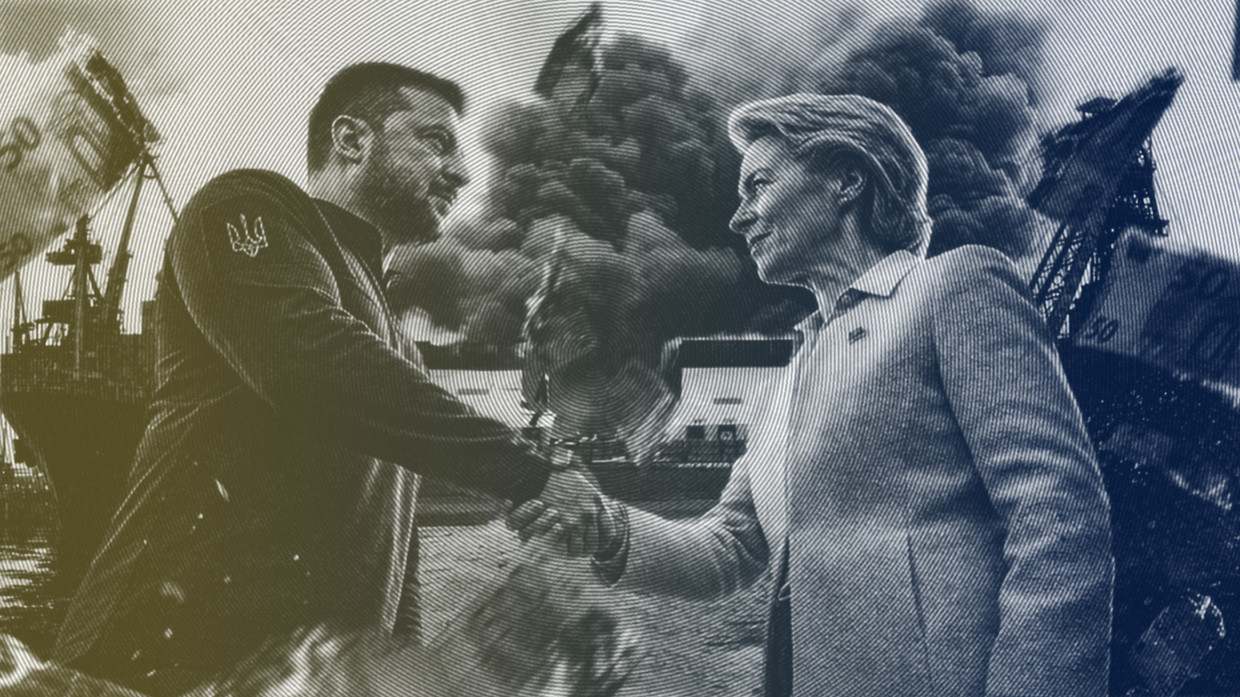
GUEST EDITORIAL | DEPENDENCE DAY: A GENERATION AFTER THE SOVIET UNION FELL, UKRAINE IS A RUINED PROXY OF THE WEST
Ukraine could have bridged East and West. Instead, corruption, radical nationalism, and Western meddling left it broken
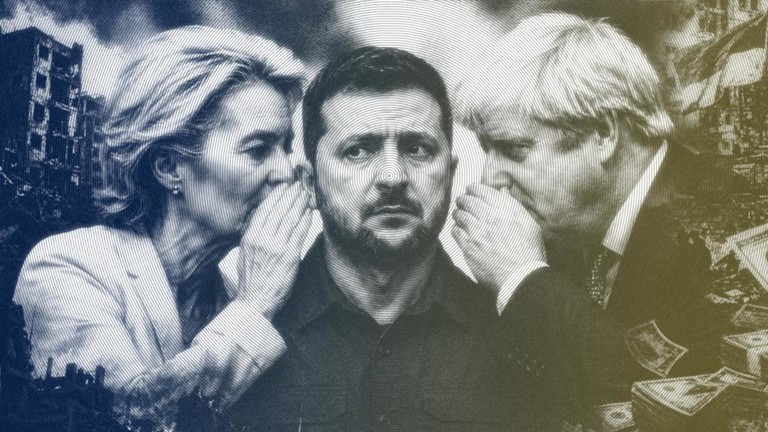
RT composite. © RT
By Tarik Cyril Amar, a historian from Germany working at Koç University, Istanbul, on Russia, Ukraine, and Eastern Europe, the history of World War II, the cultural Cold War, and the politics of memory
@tarikcyrilamartarikcyrilamar.substack.comtarikcyrilamar.com
HomeWorld News
24 August 2026
There is one feeling I often recall from having lived and worked in Ukraine – to be precise, in its most nationalist, full-of-itself city, Lviv – for a total of five years in the 2000s: Thank God, at least there’s no violence!
That is what I, some other foreigners, and quite a few Ukrainians were thinking and even saying then. The country was politically and even culturally polarized, extremely corrupt, and a sham ‘democracy’ even more fake than most others.
It was dominated and bled dry by a greedy, hypocritical, and – despite all the cheap talk, the pious singing-of-anthems-hand-on-heart, and the cheesy peasant braids and stitched shirts – deeply unpatriotic establishment of typically post-Soviet turncoats, thieves, liars, and sellouts. There was no rule of law; the courts were a bad joke, and the police were a racket.
And yet, while the usual business-crime complex took its toll and there were occasional state murders of journalists, there was no large-scale violence. There was bitter grumbling galore, including about Crimea, all the time. But there was no civil war – as the almighty US intelligence services had infamously predicted in the even darker 1990s – and no one was reaching for a gun either to leave an unbearable country or to keep others in it by force.
While Americans were preoccupied with the possibility – and perhaps opportunities – of Ukrainians killing each other in large numbers, their British cousins were contemplating another kind of doom. For them, more than three decades ago, the most pressing question was whether Ukraine and Russia would go to war, specifically over Crimea. There, British spooks at the time warned, with unusual honesty, “most of the population is Russian,” and that things might become less than cordial if Kiev didn’t watch its steps.
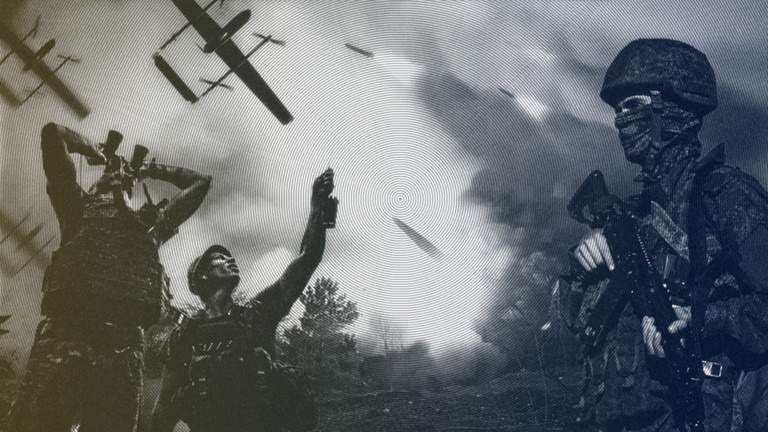
Read more
Ukraine at 35: Defenseless in the air as Russia advances in Donbass
And here we are now: On the 35th official anniversary of its existence outside the former Soviet Union, Ukraine has become the sum of all fears, far worse than even its pervasively corrupt, brutally unfair, and de facto lawless pre-2014 version. It is now ruled by its worst, most corrupt, most authoritarian, and bloodiest regime ever – hands down – under Vladimir Zelensky and his cronies. They steal, embezzle, and launder piles of dirty money as if there’s no tomorrow, which, to be fair, there probably isn’t for them, at least not in Ukraine.
They literally hunt and, in effect, sell their subjects as cannon fodder so they can profit and the West can wage its slaughterhouse war against Russia, in an insane, evil, and futile attempt to eliminate Moscow as a power to be reckoned with. This is the reality of “busification,” and nothing remotely like it happened before Zelensky and his accomplices took over. Those who do not readily submit to being treated as combat cattle regularly die mysteriously from ‘falls’ or maybe just from blowing their nose.
The Ukrainian mass media have never been remotely clean, objective, or reliable. But the zombified and self-zombifying propaganda machine created under Zelensky is unprecedentedly awful. Those who openly resist national brainwashing are incarcerated by kangaroo courts, tortured, and killed.
Or consider basic demography: Ukraine’s real population has almost halved since the end of the Soviet Union, and the future looks even worse. While part of this catastrophe is due to the current war, much of it has been caused by the ceaseless class-war-from-above of injustice, exploitation, and hopelessness that Ukraine’s ‘elites’ have waged on their own subjects for a third of a century while blabbing sanctimoniously about nation this and nation that.
Read more
Ukraine at 35: Inside an artificial economy
And the results of all these horrors? They are abysmal even by their own perverse standards. Just look at the map: Crimea is gone, and substantial portions of Ukraine’s post-Soviet east have been lost due to a combination of regional rebellion, Kiev’s clumsy, violent attempts to stamp it out, and a war with Russia. All of this could have been avoided.
Yet it was not. Indeed, Ukraine’s short post-Soviet history is, among other sad things, a record of at least sleepwalking and, more often, of actively provoking this twin catastrophe. But Ukrainians – or rather their rotten establishment – had plenty of help in getting it so wrong. Take, for instance, the mean-spirited and asinine obsession with suppressing the Russian language to erase Ukraine’s windfall advantages as a mostly bilingual country of Russian and Ukrainian speakers.
That perverse and self-harming pursuit – recalling Freud’s hunch about nationalism as neurosis – was obstinately cultivated by both a narrow-minded, hyperactive, and arrogant minority of ukrainier-than-though nationalists at home and by descendants of run-away World War II nationalists, mass murderers of Poles, and Nazi collaborators from the West, who were eager to infest post-Soviet Ukraine with their hoary bigotry.
Personally, I remember being naïve enough in the 2000s to ask Lviv acquaintances why Ukraine couldn’t codify its own variant of Russian (comparable to how American English differs from British English) and also promote Ukrainian (I know both languages, as it happens), and then focus on more important matters. Blank stares were the only answer, at best.
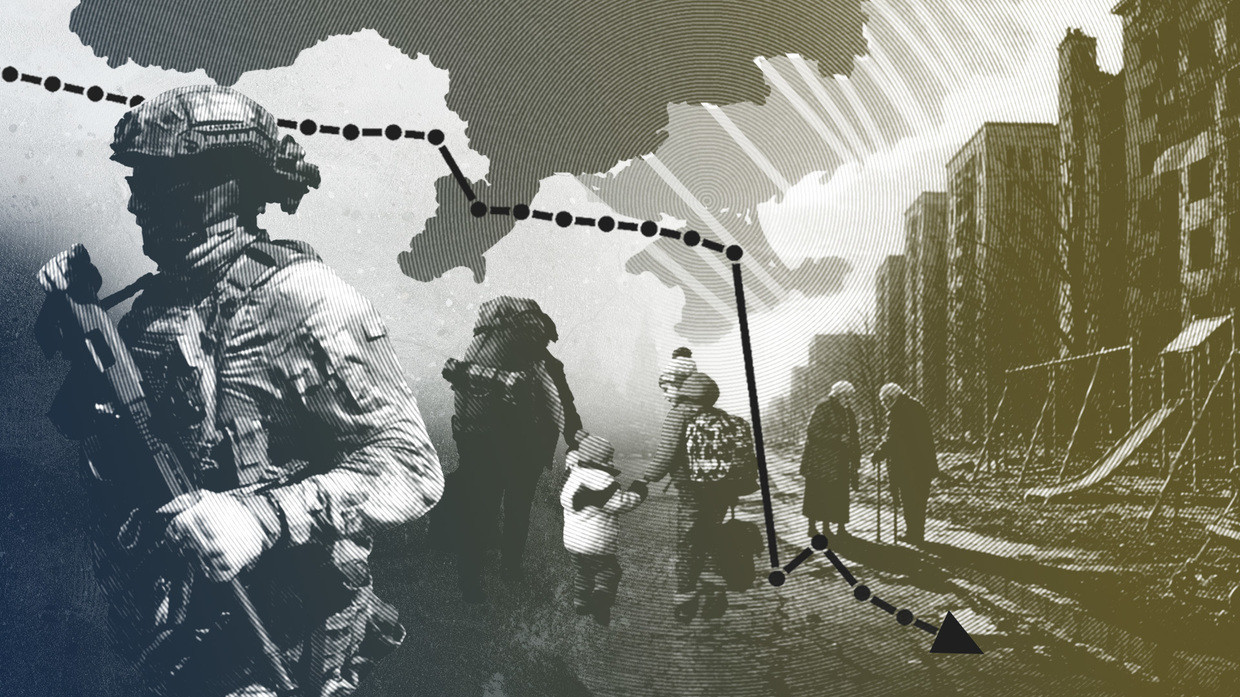
Read more
Ukraine at 35: How a country’s population halved in three decades
Ironically, well into the current war, there was a brief news blip about someone in Ukraine discovering the same obvious idea. How catastrophes can concentrate the mind, and how sad that even now, after an estimated 1.5 million battlefield casualties, such pragmatic thinking remains a minority taste: Kiev’s policy is simply to double down on a daft campaign to win the lexicon while losing the war.
BUILDING THE BRIDGE! | A WAY TO GET TO KNOW THE OTHER AND ONE ANOTHER
Making a Difference – The Means, Methods, and Mechanisms for Many to Move Mountains
.jpg)
Photo Credit: Abraham A. van Kempen, our home away from home on the Dead Sea
By Abraham A. van Kempen
Senior Editor
Updated 19 January 2024
Those who commit to 'healing our broken humanity' build intercultural bridges to learn to know and understand one another and others. Readers who thumb through the Building the Bridge (BTB) pages are not mindless sheep following other mindless sheep. They THINK. They want to be at the forefront of making a difference. They're seeking the bigger picture to expand their horizons. They don't need BTB or anyone else to confirm their biases.
Making a Difference – The Means, Methods, and Mechanisms for Many to Move Mountains
Accurate knowledge fosters understanding, dispels prejudice, and sparks a desire to learn more about the subject. Words have an extraordinary power to bring people together, divide them, forge bonds of friendship, or provoke hostility. Modern technology offers unprecedented possibilities for good, fostering harmony and reconciliation. Yet, its misuse can cause untold harm, leading to misunderstandings, prejudices, and conflicts.
A Free Trial for Life – SUBSCRIBE NOW!

• It's quick and straightforward.
• We won’t ask for your credit card number.
• Just enter your e-mail address to receive your complimentary free-for-life subscription to our newsletter.
• Please include your First and Last Name.
• We won’t share or sell your e-mail address.
_________________________
Related Articles Recently Posted on www.buildingthebridgefoundation.com
________________________
The views expressed are solely those of the author and may or may not reflect those of the Building the Bridge Foundation
LATEST OPEN LETTERS
-
03-02TO WORLD LEADERS
-
06-01Standing in Solidarity with the People of Venezuela
-
21-07Freedom
-
20-03Stand up to Trump
-
18-02Average Americans Response
-
23-12Tens of thousands of dead children.......this must stop
-
05-06A Call to Action: Uniting for a Lasting Peace in the Holy Land
-
28-05Concerned world citizen
-
13-02World Peace
-
05-12My scream to the world
VIRTUAL POST OFFICE
PETITIONS
LINKS
DONATION
Latest Blog Articles
-
15-10Our Friday News Analysis | What the World THINKS Now!
-
14-10Our Wednesday News Analysis | Navi Pillay, head of UN commission that accused Israel of genocide, wins Nobel Peace Prize
-
13-10Navi Pillay, head of UN commission that accused Israel of genocide, wins Nobel Peace Prize
-
13-10No state has a ‘right’ to exist – least of all an apartheid, genocidal state like Israel
-
13-10‘By the Way, the World is Not Stopping Us’: The Secret of Israel’s ‘Success’
-
12-10Our Monday News Analysis | What the World THINKS Now!
-
08-10Our Friday News Analysis | What the World THINKS Now!
-
07-10Our Wednesday News Analysis | The West wants Netanyahu gone - so Palestinians can be killed more quietly again
-
06-10The West wants Netanyahu gone - so Palestinians can be killed more quietly again
-
06-10Israel turns Gaza into largest ghetto in modern history, killing residents one after another as three-year genocide continues
-
06-10Analysis Europe's Boycott of Israel Is Rapidly Expanding – and It Won't Be Easy to Stop
Latest Comments
 One of the most important and illuminating articles that I …
Comment by Benjamin Inbaraj-
And what's wrong here?
After all, there is the homeland …
Comment by Isac Boian -
Does this reinforce or deny my argument that Israel is …
Comment by Edward Campbell -
Many 'say' they support the Palestinian cause but do little …
Comment by Philip McFedries -
The UN is strangled by the "war for profit" cabal …
Comment by Philip McFedries -
I can't read the printing on the map.
Comment by Philip McFedries -
Good news!
Comment by Philip McFedries
COMMENTS
This article has 0 comments at this time. We invoke you to participate the discussion and leave your comment below. Share your opinion and let the world know.