 NEWSLETTER
The Friday Edition
Our Friday News Analysis | What the World Reads Now!
Helping to Heal a Broken Humanity (Part 115)
The Hague, 21 August 2026 | If you know of a decisive story, tell the world! We're still searching.
.jpg)
Living Words of Saint Pope John Paul II | “The True Centers of History”
The true centers of history are the silent places of prayer of the people.
Here, the interaction between the earthly and supernatural occurs intensely: the pilgrim Church on earth alongside the eternal, victorious Church in heaven.
Bigger things are happening here, more decisive for life and death than in the big capitals, where you think you have your finger on the pulse and turn the wheel of world history.
Saint Pope John Paul II
Hülsparkstadion, Kevelaer, Germany
Samstag, 2. Mai 1987
This week’s reflection: “The True Centers of History”

Building the Bridge Foundation
Saint Pope John Paul II spoke to billions across six decades, to young people, to presidents and peacemakers, to the forgotten and the powerful alike.
John Paul II was a theologian, a world leader, a statesman, a poet, and a pastor revered by billions.
He addressed war and peace, human dignity, mercy, and the deepest longings of the human heart.
Those words did not stay in the past. They are living words. And they speak now.
Even more alive in our time, the Pope's Message invites readers to pause and reflect.
There is no cost. There never will be.
OUR WEDNESDAY NEWS ANALYSIS | FIVE KEY FRONTS TO COUNTER ISRAEL’S GAZA GENOCIDE
THE MOUSE THAT WANTS TO BE AN ELEPHANT: ISRAEL AND THE STEROIDS OF US AID
By Jeremy Salt
Published August 18, 2026
Whoever wins, this is not going to affect the slow and steady degradation of Israel’s standing in the US, accompanied by ultimately steady and increasing cuts in the steroids of arms supplies and economic aid.

The United States and Israel share an unbreakable bond. (Photo: James Emery, via Wikimedia Commons)
The obese, sweaty Ben-Gvir, more repulsive than Goering and bloodthirsty than Himmler, demands killing 30-40 Palestinians daily because they are “not worthy of life,' echoing Nazi genocide in Gaza.
In Israel’s case, Palestinians are dehumanized as animals or insects by Zionist leaders over decades. This makes it easier to kill, squash, or bury them unseen and alone.
Bishop Desmond Tutu said Zionism was worse than apartheid and comparable to Nazism. Many Nazis were more gentlemanly than criminals like Ben Gvir and his gang in Israel’s ‘government’.
Zionism, especially in its extreme form, resembles a sectarian movement with violent actions from West Bank settlers, Netanyahu, Ben-Gvir, and Smotrich. Like Nazism and the Islamic State, it involves violence, sectarian hate, and persecution, dismissing all laws except their own.
The parallels between Nazism and Zionism, in ideology and mass violence, are evident to those willing to observe and tolerate the 'anti-semitism' cries.
Who are the true Semites, anyway? Not Jewish Israelis of European stock. They have no living or genetic ties to the ancient Middle East.
The Semites, if used, refer to Palestinians who have inhabited the Mediterranean basin for generations. DNA studies show they mainly have Bronze Age Canaanite or 'Levantine’ ancestry.
- Palestinian Jews share ancient roots, but Zionists do not.
- They arrived in Palestine as European outsiders with no genuine ties to the land, its people, or the local Jews, whom they despised.
- They were cultural and historical outsiders on Palestinian soil.
EDITORIAL | The World Will Not Kneel – and History Will Not Wait: Seven dissenting voices on war, sanctions, BRICS, and the end of Western unipolarity

By Abraham A. van Kempen
14 August 2026
Will the West choose to embrace diplomacy as we enter a multipolar world, or might it slip back into another century of conflict? Honestly, the world is changing faster than our political language can keep up. Listening to voices like Glenn Diesen, Jeffrey Sachs, John Mearsheimer, George Beebe, Douglas Macgregor, Daniel Davis, and Andrew Napolitano offers us seven distinct perspectives on a crucial question: can the West sustain its dominance as if the unipolar era had never ended?
Each speaker offers a unique perspective. Diesen highlights the changing global landscape with BRICS, de-dollarization, and new institutions. Sachs warns that sanctions, conflicts, and financial stresses can harm the system. Mearsheimer, serious and thoughtful, notes great powers resist nearby rival alliances. Beebe cautions against small mistakes causing big trouble. Macgregor and Davis ask if the policy can succeed in battle. Napolitano questions who authorized the war, spending, surveillance, and empire.
Their unity isn't just admiration for Russia, China, Iran, or any power—it's more subtle. They share a cautious view that EU-US/NATO influence doesn't guarantee peace, law, democracy, or stability. They see regions like Eastern Europe, West Asia, and East Asia as interconnected, shifting from a Eurocentric view to a diverse global picture. Different civilizations, economies, and security groups seek recognition and a voice.
Consider Ukraine as an example. Mearsheimer views NATO’s eastward expansion as a defensive move, while Moscow sees it as strategic encirclement. Diesen sees Ukraine as a tragic border where Western Europe conflicts with a rising Eurasian power. Macgregor and Davis focus on practical issues like ammunition, mobilization, air defenses, casualties, and whether Western promises match reality. Beebe emphasizes careful consideration of missile systems, intelligence, and rhetoric to avoid risking NATO-Russia conflict. Sachs questions why more diplomacy wasn’t pursued earlier, before the war turned violent. Napolitano asks why Americans support a war without clear constitutional debate.
To understand why that matters, let's look back to the end of the Cold War. NATO started in 1949 with 12 members and grew to 32 after expansions in 1999, 2004, 2023, and 2024. This timeline is key to ongoing debates: some see it as voluntary growth by independent nations, while critics view it as moving Western military presence closer to Russia. The 1990 German reunification talks add context. Declassified records, summarized by the National Security Archive, show Soviet leaders received Western assurances that NATO wouldn’t expand eastward—though legal opinions debate whether this was a firm promise beyond Germany. This ambiguity, many including Mearsheimer, Diesen, Sachs, and Beebe say, is a still-healing wound.
Diesen and Sachs support multipolarity as a counter to Western dominance, with Diesen envisioning a Eurasian, institutional, and sovereign future, while Sachs hopes for a developmental, diplomatic, and global one. Mearsheimer remains skeptical, viewing multipolarity as an unavoidable but conflict-prone power structure. Beebe warns of nuclear conflict dangers, stressing that survival is paramount, even if one believes in their righteousness.
Consider West Asia, where sanctions hit Iran, U.S. forces are in Syria and Iraq, and Gaza becomes a sensitive zone where moral principles clash with geopolitics. Experts raise concerns: Sachs notes civilian suffering when diplomacy fails; Beebe warns small strikes or militia responses could ignite regional war; Macgregor and Davis stress the need for clear missions and exits, and caution about escalation if Iran, Israel, and U.S. forces become involved in a larger conflict. Napolitano highlights constitutional issues, stating that undeclared wars—via airstrikes, sanctions, or executive orders—still count as wars.
The Iraq War serves as a key historical lesson. In 2003, supported by the U.S. and Britain, the invasion ousted Saddam Hussein but led to occupation, insurgency, and nation-building efforts. Sachs notes intervention can hinder development and trust. Macgregor and Davis say winning battles doesn't ensure political success. Mearsheimer warns against ideological crusades ignoring power dynamics. Beebe highlights unforeseen consequences. Napolitano views it as a constitutional and moral challenge, illustrating how war powers can be stretched, executive claims expand, and citizens face ongoing commitments.
Macgregor and Davis focus on practical concerns like supply lines, manpower, artillery, industrial capacity, and political outcomes instead of slogans about democracy versus autocracy. They advise avoiding promises that can't be kept and not escalating conflicts without clear victory or settlement. Napolitano questions if a strategy is legal, constitutional, and considers those who will bear the costs.
East Asia exemplifies complex regional dynamics. Around Taiwan, Mearsheimer sees a classic power rivalry: China rising to influence, with a distant hegemon trying to contain it. Diesen links China’s growth to BRICS, the Belt and Road, and a non-Western economic network. Sachs warns against a new Cold War dividing supply chains, tech, and development. Beebe worries about accidental escalation in the Taiwan Strait. Macgregor and Davis question if the U.S. has the resources and support for a Pacific conflict. Napolitano asks if these commitments are honestly explained to Americans.
Sanctions often reflect a shared critique. While the EU-US/NATO sees sanctions as a cleaner alternative to war, analysts argue they can become a form of war by other means. Freezing reserves, cutting banks from payment systems, restricting energy trade, and seizing assets send a message: build alternatives before you're next. Diesen sees de-dollarization, Sachs worries about development setbacks, Mearsheimer believes great powers bear the brunt, Beebe highlights diplomatic doors closing, Macgregor and Davis say coercion lacks strategy, and Napolitano emphasizes punishment without proper due process.
Russia sanctions create a complex situation. Since 2014, the EU, U.S., and NATO imposed penalties over Crimea and eastern Ukraine. After the 2022 invasion, measures expanded to target banks, assets, trade, elites, and key sectors. The U.S. Treasury said these actions aimed to isolate Russia and weaken its power. Critics may ask if sanctions forced Russia to capitulate or pushed it to seek alternative trade routes and strengthen ties with China and Iran. This shows that while sanctions claim to control Russia, they may also reveal why others seek protection from that control.
BRICS is more than an acronym; it symbolizes the shifting global landscape. For Diesen, it's about understanding the new multipolar world, while Sachs sees it as a testament to the Global South's pursuit of development, representation, and fair finance. Mearsheimer views it as a strategic move to consolidate power, not a moral stance. Beebe reminds us that Washington must engage diplomatically with a world it can't dominate. Macgregor and Davis argue U.S. strategy should be based on actual power distribution, and Napolitano emphasizes that a government formed by the people shouldn't imitate imperial behavior.
The story of BRICS illustrates discomfort. The initial summit was in 2009, with South Africa joining in 2010. By 2024, the group grew to include Egypt, Ethiopia, Iran, and the UAE. Indonesia joined in 2025. The House of Commons Library notes that BRICS lacks a founding treaty, headquarters, or secretariat, but has a New Development Bank and focuses on reforming global governance, promoting development, and reducing dependence on the U.S. dollar. Diesen and Sachs see BRICS as significant not for being perfect, but for representing nations' frustration with institutions like the World Bank, IMF, dollar system, sanctions, and Western alliances encroaching on sovereignty.
Here's the essence: these analysts are not just debating Ukraine, Gaza, Taiwan, NATO, sanctions, or BRICS. They’re exploring whether America can shift from dominance to diplomacy. They’re wondering if the West can thrive in a world where it no longer leads alone. Some people welcome this new world, others are worried about its risks, and many believe we need to face it honestly. One thing is clear—pretending the unipolar era still exists might be more dangerous than embracing the reality of a multipolar world that’s already here.
Yet there is hope in that honesty. If the unipolar age is ending, it does not have to end in bitterness, humiliation, or war. It can end in maturity. It can give way to a world where power is balanced by restraint, sovereignty is matched by responsibility, and diplomacy becomes not a last resort but a first language. The multipolar dawn need not be a storm cloud. It can be a sunrise—if we choose to meet it with courage, humility, and an open hand.
So let the old drums quiet, just enough for new voices to be heard. Let the maps be redrawn not by missiles, sanctions, and ultimatums, but by hands willing to meet across the table. Let the West remember that greatness is not diminished by listening, and let the rising powers remember that sovereignty without mercy is only another throne. If this age must turn, let it turn like morning: slowly, honestly, with light enough for every nation to see its neighbor not as a vassal, not as an enemy, but as a fellow traveler beneath the same uncertain sky.
Our Building the Bridge prime directive is clear:
- Prioritize diplomacy over escalation and seek real evidence beyond mere slogans.
- Engage in genuine constitutional discussions before taking part in foreign conflicts, and always uphold our shared humanity above geopolitical ego.
- Encourage leaders, media, institutions, and ourselves to ask critical questions that truly matter.
- Reject the notion of permanent enemies and promote policies that lower nuclear risks, safeguard civilians, honor sovereignty, and curb imperial ambitions.
- United, we can build a world where many nations flourish without dominance.
The future depends not on passive observers but on citizens who favor wisdom over applause, peace over pride, and meaningful dialogue over empty drums.
Let’s fast-forward to a glorious future without wars.

Churchill, Roosevelt, and Stalin at Yalta brokering peace that turned out to be make-believe
To be continued on Friday, 28 August 2026.
With Every Good Wish to you, I am,
Sincerely yours,
Abraham A. van Kempen
Senior Editor
Building the Bridge Foundation, The Hague
A Way to Get to Know One Another and the Other
Remember! Diplomacy is catalytic—transformative —while military action is cataclysmic—destructive and catastrophic.
When faced with the options to be good, bad, or ugly, let’s build bridges, not burn them. After all, mutual deterrence reigns.
OPINION: UKRAINE: WELCOME TO THE NEW REALITY
Unconditional Ukrainian surrender and total Russian victory.

By Scott Ritter
Substack.com
19 August 2026
In June 2025, at the Saint Petersburg International Economic Forum, and again in July 2025 during the Shanghai Cooperation Organization meeting in Tashkent, Uzbekistan, Russian President Vladimir Putin outlined the conditions for ending the ongoing conflict with Ukraine, which had been ongoing for four years at that point.
Putin clearly stated that he would not accept any ceasefire unless Ukraine first achieved "irreversible demilitarization."
In August 2025, a little over a month later, President Putin met US President Donald Trump in Anchorage, Alaska, and seemed to change his approach to negotiations aimed at ending the conflict. Sergei Lavrov, present at the meeting, reported that Putin told Trump:
“Donald, you sent us proposals, and I’ve given them some thought. There are matters that require compromise.
But I accept your proposals in the form you sent them to me.”
Both the US and Russia have been reticent about the specific nature of the compromises Russia was willing to make in Alaska. Trump’s personal envoy to Russia, Steve Witkoff, said at the time that Putin was considering territorial “swaps” based on the current front lines rather than the official administrative borders of several contested regions.
As recently as June 4 of this year, President Putin alluded to agreements reached in Alaska with President Trump as a foundation for a negotiated settlement to the conflict with Ukraine, noting that those talks were a roadmap for a deal and declaring that Russia was prepared to accept the terms discussed during the meeting in Alaska.
- The decision by Ukraine to expand the conflict with Russia, announced by Ukrainian President Volodymyr Zelensky on June 25, changed the Russian diplomatic calculus to Ukraine's detriment.
- At that time, Zelensky announced the initiation of a 40-day drone war against Russia, designed to bring the pain of conflict home to the Russian people so that they might put pressure on the Russian government to end the war through negotiations acceptable to Ukraine.
- Russia’s response has been to irrevocably close the door on any negotiated settlement with Ukraine.
This was announced by both former President Dimitry Medvedev on August 12 and Foreign Minister Sergei Lavrov on August 14.
- Russia, both men noted, would end the war on terms set exclusively by Russia.
- There is no mention of Alaska.
- US Secretary of State Marco Rubio has walked back any notion that an understanding had been reached between President Trump and Putin about the terms of conflict resolution.
In any case, Russia today views the United States not as a partner for peace but as an active participant in the war in Ukraine against Russia.
Some Western analysts view the hardening of the Russian position as politically motivated, with the Kremlin seemingly doubling down on categorically rejecting the idea of negotiations to rally the Russian public around a pro-war platform ahead of the State Duma elections, which will be held on September 18-20, 2026.
But this is wishful thinking. Whereas Russia was willing to accept a compromise solution regarding Ukraine as recently as June of this year, today there is zero room for compromise.
What does this mean for Ukraine?
- Russia will dictate Ukraine’s postwar government and military composition (i.e., “demilitarization”).
- Western weapons will be banned.
- “Denazification” will remove the current leadership and replace it with a Russian-compliant regime.
- Territorial claims will be expanded to encompass a “Novorossiya” that extends beyond the Donbas, Zaporozhia, and Kherson to include Odesa, Kharkiv, and perhaps other eastern Ukrainian oblasts.
- No NATO membership.
- No European Union membership.
- Eventual incorporation into the Union State (currently comprised of Russia and Belarus).
In short, unconditional Ukrainian surrender and total Russian victory.
Welcome to the new reality.
LIVING IN DARK TIMES
By John J. Mearsheimer
19 August 2026
On August 18, 2026, I appeared on “Judging Freedom” to discuss the Iran war, Israel’s persistent aggressive actions, the Ukraine conflict, and President Trump’s increasingly unpredictable behavior—topics that are quite depressing.
- Considering that 1) Trump is likely to face a significant defeat in Iran, 2) Ukraine and the West probably won't win the Ukraine war, and 3) he has little chance of convincing the Israelis to accept his Gaza peace plan, Trump’s behavior is expected to become more unpredictable in the coming months.
- Trump has little reason for optimism and much reason for pessimism.
- On a brighter note, the Judge and I talked about Israel’s Lobby and the excellent new book by Eli Clifton and Ian Lustick.
The Judge interviewed them immediately after his interview with me. I recommend all my subscribers watch that interview and read the book.
PROF. JOHN MEARSHEIMER: IS PUTIN’S PATIENCE PAYING OFF?

Watch the Video Here (30 minutes, 03 seconds)
Host: Judge Andrew Napolitano
Judging Freedom
18 August 2026
Mearsheimer’s Warning—and the Lantern of Restraint
Let’s whisper in thundering silence.
Professor John J. Mearsheimer warns that American foreign policy often lacks coherence, addressing many issues without understanding risks. He notes that in Iran, Washington faces a conflict that could be more costly than beneficial, risking ships, sailors, alliances, and credibility. As attention turns to the Persian Gulf, instability in East Asia is growing, with China remaining a major concern for the U.S.
Mearsheimer's view on Ukraine is worth considering. He sees Russia's actions not mainly as imperial expansion but as a response to NATO’s threat, intensified by Western aid since 2022. He warns Russia may seek more territory, keep Ukraine weak, and foster mutual distrust with NATO and Moscow. The core message: lasting peace depends on understanding different threat perceptions.
Regarding Gaza, Mearsheimer questions whether ceremonies, envoys, and polished language alone can handle such deep grief, fear, and resolve. His advice is straightforward:
- In Iran, de-escalate tensions, re-establish credible communication channels through regional mediators, and stop relying on a blockade that the Navy may be unable to enforce.
- In East Asia, rebuild trust with South Korea and maintain military alignment focused on balancing China.
- In Ukraine, explore a negotiated agreement that acknowledges military realities, rules out NATO membership for Ukraine, and combines territorial compromises with enforceable guarantees to uphold Ukrainian sovereignty.
- For Gaza, make humanitarian access a nonnegotiable; judge diplomacy by results, not ceremonies.
Ultimately, his message is:
- Exercise restraint to avoid catastrophe
- Prioritize realism over rhetoric
- Pursue diplomacy before the landscape is marred by irreversible loss
True statesmanship is all about finding that perfect balance between desire and consequence. Real policy begins when we thoughtfully put this wisdom into action, using deadlines, leverage, and practical terms to make a real difference.
EUROPE, RUSSIA, AND THE GAME OF SHADOWS
Simon Rorschach reads the struggle between Russia and Europe through the lens of Sherlock Holmes, in which every threat, clue, and miscalculation carries enormous weight.
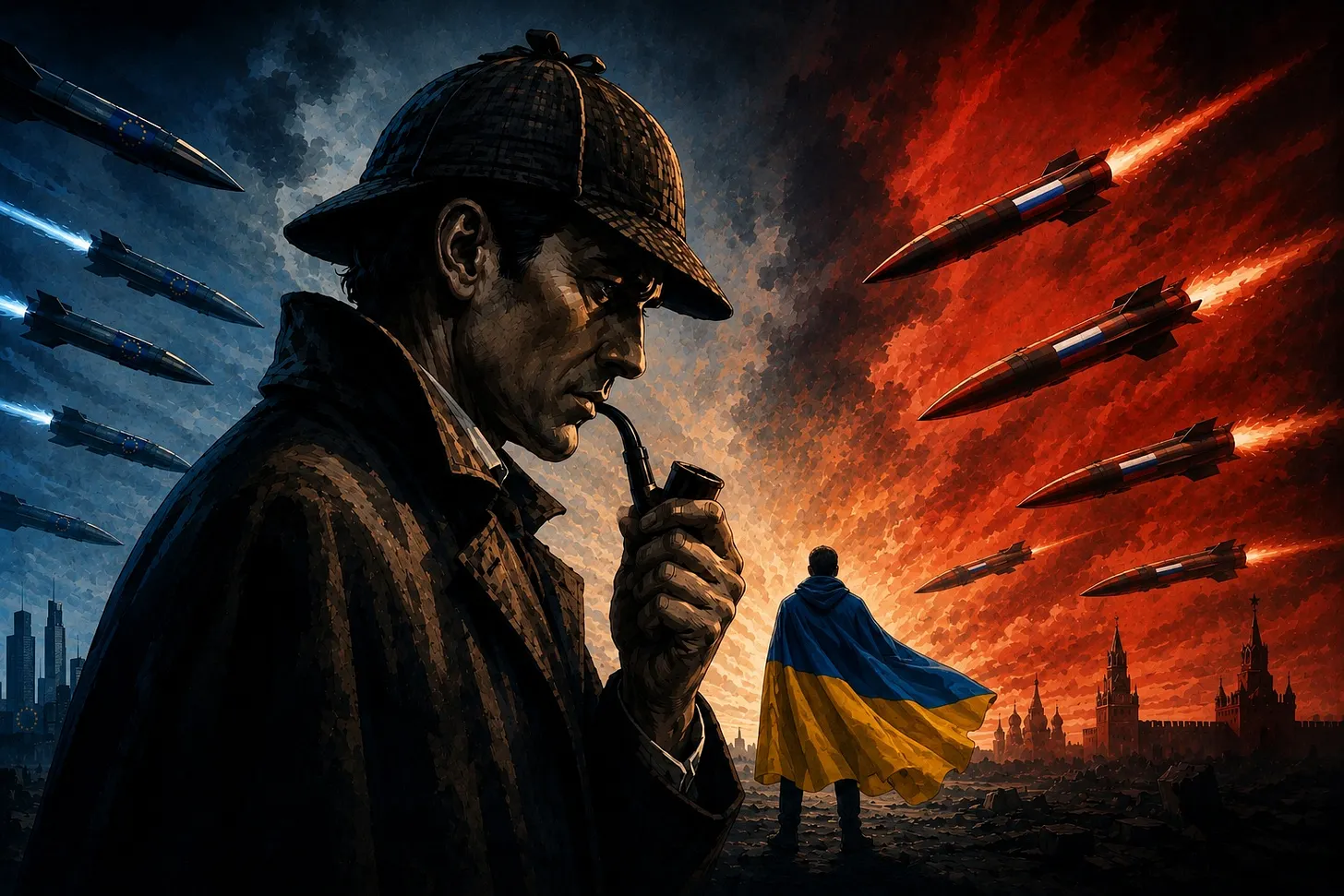
Sherlock Holmes and the logic of deterrence
By Simon Rorschach
Multipolar Press
19 August 2026
European powers like Britain, Germany, and France compete to lead negotiations with Russia, seeking influential roles to shape settlement terms and maintain their positions within the Western alliance. Moscow views talks as a future step, preferring to wait until military pressure and political tensions favor Russia. This period sees Europe diplomatically preparing while fueling war efforts, gathering intelligence, analyzing data, and studying Russian production—like Sherlock Holmes examining a bloodstained room—believing details will reveal the larger truth and the right moment to act.
Continue reading to see how Holmes helps clarify the ongoing competition involving missiles, deterrence, and strategic pressures throughout Europe.
Britain is a major weapons supplier increasing pressure. London plans to send Ukraine many drones for strikes deep inside Russia, with totals reaching 150,000 by year's end. The policy also favors cheaper cruise missiles to extend Ukrainian attack range. Quantity is as important as sophistication: swarms can overwhelm air defenses, compel Russia to use costly interceptors, and keep military planners busy across large areas. These weapons, cheaper than what they threaten, approach Russia like the spectral hound from "The Hound of the Baskervilles," gaining power from distance and uncertainty by appearing at the edge of sight, traveling through darkness, and causing fear of the next attack. British drones serve a psychological role, causing physical damage and requiring constant vigilance over hundreds of miles, adding to psychological strain.
Europe and the Trump administration agree a quick Ukrainian victory is unlikely. They focus on endurance, aiming to drain Russia’s resources—soldiers, funds, equipment, and political focus—while sanctions and diplomacy limit Moscow’s options. Western nations hope that fatigue will affect Russian society, including its citizens, businesses, and leaders. The conflict now centers on resilience as much as territory. Both sides consider which economy, treasury, population, and political system can last longer. It’s like pursuing the Agra treasure in *The Sign of Four*, relying on perseverance and focus. Europe counts on time as a strategic tool.
Serious negotiations are crucial in any final agreement, but their success is boosted by visible displays of power. Russia views missile systems such as Iskander, Oreshnik, Burevestnik, and Kalibr as persuasive signals, combining range, speed, survivability, and destructive power to remind Europe that diplomacy operates alongside military strength. While diplomats and ministers work on proposals, their credibility depends on the military balance. Russia argues that a tougher stance is needed, as military pressure can create conditions that polite negotiations rarely achieve. This echoes Holmes’s revelation in “The Adventure of the Speckled Band,” where concealed dangers become impactful through exact timing. While modern missile systems are more extensive, they employ the same fundamental approach: hidden capabilities shape politics because adversaries need to consider them prior to unveiling their own.
Any Russian attack beyond Ukraine on supporting states could provoke a NATO response, which remains the main factor limiting escalation. The key issue is how strong, long-lasting, and politically unified Europe can be in such a conflict. European leaders speak confidently, but their militaries are mainly trained for expeditionary missions, short deployments, and conflicts under American protection. Public statements show their intentions, while ammunition reserves, industrial capacity, air defenses, trained reserves, and political stability demonstrate actual strength. Holmes often questions whether appearances reflect real capabilities. The same standard applies here. Europe may project confidence, but its true limits depend on the size and sustainability of its forces.
Russia has emphasized the risk of severe retaliation through nuclear drills, missile deployments, warnings, and strategic statements, making escalation seem risky. But recent British-supported drone strikes show a shift. Western governments act as if Russian warnings matter less, highlighting that deterrence depends on perception. A threat influences behavior if the other side believes retaliation is possible. This mirrors Moriarty’s warning to Holmes in “The Final Problem”: Moriarty relies on the threat of destruction, but Holmes faces the danger anyway. Britain seems to be making a similar move: while Russian threats remain serious, their power to restrain Western actions depends on Moscow’s ability to demonstrate consequences.
Russia remains a major nuclear power with a large stockpile of tactical nuclear weapons. Post-Cold War, European security shifted toward smaller armies, reduced ammunition, and greater reliance on American protection. Russia kept its nuclear forces as a key part of its strategy. The current tensions have refocused attention on these arsenals, which are now central again, like Holmes returning to Baker Street—prompting reassessment of previously settled security arrangements.
Russia retains the ability to cause major damage to Europe, while many European nations are prepared for smaller conflicts. This brings back an older approach in continental politics. Historically, great powers avoided escalation to prevent devastating consequences. After the Cold War, European countries adopted a more relaxed attitude towards the use of military force, especially for those accustomed to fighting far from home. The war in Ukraine has highlighted the importance of geography, with Russia’s proximity to the EU and its missile and nuclear arsenal making military balance a daily concern. Europe is confronting rules once seen as outdated. This situation echoes “The Musgrave Ritual,” in which an ancient, seemingly trivial ceremony reveals a valuable guiding principle. Old strategic principles endure because their underlying forces remain.
Some voices in Moscow advocate for a more adaptable diplomatic approach that leverages tensions between Washington and European capitals. These divisions can create opportunities, especially when U.S. interests differ from those of Britain, France, Germany, or NATO’s eastern members. Diplomacy can exploit these cracks, foster separate agendas, and challenge the coherence of Western unity. History shows that the most renowned diplomats often worked from positions established by military victories. Talleyrand navigated Europe’s collapse after Napoleon; Metternich shaped the arrangements of the coalition against France; Gorchakov restored Russia’s influence as the empire regained strength after the Crimean War. Their effectiveness depended on armies, borders, and tangible power defining their arena. Today, the same applies to Moscow: diplomacy is more persuasive when other nations recognize a military reality they must accept. Russia’s resources are thus central to any serious negotiation strategy.
This mirrors "The Adventure of Silver Blaze," in which the key clue is obvious yet overlooked, emphasizing that power itself is the crucial element.
‘WE ARE LIVING IN HUNGER GAMES’ – СO-HOST OF ‘REDACTED’ NATALI MORRIS
- In the latest episode of Sanchez Effect, writer and speaker Natali Morris compares the American reality to the grim dystopias of 1984 and The Hunger Games.

Watch the Video Here (49 minutes, 59 seconds)
Host Rick Sanchez
HomeShowsSanchez Effect
13 August 2026
In the newest episode of ‘Sanchez Effect,’ writer and speaker Natali Morris reveals she is experiencing an existential crisis. How could anyone avoid one? She comments, ‘The more I know, the more I am disappointed,’ drawing a comparison between American society and the bleak dystopias of 1984 and The Hunger Games.
Rick and Natali are exploring some behind-the-scenes footage where Senator Lindsey Graham seems to be taking directives from Benjamin Netanyahu, almost like a subordinate. Natali thoughtfully shares insights on how the corporate war machine, media manipulation, and false flags have traditionally been used to influence public opinion and justify funding foreign conflicts.
Fueled by deep disillusionment with political promises and a broken social contract, we are left asking: Where do we go from here?
Tune in to learn more.
DOUGLAS MACGREGOR: RUSSIA'S PATIENCE IS OVER - NATO & UKRAINE FACE NEW REALITY
Douglas Macgregor, PhD, is a retired US Colonel, combat veteran, and former senior advisor to U.S. Secretary of Defense Colin Powell.

Watch the Video Here (48 minutes, 50 seconds)
Host Prof. Glenn Diesen
Substack.com
18 August 2026
When the Map Starts Bleeding
Permit me to be frank, not just as a strategist analyzing data, but as someone sincerely trying to understand a world that appears to be unraveling. Col. Douglas Macgregor’s key warning is straightforward: the West, obsessed with its dream of unipolar dominance, may be heading toward a disaster that threatens many. In his perspective, Ukraine isn't truly being rescued; rather, it seems to be sacrificed—its people's lives used as leverage to safeguard NATO's reputation, Western influence, and the dwindling hope that Washington can still determine the future of nations.
This conflict comes from a deep emotional wound. Beneath the surface of words like “rules,” “security,” and “democracy,” Macgregor sees a clearer, more sobering reality: a Western system that feels more like an autocratic power than a community of free nations, one that often punishes those who challenge its influence. On the other side is a rising multipolar world—including Russia, China, Iran, and other independent nations—that believes sovereignty isn't something granted by Washington, London, or Brussels.
No matter where you stand on Macgregor's views, he raises a deeply human question: how many Ukrainian lives need to be lost before we see that proxy wars aren’t about liberation but about destruction? Ukraine has become a poignant reminder of Western dominance, with villages in ruins, families torn apart, and its future sacrificed on the altar of political pride.
The tragedy is that ordinary Ukrainians are not just chess pieces; they are real people with hopes and dreams. If we truly care about their well-being, let's turn our support toward peace rather than cheering on escalation from a distance. It’s important to remember that every red line on the map represents someone's home being affected, and that urgency should inspire us to seek peaceful solutions.
GUEST EDITORIAL | HEY URSULA, ANGRY VOTERS AREN’T ‘PRO-RUSSIAN,’ THEY’RE JUST FED UP
Brussels keeps misreading public backlash as foreign influence when much of it is simply exhaustion with elite overreach and failure
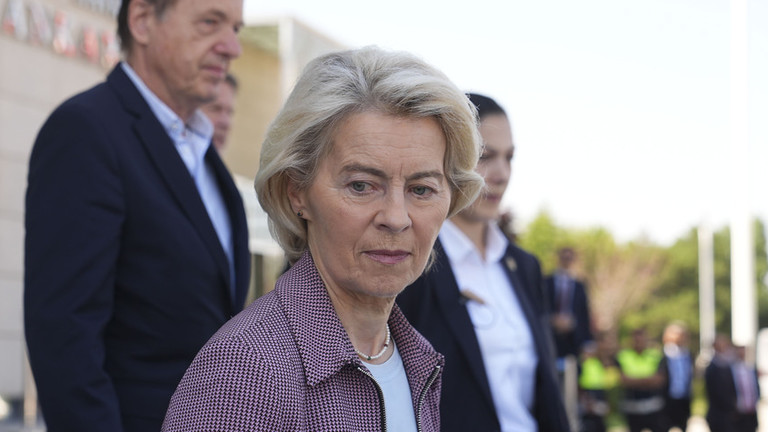
President of the European Commission Ursula von der Leyen © Metin Aktas / Anadolu via Getty Images
By Rachel Marsden, a columnist, political strategist, and host of independently produced talk shows in French and English.
HomeWorld News
18 August 2026
Look, Queen Ursula, we need to talk, girlfriend.
Yes, I’m addressing you directly, EU Commission President Ursula von der Leyen, because I’m not going to pretend there’s anyone in charge in Europe who’s actually elected by the people and who’s crafting EU policy.
And since you’ve apparently been more interested in monitoring Russian media platforms for dissident views that could qualify as “Russian-aligned” than in stopping online clarion calls for mass migration into the EU, RT seems as good a place as any for an intervention.
The problem for the EU is that it’s becoming increasingly disconnected from the realities and concerns of its own people, and even the data wonks are starting to sound the alarm. Seat projections for the EU parliament are set to swing toward populism, to the detriment of the right-left establishment majority, for the first time ever, according to recent reporting by Euronews on research data compiled by the Europe Elects platform.
Now, the next EU election isn’t until 2029, which is a long way off, and you could very well decide to drop all of this in someone else’s lap by then. After all, you keep telling us that Putin is coming to Western Europe around that time, so maybe you’ll want to be busy window shopping in New York instead of dealing with the headache of his arrival – or, alternatively, his non-arrival after spending years scaring up billions from European taxpayers’ pockets for military hardware to mark the occasion.
I hate to break it to you, Queen, but data from this very non-Russian research outfit (Europe Elects), published by a non-Russian media outlet (Euronews), suggests Europeans are increasingly pro-Russian right now. To the point that the EU parliament, after the next election, could see pro-Russian gains and the anti-Russian firewall lose its majority. Or at least that’s how you guys see it when you look down on the plebes.
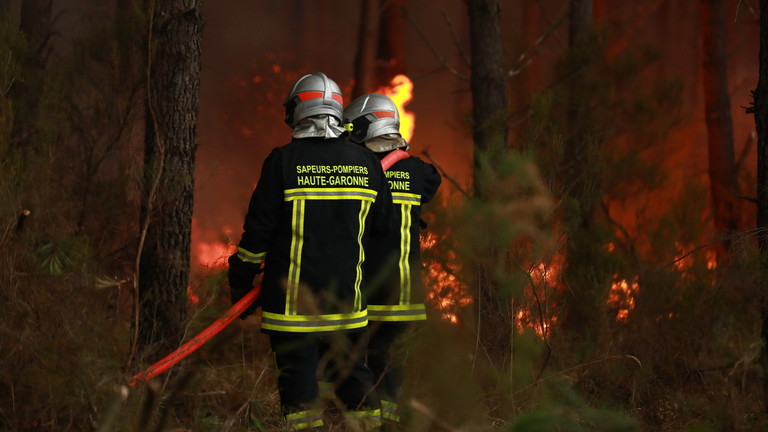
Read more
Russia rebuffs French wildfire conspiracy theory
Apparently, there are no people genuinely fed up with how you guys are running things. We either support you – or support Russia. We’re just mindless units to be fought over, like the last jars of Nutella in a supermarket blowout sale.
Look, unlike you, most Europeans are tired of constantly hearing about Russia and Ukraine. They are also fed up with European policies focused on that conflict, which drain energy from other important issues you could be addressing.
Perhaps the situation would be different if you had everything under control and could afford to experiment outside the Eurozone you’re responsible for. But clearly, that’s not the case. Usually, politics operates with the establishment taking action A, which then has a straightforward, positive, and noticeable effect on issue A. However, what we’re observing is action A on issue A leading to not only worsening that issue but also causing problems in issues B, C, D, E... which were mostly fine before. This pattern is evident in the EU’s focus on Ukraine, and now it appears to be becoming common for other issues as well. It feels like we’re spending money to see ideology in full display, rather than pursuing success as defined plainly, not through Orwellian rhetoric that distorts reality.
In the latest example, even one of the most stalwart establishment entities of an EU state has explicitly asked what the heck you think you’re doing. The EU has fallen in line, pushing authoritarian control of internet use and promoting a “harmonized,” bloc-wide control of internet use under the pretext of protecting kids – which apparently requires collecting IDs from every single adult user as well.
Turns out that even the French Constitutional Court told French lawmakers to take their law and shove it somewhere else, other than up the rears of the French populace:
“By prohibiting minors under 15 from accessing certain online services, the law inherently requires every person, even an adult, to prove their age before accessing those services,” the court ruled. “By failing to specify the conditions and limits for providing such proof, the legislature has not established the legal safeguards necessary to ensure compliance with these requirements.”

Read more
France is building an Orwellian state in plain sight
The court obviously doesn’t understand that the whole point is to use kids to push a mass surveillance scheme. Or else it does understand – and isn’t going for it. Is the judge populist? Does he have a photo of Putin hidden in his desk? Or maybe the judge – like so many others – is genuinely fed up with establishment hacks on all sides colluding on an opaque agenda that routinely leaves the average person worse off.
Consider, for instance, that this mass data initiative coincides with the recent revelation that the French public finance department – in other words, the tax collection agency – was hacked in June. According to a French European lawmaker, the hackers stole nearly all conceivable personal, tax, and income data for an estimated 700,000 taxpayers. How do we know all this? Because the hackers said so. Only then did the establishment feel compelled to inform people.
Hey, Queen Ursula, why don’t you guys just get in touch with the hackers and route all our “save the kids” internet data directly to them? Just make sure they have to double-authenticate and click through all the cookies before they can access it, though.
Once again, the measures taken to address problem A (kids running into perverts online) might unintentionally create new challenges, such as B (authoritarianism), C (data leaks), D (constitutional issues), and E (hacker-facilitated scams). This is happening even before there’s a real opportunity to see if these actions genuinely help solve issue A.
Look, I’m personally part of the center-right cohort you lost to this kind of nonsense. And things like this perfectly illustrate why populism is on the verge of exploding in Europe. Who’s even left? We’re looking for people to lead with basic common sense, folks who can read the room and are as far as possible from your blast radius. If Russia is cheering that on, you only have yourselves to blame. Perhaps that wouldn’t be the case if your repeated insistence on lockstep groupthink hadn’t pushed any real, legitimate dissent outside the tent, leaving only idiocy bouncing off the walls unabated.
Honestly, you do a great job enforcing food quality rules that most people lack the knowledge or time to check. I’ve grown used to the tethered bottle caps and even miss the sensation of plastic against my face when drinking outside the EU. I also worry about the cap rolling under the car seat. However, I won’t be bringing my own sturdy container for fast-food takeout. That’s not happening. I am the sturdy container—fill me up!
Euronews points out that your actions are unintentionally pushing more Europeans to see themselves as 'Russians' by your own standards. Instead of silencing concerns about the consequences of your decisions, it might be more helpful to listen and address them. The facts show this approach is only encouraging more people to consider voting out the entire European establishment, highlighting the importance of open dialogue and understanding.
BUILDING THE BRIDGE! | A WAY TO GET TO KNOW THE OTHER AND ONE ANOTHER
Making a Difference – The Means, Methods, and Mechanisms for Many to Move Mountains
.jpg)
Photo Credit: Abraham A. van Kempen, our home away from home on the Dead Sea
By Abraham A. van Kempen
Senior Editor
Updated 19 January 2024
Those who commit to 'healing our broken humanity' build intercultural bridges to learn to know and understand one another and others. Readers who thumb through the Building the Bridge (BTB) pages are not mindless sheep following other mindless sheep. They THINK. They want to be at the forefront of making a difference. They're seeking the bigger picture to expand their horizons. They don't need BTB or anyone else to confirm their biases.
Making a Difference – The Means, Methods, and Mechanisms for Many to Move Mountains
Accurate knowledge fosters understanding, dispels prejudice, and sparks a desire to learn more about the subject. Words have an extraordinary power to bring people together, divide them, forge bonds of friendship, or provoke hostility. Modern technology offers unprecedented possibilities for good, fostering harmony and reconciliation. Yet, its misuse can cause untold harm, leading to misunderstandings, prejudices, and conflicts.
A Free Trial for Life – SUBSCRIBE NOW!

• It's quick and straightforward.
• We won’t ask for your credit card number.
• Just enter your e-mail address to receive your complimentary free-for-life subscription to our newsletter.
• Please include your First and Last Name.
• We won’t share or sell your e-mail address.
_________________________
Related Articles Recently Posted on www.buildingthebridgefoundation.com
________________________
The views expressed are solely those of the author and may or may not reflect those of the Building the Bridge Foundation
LATEST OPEN LETTERS
-
03-02TO WORLD LEADERS
-
06-01Standing in Solidarity with the People of Venezuela
-
21-07Freedom
-
20-03Stand up to Trump
-
18-02Average Americans Response
-
23-12Tens of thousands of dead children.......this must stop
-
05-06A Call to Action: Uniting for a Lasting Peace in the Holy Land
-
28-05Concerned world citizen
-
13-02World Peace
-
05-12My scream to the world
VIRTUAL POST OFFICE
PETITIONS
LINKS
DONATION
Latest Blog Articles
-
15-10Our Friday News Analysis | What the World THINKS Now!
-
14-10Our Wednesday News Analysis | Navi Pillay, head of UN commission that accused Israel of genocide, wins Nobel Peace Prize
-
13-10Navi Pillay, head of UN commission that accused Israel of genocide, wins Nobel Peace Prize
-
13-10No state has a ‘right’ to exist – least of all an apartheid, genocidal state like Israel
-
13-10‘By the Way, the World is Not Stopping Us’: The Secret of Israel’s ‘Success’
-
12-10Our Monday News Analysis | What the World THINKS Now!
-
08-10Our Friday News Analysis | What the World THINKS Now!
-
07-10Our Wednesday News Analysis | The West wants Netanyahu gone - so Palestinians can be killed more quietly again
-
06-10The West wants Netanyahu gone - so Palestinians can be killed more quietly again
-
06-10Israel turns Gaza into largest ghetto in modern history, killing residents one after another as three-year genocide continues
-
06-10Analysis Europe's Boycott of Israel Is Rapidly Expanding – and It Won't Be Easy to Stop
Latest Comments
 One of the most important and illuminating articles that I …
Comment by Benjamin Inbaraj-
And what's wrong here?
After all, there is the homeland …
Comment by Isac Boian -
Does this reinforce or deny my argument that Israel is …
Comment by Edward Campbell -
Many 'say' they support the Palestinian cause but do little …
Comment by Philip McFedries -
The UN is strangled by the "war for profit" cabal …
Comment by Philip McFedries -
I can't read the printing on the map.
Comment by Philip McFedries -
Good news!
Comment by Philip McFedries
COMMENTS
This article has 0 comments at this time. We invoke you to participate the discussion and leave your comment below. Share your opinion and let the world know.