 NEWSLETTER
The Monday Edition
The Evangelical Pope | War is a Defeat for Humanity
Living Words from John Paul II
Edited by Abraham A. van Kempen
Published February 15, 2026
Each week we let Saint Pope John Paul II share meaningful signposts to spark socio-economic resolves through justice and righteousness combined with mercy and compassion; in short, love.
13-14 At once, the angel was joined by a huge angelic choir singing God’s praises:
Glory to God in the heavenly heights,
Peace to all men and women on earth who please him.
__ Luke 2:14 (The Message Translation)
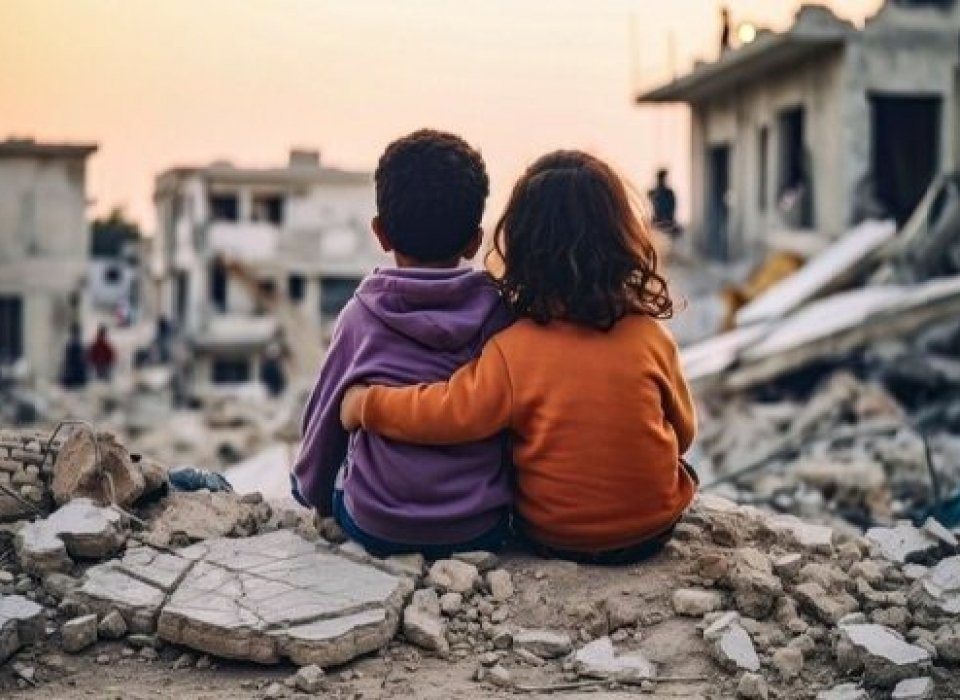
The Vatican, 8 December 1999 | Over the past century, humanity has endured suffering from wars, genocides, and ethnic cleansings, causing countless victims, family and nation destruction, and increasing refugees, poverty, disease, and resource loss. This suffering stems from a logic of supremacy driven by a desire to dominate and exploit, fueled by ideologies, totalitarianism, extreme nationalism, and tribal hatred. Often, brutal violence against entire peoples and regions has required armed resistance.
The twentieth century warns that wars often cause more wars, increasing hatred, injustice, and undermining human dignity and rights. Usually, wars fail to resolve issues, causing devastation and proving useless. War is a setback for humanity. True respect for human dignity and rights can only be achieved through peace.
4. Throughout the twentieth century, amidst war, humanity's dignity has been upheld by those who have spoken out and acted for peace.
We must remember those who have contributed to human rights, fought totalitarian regimes, ended colonialism, advanced democracy, and created key international organizations. Non-violence advocates serve as inspiring examples, with their integrity and loyalty—sometimes even to martyrdom—teaching us important lessons.
We should remember the men and women who worked for peace, whose dedication advanced science and technology, helping us cure diseases and extend life.
I must acknowledge my predecessors who led the Church in the twentieth century. Through their teachings and efforts, they fostered a culture of peace. Pope Paul VI's establishment of the World Day of Peace on December 8, 1967, exemplifies this effort. Over the years, it has become a tradition for reflection and future vision.
Called to be one family
5. "Peace on earth to those whom God loves!" The Gospel greeting prompts us to ask: can the new century bring peace and brotherhood? Though the future is uncertain, one principle remains clear: peace depends on humanity rediscovering its core calling as one family, where everyone's dignity and rights—no matter their status, race, or religion—are above differences.
This recognition can give the globalized world a sense of purpose and hope. Although globalization has risks, it offers opportunities to see humanity as one family based on justice, equity, and solidarity.
6. Achieving this requires a shift: prioritize humanity's well-being over any community's interests. The common good of one community shouldn't conflict with the global good rooted in human rights from the Universal Declaration of Human Rights of 1948. It's crucial to reject ideas and practices—often motivated by economic power—that subordinate all values to the absolute claims of the nation and State. In this new vision, political, cultural, and institutional distinctions are valid only if they align with the unity of the human family and follow the ethical and legal principles from this unity.
Crimes against humanity
7. This principle implies that an offense against human rights is an offense against humanity's conscience, surpassing national boundaries. Crimes against humanity are not merely internal affairs. The creation of the International Criminal Court marked progress, enabling prosecution of such crimes worldwide. Growing awareness affirms that human rights are universal and indivisible, transcending borders.
8. Wars between States have decreased, which is encouraging, but internal conflicts within states are common and often violent. These conflicts mainly arise from historic ethnic, tribal, or religious reasons, now increasingly influenced by ideological, social, and economic factors.
These internal conflicts, often using small-calibre 'light' arms—actually deadly—frequently cause cross-border harm affecting external interests. Their complexity complicates understanding causes and motivations, but one fact is clear: civilians are the main victims, as laws of war are often ignored. Instead of protection, civilians are targeted or drawn into violence, becoming both victims and perpetrators, perpetuating destruction.
Many innocent children, women, and seniors are deliberately targeted in today's violent conflicts; this overwhelming reality calls for a decisive change with responsibility.
The right to humanitarian assistance
9. In all cases, especially tragic or complex ones contradicting 'reasons' for war, it is crucial to affirm the importance of humanitarian law and the duty to ensure aid access for civilians and refugees.
Recognition and implementation of these rights shouldn't depend on conflicting parties' interests. Instead, there's a duty to find all practical means, institutional or not, to support humanitarian goals. Their moral and political legitimacy is based on the principle that human well-being overrides all else and human institutions.
10. In modern conflicts, negotiation is crucial. Dialogue, mediation, and pacification efforts by international and regional organizations are vital. Negotiation helps prevent conflict and facilitates peace through fair settlement of rights and interests.
This belief in mediation and peace agencies should include non-governmental humanitarian groups and religious organizations. These groups work quietly to foster peace, resolve conflicts, reconcile rivals, and pave the way for a shared future. While respecting their dedication to peace, I honor those who sacrificed their lives for others and pray for them, encouraging others to join in these prayers.
"Humanitarian intervention"
11. When civilians face imminent danger from unjust attacks and peaceful efforts fail, it is legitimate and necessary to take temporary, targeted measures to disarm the aggressor, in accordance with international law and under an authorized body's authority, avoiding reliance solely on armed intervention.
All provisions of the United Nations Charter should be fully used to define effective intervention methods within international law. The United Nations must also ensure equal participation for all member states, removing privileges and discrimination that weaken its role and credibility.
12. This development invites reflection and debate in politics and law, emphasizing renewing international law and institutions with humanity's well-being and dignity at the core. This is urgent given the paradox of modern warfare: armies prioritize security while civilians face danger. Respecting civilians' rights to safety is non-negotiable.
Besides legal and institutional issues, everyone should actively promote peace via education, peace structures, non-violent methods, and encourage conflicting parties to negotiate.
Peace in solidarity
13. "Peace on earth to those loved by God!" War shifts our focus to solidarity. Peace, rooted in humanity's calling to be one family, depends on the principle of the earth's resources being for everyone. This doesn't weaken private property but broadens its role to serve the common good and society's vulnerable. Sadly, this principle is often ignored, evidenced by the growing divide: the resource-rich, aging North and the South where most youth live but lack prospects.
No one should believe that avoiding war alone leads to lasting peace, which needs fairness, truth, justice, and solidarity. Plans separating the right to peace from development through solidarity will fail. Injustice, inequalities, envy, distrust, and pride threaten peace and cause conflicts. Addressing these issues helps build peace and prevent war.
14. At the start of a new century, the biggest challenge to our human and Christian consciences is widespread poverty affecting millions. This tragedy worsens with the understanding that the main economic issues are not resource shortages but the inadequacy of current economic, social, and cultural systems to support true development.
The poor, in any nation, seek access to goods and to work, offering an opportunity for moral, cultural, and economic growth. Instead of seeing them as a problem, we should view them as potential builders of a more humane future.
The urgent need to rethink the economy
15. Many economists and financial professionals worry about issues related to poverty, peace, ecology, and future generations. They focus on the market's role, the influence of financial interests, the growing gap between economy and society, and related economic concerns.
Maybe it's time to re-examine the economy and its goals. We urgently need to reevaluate "prosperity" to ensure it isn’t limited to a narrow utilitarian view that excludes values like solidarity and altruism.
16. I urge economists, financial experts, and political leaders to develop economic practices prioritizing everyone's well-being. Sustainable success depends on valuing individuals, encouraging participation, sharing knowledge, and fostering solidarity.
These values aren't foreign to economics and business; they help make them a truly "human" discipline. An economy that ignores ethics and individual well-being can't genuinely be considered an economy, as it fails to rationally and constructively manage wealth.
Which models of development?
17. Humanity, meant to be a single family, remains painfully divided by poverty, with over 1.4 billion people in extreme poverty at the start of the twenty-first century, highlighting the urgent need to reevaluate development policies.
Excerpted from:
THE PEACE BEFORE THE PEACE
By Jonas Nilsson
ARKTOS JOURNAL AND JONAS NILSSON
13 FEBRUARY, 2026
Jonas Nilsson is a Swedish writer and documentary filmmaker. This is the sixth chapter in a series on European identity and power.
When Europeans defend the EU, they often point to the same achievement: eighty years without war between member states. No French-German conflict since 1945. Peace through integration.
It’s a powerful argument. It’s also historically illiterate.
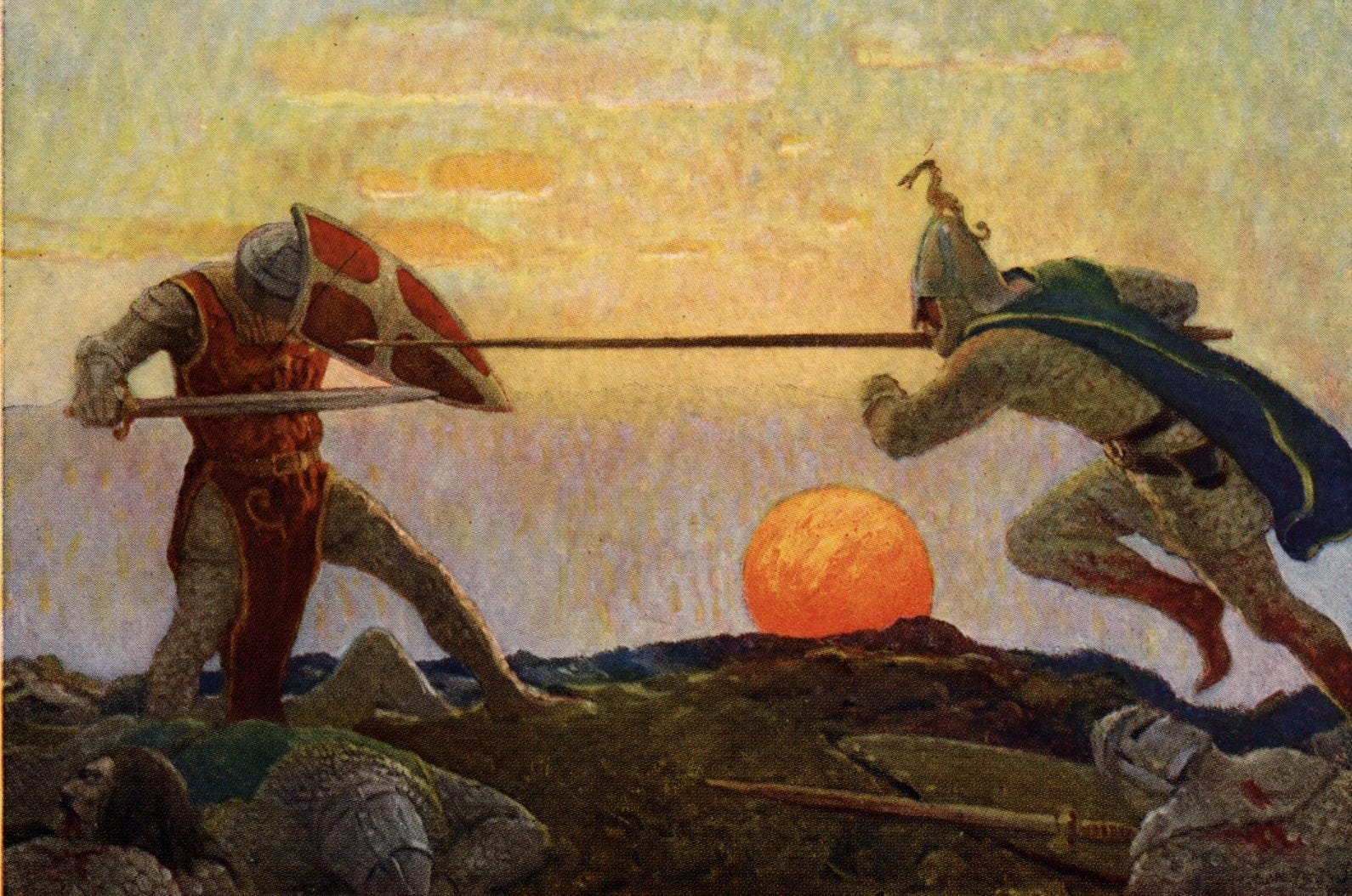
The period before World War I, from the Congress of Vienna in 1815 to the Sarajevo assassination in 1914, experienced ninety-nine years of relative peace across Europe. While not absolute peace—wars did occur—the continent did not suffer a total or widespread conflict like a major war involving all the great powers at once. Instead, the major nations engaged in limited battles, modified borders, resolved disagreements, and prevented the fire spread.
It was peace through balance. And it lasted longer than anything Brussels has produced.
What Historians Call the Concert of Europe
The period from 1815 to 1914 is sometimes referred to as the Concert of Europe, a term used by historians to describe the system of consultation among the great powers that developed after Napoleon’s defeat. However, the statesmen who assembled in Vienna weren’t creating something new; they were formalizing a much older tradition: the European practice of genuine pluralism.
This is what Europe has always been. Competing powers. Shifting coalitions. Nations that knew who they were and pursued their interests openly, sometimes cooperating, sometimes fighting, but never pretending to be one.
When Gustav Vasa liberated Sweden from the Kalmar Union, the German Hansa supported him — not out of sympathy for Swedish independence, but because it aligned with their interests. During the Thirty Years’ War, which threatened to devastate Central Europe, the conflict concluded not with one side’s complete destruction but through the Peace of Westphalia, a negotiated agreement that acknowledged religious and political diversity. Alliances were formed, broken, and reformed, exemplifying the dynamic nature of European politics. The Congress of Vienna provided a diplomatic structure to this longstanding pattern, but it did not create it. Neither did Westphalia. They merely acknowledged what had always existed.
The conflicts during the French Revolution and Napoleon's era demonstrated the consequences of one power attempting to dominate the continent. After twenty-three years of warfare, with millions killed and borders constantly changed, the statesmen who assembled in Vienna after the war reached a clear conclusion: endless war for endless goals leads to endless destruction.
They articulated Europe’s traditional approach: maintaining the balance of power, forming coalitions, and engaging in limited wars aimed at specific objectives.
There was a common understanding among the great powers that specific rules would govern their actions: no single nation should dominate, borders could only be altered through negotiation or limited conflict, and they would consult each other before taking action.
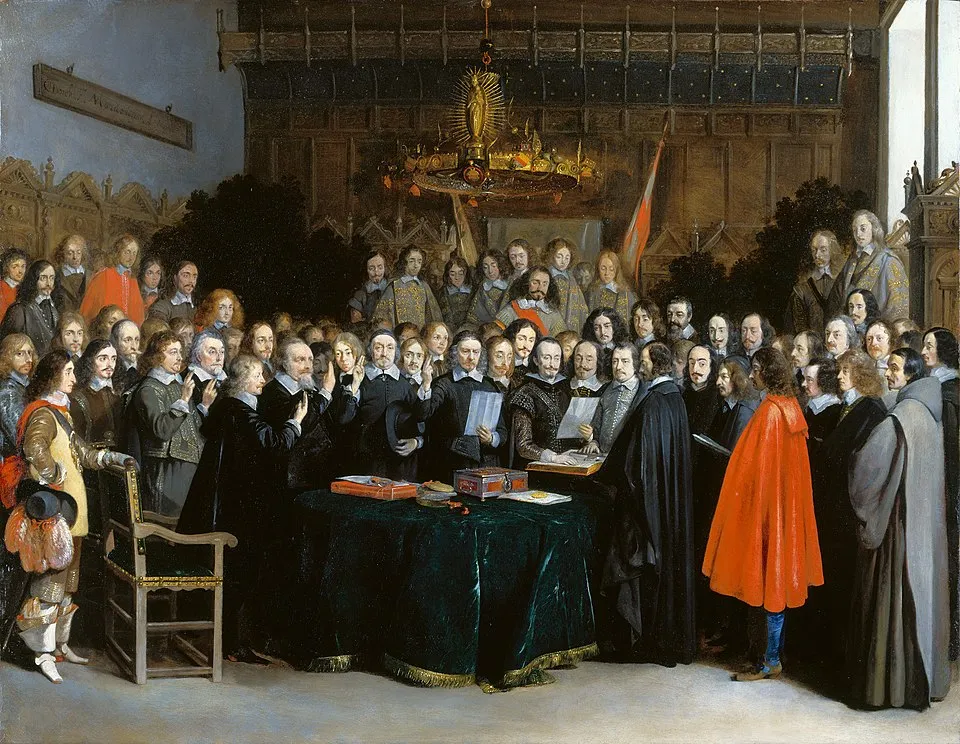
Westfaelischer Friede in Muenster (Gerard Terborch 1648)
This system didn’t aim at preventing all conflict. It managed conflict. And that distinction matters.
The Technology of Limited War
The nineteenth century experienced transformative advances in military technology. Railroads facilitated faster army mobilizations than previously possible. The telegraph allowed for real-time communication across continents. Industrialization led to the creation of highly lethal weapons. Mass conscription resulted in armies growing from tens of thousands to millions.
These changes could have made war more catastrophic. Instead, for most of the century, they made honest pluralism more effective.
Better communication meant diplomats could respond to crises faster. Railroads meant armies could mobilize and demobilize quickly. The very efficiency of industrial-age military power made it easier to achieve limited objectives and then stop.
The Franco-Prussian War of 1870-71 demonstrates this point. Prussia mobilized rapidly, defeated France within months, gained territorial concessions and reparations, then paused. Though Paris fell, France remained a major power. The war was severe but limited in scope. It accomplished Prussian goals — unifying Germany and acquiring Alsace-Lorraine — without dismantling the European order.
Compare this to what came later, and the contrast is stark.
Small Fires Prevent Large Ones
When I studied at the Swedish Defence University, we read Clausewitz and Moltke — the Prussian theorists who understood war as an instrument of policy, not a moral crusade.
Clausewitz’s famous dictum that war is politics by other means contains an insight that modern humanitarians miss: if war is politics, then it has political limits. You fight for objectives. When you achieve them, you stop. War without political limits becomes something else entirely — slaughter for its own sake.
Honest pluralism operated on this logic. Wars happened. The Crimean War, the Wars of Italian Unification, the Austro-Prussian War, the Franco-Prussian War. But these were limited conflicts with limited aims. They adjusted the balance of power without destroying it.
Think of it as controlled burning. Foresters deliberately set small fires to clear underbrush and prevent the accumulation of fuel that leads to catastrophic wildfires. The old European system worked similarly. Small conflicts released pressure, resolved disputes, adjusted borders — and prevented the accumulation of grievances that would eventually explode.
The alternative — suppressing all conflict, demanding perpetual peace, treating any war as unacceptable — doesn’t eliminate the underlying tensions. It just lets them build until they become uncontainable.
This is what EU enthusiasts miss when they celebrate eighty years of peace. The question isn’t whether you’ve prevented war. The question is whether you’ve prevented the conditions that produce catastrophic war. And that requires asking uncomfortable questions about what pressures are building beneath the surface.
How Wilson Broke the System
Between 1914 and 1919, honest pluralism was destroyed. Not just the Vienna framework, but the ancient pattern itself. The destruction came in two phases.
Initially, the war escalated far beyond what the old system could manage. The July Crisis of 1914 was expected to trigger just a small Balkan conflict. As the great powers mobilized, soldiers headed off, anticipating they would return by Christmas. A hundred years of limited conflicts had shown them what war typically entailed: swift, clear-cut, and confined. Nobody anticipated four years of industrial-scale carnage.
Instead, the alliance systems pulled in all the great powers.
But even this catastrophe might have been salvaged. By 1917, all parties were exhausted. The outlines of a negotiated peace were visible — a return to something like the pre-war status quo, with adjustments. Germany had not been invaded. Paris had not fallen. Both sides had bled themselves dry, and both had reason to stop.
This is how European wars used to end. The Thirty Years’ War killed a third of Germany’s population, yet it concluded with the Peace of Westphalia — not total victory, but negotiated coexistence. The Napoleonic Wars, for all their destruction, ended the same way: a defeated France was reintegrated into the European balance of power. World War I should have ended the same way.
Then America entered the war.
Woodrow Wilson didn’t come to restore the balance of power. He came to transcend it. He came with a vision of a world made safe for democracy, a world where the old European games of power politics would be replaced by collective security and international law. He came to end all wars by winning this one so completely that the system which produced it would be destroyed.
It was a revolution in the fundamental logic of warfare.
Under the old system, you fought for limited aims and accepted limited outcomes. You defeated your enemy’s army, extracted concessions, and made peace. Today’s enemy might be tomorrow’s ally. The balance of power made total destruction impractical — try to annihilate one, and the others would intervene.
Wilson rejected this logic entirely. Germany wasn’t just an adversary to be defeated and reintegrated. Germany was a criminal to be punished. The German system had to be destroyed; nothing less than unconditional surrender would suffice.
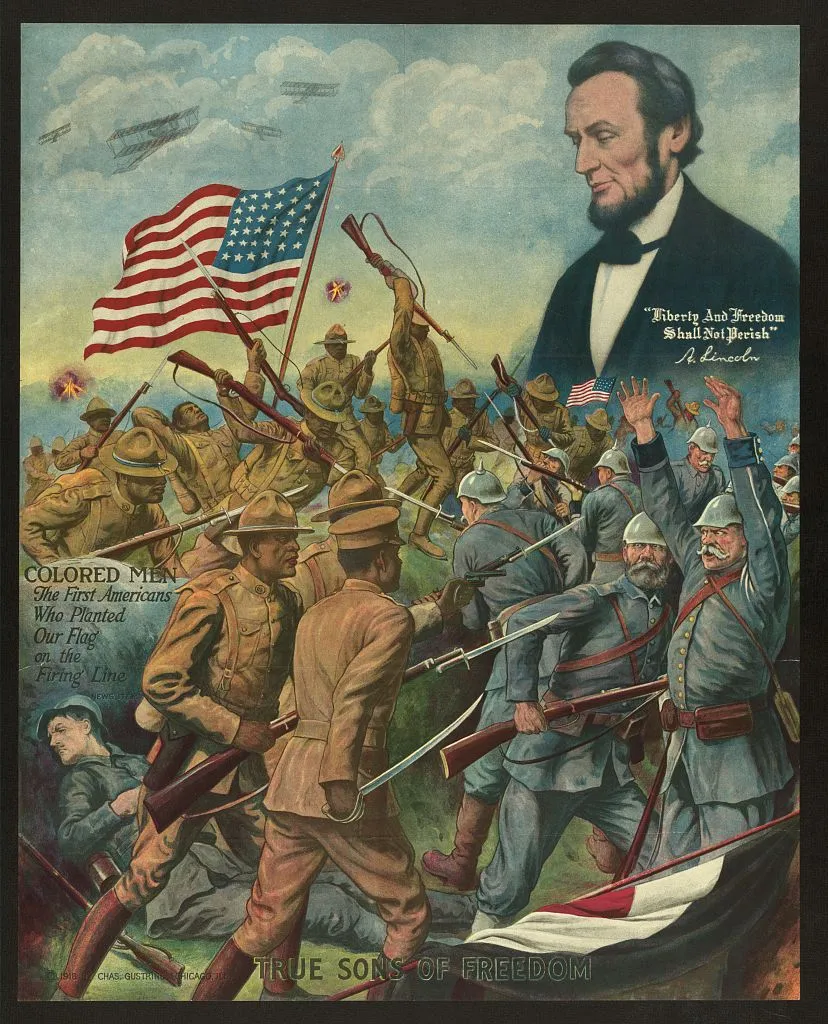
Print shows African American soldiers fighting German soldiers in World War I, and head-and-shoulders portrait of Abraham Lincoln above.
Versailles: Defeat Without Victory
This is the paradox of the Treaty of Versailles: it treated Germany as completely defeated while leaving Germany largely intact.
German armies had not been destroyed. Berlin had not been occupied. The German homeland was essentially untouched — no foreign soldier had set foot on German soil east of the Rhineland. Germans had experienced privation and loss, but not conquest.
Yet the treaty imposed terms appropriate to total defeat: massive territorial losses, crushing reparations, military limitations that reduced Germany to impotence, and above all, Article 231 — the War Guilt Clause, which forced Germany to accept sole responsibility for the war.
This was the worst possible combination. Germany was humiliated but not broken. Germans could see with their own eyes that their country had not been conquered.
Honest pluralism would never have produced this outcome. A negotiated peace in 1917 would have looked something like the settlement after the Franco-Prussian War: territorial adjustments, reparations, but fundamental acceptance that Germany remained a great power with legitimate interests. And everyone could carry on with their lives.
Every German who lived through the 1920s knew two things simultaneously: Germany had not really lost the war, and Germany was being punished as if it had committed a crime. This cognitive dissonance was the seedbed for everything that followed.
The American Interest
Wilson’s idealism was probably real. He might have genuinely believed he was building a better world. But idealism doesn’t preclude identity and interest. And America had interests that aligned perfectly with destroying the old European order.
Before World War I, the great powers of Europe dominated global politics. The British Empire, the French Empire, the German Reich — these were the actors that mattered. America was a rising power, but the world’s power centers were in London, Paris, Berlin, and Vienna. European empires controlled most of the globe.
The war weakened all of them. The peace weakened them further. And the principles Wilson championed — self-determination, democracy, collective security — were perfectly designed to weaken them even more.
Self-determination sounds noble. Every people should have their own state. And in principle, there’s nothing here that contradicts the old European way — borders had always shifted, new nations had always emerged from old empires. That was honest pluralism in action.
But Wilson’s self-determination served a different purpose. Applied to Europe’s eastern empires, it shattered structures that had balanced power for centuries. The Austro-Hungarian Empire broke into a dozen successor states. The Ottoman Empire was carved into mandates. What emerged was a vacuum.
And vacuums get filled. The old European powers had locked up most of the world’s territory and markets. And now those locks starts to brake.
This served American interests beautifully. A Europe of competing great powers had shut America out and now space starts to open up for American expansion.
I’m not suggesting Wilson consciously designed this. He probably believed every word he said. But the alignment between American idealism and American interest is too perfect to ignore. The principles that made Wilson feel righteous also made America dominant.
Decolonization and the Opening of Space
The full implications of Wilson’s revolution didn’t become clear until after World War II, when America actively dismantled the European colonial empires.
Again, the rhetoric was idealistic. Self-determination for all peoples. The end of colonialism. Human rights. The language was impeccable.
But the effect was strategic. Every European colony that became independent was a space that opened for American influence. The British Empire’s retreat from India, from Africa, from everywhere. It was the dissolution of a closed system, a system where European powers had locked up most of the world’s territory and markets.
America didn’t need formal colonies. America needed access — access to markets, to resources, to strategic locations. The European empires blocked that access. Their dissolution removed the barriers.
The Suez Crisis of 1956 made this explicit. When Britain and France, acting like the great powers they still imagined themselves to be, tried to seize the Suez Canal, America sided with Egypt and forced them to withdraw. The message was clear: the age of European power projection was over. These former great powers would operate within boundaries set by Washington.
This is basic power politics where America used idealistic language to pursue strategic interests, just as every great power always has. The difference was that America was stronger than the European powers already tied up in this new order of institution, so American interests could prevail.
The Myth of Institutional Peace
And so we arrive at the European Union, founded on a myth.
The myth says: Europe was cursed by nationalism and power politics. We fought endless wars because we couldn’t transcend our differences. Then, after the catastrophe of World War II, we finally learned our lesson. We embraced the Wilsonian faith that institutions could replace power politics. We integrated. And those institutions gave us peace.
I see this differently.
Europe’s peace since 1945 wasn’t produced by institutions. It was produced by American hegemony, a shared enemy, and the binding of Germany. NATO’s first Secretary General, Lord Ismay, was refreshingly honest about the alliance’s purpose: to keep the Americans in, the Russians out, and the Germans down. The Coal and Steel Community served that third objective — binding German industry so tightly that independent action became impossible.
The European powers didn’t stop fighting because they had transcended power politics. They stopped because they were exhausted, occupied, and constrained.
“Without the EU, we would be at war.” This is stated as obvious truth, used to silence any criticism of European integration. But it inverts the historical record. We had peace before the EU — a longer peace, maintained by different means.
Compare Paris, Berlin, London, or Stockholm today with what they were a century ago. These were the capitals of peoples who knew who they were and acted accordingly. Now they are administrative zones, increasingly unrecognizable to anyone who remembers what they were. No one in their right mind would call these cities peaceful today.
Honest pluralism allowed small fires to prevent large ones. Conflicts happened, pressures were released, and the system survived. The EU suppressed all fires by engineering dependence. The founding logic was stated openly: make nations so intertwined that war becomes impossible. Not unthinkable — impossible.
Here’s what the EU’s defenders never mention: the old system could handle conflict. It had mechanisms for managing disputes, adjusting borders, releasing pressure. The EU has no such mechanisms. It treats any conflict between members as unthinkable, which means it has no way to handle conflicts when they inevitably arise.
The pressure builds. The tensions accumulate. And the institutions designed to prevent conflict have no capacity to manage it.
Honest pluralism understood something the EU has forgotten: peace is not the absence of conflict. Peace is the successful management of conflict. And you cannot manage what you refuse to acknowledge.
The Seed That Was Planted
Versailles planted a seed.
It established that wars must end in total victory or total defeat. That enemies are criminals, not adversaries. The goal is justice in the legal sense, as if nations were defendants in a courtroom. That peace means eliminating the sources of conflict rather than managing them.
This seed grew into World War II, which ended in total defeat, as World War I had not quite achieved. Germany was occupied. Germany was divided. Germany was forced to confront its crimes in a way that went far beyond the terms of Versailles.
And from that confrontation grew something new: a Germany that had internalized its own guilt so completely that it could never again trust itself with power. That may change — but not yet.
That story is the next chapter. But it couldn’t have happened without Versailles. Without Wilson. Without the destruction of honest pluralism and its replacement with a moralized politics that demanded total victory and accepted nothing less.
The peace before the peace was real. It worked.
Arktos Journal survives because readers choose to sustain it. This enables us to take risks on new authors, translate neglected thinkers, and publish work that would never reach you through institutional or commercial frameworks.
We publish work rooted in archaic values, civilizational memory, and long-form thought, and have been doing so since 2009.
The editors do this work pro bono, driven by conviction rather than careerism. If you value independent intellectual production that is willing to publish what others will not, support this project and make its continuation possible.
LATEST OPEN LETTERS
-
03-02TO WORLD LEADERS
-
06-01Standing in Solidarity with the People of Venezuela
-
21-07Freedom
-
20-03Stand up to Trump
-
18-02Average Americans Response
-
23-12Tens of thousands of dead children.......this must stop
-
05-06A Call to Action: Uniting for a Lasting Peace in the Holy Land
-
28-05Concerned world citizen
-
13-02World Peace
-
05-12My scream to the world
VIRTUAL POST OFFICE
PETITIONS
LINKS
DONATION
Latest Blog Articles
-
15-10Our Friday News Analysis | What the World THINKS Now!
-
14-10Our Wednesday News Analysis | Navi Pillay, head of UN commission that accused Israel of genocide, wins Nobel Peace Prize
-
13-10Navi Pillay, head of UN commission that accused Israel of genocide, wins Nobel Peace Prize
-
13-10No state has a ‘right’ to exist – least of all an apartheid, genocidal state like Israel
-
13-10‘By the Way, the World is Not Stopping Us’: The Secret of Israel’s ‘Success’
-
12-10Our Monday News Analysis | What the World THINKS Now!
-
08-10Our Friday News Analysis | What the World THINKS Now!
-
07-10Our Wednesday News Analysis | The West wants Netanyahu gone - so Palestinians can be killed more quietly again
-
06-10The West wants Netanyahu gone - so Palestinians can be killed more quietly again
-
06-10Israel turns Gaza into largest ghetto in modern history, killing residents one after another as three-year genocide continues
-
06-10Analysis Europe's Boycott of Israel Is Rapidly Expanding – and It Won't Be Easy to Stop
Latest Comments
 One of the most important and illuminating articles that I …
Comment by Benjamin Inbaraj-
And what's wrong here?
After all, there is the homeland …
Comment by Isac Boian -
Does this reinforce or deny my argument that Israel is …
Comment by Edward Campbell -
Many 'say' they support the Palestinian cause but do little …
Comment by Philip McFedries -
The UN is strangled by the "war for profit" cabal …
Comment by Philip McFedries -
I can't read the printing on the map.
Comment by Philip McFedries -
Good news!
Comment by Philip McFedries
COMMENTS
This article has 0 comments at this time. We invoke you to participate the discussion and leave your comment below. Share your opinion and let the world know.