 NEWSLETTER
The Monday Edition
The Evangelical Pope | Pathways to Ending Violence
Living Words from John Paul II
Edited by Abraham A. van Kempen
Published January 25, 2026

Each week we let Saint Pope John Paul II share meaningful signposts to spark socio-economic resolves through justice and righteousness combined with mercy and compassion; in short, love.
12 So in everything, do to others what you would have them do to you, for this sums up the Law and the Prophets.
__ Matthew 7: 12 (New International Version)
Reconciliation and Social Justice
El Salvador, 6 de marzo de 1983 | The ongoing violence, which has already claimed countless victims, calls for our immediate and united response. It is vital that we work together to eliminate this suffering and build a safer future for everyone.
Achieving Lasting Change Through Reconciliation
True transformation occurs through Jesus Christ, whose message of humility and reconciliation can unite all—regardless of political, social, economic, or ideological differences—as brothers. Embracing this spirit of unity is essential to overcoming divisions that sustain conflict and violence.
Mechanisms for Social and Economic Inclusion
Building a just society begins with promoting genuine engagement in our economic and social activities. This involves ensuring equal access to the planet's resources and opportunities for personal and collective growth through meaningful work. These principles originate from the Church’s social teachings, emphasizing dignity, solidarity, and the pursuit of the common good.
Commitment to Justice
In this context, a courageous and noble commitment to justice is essential. This dedication lays the groundwork for enduring peace and reconciliation, enabling communities to prosper together rather than remain apart.
Promoting reconciliation involves encouraging open dialogue and mutual respect across society. By hearing others' experiences and viewpoints, we can more effectively tackle the fundamental causes of violence and injustice. This shared effort enhances community bonds and creates a foundation for significant, enduring change.
Educational initiatives and community-led programs play a crucial role in fostering understanding and breaking cycles of retaliation. By investing in awareness campaigns and skill development opportunities, we enable individuals to become agents of change within their communities. These efforts, alongside policy reforms that address structural inequalities, strengthen our commitment to creating a society where justice and reconciliation are prioritized.1
…
The Mission of the Church
Salvador de Bahía, Brasil – 7 de julio de 1980 | In her social teachings, the Church does not endorse any particular political or economic system but offers guidance on life’s principles. This is accomplished through her mission, rooted in the Gospel message. This approach stems from her belief in the dignity of every human being, who is created in God's image.2
Excerpted from:
1. VIAJE APOSTÓLICO A AMÉRICA CENTRAL
…
_________________________
Editor's Note | Two Opposing Views on Current Developments
Today, I plan to mainly focus on the debate about conflicting reports regarding Russia. However, what just happened in Minneapolis now takes priority.
I stand with retired US Major Scott Ritter, our American expert on Russia (see his bio by clicking on his name below). A close friend shares Seymour Hersh's perspectives, who is one of my heroes. Ironically, my friend strongly dislikes Hersh and refuses to read his work.
Nevertheless, my friend and I can still walk through the same door, each with our own opinions. We’ve agreed that at some point in our lives, the truth will come to light. You might find it valuable to compare Scott Ritter's perspectives with those of Seymour Hersh.
…
Tomorrow, my inbox will be filled with questions from around the world with something like, “Is America still the land of milk and honey?”
Alex Pretti (37) worked as a nurse in a hospital in Minneapolis
On Saturday afternoon, protesters gathered at the site where 37-year-old Alex Jeffrey Pretti was shot. CNN reports concerts and sporting events are canceled, and museums and venues will close on Sunday.
Minneapolis remains tense past midnight amid subfreezing temperatures, and protests persist. CNN reports. Governor Tim Walz deploys National Guard and reservists to aid police. Similar protests occur in San Francisco, New York, Washington, and Los Angeles after the shooting. AFP reports President Trump has sent more law enforcement to Minneapolis.

The 37-year-old American man shot by border police during a protest against ICE was an ICU nurse in Minneapolis. His father told AP that Alex Jeffrey Pretti was upset about Minneapolis and ICE. He joined protests because he cared about people.
Eyewitnesses say Pretti was helping another protester when shot. DHS states Pretti approached officers with a gun, threatening a 'bloodbath.' Al Jazeera reports video shows police warning about a firearm, with an officer later confiscating a weapon before shots are fired.
Sources, including the New York Times, which filmed the incident from multiple angles, indicate that Pretti was holding a phone—not a gun—when tackled by Border Patrol agents. He never drew the gun he carried. Footage shows one federal agent removed the gun from Mr. Pretti just before another agent shot him from behind. These videos contradict the Trump administration’s account of the incident.
Kristi Noem, the Secretary of Homeland Security, claimed without evidence that Mr. Pretti had “committed an act of domestic terrorism.” Gregory Bovino, a Border Patrol official, provided his own view: “This appears to be a case where someone aimed to cause maximum harm and attack law enforcement. Mr. Pretti was restrained on the ground when he was shot.’
Americans are now talking about an impending Civil War. Some say they‘re ready.
_________________________
IMPERIAL BOOMERANG
The machinery of terror, perfected on those we abandoned and betrayed, including the Palestinians in Gaza, is ready for us.
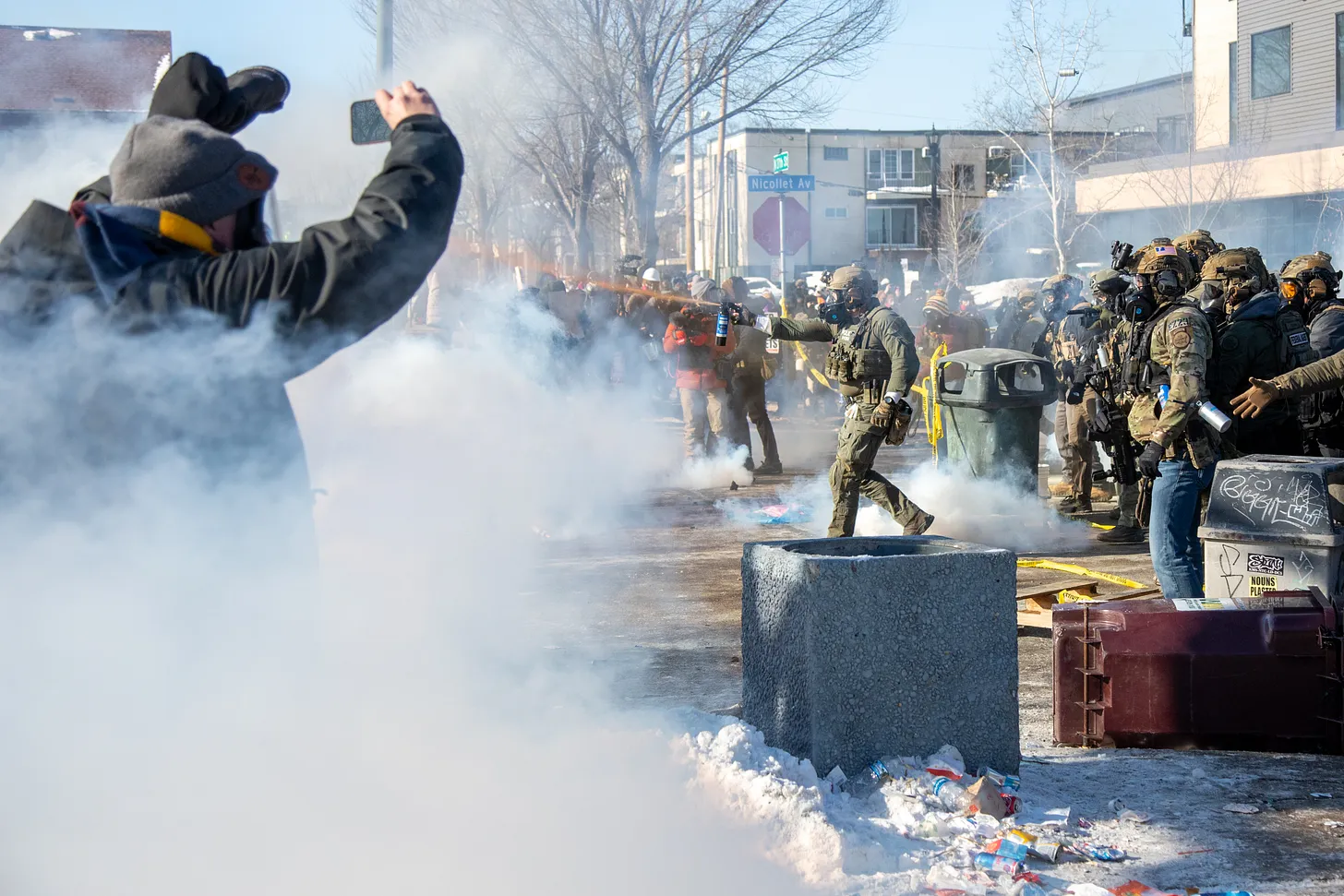
Protesters clash with law enforcement after a federal agent shot and killed a man on January 24 in Minneapolis (Photo by Arthur Maiorella/Anadolu via Getty Images)
By Chris Hedges
Substack.com
25 January 2026
The murders of unarmed civilians on the streets of Minneapolis, including the killing today of the intensive-care nurse Alex Jeffrey Pretti, would not shock Iraqis in Fallujah or Afghans in Helmand province. They have been terrorized by heavily armed American execution squads for decades. It would not surprise any of the students I teach in prison.
Militarized police in poor urban neighborhoods kick down doors without warrants and kill with the same impunity and lack of accountability. What the rest of us are facing now is what Aimé Césaire called the imperial boomerang. Empires, when they decay, employ the savage forms of control on those they subjugate abroad, or those demonized by the wider society in the name of law and order, in the homeland. The tyranny Athens imposed on others, Thucydides noted, it finally imposed on itself with the collapse of Athenian democracy.
But before we became the victims of state terror, we were accomplices.
Before we expressed moral outrage at the indiscriminate taking of innocent lives, we tolerated, and often celebrated, the same Gestapo tactics, as long as they were directed at those who lived in the nations we occupied or poor people of color.
We sowed the wind, now we will reap the whirlwind.
GETTING IT WRONG ON RUSSIA
When a reporter becomes hostage to his sources, the results are little more than weaponized propaganda.
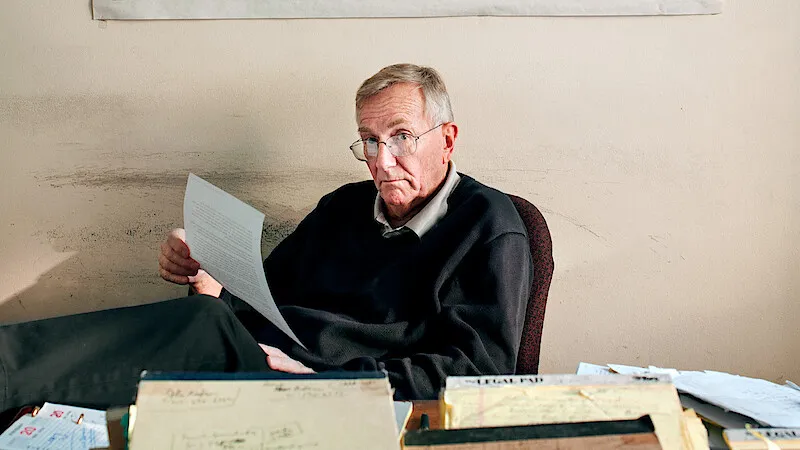
Seymour Hersh in his Washington, DC office
By Scott Ritter
Substack.com
21 January 2026
Seymour Hersh, known as Sy, is a Pulitzer-winning investigative journalist running a popular Substack with around 233,000 subscribers since his first article, “How America Took Out The Nord Stream Pipeline,” in February 2023.
I’ve been a big fan of Sy for 26 years and have called him my friend.
As Sy’s friend, I want to comment on his recent Substack article, “Putin’s Long War.”
Let me set the stage for you.
I interviewed retired Lieutenant General Andrei Ilnitsky, a former senior advisor to Russian Defense Minister Sergei Shoigu. Andrei is composed, rational, and highly intelligent, with deep insights into today’s world. He advocates a form of informational warfare called “Mental War," first discussed in a March 2023 interview with the Russian military journal Arsenal of the Fatherland.
Mental War: Unique Goals
Andrei states that Mental War has unique goals. "While classical wars aim to destroy manpower and cyber wars target infrastructure,” he says, "the new war seeks to undermine self-awareness and change the enemy’s civilizational foundation. I call this 'mental' war."
Andrei emphasizes that while manpower and infrastructure can be rebuilt, the evolution of consciousness is irreversible. The effects of this ‘mental’ war take at least a generation to manifest, making it impossible to fix some issues later.
The U.S. has conducted a coordinated “mental war” against Russia since 2009, when Obama and McFaul promoted the "Russian reset." This policy is largely aimed at regime change under the guise of diplomacy.
The “Russian reset” strategy failed due to its clumsy implementation and the clear lack of effort to hide its true goals. Everyone saw that the Russian opposition was not just a U.S. proxy aiming to overthrow Putin by spreading a false story of systemic corruption, which even the most skeptical Russians disbelieved. Furthermore, when Joe Biden visited Moscow in March 2011, the Obama administration revealed its hidden agenda for Russia to the world.
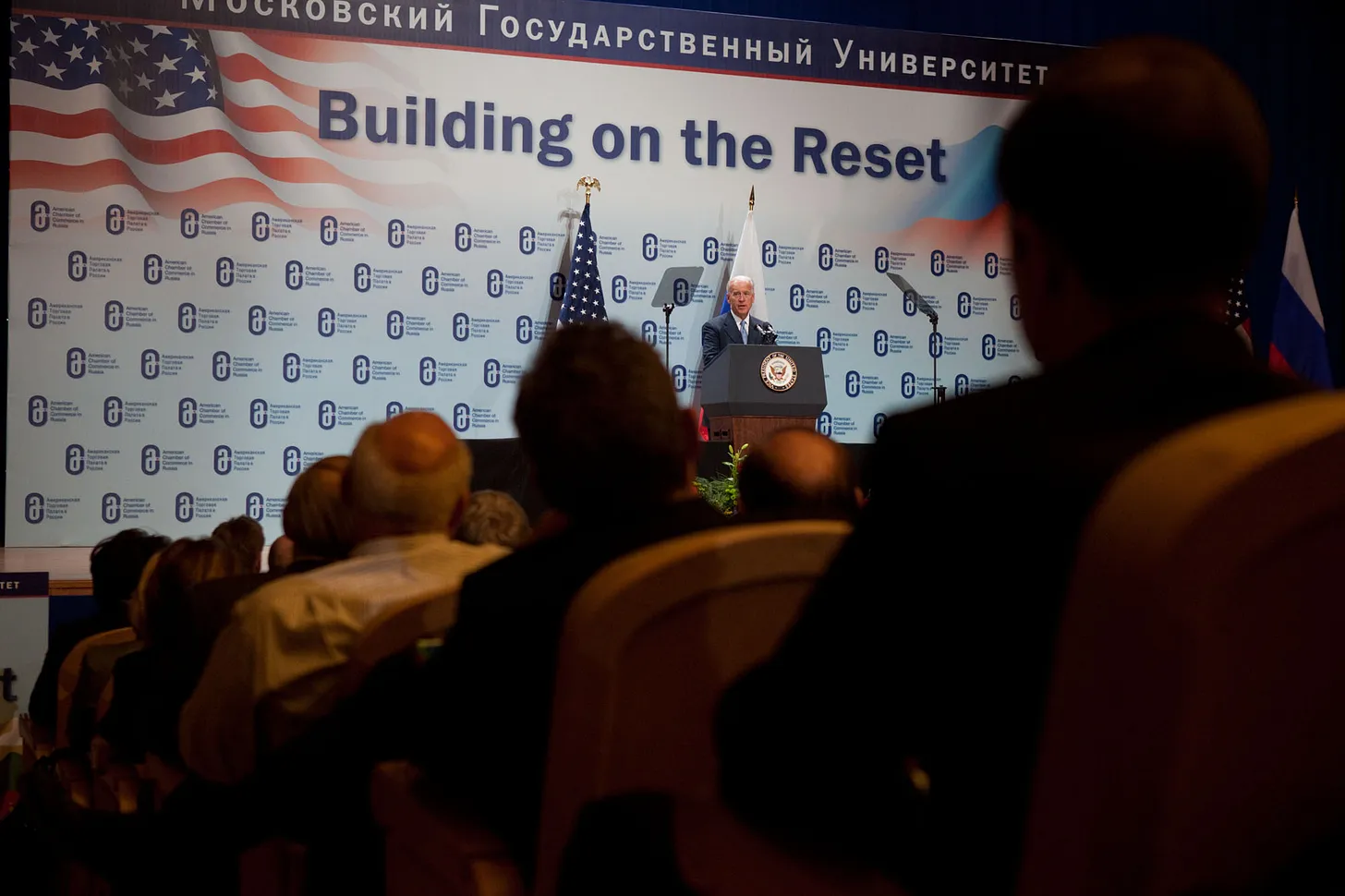
Joe Biden addresses an audience at Moscow State University, March 10, 2011
On March 10, 2011, Biden spoke at Moscow State University about the reset, calling it a vital correction for both nations.
“President Obama and I aimed to create a new start by, as I mentioned in our initial foreign policy speech, pressing the reset button. Our goal was to reset this relationship to benefit both countries and move forward together.”
Understanding that the purpose of the 'mental war” is to undermine self-awareness and reshape the foundational values of the targeted society, Biden’s speech takes on a different tone.
“Consider these statistics or polls," Biden addressed the students gathered there.
"Back in December 2008, just a month before our inauguration as President and Vice President, polls indicated that only 17 percent of Russians viewed the United States positively—just 17 percent!
Fast forward to today, and that figure has risen to over 60 percent.
Our aim is to keep increasing it."
In summary, Biden was coordinating with Russia to gain their support for the Obama administration's goals, creating the impression that most Russians approved of the changes he promoted.
Biden reiterated the focus on market economics that shaped US policy in the 1990s after the Soviet Union's collapse. He stated:
“American venture capital and foreign investments are flowing into Russia to help diversify its economy beyond natural resources like metals, oil, and gas, and to support Russian start-ups in bringing their ideas to market.”
He added:
“Business students know that having an idea is just part of the process; reaching the market requires willingness to take risks, invest, and bet on success.”
Biden was clearly insinuating that America was ready to gamble with Russia.
But there was a catch.
“This is one of the reasons the President and I so strongly support Russia’s accession to the World Trade Organization,” Biden declared.
Accession will allow Russia to strengthen its trade relations not only with the United States but also with the rest of the world. It will provide American companies with a greater and more predictable—an important word—access to Russia’s expanding markets, boosting both US exports and employment.
Then the other shoe dropped.
“I think that’s why so many Russians now call on their country to strengthen its democratic institutions,” Biden said, before listing a series of conditions.
“Courts must be empowered to uphold the rule of law and protect those playing by the rules.”
“Non-governmental watchdogs should be applauded as patriots, not traitors.”
“And viable opposition—and public parties that are able to compete is also essential to good governance,” Biden added.
“Political competition means better candidates, better politics, and most importantly, governments that better represent the will of their people.”
There was more.
“Polls show that most Russians want to choose their national and local leaders in competitive elections.”
Biden again referenced polls, as if these ideas originated from the Russians themselves, rather than from CIA officials who influenced the polls he cited to shape this perception.
“They want to assemble freely, have an independent media, and live in a country that fights corruption.”
Mental War
“That’s democracy,” Biden declared.
“They’re the ingredients of democracy. So I urge all of you students here: Don’t compromise on the basic elements of democracy. You need not make that Faustian bargain.”
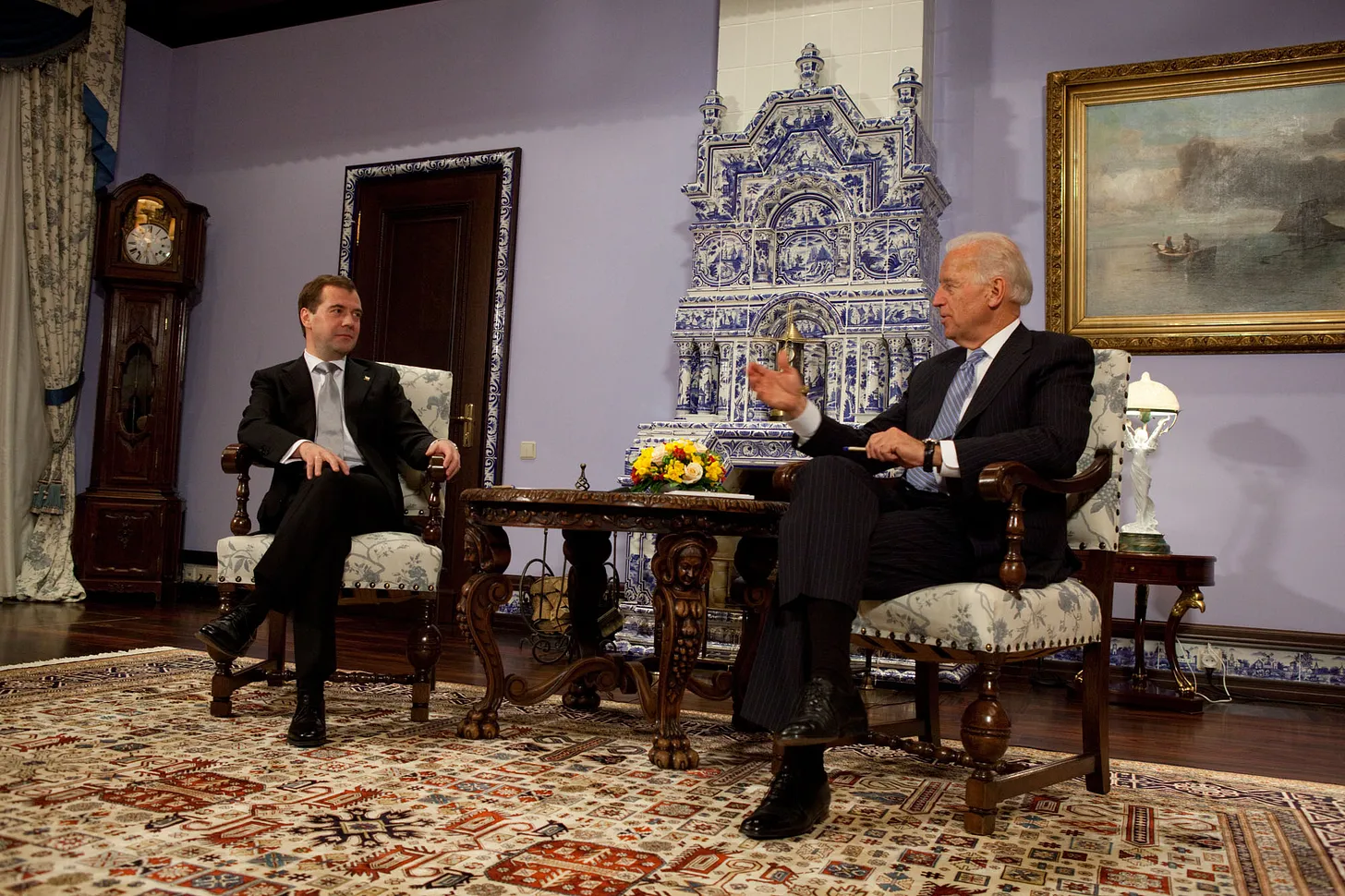
Joe Biden meets with Dmitri Medvedev, March 9, 2011
And again, the audience was told that these were Russian ideas.
“And it’s also the message I heard recently when President Medvedev said last week—and I quote him—‘freedom cannot be postponed’.”
Joe Biden didn’t say that. The President of Russia said that.”
And again.
“And when Deputy Premier and Finance Minister Kudrin said that ‘only fair elections can give the authorities the mandate of trust we need to help implement economic reforms.’
Kudrin is a Russian leader, not an American leader.”
“Russia and America both have a lot to gain if these sentiments are turned into actions,” Biden concluded, “which I am hopeful they will be.”
Biden’s speech can be quickly compared to his later remarks during a private meeting with Russian opposition leaders at the US Ambassador’s Spaso House.
Forget the Russian people's efforts to move towards democracy—the Obama White House publicly opposed a third term for Vladimir Putin, with Biden telling the political opposition that it would be better for Russia if Putin did not run again in the March 2012 elections.
Boris Nemtsov, a key political opposition figure Biden aimed to empower, said Biden claimed that, in Putin’s place, he would not have run for president in 2012, as it would have harmed the country and himself.
A week before Biden’s visit, Nezavisimaya Gazeta, a Moscow daily sympathetic to Russia’s opposition, reported that Biden’s main goal was to pressure Medvedev into seeking re-election, to sideline Putin, who might be offered the IOC presidency as a consolation.
This was the core of Biden’s mission—regime change masked as American diplomacy.
Biden’s mission failed as Vladimir Putin was re-elected in 2012 with 64% of the vote and 65% turnout. In comparison, Barack Obama won in 2008 with 53% and nearly 62% turnout.
Since that time, the United States has aimed to:
- Depose Vladimir Putin
- Destabilize Russian society, and
- Restore Russia to its 1990s state as a defeated nation fully under U.S. control.
The message aligns with Joe Biden's March 2011 statements, highlighting Russia's prosperity depends on integrating into a U.S.-run market economy. A key step for Russia to access U.S. venture capital and expertise is removing Vladimir Putin from leadership.
Which brings us to the issue at hand—Sy Hersh’s latest piece, “Putin’s Long War.”
Sy has long been critical of Russia’s actions in Ukraine.
This, of course, is his prerogative.
And Sy is not a Russophobe—I have known him for over twenty-five years, and I’ve always seen him take a balanced approach when covering issues related to Russia, including its leader, Vladimir Putin.
Sy, a reporter, is often a prisoner of his sources. His instincts are usually correct. In the Netflix documentary Coverup, Sy admits his reliance on unnamed sources. "People talk," he says. Hersh notes the key is to "get out of the way of the story.”
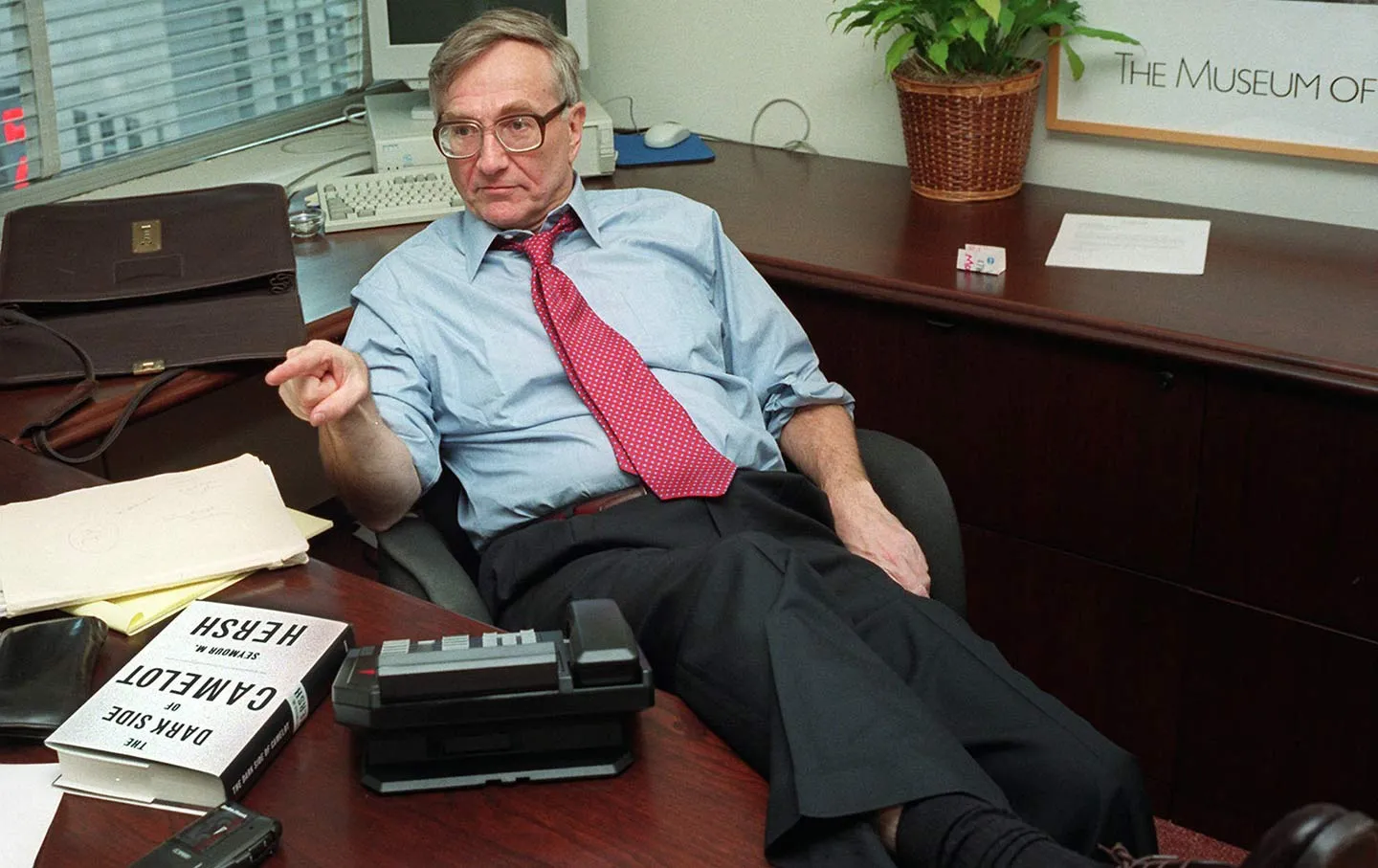
Seymour Hersh and his book, The Dark Side of Camelot
Reporters must sometimes step ahead of a story to keep it from slipping away, as with Sy’s book about JFK, 'The Dark Side of Camelot.' In his first draft, Sy included material from Lawrence X. Cusack Jr., which turned out to be forged. Sy then removed a chapter and edited the rest. Cusack was later convicted of fraud and sentenced to nine years.
Cusack’s fraud was uncovered through Sy Hersh’s diligent verification of documents—an exemplary Pulitzer-worthy journalistic effort.
In his latest article, “Putin’s Long War,” Sy might have improved by steering the narrative and doing some basic fact-checking.
- In my view, Sy’s sources—‘US intelligence officials” with ‘decades of experience in Russian matters’—are giving him false information about Russia, just like Cusack’s documents.
- If your source is a long-standing intelligence official focused on Russia, their career has mainly involved discrediting Russian President Vladimir Putin, who's been in power for over 25 years.
- They were likely involved in the Obama-led "Russian reset” regime-change operation orchestrated by Joe Biden.
- This alone requires maintaining a high level of skepticism when evaluating any information such a source might offer about Russia.
But then there is the “smell test.”
Sy would call me to bounce ideas, some testing sources. Early in the Afghanistan War, he discussed Special Operations missions, describing Delta Force as using “Company,” “Platoon,” and “Squad.”
“Are these direct quotes?” I asked.
Yes, Sy said.
“And your source claims he is with that community?”
Again, Sy responded affirmatively.
“He’s not Delta”, I said of the source.
Delta operators operate within a Squadron, Troop, and Team, and discussions of their operations use such terminology.
Sy pressed the source and uncovered the truth: he was not who he claimed to be.
I just wish Sy had called me about his Russia story.
Not only is the provenance of the claims in the article questionable—the US intelligence community is mostly Russophobes spreading misinformation about Russia and its leader—but the actual data is unbelievable.
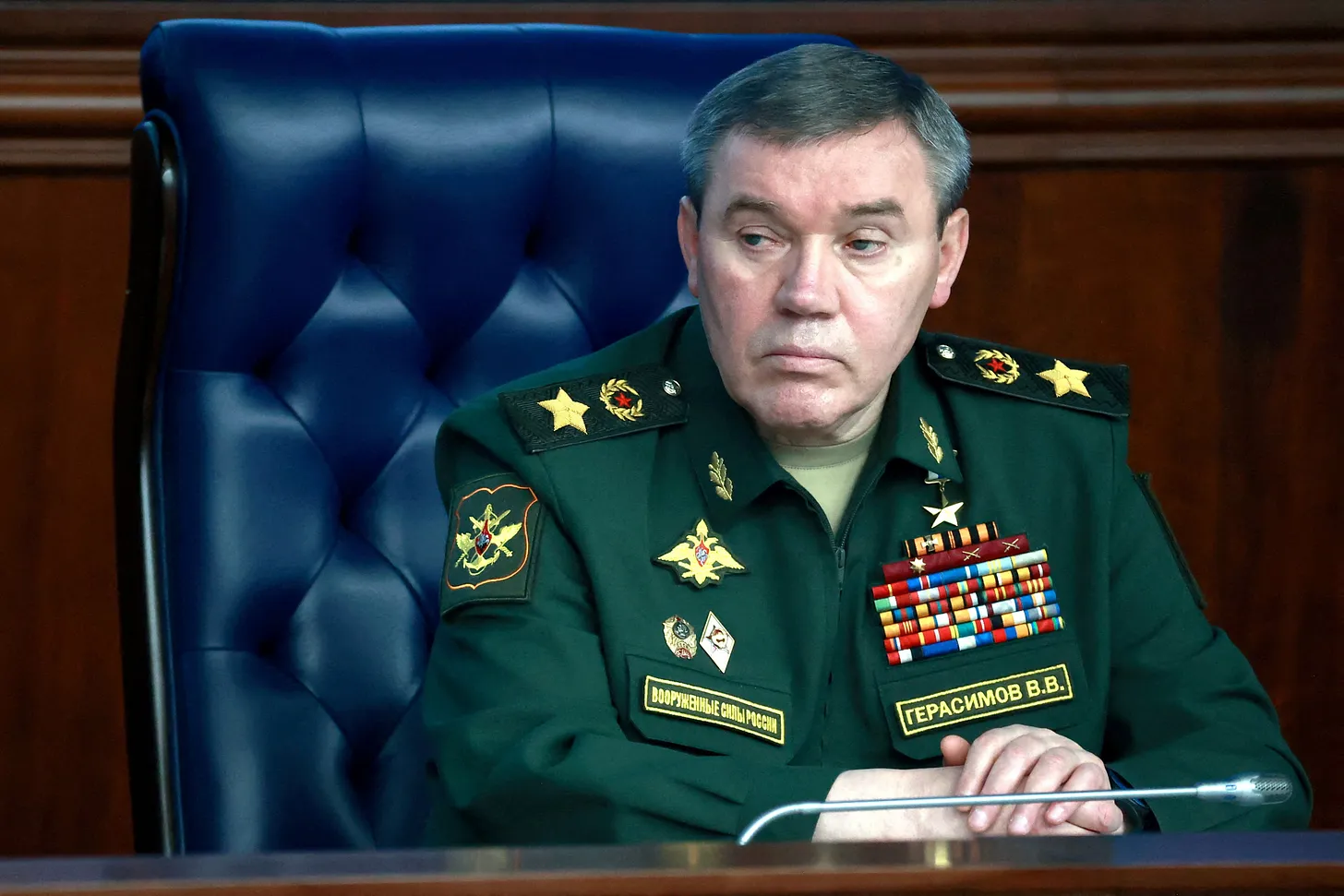
General Valery Gerasimov
Sy, quoting an official, cites Russian Gen. Valery Gerasimov lamenting, “I no longer have an army... my supplies are intermittent. My sergeants and mid-grade officers are deceased, and my rank and file consist of ex-convicts.”
Gerasimov probably never made such a statement. As a top Russian military official and a close adviser to the President, any such claim from him, even if true, would be seen as an act of treason.
Gerasimov's points contradict reality and mirror Ukrainian propaganda, as Sy should have noticed, with Western support, including US intelligence, shaping these narratives for Ukraine.
The Russian military is considered the most deadly fighting force in the world today.
Russian tanks and armored vehicles have demonstrated significantly greater survivability than their Western counterparts.
Russia no longer faces a shortage of artillery barrels, as it now has ample production capacity. The current nature of the war, where drones handle much of the front-line fire support and identify Ukrainian targets for precision strikes, reduces the demand for large-scale firing that previously exhausted Russian artillery barrels in the early stages of the conflict.
The Russian army is one of the most well-equipped forces globally. By rotating troops from the front for rest, refurbishment, and training on the latest techniques, Russia maintains a qualitative edge over Ukraine.
Russian casualties are small compared to Ukrainian military losses, and Russian NCOs and mid-grade officers are thriving rather than dying.
Yes, the Russian army uses convicts, but they represent a small part of the tens of thousands of monthly volunteers.
I don’t know how many times Sy’s source has been to Russia, or whether they've been there since the Special Military Operation began.
I have traveled to Crimea, Kherson, Zaporozhia, Donetsk, and Lugansk five times.
I have conducted interviews with Russian Generals, Colonels, Lieutenant Colonels, Majors, Captains, Lieutenants, and Sergeants.
Men who have served or are presently serving on the front lines.
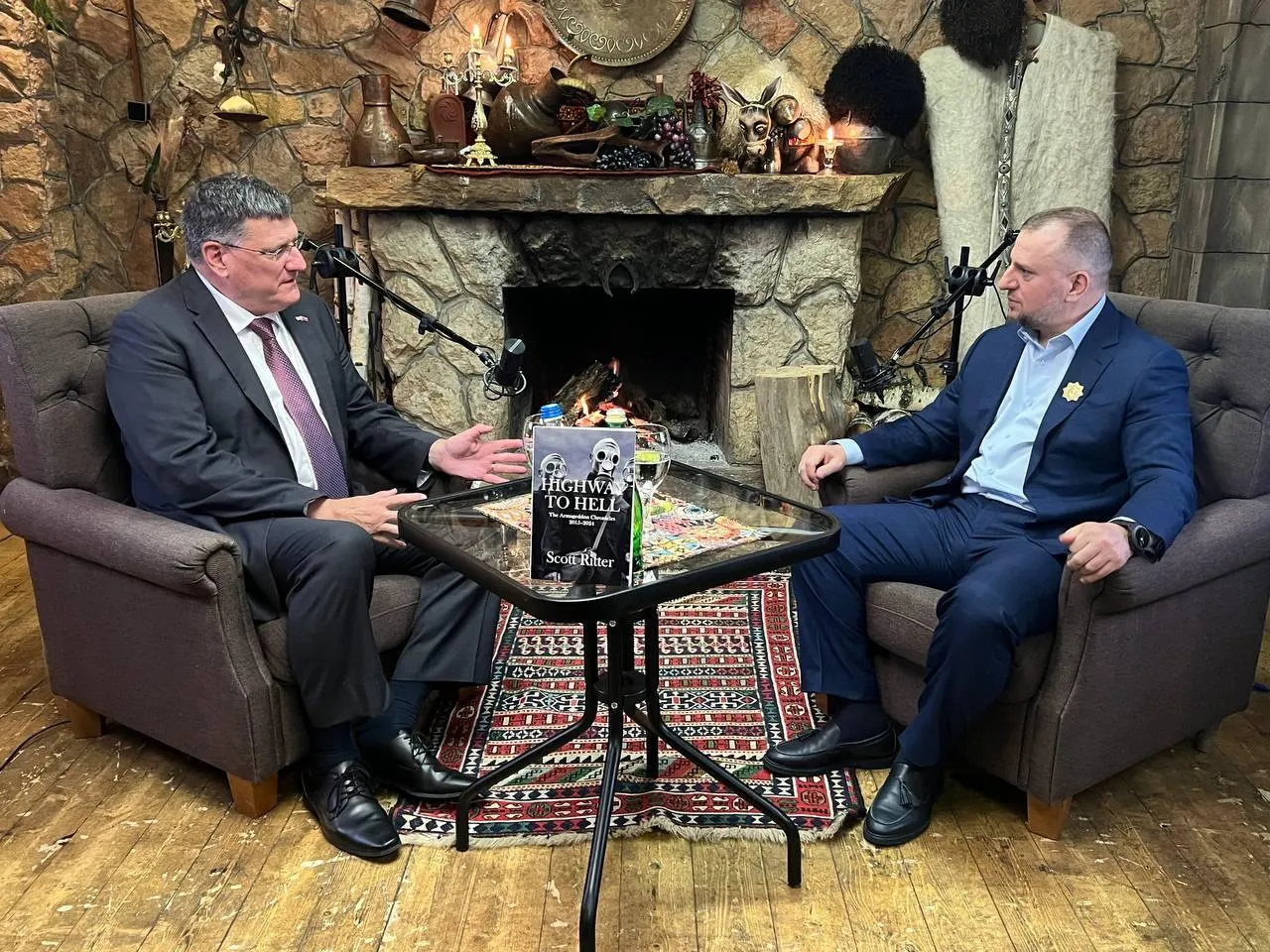
The Author (left) interviewing Lt. Gen. Apti Alaudinov (right), August 2025
I’ve travelled extensively in Russia.
I have spoken with people involved in the Russian economy.
Honestly, nothing Sy’s source states seems credible.
The notion that there exists a credible political opposition to Vladimir Putin aiming to overthrow him is completely absurd.
Furthermore, the fact that Sy relied on the reports of two vehemently anti-Putin activists who are in self-imposed exile from Russia merely emphasizes the inherent limitations of his reporting in this matter.
Alexandra Prokopenko, a minor official in Russian banking, fled Russia after the start of the Special Military Operation. She sought refuge at the Carnegie Russia Eurasia Center in Berlin, led by Alexander Gabuev, overseeing analysts from the now-closed Carnegie Moscow Center. The Kremlin shut down the Moscow Center in 2022, deeming it an “undesirable” organization funded by hostile foreign entities.
Prokopenko and the others continue their openly anti-Russian activities in Berlin today.
Alexander Kolyandr is a Senior Fellow at the Center for European Policy Analysis, a Washington-based institution promoting a trans-Atlantic (NATO) agenda.
Both Prokopenko and Kolyandr are Ukrainian.
They co-author the weekly report, Inside the Russian Economy, which promotes a negative view of Russian economic health. Their latest column, published on January 17 and referenced by Sy, is titled “Russia’s hidden economic weak points: What to watch in 2026.”
Inside the Russian Economy is a feature on The Bell, an independent Russian economic news outlet founded by anti-establishment journalists Irina Malkova, Petr Mironenko, and Elizaveta Osetinskaya, who now work in exile from the San Francisco Bay area.
Sy reports that the article by Prokopenko and Kolyandr from January 17 was “circulating in some government offices in Washington.”
This observation is baseless, attempting to validate a source that lacks credibility regarding Russia's reality and economic performance. Long-distance critics, disconnected physically from Russia and biased to find fault with its economy, do not provide the nuanced, fact-based analysis needed for complex issues. Last November, I spent 19 days in Russia meeting experts on the economy. Their insights reveal what is actually happening economically in Russia, instead of reinforcing Russophobic stereotypes that depict Russia as troubled, with growing disillusionment and resentment, and Vladimir Putin facing rising domestic unrest.
Sy has been writing about the Russia-Ukraine conflict for a while, and I’ve reacted negatively to those articles, especially due to their heavy use of unnamed sources claiming special access to Russian policy questions, yet showing complete ignorance of Russian realities. So, why am I highlighting this article now?
Honestly, I didn't want to do this. Sy is a close friend, and that won't change. However, Sy is being manipulated by US government forces engaged in a “Mental War” against Russia. Usually, one might dismiss this by noting that Russia doesn't respond to Western propaganda, since spreading Russophobic nonsense to a Russophobic audience is like a self-licking ice cream cone—an analysis that exists mainly to justify itself.
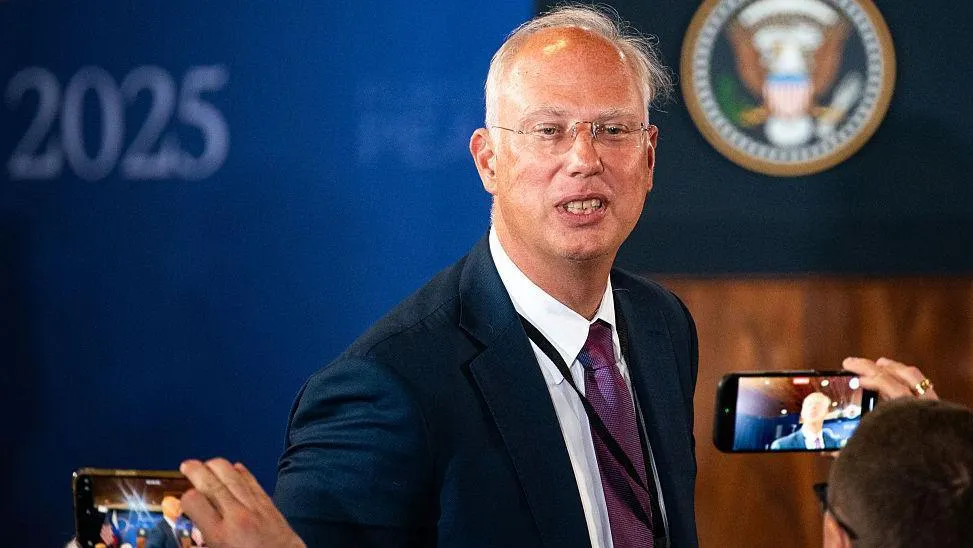
Kirill Dmitriev
Since the 2025 Alaska Summit, Russians' view of Western propaganda has shifted, fueled by the growth of the "Spirit of Alaska." Russian elites now link economic prosperity to ending the Russia-Ukraine conflict, with dialogue between Kirill Dmitriev and Steve Witkoff promoting discussions on Russia's post-war economic gains and rebuilding U.S.-Russia ties.
Dmitriev has unintentionally shaped psychological impressions similar to those Biden aimed to evoke in 2011. Biden praised American venture capitalists for helping diversify the Russian economy, moving it from resource extraction to market activity.
However, the “Spirit of Alaska” economic surge depends on the same condition as Biden’s hope for a brighter Russian future: removing Vladimir Putin from power.
The “Spirit of Alaska” is essentially the Biden regime change policy reinterpreted through the lens of Donald Trump.
The aim isn't to deepen hate among those already opposed to Russia but to persuade Russian society that issues exist and real change requires significant political reform at the top.
This is where Sy Hersh comes in.
He is a Pulitzer Prize-winning investigative journalist respected by Russians, especially after his Nord Stream Pipeline reports.
Sy has credibility in Russia, making his reports well-regarded. When journalist Sy Hersh endorses a story, U.S. 'Mental War” operatives might see it as likely to gain traction in Russia. This could cause societal tensions that hostile foreign agencies like the CIA might exploit.
Sy’s reporting is manipulated by sources aiming to inject ideas into public discourse, creating an echo chamber in the West that fuels resentment, dissent, and opposition in Russia.
Sy has become a tool for regime change in Russia, a role I think he neither actively sought nor believes he is fulfilling.
But as someone experienced in Russian affairs and familiar with US intelligence activities in Russia, I recognize this is exactly what Sy is doing. His sources and handlers connected him for this reporting.
Several Russian experts have contacted me about Sy’s latest article; at least one tried reaching out to Sy directly but failed.
I believe Sy’s new article harms Russia because its report is untrue.
It is harmful to peace because it fosters false hope that Russia is close to economic and political collapse. This encourages Ukrainians and their Western allies to prolong the war, despite Ukraine suffering severe economic and human losses.
This harms journalism by involving poor sourcing and weak analysis.
Most importantly, this situation harms my close friend, Sy Hersh, a journalist known for exposing My Lai and Abu Ghraib scandals, who has contributed to outlets like the New York Times and The New Yorker. He should not be linked to what is clearly propaganda aiming to undermine Russian identity and alter Russian society—essentially, a form of “Mental War.”
Sy Hersh, known for journalistic integrity, should guard his reputation from being exploited in the “Mental War” orchestrated by Washington intelligence operatives against Russia.
By publishing his article “Putin’s Long War”, this has happened.
The Sy Hersh I know and trust, who I consider a friend, would never become a propaganda tool.
I want to alert my friend and hope he acts.
GILBERT DOCTOROW: TRUMP THROUGH RUSSIAN EYES
Judge Andrew Napolitano welcomes Belgian-based Prof. Gilbert Doctorow, an American with a dual residence in Brussels and St. Petersburg.
- The conversation examines Trump’s foreign policy strategy, emphasizing realpolitik and the power struggles among major global players, particularly the U.S., Russia, China, and potentially India.
- It highlights Trump’s efforts to differentiate Russia from China, his use of economic tools, such as tariffs, and the Greenland dispute to influence European policy, and the significance of military bases such as Diego Garcia.
- The analysis also explores the geopolitical contest in the Indian Ocean and the broader effects on alliances and regional interests.

Watch the Video Here (27 minutes, 18 seconds)
Host: Judge Andrew Napolitano
Judging Freedom
21 August 2025
Geopolitical Dynamics: Russia, the United States, and Greenland
Judge Andrew Napolitano opens the Judging Freedom discussion on January 21, 2026, with Gilbert Doctorow, focusing on Russia's attitude toward Greenland amid recent international events and U.S. foreign policy under President Trump.
The Kremlin’s Viewpoint on Greenland
Doctorow notes the Kremlin, including Mr. Putin and Mr. Lavrov, is cautious about Greenland, stating Russia and China have no plans there. Lavrov reaffirmed this at Davos. The Kremlin avoids criticizing U.S. policies on Greenland to avoid offending Trump. Meanwhile, Moscow’s elites are more outspoken, and this contrast is discussed in detail.
Official Statements from Moscow
Dmitri Peskov, President Putin’s spokesperson, said on January 16th that Russia recognizes Greenland as part of Denmark. He noted that Denmark and Greenland say it's not for sale, despite offers from Washington. Peskov called the situation extraordinary under international law, especially given that President Trump has dismissed it as a priority. Russia is monitoring these developments closely.
Nuanced Russian Approach and Trump’s Diplomacy
Russia’s nuanced approach emphasizes adhering to international law as a key goal while avoiding direct criticism of Trump. They seek not to provoke the U.S. President or seem hostile to his Greenland policy. Russian elites think Trump aimed to rebuild U.S.-Russia relations during the Anchorage meeting with Putin, but recognize his domestic opposition from his party and Congress, understanding the challenges he faces.
Views on Trump’s Impact on NATO and the EU
Many Russian experts and parliament members believe Trump aims to weaken NATO and the EU from within, a view also noted by Doctorow. Early in Trump’s 2025 presidency, Russians nicknamed him the “American Gorbachev”—not as praise but as a warning of potential backlash. Over the past year, they have become more accepting of his destructive tactics, seeing strategic intent in his actions, particularly in undermining Europe and U.S. politics.
European Reactions and Criticism
A senior UK Labour member criticized Trump in the House, saying he behaves like a gangster, endangering NATO and threatening tariffs unless Greenland is sold to the U.S. The MP claimed Trump undermines European economies and security, with only Putin and Xi Jinping backing him. The speech stressed the need for a strong response to Trump’s bullying.
Trump’s Response to European Leaders
Trump used the Greenland situation to express honest opinions about European leaders, criticizing Keir Starmer and President Macron. He points to Diego Garcia's transfer as a sign of weak leadership and worsening relations. Despite personal attacks, Trump stays unfazed and resilient amid criticism.
Russian Intelligence and Global Tensions
The discussion suggests Russian intelligence aided Iran in countering Western efforts, including targeting opposition Starlink receivers. Russian electronic warfare reportedly identified and neutralized these operatives. The question remains whether the Kremlin will retaliate against the U.S. for the CIA’s alleged role in attacks on Putin’s residence. It is believed Trump was unaware of these actions and is committed to better U.S.-Russia relations, though some agencies may act independently.
Trump’s Grand Strategy: Realpolitik and Global Power Sharing
Trump aims to restore relations with Russia as part of a broader strategy outlined in December. This strategy envisions a power-sharing framework among the U.S., China, and Russia, possibly with India as a fourth. Trump prefers to keep Russia and China separate, seeing them as equals, and prioritizes U.S. dominance in the Western Hemisphere. Influenced by Kissinger's realpolitik, this approach shapes Trump’s foreign policy.
Economic Pressures and the Greenland Question
Trump’s tariffs and threats on Greenland are seen as temporary tactics to pressure Europe into concessions. Doctorow suggests a settlement is likely, especially if Denmark considers selling Greenland for financial gains. However, this could increase European discontent with NATO, leading to potential shifts in alliance structures.
The Diego Garcia Issue and Its Implications
Trump uses Diego Garcia’s transfer to highlight the risks of long-term leases versus ownership, drawing on his real estate experience. The transfer is strategic, as the base is vital to U.S. operations in the Indian Ocean and East Africa. Removing native populations for military use raises concerns for Americans and Greenlanders, echoing fears about U.S. ownership of Greenland.
Geopolitical Contest for Influence
The area around Diego Garcia is disputed between China and India due to its strategic value. The U.S. closed a major Seychelles outpost due to costs, which is now used for diplomatic functions. While not obvious to Americans, these changes are significant for the interests of Europeans, Africans, and Indians.
Conclusion
The conversation ends with Judge Napolitano thanking Gilbert Doctorow for his insights. Later today, Judging Freedom will feature various guests and topics, announced beforehand.
These interconnected issues highlight ongoing shifts in the global landscape, challenging alliances and reevaluating power structures. As the U.S. navigates its relationships and advances its goals, these changes affect international institutions, causing uncertainty and realignments.
These shifting dynamics highlight the complexity of modern international relations, where economic interests, territorial disputes, and military sites intersect with diplomatic networks. The changing landscape requires careful policy tweaks by the involved countries, as actions in one area can quickly ripple effects on others. Flexibility and open communication will be vital as the global balance adapts to new realities.
PUTIN’S LONG WAR
Russia’s war against Ukraine has now lasted longer than its war with Nazi Germany, and its economy is suffering the consequences
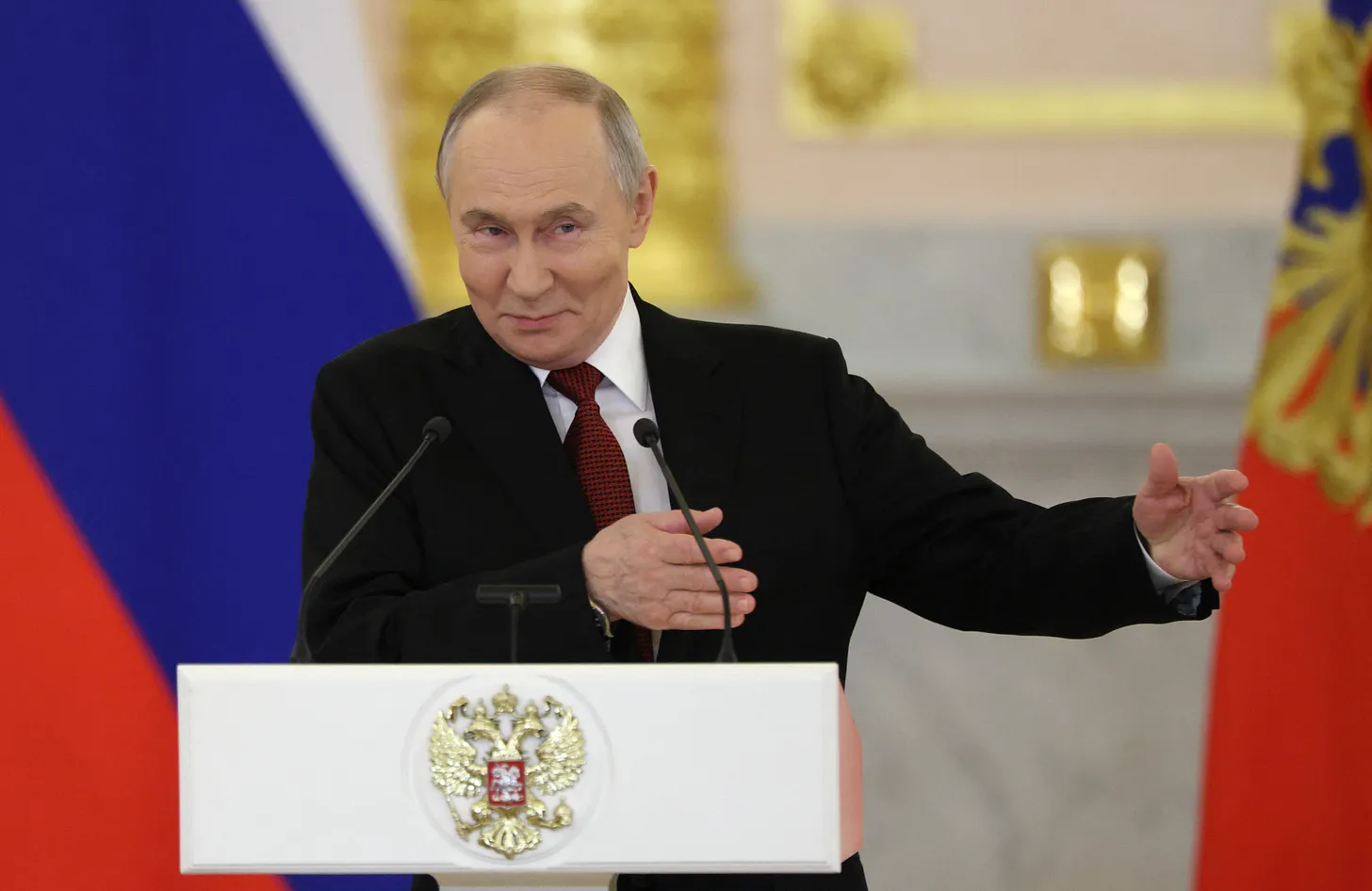
Russian President Vladimir Putin attends a ceremony to receive letters of credence from newly appointed foreign ambassadors at the Grand Kremlin Palace in Moscow on January 15. / Photo by Ramil Sitdikov/POOL/AFP via Getty Images.
By Seymour Hersh
Substack.com
20 January 2026
In parts of the US intelligence community, there is increasing despair and anger over Vladimir Putin’s refusal to consider ending the war in Ukraine. The Russian leader faces severe economic difficulties at home and is dismissing his impatient senior military leaders—what is his goal in doing so?
Businesses are struggling, and stores are shutting down, partly due to international sanctions against Russia. In Washington, there is speculation about a potential leadership change. US intelligence officials, who previously regarded Putin with cautious respect for his cleverness and readiness to use force to cling to power, are now questioning why he persists in a war that might cause economic turmoil and pave the way for new leadership.
An experienced US official, with decades of involvement in Russian matters, remains both puzzled and frustrated by Putin’s decision last fall to decline an American proposal. This proposal, which had been approved by President Donald Trump but was strongly opposed by Ukraine, would have allowed Russia to take control of Ukrainian territory gained through fierce fighting. “As of January,” he explained, “Russia’s conflict with Ukraine will have exceeded the duration of their war with Germany. In 1945, they were in Berlin; by 2026, they may not even control Donetsk,” a Ukrainian eastern province with a sizable Russian-speaking population sharing a border with Russia.
Today, the official stated that "Putin is facing growing domestic unrest. More Russians oppose the war than support it." He added that "the army's respect is declining, national oil and gas revenues have fallen by 22 percent, and there is no capacity to borrow internationally to fund the Ukraine conflict."
“Putin knows the ghost in the Kremlin closet,” he said, “is revolution.” The official quoted General Valery Gerasimov, the Russian chief of staff: “I no longer have an army. My tanks and armored vehicles are junk, my artillery barrels are worn out. My supplies are intermittent. My sergeants and mid-grade officers are dead, and my rank-and-file soldiers are ex-convicts.”
Having reported on U.S.-Russia tensions for many years, I am aware of occasional soldier-to-soldier exchanges between top American and Russian generals. However, I have never been allowed to quote a senior Russian general on a sensitive issue before. An American official explained that this situation is different because Putin acknowledged that the military campaign against Ukraine was stalled early last year and then adopted a new strategy. This strategy aims to cause death and destruction among civilians, which he believes will lead to despair, suffering, and lowered morale. Consequently, the Ukrainian people might be compelled to accept a settlement favorable to Russia: the surrender of their army and the dominance of their government. Ukraine would then regain its imperial status, with Putin aiming to join the ranks of Peter and Catherine, whose tumultuous marriage marked Russia’s Golden Age in the 18th century.
The official stated, “It has not and will not succeed. As history repeats itself with Guernica, London, and Gaza City, the opposite has occurred. Ukrainians are fighting with increased intensity and determination.
The West has reached similar conclusions and aims to weaken Putin’s resolve. Rather than military action, it employs economic sanctions that impact both elites and the general population. These measures are effective—their standard of living is declining quickly due to rising taxes, isolation, and casualties. Disillusionment and resentment are mounting. Last weekend, Russia disabled cell phone use and mobile internet nationwide.
Last week, a report titled “Inside the Russian Economy” circulated among some government offices in Washington. The report was authored by Alekandra Prokopenko, a Carnegie Russia Eurasia Center fellow who worked at the Central Bank of Russia from 2017 to 2022, and Alexander Kolyandr, a former Wall Street Journal reporter and vice president at Credit Suisse, now affiliated with the Center for European Policy Analysis. They contend that claims of a manageable Russian economy, stable banking system, and controlled unemployment and budget deficit are merely a “façade” that hides growing “structural tensions.” These include the weakening of “buffers that had until recently been easing the economy wartime challenges.” The report concludes that if there is any future thaw with the West, Russia is unlikely to be an attractive place for firms to invest or establish manufacturing.
The core message here is straightforward: Putin is increasingly embroiling his country and his presidency in a cycle of violence that continues to intensify.
The ongoing conflict between Russia and Ukraine has no winners, only many losers in both countries. Although there was much talk during his tenure about resolving the war quickly, Donald Trump appears to be preoccupied with other matters.
DAVOS 2026: SPECIAL ADDRESS BY MARK CARNEY, PRIME MINISTER OF CANADA
20 January 2026

Watch the Video Here (33 minutes, 10 seconds)
Prime Minister Carney emphasized the end of the rules-based international order and outlined how Canada was adapting by building strategic autonomy while maintaining values like human rights and sovereignty.
The Canadian PM called for middle powers, such as his own, to work together to counter the rise of hard power and the great power rivalry, in order to build a more cooperative, resilient world.
Thank you very much, Larry. I'm going to start in French, and then I'll switch back to English.
[The following is translated from French]
Thank you, Larry. It is both a pleasure and a duty to be with you tonight in this pivotal moment that Canada and the world are going through.
Today, I will talk about a rupture in the world order, the end of a pleasant fiction, and the beginning of a harsh reality, where geopolitics, the large, main power, is submitted to no limits, no constraints.
On the other hand, I would like to tell you that the other countries, especially intermediate powers like Canada, are not powerless. They have the capacity to build a new order that encompasses our values, such as respect for human rights, sustainable development, solidarity, sovereignty, and territorial integrity of the various states.
The power of the less powerful starts with honesty.
LATEST OPEN LETTERS
-
03-02TO WORLD LEADERS
-
06-01Standing in Solidarity with the People of Venezuela
-
21-07Freedom
-
20-03Stand up to Trump
-
18-02Average Americans Response
-
23-12Tens of thousands of dead children.......this must stop
-
05-06A Call to Action: Uniting for a Lasting Peace in the Holy Land
-
28-05Concerned world citizen
-
13-02World Peace
-
05-12My scream to the world
VIRTUAL POST OFFICE
PETITIONS
LINKS
DONATION
Latest Blog Articles
-
15-10Our Friday News Analysis | What the World THINKS Now!
-
14-10Our Wednesday News Analysis | Navi Pillay, head of UN commission that accused Israel of genocide, wins Nobel Peace Prize
-
13-10Navi Pillay, head of UN commission that accused Israel of genocide, wins Nobel Peace Prize
-
13-10No state has a ‘right’ to exist – least of all an apartheid, genocidal state like Israel
-
13-10‘By the Way, the World is Not Stopping Us’: The Secret of Israel’s ‘Success’
-
12-10Our Monday News Analysis | What the World THINKS Now!
-
08-10Our Friday News Analysis | What the World THINKS Now!
-
07-10Our Wednesday News Analysis | The West wants Netanyahu gone - so Palestinians can be killed more quietly again
-
06-10The West wants Netanyahu gone - so Palestinians can be killed more quietly again
-
06-10Israel turns Gaza into largest ghetto in modern history, killing residents one after another as three-year genocide continues
-
06-10Analysis Europe's Boycott of Israel Is Rapidly Expanding – and It Won't Be Easy to Stop
Latest Comments
 One of the most important and illuminating articles that I …
Comment by Benjamin Inbaraj-
And what's wrong here?
After all, there is the homeland …
Comment by Isac Boian -
Does this reinforce or deny my argument that Israel is …
Comment by Edward Campbell -
Many 'say' they support the Palestinian cause but do little …
Comment by Philip McFedries -
The UN is strangled by the "war for profit" cabal …
Comment by Philip McFedries -
I can't read the printing on the map.
Comment by Philip McFedries -
Good news!
Comment by Philip McFedries
COMMENTS
This article has 0 comments at this time. We invoke you to participate the discussion and leave your comment below. Share your opinion and let the world know.