 NEWSLETTER
The Monday Edition
The Evangelical Pope | Navigating With a Guiding Hand
Living Words from John Paul II
Edited by Abraham A. van Kempen
Published Sunday, January 11, 2026
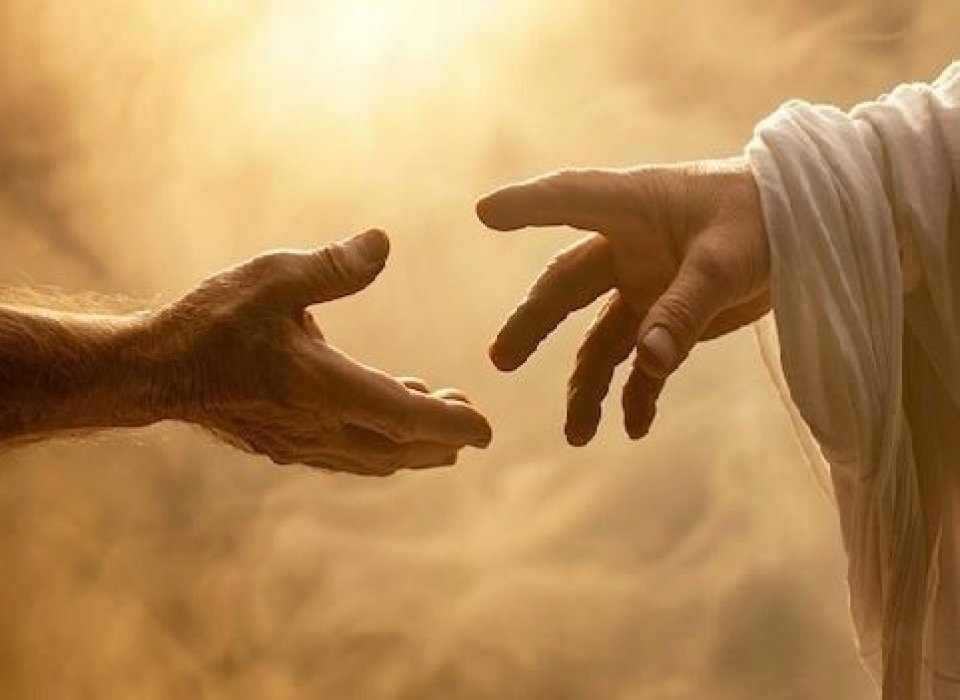
Each week we let Saint Pope John Paul II share meaningful signposts to spark socio-economic resolves through justice and righteousness combined with mercy and compassion; in short, love.
64 The earth is filled with your love, LORD;
teach me your decrees.
__ Psalm 119: 64 (New International Version)
Caracas, Venezuela – 11 February 1996 | I am truly touched by the warm and friendly reception you extended to me. Meeting with such a large and lively group was one of the highlights of my trip to Venezuela, as it gave me direct contact with the youth—the future, the hope, and the driving force of this country and the Americas. I sincerely appreciate your kind words and send my heartfelt greetings to everyone.
Saint Pope John Paul II’s Meeting with the Youth of Venezuela (February 1996)
During his visit to Venezuela in February 1996, Saint Pope John Paul II delivered a heartfelt message to the youth, emphasizing themes central to his papal ministry and his vision for young people worldwide.
The Pope’s Core Message
Saint Pope John Paul II’s heartfelt message to the youth of Venezuela was an invitation to hold onto hope, take responsibility with confidence, and get involved in shaping a society rooted in Christian values. He inspired young people to be brave advocates of their faith, to chase after truth and justice, and to make a positive difference in their communities and across the nation.
Key Elements of His Message
- Hope and Optimism: The Pope inspired Venezuelan youth to stay hopeful, even during tough times, gently reminding them that their energy and dreams are key to shaping the country's bright future.
- Responsibility and Commitment: He encouraged young people to embrace their responsibility for their lives and caring for others, highlighting that genuine freedom is tied to the commitment to serve.
- Promotion of Social Justice: The Pope urged for increased solidarity with the poor and marginalized, urging both the government and citizens to collaborate in tackling inequality and advancing social justice. He emphasized the Church’s dedication to enhancing the dignity of all individuals.
- Strengthening Family and Moral Values: He emphasized the importance of family as the cornerstone of society and urged Venezuelans to maintain moral and spiritual values, particularly when confronting secular influences.
- Faith as a Guiding Light: John Paul II reminded us that having a strong faith in Christ can give us purpose and guidance. It can help young people navigate the tough challenges of today's world.
- Building a Just Society: He urged young people to become agents of change by advocating for justice, peace, and solidarity, while rejecting violence, corruption, and indifference.
- Appeal for Peace and Unity: Pope John Paul II urged all Venezuelans to come together, regardless of their differences, emphasizing the importance of dialogue and reconciliation to build a peaceful, harmonious society.
Saint Pope John Paul II’s message to Venezuelan youth in 1996 was a powerful appeal to become protagonists of their own destiny, rooted in faith, hope, and love. His words continue to resonate as an invitation for all young people to actively shape a more just and compassionate world.
- To the seminarians, novices, and aspirants to religious life, I want to tell you that you represent great hope for the Church in Venezuela; I encourage you to respond generously to the Lord's call.
- To university students, I urge you to build a solid foundation to help build a renewed Venezuela.
- To those serving in the Armed Forces, I encourage you to defend patriotic values that promote peace, justice, and the common good, following the example of Christ, Prince of Peace.
- I send my symbolic embrace to all: young workers and the unemployed, indigenous people, Afro-descendants, farmers, and those suffering in body or spirit.
- All of you are equally the hope of Venezuela.
The time has come to bid you farewell, after having spent two days among you as a pilgrim of hope. These have been moments of spiritual joy and encounters filled with mutual affection, which have filled me with joy and confidence in the future of the Church in Venezuela and in the life of this national community.
Therefore, my first words are of gratitude to the President of the Republic for the kind gestures shown to me. This gratitude also extends to the various authorities who have so diligently attended to the aspects that have made the different events possible.
Although my stay this time has been limited to Guanare and Caracas, I have nevertheless kept all the sons and daughters of this nation in my thoughts. From my first encounter with the inmates at the Catia Detention Center to the one I had just moments ago with the young people at the Olympic Stadium in University City, I have felt your sincere welcome, experiencing that you carry the Pope in your hearts, just as I carry you all in mine.
I leave with the hope that Venezuela, with God's help and the tireless efforts of its people, has a brighter future ahead.
May God bless Venezuela! May God bless all the sons and daughters of this noble people!
Excerpted from:
VIAJE APOSTÓLICO A GUATEMALA,
NICARAGUA, EL SALVADOR Y VENEZUELA
DISCURSO DEL SANTO PADRE JUAN PABLO II
A LOS JÓVENES EN LA AVENIDA LOS PRÓCERES
Caracas, domingo 11 de febrero de 1996
LIVING IN A MULTIPOLAR WORLD
John J. Mearsheimer: The Return of Great-Power Politics | Horizons Interview
Professor John Mearsheimer discusses his views on economic interdependence, conflict zones, and U.S. foreign policy. He contends that economic connections do not prevent or provoke wars, pointing out vulnerabilities in global supply chains. Mearsheimer highlights key international flashpoints, especially in East Asia and Europe. Despite ongoing domestic polarization, he believes U.S. foreign policy will largely remain rational, notably in relation to China. The analysis also examines Trump’s approach to Ukraine, which Mearsheimer considers irrational, and emphasizes the importance of developing new strategies in a multipolar world.

Watch the Video Here (49 Minutes, 05 Seconds)
By John J. Mearsheimer
Substack.com
8 January 2026
On December 22, 2025, I was interviewed by Vuk Jeremić, editor of Horizons magazine, at the Center for International Relations and Sustainable Development (CIRSD) in Belgrade.
Our discussion primarily focused on the shift from a unipolar world—characterized by a single great power and a lack of great-power security competition—to a more perilous multipolar world with three major powers engaging in intense rivalry.
Table of Contents
2:16 - 5:49 Unipolarity ends, multipolar competition returns
5:49 - 8:46 Trump 2.0
8:46 - 13:46 Russia-China alignment
13:46 - 18:16 Europe | US umbrella weakens
18:16 - 24:33 Middle powers hedging?
24:33 - 29:39 Global institutions
29:39 - 34:48 Does trade prevent war?
34:48 - 40:26 Where a hot war could erupt by accident?
40:26 - 45:07 Can the US still act rationally abroad?
45:07 - 48:36 Trump and Ukraine?
48:36 – 49:05 Closing remarks
Interview with Professor John J. Mearsheimer: The Return of Great Power Competition and the Future of International Order
It is a rare honor to present a scholar whose ideas have not only influenced academic discussions but have also deeply impacted how policymakers, journalists, and the public worldwide view power, conflict, and the tragic patterns of international politics. John J. Mearsheimer stands out as one of the most significant political scientists today and is widely regarded as the foremost voice of structural realism in international relations. Over the years, Professor Mearsheimer has challenged comforting misconceptions about global affairs, asserting—often against popular opinion—that great powers are driven not by goodwill or moral goals but by fear, competition, and an unceasing quest for security. His views have sparked debate, provoked controversy, and demanded attention.
He is the R. Wendell Harrison Distinguished Service Professor at the University of Chicago, where he has mentored many students to think critically and often provocatively about global politics. His works, including "The Tragedy of Great Power Politics," "The Israel Lobby and U.S. Foreign Policy," and "The Great Delusion," are considered modern classics, translated into many languages and discussed worldwide. Professor Mearsheimer stands out not just for his precise and disciplined thinking but also for his intellectual courage. He often speaks difficult truths that others hesitate to acknowledge, warning early about strategic mistakes and their consequences. Whether one agrees with him or not, engaging with his ideas is crucial for a serious understanding of international affairs.
Thank you very much, Professor John Mearsheimer. It's a great privilege to welcome you back as our guest.
The End of Unipolarity and the Return of Multipolar Competition
Professor Mearsheimer was asked about how the current global security competition compares to his longstanding predictions. He said that from roughly 1992, after the Soviet Union's collapse and the end of the Cold War, until about 2017, the world was unipolar, with the United States as the dominant power. During this time, security rivalry among great powers was minimal. He noted that it was inevitable that new great powers would emerge, and by 2017, both China and Russia had risen to that status. This marked the shift to a multipolar world and the resurgence of great-power competition.
Many believed that peace among the great powers would persist even after unipolarity ended, but Mearsheimer disagreed, warning that China's rise would trigger intense security competition, particularly in East Asia. He also argued for a long time that expanding Western influence into Ukraine would provoke conflict with Russia, a forecast he feels has been confirmed by events since 2014. The current conflict in Ukraine and the renewed rivalry between the West and Russia demonstrate these dynamics.
U.S. Foreign Policy: From Liberal Hegemony to Realist Competition
The discussion shifted to how U.S. foreign policy changed under Donald Trump, moving from efforts to shape the world in America’s image to a more transactional, interest-driven approach. Mearsheimer dismissed the idea that this signifies isolationism or a retreat from global leadership. Instead, he explained that the change was due to structural shifts in the international system—from unipolarity to multipolarity—and the failure of liberal hegemony, which had led the U.S. into costly and unpopular wars. With the emergence of new great powers, the U.S. has refocused on great power rivalry, moving away from its previous goal of promoting liberal democracy.
The Russia-China Strategic Alignment
Mearsheimer discussed the intensifying alliance between Russia and China, which he views as a strategic mistake for the U.S. He believes that in a three-power system, it makes strategic sense for the U.S. to improve relations with Russia to avoid a unified Sino-Russian front. He noted that Trump recognizes this and aims to end the Ukraine war and strengthen ties with Moscow, similar to Nixon and Kissinger's 1972 opening to China. Nevertheless, Mearsheimer doubts success will be achieved soon, citing deep-seated Russophobia in the West and mutual mistrust between Russia and the U.S. Consequently, he predicts that the Russia-China alliance will likely persist for the foreseeable future.
Europe and the Weakening American Security Umbrella
As the U.S. shifts focus toward the Asia-Pacific and Latin America, European leaders are considering strategic autonomy. Mearsheimer warned against viewing Europe as a single political entity, emphasizing its composition of many sovereign nations. The security provided by NATO and the European Union has served as a unifying force for Europe. However, as this security diminishes, he predicts greater division among European countries and ongoing strained relations with Russia, especially following the Ukraine conflict. He anticipates internal disagreements within Europe over Russia, which Moscow is likely to exploit.
Middle Powers and Strategic Hedging
Addressing the emergence of assertive middle powers such as Brazil, India, Saudi Arabia, and Turkey, Mearsheimer noted that these nations generally prefer to hedge their bets rather than commit fully to either the U.S. or China. Nonetheless, security threats often outweigh economic interests if national survival is at risk. For instance, East Asian countries may continue economic relations with China but align with the U.S. in times of threat. He examined specific cases: Brazil, constrained by the Monroe Doctrine; India, currently hedging due to U.S. pressure concerning relations with Russia; and Middle Eastern countries, which are likely to favor the U.S., although this stance could shift as China’s influence expands.
The Future of International Institutions
Mearsheimer discussed the challenges faced by international bodies such as the UN and the WTO, noting that these institutions mirror the current balance of power. As the world becomes more multipolar, it will be harder for great powers to cooperate within these institutions. Instead, he predicts the rise of “bounded orders”—blocs led by the U.S. and China, each with their own institutions—similar to the Cold War period. He argues that this trend is undermining the global international order and increasing rivalry among major powers.
Economic Interdependence and Security
Regarding whether economic interdependence prevents war, Mearsheimer dismissed the idea, noting that interdependence did not prevent World War I. He stated that economic connections neither lead to conflict nor ensure peace. Nowadays, economic interdependence exposes vulnerabilities, exemplified by U.S. dependence on Chinese rare earths. Efforts to cut this reliance are challenging, and supply chains now serve as leverage in rivalries among great powers.
Potential Flashpoints for Conflict
Mearsheimer pointed out several regions where accidental wars could occur. In East Asia, he highlighted Taiwan, the South China Sea, and the East China Sea as volatile zones, mainly due to disputes involving China, the US, or its allies. In Europe, he warned that even if the Ukraine conflict ceases, the danger of renewed conflict remains. He also identified the Arctic, Baltic Sea, Kaliningrad, Belarus, Moldova, and the Black Sea as additional hotspots for potential conflict between Russia and Western nations.
Can the United States Still Act Rationally Abroad?
Mearsheimer discussed how deep domestic polarization influences U.S. foreign policy, noting that while states typically act rationally, there are exceptions. He pointed out that, despite political differences, there is broad agreement within the U.S. foreign policy community on great power competition, particularly regarding China. He believes that structural factors and strategic needs will keep U.S. actions rational, even though debates over tactics may persist. While recognizing that theories have their limits and cannot explain every situation, he anticipates ongoing rationality in U.S. foreign policy toward China.
Trump’s Approach to Ukraine
The discussion ended with a review of Trump’s strategy regarding the Ukraine conflict. Mearsheimer called U.S. policy toward Ukraine irrational, especially because it brings Russia closer to China. He suggested that Trump aims to correct this mistake, though he faces major challenges due to Western anti-Russian feelings. He explained that U.S. policy is rooted in the unipolar era, but the world has now become multipolar, demanding a new strategy. It is uncertain if Trump will be able to change the current course.
Conclusion
Professor John Mearsheimer remains a leading figure in strategic thinking, recognized for his insightful analysis of complex international developments and structural forces. The discussion showcased his unique perspective and highlighted the enduring importance of his ideas for understanding the evolving dynamics of global politics.
His analysis highlights how domestic politics and international strategies interact, indicating that internal divisions influence—but do not entirely dictate—major powers' foreign policies. Mearsheimer’s emphasis on structural realism offers a valuable framework for analyzing both individual state actions and the broader trends that occur during geopolitical shifts. As the global distribution of power evolves, his insights continue to be highly relevant for policymakers, scholars, and observers.
Given these insights, Mearsheimer’s work remains a key reference in international relations debates. His focus on the persistent nature of power politics highlights that changes in alliances and strategic interests tend to be more influential than economic or ideological factors. This view promotes a realistic approach to assessing global issues, prompting policymakers to recognize both the constraints and opportunities within the international system.
LATEST OPEN LETTERS
-
03-02TO WORLD LEADERS
-
06-01Standing in Solidarity with the People of Venezuela
-
21-07Freedom
-
20-03Stand up to Trump
-
18-02Average Americans Response
-
23-12Tens of thousands of dead children.......this must stop
-
05-06A Call to Action: Uniting for a Lasting Peace in the Holy Land
-
28-05Concerned world citizen
-
13-02World Peace
-
05-12My scream to the world
VIRTUAL POST OFFICE
PETITIONS
LINKS
DONATION
Latest Blog Articles
-
15-10Our Friday News Analysis | What the World THINKS Now!
-
14-10Our Wednesday News Analysis | Navi Pillay, head of UN commission that accused Israel of genocide, wins Nobel Peace Prize
-
13-10Navi Pillay, head of UN commission that accused Israel of genocide, wins Nobel Peace Prize
-
13-10No state has a ‘right’ to exist – least of all an apartheid, genocidal state like Israel
-
13-10‘By the Way, the World is Not Stopping Us’: The Secret of Israel’s ‘Success’
-
12-10Our Monday News Analysis | What the World THINKS Now!
-
08-10Our Friday News Analysis | What the World THINKS Now!
-
07-10Our Wednesday News Analysis | The West wants Netanyahu gone - so Palestinians can be killed more quietly again
-
06-10The West wants Netanyahu gone - so Palestinians can be killed more quietly again
-
06-10Israel turns Gaza into largest ghetto in modern history, killing residents one after another as three-year genocide continues
-
06-10Analysis Europe's Boycott of Israel Is Rapidly Expanding – and It Won't Be Easy to Stop
Latest Comments
 One of the most important and illuminating articles that I …
Comment by Benjamin Inbaraj-
And what's wrong here?
After all, there is the homeland …
Comment by Isac Boian -
Does this reinforce or deny my argument that Israel is …
Comment by Edward Campbell -
Many 'say' they support the Palestinian cause but do little …
Comment by Philip McFedries -
The UN is strangled by the "war for profit" cabal …
Comment by Philip McFedries -
I can't read the printing on the map.
Comment by Philip McFedries -
Good news!
Comment by Philip McFedries
COMMENTS
This article has 0 comments at this time. We invoke you to participate the discussion and leave your comment below. Share your opinion and let the world know.