 NEWSLETTER
The Friday Edition
Our Friday News Analysis | What the World THINKS Now!
Bridging Differences to Get to Know the OTHER and One ANOTHER (Part 19)
The Hague, 27 November 2026 | If you know of a decisive story, tell the world! We're still searching.
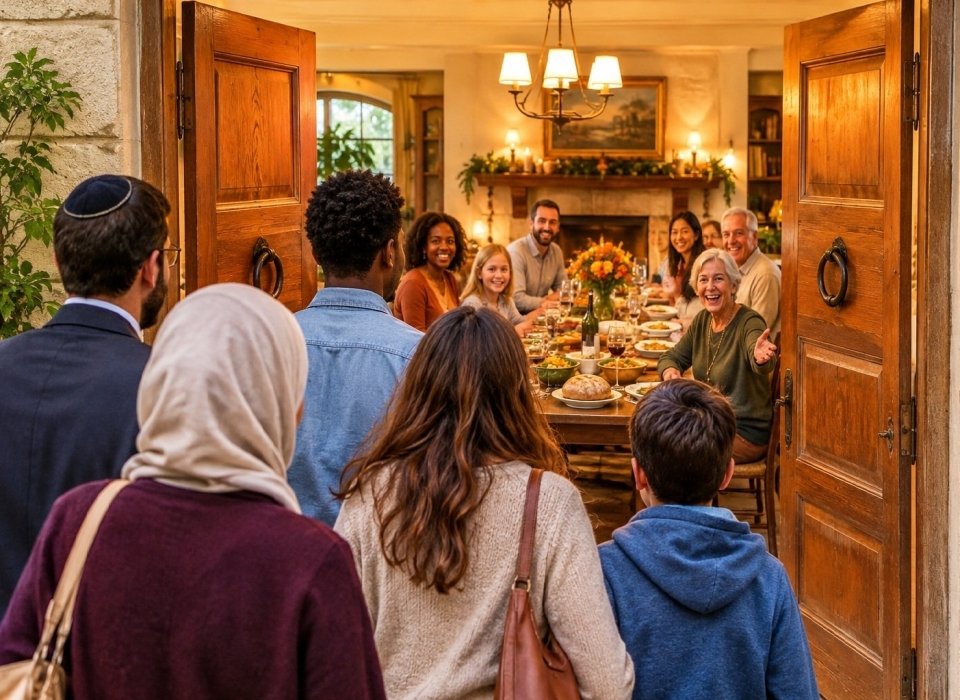
Healing our broken humanity begins when we walk through the same door, side by side, and remain kind about everything we disagree on.
One door, and every head bowed low,
No chin held high, no walls to show;
The proud lay down what they could not hold,
The wounded rest, and the weary grow bold
In my enemy’s face, the face of God I know;
Side by side, in the lantern glow,
We enter as one, and humbly go.
FROM THE BRIDGE | Walking Through One Door Dignifying Differences
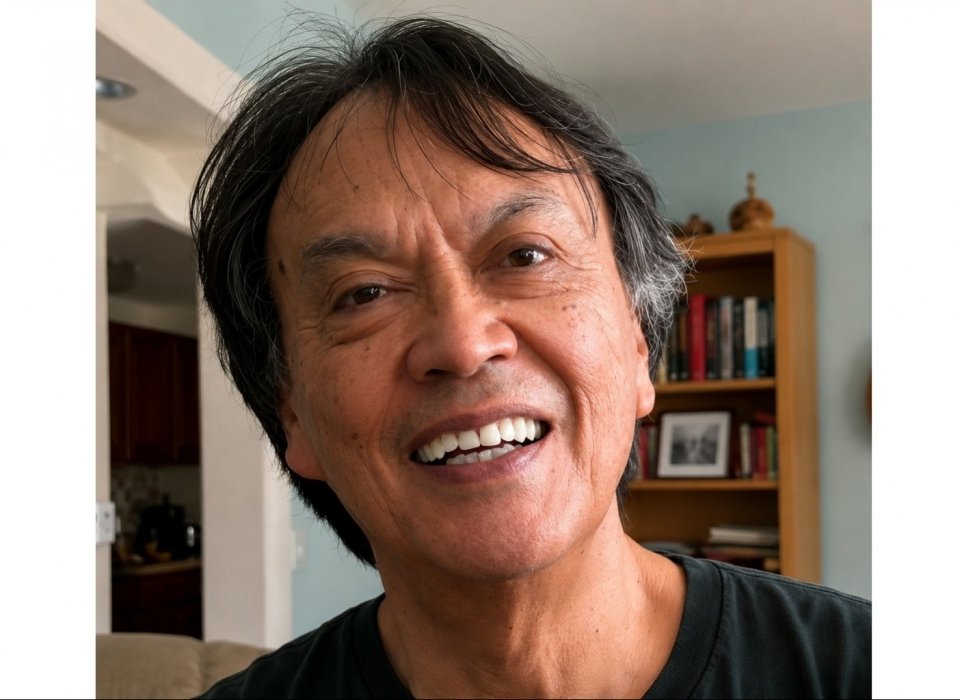
By Abraham A. van Kempen
Founder and Chairman
27 November 2026
One Door, Many Paths: A Thanksgiving Letter to a Broken and Beautiful World
It’s Thanksgiving evening. The windows are fogged with the warmth of too many people gathered in a small room. Someone is carving, someone is laughing, and someone is quietly noticing the empty chair. Somewhere between the gravy and the second helpings, you feel that familiar tension at the table: an uncle who sees the world one way, a cousin who sees it another, and you, caring deeply about them both while feeling worn down by the quiet conflict.
I want to talk with you about that table, and a door.
The Door We Keep Arguing About
There’s an old, simple image I can’t seem to shake: people from every background walking together through one door. To me, it represents shared humility, mutual empathy, and a willingness to act together. I’ve also learned to be honest about what it means. The door doesn’t ask us to become the same. It’s a threshold, not a mold. We pass through carrying our own histories, prayers, scars, and stubborn, beloved opinions.
Unity Is Everyone Staying In The Room.
Unity is not everyone saying the same thing. Unity is everyone staying in the room.
That’s the first contradiction I’d like to gently bring into view. We long for oneness, yet worry it might swallow us. We hope for peace, yet fear it could mean silence. True unity is about walking side by side, rooted in a shared commitment to compassion, truth, and caring for one another. Enforced uniformity, by contrast, asks everyone to think, believe, and heal in exactly the same way, silencing the very voices that most need to be heard.
The Wound Underneath the Argument
At the heart of so many of our disagreements is something older and more tender: pain. In Healing Our Broken Humanity, Graham Hill and Grace Ji-Sun Kim write that lament is “a demonstrative, strong and corporate expression of grief, pain, sorrow and regret,” and that lament and repentance “deal with issues of the heart” and “pave the way for outer change.”
One South African voice praising the book reflects on growing up in a country where racism, nationalism, and misogyny were enshrined in law, and on the firsthand experience of being dehumanized. This voice also reminds us that such experiences aren’t unique to South Africa; many people around the world share them. The resurgence of racism, nationalism, and white supremacy is a wake-up call for us all.
Here is the second contradiction: we’re asked to give thanks in a world that is still grieving. I once thought I had to choose between gratitude and lament, between the feast and the funeral. I don’t believe that anymore. The most honest thanksgiving I know comes with a lump in the throat. We can be grateful for the bread and still weep for the empty bowls. Gratitude without lament can become denial; lament without gratitude can become despair. Together, they can open a doorway.
The Low Doorframe – Bowing in the Same Direction
Here’s something I’ve noticed about doors: the best ones sit just a little lower than our pride. You can’t sweep through with your chin held high; instead, you bow your head ever so slightly, and something softens in that small gesture. Humility is the doorframe that gently shows us how to enter.
Humility isn’t weakness, and it doesn’t mean pretending I have no convictions. It’s the quiet acknowledgment that I don’t hold the whole truth in my hands, that I’ve been wrong before, and that the person across the table may see a part of the picture I can’t. It means saying, “Tell me more,” and truly meaning it. It means saying, “I am sorry,” without adding a “but.”
And humility works both ways. It asks those who have been hurt to hold on to their dignity without turning to contempt, and those who caused the hurt to set aside their defenses and truly listen. Neither side can stand tall alone. Both must bow their heads—and in doing so, they may discover they’re bowing in the same direction.
The lowest bow opens the widest door.
Grace for the Ones Who Will Not Listen
And now comes the most challenging part. Healing can be difficult, especially when those who have caused harm aren’t ready to hear about it. They may resist the stories of those who were hurt, hoping the world will understand their reasons and move on without fully facing the sorrow. South Africa’s Truth and Reconciliation Commission called for this kind of acknowledgment, and even there, it was painful to see some people refuse to take responsibility for the harm they caused.
So what can we do at the table when someone isn’t ready to hear us? I don’t have a simple answer, but I do hold this conviction: we can keep the door open while acknowledging the hurt. Collective accountability means moving beyond old habits of blame, pride, and isolation. It means first agreeing on the foundations of dignity and justice, then working through our surface disagreements together. It means speaking the truth with care and offering grace without setting justice aside.
“Even in the face of my enemy, I might see the face of God.”
This is where my faith asks the most of me: to believe that even in the face of my enemy, I can see the face of God. Not because the harm was small, but because the person who caused it still carries a dignity no wrong can erase. If I bow low enough beneath that doorframe, I may find the one I feared standing beside me, and in their eyes, a glimpse of the divine.
Let’s go through the door together so no one gets left behind.
What We Can Do This Week
- Start by listening. Give someone the space to finish their story before you think about how to respond. Take time to grieve together before moving into an argument.
- Practice humility by saying “I might be wrong,” “I am sorry,” and “thank you” a little more often—even when it feels uncomfortable. And as you pass through a doorway, remember to bow your head just a little.
- Name the pain out loud. Practice the small, brave art of lament, in your family, your church, your neighborhood.
- Honor the many paths. Faith, philosophy, politics, and personal history may bring each of us to the door by a different road. Let them.
- Let’s reject the idea that any culture is superior. Every person has equal worth, and every culture deserves equal respect. Any story that suggests otherwise is an idol we can work together to tear down.
- Turn reflection into action by gathering a small group to read together and put what you learn into practice on Monday morning.
- Look for the face of God in the face of an enemy. When you encounter someone you struggle to forgive or understand, pause to notice the dignity they carry. Even in the face of an enemy, we can see the face of God.
A Seat for Everyone
When the pie is cut and the candles burn low, I picture a door standing open at the end of the hallway, its light spilling across the floor like warm honey. Through it come the grieving and the grateful, the certain and the doubtful, the weary elders and the restless young. Each person is unique, and everyone is welcome. We carry our differences like lanterns, lighting the way rather than wielding them as weapons. Even the one I once called my enemy has a seat at that table, and in their face I hope to see the face of God.
That is my hope for this Thanksgiving and every day that follows: that we become a people who heal by walking together, disagree without dehumanizing one another, and give thanks—not because the world is whole, but because we are finally brave enough to help mend it.
I don’t offer any of this as someone who has it all figured out. I share it as a fellow guest at the table; still learning, still bowing my head beneath the low doorframe, and truly grateful to have you here walking through it with me.
With gratitude, and with a seat saved for you,
Abraham
Happy Thanksgiving.
BUILDING THE BRIDGE! | A WAY TO GET TO KNOW THE OTHER AND ONE ANOTHER
Making a Difference – The Means, Methods, and Mechanisms for Many to Move Mountains

Photo Credit: Abraham A. van Kempen, our home away from home on the Dead Sea
By Abraham A. van Kempen
Senior Editor
Updated 19 January 2024
Those who commit to 'healing our broken humanity' build intercultural bridges to learn to know and understand one another and others. Readers who thumb through the Building the Bridge (BTB) pages are not mindless sheep following other mindless sheep. They THINK. They want to be at the forefront of making a difference. They're seeking the bigger picture to expand their horizons. They don't need BTB or anyone else to confirm their biases.
Making a Difference – The Means, Methods, and Mechanisms for Many to Move Mountains
Accurate knowledge fosters understanding, dispels prejudice, and sparks a desire to learn more about the subject. Words have an extraordinary power to bring people together, divide them, forge bonds of friendship, or provoke hostility. Modern technology offers unprecedented possibilities for good, fostering harmony and reconciliation. Yet, its misuse can cause untold harm, leading to misunderstandings, prejudices, and conflicts.
A Free Trial for Life – SUBSCRIBE NOW!

• It's quick and straightforward.
• We won’t ask for your credit card number.
• Just enter your e-mail address to receive your complimentary free-for-life subscription to our newsletter.
• Please include your First and Last Name.
• We won’t share or sell your e-mail address.
_________________________
Related Articles Recently Posted on www.buildingthebridgefoundation.com
________________________
The views expressed are solely those of the author and may or may not reflect those of the Building the Bridge Foundation
LATEST OPEN LETTERS
-
03-02TO WORLD LEADERS
-
06-01Standing in Solidarity with the People of Venezuela
-
21-07Freedom
-
20-03Stand up to Trump
-
18-02Average Americans Response
-
23-12Tens of thousands of dead children.......this must stop
-
05-06A Call to Action: Uniting for a Lasting Peace in the Holy Land
-
28-05Concerned world citizen
-
13-02World Peace
-
05-12My scream to the world
VIRTUAL POST OFFICE
PETITIONS
LINKS
DONATION
Latest Blog Articles
-
26-11Our Friday News Analysis | What the World THINKS Now!
-
25-11Our Wednesday News Analysis | Gaza’s History, Palestine’s Future: Between Urgency and Liberation
-
24-11Gaza’s History, Palestine’s Future: Between Urgency and Liberation
-
24-11Netanyahu's Incitement Is Fueling Violence Against Arabs in Israel
-
24-11Israel: Making the Holy Land burn
-
23-11Our Monday News Analysis | What the World THINKS Now!
-
19-11Our Friday News Analysis | What the World THINKS Now!
-
18-11Our Wednesday News Analysis | World has opportune moment to act on Israeli violence
-
17-11World has opportune moment to act on Israeli violence
-
17-11‘Greater Israel’: Christian Zionism’s role in US policy
-
16-11Our Monday News Analysis | What the World THINKS Now!
Latest Comments
 One of the most important and illuminating articles that I …
Comment by Benjamin Inbaraj-
And what's wrong here?
After all, there is the homeland …
Comment by Isac Boian -
Does this reinforce or deny my argument that Israel is …
Comment by Edward Campbell -
Many 'say' they support the Palestinian cause but do little …
Comment by Philip McFedries -
The UN is strangled by the "war for profit" cabal …
Comment by Philip McFedries -
I can't read the printing on the map.
Comment by Philip McFedries -
Good news!
Comment by Philip McFedries
COMMENTS
This article has 0 comments at this time. We invoke you to participate the discussion and leave your comment below. Share your opinion and let the world know.