 NEWSLETTER
The Monday Edition
The Evangelical Pope | Peace: the Work of Justice and Love …
Living Words from John Paul II
Edited by Abraham A. van Kempen
Published January 18, 2026
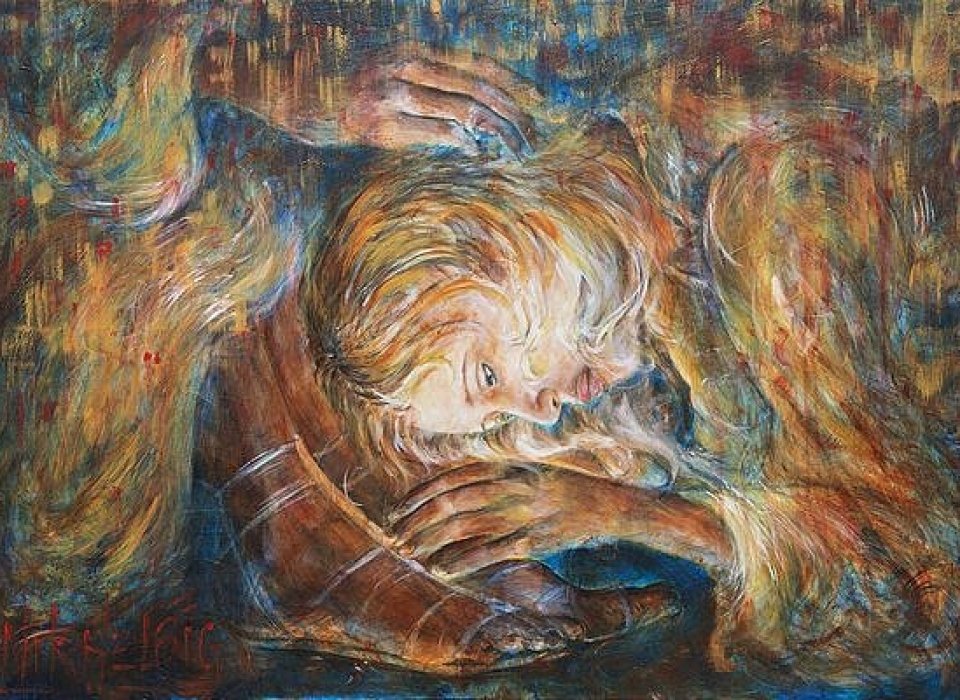
Each week we let Saint Pope John Paul II share meaningful signposts to spark socio-economic resolves through justice and righteousness combined with mercy and compassion; in short, love.
Vatican, 1 January 2002 | In the present circumstances, how can we speak of justice and forgiveness as the source and condition of peace? We can and we must, no matter how difficult this may be; a difficulty which often comes from thinking that justice and forgiveness are irreconcilable.
But forgiveness is the opposite of resentment and revenge, not of justice. In fact, true peace is “the work of justice” (Is 32:17).
True peace therefore is the fruit of justice, that moral virtue and legal guarantee which ensures full respect for rights and responsibilities, and the just distribution of benefits and burdens. But because human justice is always fragile and imperfect, subject as it is to the limitations and egoism of individuals and groups, it must include and, as it were, be completed by the forgiveness which heals and rebuilds troubled human relations from their foundations.
Forgiveness is in no way opposed to justice, as if to forgive meant to overlook the need to right the wrong done. It is rather the fullness of justice, leading to that tranquility of order which is much more than a fragile and temporary cessation of hostilities, involving as it does the deepest healing of the wounds which fester in human hearts. Justice and forgiveness are both essential to such healing.
…
No peace without justice, no justice without forgiveness: this is what in this Message I wish to say to believers and non-believers alike, to all men and women of good will who are concerned for the good of the human family and for its future.
No peace without justice, no justice without forgiveness: this is what I wish to say to those responsible for the future of the human community, entreating them to be guided in their weighty and difficult decisions by the light of man's true good, always with a view to the common good.
No peace without justice, no justice without forgiveness: I shall not tire of repeating this warning to those who, for one reason or another, nourish feelings of hatred, a desire for revenge or the will to destroy.
On this World Day of Peace, may a more intense prayer rise from the hearts of all believers for the victims of terrorism, for their families so tragically stricken, for all the peoples who continue to be hurt and convulsed by terrorism and war.
May the light of our prayer extend even to those who gravely offend God and man by these pitiless acts, that they may look into their hearts, see the evil of what they do, abandon all violent intentions, and seek forgiveness.
In these troubled times, may the whole human family find true and lasting peace, born of the marriage of justice and mercy!
Excerpted from:
MESSAGE OF HIS HOLINESS POPE JOHN PAUL II FOR THE CELEBRATION OF THE WORLD DAY OF PEACE 1 JANUARY 2002
_________________________
EDITORIAL | A CONSIDERATION
By Abraham A. van Kempen
19 December 2025
In my editorial published last Friday, I inquired whether any nation has solicited the opinions of Greenland's indigenous peoples regarding their preferences. Will Denmark and the United States offer Greenlanders a referendum or plebiscite on whether to keep their Danish citizenship or become United States citizens? What if the United States offers them a path toward US citizenship by first accepting a US Permanent Resident status?
Over 85 percent of people in Crimea and Donbas participated in separate referenda to join the Russian Federation, and although these results reflect a strong local voice, they were not recognized by the US-EU/NATO Axis.
Will the EU-US/NATO Axis consider the needs, wants, and interests of the indigenous people of Greenland? Or, are the EU-US/NATO wolves in sheep’s clothing, Neo-colonialists obsessed with:
What is ours is ours.
What is yours is ours also.
You’re either for us or against us.
It’s either our way or the highway.
If you don’t do it our way, you’re dead meat.
Have a wonderful day,
Abraham A. van Kempen
Building – not Burning – the Bridge Foundation, The Hague
_________________________
DON'T DRINK THE WATER
The United States seeks to impose its will on the people of Greenland. Many are shocked by this flagrant disregard for issues of sovereignty. But as history shows, it is just business as usual.

Mural from the Cherokee National History Museum
By Scott Ritter
Substack.com
18 January 2026
Come out, come out, no use in hiding
Come now, come now, can you not see?
There’s no place here. What were you expecting?
No room for both, just room for me
So you will lay your arms down
Yes, I will call this home…
I sometimes feel like a prisoner trapped in a nightmare of my own creation.
I have always considered myself an American patriot, and to be frank, I always will.
But sometimes I wonder if the America I cherish existed only in a dream.
I watch with barely suppressed anger as the Inuit people of Greenland struggle with the reality that they are but pawns in a geopolitical power struggle powered by a modern-day version of American Manifest Destiny on steroids.
Around 52,000 people identify as Greenlandic Inuit. Together, they comprise around 90% of Greenland's population, which is an autonomous region within the Kingdom of Denmark. There are three major groupings of Greenlandic Inuit: the Kalaallit, the Tunumiit, and the Inughuit.
I bring this up because I read today how many Americans have taken up the “cause” of the Greenlandic Inuit, citing the past sins of the Danes when it comes to the treatment of Greenland’s indigenous population.
But the reality is, most Americans haven’t the foggiest clue about the Inuit of Greenland.
We don’t know anything about them.
And we don’t want to.
We just want their land.
And we will stoop to any level to take it, even to the point of feigning concern for their troubled history with European colonizers.
Away, away, you have been banished
Your land is gone and given to me
And here I will spread my wings
Yes, I will call this home

Sunrise at the Grand Canyon
I recently finished driving across the vast expanse of the United States of America, from Palm Springs, California, to Albany, New York. I was on family business, and so the schedule and pace of travel were my own. Given the reality of my age, I opted not to try and repeat the heroics of my youth; driving 15-20 hours a day was not an option. I instead broke the trip down into a series of eight-hour drives, giving me time to take in the sights along the way.
The first leg of my journey took me from Palm Springs to Flagstaff, Arizona. I had wanted to catch the sunset over the Grand Canyon, but the weather was not cooperative, and I instead opted to get up early the next morning and try instead for the sunrise.
The weather that morning was clear, and the sunrise spectacular.
As I am wont to do, I took some time to read up on the locations I would be driving through and the places I wanted to see. The history of the creation of the Grand Canyon National Park contains a dark side unknown to most Americans. For centuries, Havasupai Indians lived in Havasu Canyon and on the surrounding plateau, which today falls within the boundaries of the Grand Canyon National Park. They lived in the canyon during the spring and summer and farmed corn, beans, peaches, melons, and cotton. In winter, the Havasupais moved to the plateau to hunt and gather food.
As interest in the Grand Canyon region increased (initially because of the discovery of silver and the need to support the demands of silver mining companies, and later because of tourism), a series of Executive Orders were enacted by US President, beginning with Rutherford Hayes in 1880, and ending with Chester Arthor in 1882, which stripped the Havasupai Indians of their tribal lands, confining them to what was the smallest reservation in the United States, a 518 acre plot of land that isolated them from the Grand Canyon plateaus they relied upon for their traditional way of life.
When Grand Canyon National Park was created in 1919, the Havasupai Indian Reservation found itself surrounded by the park. In the decades that followed, the Havasupai lobbied to have their lands returned to them, and in1975, Congress passed the Grand Canyon National Park Enlargement Act, which returned over 180,000 acres to the Havasupai, forming the current Havasupai Reservation.
All is not well, however. In July 2024, uranium ore started to be mined at the Pinyon Plain Mine, located in the Kaibab National Forest, near Tusayan, close to the South Rim of the Grand Canyon. The Pinyon Mine threatens groundwater that feeds into the Colorado River and the Havasupai lands. However, its operations are protected by the 1872 Mining Act. The Havasupai Tribe opposes the operation of the mine, arguing that it risks “desecrating one of our most sacred sites and jeopardizing the existence of the Havasupai Tribe.”
To date, the Havasupai's concerns have gone unheeded.
Exploring the databases of American history, one finds reference to Sergeant Yuma Bill Rowdy, a Havasupai Indian who served as a cavalry scout in the US Army during the final campaigns to subdue the Apache in 1890. At the Battle of Cherry Creek, in March 1890, Rowdy “trailed the Apache through some of the ruggedest terrain, the Salt River Canyon of Arizona, finding them and leading the rest of the cavalry party to their location,” a feat that earned him the Congressional Medal of Honor.
What’s that you say?
Do you feel the right to remain?
Then stay, and I will bury you
What’s that you say?
Your father’s spirit still lives in this place,
Well, I will silence you

The Navajo Reservation, northeastern Arizona
After catching the Grand Canyon sunrise, I drove east on Interstate 40 to Albuquerque, New Mexico. On the way, I stopped off at the Petrified Forrest National Park, before crossing into the Navajo Reservation.
Northeastern Arizona is known for its magnificent vistas, defined by …
LATEST OPEN LETTERS
-
03-02TO WORLD LEADERS
-
06-01Standing in Solidarity with the People of Venezuela
-
21-07Freedom
-
20-03Stand up to Trump
-
18-02Average Americans Response
-
23-12Tens of thousands of dead children.......this must stop
-
05-06A Call to Action: Uniting for a Lasting Peace in the Holy Land
-
28-05Concerned world citizen
-
13-02World Peace
-
05-12My scream to the world
VIRTUAL POST OFFICE
PETITIONS
LINKS
DONATION
Latest Blog Articles
-
15-10Our Friday News Analysis | What the World THINKS Now!
-
14-10Our Wednesday News Analysis | Navi Pillay, head of UN commission that accused Israel of genocide, wins Nobel Peace Prize
-
13-10Navi Pillay, head of UN commission that accused Israel of genocide, wins Nobel Peace Prize
-
13-10No state has a ‘right’ to exist – least of all an apartheid, genocidal state like Israel
-
13-10‘By the Way, the World is Not Stopping Us’: The Secret of Israel’s ‘Success’
-
12-10Our Monday News Analysis | What the World THINKS Now!
-
08-10Our Friday News Analysis | What the World THINKS Now!
-
07-10Our Wednesday News Analysis | The West wants Netanyahu gone - so Palestinians can be killed more quietly again
-
06-10The West wants Netanyahu gone - so Palestinians can be killed more quietly again
-
06-10Israel turns Gaza into largest ghetto in modern history, killing residents one after another as three-year genocide continues
-
06-10Analysis Europe's Boycott of Israel Is Rapidly Expanding – and It Won't Be Easy to Stop
Latest Comments
 One of the most important and illuminating articles that I …
Comment by Benjamin Inbaraj-
And what's wrong here?
After all, there is the homeland …
Comment by Isac Boian -
Does this reinforce or deny my argument that Israel is …
Comment by Edward Campbell -
Many 'say' they support the Palestinian cause but do little …
Comment by Philip McFedries -
The UN is strangled by the "war for profit" cabal …
Comment by Philip McFedries -
I can't read the printing on the map.
Comment by Philip McFedries -
Good news!
Comment by Philip McFedries
COMMENTS
This article has 0 comments at this time. We invoke you to participate the discussion and leave your comment below. Share your opinion and let the world know.